Where Sight Ends
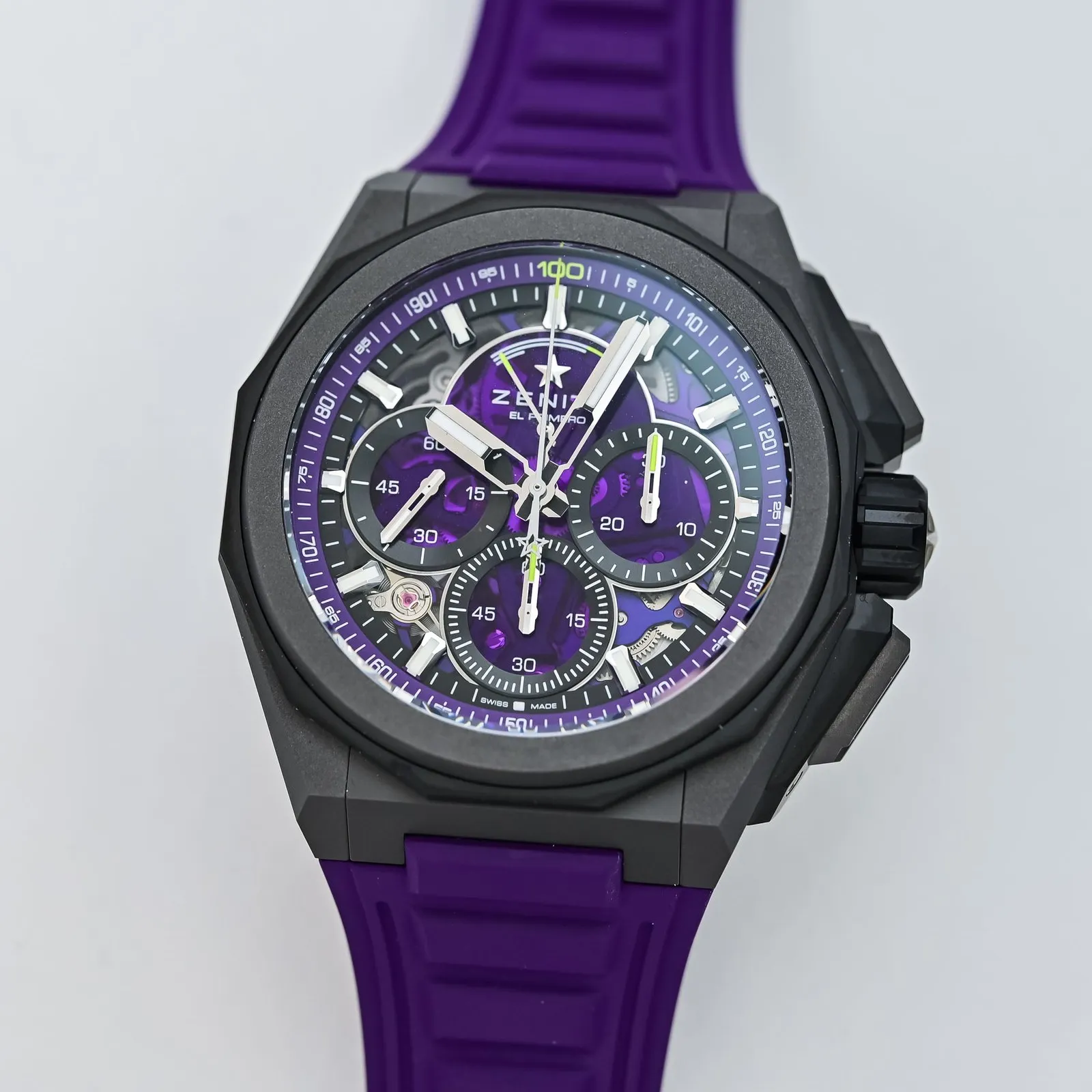
Violet stands at the place where the human eye runs out. At the very end of the rainbow, where light reaches its highest energy and then, just beyond, falls into the ultraviolet that is invisible to us, on that razor-thin threshold. When Zenith named this watch Ultraviolet, it was in truth pointing at a boundary: the very edge of the world we can see. And it hides that edge inside armour of microblasted titanium, behind a pane of violet glass.
But the story of this watch does not begin with colour; it is hidden in the name of the case: Defy. To defy. And Zenith's history of defiance holds one of the bravest, most stubborn stories in all of watchmaking.
El Primero: The Legend of a Stubbornness
In 1969 Zenith gave birth to the world's first serially produced automatic high-frequency chronograph movement and named it El Primero, Spanish for 'the first'. Beating at 36,000 vibrations per hour, this heart could slice time down to a tenth of a second, a precision unseen until then.
Then came the storm of cheap quartz watches. In the 1970s Zenith's owners of the day decided that mechanical watchmaking was finished and ordered every press, die and technical drawing that produced El Primero to be sent for scrap. And it was precisely here that one craftsman intervened: Charles Vermot. This man defied the order. Night after night he dismantled the hundreds of tools, dies and plans that made El Primero, hid them in the attic of the Le Locle manufacture behind a wall, and bricked up the entrance.
Years later, when the world once again longed for the mechanical watch, the only thing that could bring El Primero back from its ashes was that set of tools waiting silently in the attic. The movement ticking on your wrist today is still alive thanks to one man's stubbornness. 'Defy' is in this brand's very blood.
Dividing the Second by a Hundred
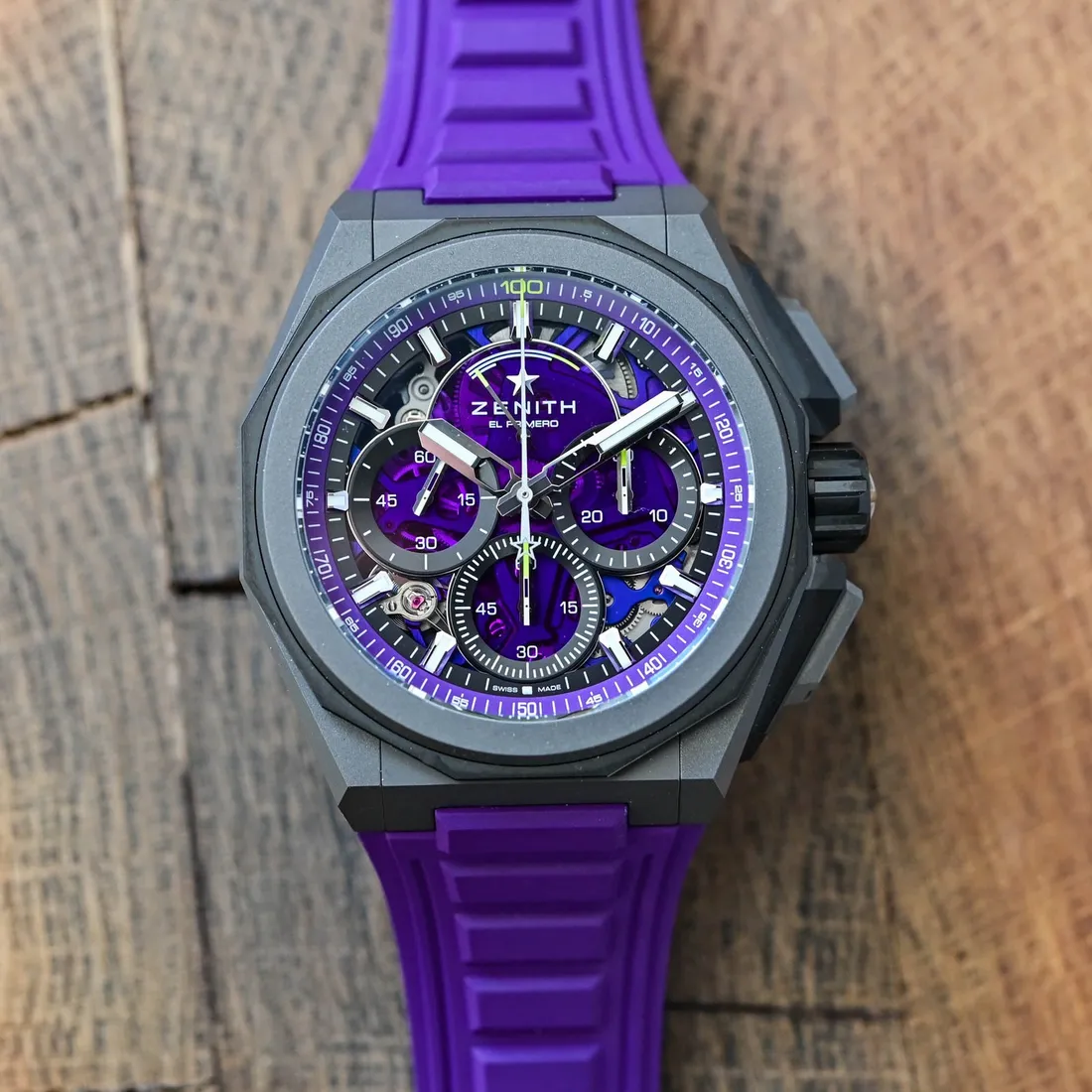
The Defy Extreme Ultraviolet carries the calibre 9004, which takes the El Primero heritage a step further. Where an ordinary chronograph might show perhaps an eighth of a second, this movement measures a hundredth of a second. The way to achieve this is to carry almost two separate hearts within a single body.
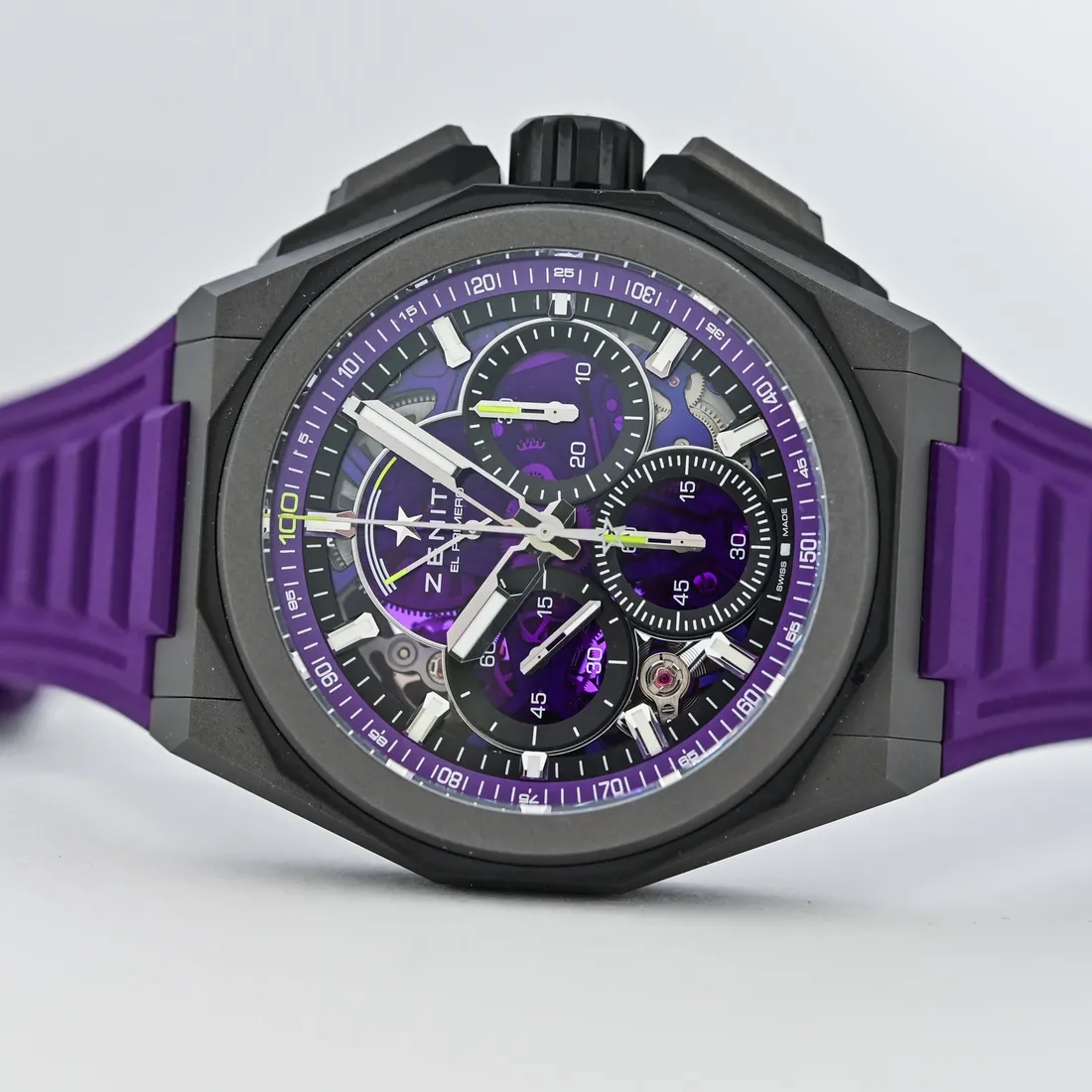
Inside the movement there are two independent escapements, two regulating organs. One is the classic balance that keeps the time, beating calmly at 36,000 vibrations per hour (5 Hz). The other is dedicated solely to the chronograph and runs at a staggering 360,000 vibrations per hour (50 Hz). When you start the chronograph, the slender hand at the centre of the dial makes one full turn every second; that dizzying rotation, which the eye can barely follow, is the visible proof that the second has been divided by a hundred.
To keep two different speeds and two different power sources alive within the same body without conflict is one of the toughest engineering tests in modern watchmaking; for an organ spinning at 50 Hz devours energy with extraordinary appetite and wears at the slightest friction. This is why the chronograph has its own power reserve of about 50 minutes, while the timekeeping movement runs for 50 hours.
The Transparency of Violet
Zenith first tried this colour in 2020 with the Defy 21 Ultraviolet; now it carries it into the far more aggressive, far more faceted Defy Extreme body. The dial is made of violet-tinted sapphire crystal. This is not a surface painted purple; it is a semi-transparent crystal that dyes the very light violet. Thanks to this transparency the wheels and bridges of the movement working beneath the dial appear faintly, as if through a violet mist. The rings of the counters play in tones of that same purple, while the neon-green accents at the tips of the hands glow like sparks within it.
The Architecture of the Extreme
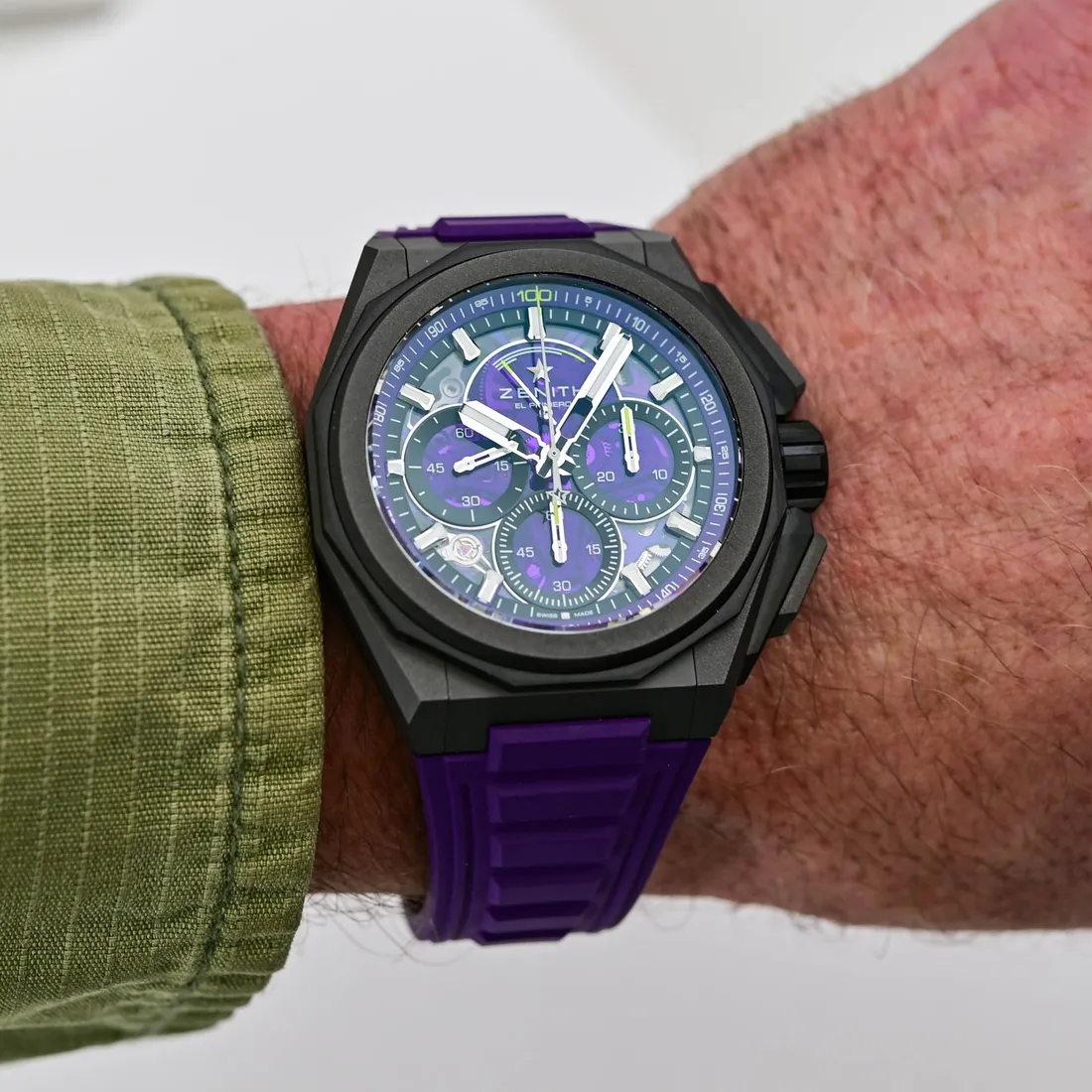
The Defy Extreme earns the word 'extreme' in its name. The 45 mm case is machined from microblasted titanium, a matte, grey, almost reflection-free surface that seems to swallow light. The sharply faceted bezel, the protected chronograph pushers and the toothed crown give the watch the air of an instrument. At 15.4 mm thick, this body is water-resistant to 200 metres.
One of the cleverest details is the strap system: three options come in the box, each changeable in seconds without any tool. A violet rubber strap, a microblasted titanium bracelet and a black Velcro strap. And so, within a single day, the watch can become both a hard sports instrument and a jewel.
Behind the Star
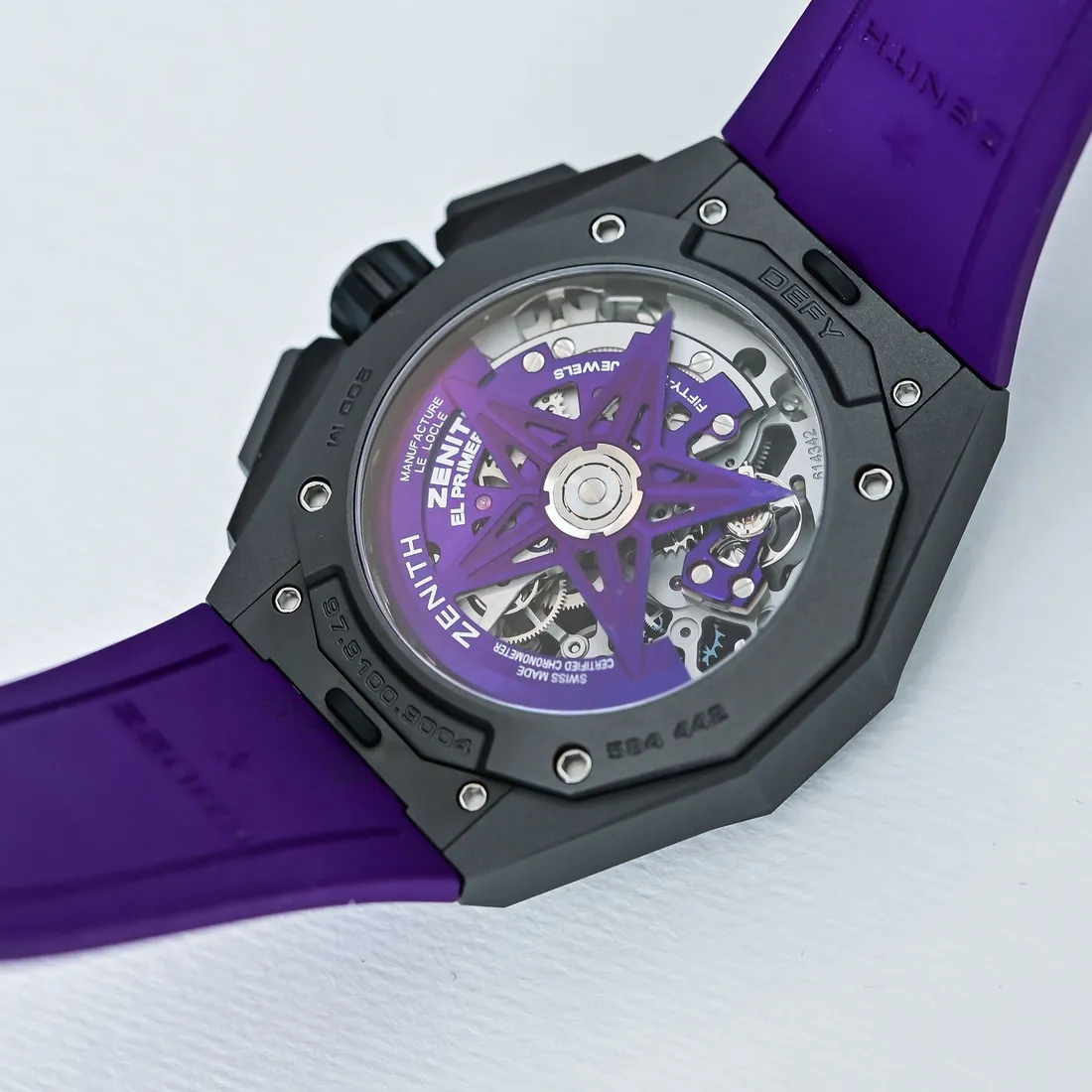
Turn the watch over and, behind the sapphire caseback, Zenith's signature appears: an automatic rotor shaped like a star, openworked and coloured violet. Zenith's star is the symbol that has shone over the brand's Le Locle manufacture since 1865. This rotor turns with every movement of the wrist to wind the mechanism, and with its violet hue it completes, in the background, the story told on the dial.
The Colour of the Boundary
The Zenith Defy Extreme Ultraviolet is not a limited edition; it is open to anyone who wishes to join this act of defiance, priced at around 20,200 euros. But what it truly tells is not a price tag: it gathers onto a single wrist a legend rescued from its ashes by the stubbornness of a craftsman named Charles Vermot, a genius that divides the second by a hundred, and that audacious colour at the place where the human eye runs out. A watch that begins where the visible ends.