Paris, 1842: The Quai des Orfèvres Workshop
In the dim shadow of candlelight, a distinguished French chronometer master leans over the plate on his bench. The plate is cut from maillechort, the new and resilient copper-zinc-nickel alloy developed in the early 19th century by the French metallurgists Maillot and Chorier and named after them, the alloy we call nickel silver.
With a piece of black willow charcoal (charbon de bois) in his hand, he presses circular, rhythmic strokes into the dial. The surface stays neither fully matte nor mirror-bright; it takes on a velvet texture that drinks in the light. The master draws a deep breath: "Metal is cold; but the touch of charcoal breathes into it the lived experience of time."
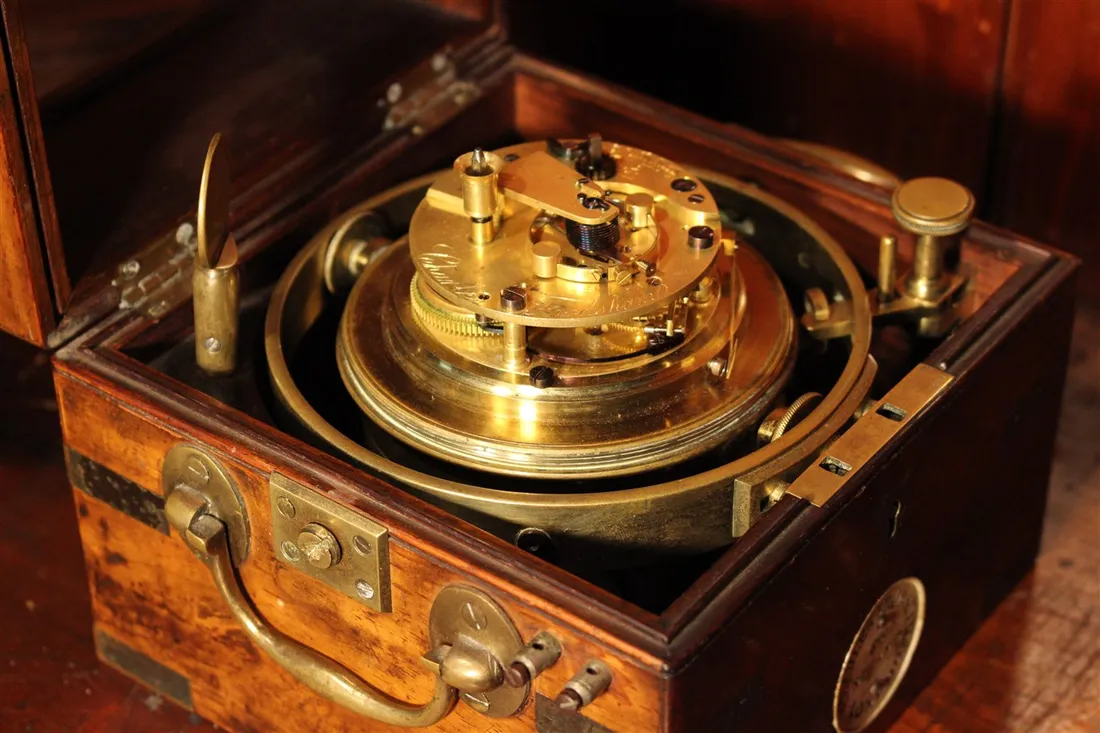
This technique, called charbonnage, was one of the highest decorative crafts of the 19th century, used on precision marine chronometers and table clocks to prevent glare and to give the metal a deep, organic identity. As time went on, it slowly fell toward oblivion in the shadow of industrialisation.
Geneva, 2018: The Rebirth of a Craft
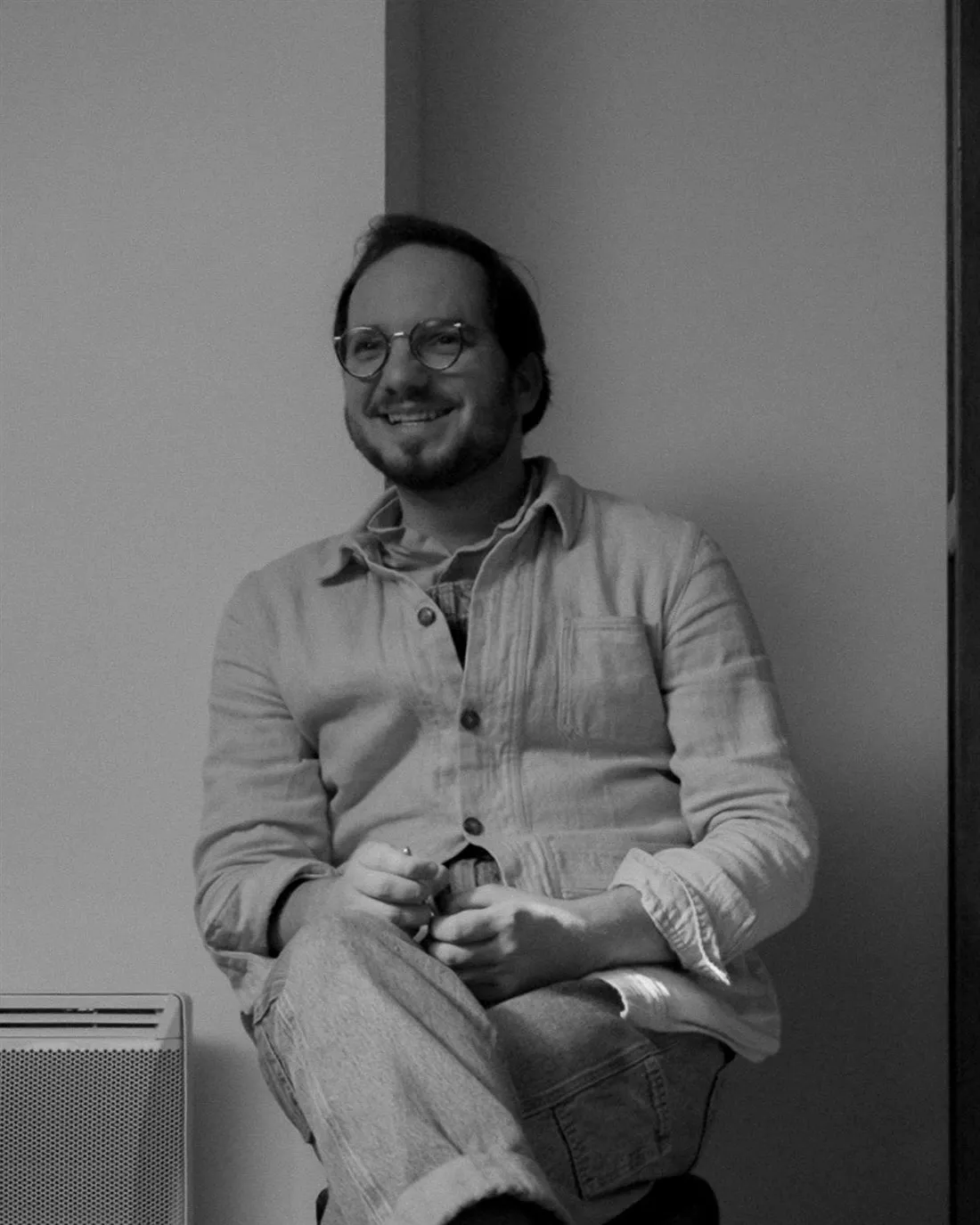
That same traditional spirit sprouted anew in Geneva, a full 176 years later. At the award ceremony of the F.P. Journe Young Talent Competition, the legendary master François-Paul Journe was shaking the hand of a very young French artisan, Théo Auffret. On the table stood the Tourbillon Grand Sport prototype that Théo had built entirely with his own hands, and that had won him this prestigious prize.
Journe looked at the watch’s regulator and smiled: "You have tamed the mechanics, my boy; but more importantly, you have given the metal a soul."
For Théo Auffret did not merely design complex mechanisms; he had also revived forgotten dial-working techniques such as Charbonné, once practised in the workshops of the 19th century, and made them his own signature. The architecture of the future was being fed by the craft of the past.
Paris, 2021: The Intersection of Two Contrary Universes
At Baltic’s headquarters in Paris, four names gathered around the same table: Baltic’s founders Etienne Malec and Jas Rewkiewicz, the serial entrepreneur Guillaume Laidet behind SpaceOne, and the rising star of independent watchmaking, Théo Auffret.
The philosophies on that table were, at first glance, diametrically opposed. Baltic championed the neo-classical aesthetics and vintage proportions of the mid-20th century; SpaceOne represented a radical, futuristic deconstruction that read time not through traditional hands but through cases and discs recalling spaceships. What united them was a deep friendship and the mechanical genius of Théo Auffret. The seeds of the idea sown that day would bear their final fruit after five years of development.
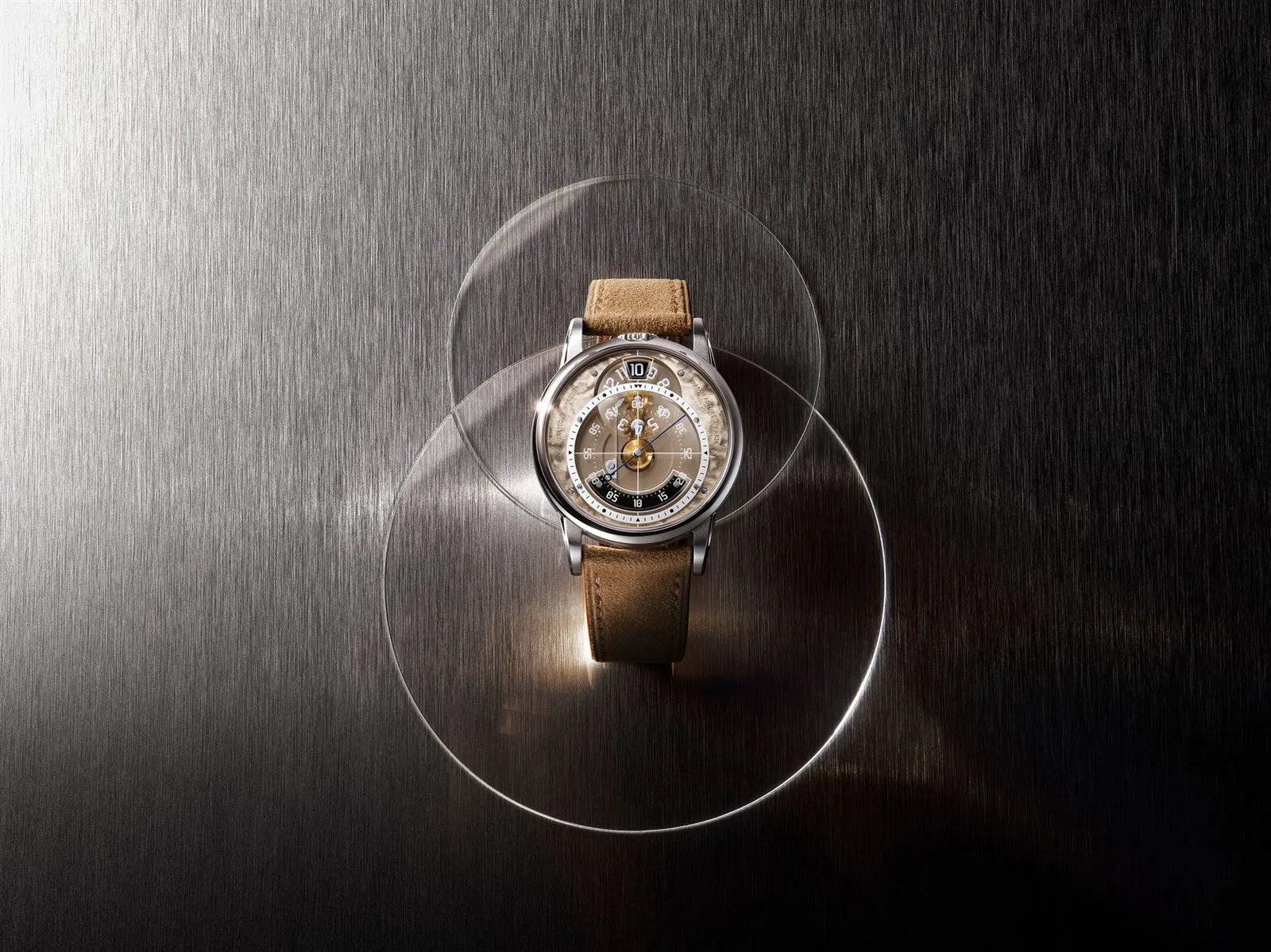
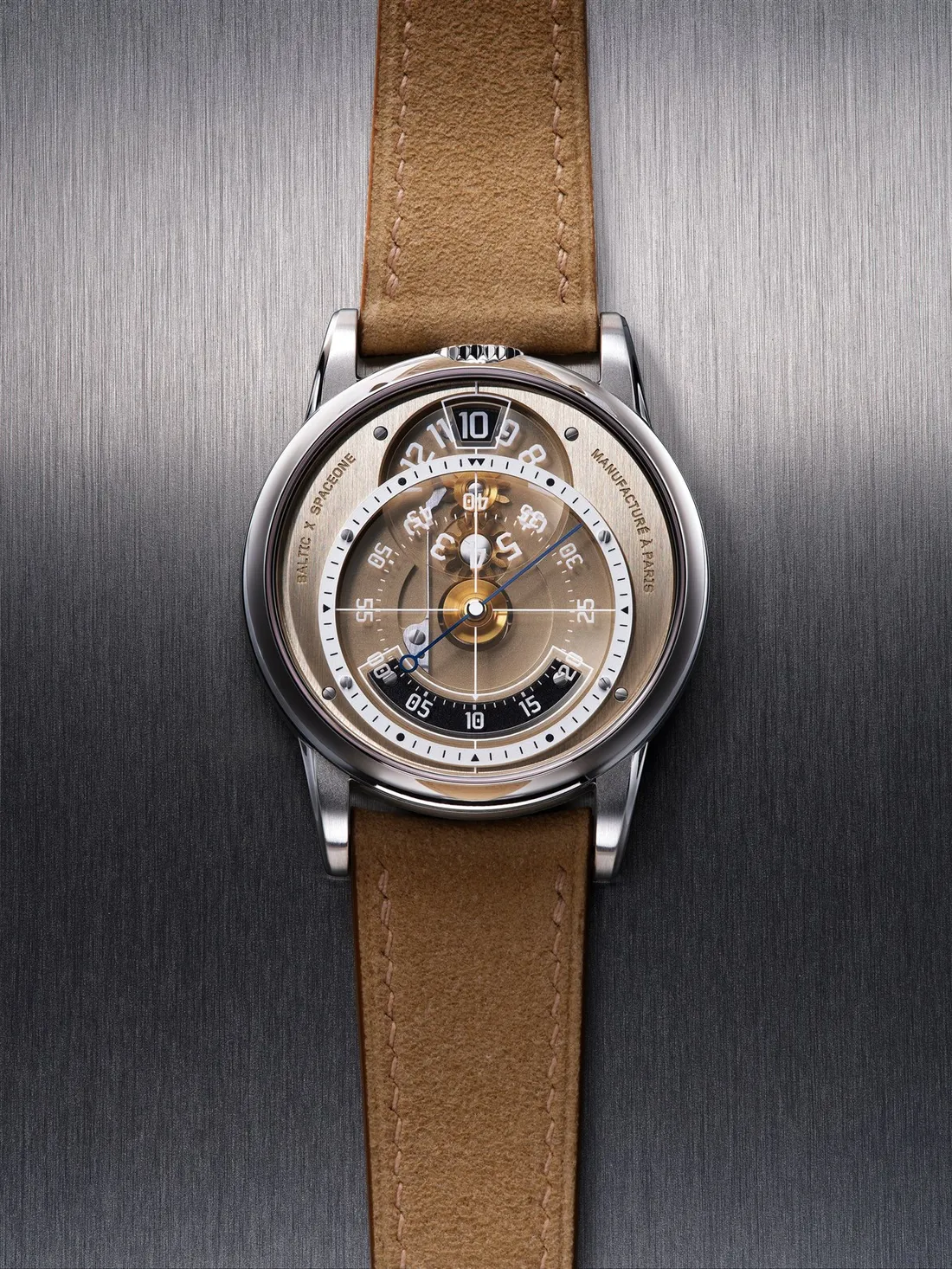
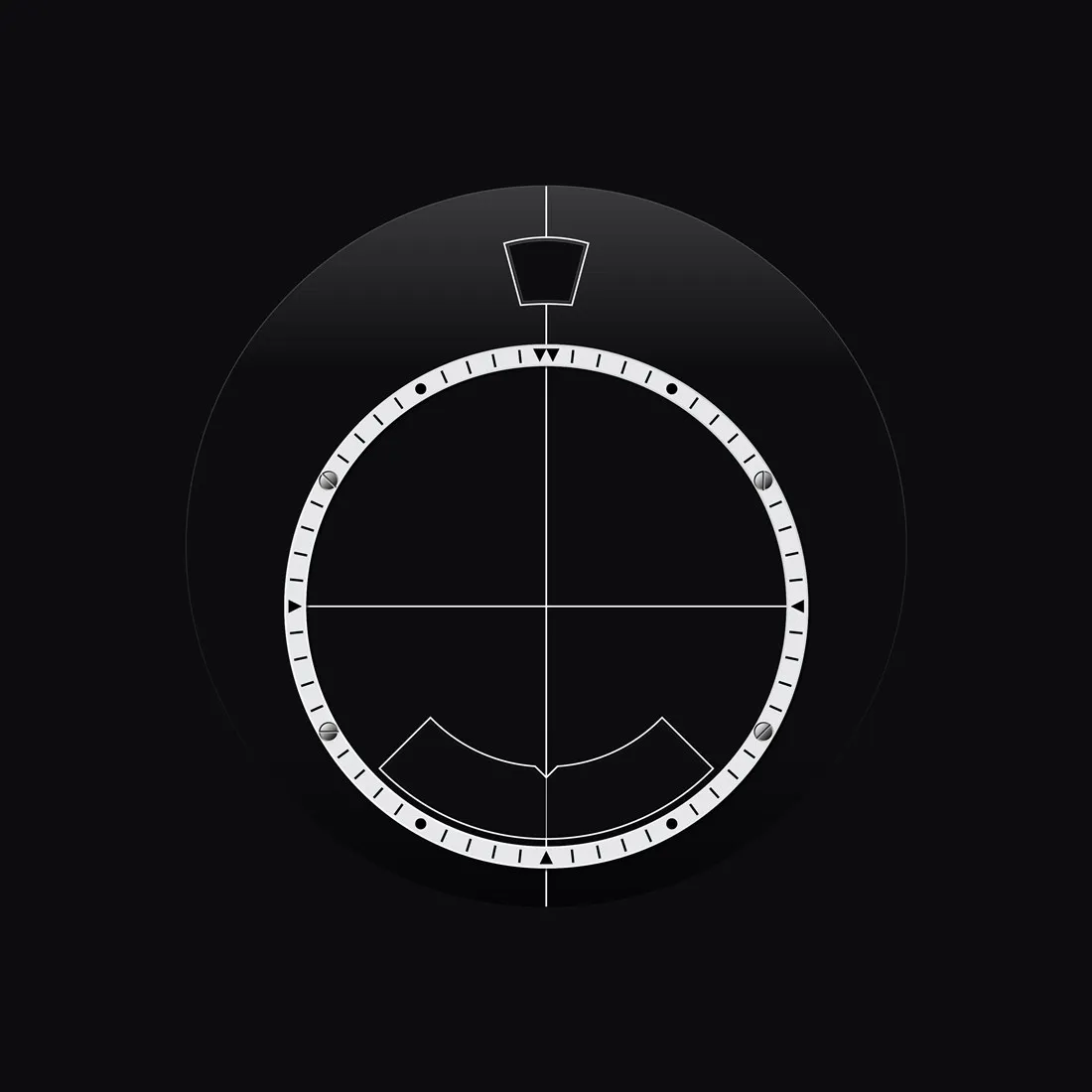
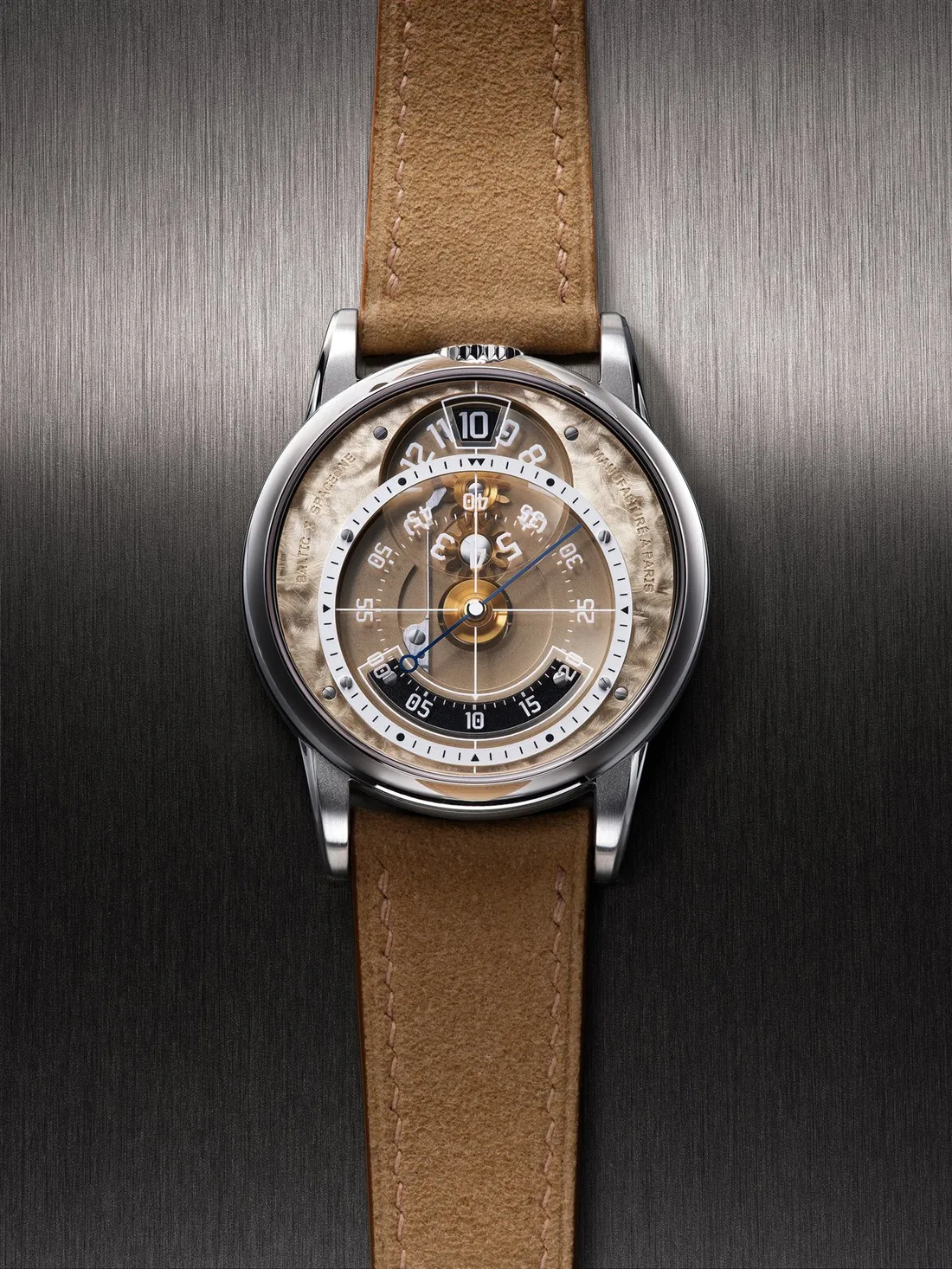
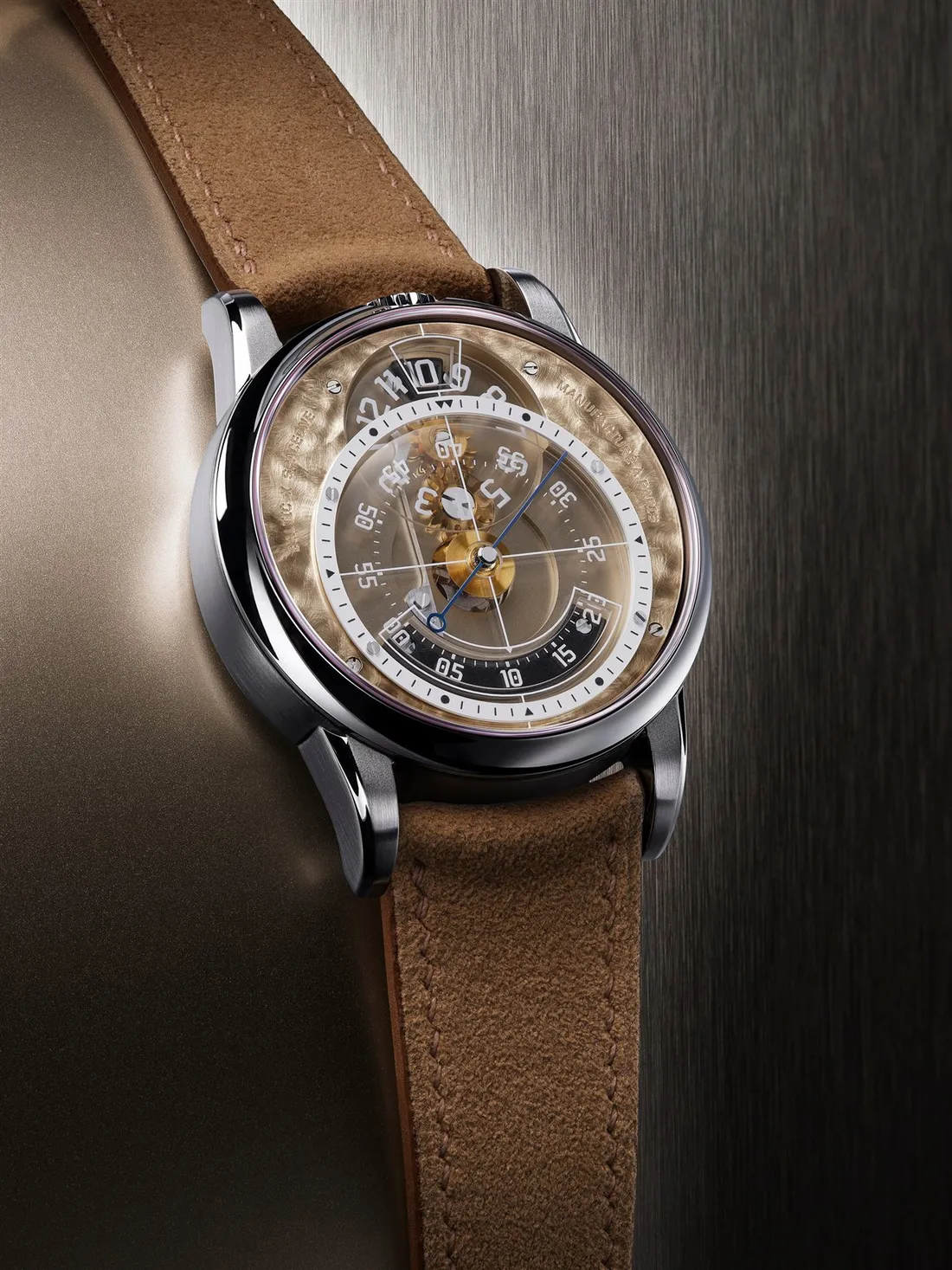
The Seconde Majeure that emerged is the synthesis of these two philosophies: a decentralised reading of time. The hour is shown at twelve o’clock by a jumping-hour disc; the minutes at six by a sapphire disc. And gliding above the dial is the blue central seconds hand that gives the watch its name, lending continuous motion to an otherwise still composition. Seconde Majeure, the Major Second.
From Stellar Cores to a Dial: Nickel Silver
That alloy, worked with a piece of willow charcoal in 1842, is once again on a master’s bench today. What you see when you look at the dial of the Seconde Majeure is not merely a decorative layer; it is the load-bearing body of the mechanism itself, the main plate. Auffret deliberately chose maillechort over traditional brass.
There are concrete reasons. Nickel silver is almost as hard as steel, yet machined with great precision; because it resists friction well, the wheel bearings on it do not deform. It also needs no plating: it does not oxidise over time and keeps its own warm champagne-silver tone. And its low coefficient of friction lets the star wheel and the spring work directly on the surface of the dial.
But here is the truly enchanting part: the copper (atomic number 29), nickel (28) and zinc (30) atoms that make up maillechort are not chemicals that happened to gather at random on Earth. In the first ages of the universe there was only hydrogen and helium. These heavy metals were cooked in the fusion furnaces at the cores of giant stars far more massive than the Sun. In the silicon-burning phase at the end of a star’s life, and in the Type II supernova explosion that follows, heavy elements are synthesised and scattered into space. Billions of years later, these three atoms, drawn from an Earth’s crust kneaded out of the dust cloud of an exploded star, became a single piece of maillechort on Auffret’s bench. The dial you carry on your wrist is, in the most literal sense, the fossilised architecture of a stellar explosion.
The Kinetic Codes of a Biological Architecture: The Jumping Module
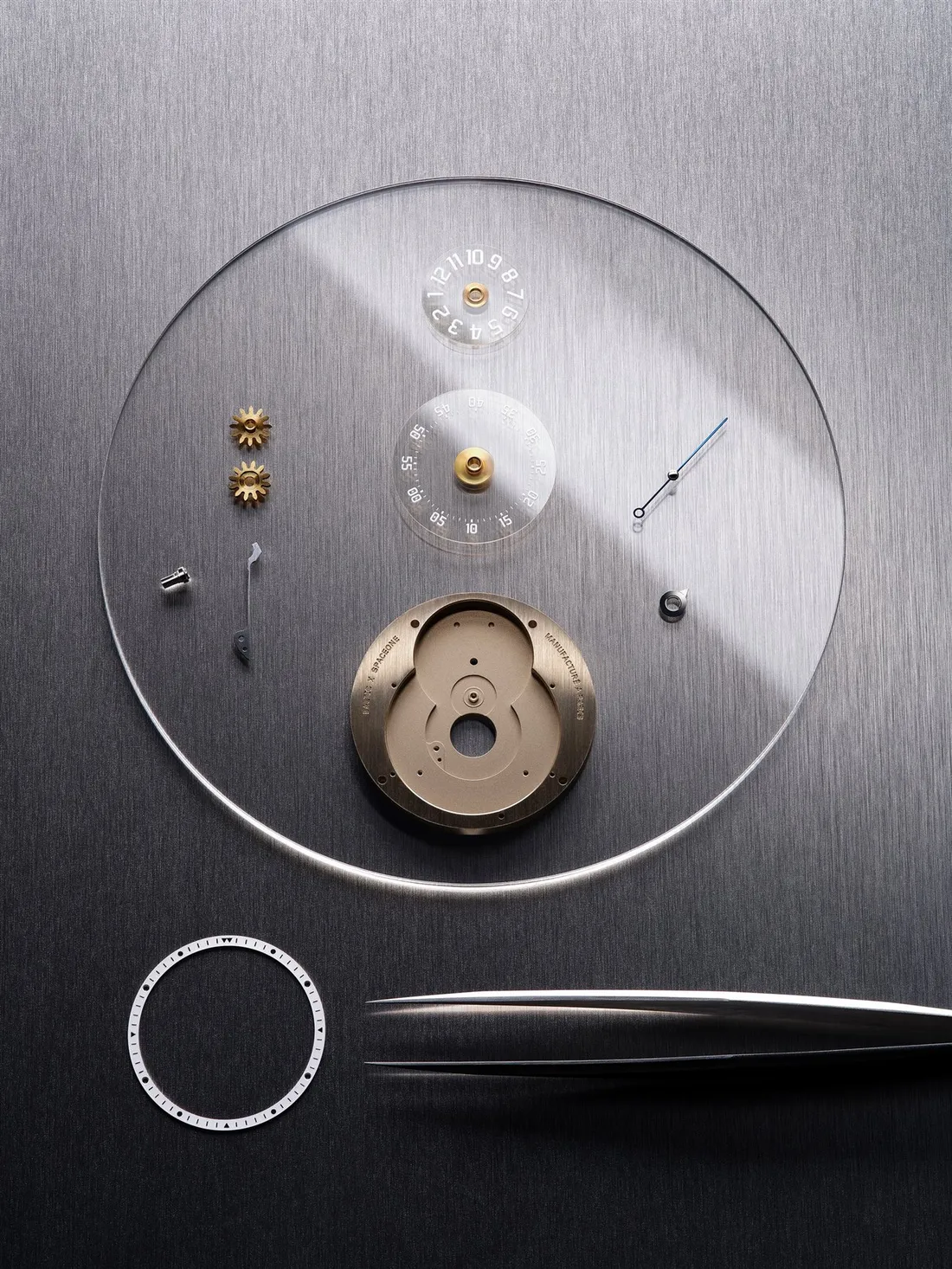
At the heart of the Seconde Majeure lies a bespoke jumping-hour module, developed from scratch by Théo Auffret and integrated on top of the automatic Soprod P024 base movement. This is no ordinary train of wheels; to grasp how it works, one must look to the most elegant machines of the cell.
The first component is the Central Control Wheel. It sits just beneath the minute disc and turns a full 360 degrees every 60 minutes. Just as the enzyme RNA polymerase advances step by step along the DNA helix, synthesising the mRNA strand without interruption, this wheel transmits energy in millimetric order, never stopping.
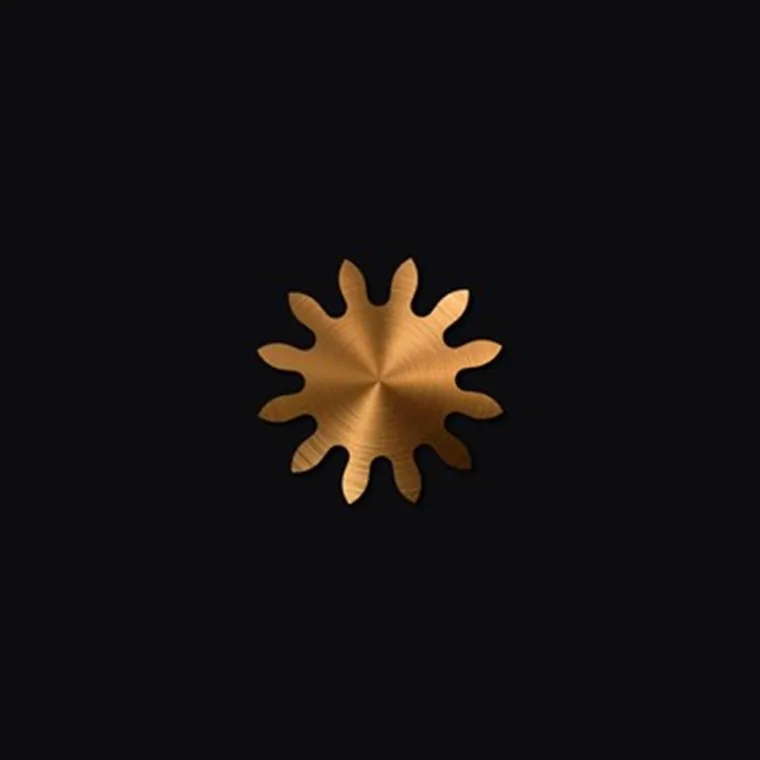
The second component is the Star Wheel. Attached directly to the hour disc, it has twelve symmetrical teeth, one for each of the twelve hours. It works like the ribosome that reads the three-letter genetic codons along the mRNA one by one: each tooth stands for a genetic code of time, a single hour. Its progress is not fluid but tooth by tooth, discrete and distinct.
The third component, clearly visible on the left of the dial, is the Jumper Spring, and this is where the secret lies. In the membrane of a neuron an electrical tension builds slowly; when the membrane potential reaches a threshold of about minus 55 millivolts, the voltage-gated channels open suddenly and the cell fires into an explosive depolarisation, all or nothing. The same thing happens here: as the Central Control Wheel turns, it pushes against a tooth of the Star Wheel; the spring on the left resists that push, flexes, and stores elastic potential energy. The instant the minute reaches a full 60, the tip of the spring passes the peak of the tooth and, exactly like an action potential, the stored energy is released in a sudden conformational change. The spring drops between the next two teeth, and the hour disc leaps forward within milliseconds.
Physics calls this behaviour a relaxation oscillator: energy builds slowly, reaches a threshold, and there discharges all at once, irreversibly. Like a drop of water swelling under a tap and falling once it reaches a certain weight. What Auffret achieved was to turn a continuously flowing energy into a sharp, discrete, clean leap; that crisp jump you see on the dial is the result of weeks of balancing, of tuning teeth and spring to within a micron.
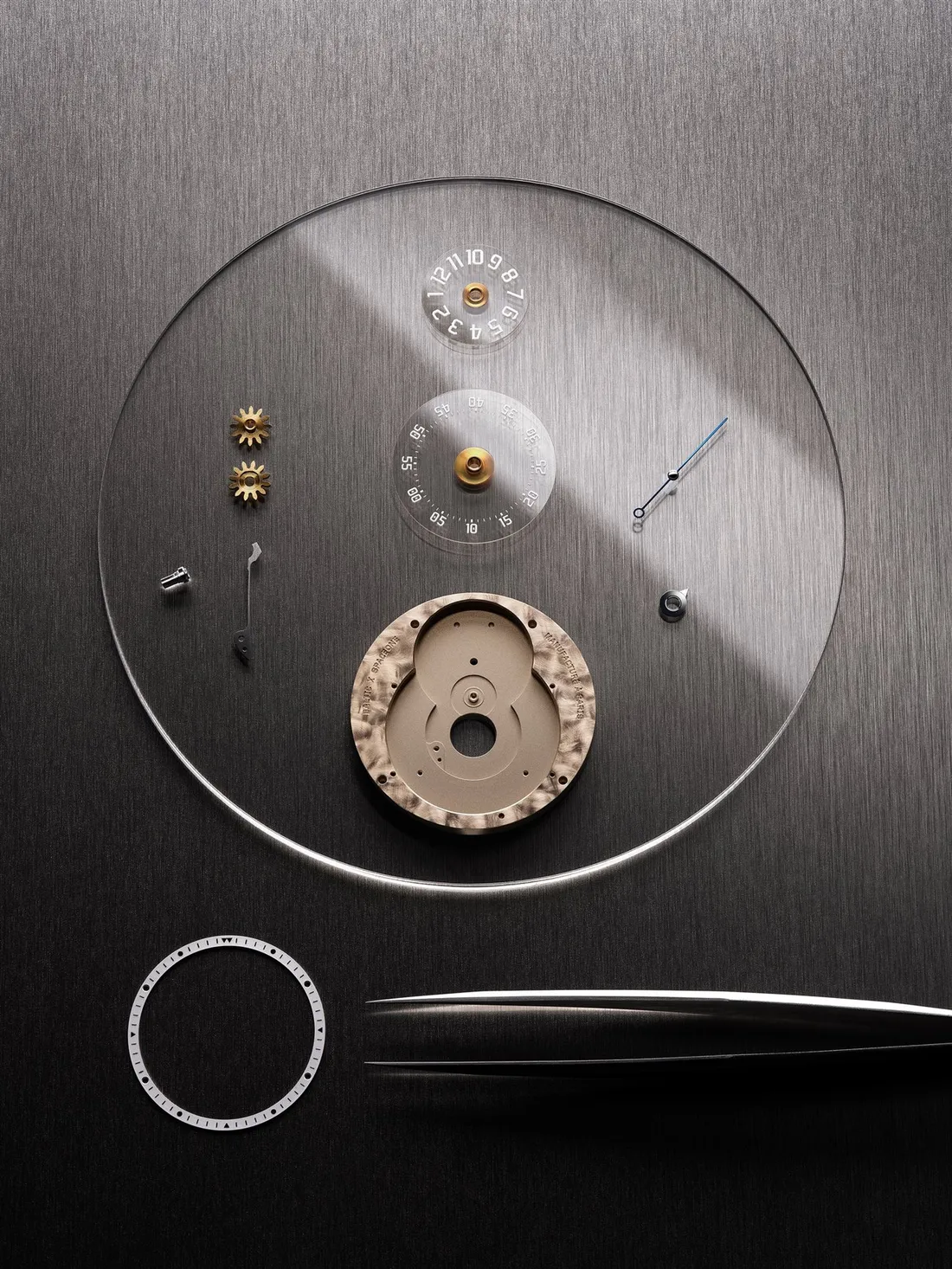
The Carbon Texture of Time: Charbonné and Brushed Finishing
The Seconde Majeure is offered with two faces of the dial: the finely linear brushed finish, and that historic technique from the opening, Charbonné. The method Auffret revived demands up to three hours of handwork per dial today and unfolds in four stages.
First the maillechort main plate is smoothed by micro-polishing, establishing a stable surface. Then blocks of natural wood charcoal of a specific density are cut to give the ideal abrasive grain size. In the third stage the surface is abraded by hand, with an oil-based suspension, in up to three hours of labour (charbonnage); it is here that the microscopic darkening and the matte-glossy texture are born. Finally the carbon residue is washed away and the metal’s own colour emerges, that organic, light-breaking champagne-carbon tone. The result can never be exactly repeated; every Charbonné dial is the unique mark the master’s hand left that day.
The brushed version speaks another language: linear micron lines drawn in a single direction break the light at even angles, giving a more industrial, crisp and neo-classical stance. One carries the hand of the past, the other the line of the future; yet both rest on the same stardust plate.
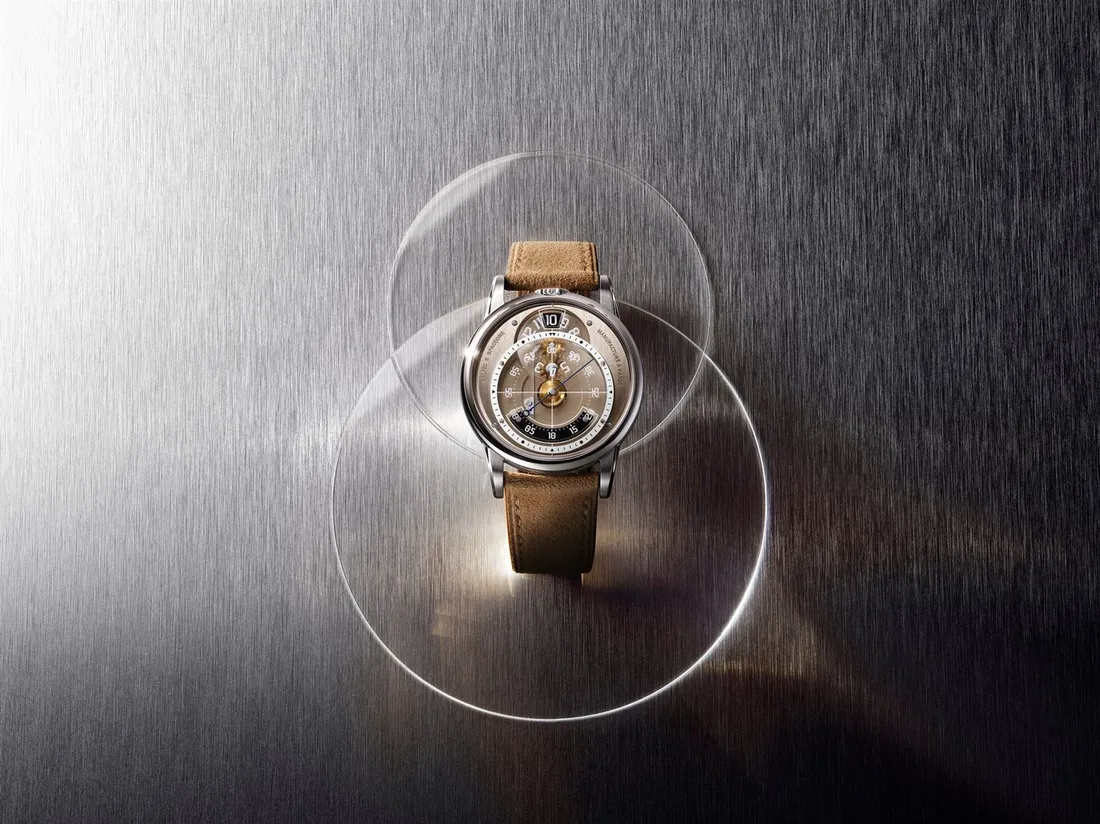
Specifications
Case material: 904L stainless steel.
Diameter and thickness: 38.5 mm and 12.3 mm.
Dial plate: single-piece maillechort (nickel silver).
Finishing: brushed, or Charbonné worked by hand over three hours.
Complication module: jumping hour designed by Théo Auffret.
Base movement: Soprod P024 automatic, 42-hour power reserve.
Crystal: domed sapphire with internal anti-reflective coating.
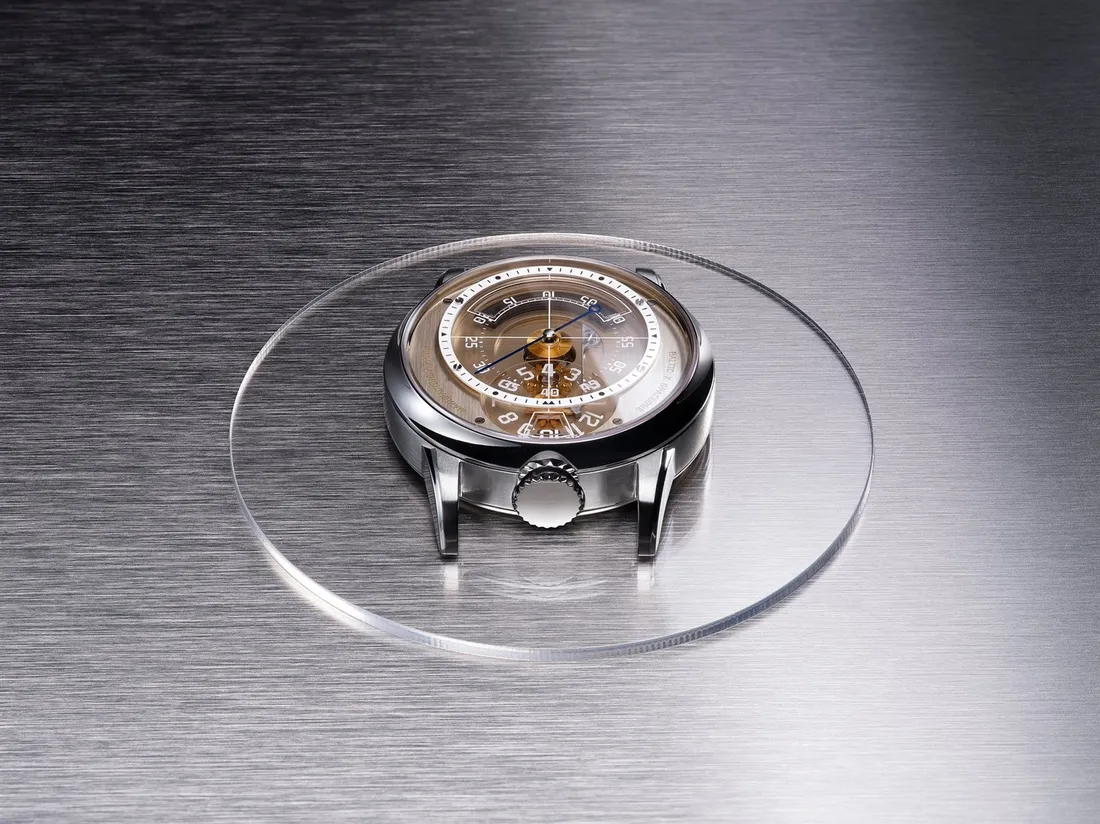
In the end, the Seconde Majeure turns a contradiction into elegance. On one side a surface worked with charcoal by the candlelight of 1842, on the other the leaping discs of the space age; on one side an alloy cooked in the cores of the stars, on the other a mechanism that recalls the ribosome and the neuron inside a cell. Each time that star jumps a single tooth on the hour, the same law of the universe and of the cell repeats itself on your wrist: a sudden, irreversible leap that arrives after a long patience.