The fifth century after Christ. The fertile plains of northern Italy are burning. Under the hooves of mounted armies from the east, Attila's Huns and then the Lombards, cities fall one by one. On the roads are people fleeing with only what they can carry; behind them, their homes in flames, before them an unknown horizon.
Some of those who fled turned toward a place no one thought worth living in: the reedy, muddy, shallow lagoons of the Adriatic coast. This marsh, which no heavily armoured cavalry could ever enter, was a shield offered by nature itself. But to live beneath that shield meant waging a wholly different war. The ground slid away underfoot, and the waves redrew the shore without cease. To build anything permanent here was a dream the mind would refuse. And Venice was founded upon precisely that impossibility.
An Empire Born of the Marsh
The Venetians' solution is one of the boldest feats of engineering in human history. To pierce through the soft mud beneath the lagoon and reach the hard clay deeper down, they drove millions of tree trunks vertically into the seabed. They chose the species most resistant to rot: alder, oak and larch. The number of piles driven beneath a single building, the famous church of Santa Maria della Salute, is beyond belief: exactly 1,106,657 of them.
And here, out of sight, a miracle took place. Buried in oxygen-starved mud, these trees did not rot; on the contrary, absorbing the minerals in the water over years, they turned almost to stone. If Venice still stands today, it is because it draws its strength from these millions of piles, waiting like invisible soldiers beneath the water.
Over this invisible forest were laid thick wooden planks, and over them a special layer of water-resistant stone. But there was one rule: everything built on top had to be light. This necessity gave birth to one of the most elegant architectural languages in the world. Venetian Gothic rose with walls as thin as possible, immense windows, arches carved like lace and light brick. In other words, the city's peerless grace is the child of a necessity to survive. Engineering became aesthetics.
In Pursuit of Light: Monet's Venice
Centuries later, this dream of stone suspended over water enchanted another genius. In the autumn of 1908, Claude Monet, regarded as the father of Impressionism, came to Venice with his wife Alice for what was meant to be a short holiday. The sixty-eight-year-old painter was so struck by the city's play of light and water that he stayed for weeks.
Impressionism aims to paint not the object itself, but the impression that object leaves on the eye under the light of a particular moment. For Monet, Venice was almost the physical body of that movement on earth. For in Venice nothing was fixed: the sky fell into the water, the water bent the colours of the sky, and the shadows of marble palaces shattered on ever-changing waves. Everything was made of light, atmosphere and time. Monet would return to the same spots at different hours of the day, set up his easel, and find a wholly different city each time.
The Immortalising of a Moment: The Grand Canal
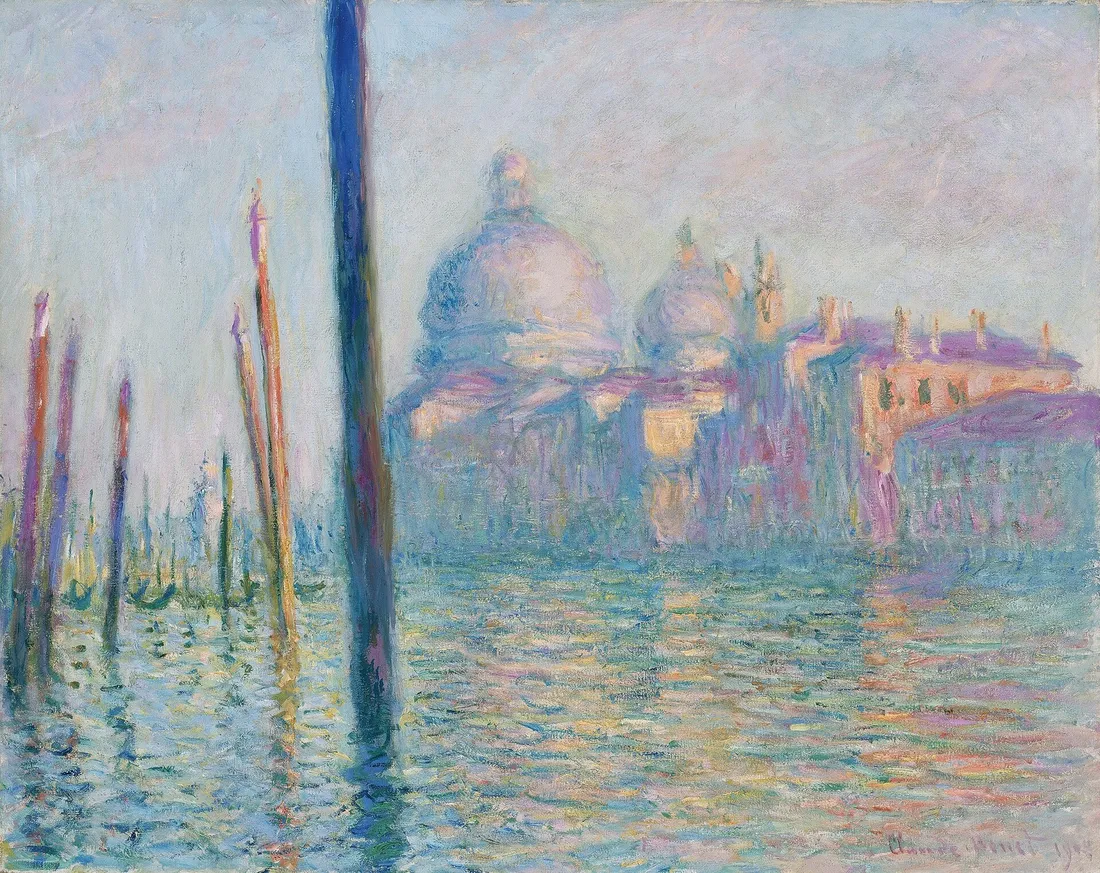
One of the most spellbinding works Monet produced in Venice is The Grand Canal, depicting the entrance to the great canal with the Basilica of Santa Maria della Salute rising in all its majesty in the background. Yet Monet does not dwell on the stone of the basilica or the line of its dome. Under his brush, the Salute seems to float within a misty atmosphere dominated by tones of blue and violet.
The green and turquoise waters of the canal are bathed in the warm gold and pink light of the afternoon sun. With quick, broken brushstrokes, Monet carried every ripple on the surface of the water onto the canvas. Looking at the painting, you feel the water stir and the light fading at that very instant. This is no photograph; it is the immortalising of a passing moment, of a light that will never come again. And the wooden posts driven into the water in the foreground are like the surfaced cousins of those invisible piles hammered into the marsh centuries before.
A Painting Worn on the Wrist: the Reverso
Now the story moves to Switzerland, to the Vallee de Joux. In 1931, Jaeger-LeCoultre devised an extraordinary solution to an extraordinary problem: the watch crystals of British officers playing polo in India kept shattering during matches. The answer was a case that could pivot on its own axis and turn over, hiding its fragile crystal and presenting a solid metal back instead. The Reverso was born. Today, that act of turning does far more than protect the crystal; it takes us on a journey through time.
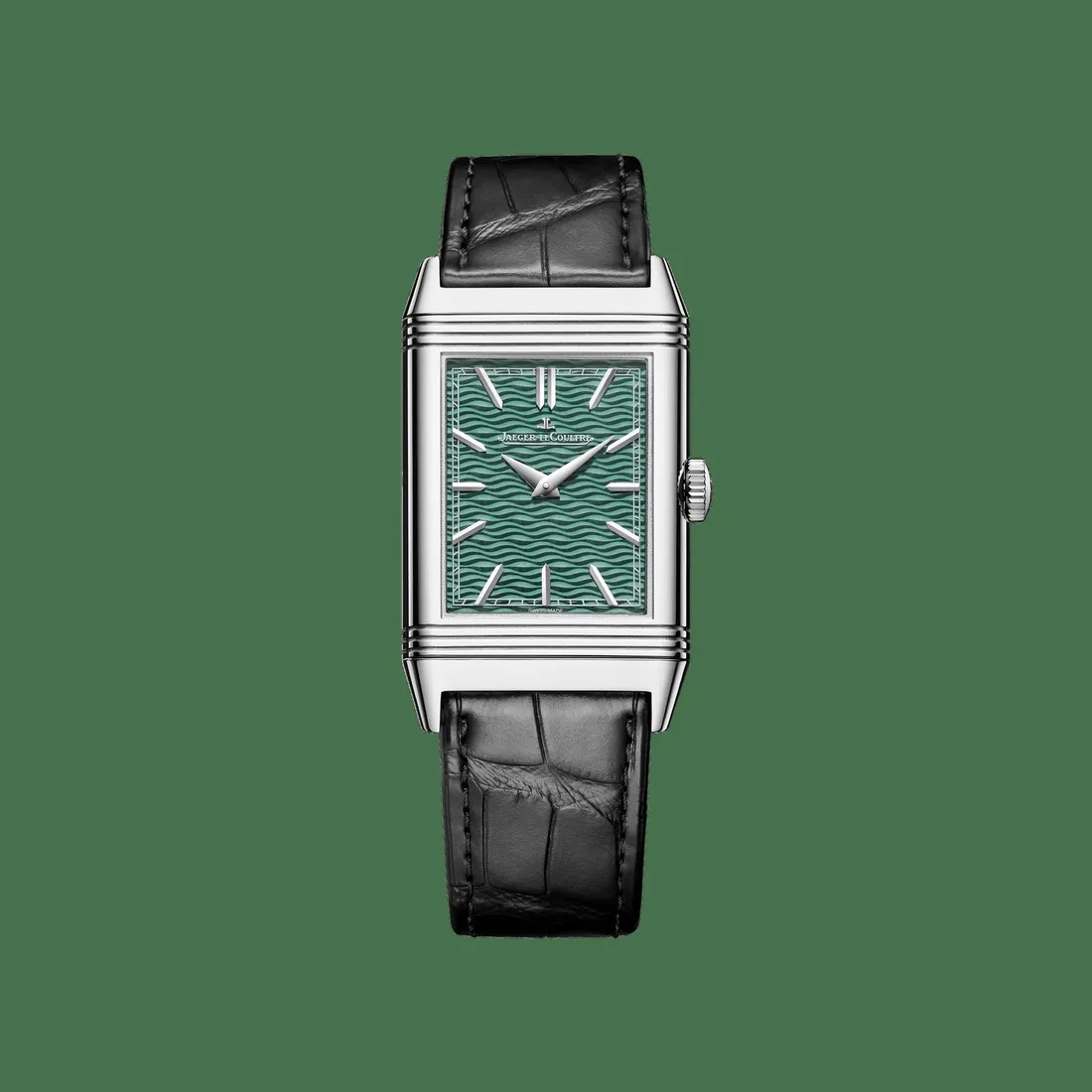
The front of the Reverso Tribute Enamel The Grand Canal whispers of Venice at first glance. The dial is covered from edge to edge with a hand-worked wave pattern (guilloche); tiny, ordered waves that mimic the stirring water of the canal. The translucent green Grand Feu enamel layer poured over this pattern changes depth with the angle of the light, gleaming and darkening just like a real water surface. The preparation of this front dial alone takes 17 hours.
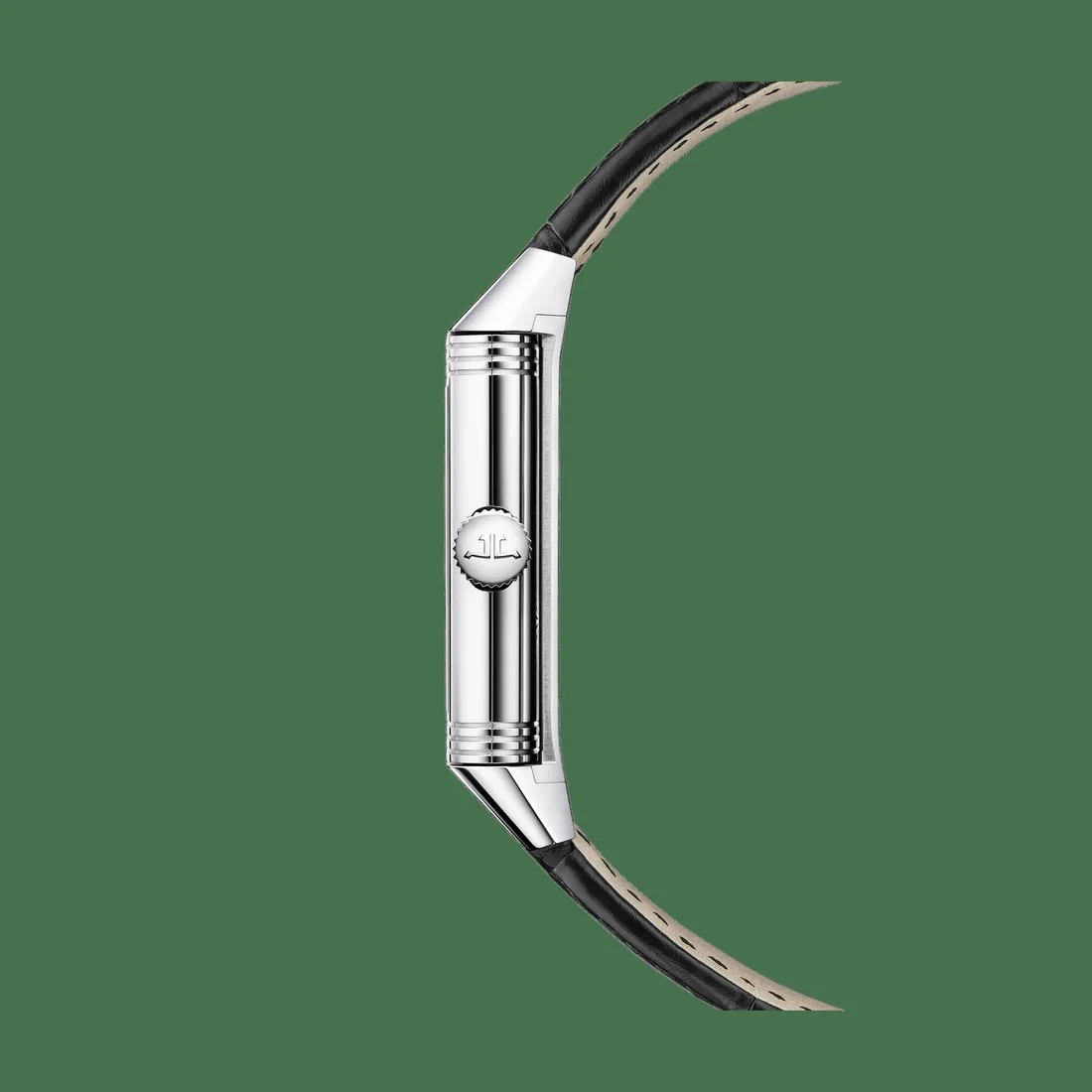
The Reverso's swivelling case is like an echo of the Venetians' ingenuity: here too, the point is to build a clever architecture in order to protect the fragile. The case turns quietly upon a carrier cradle beneath it, clicks into place, and guards the masterpiece on the back from the blows of the outside world. An invisible engineering watches over a fragile beauty.
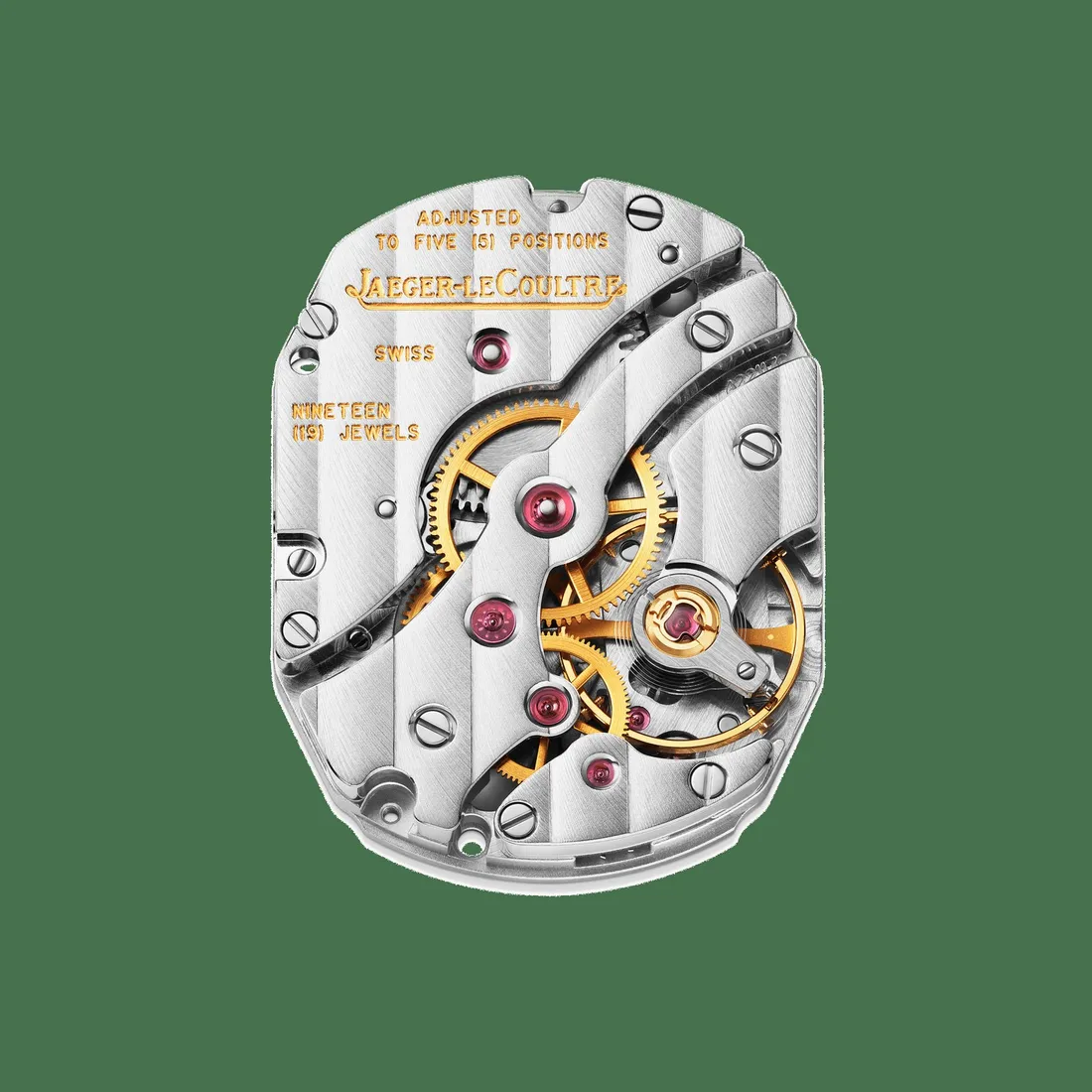
At the heart of this elegance beats the hand-wound Calibre 822, made entirely in-house by Jaeger-LeCoultre. This slender movement, with nineteen jewels and adjusted in five positions, runs at a calm 21,600 vibrations per hour (3 Hz) and, fully wound, keeps going for 42 hours. There is no automatic rotor; you must wind the watch each morning with your own hand. For most, this is no burden but a small daily ritual observed with a work of art. This whole universe fits within a white gold case of 45.6 by 27.4 millimetres.
Metiers Rares and the Secret of 800 Degrees
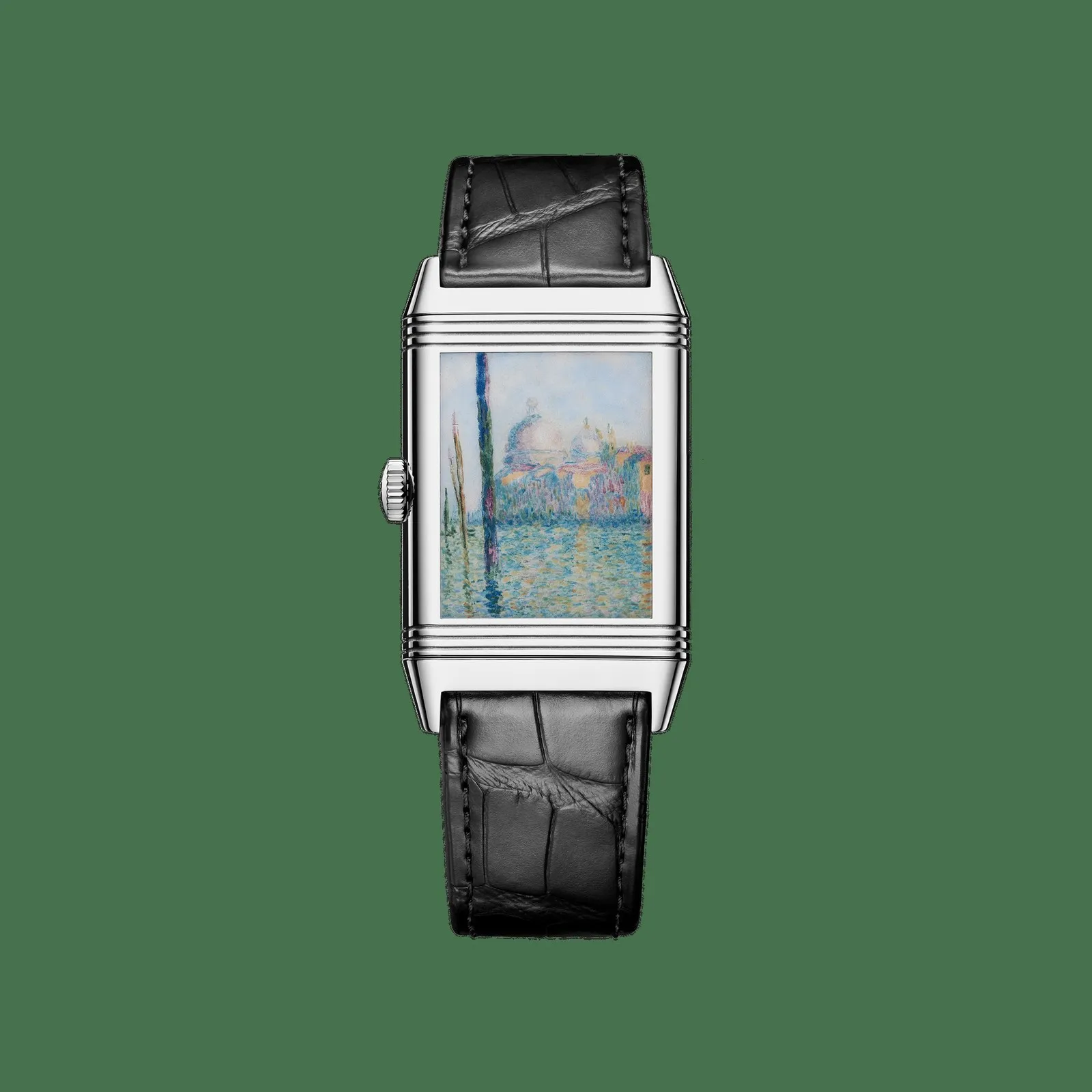
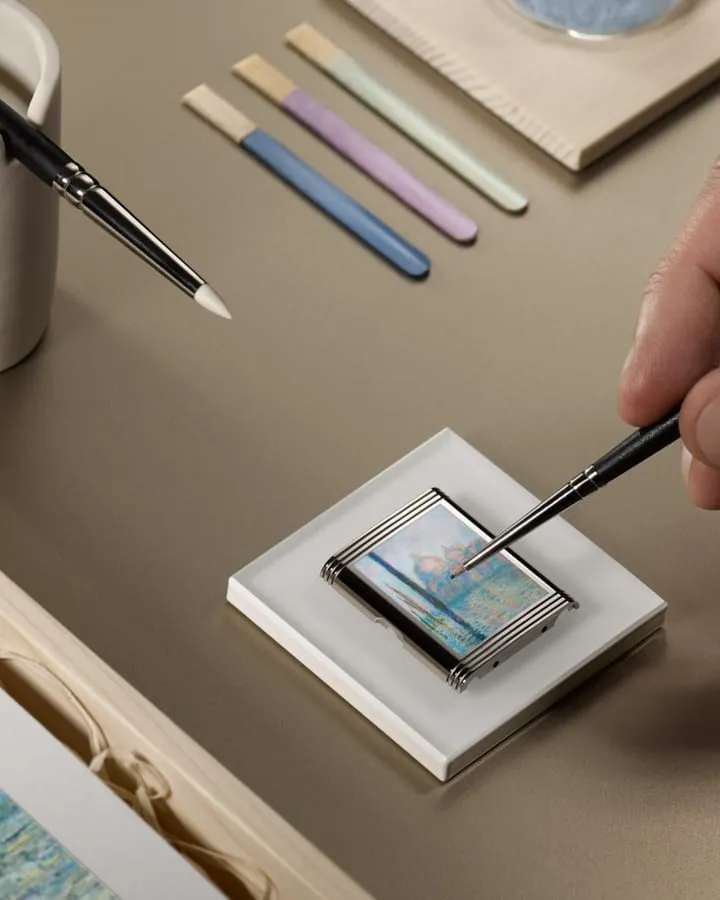
And now we turn the watch over. Here is the true miracle. Onto an area of roughly 2 square centimetres, about the size of a thumbnail, Monet's vast painting has been reproduced. But this is no ordinary painting; it is the art of Grand Feu (Great Fire) enamelling, in which every step carries great risk. In Jaeger-LeCoultre's legendary Metiers Rares, the workshop of Rare Crafts, a miniature artist bends beneath a microscope.
Some of the brushes used are finer than a human hair. The artist rebuilds Monet's colour transitions, the play of light on the water and the misty silhouette of the Salute to a precision of a tenth of a millimetre. The hardest part is this: to shrink the painting this far without losing the texture, the very soul of Monet's rapid brushstrokes. This demands a full 70 hours of uninterrupted focus. It is like fitting a painter's entire afternoon onto a single grain of wheat.
But why 800 degrees? Enamelling is done by applying powdered glass mineral pigments onto a metal plate. For these colours to become permanent, brilliant and smooth, the plate is fired in a special kiln at exactly 800 degrees Celsius after each layer of colour. This temperature is no accident; it is the critical threshold at which the glass powder melts completely and fuses with the metal base at the molecular level, while the metal itself does not lose its form.
And this is precisely where the tension lies. A few seconds too long in the kiln, a single speck of dust, or the slightest deviation in heat can crack and destroy hours of work in an instant. But if the firing succeeds, the resulting colours do not fade for centuries. They remain as vivid as on the first day, defying the wearing hand of time. Monet had captured a moment; the enameller seals that moment into eternity.

The Parallel Journey of Art and Time
The wooden piles the Venetians drove into the seabed, the marble palaces that rose upon them, the brush of Monet catching the traces those palaces left on the water, and finally the masters of Jaeger-LeCoultre who imprisoned all of this in white gold with microscopic perfection. They all stand upon the same line.
This watch is not merely an instrument for telling time. It is the most noble union of human genius, patience and stubbornness, reaching from desperate people who fled the barbarians to build a city upon the sea, to a painter chasing the light, and on to Swiss artisans working with the precision of seconds. This piece, which lets you feel the coolness of Venice's waters and the warmth of Monet's brush in the same instant, will fall to only 10 people. A monument to timelessness, worn on the wrist.