In high watchmaking, the greatest paradox of the perpetual calendar complication lies hidden within its noble and proud name: “perpetual.” Designed in theory to compute the cycles of day, month, year and leap year flawlessly across centuries with no need for intervention, these mechanisms wage war in the practical world against a relentless enemy: the exhaustion of the power reserve. If you remove the watch from your wrist and abandon it to its own silence for a few days, that noble energy in the mainspring fades, the wheels stop, and the calendar's mesmerising synchronisation collapses in an instant. Resetting the watch then becomes a veritable engineering ordeal, one that strains the subatomic geometry of dozens of delicate gears.
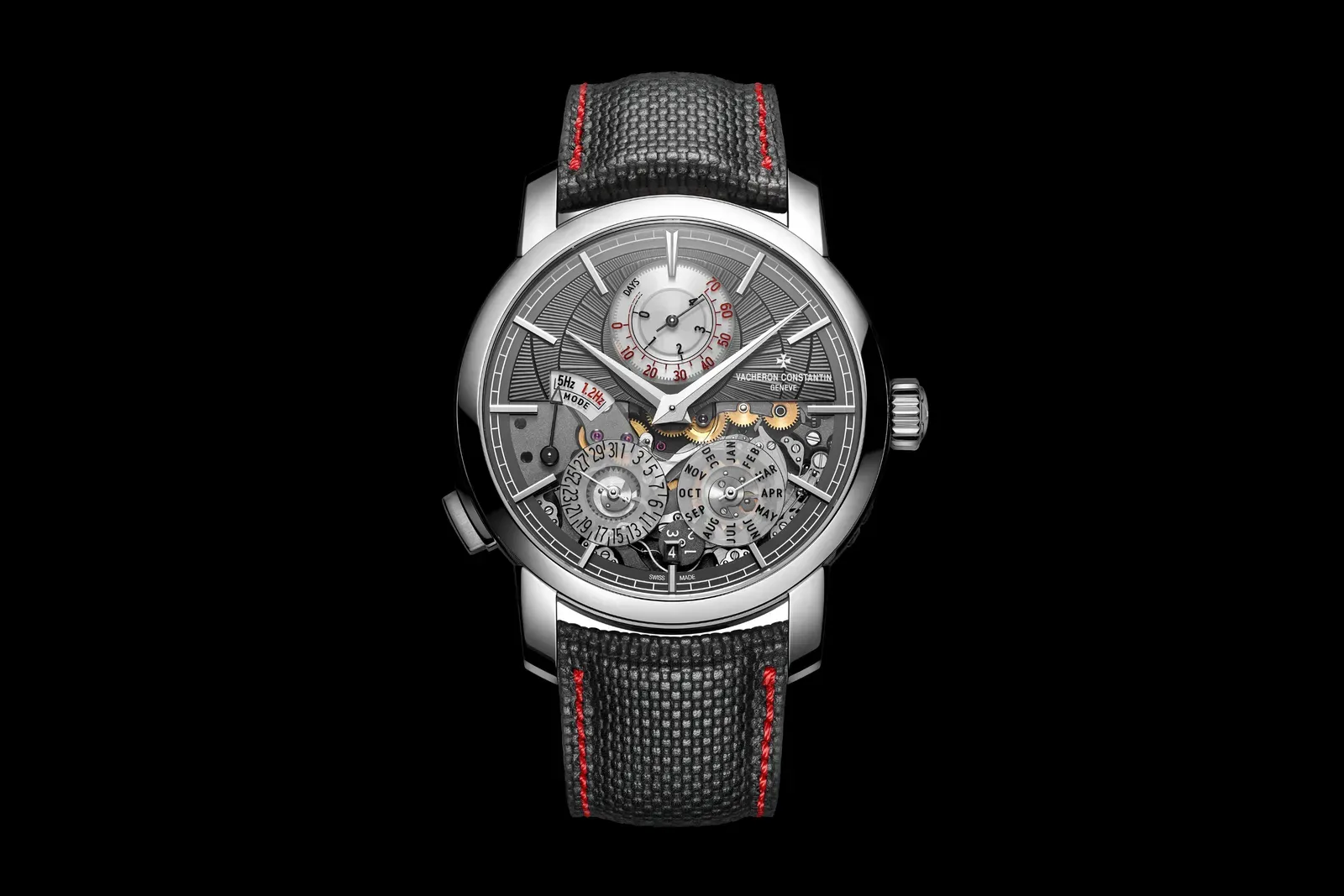
It is precisely to solve this ancient paradox at its root that Geneva's oldest and most deeply rooted house steps onto the stage, presenting a masterpiece that overturns the traditional rules entirely: the Vacheron Constantin Traditionnelle Twin Beat Perpetual Calendar.
In the world of haute horlogerie, this piece does not merely measure time; it transforms it into a virtually controllable form of energy. So that the watch might preserve its energy in a tremendous saving mode during the moments it is off your wrist, Vacheron Constantin's engineers developed one of the most extraordinary micromechanical solutions in human history. This watch is a dual-frequency quantum reactor that, while on your wrist, dances with the rapture of a whirling dervish at high frequency, yet, once placed in its box, brings its heartbeat almost to a standstill and sinks into a deep hibernation.
format_quote"This watch is a dual-frequency quantum reactor that dances with the rapture of a whirling dervish while on your wrist, yet sinks into a deep hibernation the moment it is laid in its box."
Hasan Bekmezci
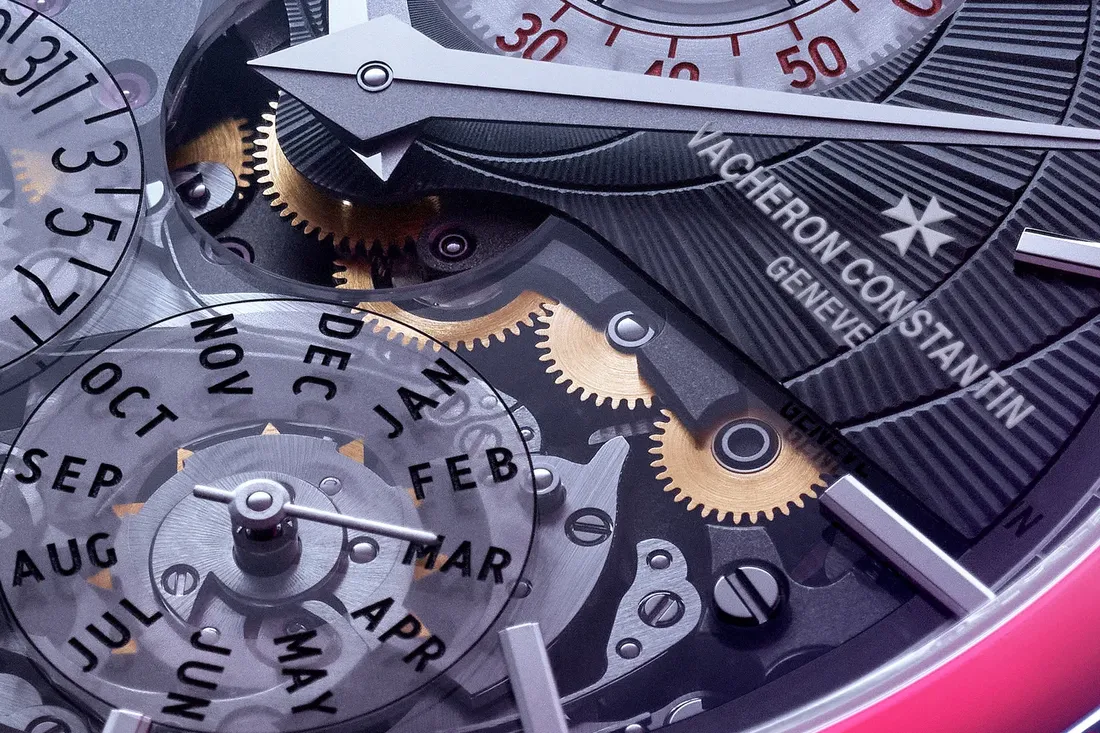
In the universe of horology, a watch that merely displays the time is a matter of linear mathematics. But the moment a “perpetual calendar” enters the equation, a mechanical chaos must be tamed. Standard calendar watches assume that every month has 31 days; when they reach February, or in months of 30 days, they call for manual intervention. A perpetual calendar, by contrast, does not merely know whether a month runs to 30 or 31 days; it flawlessly computes February's rebellious 28-day rhythm and that mysterious leap year (February 29) added to the universe's matrix of time once every four years.
To accomplish this, behind the mechanism lie a vast mechanical memory that holds a 4-year cycle in its recollection, special program wheels of intricate peaks and recesses, and delicate feeler arms that mechanically “read” the length of each month. This is why building this complication is an ordeal: on a tiny wheel, a deviation of as little as one hundredth of a millimetre can entirely paralyse the calendar mechanism's flawless chain reaction, meant to endure for centuries.
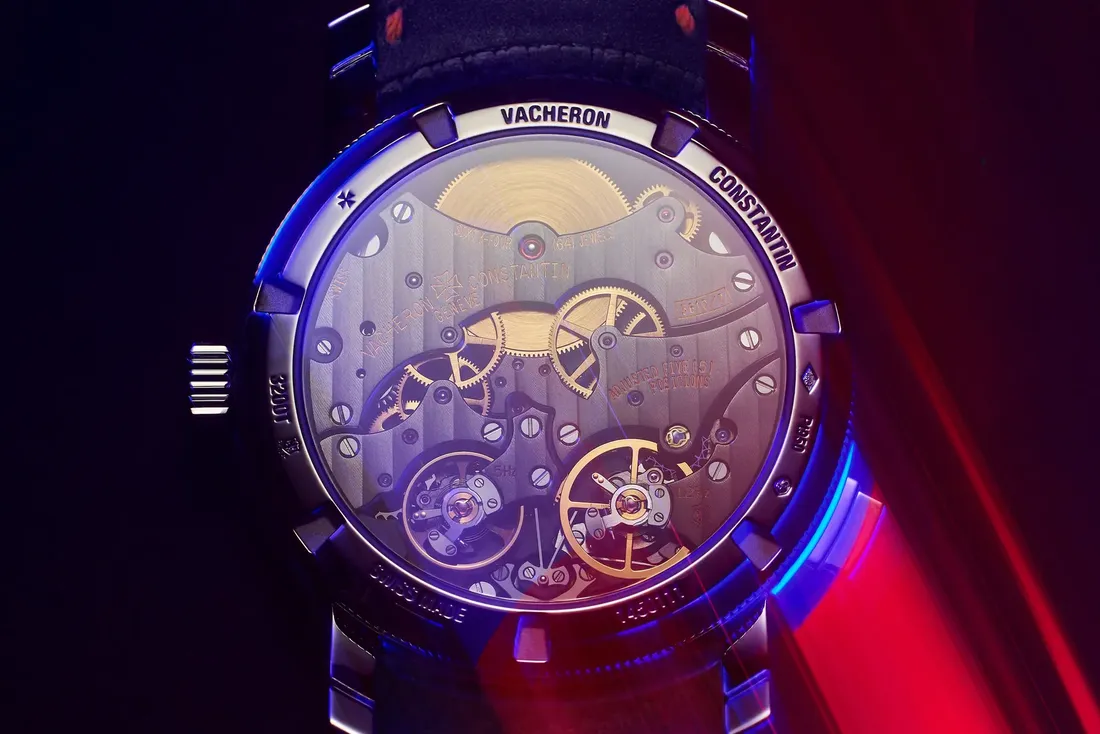
At the heart of this masterpiece lies the in-house Calibre 3610 QP, which pushes the very limits of watchmaking architecture. The mechanism rejects that single-hearted structure we are accustomed to seeing in traditional watches. Here are two distinct balance wheels, fed by the same mainspring barrel yet operating in entirely opposite characters.
A typical human heart beats at a high frequency while we rush and grow excited through the day; yet when night falls and we lie down in bed, when our body passes into that phase of rest and hibernation, it slows its rhythm and begins to beat to a deep and tranquil tempo. This is precisely the human biology that the Twin Beat transposes into the mechanical world. When you touch the pusher at the 8 o'clock position on the dial, the mechanism's entire oscillating identity changes in a single second:
Active Mode (the Running Phase): This first heart, which runs when you have not removed the watch from your wrist, oscillates with a high kinetic energy at a frequency of 5 Hz (36,000 vph). This high frequency is needed to slice time with the utmost precision and without error, against the dynamism of daily life and the sudden movements of your wrist. In this mode, the watch offers a tremendous active power reserve of a full 5 days (120 hours).
Standby Mode (the Sleeping Phase): The second heart, which comes into play when you take the watch off your wrist and lay it on a table or in its box, slows just like the heart of a sleeping person. Through an incredible feat of engineering optimisation, the frequency is lowered to 1.2 Hz (8,640 vph). The balance wheel's high oscillation grows calm, and the rate at which the barrel discharges its energy comes almost to a standstill. In this mode the watch reaches an unbelievable power reserve of a full 70 days.
format_quote"Even if you leave the watch in its box for more than two months, upon your return the day, month, year and leap-year indications will not have slipped by a single second. This is an astronautic freedom in the world of horology."
Hasan Bekmezci
The true vision that sets this watch apart from every other perpetual calendar mechanism in the world lies precisely in this 70-day (roughly 2.5-month) power reserve. Take a traditional perpetual calendar watch off your wrist and leave it to its own devices for three days, and it will stop. The instant it stops, the calendar synchronisation is severed. Resetting it is a veritable micro-surgical torment, in which you are forced to advance the calendar discs one by one, at the risk of breaking those delicate gears.
But with the Traditionnelle Twin Beat, this torment becomes a thing of the past. Even if you leave the watch in its box for more than two months, its slow-beating heart allows the mechanism to keep running in its sleep. When you take the watch in hand weeks later, the day, month, year and leap-year indications will not have slipped by a single second; the setting will never have gone astray. All you need do is press the pusher to return the heart to its 5 Hz mode and fasten the watch to your wrist. This is an astronautic freedom in the world of horology.
The true madness, and the craftsmanship's great difficulty, in producing this mechanism lies hidden in its unbelievable dimensions. Vacheron Constantin's master craftsmen have fitted a full 480 parts, two distinct balance wheels, differential gears and that vast calendar memory into an expanse just 6 mm thick. Each of the 480 parts must work, like the members of an orchestra, in absolute harmony and with zero tolerance. A friction error of as little as one thousandth of a millimetre could lay waste to all the torque calculations of that 70-day sleep mode.
Despite the tremendous density of parts within this confined space, the Calibre 3610 QP holds the title of the Poinçon de Genève (Geneva Seal), which meets the strictest standards of high watchmaking. Those hand-finished Côtes de Genève waves upon the bridges combine with the modern, light-absorbing anthracite-toned NAC coating to create a deep contrast.
The anglage (chamfering) along the edge of each plate, whose perfection dazzles the eye on inspection, has been polished by human hand using entirely traditional wooden tools and pastes. And at that low frequency of 1.2 Hz, the hand regulation of the delicate hairsprings that keep the watch from stopping at the slightest jolt from without is an ancient secret held in the fingertips of only a handful of masters the world over.
format_quote"With this masterpiece, Vacheron Constantin did not freeze time; rather, by laying it down for its own cosmic hibernation, it kept it safe among delicate gears until that future moment of awakening."
Hasan Bekmezci
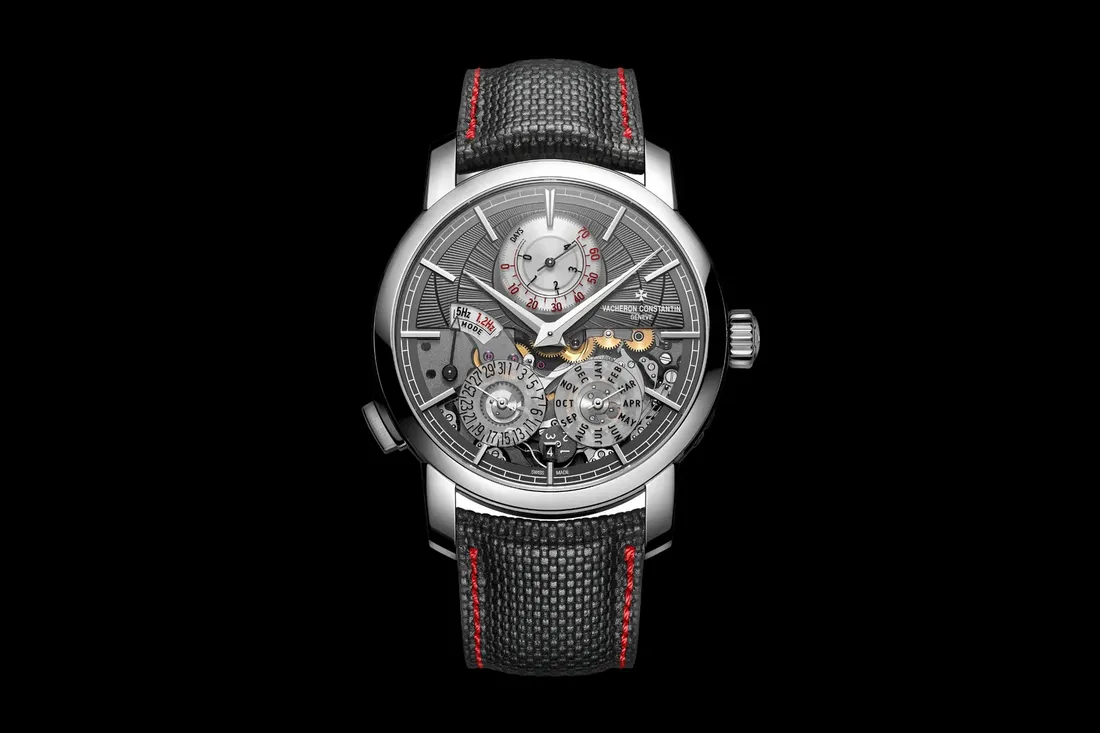
Across the surface of the dial, one sees clearly how Vacheron Constantin's deep-rooted heritage is blended with its futuristic vision. One half of the dial presents a dark-grey ground adorned with traditional, hand-worked guilloché patterns, while the other half, thanks to the transparency of the sapphire crystal, lets you observe directly the noble discs, wheels and calendar-jumping levers of the perpetual calendar mechanism.
The power-reserve indicator at the 12 o'clock position displays the dual-layered time scale of the Active and Standby modes, while the symmetrical subdials at 9 and 3 o'clock lay bare, with flawless precision, the cycle of day, month and leap year.
Far beyond luxury and status, the Traditionnelle Twin Beat Perpetual Calendar is one of the most distinguished interventions ever made into humanity's perception of space-time and the universe's rhythm of micro-vibration. With this masterpiece, Vacheron Constantin did not freeze time; rather, by laying it down for its own cosmic hibernation, it kept it safe among delicate gears until that future moment of awakening.