The Mona Lisa of the North: An Alchemist of Light in Delft
It is around 1665. In the Dutch city of Delft, a studio tries to keep out the merciless cold, sombre yet washed in the pale Northern light that filters through its windows. Inside sits a tragic genius who will struggle with debt all his life, pledge his paintings against what he owes the baker and the grocer, and finally die young leaving almost no possessions behind: Johannes Vermeer.
Unlike the popular painters of his day, Vermeer despises depicting lavish court life, great military victories or the haughty portraits of nobles. His soul works like an alchemist, chasing ordinary moments, the silence hidden in the quiet corners of homes, and above all the sacred light that seeps into those rooms. That day in his studio, a moment that will give birth to one of history's greatest mysteries takes place. A young girl sits before him; who she was is still an endless debate among art historians: perhaps a maid of the house, perhaps his most beloved daughter, perhaps an impossible love that set the painter's soul alight but whose name he could never speak, hidden behind the boundaries of society.
The girl turns slightly over her shoulder to look at the viewer, that is, straight into Vermeer's eyes. Her lips are parted by a millimetre, as if she is about to whisper a secret, to say a single word that the painter's brushstroke will leave suspended in the air forever. Vermeer touches to the girl's turban the mesmerising ultramarine blue, in his day more precious than gold, obtained by grinding lapis lazuli from the depths of Afghanistan. Then he places that famous, exotic and large pearl earring on her ear. A single drop of white light falling on the pearl's smooth surface tears through all the darkness of the studio on its own. Without realising it in that instant, Vermeer gives the world one of the most captivating and most sorrowful portraits in human history, Girl with a Pearl Earring. Today this immortal masterpiece continues to gaze at the world from the Mauritshuis in The Hague, just as it gazed at Vermeer 350 years ago.

A Portrait Written in Fire: Anita Porchet and Grand Feu Enamel
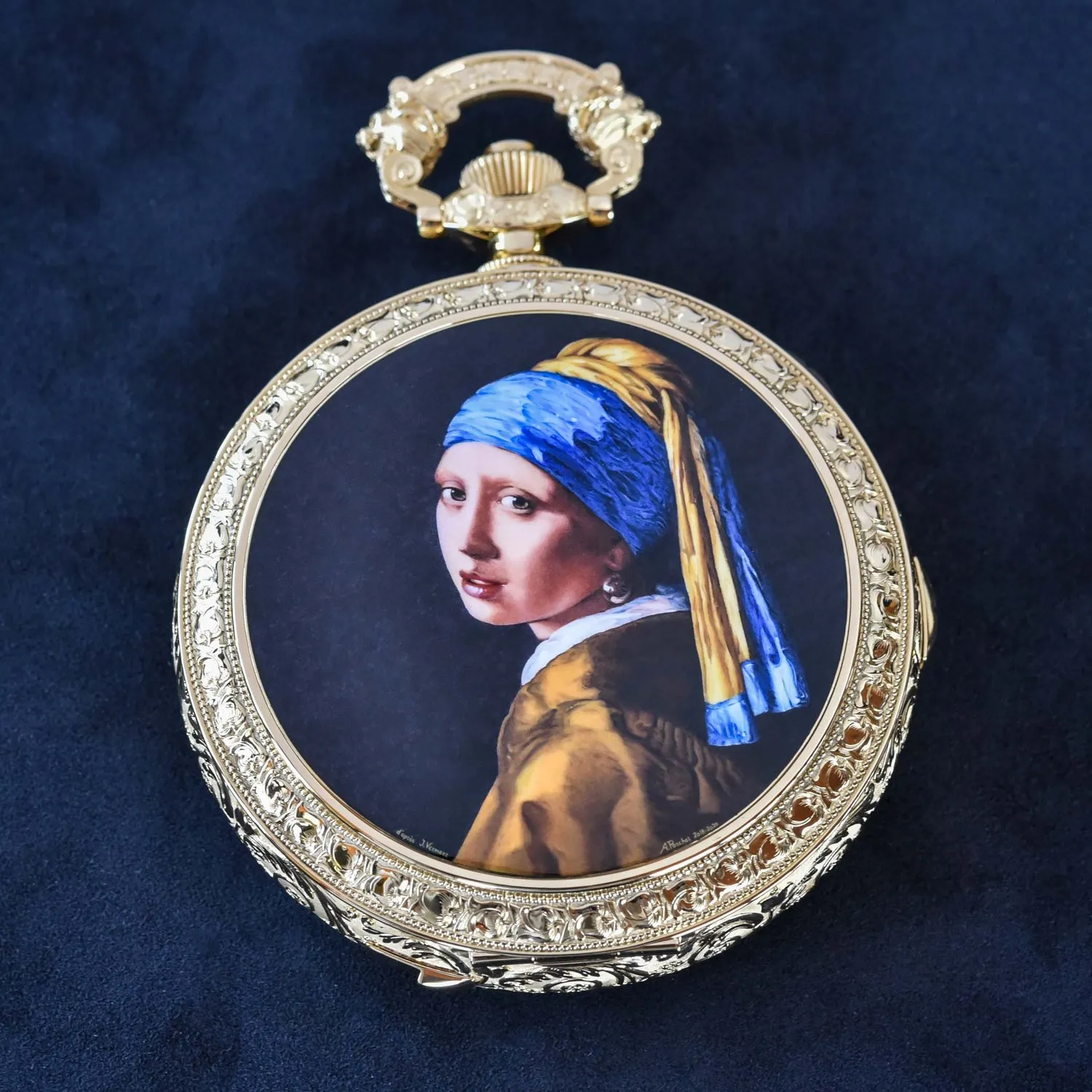
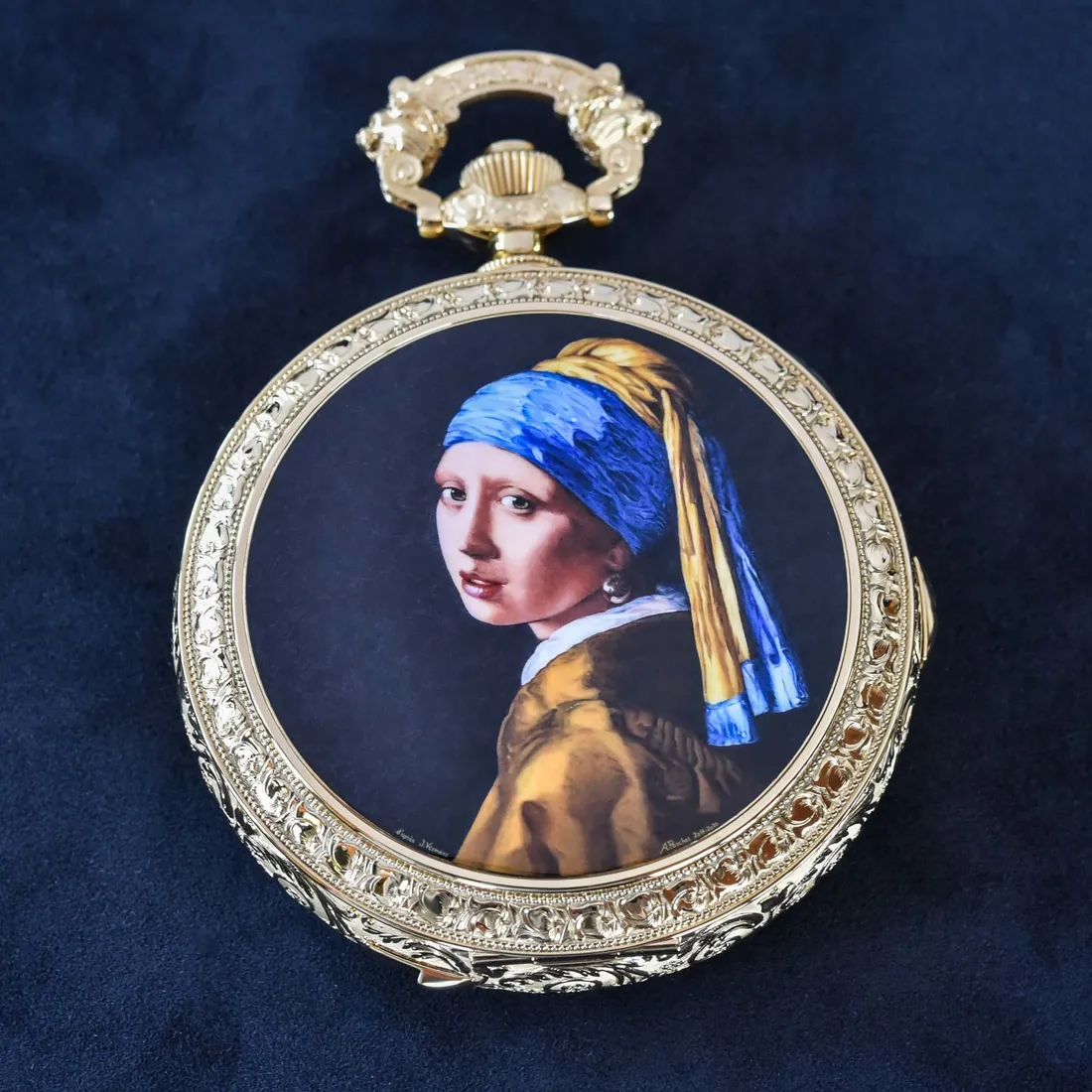
The moment Vermeer captured in that dark studio, kneaded with love and light, arrives centuries later as an immense challenge on the desk of Anita Porchet, the greatest living master of miniature enamel in Switzerland. The task is to render the depth, the innocence and the play of light that Vermeer created on a vast canvas, in a millimetric and flawless way, onto the Officer-type cover of a pocket watch small enough to fit in the palm.
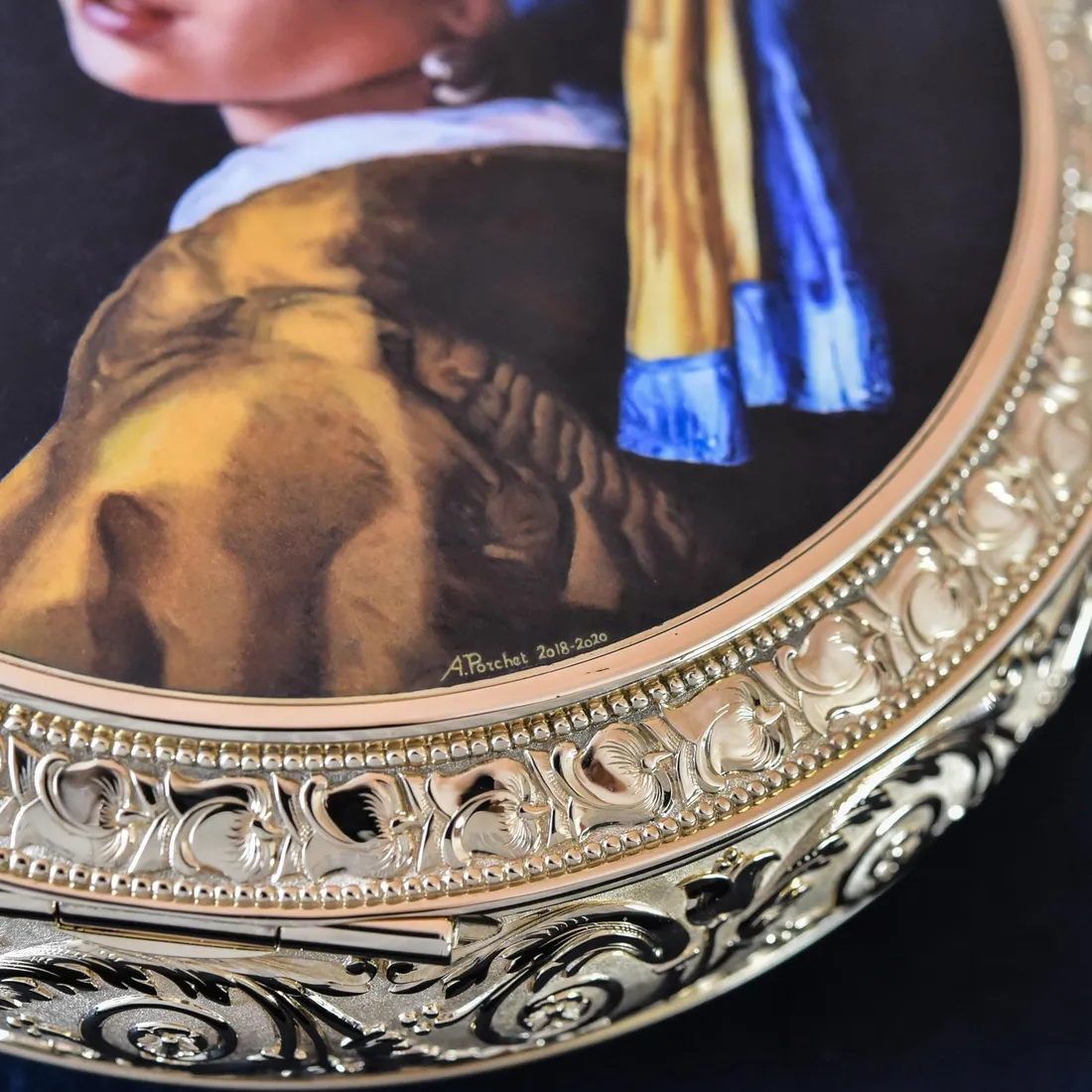
When Porchet sits at her microscope, she holds only a single hair-fine brush. The chosen method is Grand Feu, the Great Fire enamel, the most merciless technique in high watchmaking; it never forgives a mistake, a single tremor means the loss of all the work. After working microscopic powders of colour onto the cover with needle-point precision, the artist places the cover into a kiln glowing above 800 degrees. With each layer that comes out of the fire the chemistry of the colours can shift, the metal can crack, and months of labour can turn to ash in a second. To capture Vermeer's unique blue and the iconic reflection of light on the pearl, this firing is repeated more than twenty times; protected by a layer of Geneva Fondant flux, the miniature is the fruit of roughly seven months of patient work spread across 2018 to 2020. When the cover leaves the kiln for the last time, Vermeer's sorrowful mood of 1665 and the girl's mysterious gaze come alive once more beneath a layer of glass that will never fade.


The Holy Grail of Mechanics: Calibre 3761
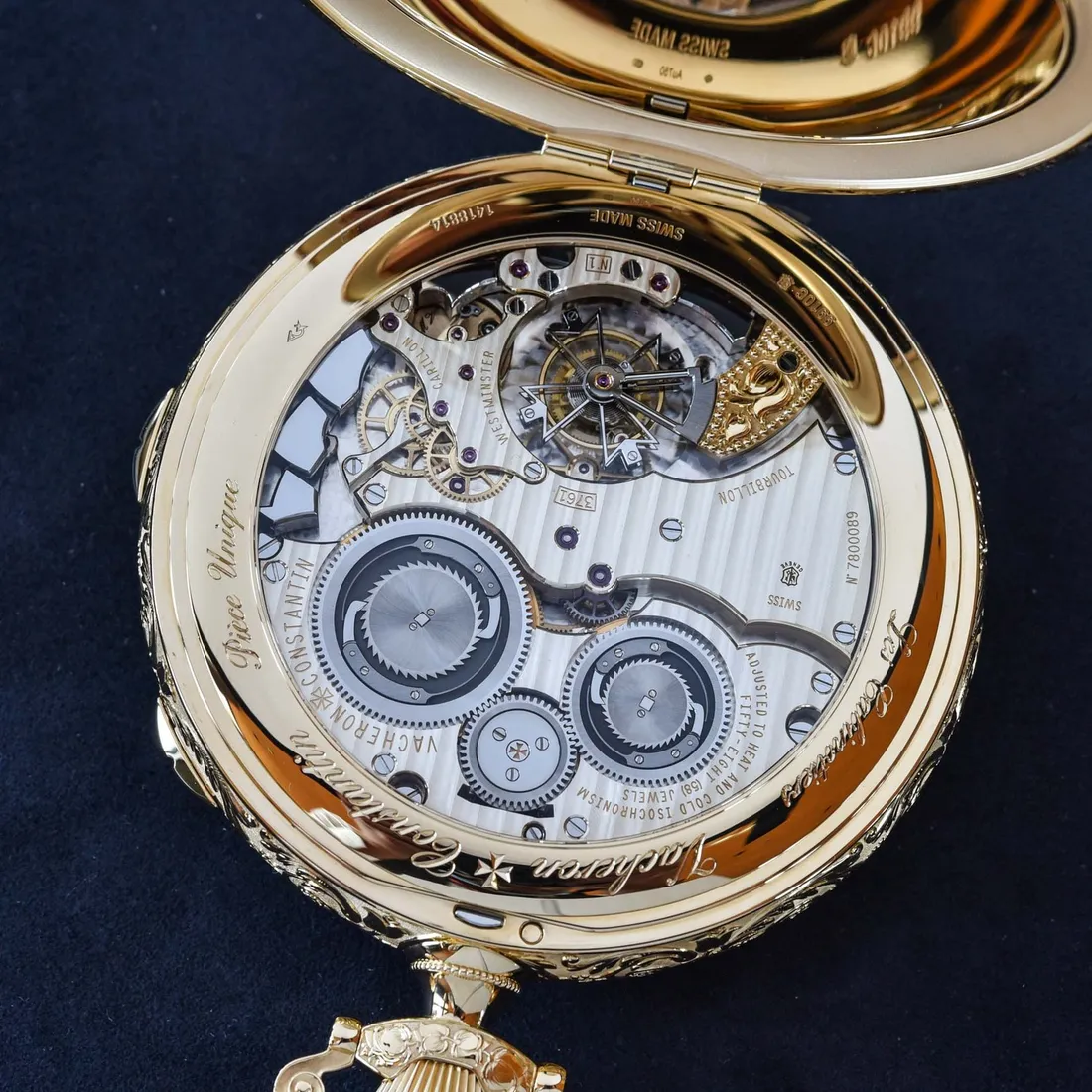
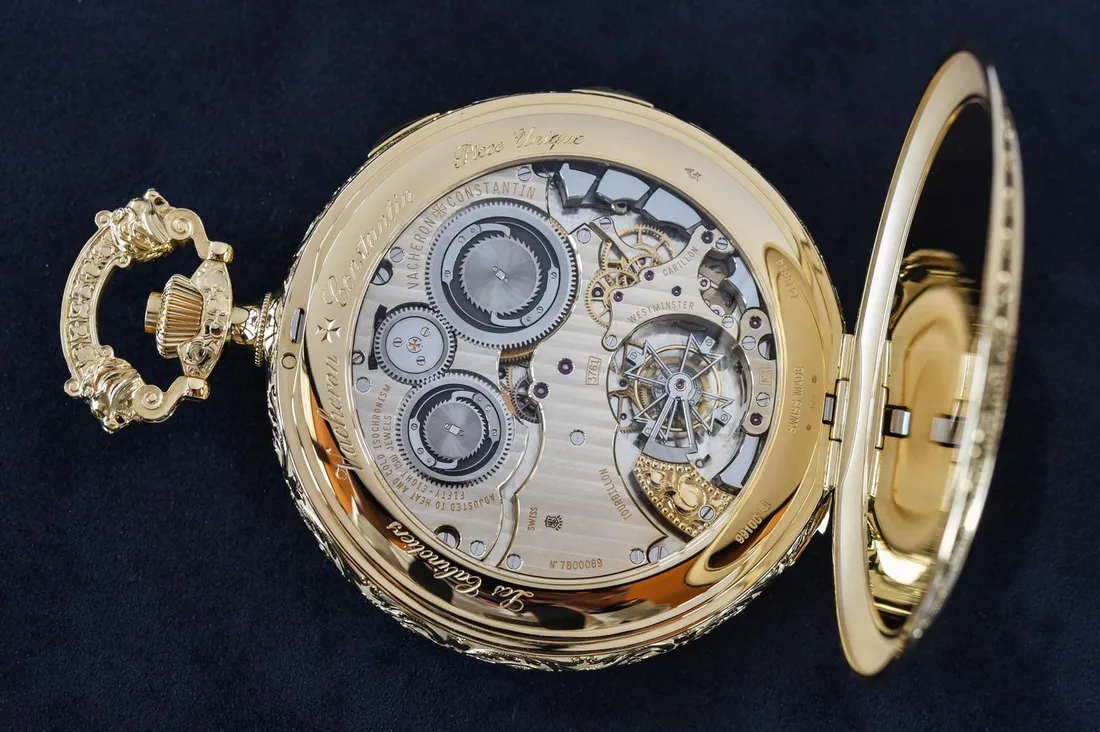
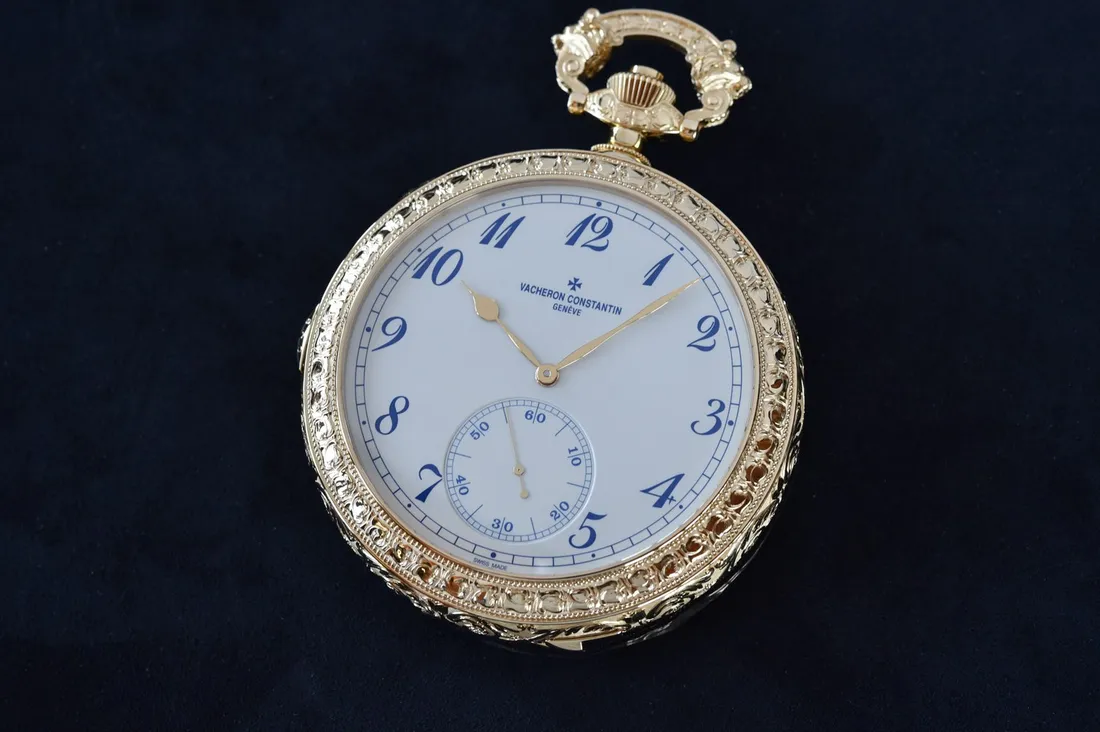
This visual miracle turns into a true masterpiece when it is united with Calibre 3761, produced in the workshops of Vacheron Constantin and considered one of the holy grails of mechanical watchmaking. Named Les Cabinotiers Westminster Sonnerie, Tribute to Johannes Vermeer, and produced as a single piece in the world, this 98 mm 18-carat yellow gold pocket watch is recorded under the reference 9910C/000J-B413.
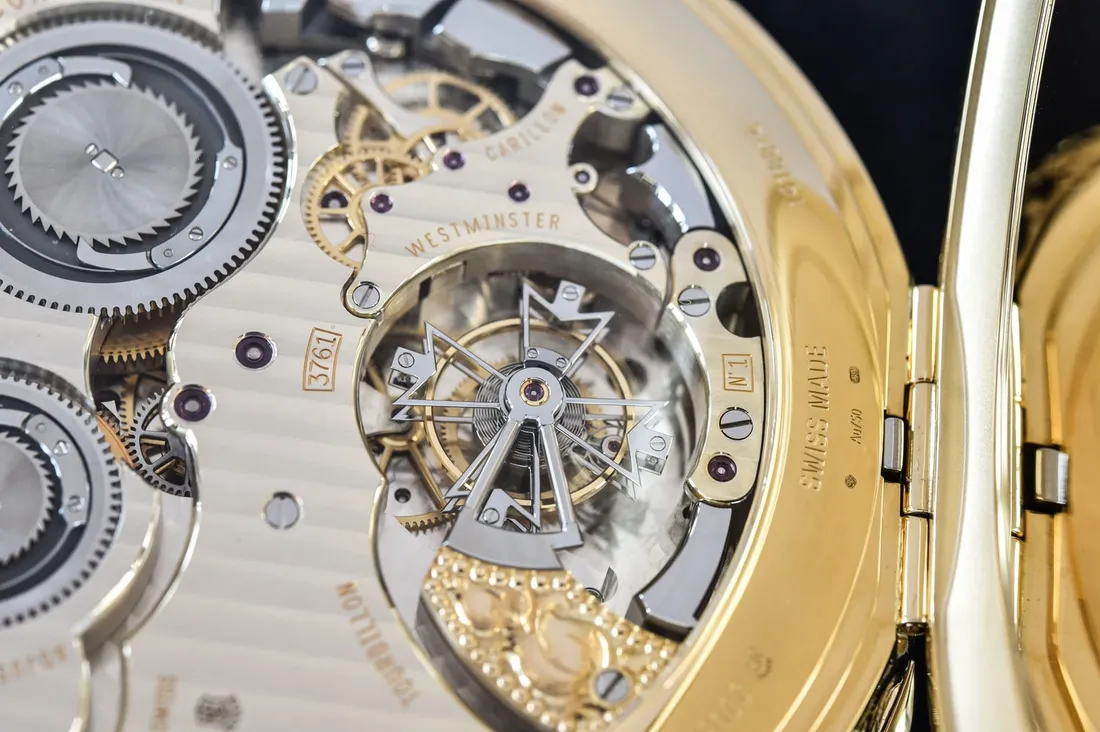
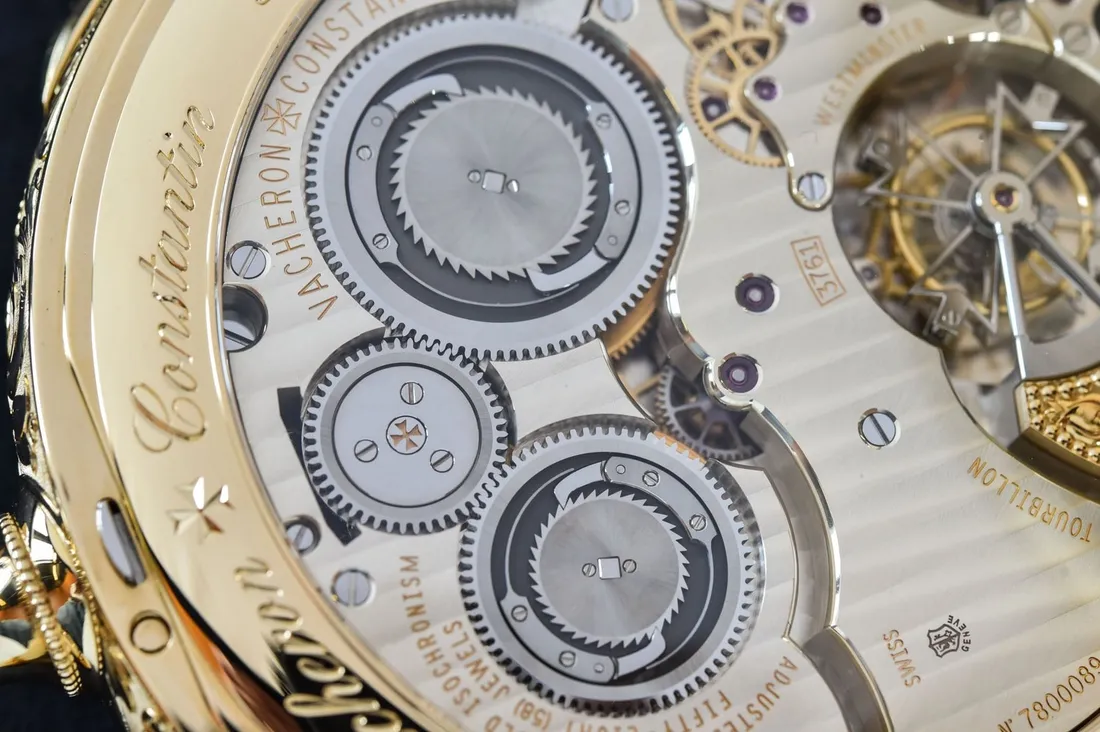
Inside, exactly 806 microscopic parts and 58 jewels work together in a harmony that pushes the limits of the human mind. The hand-wound movement beats at 18,000 vibrations per hour, that is 2.5 Hz; the 71 mm calibre reaches a thickness of 17.05 mm, an engineering feat in itself. The case is 32.60 mm thick and its back is a hinged Officer type that can stay half-open thanks to a safety catch. At the heart of the watch, a great tourbillon completing a full turn every minute rotates ceaselessly, cancelling the distorting effect of gravity on timekeeping. This whole mechanical symphony is crowned with the Geneva Seal, the strictest hallmark of quality in watchmaking.
Big Ben in Your Pocket: The Westminster Sonnerie
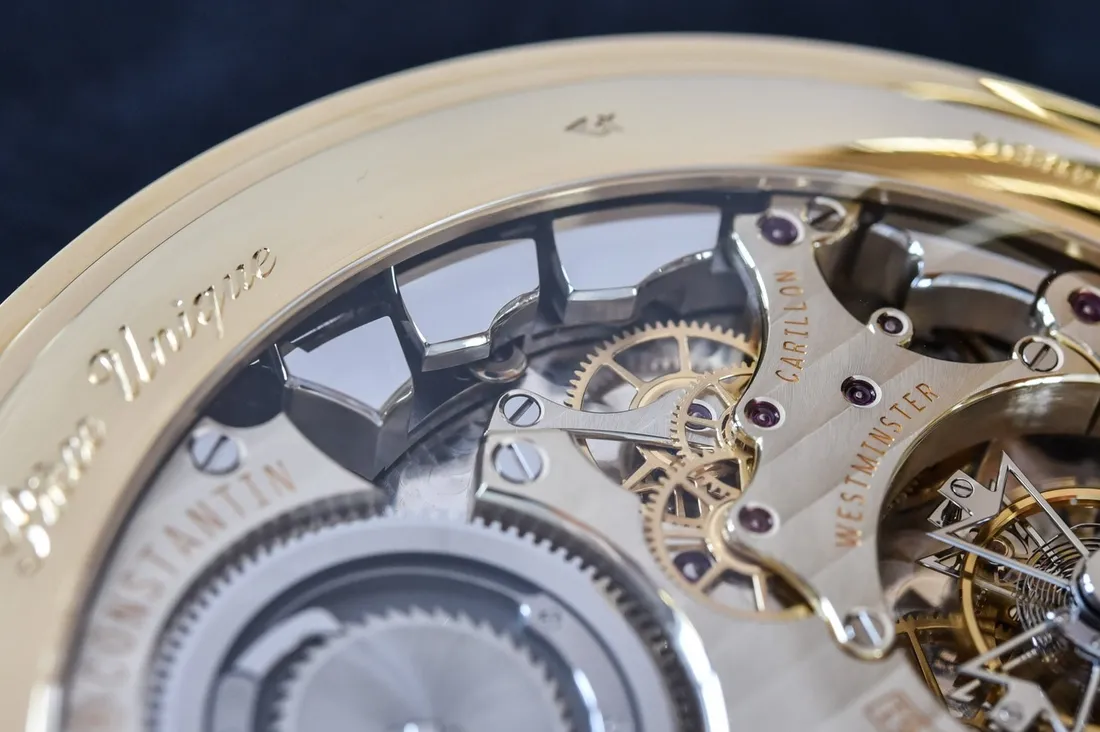
The true magic, though, is hidden in the hammers on the sides of the case. This watch carries the Westminster Sonnerie complication. Its tiny hammers and five specially tuned steel gongs play the noble melody of London's famous Big Ben tower, the Westminster Carillon, in your pocket with the flawless rhythm of an orchestra conductor.
In Grande Sonnerie mode the watch murmurs the melody and the current hour to itself every quarter of an hour, without your touching anything. In Petite Sonnerie mode it strikes only the full hours, without repeating the hour at each quarter. A minute repeater, engaged by pulling the slide on the case, reads out the hours in a low tone, the quarters in a double tone and the minutes in a high tone. There is even a night-silence mode that automatically mutes the striking between 11 pm and 9 am so as not to disturb the peace of the night. For this magnificent acoustic display the watch draws on an independent 16-hour striking reserve, while offering an 80-hour power reserve for ordinary timekeeping.
An Eggshell Dial and Lion Heads
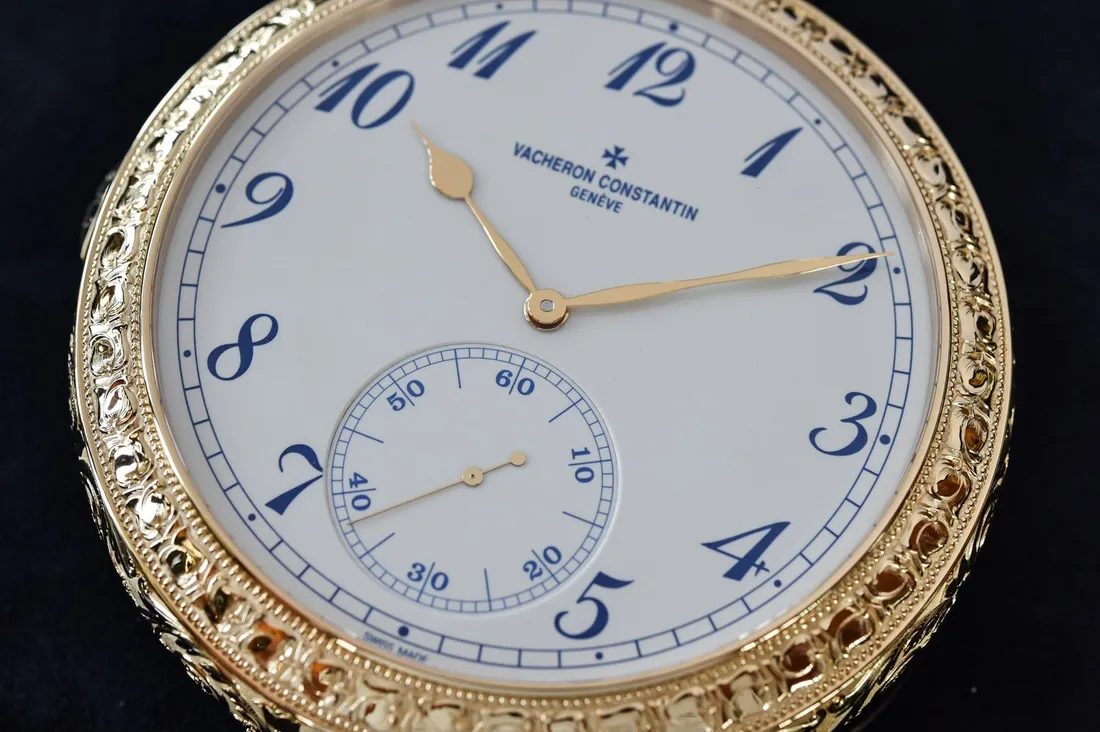
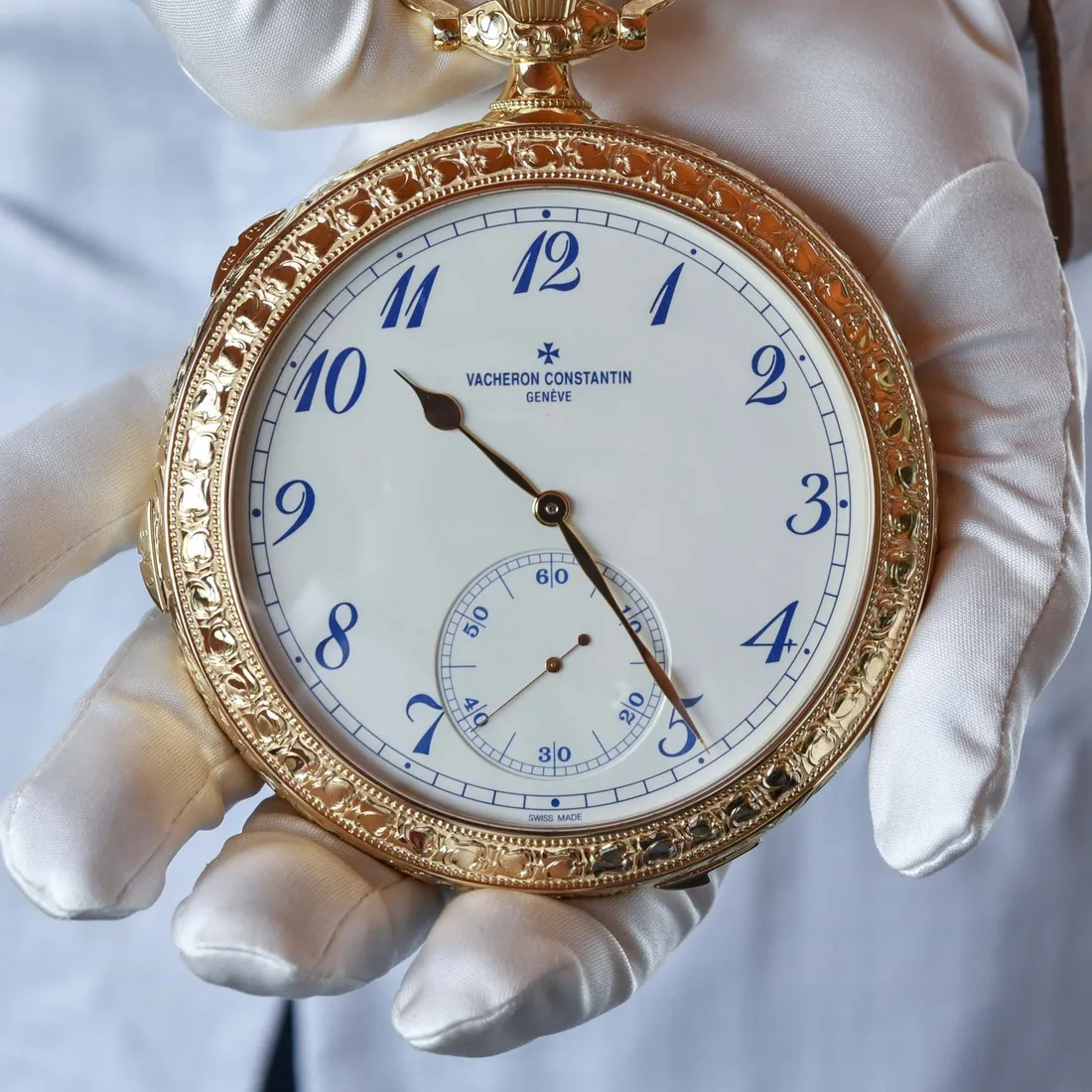
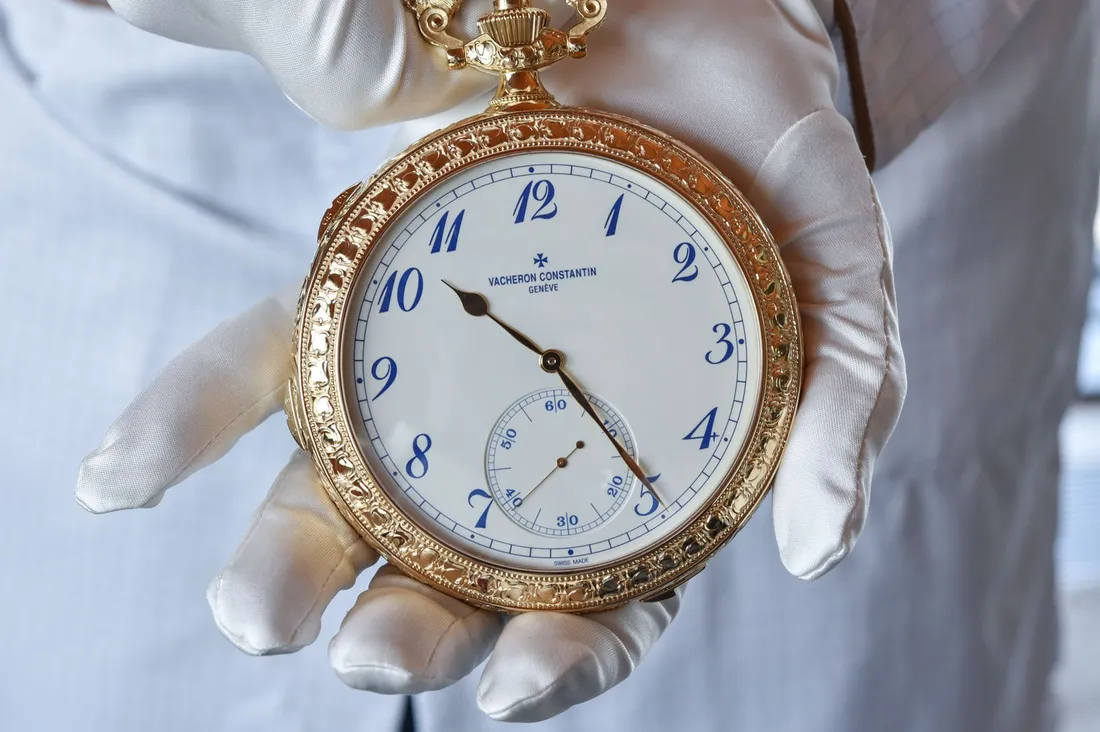
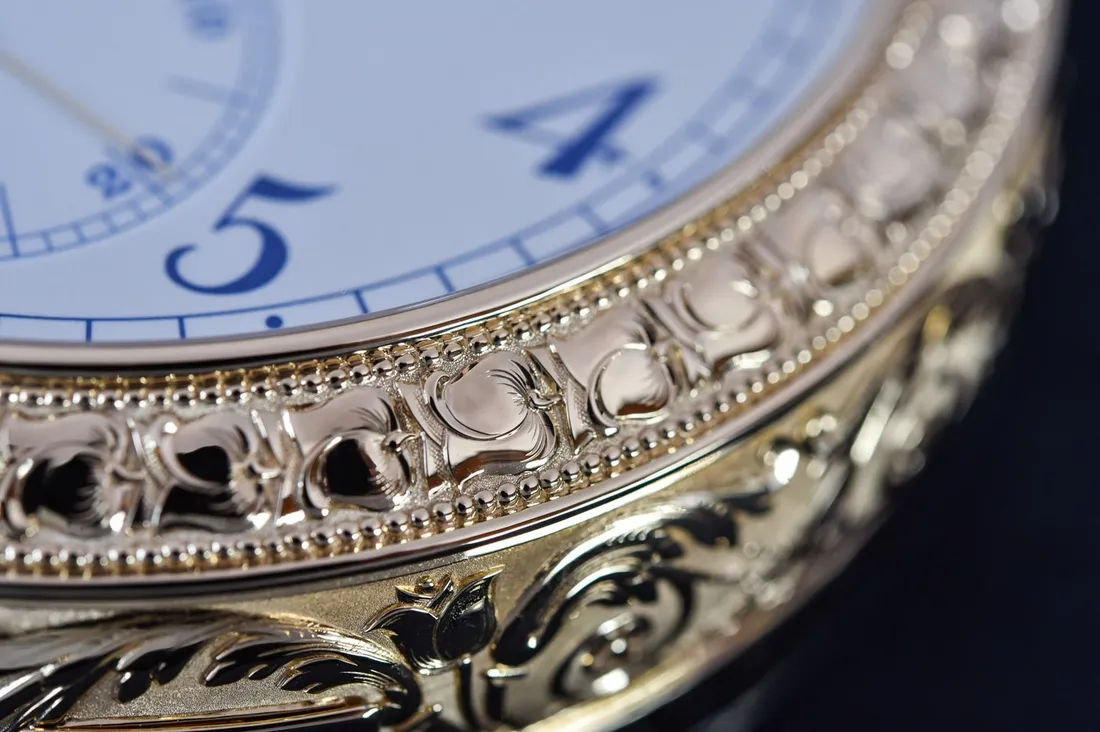
All this acoustic genius is wrapped in a shell worked with the same mastery. A magnificent eggshell-coloured Grand Feu enamel dial carries the elegance of simplicity, with blue Arabic numerals and golden hands.
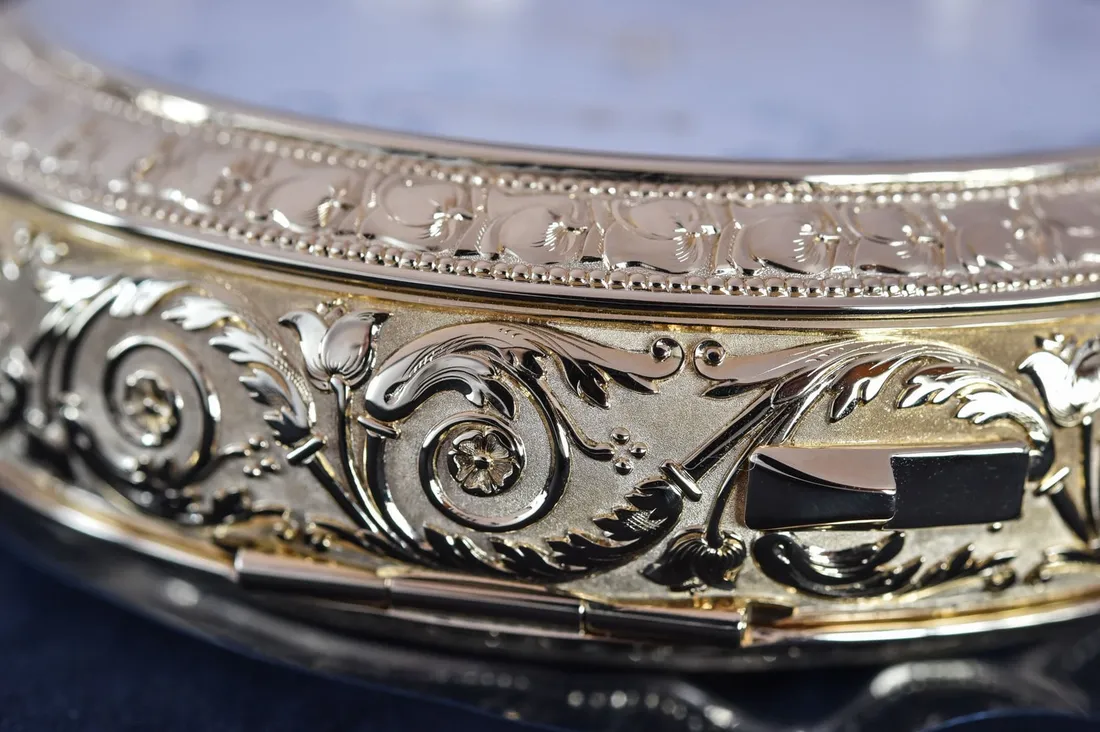
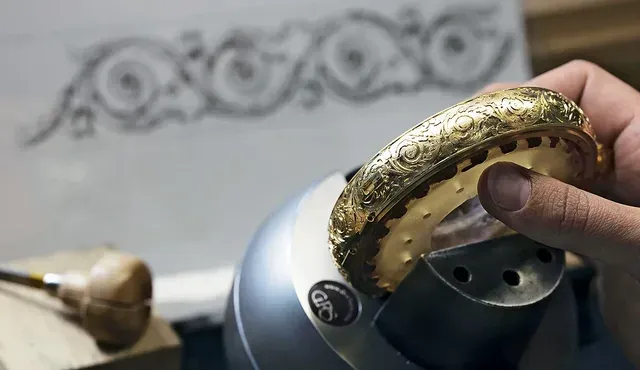
The case, meanwhile, is a monument to handwork to which the engraver Emmanuelle Maridat devoted about five months: acanthus leaves, scrolls, flowers with hearts of pearl beads and a double pearl border, all hand-engraved one by one. On the bow sit two sculpted lion heads, emblems of the nobility the watch carries.
A Meeting of Three Centuries
In the end, the object before us is not merely a luxurious device that measures time; it is the magnificent union across three different centuries of humanity's endless passion for art, for love and for perfection. When you take this watch from your pocket you see Vermeer's impossible love in Delft on the cover; when you open the cover you touch the flawless technique Anita Porchet wrote with fire; and when you raise the watch to your ear you hear the noble voice of the Big Ben chimes brought to life by 806 parts.
This watch whispers to us one thing: time is not merely a number flowing past; in the right hands it becomes an immortal work of art with a soul.