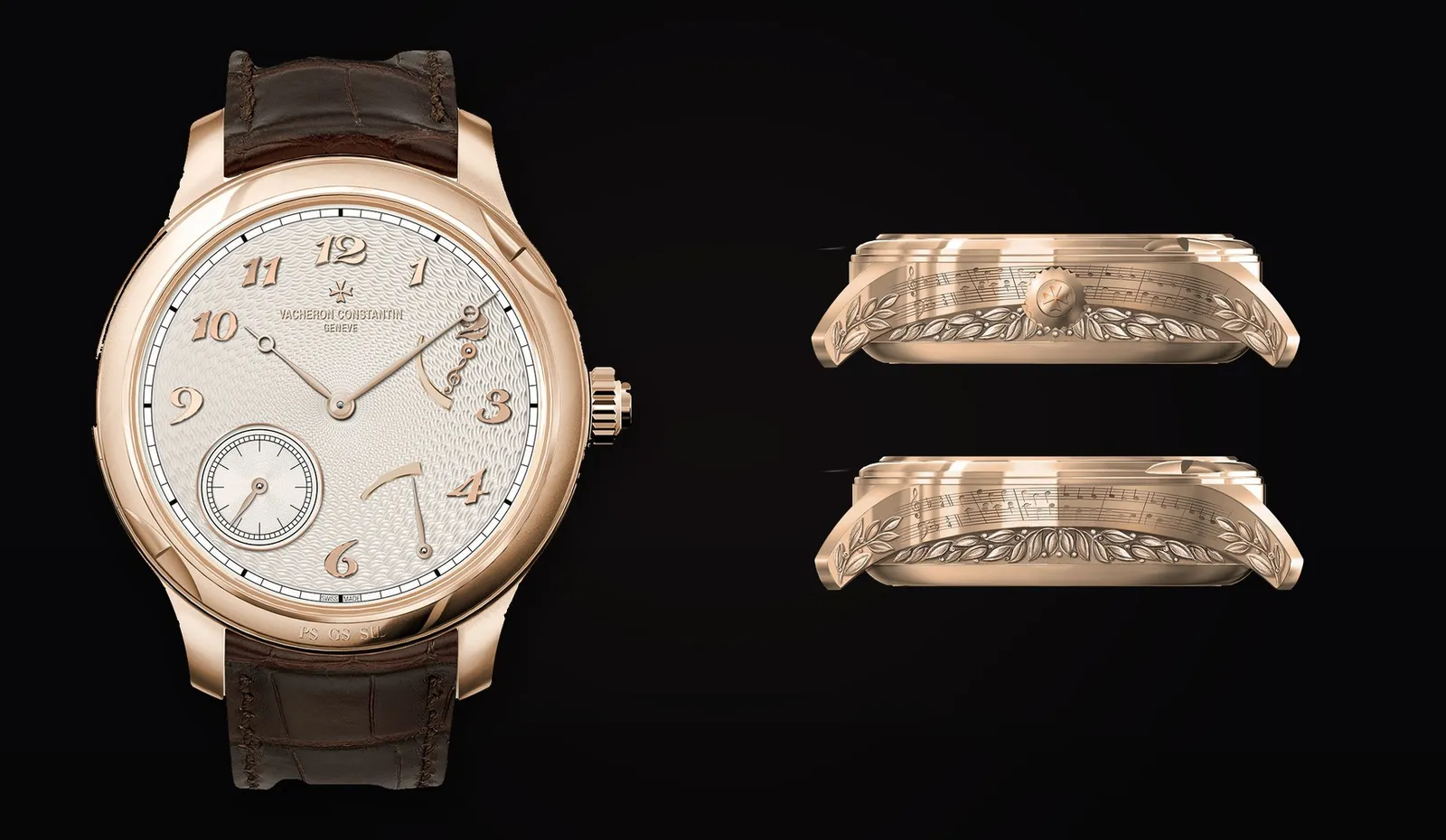
A Deaf Genius Returns to Nature: The Birth of the Sixth Symphony
The year is 1808. Near Vienna, in the woods of Heiligenstadt, a man is walking. His hair is dishevelled, his clothes worn, his steps irregular, yet there is a wild passion in his eyes. This man is Ludwig van Beethoven.
In those years Beethoven is living through hell. The greatest catastrophe that can befall a musician has knocked at his door: his ears are almost completely deaf. He no longer hears people speak, and the notes of his piano sink a little further into darkness with each passing day. In those dark days, when he has stepped back from the edge of suicide, only one refuge keeps him alive: nature itself.
Every day he escapes to the forest. Though his ears are closed to man-made sounds, his mind hears the rhythm of nature flawlessly. He listens with his heart to the song of the birds, the murmur of streams, the rumble of an approaching storm. And one day he sits at his desk and pours out those immortal notes: the Sixth Symphony, the Pastoral.
Presenting the work, Beethoven inscribes upon it: more an expression of feeling than painting. He rebuilds the sounds of a world he can no longer hear through the vast musical genius within him. The most joyful, most serene, most nature-bound symphony in human history is in fact born from the silent world of a completely deaf man.

A Legacy Two Centuries Later: Sound Turned to Metal
Now we are transported two hundred years forward, to the Vallee de Joux in Switzerland, to the high watchmaking workshop of Vacheron Constantin. The immense world of nature that Beethoven built in the woods of Heiligenstadt arrives, two centuries on, as a challenge before a master watchmaker. The task: to bring the melody a deaf genius drew out of silence back to life, in the language of mechanical wheels, gears and steel.
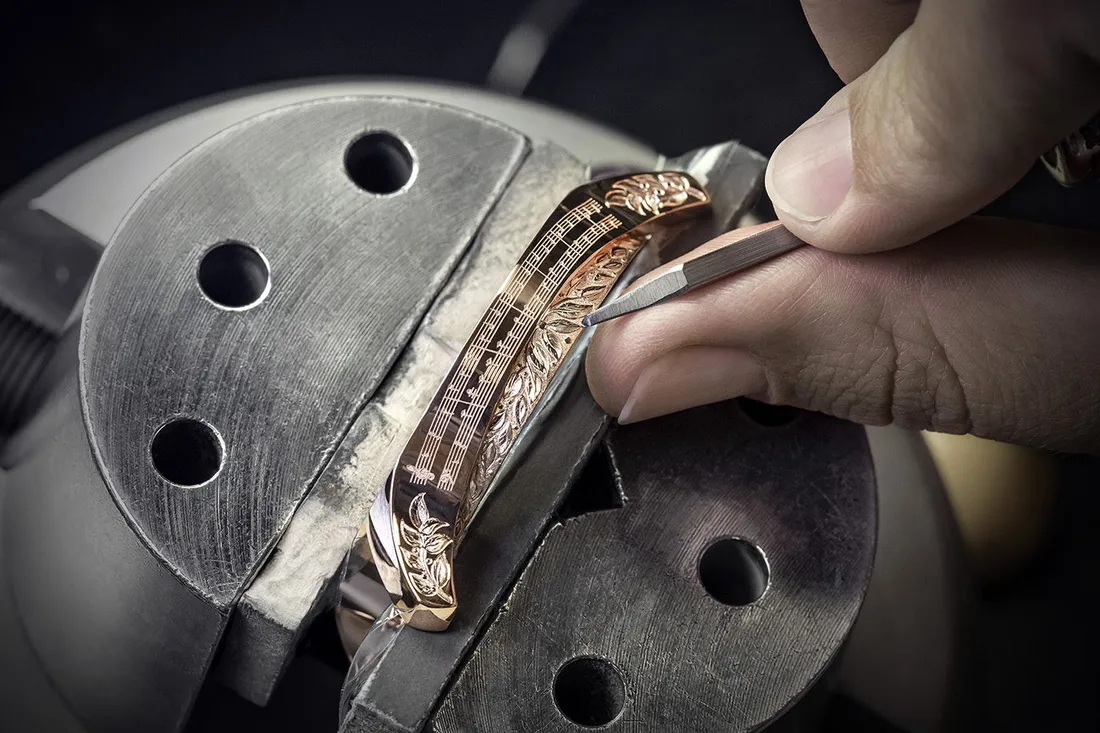
The master sits at his bench under a single light. Before him are a large microscope, micro-files and brass tweezers. What he holds in his hand is a thread of specially alloyed steel, barely thicker than a strand of hair: the gong.
The master holds his breath. The slightest excitement means the slightest excess pressure on that thread. He draws the file across the steel once; an invisible cloud of metal dust rises into the air. He fits the gong to the mechanism and strikes it with a tiny hammer. The precise frequency meter in the laboratory analyses it: the sound does not yet carry the clear country air Beethoven longed for, it is either too muffled or too shrill. The master removes the gong and files it again, by a thousandth of a millimetre, under the microscope. This ritual lasts for weeks. Because when that tiny hammer strikes the gong, it will not merely be steel meeting steel; the soul of that deaf genius who walked the woods in 1808 will be heard once more, on the wrist.
A Mechanical Conductor: The Summit of Complications
What makes this watch so extraordinary is the mechanical genius that conducts the melody within. Before us, three of the most demanding chiming complications in all of watchmaking sit together in a single movement: the grande sonnerie, the petite sonnerie and the minute repeater.
The grande sonnerie, the great strike, chimes the passing hour and then the quarters on its own, every quarter of an hour, without your touching anything. In petite sonnerie mode the watch strikes only the full hours, without repeating the hour at each quarter. The minute repeater engages when you pull the slide on the side of the case: the hammers read out the hours in a low tone, the quarters in a double tone, and the minutes in a high tone. Across a full day the watch strikes of its own accord 96 times.
So what is the secret of that rhythm? If the hammers strike too fast, Beethoven's symphony turns to noise; too slow, and the melody breaks apart. That is why the masters place a tiny propeller inside the movement, the silent centrifugal governor. Turning as it beats the air, it brakes the striking speed of the hammers with millisecond precision. As a result you hear no ticking of gears, only the clear, smooth melody flowing in perfect time. A specially designed surprise piece, moreover, entirely eliminates the unwanted phantom quarter that can otherwise sound at the quarter transitions.
A Masterpiece in Numbers: Calibre 1860
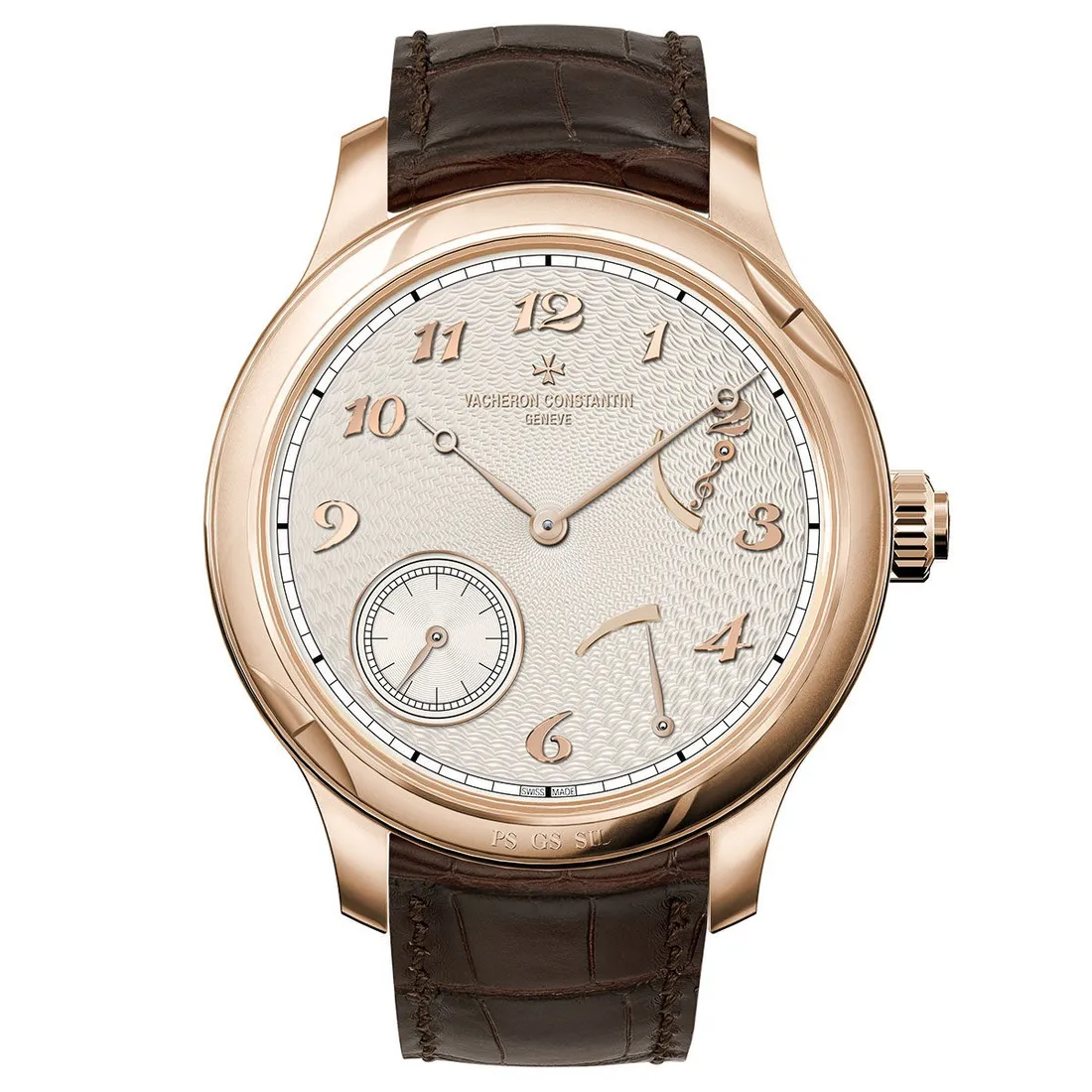
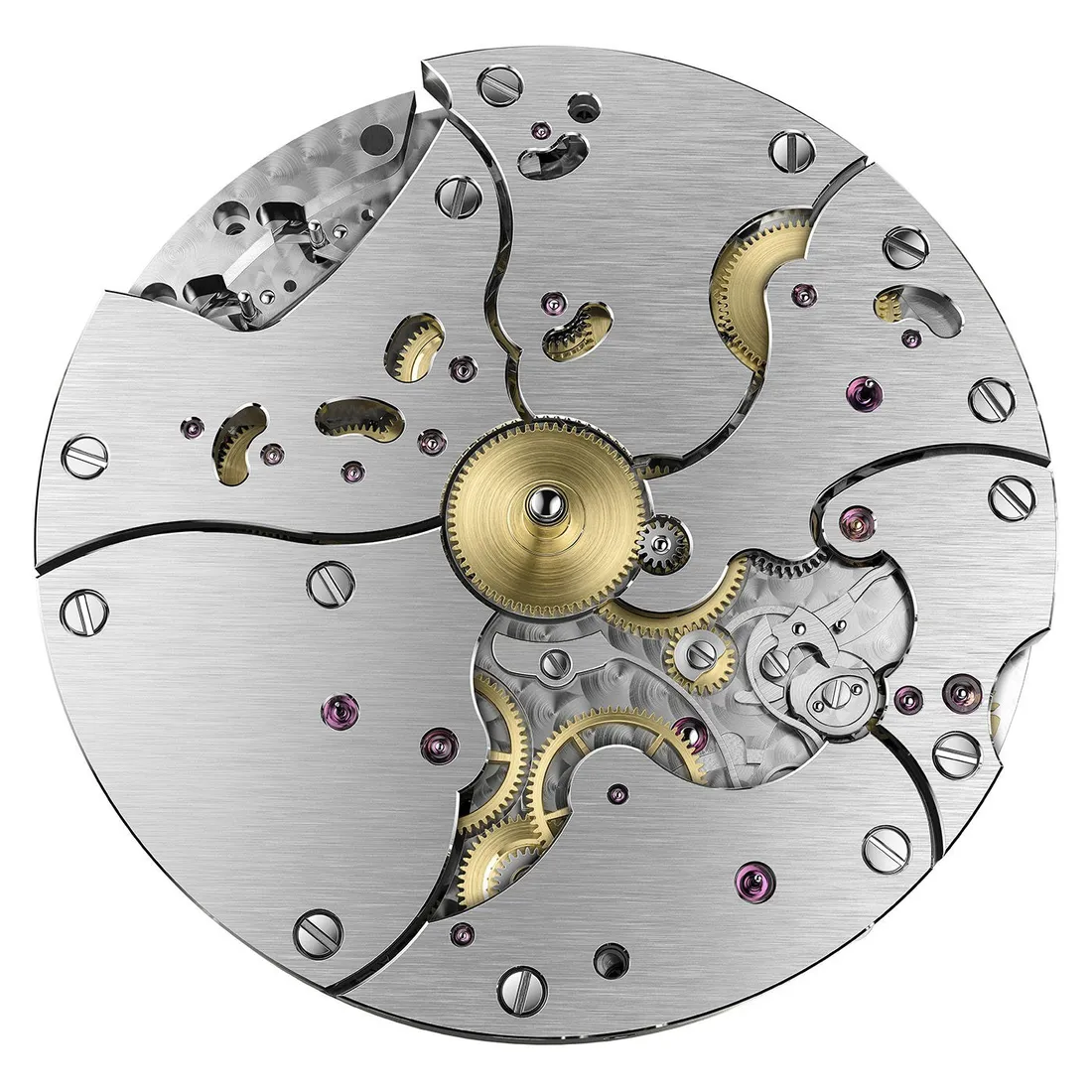
Now to the technical anatomy of this miracle. At the heart of the watch lies the calibre 1860, the fruit of a full ten years of research and development at Vacheron Constantin. This hand-wound calibre is made of exactly 727 micro-components and is assembled by a single master in roughly 500 hours.
The movement is fed by two separate barrels: one delivers 72 hours of timekeeping power, the other an independent reserve dedicated solely to the striking mechanism. Every part, down to wheels as fine as a human hair, is hand-bevelled to a mirror finish (anglage) and finished to the standards of the Geneva Seal, the Poincon de Geneve.
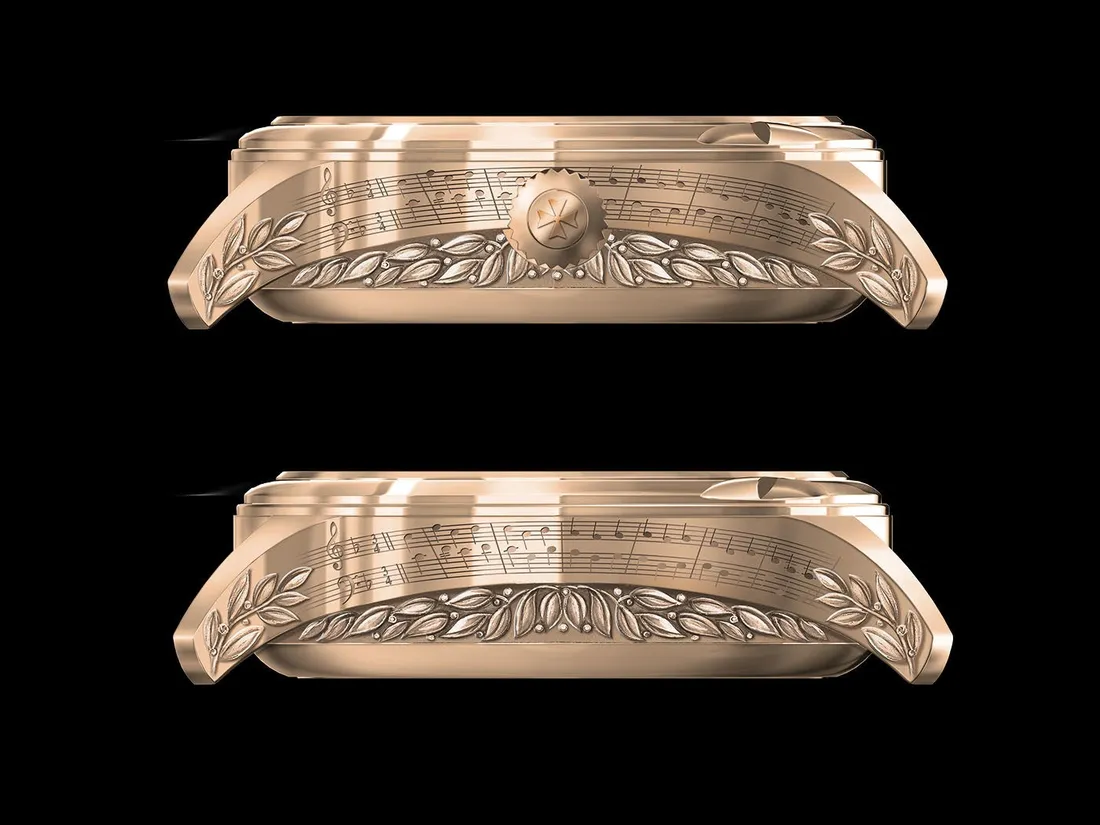
But the true signature of this watch is hidden in its case. On the flank of the 18-carat 5N pink gold case, the score of Beethoven's Sixth Symphony has been hand-engraved in bas-relief by master engravers under the microscope. The olive-leaf motif beneath the notes draws on the house's 1923 Les Bergers d'Arcadie pocket watch. The watch does not merely play music; it wears it on its body like a tattoo. Produced as a single piece unique, it is one of the most eloquent acoustic monuments of the Les Cabinotiers atelier.

A Sound Certified by Abbey Road Studios
Vacheron Constantin left nothing about the quality of this watch's sound to chance. The house partnered with the legendary Abbey Road Studios in London, where legends such as The Beatles and Pink Floyd recorded their albums. These first chiming watches of the La Musique du Temps range are taken, once they leave the atelier, to the studio's special acoustic rooms.
With ultra-sensitive microphones, the frequency, tonal accuracy and timbre of the sound the watch produces are recorded. This recording, unique to each watch, is documented by Abbey Road's sound engineers as a sonic imprint and delivered to the collector as a unique certificate alongside the watch. And so the watch is no longer merely a watch, but a musical instrument whose voice has been registered.

Carrying a Deaf Genius's Voice on the Wrist
Many things define luxury in the world of watchmaking: diamonds, gold, platinum. But none of them comes this close to the human soul. The Vacheron Constantin Les Cabinotiers The Sixth Symphony is the story of a love letter written to nature by a man who could not hear, whispered into steel two centuries later by masters of micro-mechanics.
The whisper of the woods of Heiligenstadt has become, in the master hands of the Vallee de Joux, an immortal ringing. Those microscopic strokes of the file, the fine notes on the case and that first clear chime echoing in the silence of Abbey Road prove one thing to us: true genius and true craft never die, they only change form. Do not see time merely as a number flowing past; listen to it.