Copernicus’s Revolution, Medieval Towers and Extrapolation
In 1543, Nicolaus Copernicus, by publishing his work De revolutionibus orbium coelestium, changed humanity’s perception of the universe at its root: the Sun was at the centre, and the Earth and all the other planets turned around it. From the standpoint of modern physics and astronomy, this is an absolute truth.
Yet what a person feels when they raise their head to the sky at night, when they sit by the sea and watch the Sun set or the stars drift, is not the heliocentric universe of Copernicus. In the human being’s sensory reality, the Earth is at the centre, and the whole vault of heaven turns around us like an immense theatre.
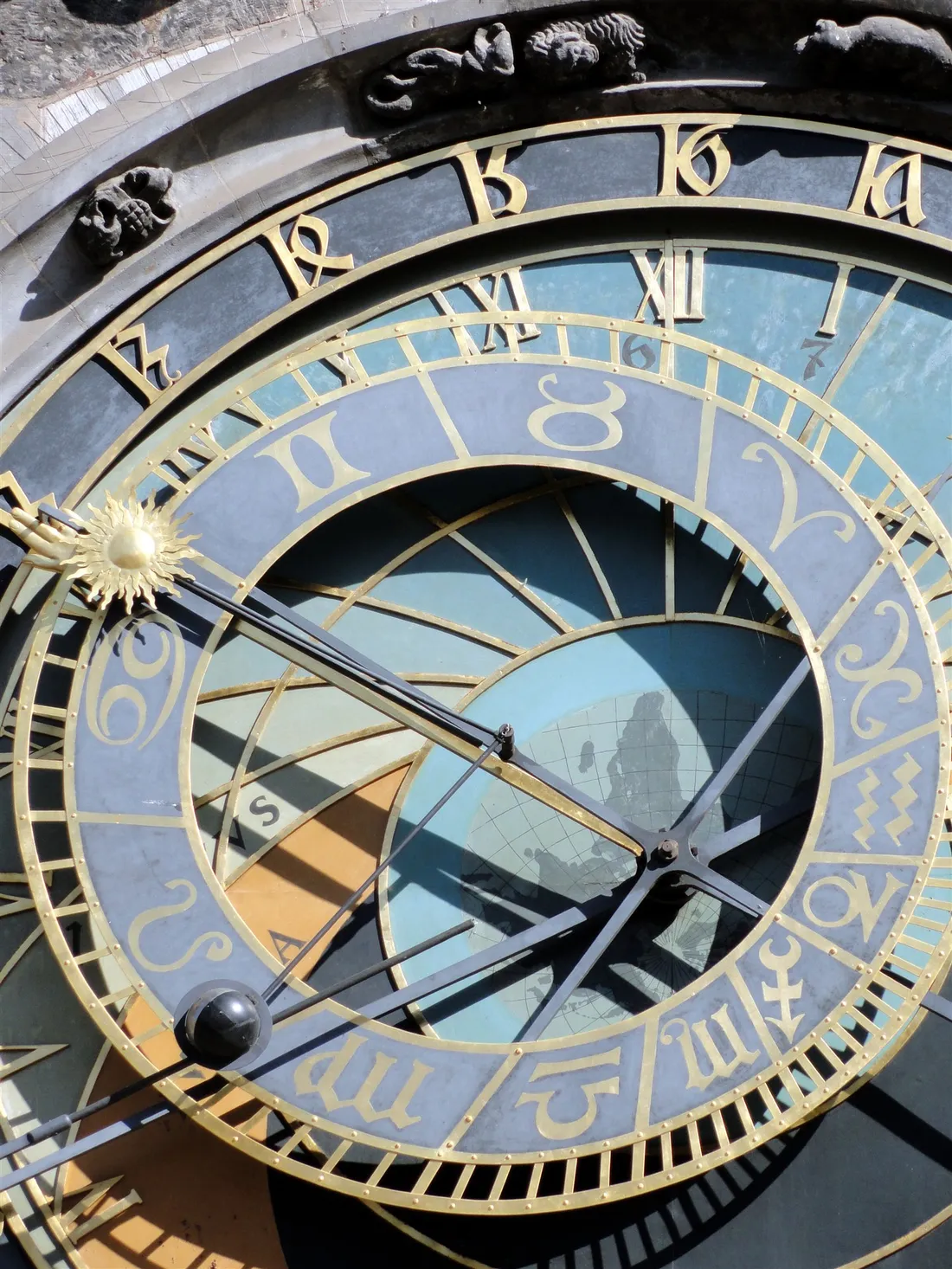
Toward the end of the Middle Ages, in the great cities that shaped the fate of Europe, from Prague to Strasbourg, from Padua to Bern, the vast tower clocks built at the heart of the city squares were monumental symbols of exactly this human point of view. The crowd gathered in the square would raise its head and watch the magnificent dance of the Sun, the Moon and the constellations around the Earth.
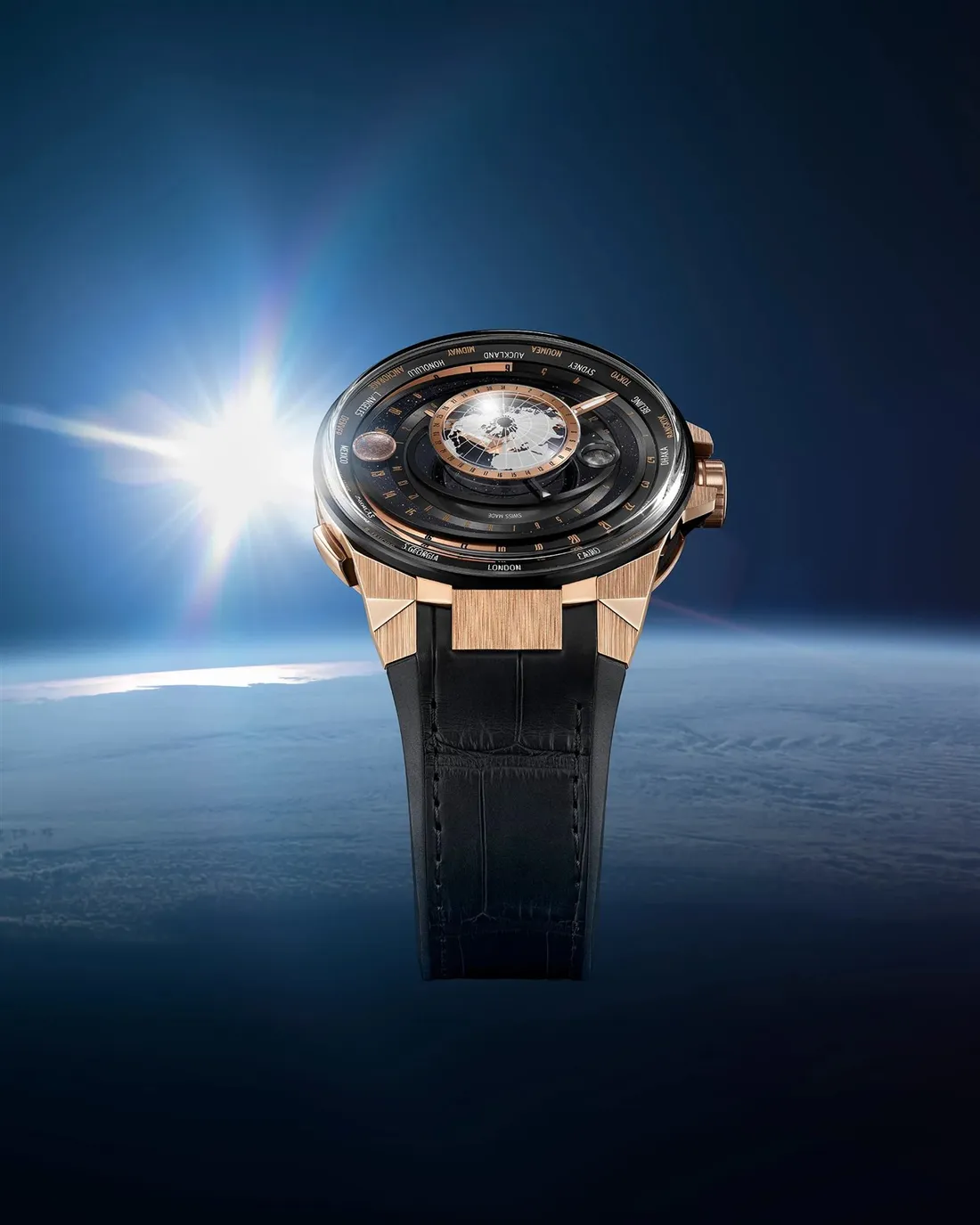
With the Blast Moonstruck it unveiled in 2022, Ulysse Nardin placed a deep philosophical signature on the history of watchmaking: the Blast Moonstruck, like all iconic watches that carry detailed astronomical information, aims to be a miniaturised extrapolation of those powerful tower clocks raised at the heart of cities in the late Middle Ages.
But what does extrapolation mean? It means taking the fundamental principles, the operating logic and the spirit of a known structure and carrying it into a far different, more advanced or miniaturised dimension. In watchmaking, it means shrinking the celestial mechanism of a vast medieval tower clock, made of cast gears weighing tons and wheels metres across, into a 45-millimetre case and micron-scale gears, without spoiling its essence, its precision or its grandeur. With the legacy of the genius watchmaker Ludwig Oechslin, Ulysse Nardin has extrapolated the cosmic theatre that medieval masters raised in the squares directly onto your wrist, with the futuristic engineering of the 21st century.
Geocentric Poetry: A Dance Legible Even to a Novice Eye
The mechanism that Ludwig Oechslin developed, reborn in the sharp lines of the Blast series, does not turn complex astronomical data into cold numbers. The Blast Moonstruck reproduces the turning of the Moon, the apparent movement of the Sun around us as we observe it from Earth, and the tidal map that symbolises the breathing of the oceans.
Designed to make this mesmerising dance between the Sun and the Moon both intelligible and deeply poetic, this geocentric display is a visual feast that even a novice with no training in astronomy can read at first glance. When you look at the watch, you do not search for complex formulas; you read intuitively, in a single glance, where the Sun is, which phase the Moon stands in, and in which city of the Earth it is day or night.
Five Celestial Signs, One Intuitive Screen
The Blast Moonstruck gathers the universe’s complex cycles into a single coherent system. Let us look closely at the five vital indications.
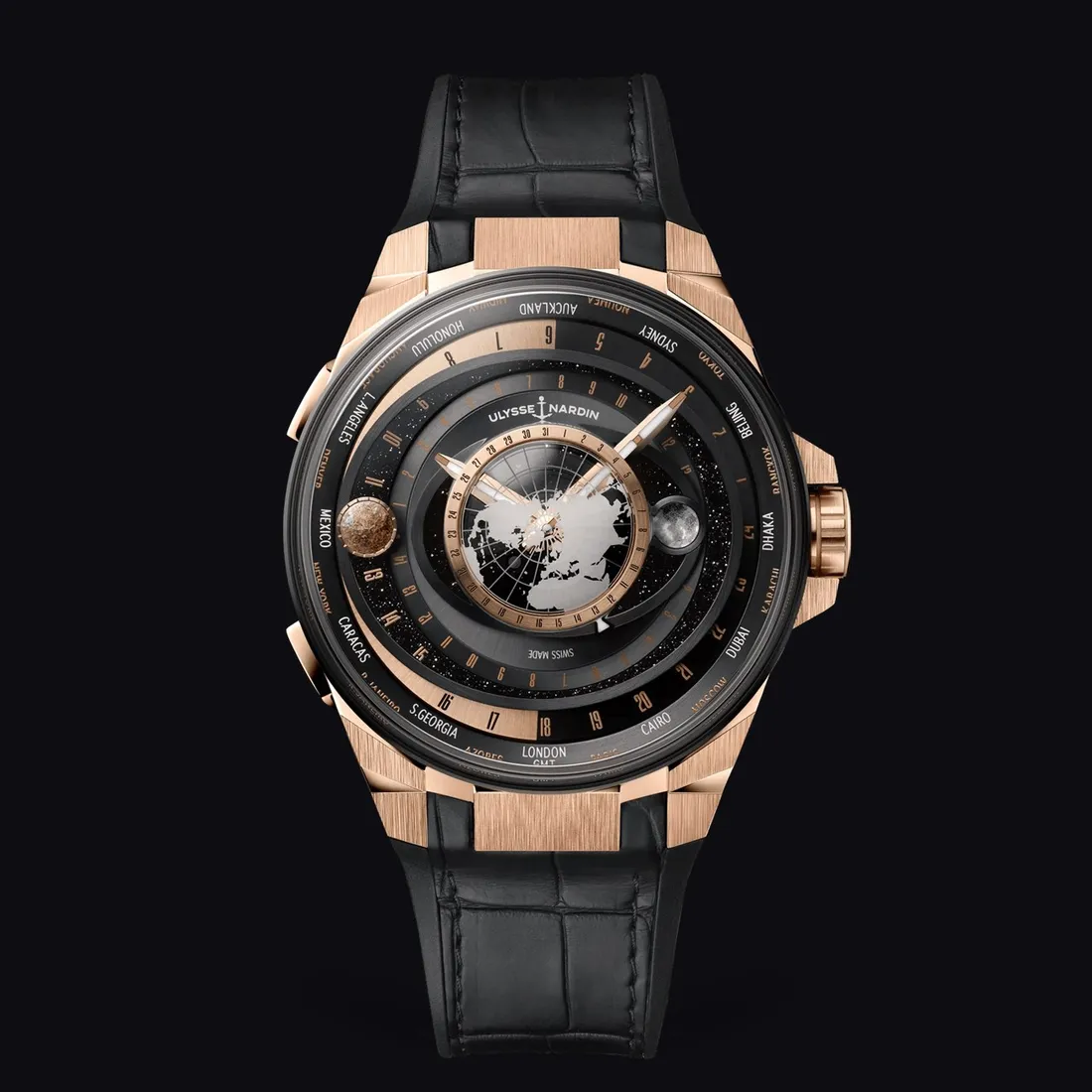
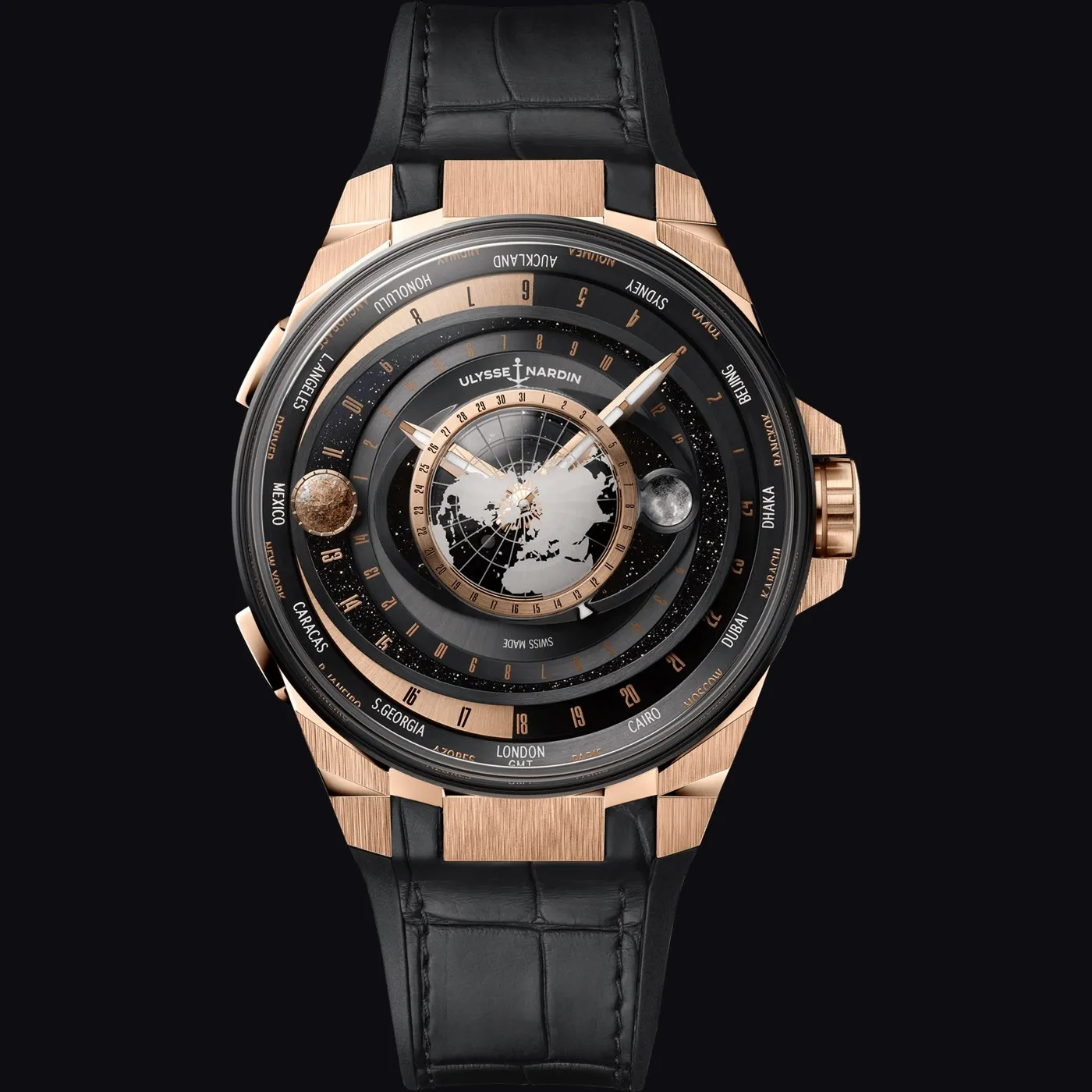
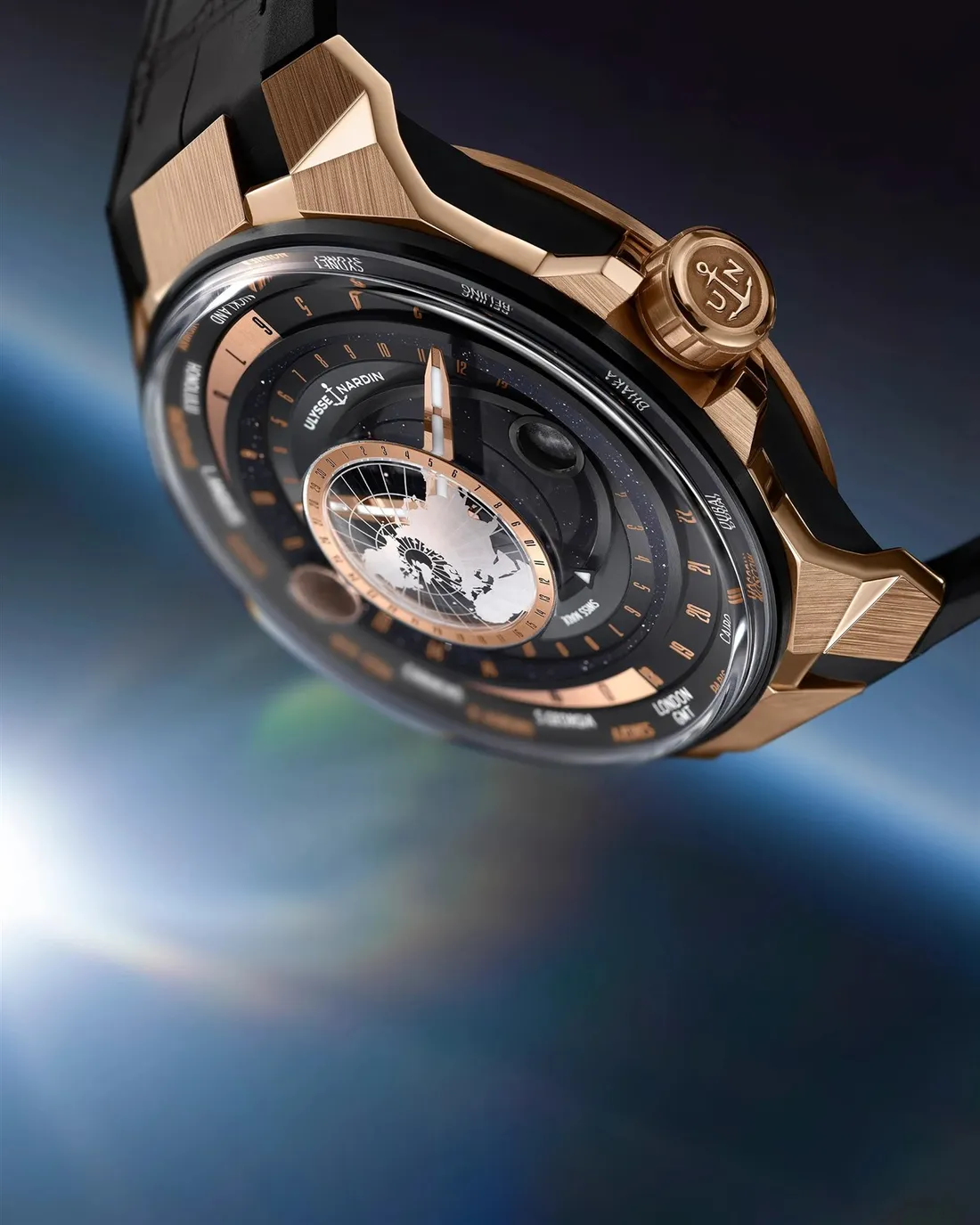
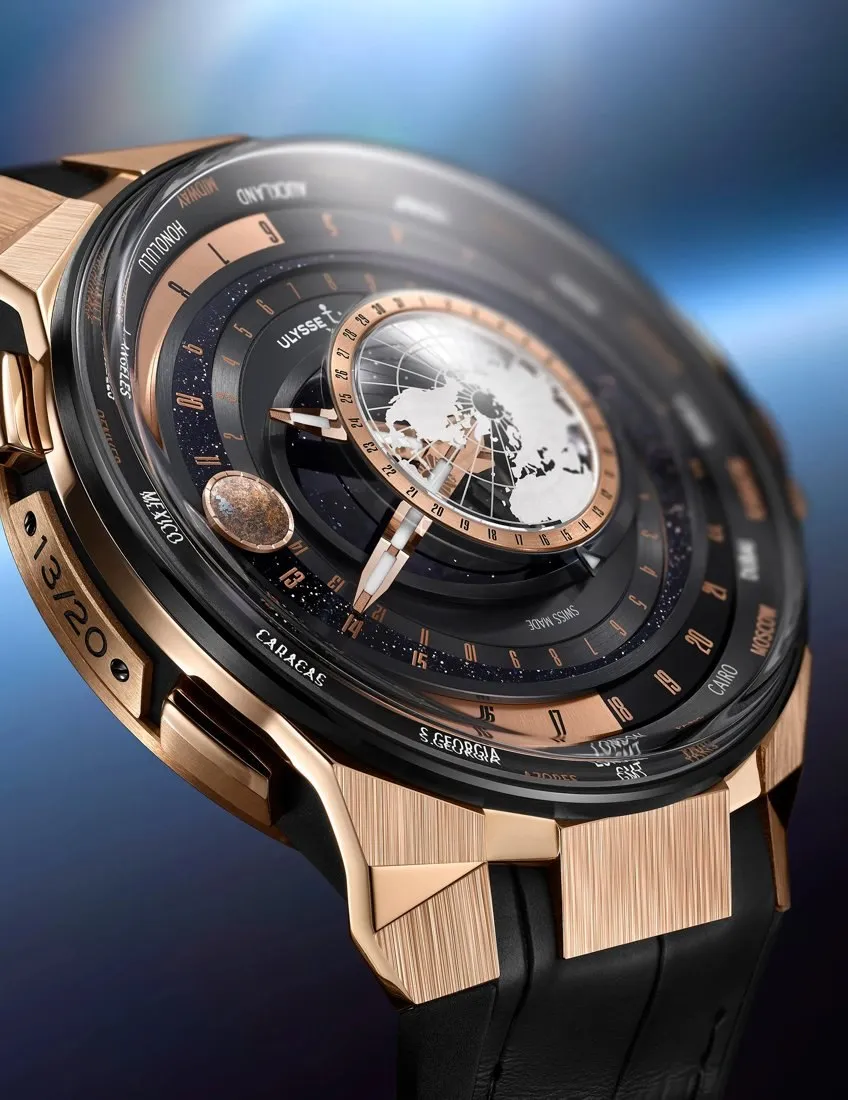
The high-precision moonphase: the moonphase indications of traditional watches are most often two-dimensional drawings passing behind a small window. In the Moonstruck it is, in the fullest sense, a three-dimensional theatre; the special moon disc on the dial turns on its own axis according to the angle it makes with the Sun, showing its dark and its lit faces just as they truly appear in the sky. The transitions of new moon, crescent, full moon and last quarter are presented with flawless visual precision.
The days of the lunar month: a calendar month (30 or 31 days) and the time that passes between two full moons (the synodic month, about 29.5 days) are not the same. The Blast Moonstruck has a special counter ring running from 1 to 29.5 around the moon disc; this ring shows, at that instant, which day of the synodic cycle you are in.
The tidal coefficients: the rising and falling of the oceans is created by the combining of the gravitational forces of the Sun and the Moon. There is no separate tide hand on the dial; when the Sun and Moon discs come into the same alignment (new moon or full moon) the pull peaks and the spring tide, symbolising the highest water, forms. When the discs stand at a right angle, the pull is balanced and the neap tide period is read from the dial.
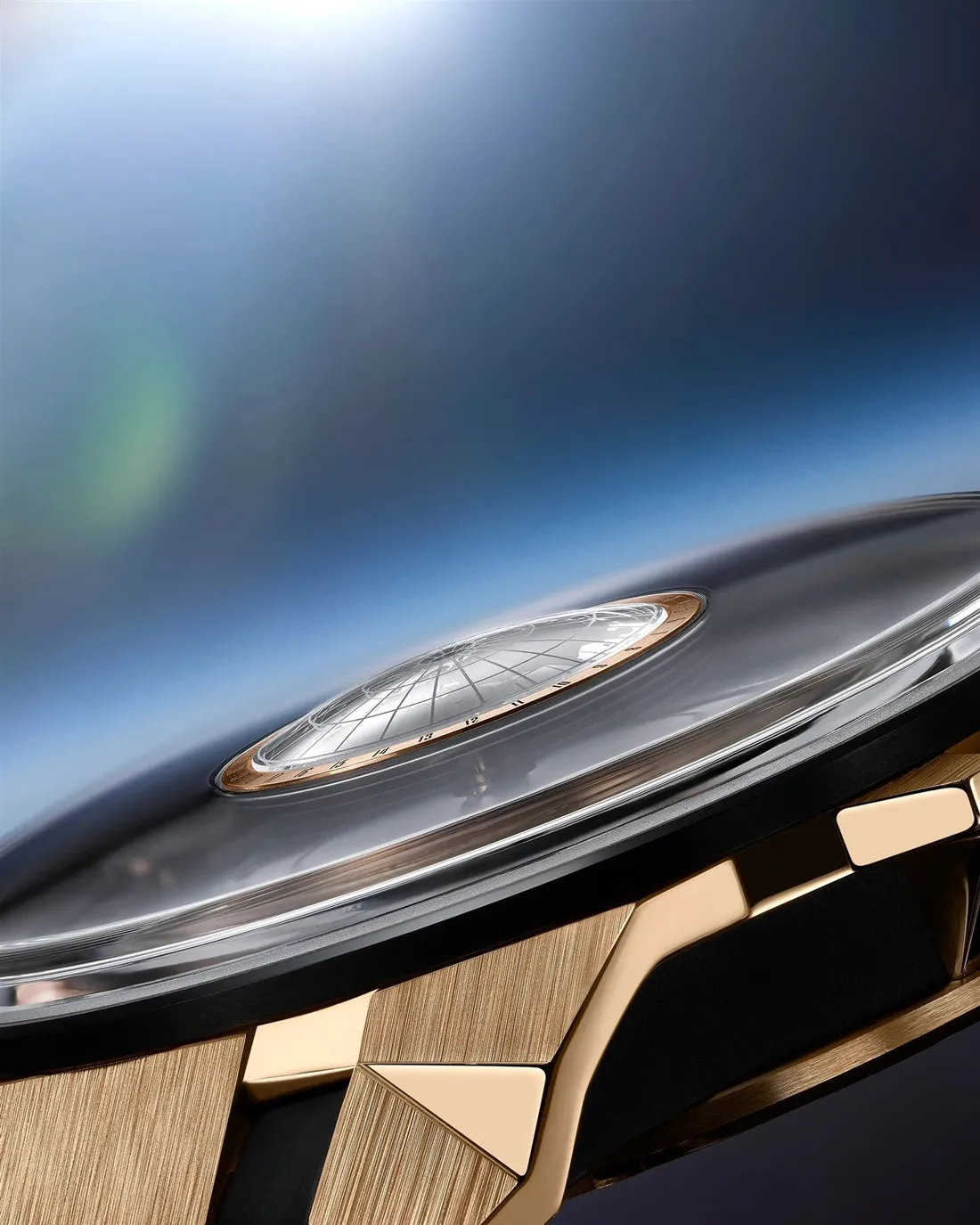
Worldtime: around the three-dimensional Northern Hemisphere map engraved beneath the domed sapphire, there is a turning ring representing 24 major cities. Continuing the traditional worldtime logic of Louis Cottier, this system lets you read the local time in the planet’s 24 time zones at a glance.
The positions of the Sun and Moon around the Earth: while the Sun disc makes one full turn of the dial in 24 hours, the Moon disc completes its turn in about 24 hours and 50 minutes. This slight difference in speed reveals, like a living astronomical map, which geography on Earth the Sun and the Moon are directly above.
Astronomy and Two Simple Analogies
You need no complex equations to understand the astronomy behind this mechanism; it is possible to grasp the rhythm of nature through two simple analogies.
Two athletes on a circular track: picture the Sun and the Moon as two athletes running on the same track. The Sun makes one lap in 24 hours at a steady, rhythmic pace. The Moon comes a little behind and completes its lap in about 24 hours and 50 minutes. The Moon catching up to the Sun a little later on each lap is what causes the phases of the Moon, from new to full, to change continuously in the sky. Ulysse Nardin’s engineers have flawlessly written the speed difference of these two athletes into the tooth counts of the gears.
The tug-of-war and the tides: the oceans are a vast, elastic body of water wrapping around the Earth. Because the Moon is very close to the Earth, it holds a thick, strong rope of gravity; the Sun is far larger but, being distant, its rope is a little weaker. When the Sun and the Moon come side by side or directly opposite on the dial, both pull the waters along the same line and the seas swell. When they stand at a right angle, they pull in opposite directions, the force is balanced, and the seas grow calm.
The Blast Design: The Futuristic Future of Geometric Form
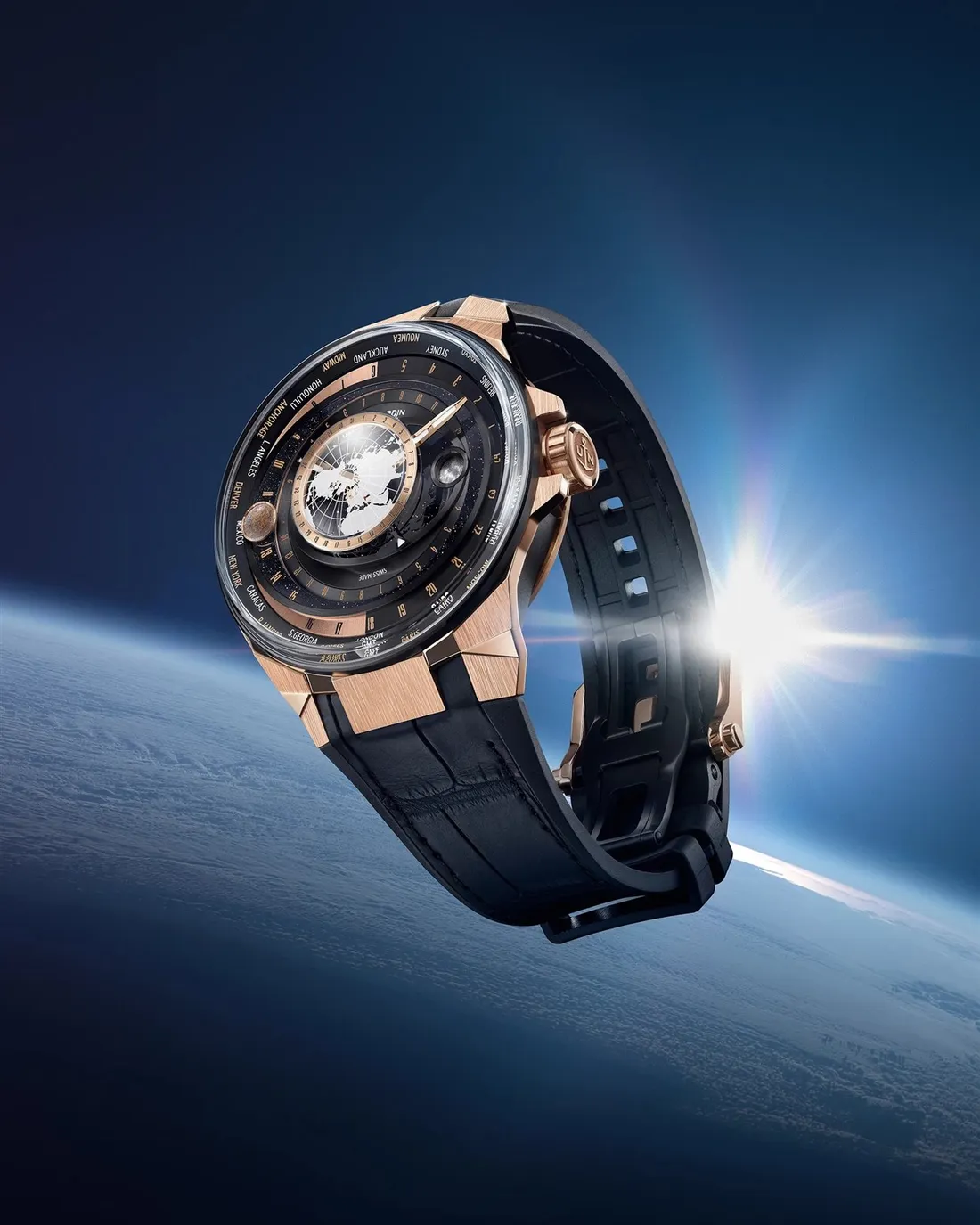
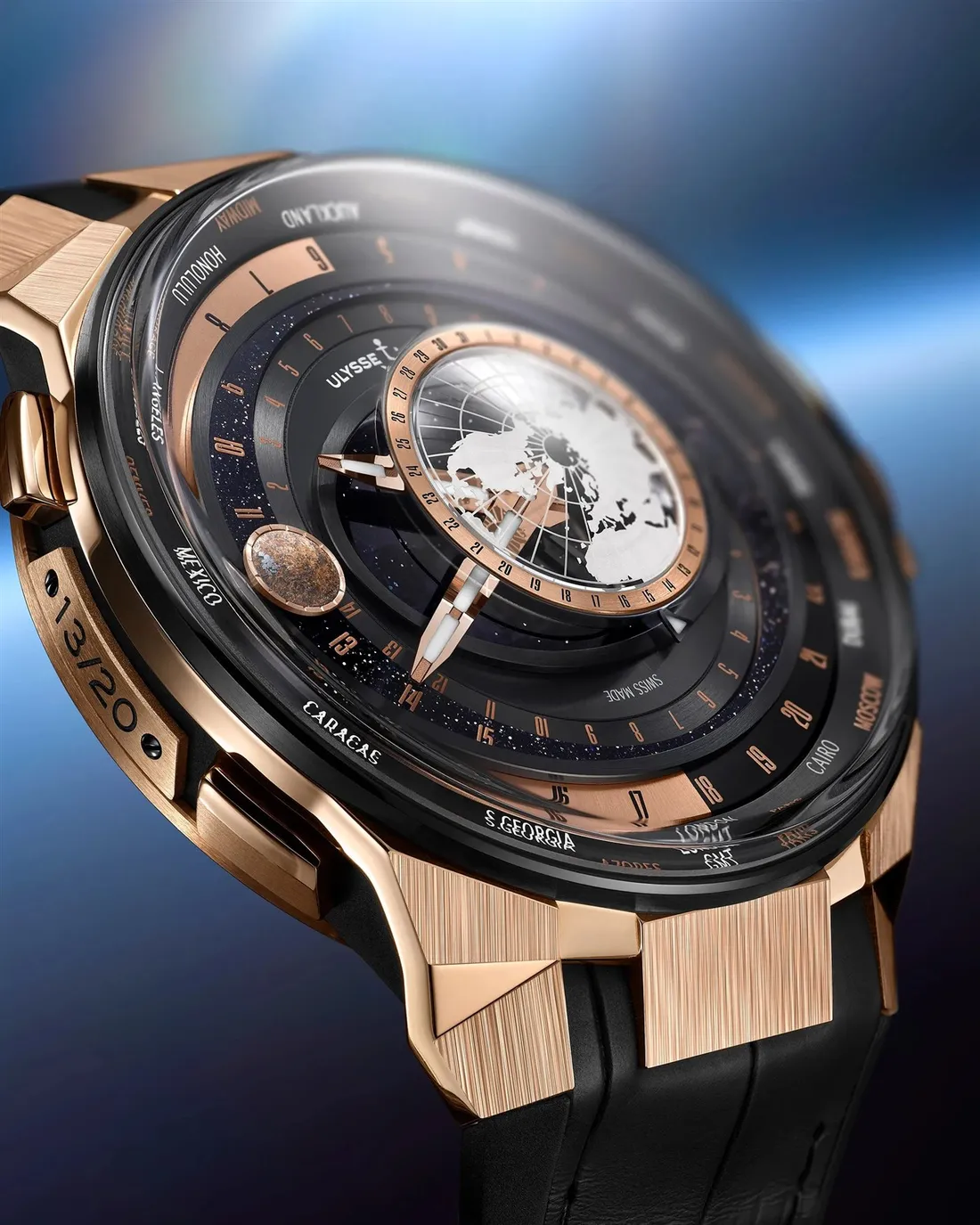
Ulysse Nardin crowns Oechslin’s historic legacy with the aggressive, modern architecture of the Blast collection. The black ceramic and rose gold case, inspired by the sharp body lines of stealth aircraft, guards the astronomical sapphire dome like a powerful armour.
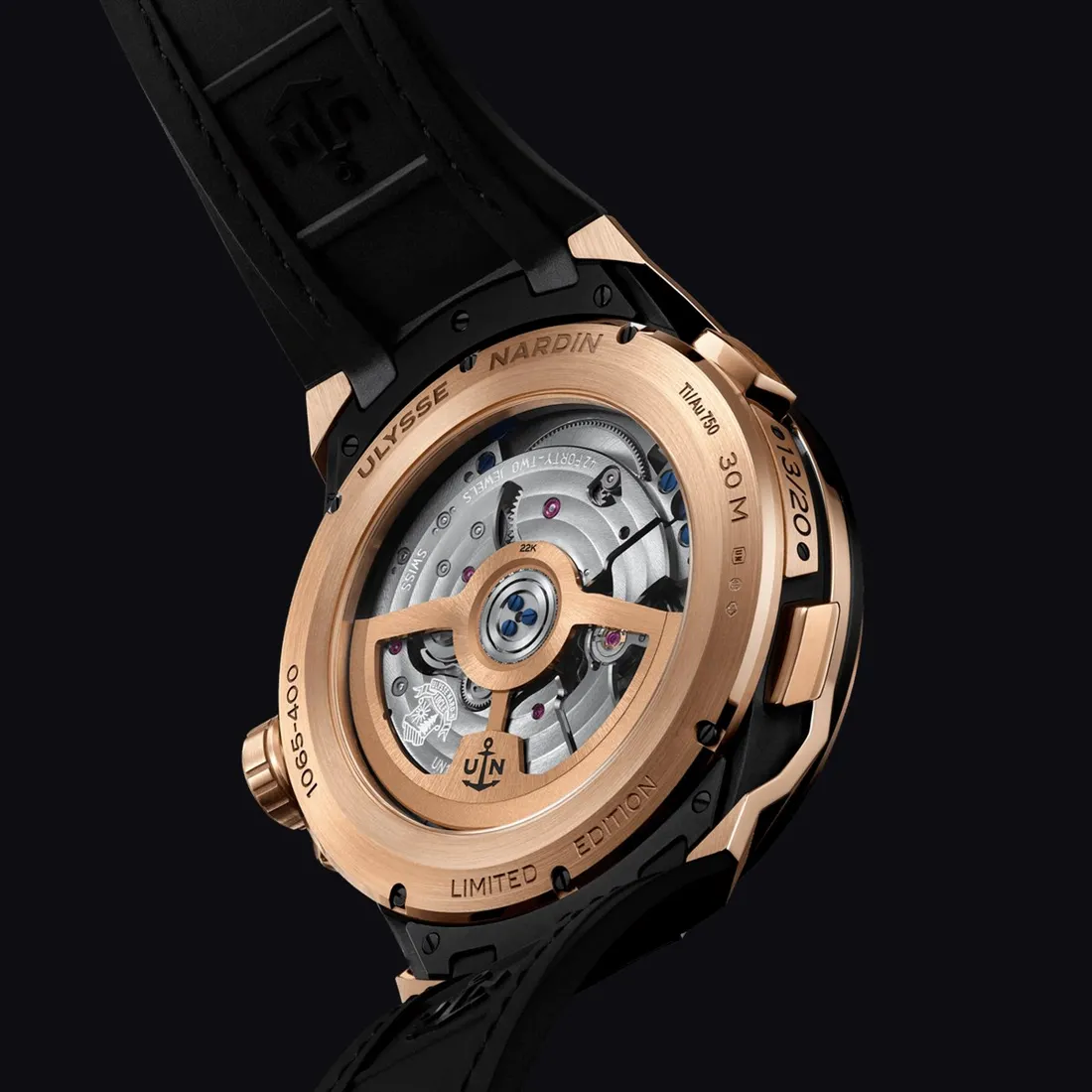
At its heart beats the silicon-technology UN-106 calibre. Made of 338 parts, this automatic mechanism is unaffected by strong magnetic fields thanks to its silicon escapement wheel and balance spring. The two integrated pushers on the left of the case let you jump the main hour hand forward or backward in one-hour steps while travelling, without ever disturbing the delicate astronomical Sun-Moon balance on the dial.
The Blast Moonstruck unites the universal truth of Copernicus, the philosophical spirit of the monumental tower clocks in the squares of the Middle Ages, and the futuristic lines of modern haute horlogerie beneath a single sapphire dome. And so it carries the infinite dance of the universe directly onto your wrist.