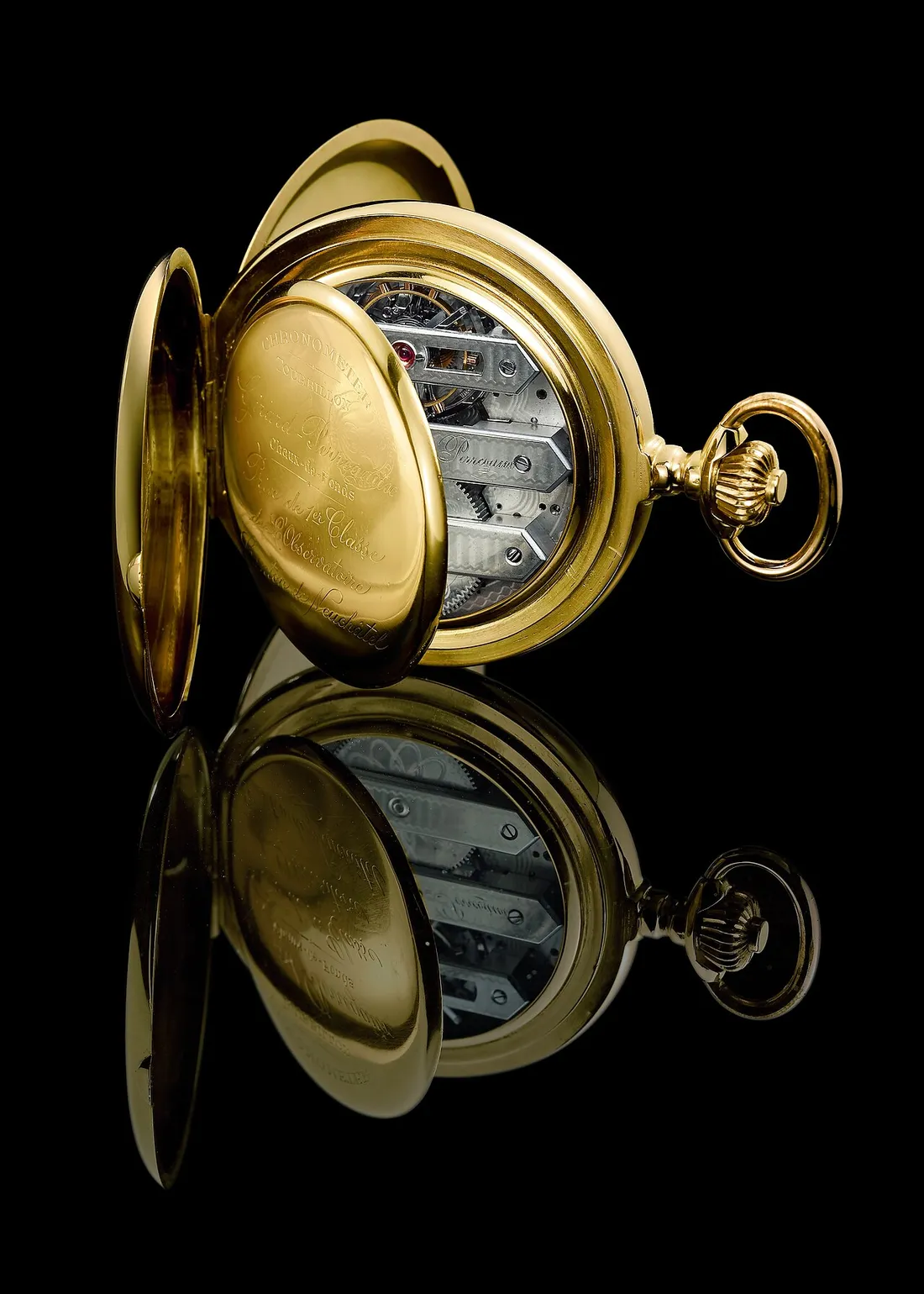
Paris, 1889. The city had turned itself into a stage of science and art for the Universal Exhibition; for that same fair, a tower of iron, the Eiffel, was rising into the sky. And there, at the watchmaking table of this grand contest, a pocket watch by the Swiss master Constant Girard won a gold medal. But what made this watch a legend was neither a showy dial nor diamonds; it was an ordinary part everyone else kept out of sight: the bridge.
In a watch, the bridge is a functional but invisible skeleton that holds the wheels and the barrel in place. Constant Girard took that skeleton and brought it to the very centre of the stage. He arranged three slender, arrow-shaped gold bridges in perfect symmetry and placed them not where the dial hides them, but right before the eye. Engineering became a work of architecture. The signature Girard-Perregaux still carries today was born that day: the Three Gold Bridges.
The Man Who Turned a Bridge into Art
That watch was named La Esmeralda; it took its name from the famous Mexico City jeweller La Esmeralda, who sold Girard-Perregaux watches. The gold medal of 1889 decided the fate of the maison. Today the Three Gold Bridges are the seal that identifies Girard-Perregaux at a glance; the courage to show a watch's heart and its face at the same time.
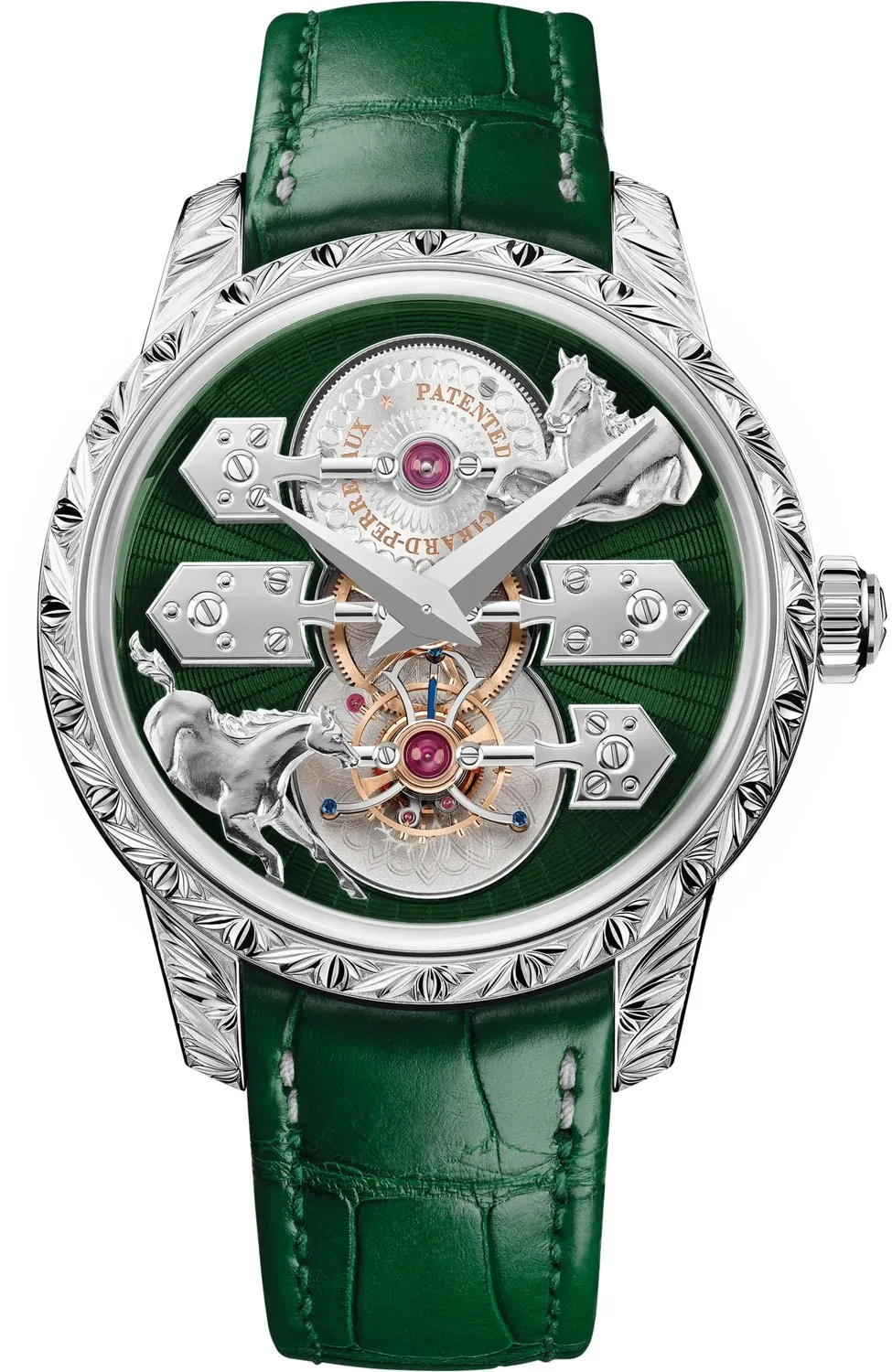
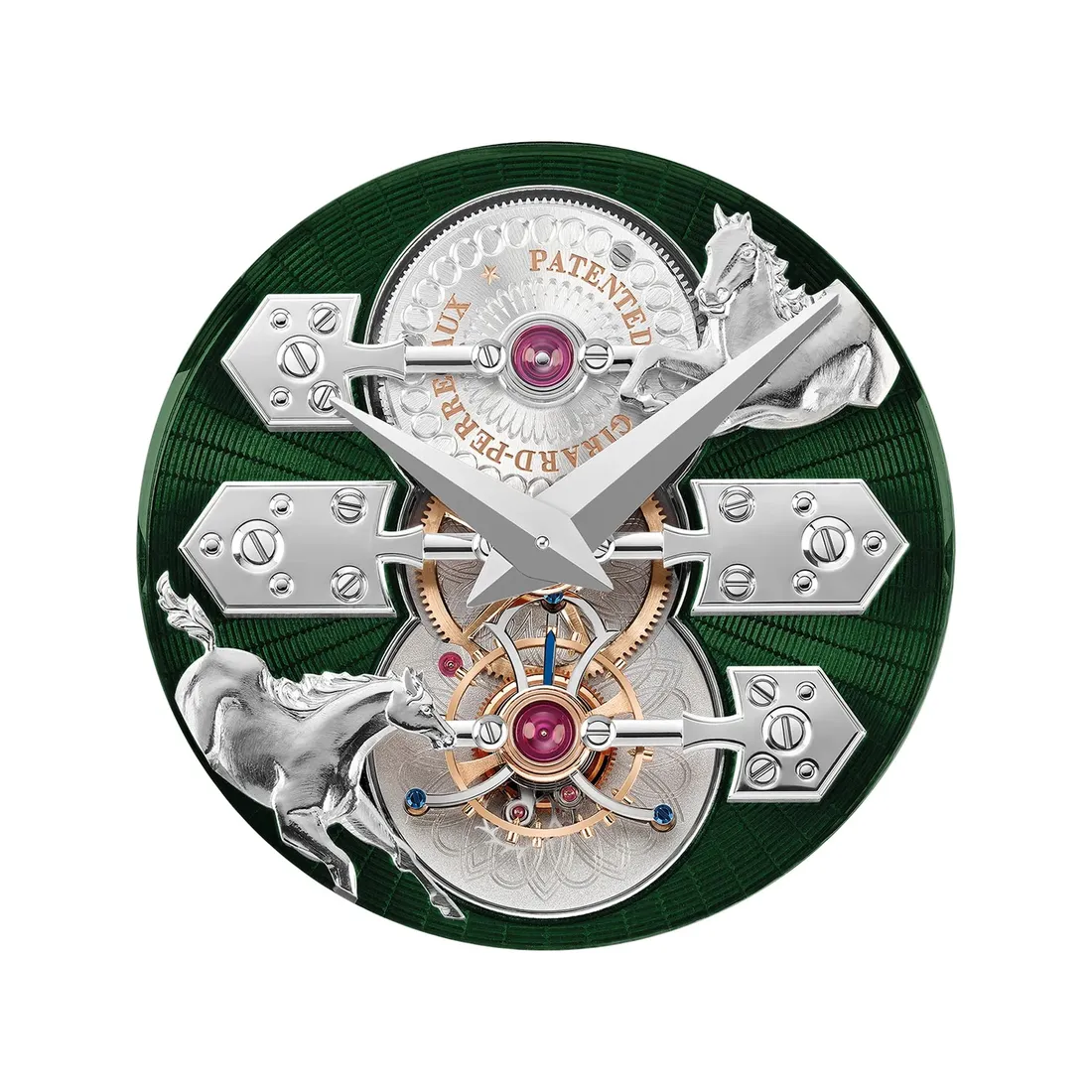
The La Esmeralda Tourbillon A Secret Eternity Edition carries this century-and-a-half-old heritage to the wrist. Three arrow-shaped white-gold bridges cross the centre of the dial, hand-engraved, each bearing screws and that old, refined craftsmanship. At six o'clock, a tourbillon turns in its own cage; the rotating heart Breguet invented two centuries ago to defeat gravity. And on the upper bridge it proudly reads: GIRARD-PERREGAUX PATENTED.
A Rebirth for the Wrist
This modern interpretation lives in a forty-three-millimetre case of 18K white gold. Its bezel, its lugs, its every surface are hand-engraved from end to end; so that, before you even look at the dial, the watch is already the work of a jeweller. Inside runs the hand-wound calibre GP09600: thirty-one jewels, 21,600 vibrations per hour (3 Hz), and about sixty hours of power when fully wound. And this whole universe will fall to only eighteen fortunate people; for this is a limited Eternity Edition.
But the true depth of the watch is hidden in the dial beneath those bridges: a deep, forest-green enamel. When the light strikes it, the surface does not sit like ordinary paint; it shifts tone, deepens, and seems to open an abyss within itself. The name of this magic is enamel; and the hands that make it carry as much story as the watch itself.
The Horses and 'A Secret'
Upon the dial, among the bridges, gallop two white-gold horses; each a tiny sculpture carved by hand. The horses are a tribute to the maison's prize-winning past and to the power, speed and grace of that age. But the true secret in the watch's name lies elsewhere: 'A Secret'. Behind a hidden cover of the case, another horse gallops, worked into enamel with the champlevé technique, to be opened and seen by the owner alone. A beauty open to all, and a secret whispered to one; the watch carries both in the same body.
(In the Enameller's Workshop: Donzé Cadrans)
Here we must open a parenthesis and look at the hands that create that green depth. The master of these dials is the Donzé Cadrans workshop in Le Locle; one of the very few artisans in the world who still keep alive Grand Feu, the Great Fire enamel. Enamel is no ordinary painting; it is an immortal layer of glass fused onto gold. Here are the principal techniques they use, and why they are so difficult.
You may wonder why the names of these techniques are French: it is because fine enamelling and the art of watchmaking developed over centuries in France and French-speaking Switzerland (Geneva, Le Locle, La Chaux-de-Fonds). Terms like guilloché, flinqué, champlevé and grand feu have come down from the workshop language of those masters; just as musical terms remain Italian and ballet terms French.
Grand Feu (Great Fire): First a very fine glass powder, made of minerals such as silica, soda and borax and coloured with metal oxides, is dusted onto the gold plate. Then the plate is fired in a kiln at 800 to 900 degrees Celsius, again and again, sometimes five to ten times. Each firing is a gamble: the enamel may crack, bubble, or take on the wrong colour. At the smallest error, hours of work go into the bin and one begins from scratch. Dozens of plates are sacrificed for a single perfect dial. Think of stubbornly baking a soufflé that risks collapsing each time the oven opens; but if it succeeds, the colour will not fade for centuries, because it has become glass.
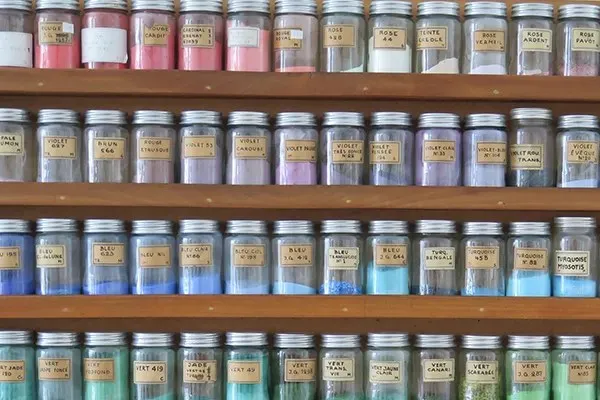
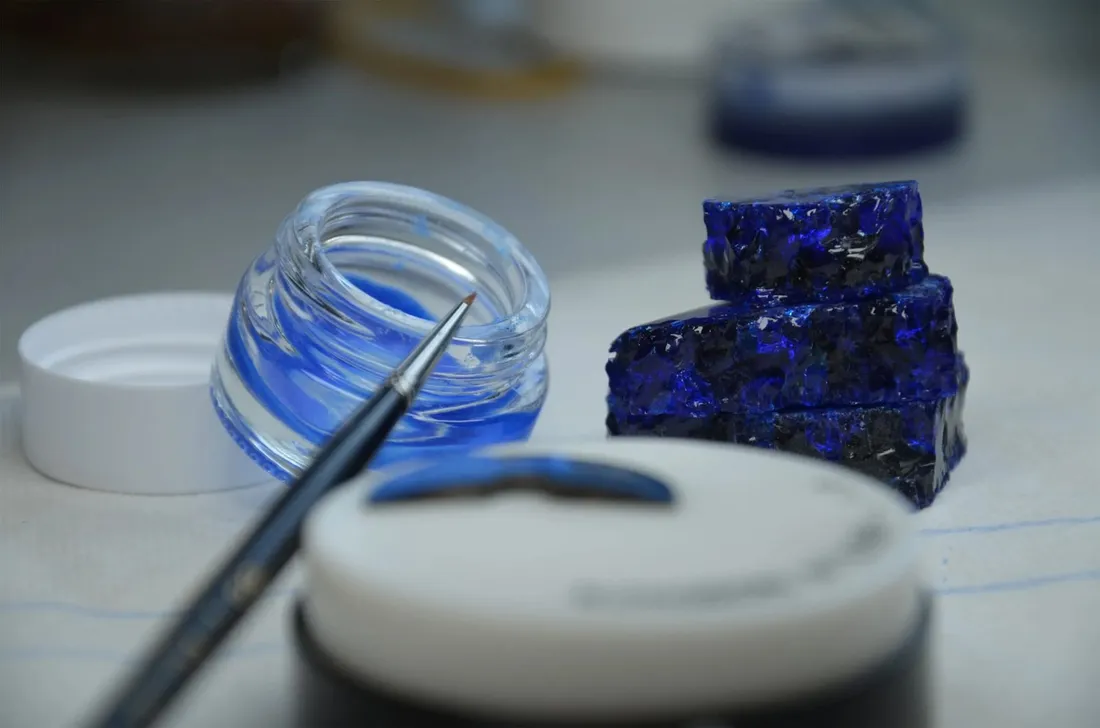
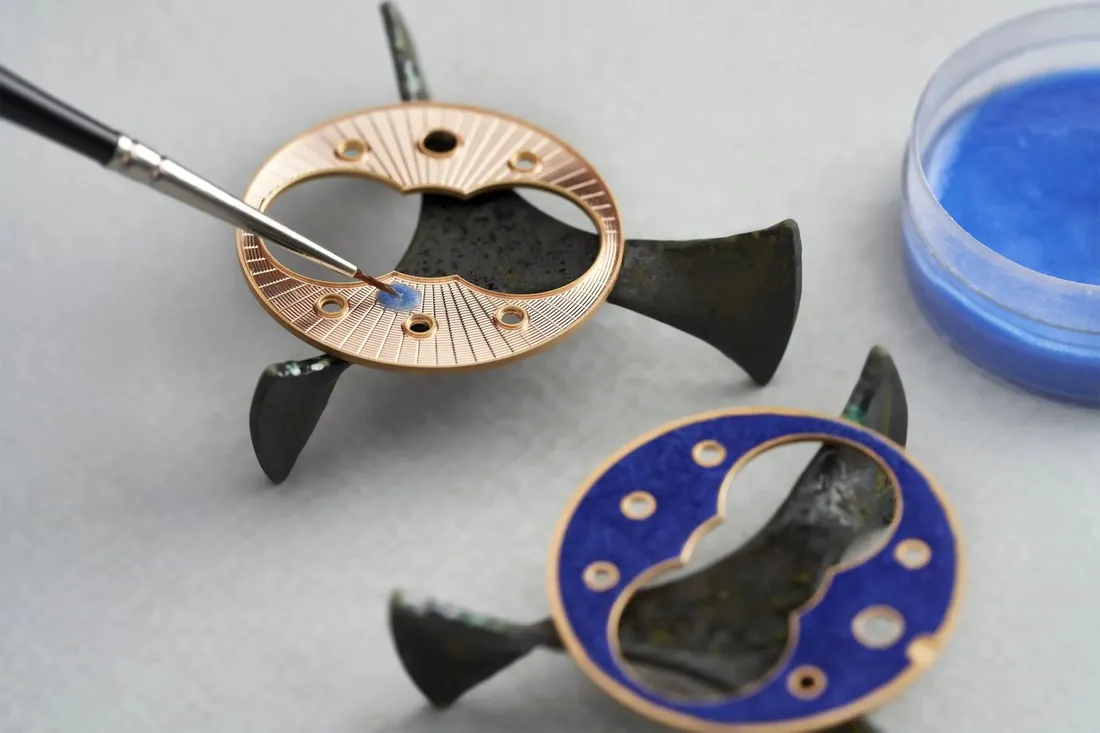
Flinqué (Translucent Enamel over Guilloché): This is the secret of that green depth. First the gold plate is worked by hand on historic engine-turning lathes, engraved with circular, radiating, wavelike geometric patterns; this is called guilloché. Then a translucent green enamel is poured over the pattern. The light dives into the enamel, strikes those fine gold lines beneath, and returns. The result, on a flat surface, is an illusion of three-dimensional depth. Picture sunlight falling on a golden bed beneath shallow, rippling water: as the water stirs, the gold glimmers. Flinqué freezes that shimmer in enamel.
Champlevé (the Horse on the Hidden Cover): The flawless transitions around the horse on the 'A Secret' cover are made this way. Hollows are cut into the gold plate; the horse figure is left raised in relief, while the background is dug out and lowered. These hollows are filled with enamel powder and fired. Once out of the kiln, the surface is carefully ground with diamond-dust stones until the enamel and the horse figure are exactly level. It is inlaying coloured glass into carved metal; like a stained-glass window laid flat.
Beyond Time
In 1889, in Paris, a bridge was declared the most elegant way to carry time. A century and a half later, those same three bridges still carry time upon a wrist; and the green glass beneath them will outlive by far the master who made it. Enamel does not fade, because it is sealed with fire; the bridge does not age, because it is as beautiful as it is useful; and the horse behind the hidden cover gallops forever, though no one sees it.
Perhaps what this watch really tells us is this: true mastery is to work not only the face everyone will see, but also the secret no one will, with the same perfection. Eighteen people will carry that secret on their wrist; but everyone who looks into that green depth will see the trace of a two-century-old fire and patience.