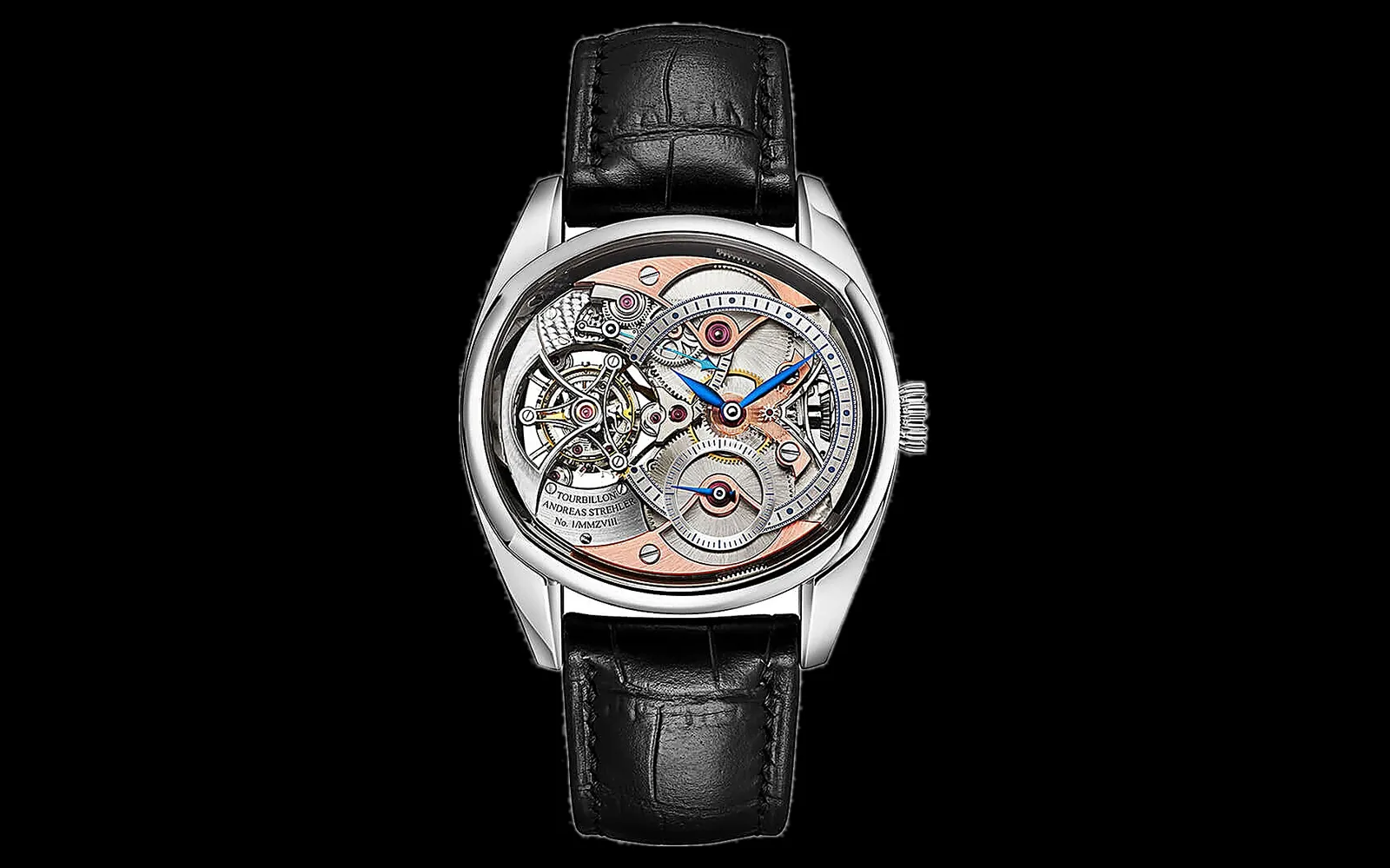
One of the summits of fine mechanical watchmaking and of independent horology, the Andreas Strehler Trans-axial Tourbillon stands at first sight far beyond a measurer of time; it is closer to a breathing biological organism working at the level of cells. The symmetrical bridges that rise at the centre of the dial and recall the wings of a butterfly lift the mechanism out of the condition of a lifeless heap of metal and carry it into a deeper, philosophical register.
The aesthetic and technical perfection of this watch cannot be explained by the standard templates of engineering alone. Approached through the philosophy of cellular renewal, of the apportioning of sustenance and of the conscious despatch of atoms to the organs, the Trans-axial Tourbillon offers us, at micro scale, a concrete expression of the great analogy that runs through both the universe and the human being.
To grasp more clearly the perfect despatch of the atoms in the universe and in our bodies, three concrete examples from everyday life are worth looking at first. Imagine a glass factory, a cement station and a copper mine at different points of a city. These scattered materials are gathered, processed and loaded onto lorries. As the lorry passes through the streets, it does not tip a single load at random. Cement goes to the mosque site, glass to the windows of the school, copper cable to the electrical board of the hospital. If the copper cable went instead into the window of the school, the system would collapse. The atoms in our food are carried by the blood vessels and used exactly where they belong, as glucose in the eye and calcium in the bone, and that is the outcome of this flawless logistics.
The second example is a car. You own one and you drive it for ten years. But every day, secretly and without your noticing, the car replaces its worn bolts, its abraded rubber molecules and its ageing seat threads one by one, with raw material taken from outside. At the end of ten years not a single atom on that car is the atom of the first day; yet the car stands as the same car. This is exactly what it means to say that a person changes the garment of the body every year. The cellular buildings of our body are pulled down continuously and raised again out of what arrives.
The third example is wheat in a field. First it is gathered from the field, milled into flour and kneaded into dough, baked in the oven and turned into bread, and then it enters the blood and gives energy to a muscle cell in the finger of a painter. The mouth and stomach are the first sieve, the intestine the second, the liver the third, the tissue the fourth. An ordinary atom in the soil passes through four kitchens and becomes, in the end, the tissue of a hand that paints.
format_quote"An ordinary atom in the soil passes through four kitchens and becomes, in the end, the tissue of a hand that paints."
Hasan Bekmezci
In biology the arrival of a foodstuff at its destination, a molecule of beta carotene that will fuel a cell of the eye for instance, is not left to chance; it is put through an immense refinery of four stages. The first kitchen is the mouth and the stomach. The teeth break the food physically like an industrial mill and widen its surface area; the salivary gland enters at once and begins to break the bonds of the carbohydrates chemically with the enzyme amylase. The walls of the stomach, with their three layers of muscle, contract and release without pause and churn the food like the drum of a washing machine. At the same time the secretory cells of the stomach release an immense solution of hydrochloric acid, at a pH between one point five and two, together with the enzyme pepsin. This extremely acid medium unfolds the complex folded structures of the proteins and turns the whole of the food into a homogeneous slurry called chyme.
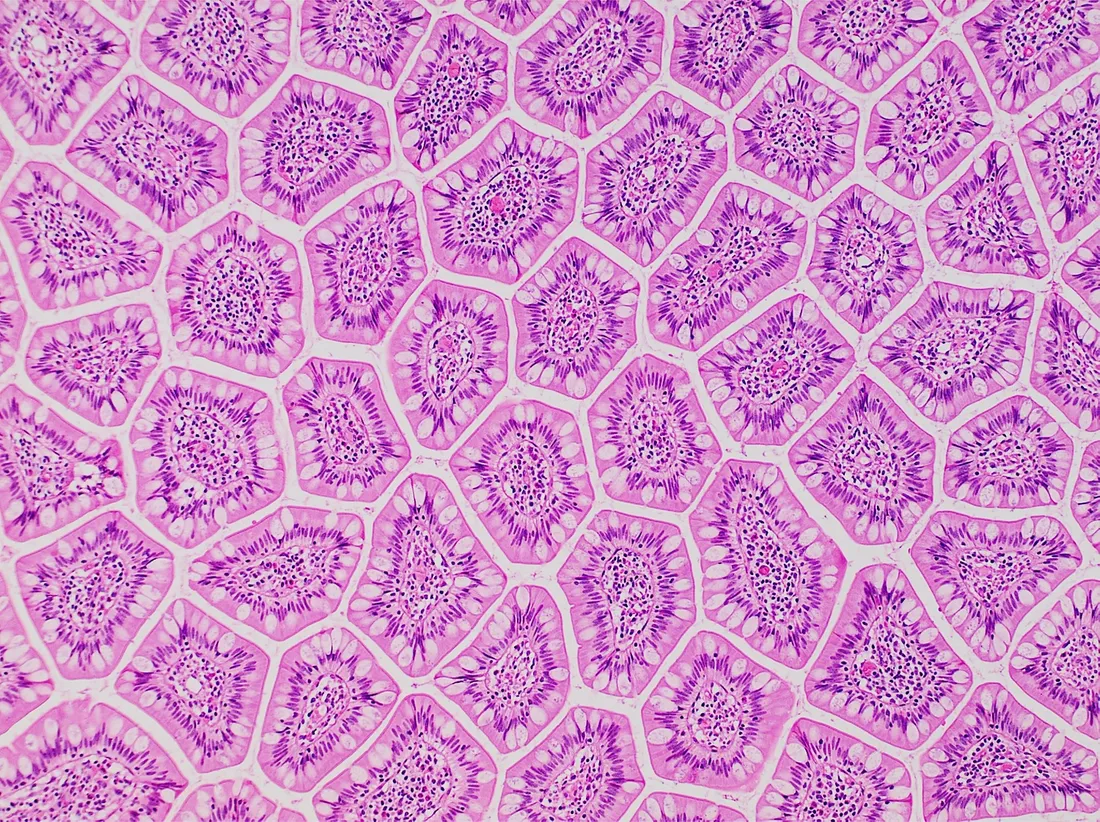
The acid soup leaving the stomach passes into the small intestine, and there absorption and the first micro sieve begin their work. Alkaline secretions from the pancreas neutralise the acid; with lipase, trypsin and amylase the food is taken apart down to amino acids, glucose and fatty acids. The inner surface of the small intestine is not a smooth pipe; like towelling it is covered with millions of finger-like projections and, upon those, with microscopic fringes. This structure brings the absorbing surface to the size of a tennis court. The carrier pumps in the membranes of the microvilli draw the useful nutrient atoms inside while leaving the residue and the harmful large molecules outside. The essence is absorbed, the residue is set aside.
What is absorbed in the small intestine is not released straight into the general circulation. It is sent directly to the liver along a private motorway, the portal vein. The liver is the most advanced chemical plant in the body; heavy metals, toxins and bacterial waste that may arrive with food are filtered and neutralised by the hepatocytes. The liver turns glucose into glycogen, ammonia into urea, and synthesises from amino acids the particular proteins the body will use, albumin and globulin among them. In other words it brings the raw, foreign molecules that came from the soil or from a plant into a form entirely suited to the chemistry of the human body, a pure fuel at the level of the cell.
Pumped by the heart, these pure molecules spread from the aorta into the capillary networks of the organs. The walls of the capillaries are thin enough to consist of a single layer of cells; a nutrient molecule arriving at the retina seeps through their pores into the tissue fluid. The receptors on the surface of the eye cell recognise the molecule passing in the blood. Exactly as the guard at a factory gate has a card presented to him, the eye cell admits only the atoms it needs. The molecule enters the cell and is appointed to its post as fuel for the proteins of sight.
The raw steel, gold, brass and sapphire lying scattered across the earth pass, in the hands of Andreas Strehler, through four production sieves of exactly this kind. In the first kitchen the raw ores taken from the ground are melted in high temperature furnaces and turned into pure ingots. In the second the ingots are cut on machines accurate to the micron, and the teeth of the wheels and the forms of the bridges emerge. In the third the metal parts are fired and hardened, their stresses relieved and the micro burrs on their surfaces cleared away; just as the liver produces a refined substance, the metal is given strength and purity. In the fourth the horologist polishes the parts under the microscope, cuts the anglage and sets each wheel with tweezers into its particular post inside the watch.
An ordinary atom of iron or copper from the soil, despatched under the plan and the will of the master horologist, is placed into a micro screw on the balance of the Trans-axial Tourbillon or into the tourbillon cage, appointed to it almost as an official is appointed to a post.
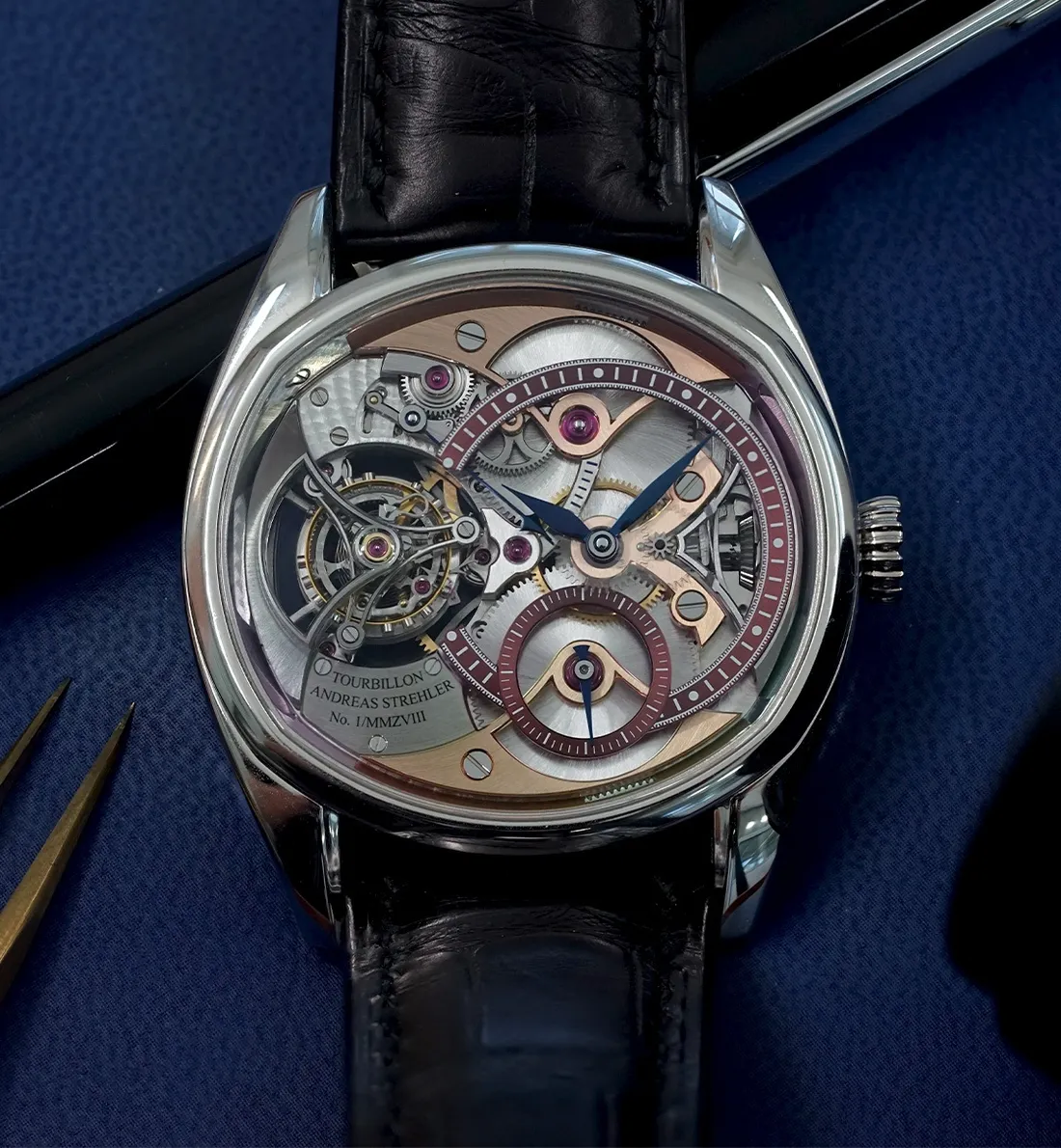
The full name Strehler gives this watch is the Trans-axial Remontoir Tourbillon, and the word in the middle of that name describes the real office beneath the visible elegance of the dial. The force coming from the two barrels does not reach the tourbillon directly. It is loaded first onto a small spring carried on a satellite arm that a star wheel holds in place. Once every second the pallet arm releases the star wheel, the wheel turns by one tooth, and the satellite arm jumps six degrees forward and rewinds the escapement spring. The force delivered to the escapement is therefore always the same, whether the mainspring is full or nearly spent. This is also why the small seconds hand jumps from second to second instead of sweeping. The seventy eight hour reserve is read off an unusually small differential gear, and part of the gearing is cut to the true conical geometry Strehler developed himself. In this watch, then, the distribution of force is made in measured and equal shares, exactly as sustenance is apportioned in the body.
The famous paradox of the ship of Theseus, which has reached us from ancient Greek philosophy, appears in the world of watchmaking as the watch of Theseus, and it is the most concrete philosophical analogy for biological renewal. The legendary wooden ship of Theseus, king of Athens, is kept in a harbour. As the years pass its planks rot. The sailors who look after the ship take out each rotten plank and put in its place a new one of exactly the same size, made of the same wood. After some hundreds of years not one molecule of wood from the first day remains in the ship; every part has been renewed. The question is this: is this ship, all of whose parts have changed, still the ship of Theseus, or is it an entirely different ship? And further, if those old rotten planks had been gathered in a store and dried, and another craftsman had brought them together into a second ship, which would be the true ship of Theseus?
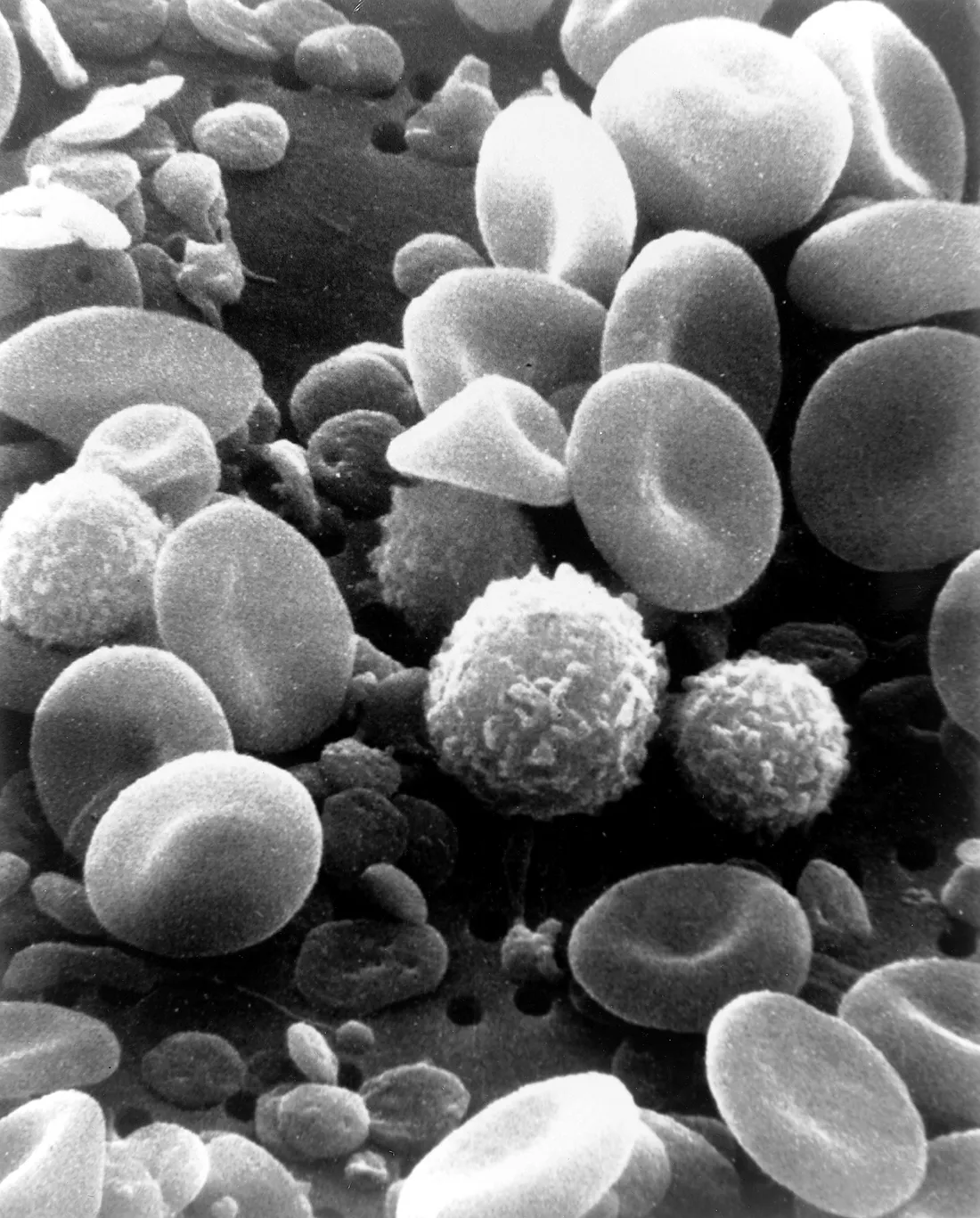
This philosophical question touches directly on the heart of the human body and of Andreas Strehler’s watchmaking. In a single year the human body pulls down trillions of its cells by apoptosis, that is to say by programmed cell death. The lining of the stomach is renewed every few days, the skin every two or three weeks, the red cells roughly every hundred and twenty days. After a few years almost no atom in our body is the atom of the first day. The human being has changed the garment of the body entirely. And yet you are still the same person; your childhood memories, your character, your soul and your legal identity do not change.
Suppose this rare watch is worn for a hundred years. At its routine services the wheels worn by friction are replaced with new ones, the synthetic ruby bearings that have dried are taken out and fresh ones fitted, the mainspring that has lost its elasticity is removed from the barrel and renewed, the gaskets and the synthetic oils are refreshed completely. At the end of the century almost every atom on the watch has changed. Is it still the Andreas Strehler Trans-axial Tourbillon? The answer is certainly yes. For what makes the watch that watch is not the atoms or the metal molecules themselves, but the architectural order laid upon those atoms, the geometry, the proportion and the conceived design the master horologist drew.
format_quote"Atoms are porters carrying a temporary load; what matters is the order and the meaning that holds those atoms."
Hasan Bekmezci
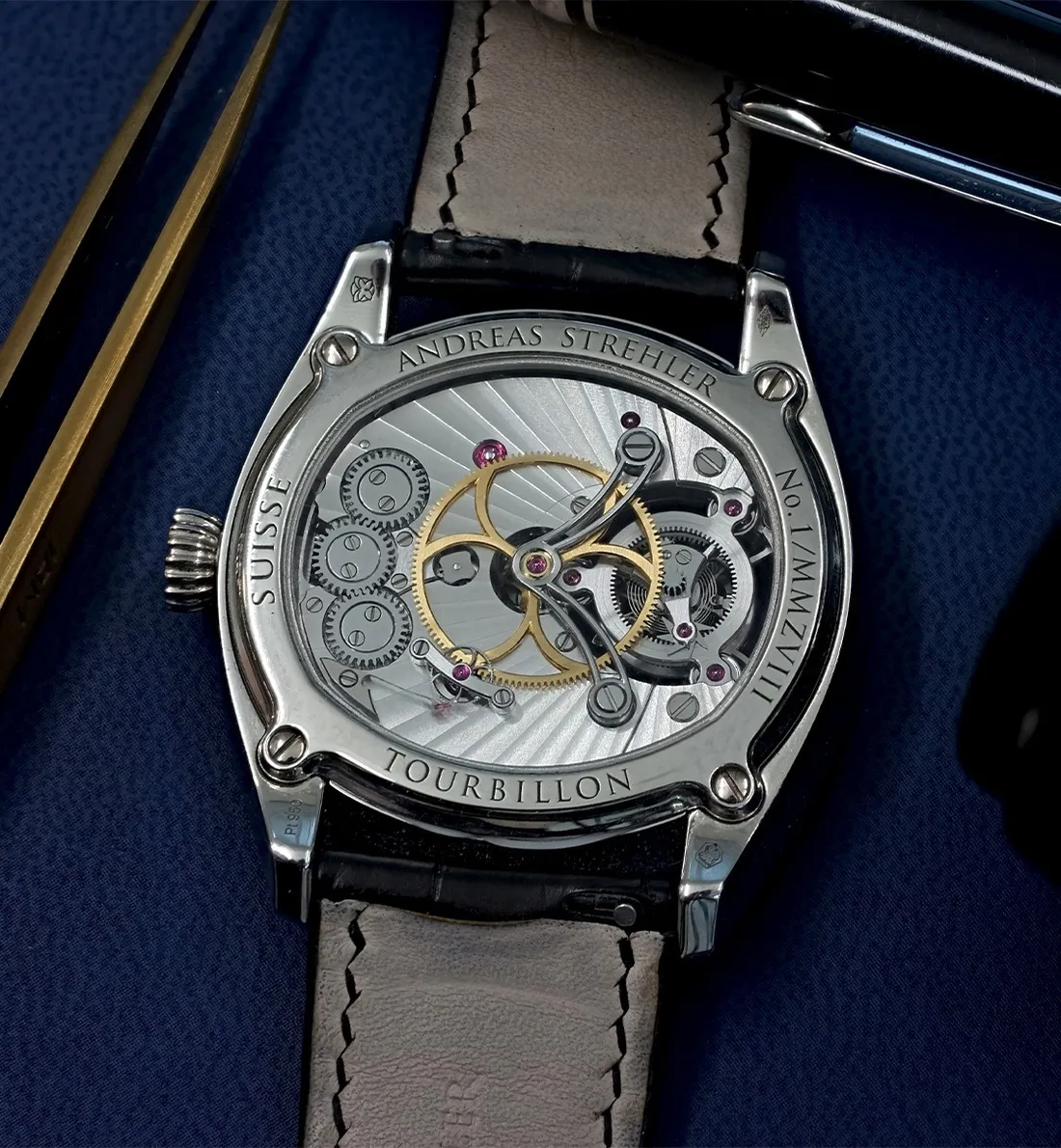
That order is a measurable order. The tonneau movement is thirty two millimetres by thirty and seven millimetres thick; it is built of two hundred and fifty parts and beats three times a second. The dial is made of silver and sapphire, and some of the wheels turning behind the sapphire are themselves sapphire, so that the eye can look from one storey of the mechanism through to the next. The forty one by forty seven millimetre case is made in eighteen carat rose gold, in platinum, in steel or in titanium, and is only ten millimetres thick. The hands are blued steel, and the strap is black alligator.
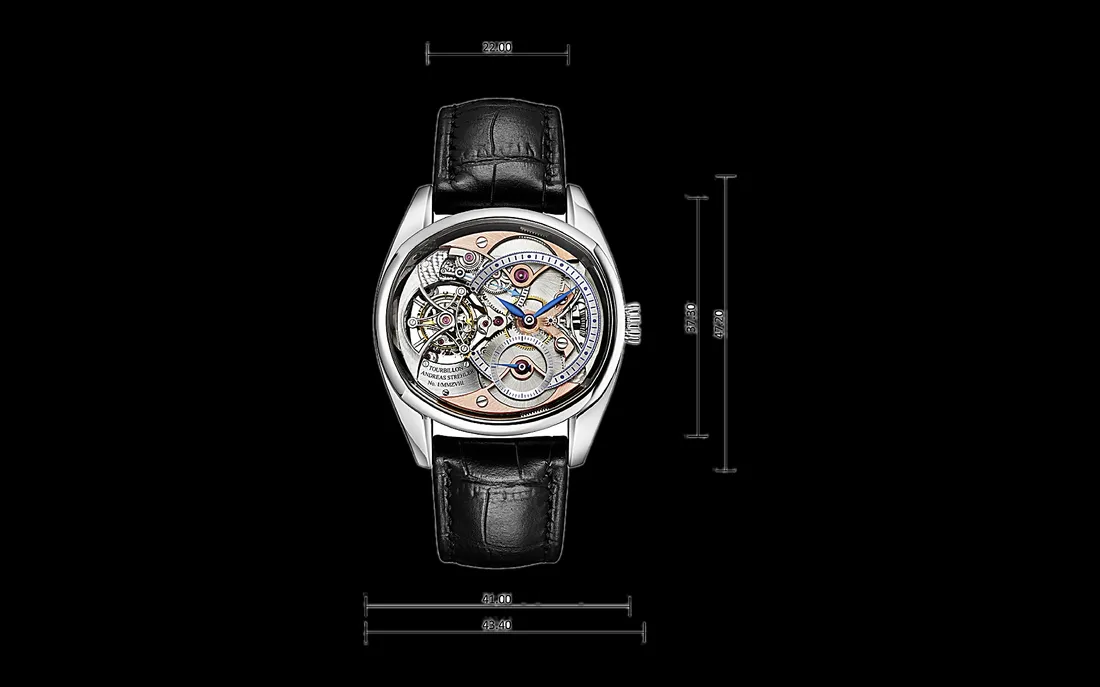
When you look at the dial of the Trans-axial Tourbillon, the tourbillon cage is there, turning about an axis with an unbroken elegance. Conceived to cancel the deviations of gravity, this mechanism oscillates in a flawless rhythm across small fractions of the second. In a process without plan, without a master and without knowledge, it is impossible for these micro wheels to assemble themselves and keep time without error. Just as it cannot be explained by chance that a commonplace atom from the soil or the air should pass through four sieves and settle in a cell of the human eye like an official at his post, exactly where it is needed and not by blind accident, neither can the hundreds of micro parts in the Trans-axial Tourbillon come together without friction and keep time without error of their own accord.
That the atoms in our bodies and the particles in our eyes are despatched in a determined order is clear evidence that the possessor of infinite knowledge and will who despatches those particles is able to bring the human being together again in that same order after death.
format_quote"Where there is order, there is a mind and a will that appoints it and sends every part to its post."
Hasan Bekmezci

The Andreas Strehler Trans-axial Tourbillon shows us that where there is order there is no room for chance. Even the smallest particle moves at the command of a high plan and a will. A single nutrient atom despatched to a cell of the human eye, and a wheel screw worked to the micron in the hands of a watchmaker and set into a tourbillon cage, both cry out the same truth.
The watch on its maker’s own site: Andreas Strehler, Trans-axial Remontoir Tourbillon