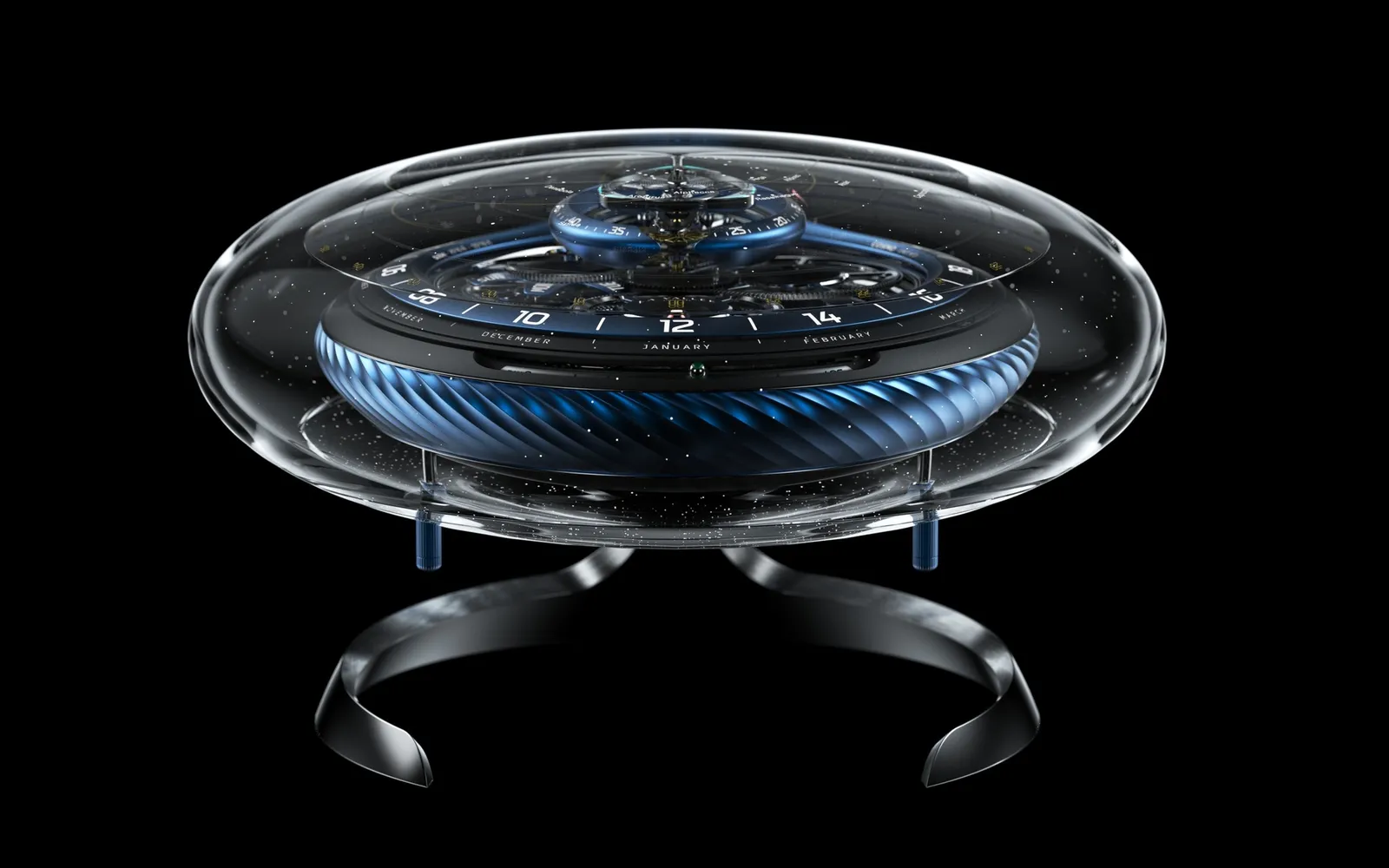
To imprison the immense turning of the heavens, the alignment of the stars and the invisible flow of time in wheels of bronze, in domes of sapphire and in springs of steel is the most immense appearance of man’s effort to understand and to imitate the flawless astronomical order the Creator established in the universe.
In the world of haute horlogerie there are certain masterpieces that do not merely measure time; they set out, directly, a mechanical and cosmological simulation of the universe. The COSMO of the La Vallée workshop, which unites the artistic spirit of the Lake Como region of Italy with mechanical engineering of the highest order, represents the very summit of that philosophy. The workshop stands at Vertemate con Minoprio, just beside Como, and this piece was designed by Luciano Sasso, the head of research and development and the son of a family that has been making clocks for four generations.
Some forty centimetres across, eighteen kilograms in weight and valued at 510,000 Swiss francs, this astronomical sculpture of a clock is the summit of micro-engineering, from its hand-blown Murano glass dome to the enormous balance wheel that imitates a human pulse. At the Grand Prix d’Horlogerie de Genève given in Geneva on 7 November 2026, this piece took the Mechanical Clock Prize. Let us now examine, through this work, the cosmological constants, the universal phenomena and craft in its purest form.
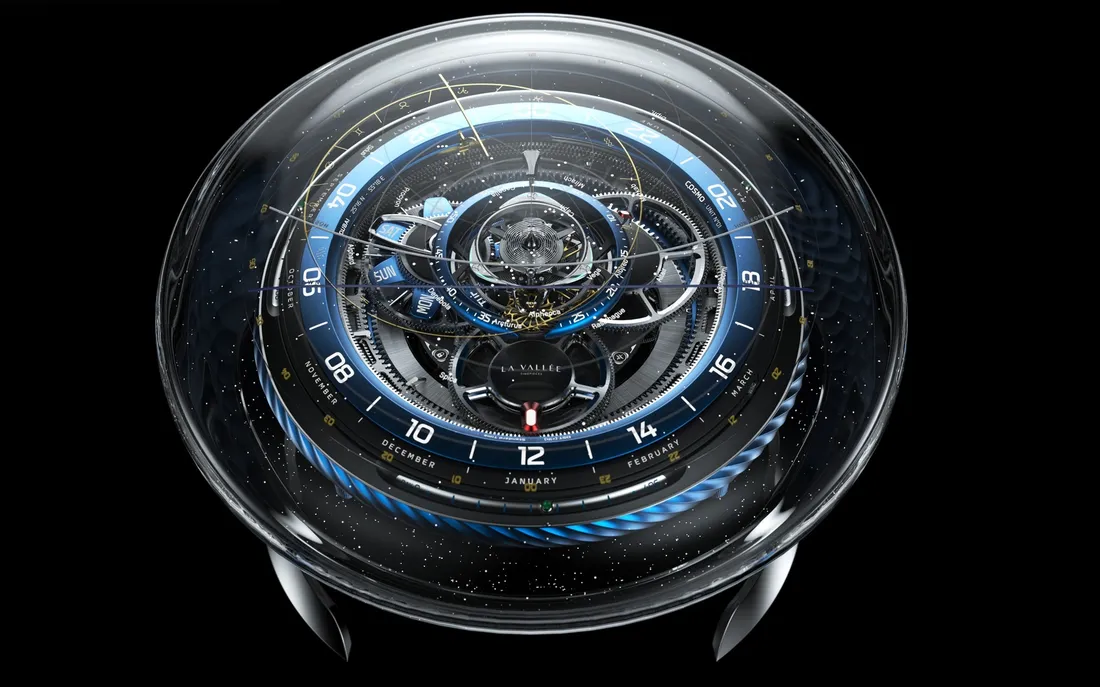
That the universe can continue to exist rests not on an aimless chaos but on cosmological constants, on everything from particles to galaxies being set with a fine precision. That order, which physicists and astronomers call fine-tuning, takes concrete shape in the wheels of COSMO.
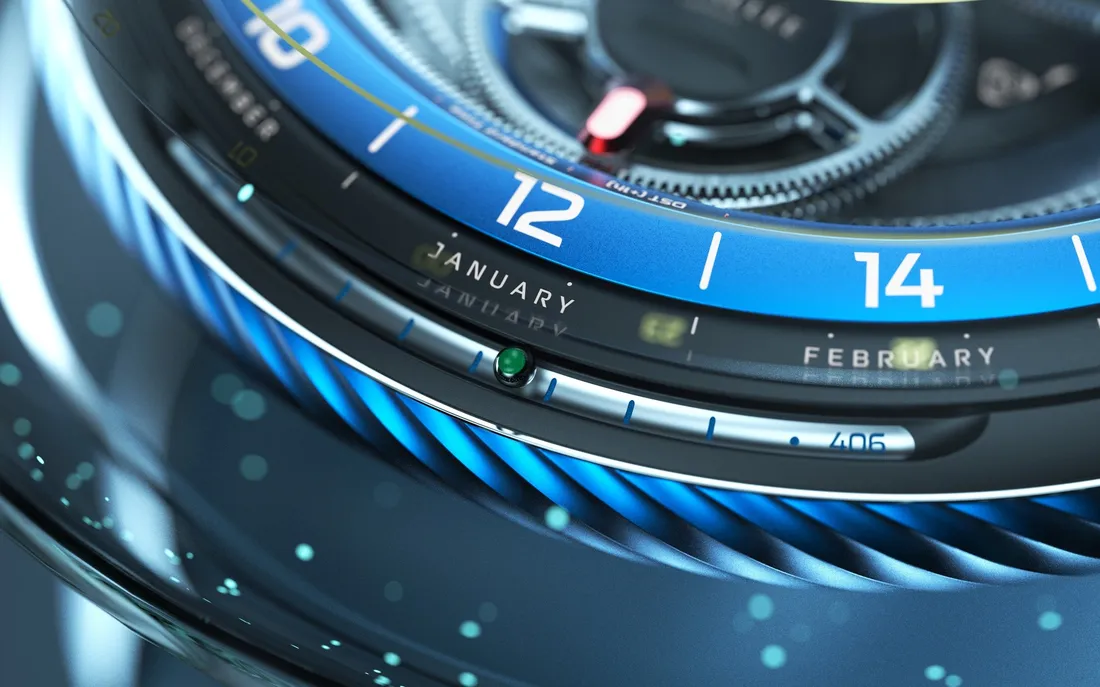
In the universe entropy always increases; time flows forward irreversibly. The 406-day power reserve at the heart of COSMO works in absolute obedience to the first and second laws of thermodynamics as it turns the potential energy of the mainspring into kinetic energy. What makes that endurance possible is a transmission, patent pending, made of just two eccentric gears; with a few parts added, the same arrangement also becomes a stopwork that counts the four hundred and six turns of the barrel. The energy left is read from three spherical indicators that look like small planets; when the reserve falls to fifty days those spheres turn, hiding their green faces and showing red.
format_quote"That the universe can continue to exist rests not on an aimless chaos but on cosmological constants set with a fine precision."
Hasan Bekmezci
The orbital motion of the earth around the sun, three hundred and sixty-five days, five hours, forty-eight minutes and forty-five seconds, is the first measure the sky imposes on a human being. COSMO, however, takes its own measure not from the solar day but from the sidereal day: the whole mechanism completes its turn about its own axis in twenty-three hours, fifty-six minutes and four seconds. While a red index turning around the central escapement shows the minutes, the hour and month rings turn at their own speeds, and the right indication always falls against its own marker. That mathematical perfection in the universe finds life again in wheels made by human hands.
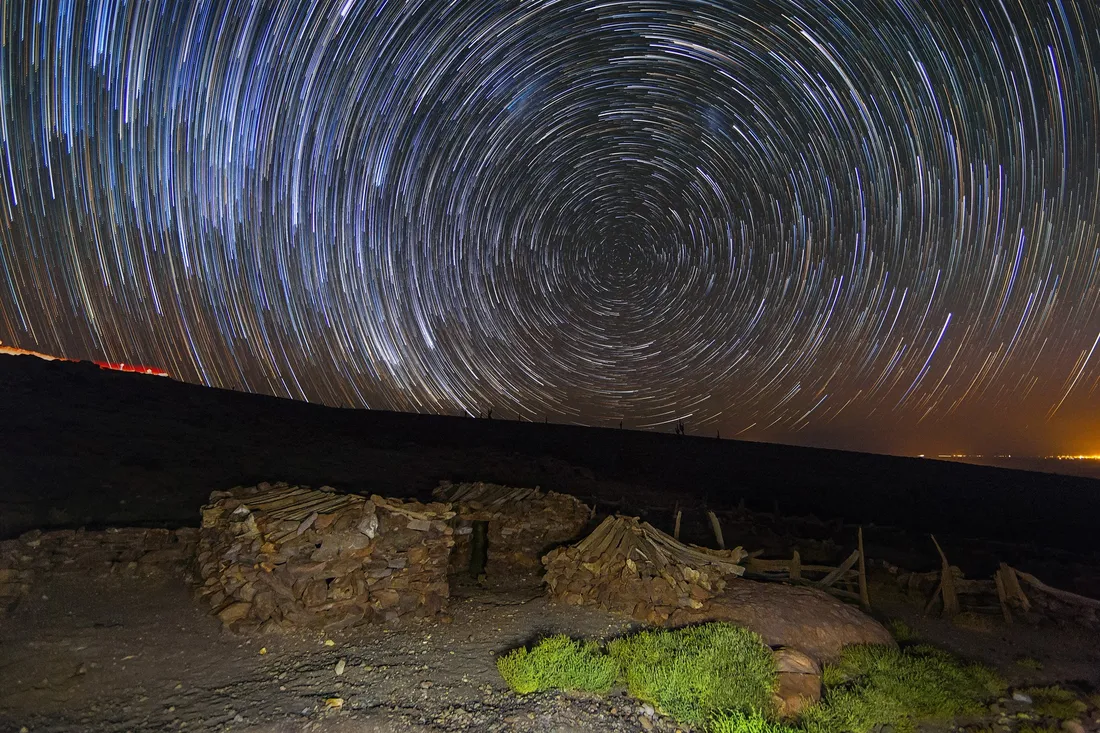
The twenty-three and a half degree tilt of the earth’s axis and its elliptical orbit create deviations of plus or minus sixteen minutes between our sundial and our standard clock. COSMO does not hide that cosmic deviation; it shows it directly: the dial carries its own reading for local solar time, and the gap between the true motion of the sky and the mean hour on our wrist can be followed there throughout the year. On the same surface lie sunrise and sunset, the duration of dawn and dusk, the position of the sun and of the stars, and the signs of the zodiac; the gold-plated sun hand completes its turn in twenty-four hours.
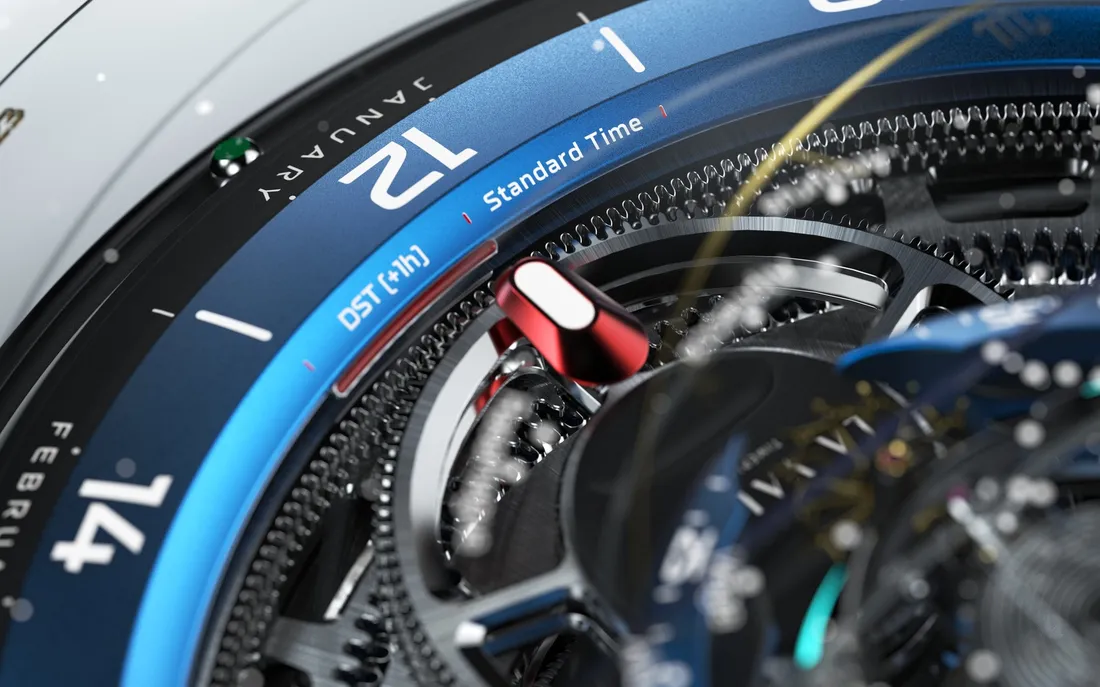
The outer dome that protects this immense cosmic mechanism from the world outside and displays it with a three-dimensional depth is no industrial plastic or flat glass; it is the work of the legendary Murano glass mastery of Venice and of a divine dance performed with fire. The stages in which this enormous transparent dome comes into being are, as it were, the disciplining of matter by fire.
The craftsmen of Murano blend the purest silica sand with soda ash and lime as fluxes. For the glass to reach that flawless optical purity and colour, the mixture is prepared with a microscopic care. The prepared raw material is melted in special furnaces at extreme temperatures passing fourteen hundred degrees; that high heat unties the molecular bonds of the solids and turns them into a fluid paste of glass.
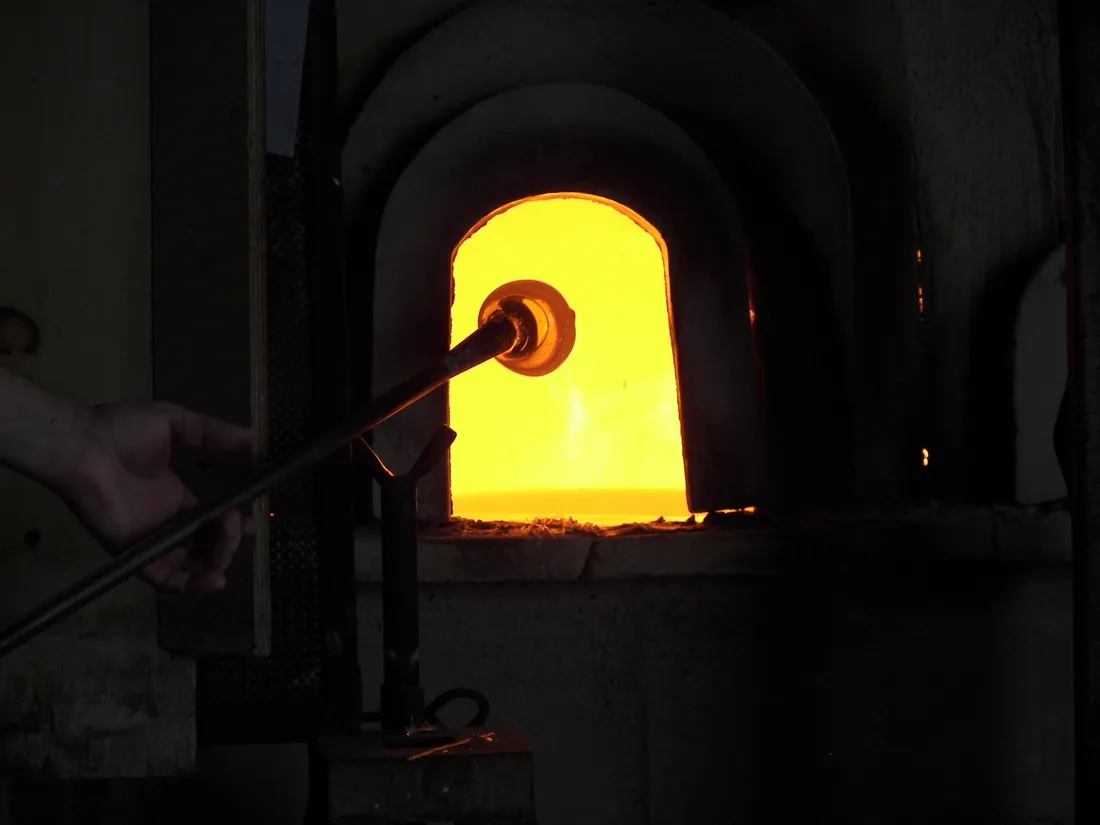
The master blower draws out of the furnace the glowing, incandescent paste of glass taken onto the end of a long iron pipe. With his breath, and by turning the iron pipe without pause, which is to say by using centrifugal force, he gives the glass its first form. To reach the form of this enormous dome forty centimetres across, it is carefully stretched with hand tools inside moulds of iron or of wood.
Once the shaping is over, the glass is cooled slowly for days in annealing kilns in order to destroy the thermal tensions inside it. Should the rate of cooling be uneven, the dome shatters from its own internal tension.
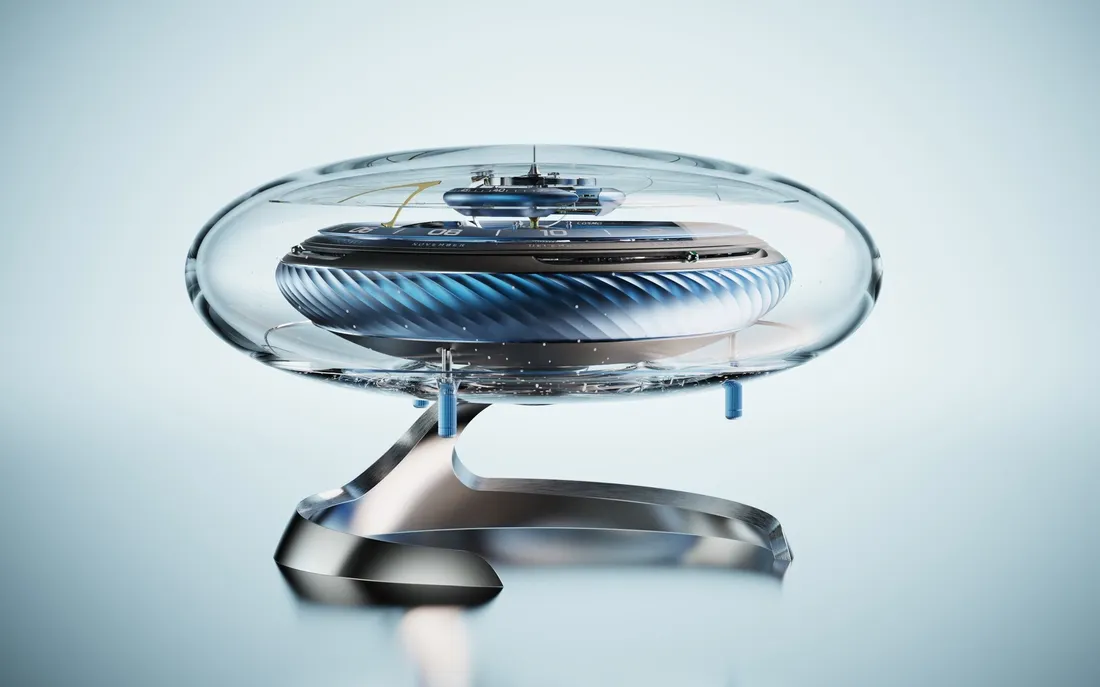
format_quote"The stages in which this enormous transparent dome comes into being are, as it were, the disciplining of matter by fire."
Hasan Bekmezci
When we look at the La Vallée COSMO and at its Murano glass dome as a whole, what we see is a small divine ode that human intellect and human patience have written upon the universe. Just as the Creator governs immense galaxies, the cycles of the zodiac and the orbits of the planets with a flawless gravitational and thermodynamic balance, so the masters of La Vallée have built that same order again at a microscopic scale in this ecosystem of steel and brass made of 1,280 parts.
format_quote"A small divine ode that human intellect and human patience have written upon the universe."
Hasan Bekmezci
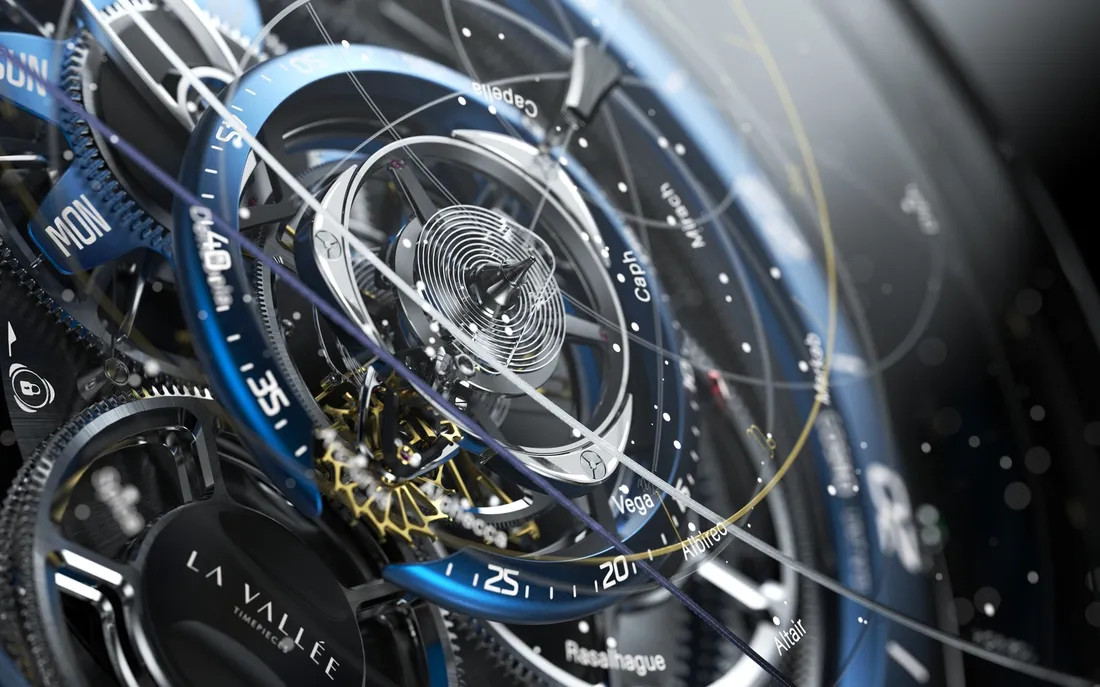
While the fourteen-hundred-degree fire of the Murano furnaces shapes the glass and brings this cosmic dome into being, the mechanical springs and the balance wheel inside the clock are fired in the fire of time too, and whisper to a human being the truth of the moment. That balance beats fifty-six times a minute, and an owner who wishes it may have it set to the number of his own resting pulse; when the knob beneath the dome is turned, the whole escapement rises by one millimetre until it touches the glass, and the ticking grows tenfold and fills the room.
When a human being looks at this work he does not see merely a clock; he grasps in its purest form his own Earth turning in the immense void of the universe, the unshakeable rhythm of the stars, and how that divine order has become a work of art through human will.
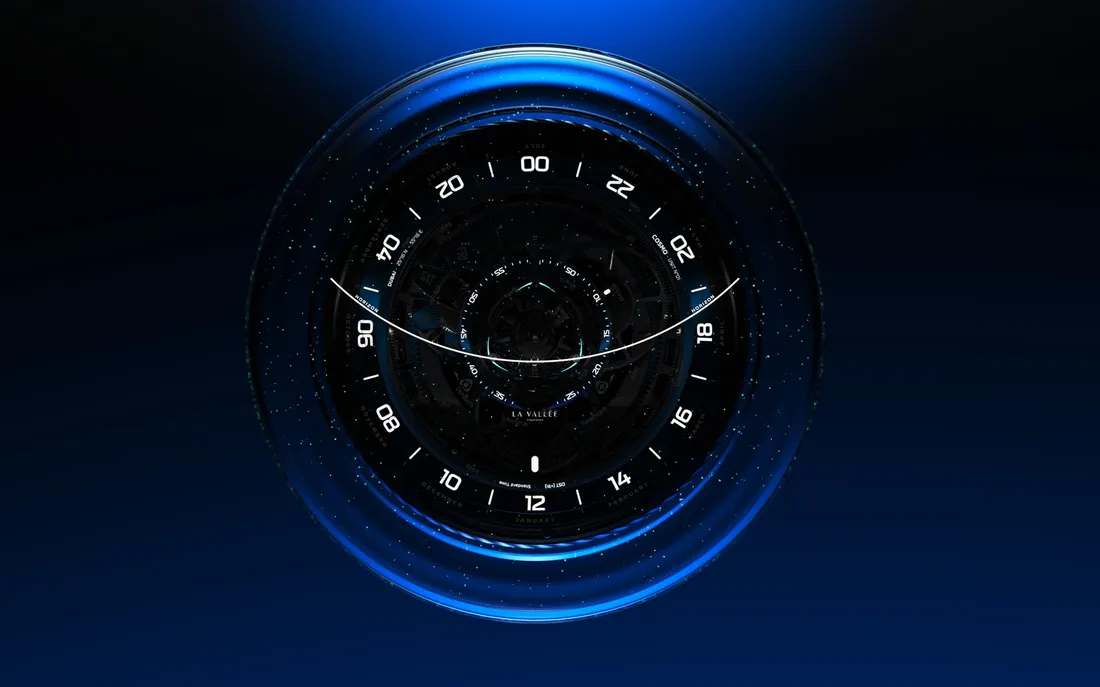

The clock in the words of its maker: La Vallée, COSMO