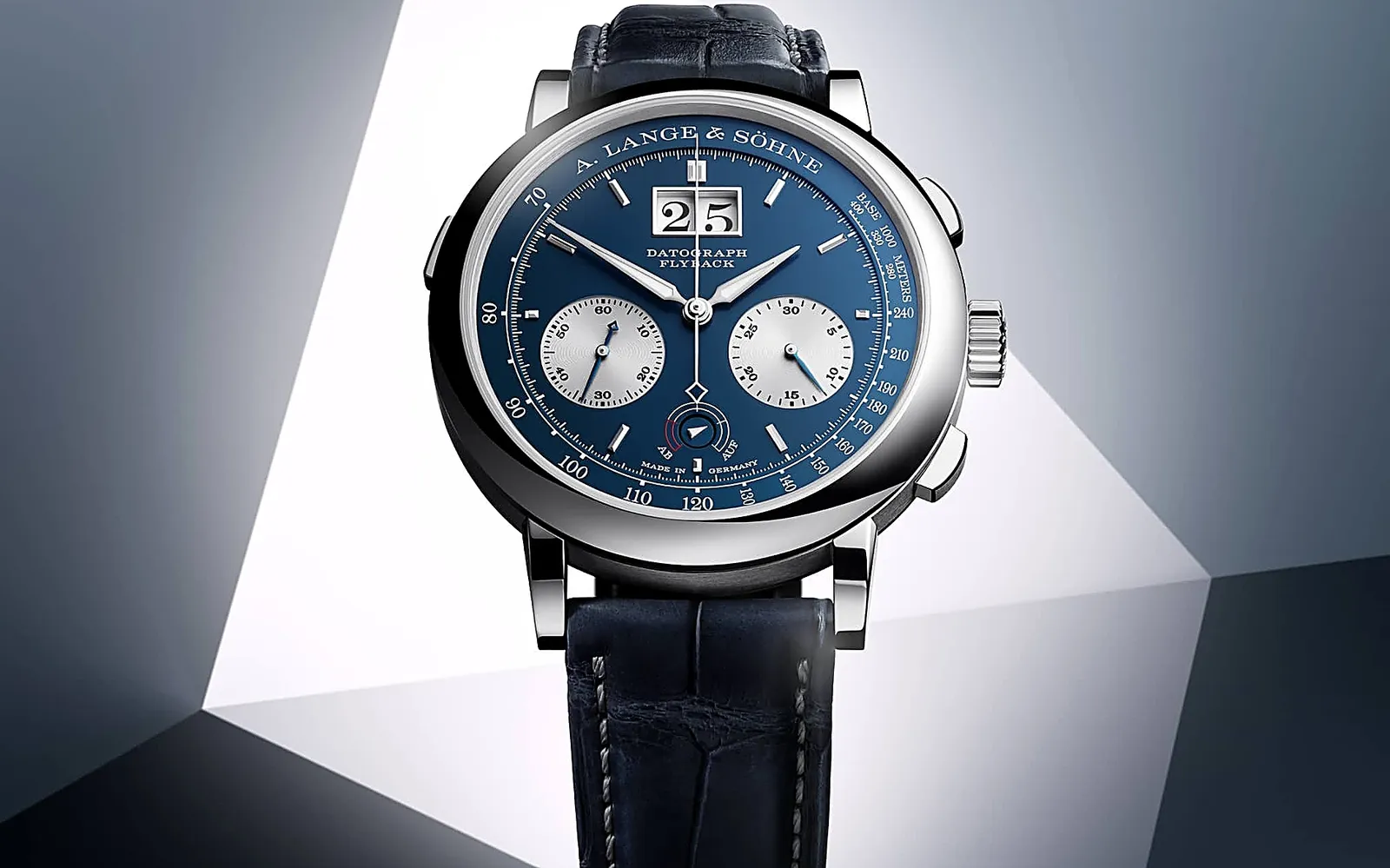
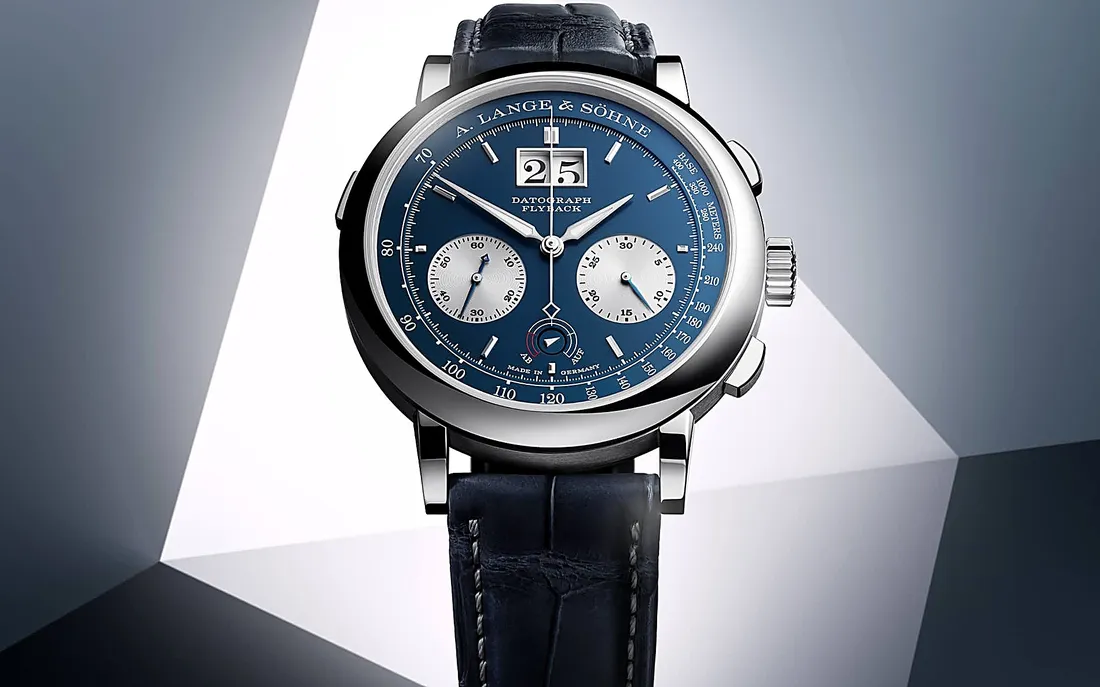
Time runs without a break. Every instrument that displays it has to cut that flow somewhere. Inside a watch the balance wheel is the part that does the cutting; it swings back and forth, and with each swing the escapement releases the going train by one tooth. The smallest interval a watch can show is exactly the distance between two of those beats.
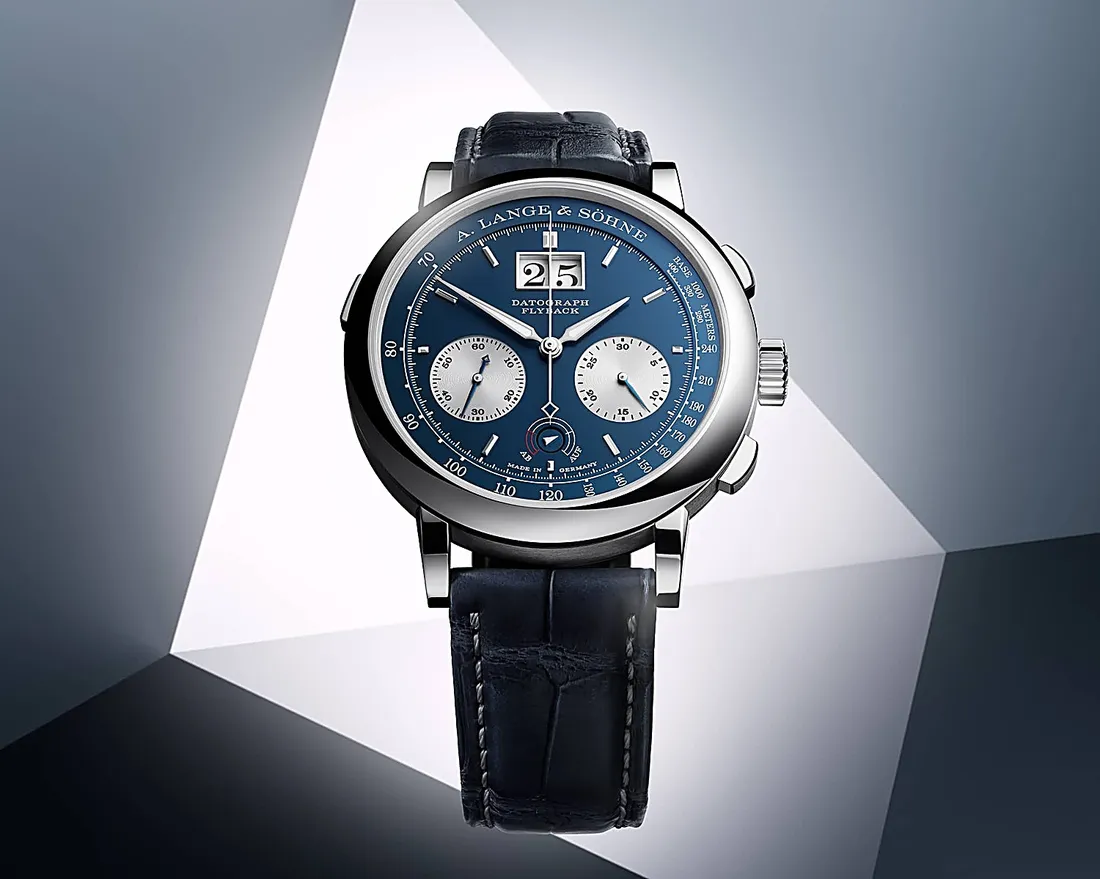
The heart of the Datograph Up/Down performs eighteen thousand semi-oscillations an hour. That comes to two and a half full swings a second, which is five beats a second. This chronograph therefore measures one fifth of a second. Nothing smaller.
Today’s standard is four oscillations a second, and some chronographs run very much faster. Lange choosing to stay slow is not a technical lag but a decision. A slow balance spends less energy, wears less, and holds its regulation for longer.
format_quote"The smallest interval a watch can show is the distance between two beats. Anything finer is a guess."
Hasan Bekmezci
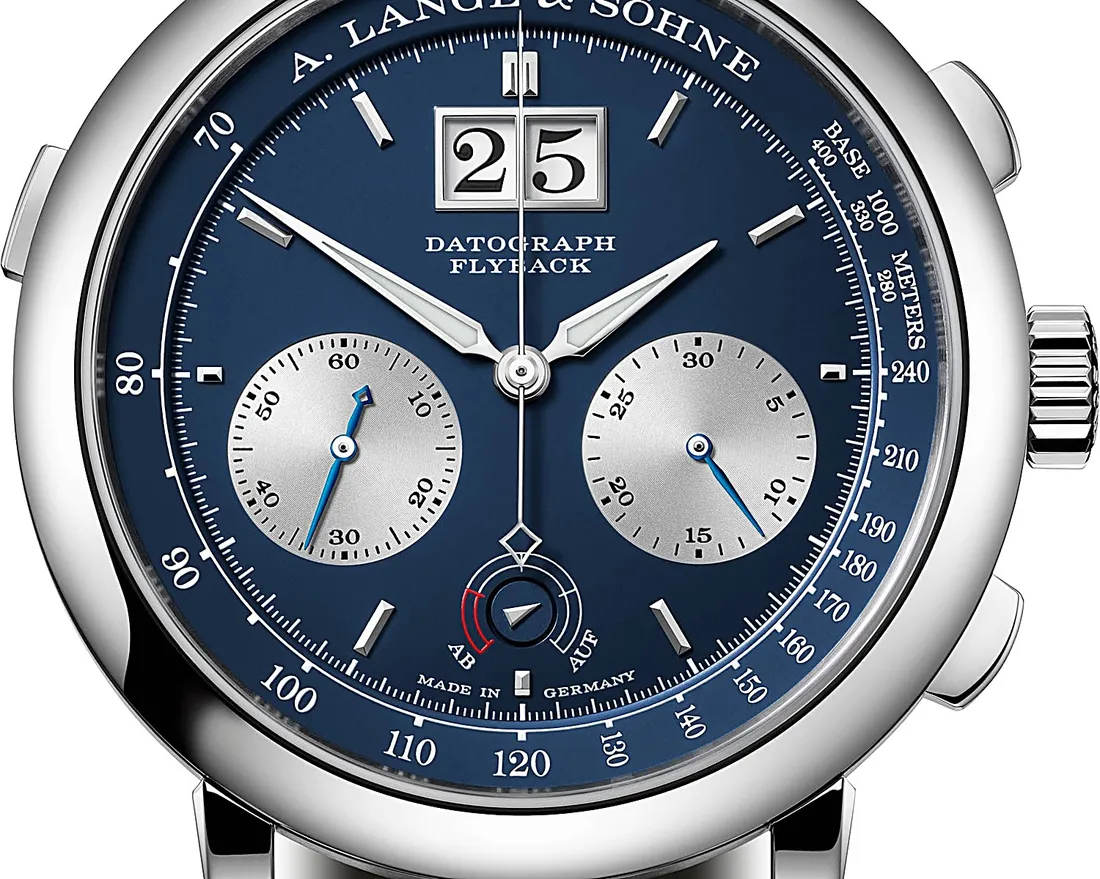
That decision has a direct consequence, and it is visible on the dial. The chronograph seconds hand does not glide smoothly; it advances in small steps the eye can pick out. The scale is divided into fifths of a second to match. The watch shows you only as much as it can genuinely tell apart.
To see the value of that honesty, consider the opposite. A chronograph with a hundredth-of-a-second scale printed on its dial but a balance beating five times a second promises a precision it cannot deliver. A fine scale does not make a fine measurement. No measurement can be finer than the step of the mechanism behind it.
The same honesty shows itself far more plainly in the minute counter. On an ordinary chronograph the minute hand creeps. At the fifty-fifth second it sits somewhere between two numerals and you cannot tell which one to read. Lange’s minute counter does not creep. At the exact moment the chronograph seconds hand completes its sixtieth second, it jumps one step.
These are two different ideas of time. One imitates continuous flow and sacrifices legibility. The other divides the flow into open steps and is never ambiguous for an instant. The second is what one should want from an instrument of measurement.
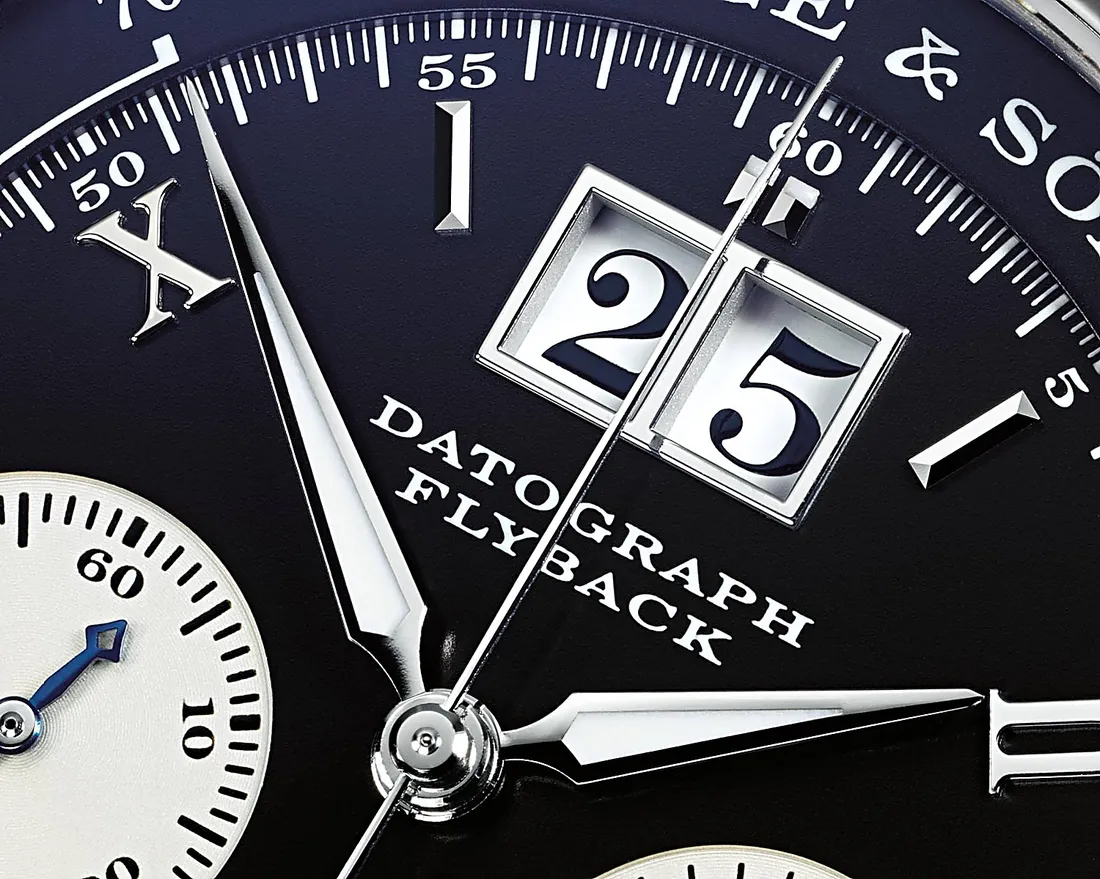
The twin aperture in the upper part of the dial carries the outsize date that is Lange’s signature, its numerals about three times larger than those of comparable watches. The mechanism consists of a units disc and a tens cross. The two cannot possibly advance at regular intervals, because the calendar is not a decimal system. When the units disc turns from nine to zero, the tens cross takes a step, but the passage from the thirty-first to the first demands that both return to the beginning at once. The mechanism is obliged to work to an irregular rhythm.
The reason for that lies in the sky. The Earth’s journey around the Sun is not a whole multiple of its turn on its own axis. The phases of the Moon do not fit either of them. A calendar is a compromise that tries to show three motions on one page when none of them divides into another. That irregular jump on the dial is a mechanical echo of the sky refusing to conform to human numbers.
format_quote"The irregularity in the calendar is not a human mistake. It is the sky refusing to conform to our numbers."
Hasan Bekmezci
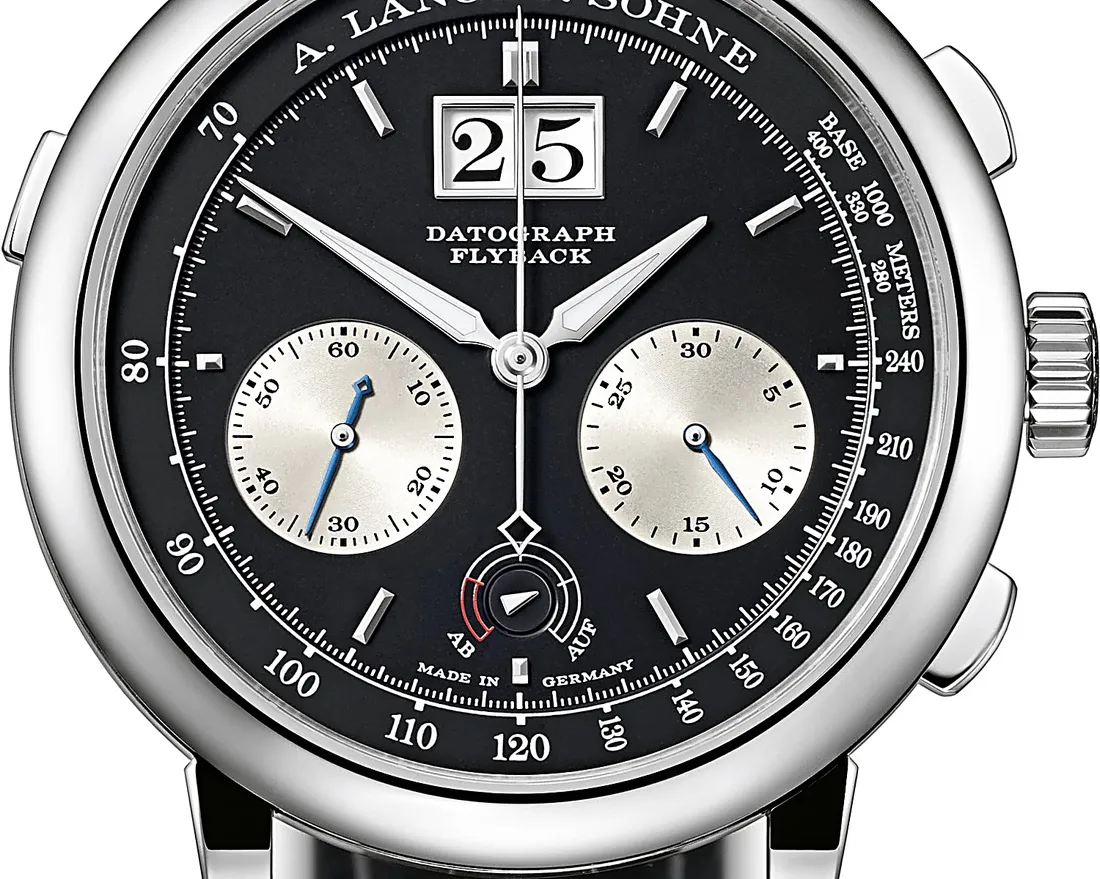
The lineage of this watch begins in 1999. Calibre L951.1, the manufacture’s first chronograph movement, appeared that year in the original Datograph and brought together a classic column-wheel chronograph with a flyback function, a precisely jumping minute counter and the Lange outsize date. The Up/Down, presented in 2012, carries calibre L951.6, with the power reserve raised to sixty hours and a power-reserve indicator added to the dial.
The flyback performs three operations in succession from one actuation of a single pusher: stop, reset, restart. It was a speed-switching function used in early aviation, where a pilot passing from one leg of a route to the next needed a solution that cost him no seconds and only one movement of the hand.
The name Up/Down comes from the power-reserve indicator at six o’clock. Its hand enters the red sector on the third day at the latest, telling you the watch is waiting to be wound.
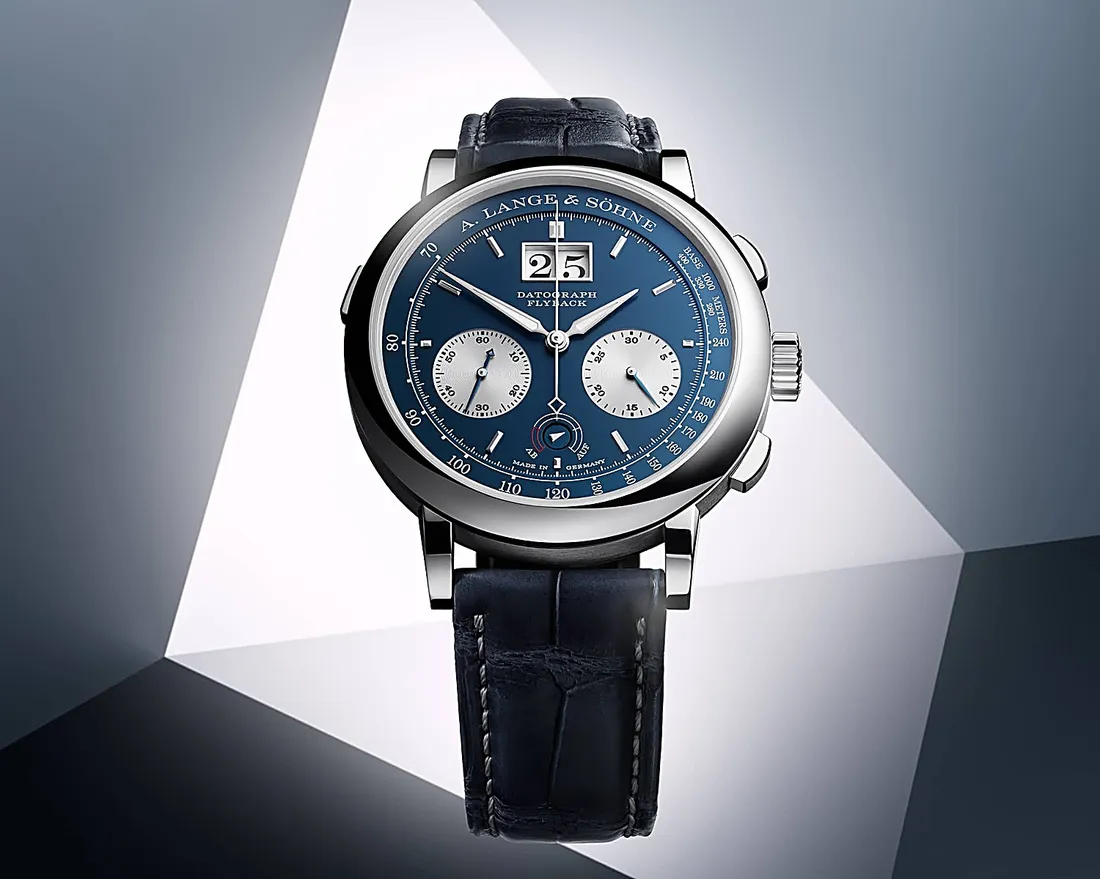
Picture two people at the bench arguing about this dial: the constructor of the calibre and the designer who drew the layout.
The designer objects to the jumping minute counter. It adds twenty parts to the movement and every part is a chance of failure. Users are perfectly used to a hand sitting between two numerals.
The constructor will not accept habit as an argument. Habit is one thing and correctness is another. A creeping hand gives you no answer at the fifty-fifth second; it leaves you between two answers. An instrument that avoids giving its answer stops being an instrument and becomes an ornament.
The designer asks the real question. And who is going to see those twenty parts? All that appears on the dial is a hand changing place in an instant.
The constructor’s reply is short. Nobody will see them. But the person wearing the watch will know, in every minute measured, that the answer was never left hanging. That is how trust is built: not by display, but by never once misleading.
format_quote"Every figure printed on a dial is a promise. A dial should not carry promises the mechanism cannot keep."
Hasan Bekmezci
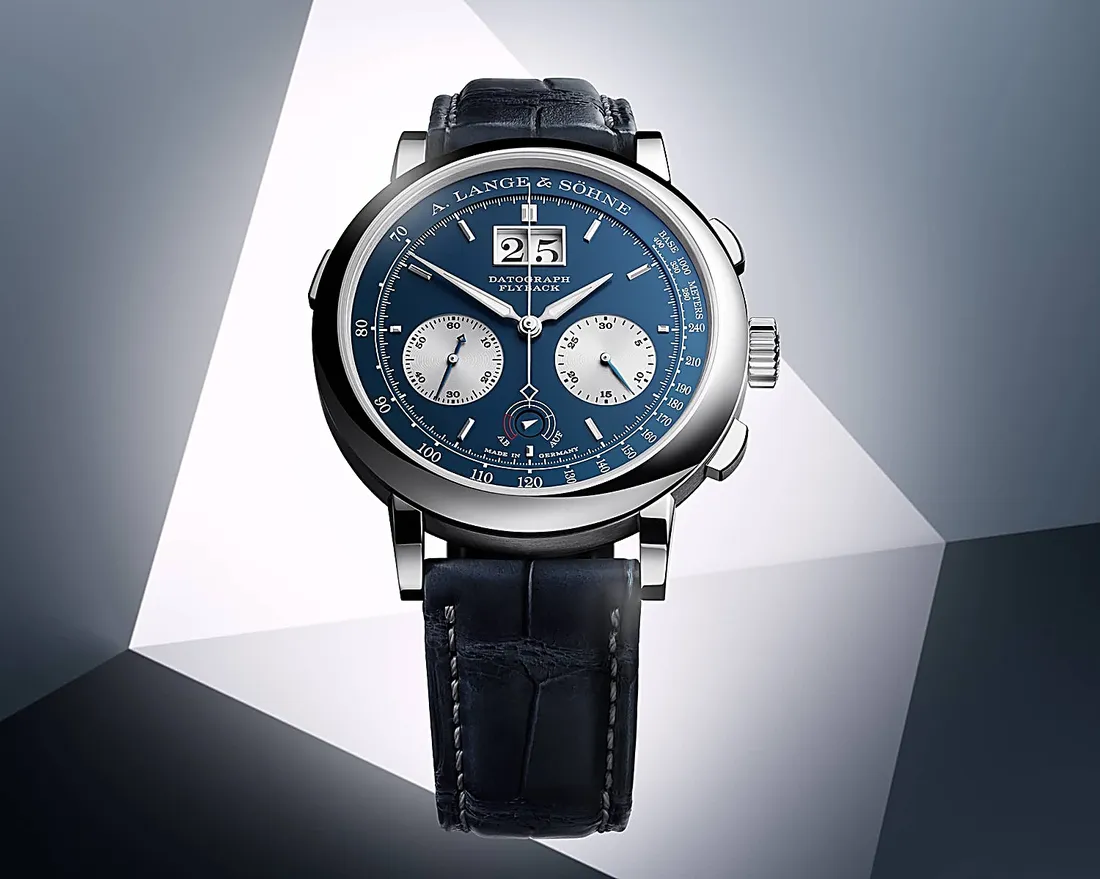
The layout of the dial is geometric. The twin date aperture below twelve marks the apex of an equilateral triangle, and the small seconds at nine with the jumping minute counter at three form its base. That triple arrangement lets the eye find the same balance every time it falls on the dial.
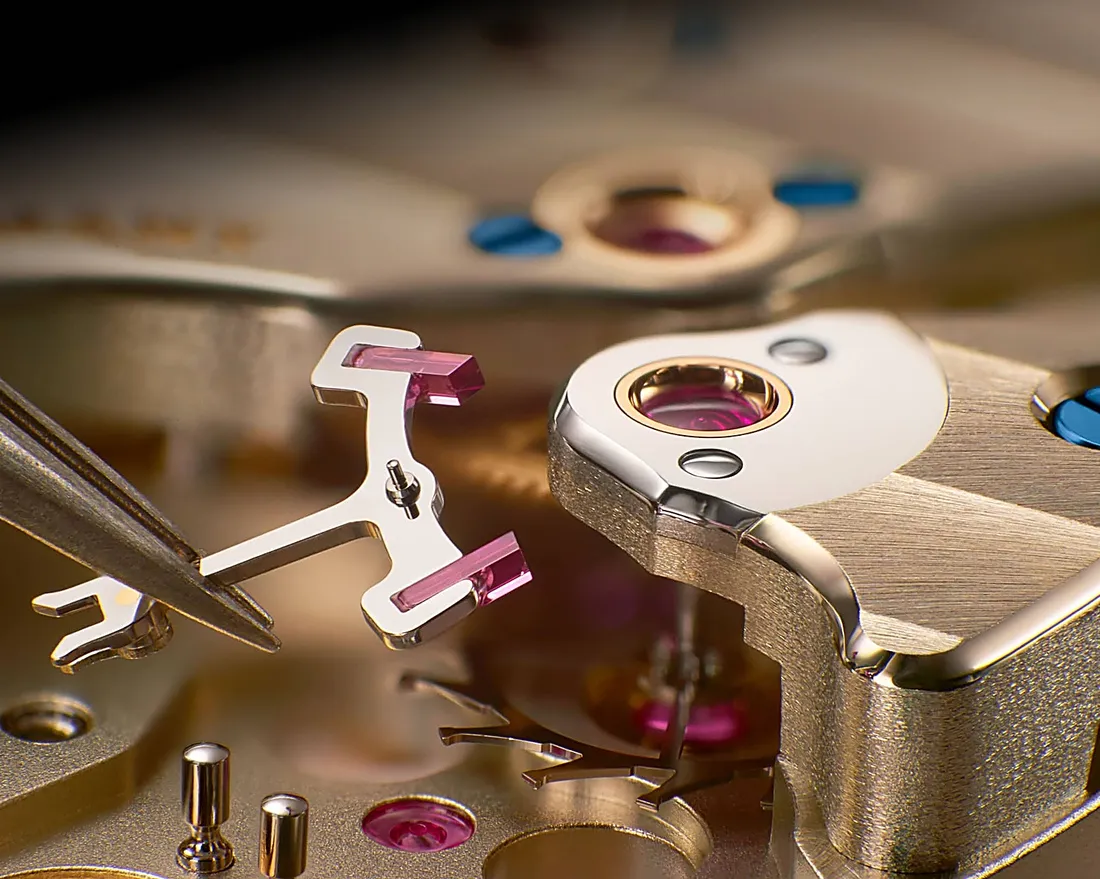
Calibre L951.6 consists of four hundred and fifty-one parts and is assembled, taken apart and assembled again. It uses a freely oscillating balance spring and a balance with eccentric poising weights. Parts such as the clutch rocker carry acute internal angles that can only be made by hand; the German silver bridges are left untreated; the balance cock is engraved by hand, the screws are thermally blued, and four gold chatons are held in place with screws.
The idea this watch stands on is simple and not easily accepted. Every instrument of measurement has a threshold, and nothing below that threshold can be seen at all. An event lasting less than a fifth of a second does not exist for this chronograph; it falls between two beats and passes without leaving a trace.
The same holds for our own senses. There is a limit to what the eye can separate, a range within which the ear can hear, a span for which attention can hold. A very large part of the world happens below our threshold, and we take it for absence.
An honest instrument therefore writes its own limit on its dial. A scale divided into fifths of a second promises nothing it cannot measure. A person who knows their own threshold is likewise spared from mistaking what they cannot perceive for what is not there. Remembering that the measure was not ours to set may be where the whole business of measuring begins.