To measure anything a person first had to find a unit, and the oldest units were whatever lay at hand: a foot, a span, a pace. The trouble was that every foot was different.
When something smaller and more consistent was needed, people looked at grain. Barley of a given kind grows with surprising uniformity; one grain is very close in length and weight to the next. For centuries weights were described by how many barleycorns they came to, and lengths by how many grains lay end to end. That an inch counts as three barleycorns in the English system is a survival of this habit.
Humanity found the first fixed point of measurement in the regularity of a plant. And watchmaking gave that grain’s name to a texture.
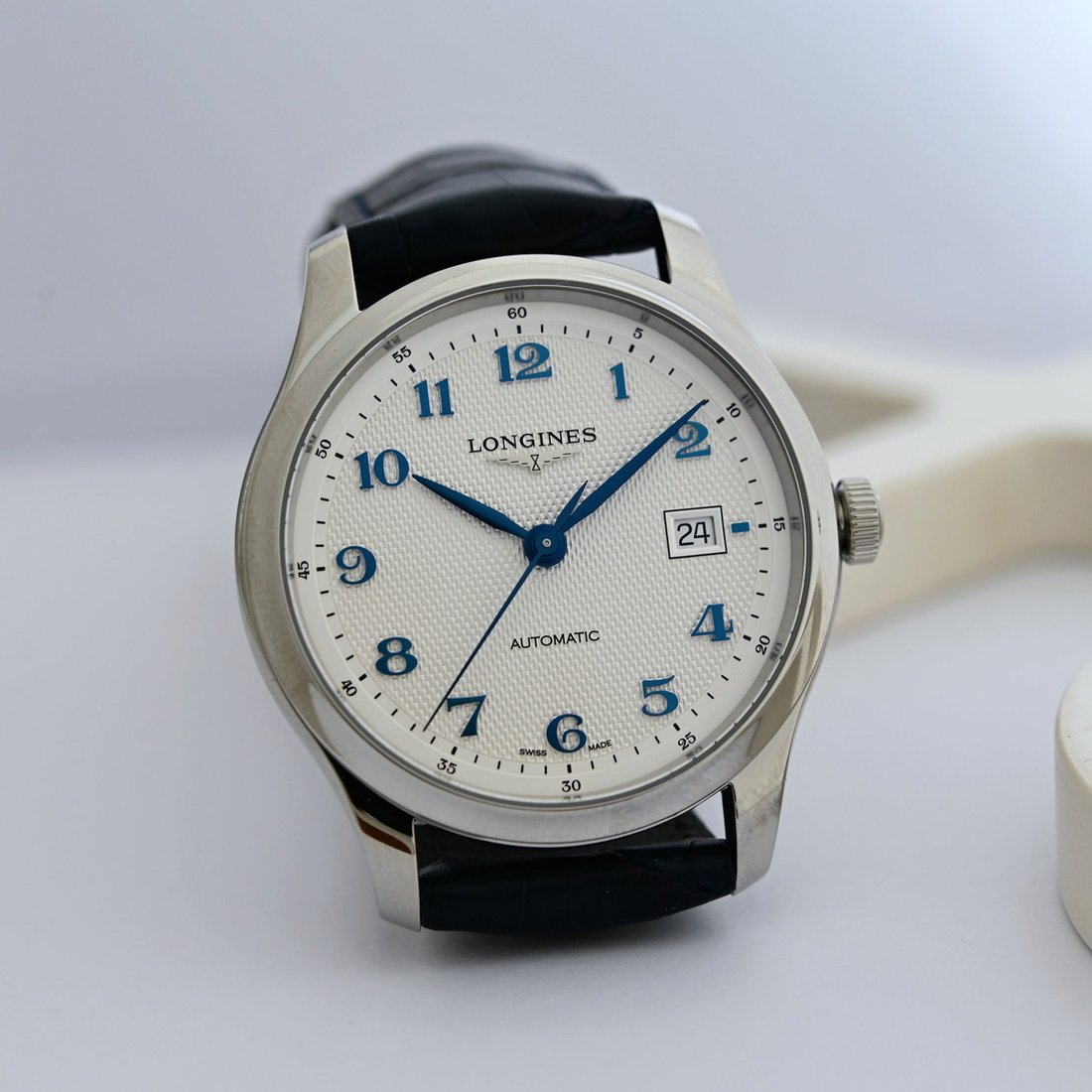
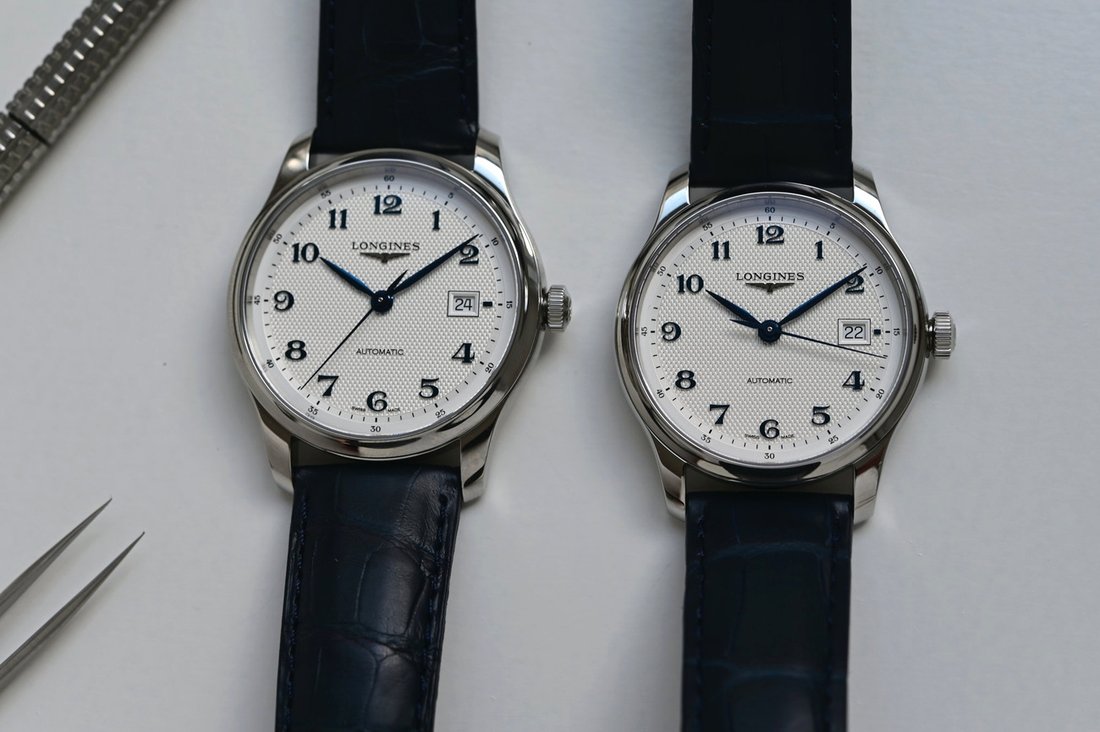
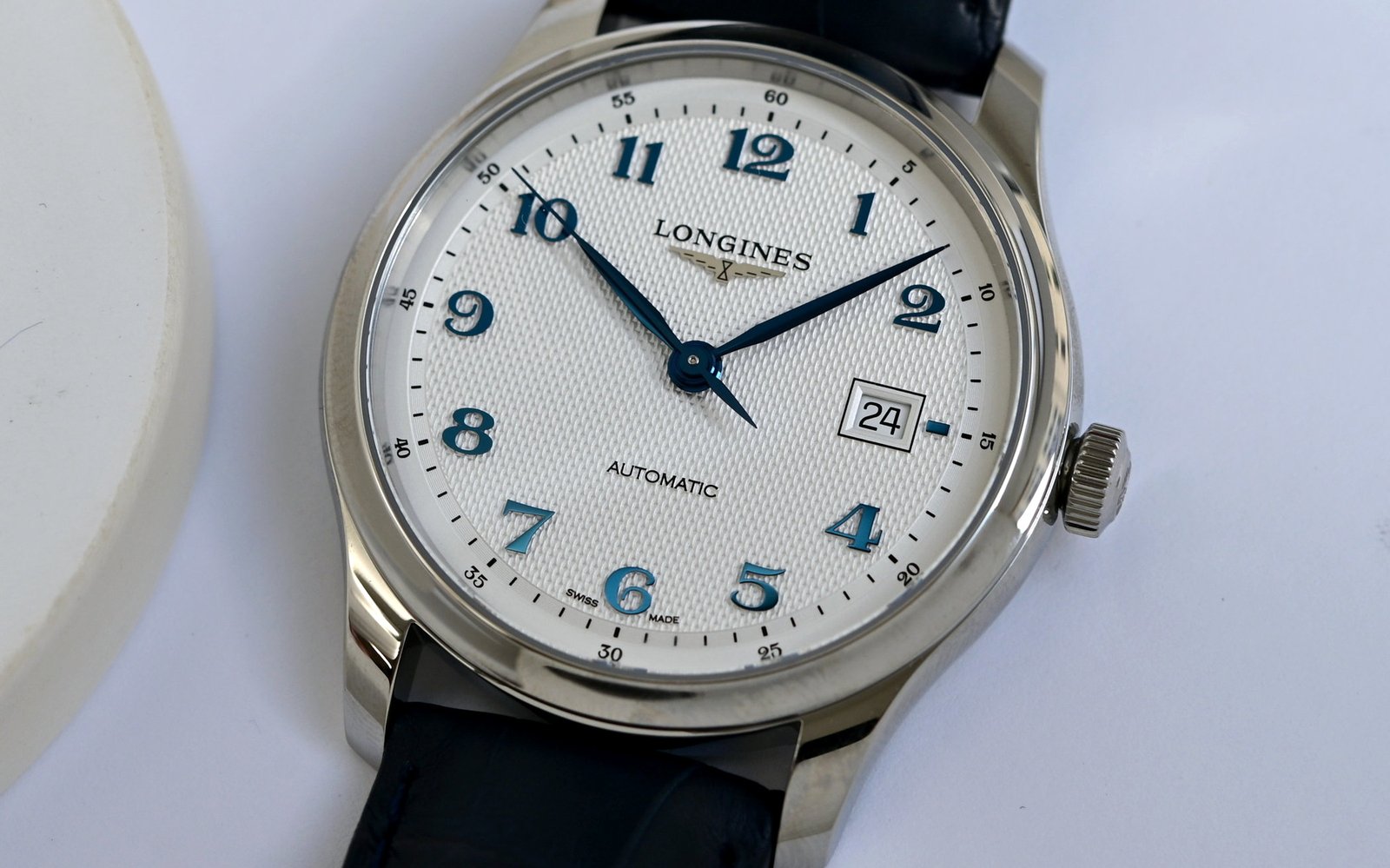
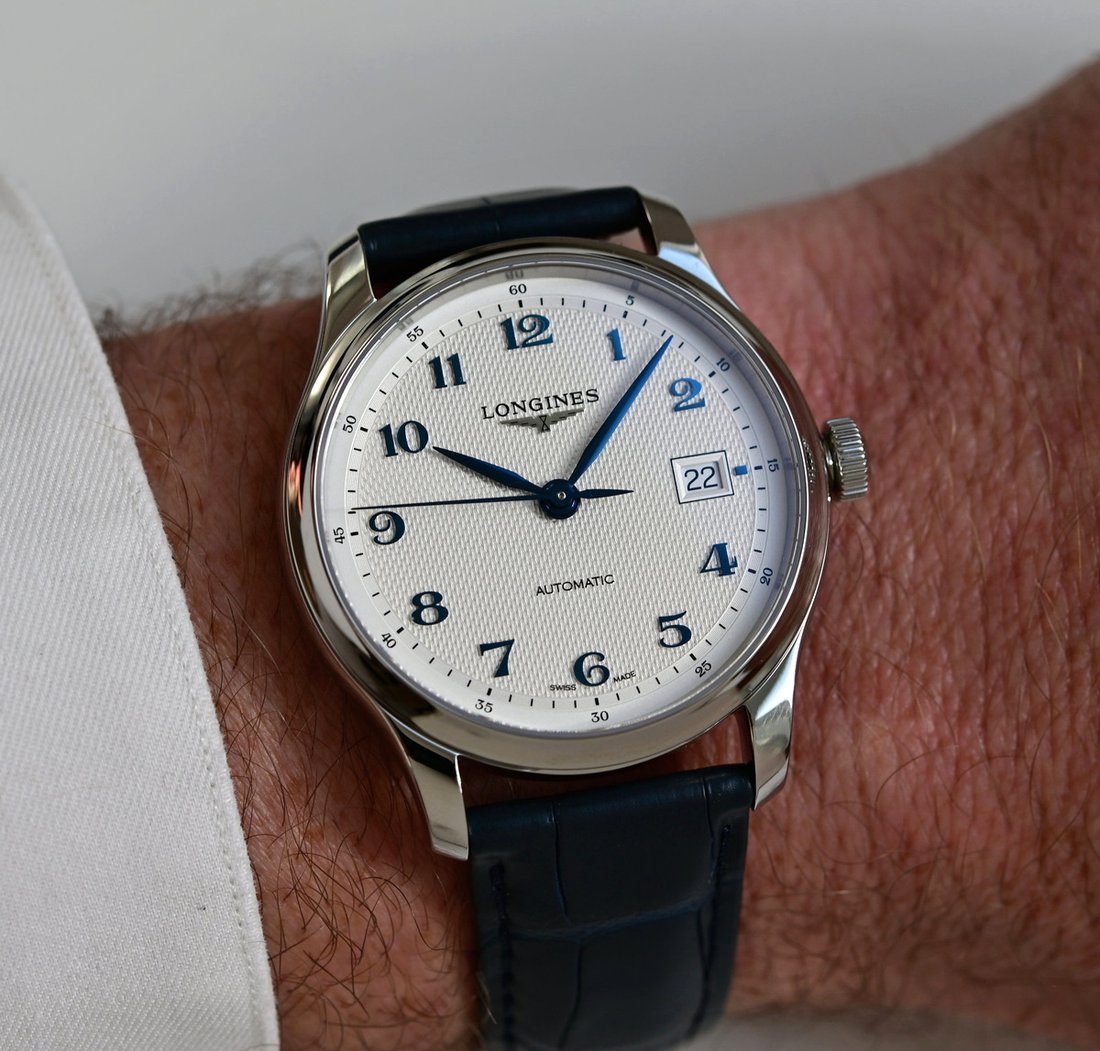
In the world of guillochage, barleycorn is a texture built from fine intersecting curves that leave a field of small ordered lozenges on the surface. The name comes from those little cells sitting in rows like the grains on an ear.
The function of that texture on a dial is not decoration but the breaking up of light. A flat dial reflects light in one piece and goes unreadable at certain angles. Divide the surface into thousands of small slopes and the light scatters in every direction; the dial stops glaring and gains depth instead. On a wrist that means you read it the same way under the sun and under a lamp.
Longines has carried that texture onto every dial of the Master Collection family it renewed for 2026. Not on a single model but across the whole range, from thirty millimetres to forty-one.
format_quote"The function of this texture is not decoration but the breaking up of light. The dial stops glaring and gains depth."
Louis Lorent
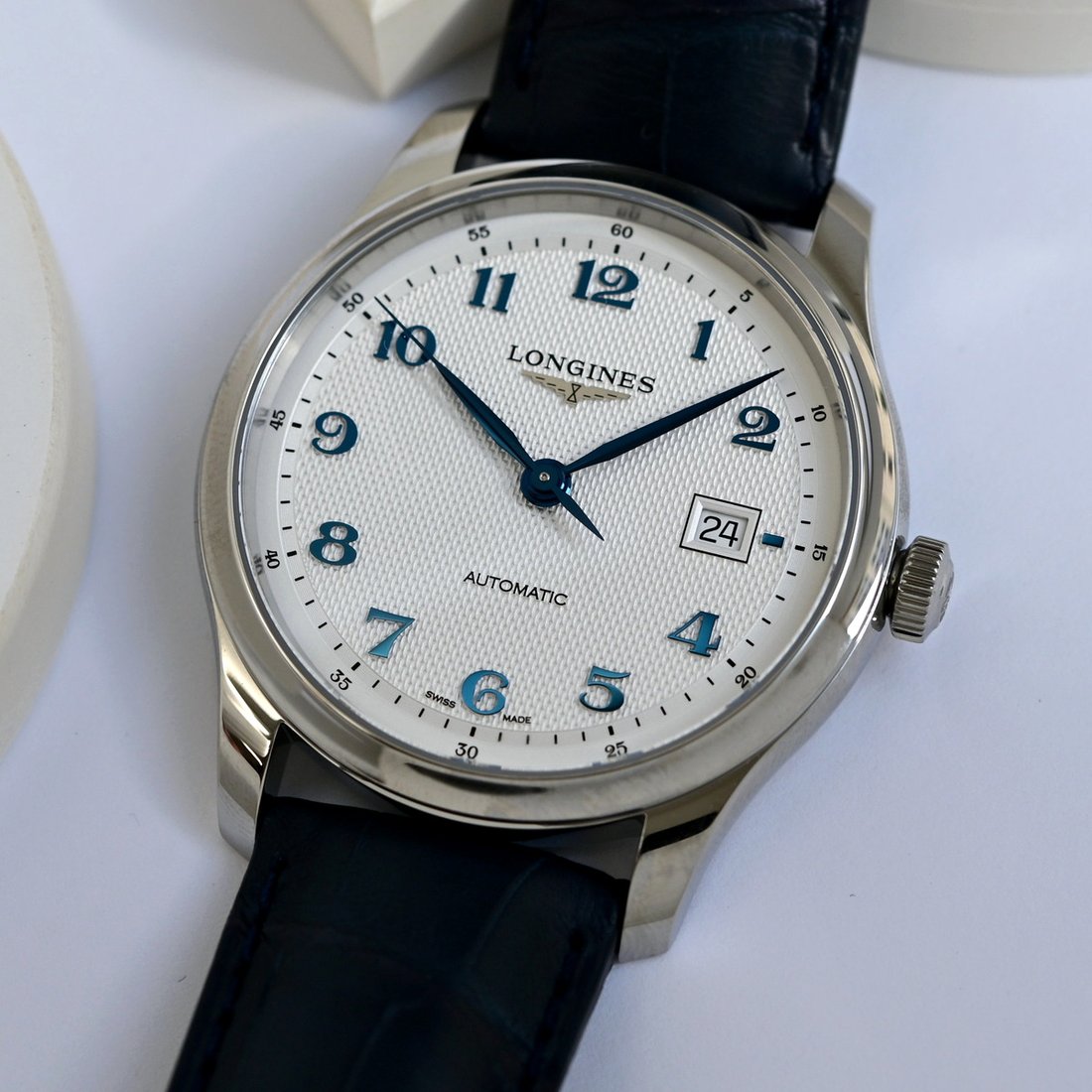
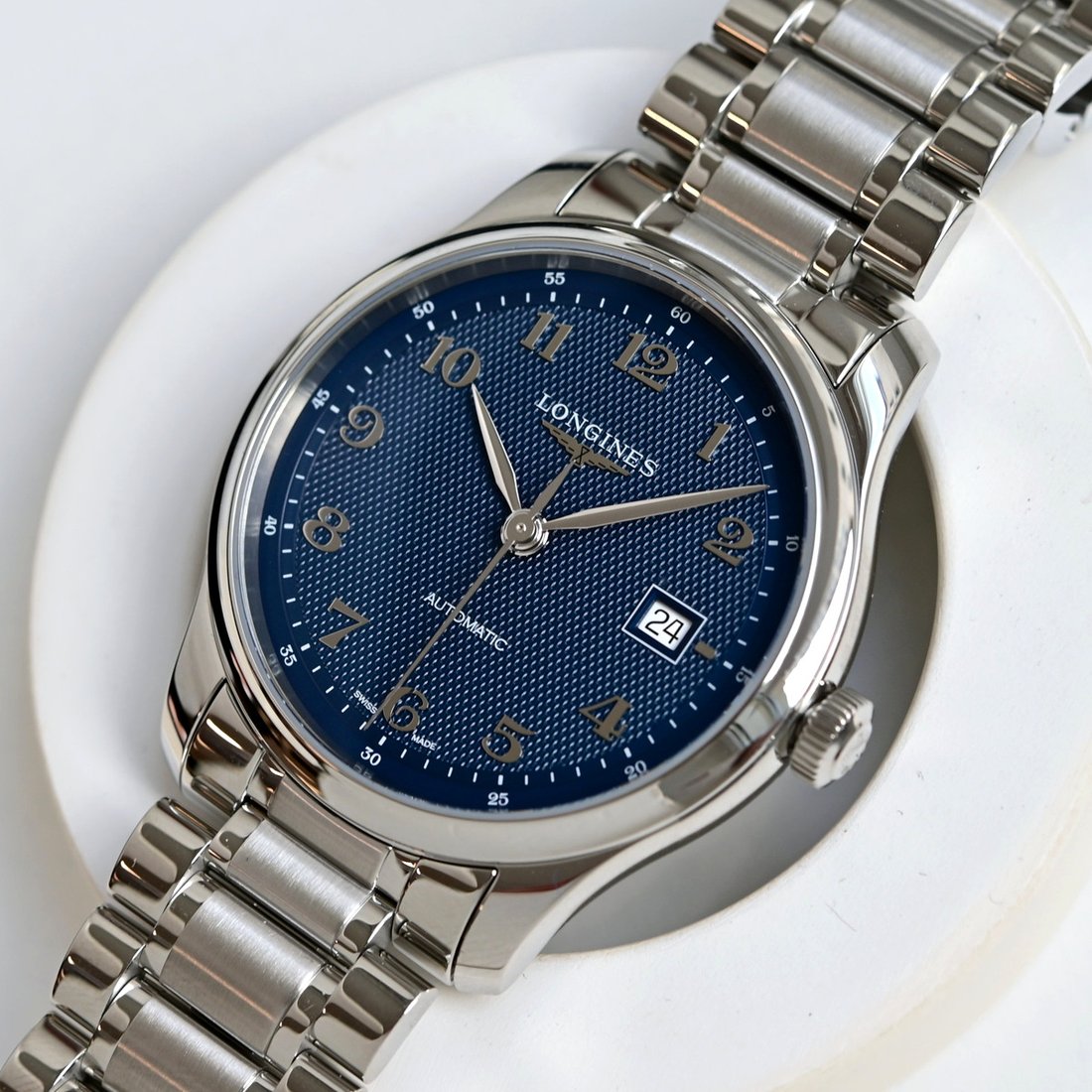
Decisions on a similar scale run through the rest of the family. The hands have been redrawn: the classic leaf shape is kept but its proportions altered. The date window sits at three o’clock, placed so as not to break the symmetry of the dial. Where to put a date window is one of the most disputed questions on a watch dial; every position sacrifices something, and three o’clock means choosing the one that sacrifices least.
The case and bracelet have been reworked too. On the thirty-nine and forty-one millimetre models the surfaces are cut curved and concave; a flat flank throws light back as a single band, a curved one softens it. The butterfly clasp carries a fine-adjustment system, so the length can be moved by a few millimetres. In daily wear that is often what decides whether a watch is comfortable; on a wrist that has warmed up, two millimetres is not two millimetres.
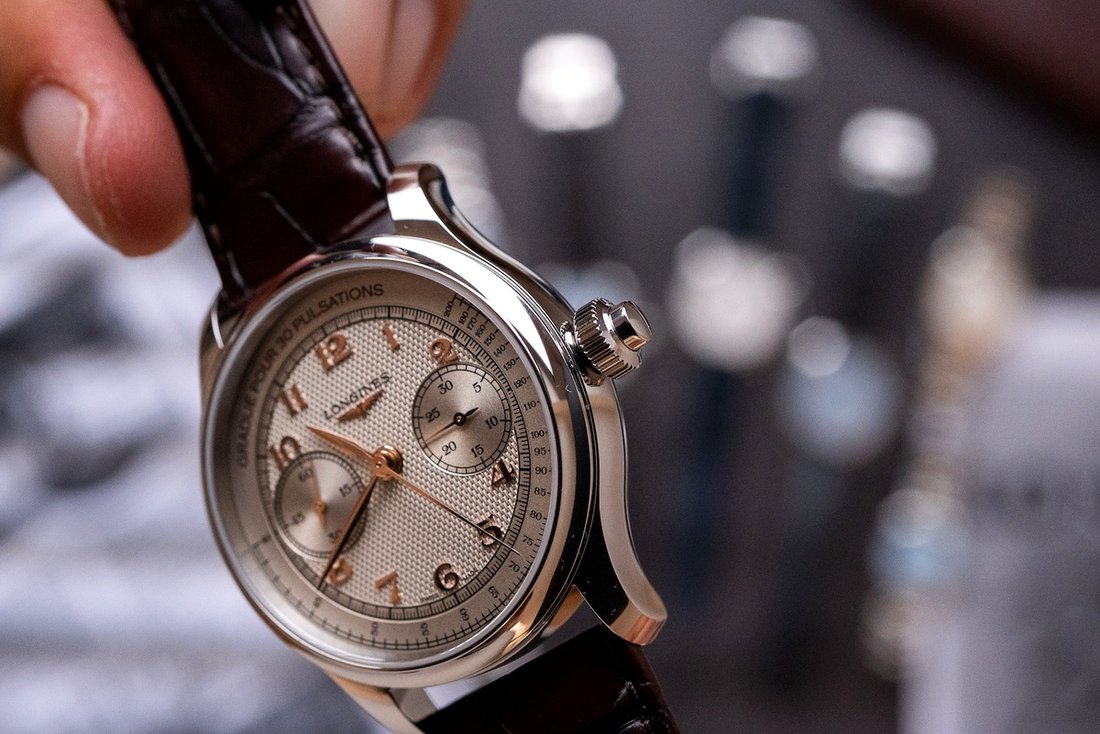
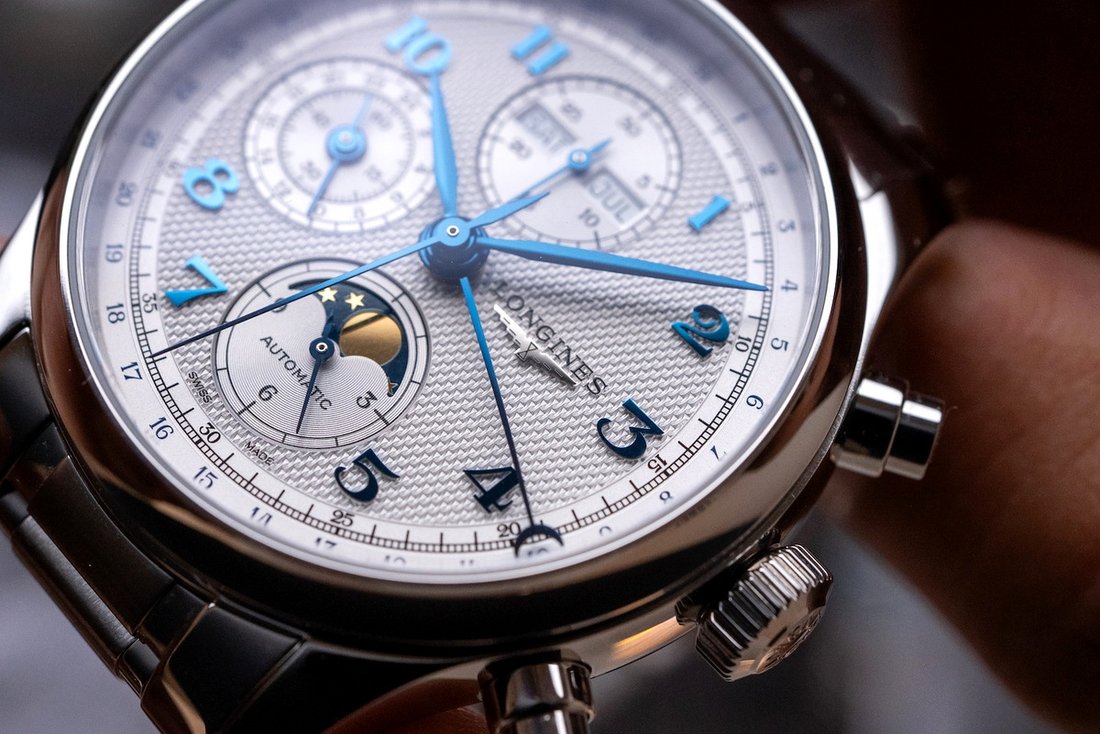
At the top of the family sit two chronographs, one with a moonphase and one with a single pusher. A monopusher chronograph puts start, stop and reset on the same button; that was the arrangement in the early period of the complication, and the move to two buttons was made for convenience.
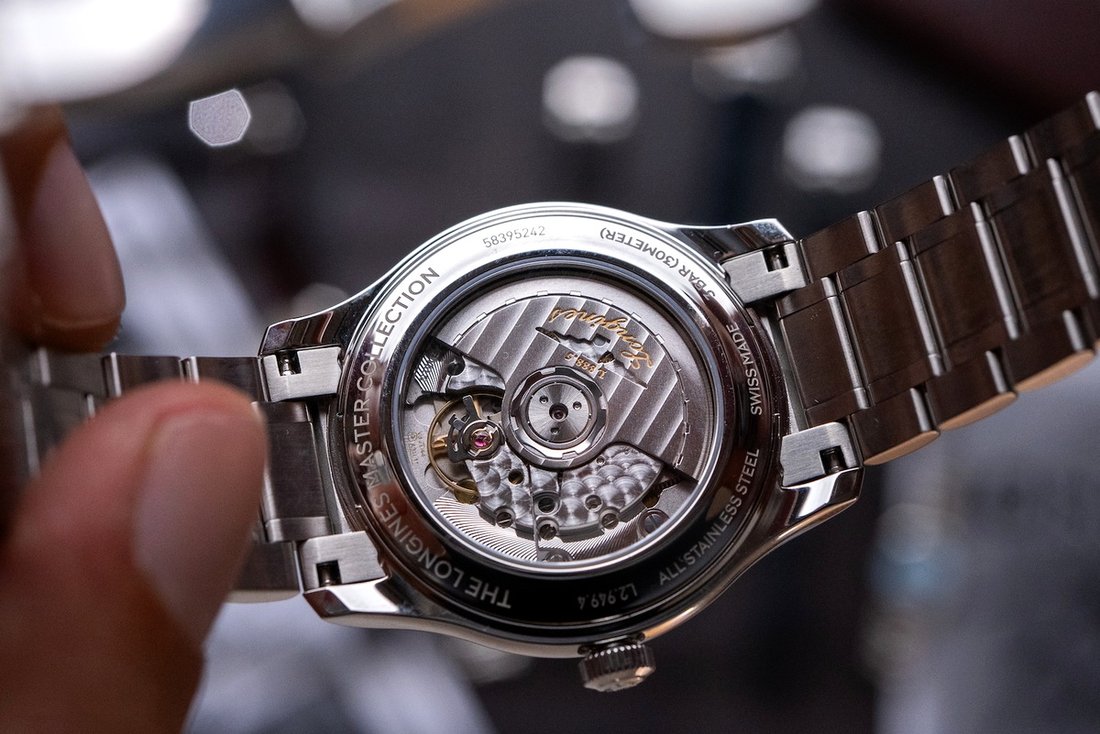
Going back to one button restores a restriction rather than a convenience: once you stop, you cannot start again, only reset. Which means no intermediate timing. In return, one flank of the case stays clean and the mechanism is simplified. The calibre L799.5 inside is hand-wound, column-wheel and carries sixty-eight hours of reserve. A column wheel is the toothed part that routes the chronograph commands; it costs more and gives an easier feel under the finger.
format_quote"Returning to a monopusher restores a restriction rather than a convenience. And that restriction leaves the case clean."
Louis Lorent
format_quote"Finding the history of measurement on the surface of a measuring instrument is too fitting to be an accident."
Louis Lorent
The Master Collection is the quietest family at Longines, and this renewal was carried out quietly too. There is no new complication in it; what there is, is a family brought into one language.
And at the centre of that language stands the name of a grain of cereal, the first reliable measure a human being had. You do not have to think about that while looking at a dial. But finding the history of measurement on the surface of a measuring instrument is too fitting to be an accident.