For a hundred years, the story of Rolex was in truth the story of an escape from the ground. The brand went down into the crushing darkness of the ocean (the Sea-Dweller), rose into the thin air of the sky and its time zones (the Sky-Dweller), climbed to the summit of Everest, dived to the deepest trench. Luxury and heroism almost always meant leaving the earth behind: deeper, higher, farther. The most precious watches were passports to somewhere else.
So in 2025, when Rolex unveiled its first entirely new model line in more than a decade, everyone expected another escape: a new depth, a new altitude. But Rolex did the most unexpected thing of all. It dedicated its watch neither to the sea nor to the sky, but to the one place it had spent a whole century trying to leave: the solid ground beneath our feet. The Land-Dweller. The 'one who dwells on land.'
Pause for a moment on that name. Who is a 'land-dweller'? Everyone. We all live upon the land. And that is precisely the point. In an age that worships escape, an age of virtual worlds, trips to space and the endless dream of somewhere else, Rolex planted its flag on reality itself. The Land-Dweller is a quiet manifesto: the greatest adventure is not to flee the world but to build something real upon it; the extraordinary is hidden inside the ordinary ground you stand on every day.
But there was a second, far more concrete reason this watch had to exist. Rolex had been quietly preparing a technical earthquake: an entirely new escapement and the first high-frequency movement in its history. A revolution like that needed a new home, a new name to carry it into the future. The Land-Dweller is where Rolex's boldest engineering meets its most grounded philosophy: the homecoming, at last, of a brand that had conquered the sea and the sky, back to the earth.
A Kingdom That Earns Its Name
Rolex says it designed the Land-Dweller 'for well-grounded men and women who build their own destinies.' The poetry of the name lies here: to conquer the sea and the sky is magnificent, but the true mastery is to turn the ordinary ground you stand on every day into a kingdom. Sea, Sky, and at last Land; the trilogy is complete.
But this watch did not fall from the heavens. Its sharp, integrated-bracelet, boldly modern silhouette comes in fact from Rolex's own past, from a forgotten and once-controversial act of daring: the Oysterquartz of 1977. It was an angular, modern design decades ahead of its time; for years it was overlooked. The Land-Dweller resurrects that bold spirit nearly half a century later, but this time it places within it the most advanced heart of 2025.
Honeycomb and Flat Jubilee: the Craftsmanship
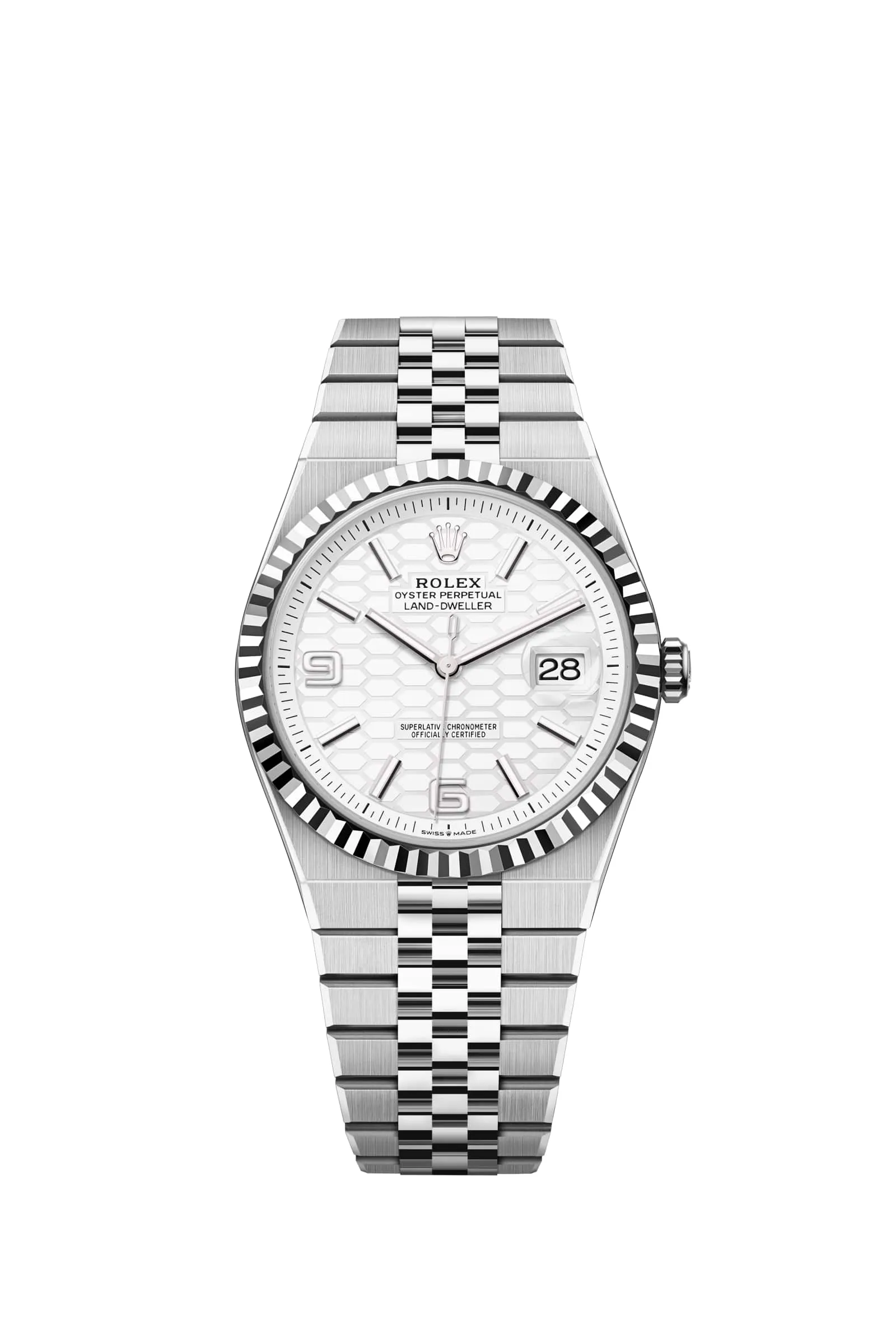
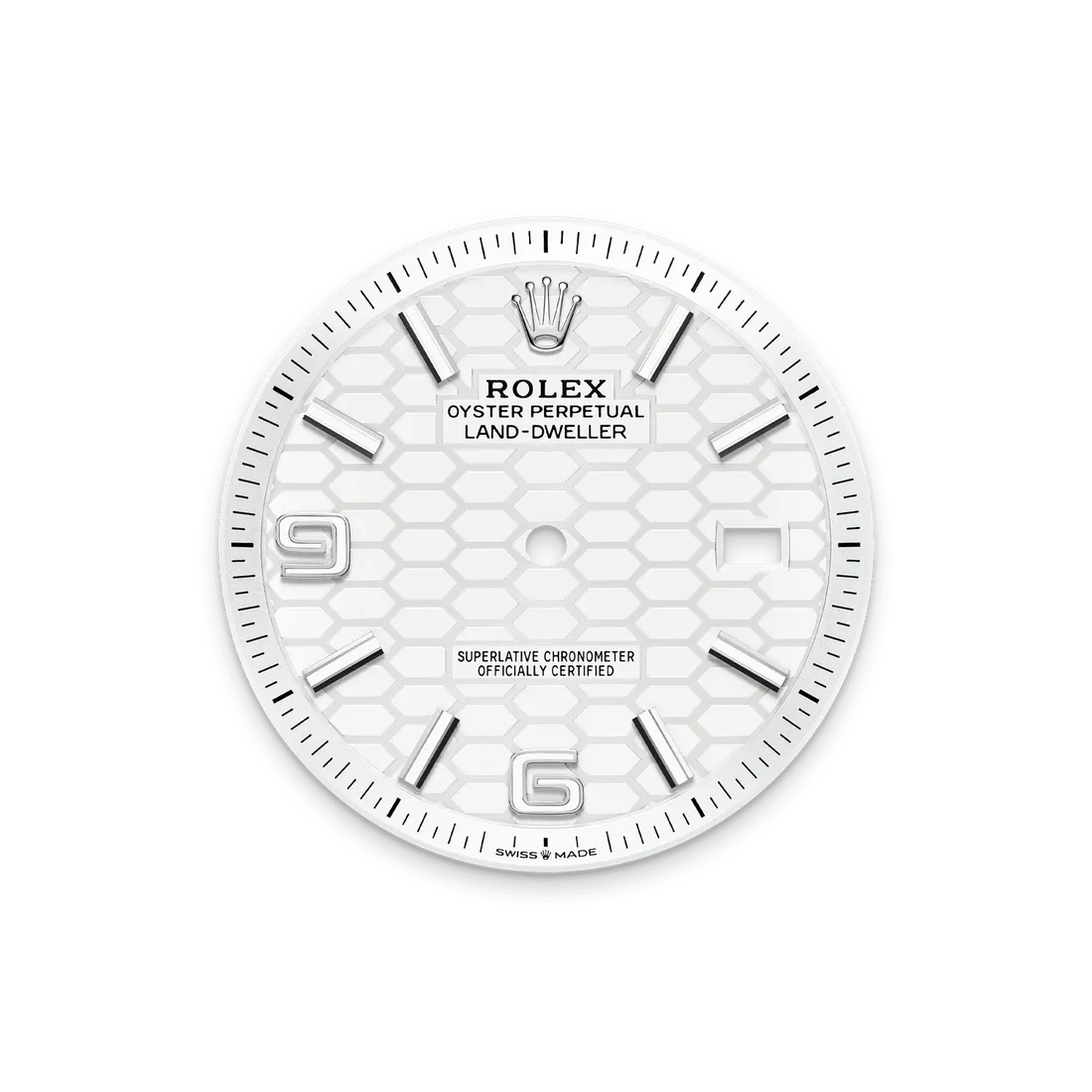
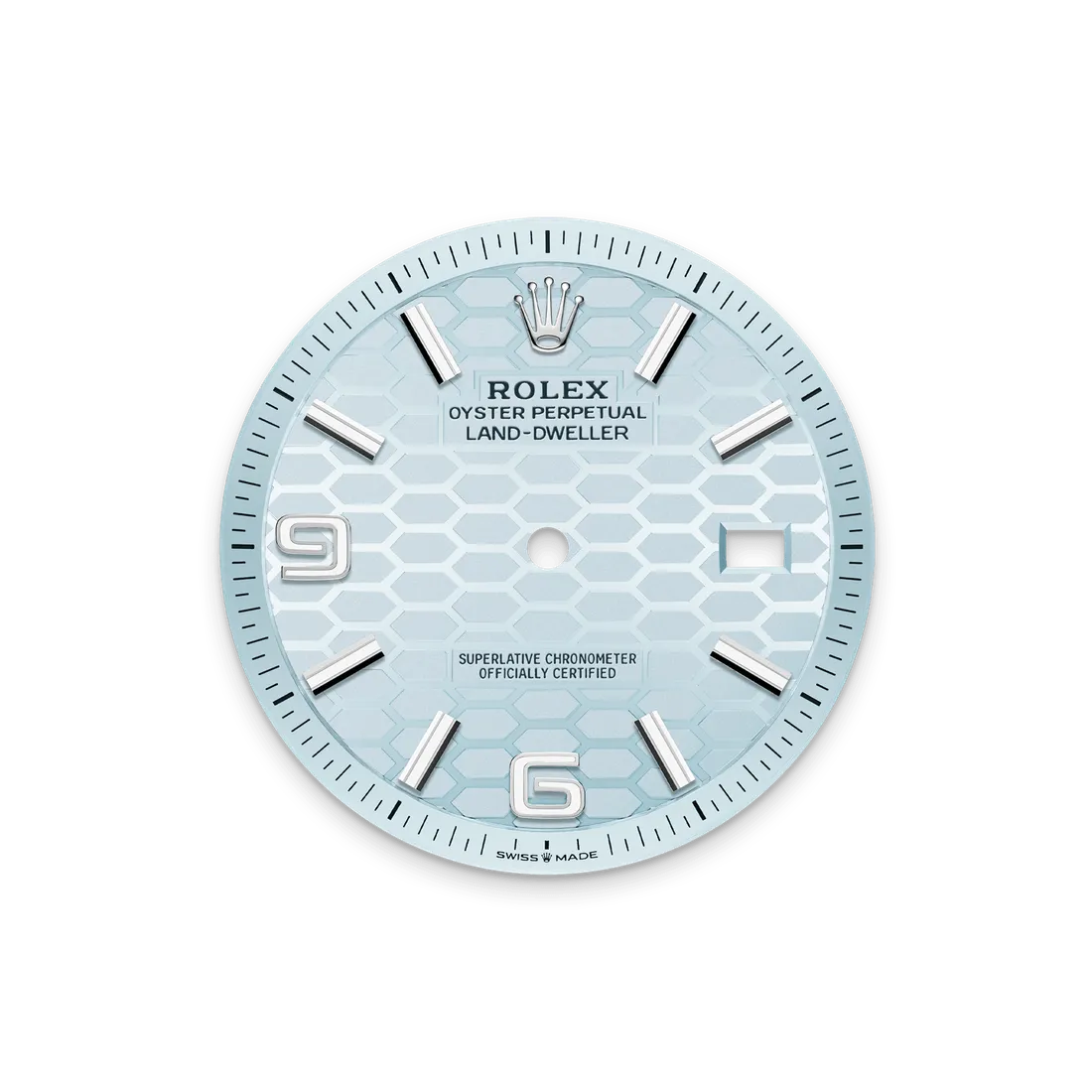
When you take the Land-Dweller in hand, the dial seizes your eye first. This texture, called honeycomb (nid d'abeille), is worked neither with paint nor with classic guilloché, but with the very latest laser technology; thousands of microscopic hexagons give the dial a three-dimensional depth that plays with light. Tilt it under the light and the surface comes alive like a beehive.
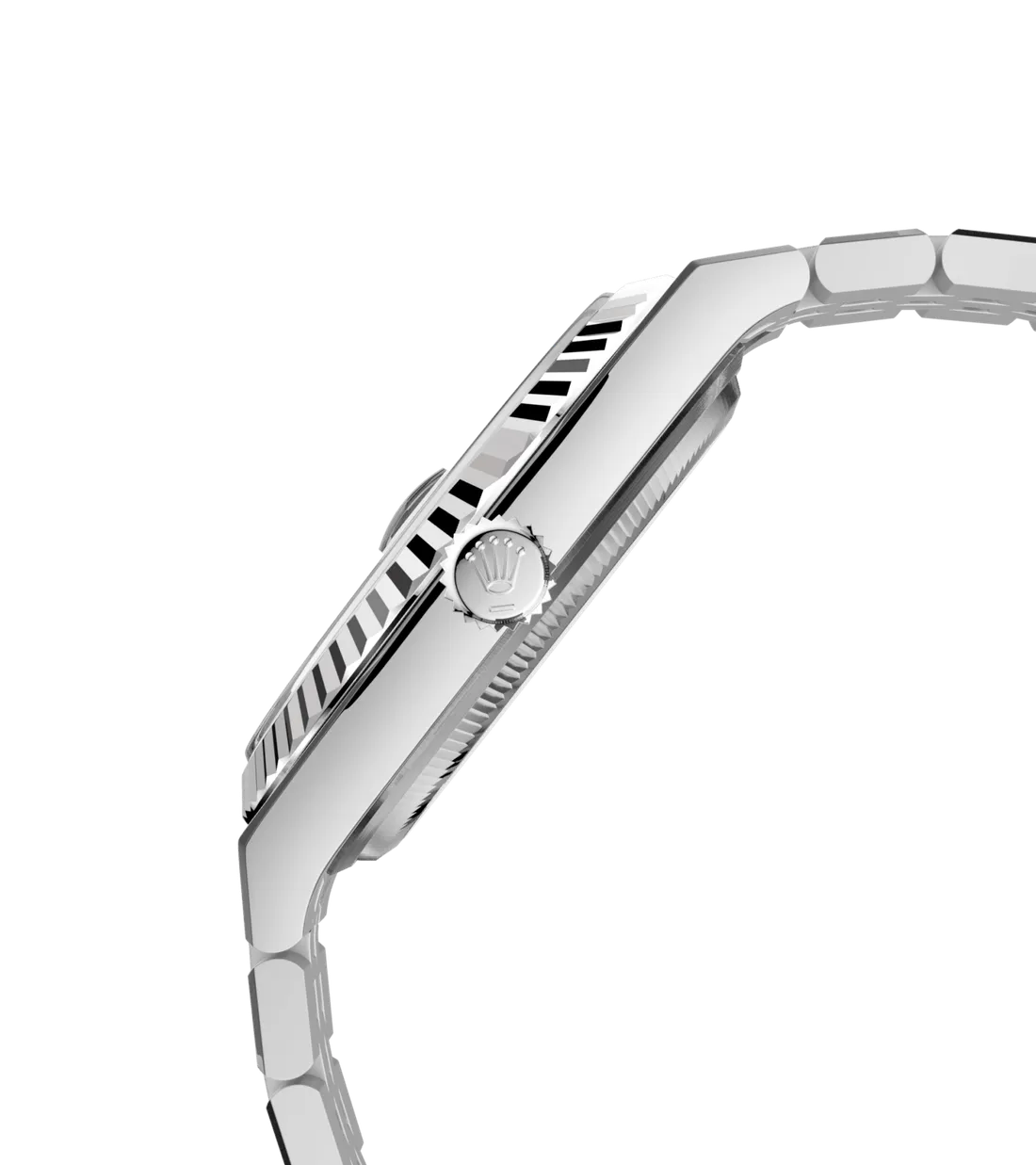
The second marvel is in the bracelet. Rolex took its iconic five-link Jubilee bracelet, flattened it, and integrated it seamlessly with the case; the result is a new, flowing architecture called the 'Flat Jubilee.' The sharp lines of the case are a play of light and shadow where Rolex's legendary mirror polishing meets brushed surfaces. The forty-millimetre body is only 9.7 millimetres thin; so this technical monster sits on the wrist elegantly enough to slip beneath a shirt cuff.
An Earthquake: the Dynapulse Escapement
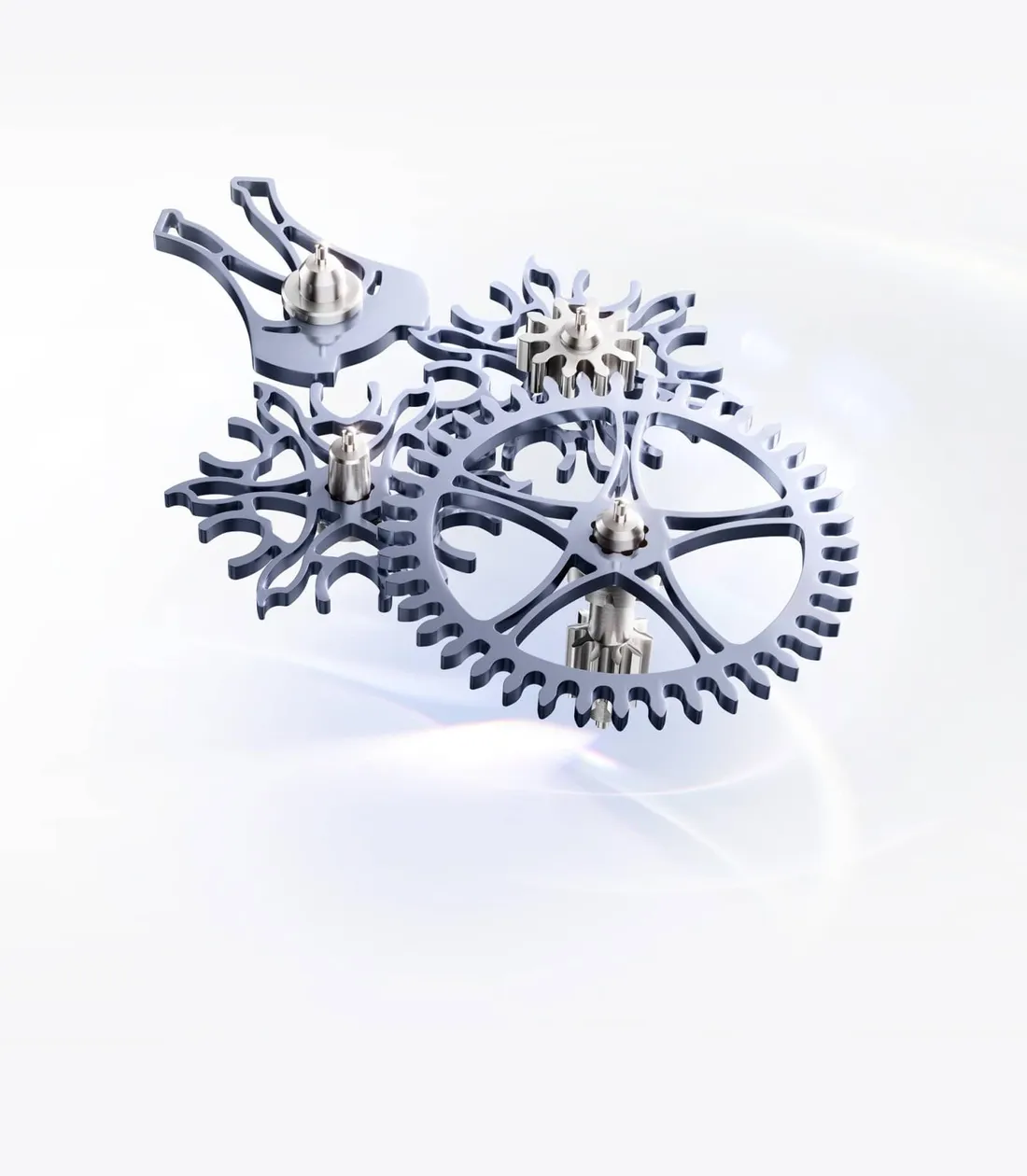
Now to the true tremor that makes this watch a masterpiece; for at the heart of the Land-Dweller beats an innovation that genuinely shakes the watchmaking world. The part that regulates a mechanical watch's heart is called the escapement; for two and a half centuries, nearly every watch has used the Swiss lever escapement. In that system the parts push by sliding over one another; and that sliding means friction, which means wasted energy.
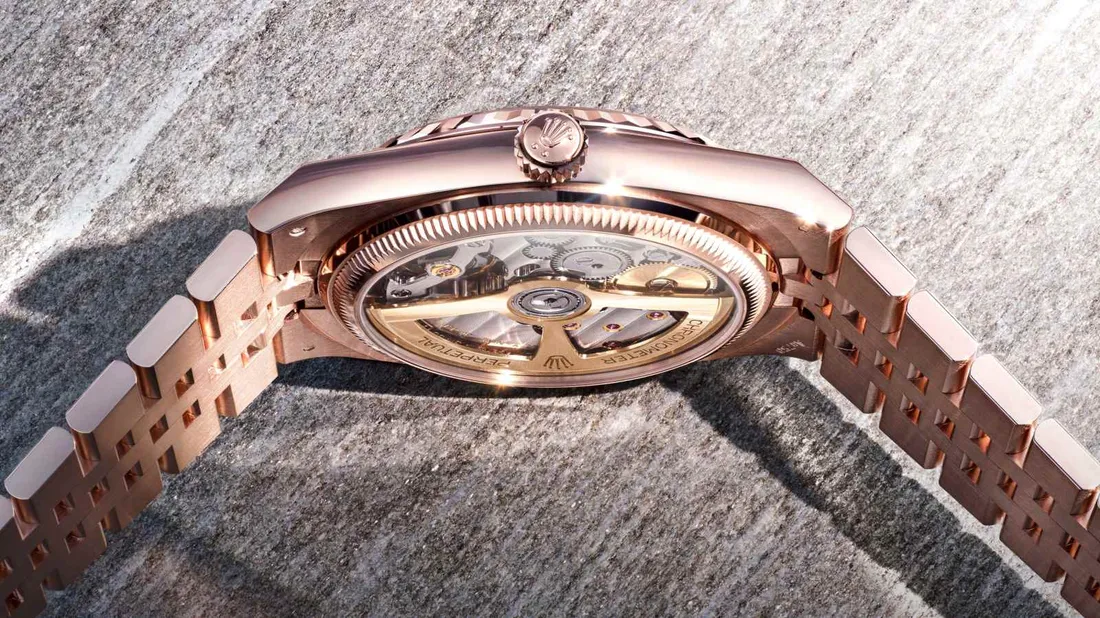
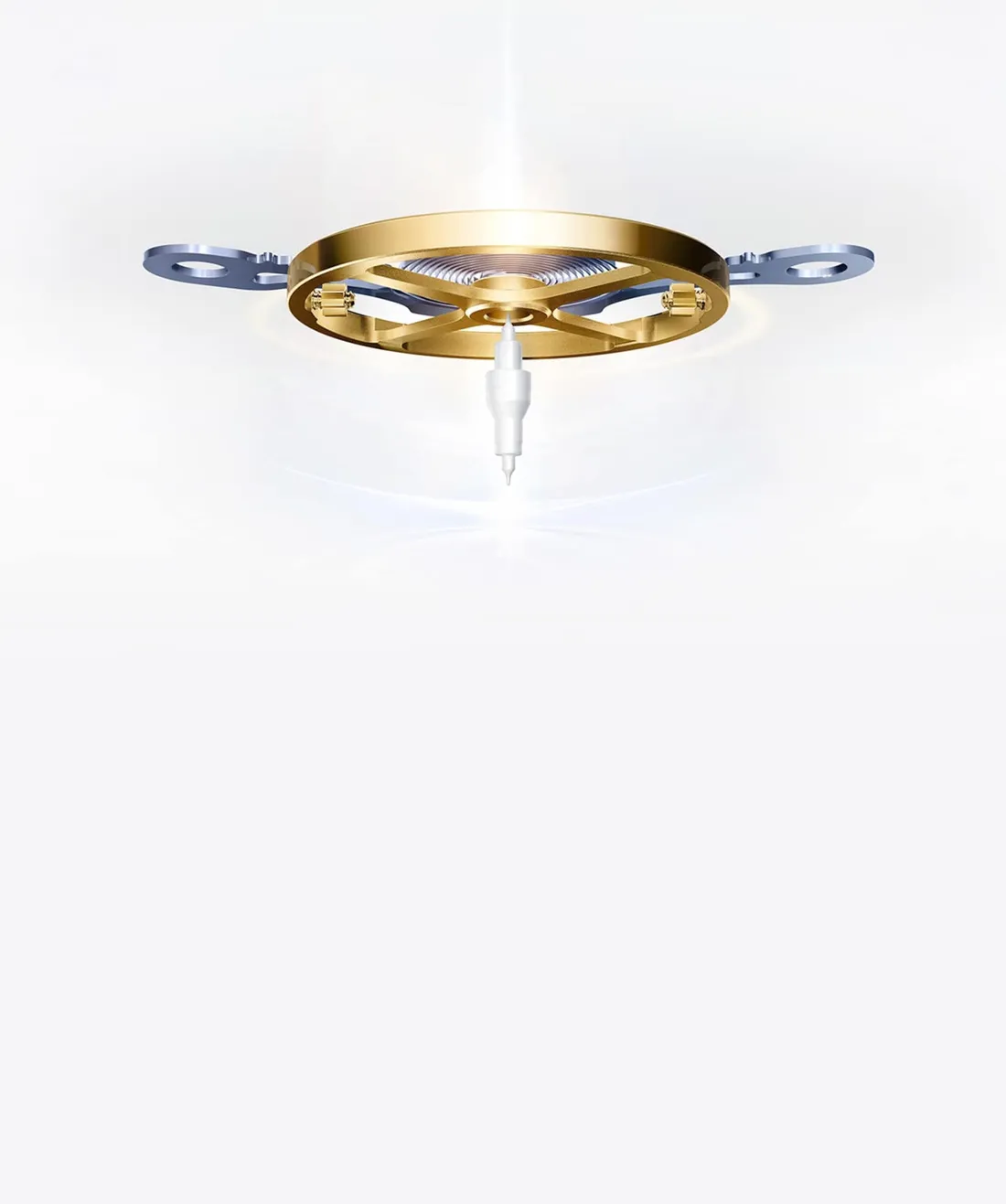
With calibre 7135, Rolex overturned this two-hundred-year-old order and invented an entirely new escapement, made wholly of silicon: the Dynapulse. In this system, twin escape wheels push a lever tangentially, that is, without rubbing, with a clean touch; and the lever in turn drives the balance. A gentle push instead of a sliding friction. The result? A heart 30 percent more efficient than the classic lever escapement. Less friction means less wear, a more stable precision, and a far cleverer use of energy.
The Heart of High Frequency: Calibre 7135
The efficiency of the Dynapulse made possible something Rolex had never dared before: high frequency. Calibre 7135 is the first high-frequency movement in the brand's history; it vibrates five times a second, that is, 36,000 times an hour (5 Hz). Considering that most watches beat at 4 Hz, this heart beats faster and more often. Why does that matter? Because the more often a watch vibrates, the more resistant it is to shocks and changes of position, the more stable it stays. The result is a deviation of only -2/+2 seconds a day; the promise of the Superlative Chronometer certification.
This speed is accompanied by a Syloxi hairspring made of silicon; a spring untouched by magnetism and temperature changes, specially reshaped and thickened for high frequency. Despite its twin barrels it offers a 66-hour power reserve. And perhaps most striking of all: for the first time in its history, Rolex proudly displays such an important movement behind a transparent sapphire caseback. This moment, in which the two-and-a-half-century-old lever escapement is dethroned, is a genuine event in the history of watchmaking.
Two Characters: Steel-and-Gold and Platinum
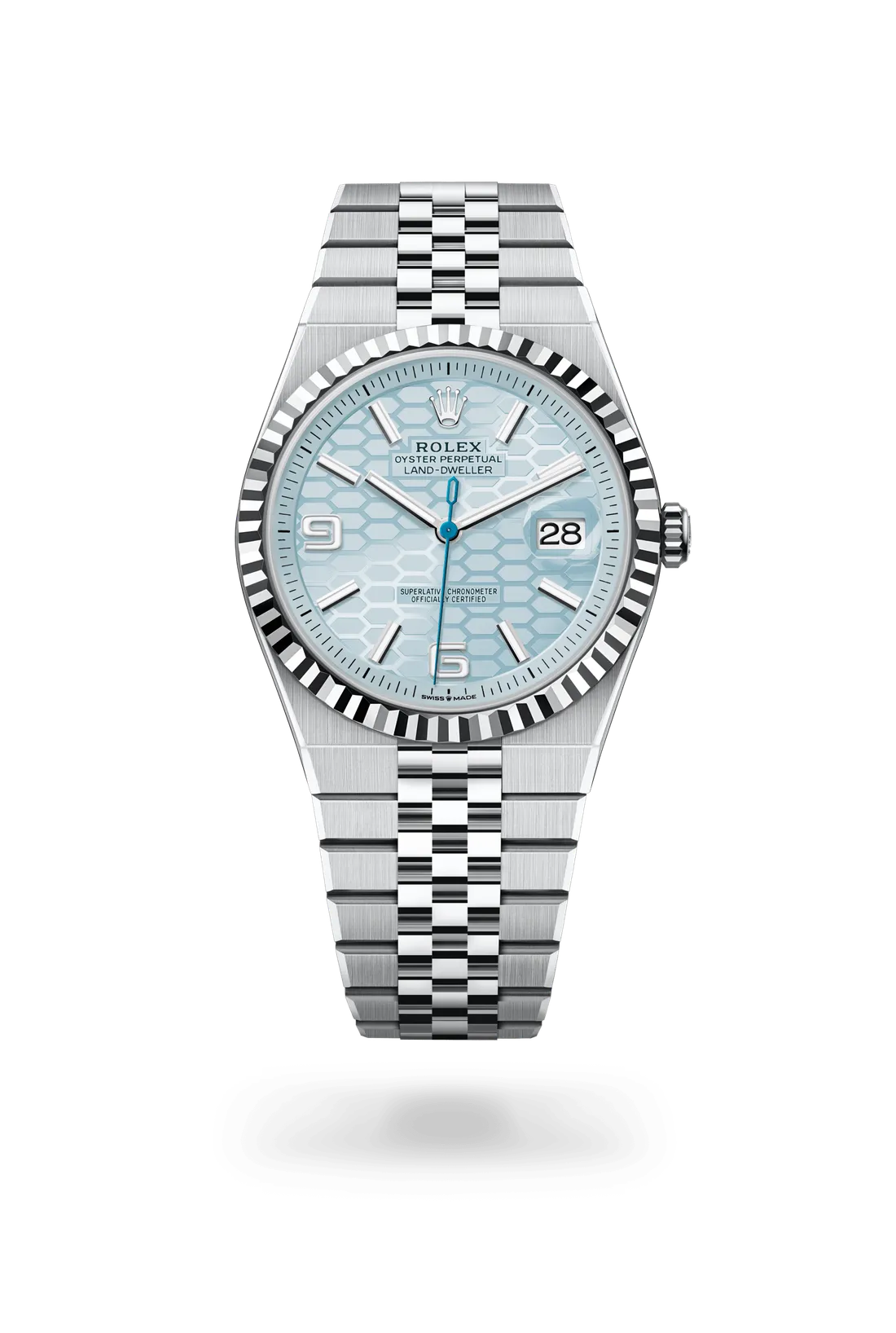
The Land-Dweller comes before us with two different souls. The first, the reference we examine, is 127334: a 40-millimetre White Rolesor, that is, a union of Oystersteel and white gold; with its fluted white-gold bezel and its intense white honeycomb dial. This is a versatile elegance that adapts to every day, whispering confidence rather than ostentation; and at around sixteen thousand euros it is a modern Rolex icon.
The second is an object of pure passion: reference 127336, made of 950 platinum. And its dial is that legendary colour Rolex reserves, worldwide, for its platinum models alone: ice-blue. Take it in hand and you feel the density of platinum, that weight; this is a quiet magnificence that does not shout, understood only by those who know. Both watches share the same revolutionary 7135 heart; but one is the hero of everyday life, the other the collector's secret treasure.
A Man, a Woman, and Solid Ground
When Rolex unveiled this watch, it chose two faces; and that was never an accident. What was the Land-Dweller's philosophy? 'For well-grounded men and women who build their own destinies.' So Rolex brought onto the stage the very 'man' and 'woman' of that sentence: on one side Roger Federer, on the other the world-famous pianist Yuja Wang.
They did not put Federer in that campaign for nothing. For years this man conquered the 'sky' of tennis: twenty Grand Slams, world number one, an age of grace. But what made him a legend was not only his victories at the summit; it was the way he hung up his racquet in 2022 and set his feet firmly back on the ground. It was an ordinary Swiss boy building his own destiny, brick by brick, with patience and humility. The Land-Dweller is precisely the watch of the man who, having conquered the sky, plants his feet upon the earth; Federer is that 'solid ground' itself.
The other face was the pianist Yuja Wang, with a diamond-cut Land-Dweller 36 in Everose gold on her wrist. While her feet rest on the pedals, her hands fly like a bird over the keys. But that flight is built upon the solid ground of thousands of hours of discipline. A woman who builds bridges between East and West, classical and modern, and composes her own destiny. Federer was a master of the sky, Wang of sound; but what united them was the unshakeable ground beneath their feet.
And so Rolex completed its trilogy not with a name alone (Land) but with two people: a man who conquered the sky and came down to earth, and a woman who set sound soaring yet took root in the ground. Sea, sky, and at last land; and upon that land, two masters standing tall. What could tell a watch's philosophy better than that?
The Secret That Glows in the Dark: the Chemistry That Stores Light
So why, and how, does the dial glow in the dark? The answer lies in the flawless dance of three substances. Rolex's own Chromalight luminescence is built, at its base, from a crystal of strontium aluminate. Into the lattice of this crystal are scattered the atoms of two rare-earth elements: europium and dysprosium. This trio performs a silent dance between day and night. When daylight strikes the dial, europium takes the stage: the electrons of its atoms 'wake' with that energy and leap to a higher level. And here dysprosium steps in; like a treasurer, it catches and stores that energy in tiny traps within the crystal.
When darkness falls, the dance reverses: dysprosium releases its stored energy drop by drop, patiently, and europium turns each drop into a particle of light, a photon. That is the blue glow you see. Think of it this way: europium is a lamp, and dysprosium a battery that charges all day and feeds that lamp all night. Or a sponge that soaks up light by day and wrings it out, drop by drop, through the dark. There is no battery and no radioactivity; the watch merely drinks the light of day and breathes it back in the dark. Even when your feet are in darkness, your wrist still carries a piece of the day.

The Time Beneath Our Feet
Having conquered the bottom of the sea and the depths of the sky, Rolex reminds us of this: the greatest kingdom is not somewhere far away; it is right where our feet stand. The Land-Dweller is a medal for those who return home from adventure, who build their destiny on solid ground. With that earthquake of a movement inside it, it redefines the ordinary; and by toppling a two-and-a-half-century-old tradition, it shows us today what the future will look like.
When its dial glows blue in the dark with Chromalight, you remember: sea, sky and land; all three now meet upon a single wrist. And time, in that place where you stand most firmly, beneath your feet, goes on flowing without pause.