The deepest riddle of existence hides in the radical designs that break out of the familiar moulds. On the canvas of the universe certain orders are repeated again and again, and then a moment comes in which the Creator sets every one of them aside. The form that meets us fits no pattern we know and no ordinary logic the mind can file away.
And there, in the depths of the blue planet, standing in the middle of exactly such a design, is a creature that resembles nothing else alive: the octopus.
The ocean belongs to those that play by the rules, that put on thick armour, that hide behind hard shells. In that vast ecosystem the food chain is built on a rigid hierarchy of prey and predator, of the strong and the weak. Most animals on that pyramid survive either by growing enormous or by surrounding themselves with impassable shells and spines.
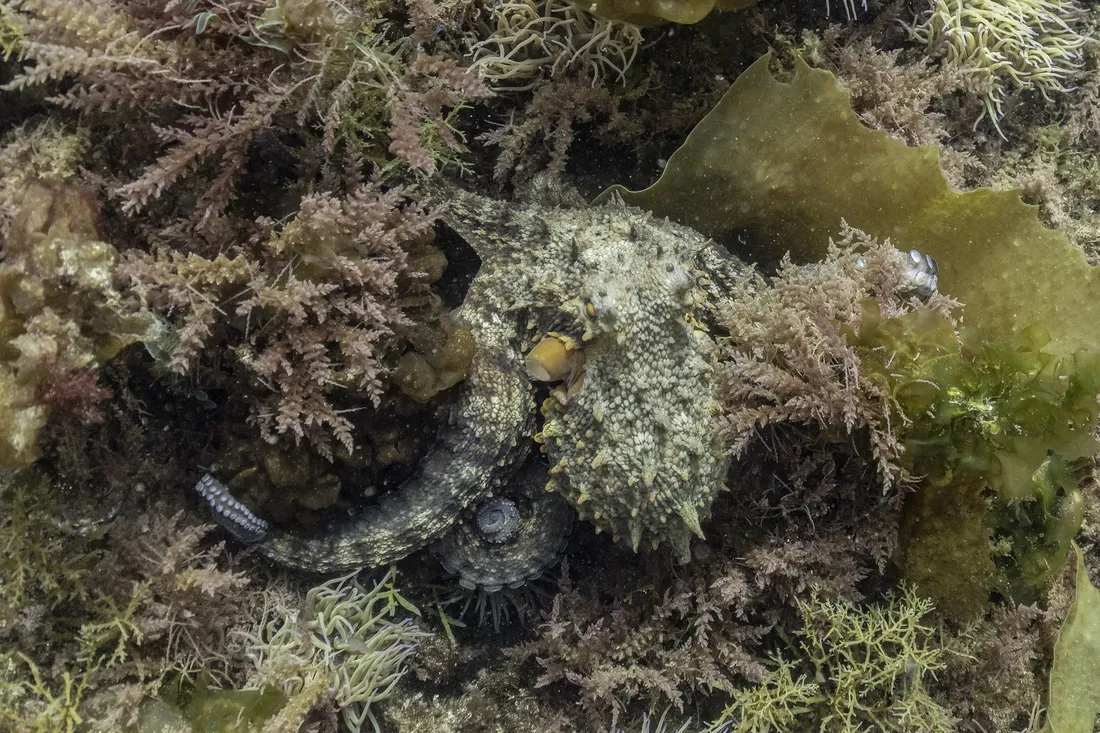
The octopus is the radical exception that defies the whole arrangement. It has no false armour and no great weapon to sink into anything. In the middle of the ocean it is at once one of the most capable hunters and one of the softest, most defenceless targets. Its ancestors carried a shell on their backs; the rest of the molluscs went on carrying theirs, and the octopus let its own go, until nothing hard was left of it but the beak. That ambiguous and dangerous place in the food chain gives it a singular consciousness of its own existence. The octopus worships no strength and takes refuge in no mould; it is a sovereign ghost that overturns the hard rules of the chain with intelligence, with flexibility and with invisibility.
That biological fact offers the human mind a startling guide on the philosophical plane. The philosophy of the octopus is the purest manifesto of existence raised against rigid dogma, against protective armour, against the arrogance of the centre.
A person spends a whole life building hard rules, prejudices and impassable walls in order to be safe. The philosophy of the octopus answers that real strength does not lie in being rigid but in being fluid as water, bendable, impossible to break. The moment a hard shell believes it is protecting you, it is in fact imprisoning you. The octopus refuses the shell, because only the unarmoured can slip through the narrowest cracks and the hardest dead ends.
format_quote"The moment a hard shell believes it is protecting you, it is in fact imprisoning you."
Hasan Bekmezci
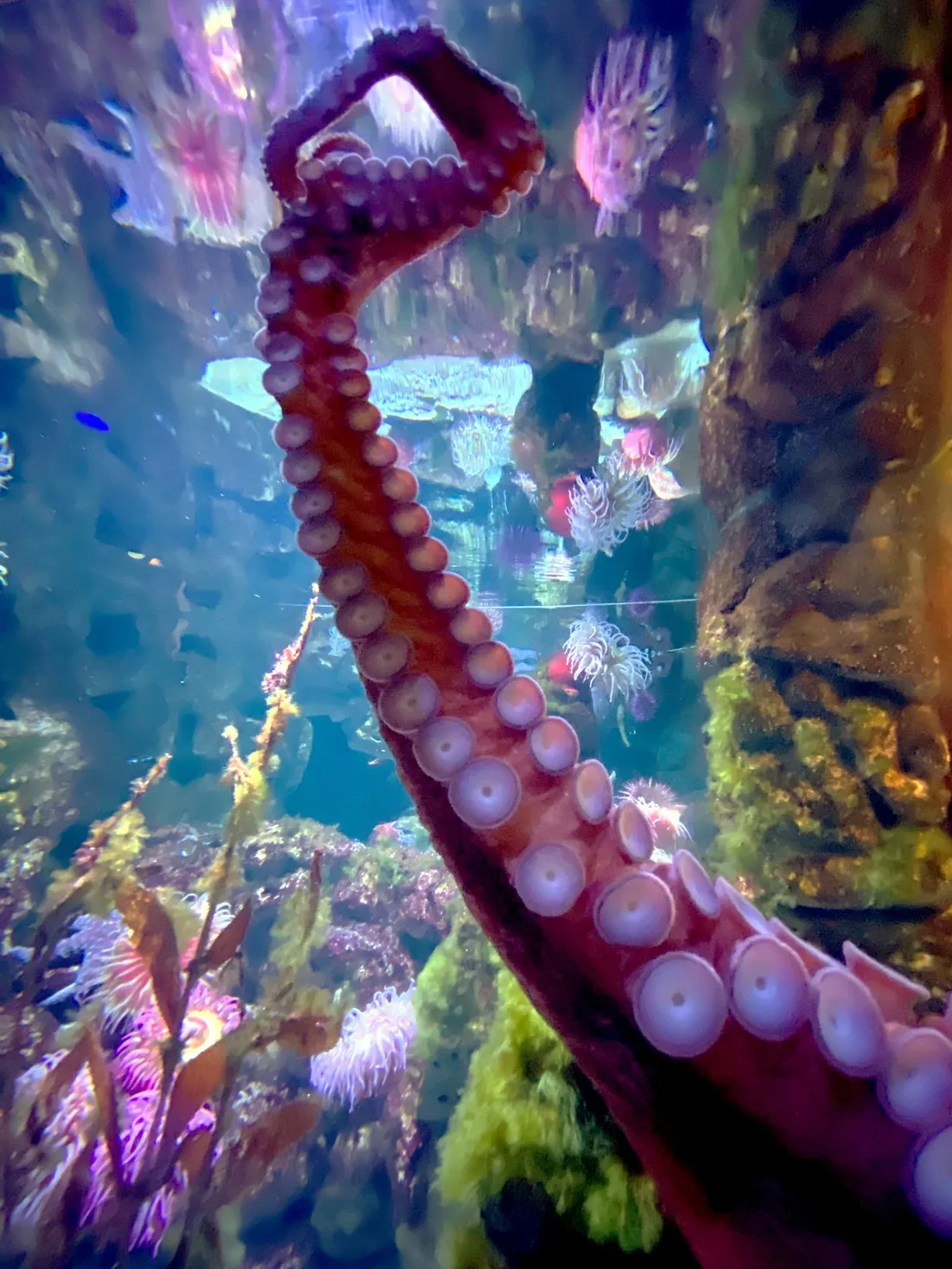
Classical thought is used to governing everything from a single centre. The octopus has spread its consciousness through its whole body, through those eight arms. Each arm feels, decides and acts on its own. The philosophy of the octopus works a revolution in the mind by teaching us not to depend on a single point in the face of the confusion of life, but to distribute instinct and reflex through every cell of the body and to move with a whole awareness.
As that unforgettable Netflix documentary, My Octopus Teacher, laid bare, the octopus does not fight the outside world; it becomes one with it. In danger it enters no war of ego; it changes colour, texture and form in an instant and turns into an invisible part of its surroundings. There is no arrogance in the philosophy of the octopus, no stubborn insistence on the self. There is only absolute accord, observation and the intelligence of staying alive.
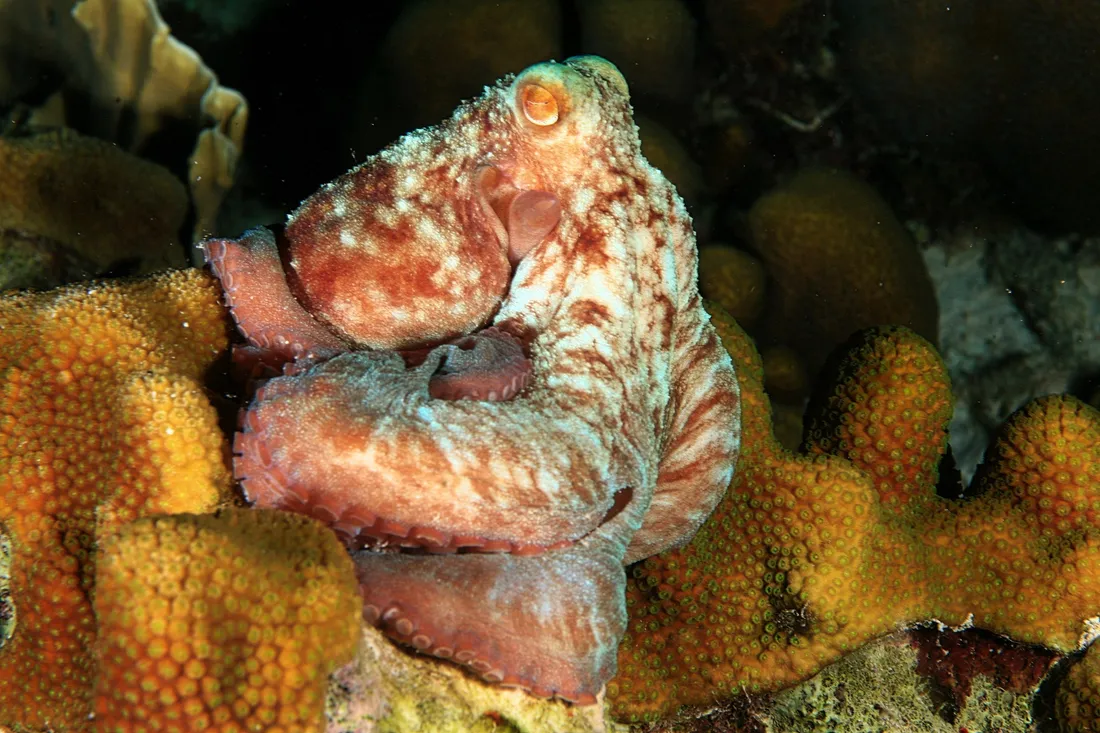
To look closely at the body of an octopus is to face the most astonishing layers of the perfect engineering in the universe. The systems that set it apart from every other living thing were brought into being with the finest workmanship of a divine design.
There are some five hundred million neurons in the body of an octopus, and two thirds of them sit in its arms. Without the central brain saying go there, each arm can decide, touch, taste and hunt by itself. This is a flawless architecture of freedom in which authority is not locked into one centre and consciousness is shared out justly through the whole being.
format_quote"An architecture of freedom in which authority is not locked into one centre and consciousness is shared through the whole being."
Hasan Bekmezci
The octopus can change the colour of its skin in less than a second. It does so with the thousands of tiny bags of pigment beneath that skin, the chromatophores, and with the muscles around them tightening and letting go. And not only the colour: by raising the special muscular bumps in its skin, the papillae, it copies the texture of stone, of coral, of sand exactly. It does not fight its surroundings; it becomes a single body with them and disappears.
The octopus never sat down at a table and consciously decided that it would not use iron but would choose copper; it was brought into being with this flawless design. In the lightless, ice cold, pressured depths of the ocean the iron-based haemoglobin that the warm-blooded creatures we know rely on struggles to give its oxygen up to the tissues. For survival in that extreme and merciless place, copper-based haemocyanin was set into the design instead. When copper meets oxygen it paints the blood blue, and it lets that blood bind oxygen and carry it to the cells even at temperatures close to zero and in water that holds little of it. This is the work of a divine order and of an immense intention in creation, set there so that life would not go out even in the loneliest and darkest dungeon of the ocean.
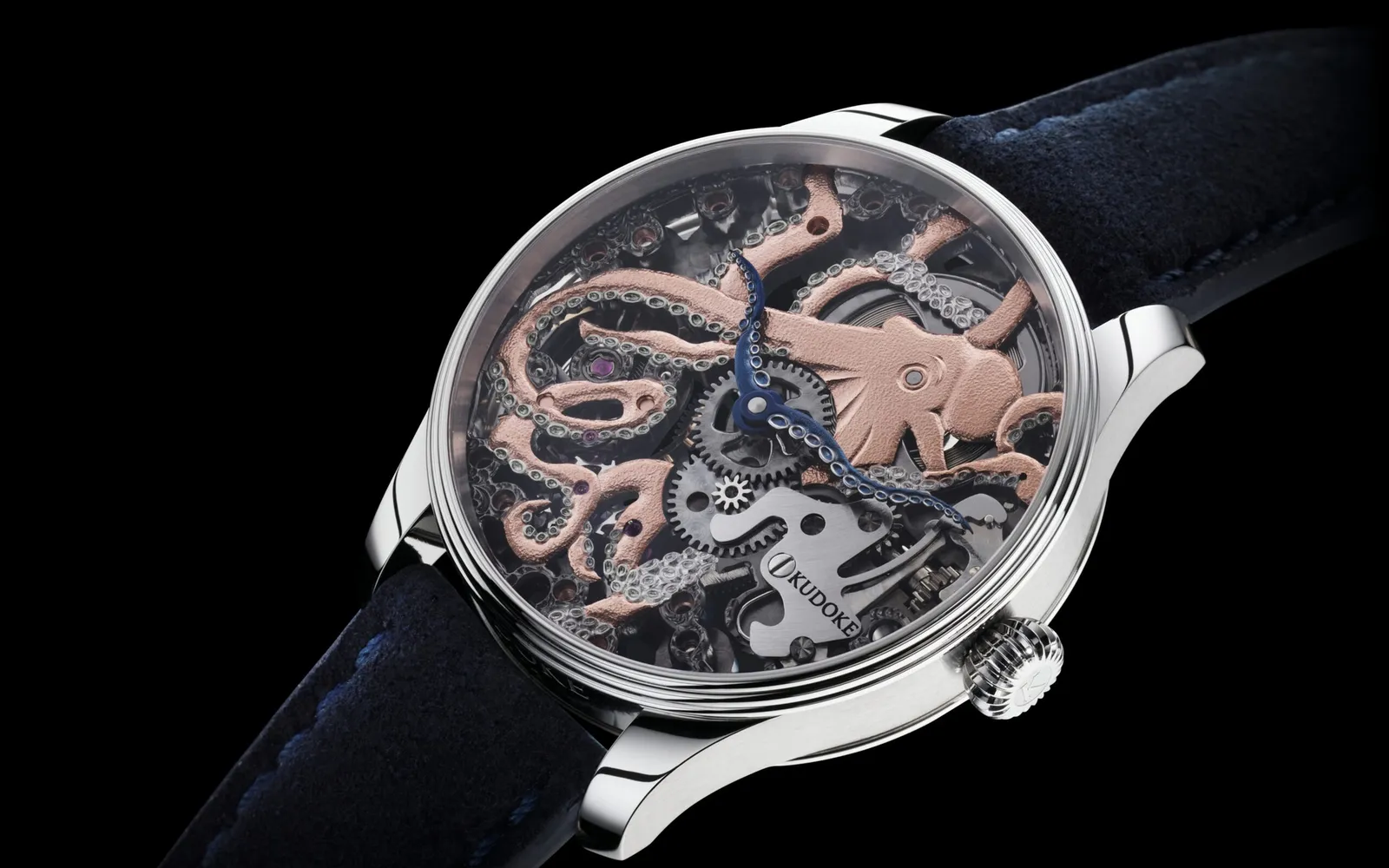
That deep philosophy, that fluid and intelligent spirit which refuses the rigid rules, turns into a mechanical masterpiece in the hands of Stefan Kudoke, the master of German independent watchmaking. The KudOktopus of the Kunstwerk collection, whose German name means work of art, is the concrete appearance of the philosophy of the octopus upon a set of wheels. The forty-one millimetre steel case is closed front and back with anti-reflective sapphire, it stands nine point three millimetres tall, and the only thing that projects from it is an onion-shaped crown.
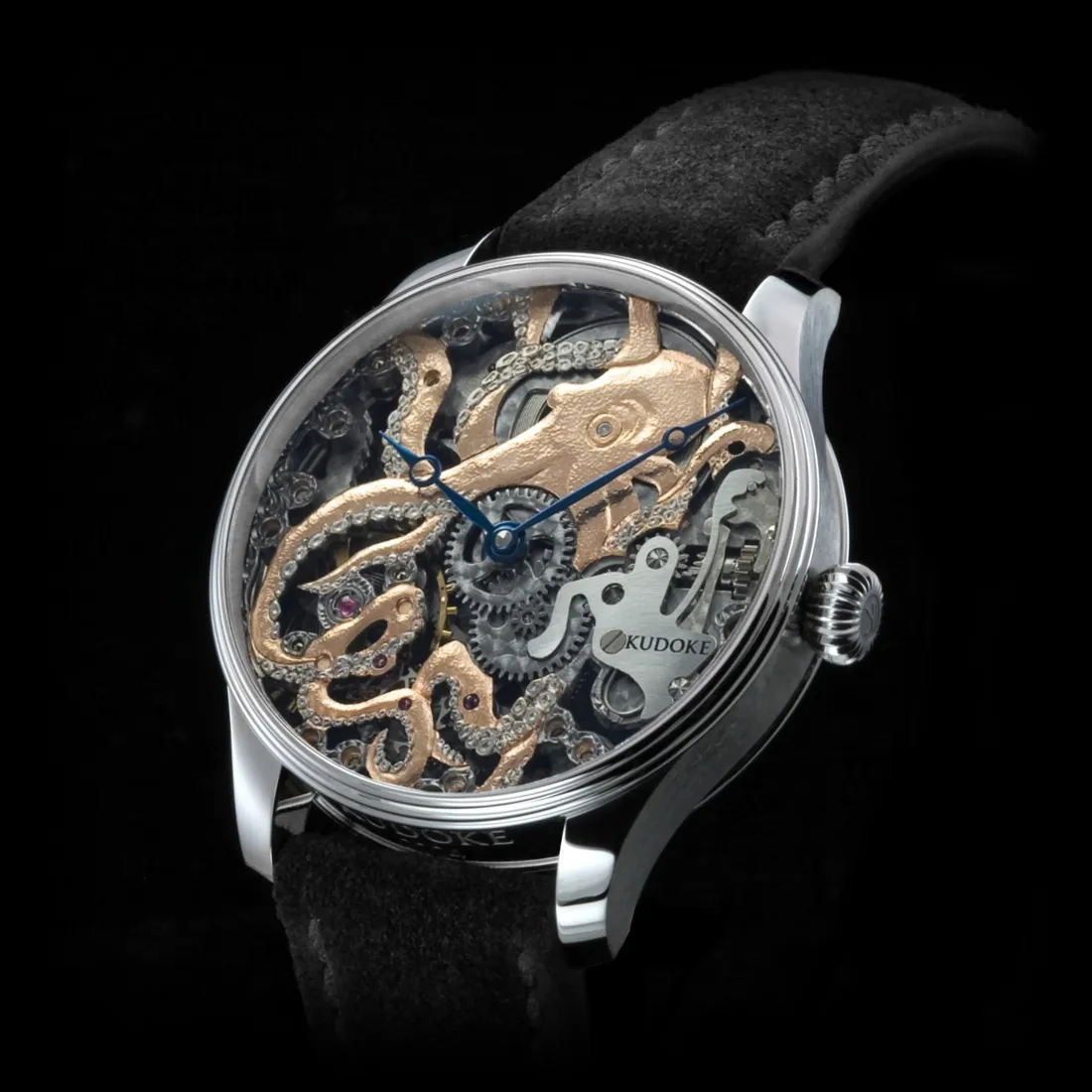
In the KudOktopus the traditional covering of the dial has been removed altogether. The plates and bridges are cut away with such radical mastery that every wheel behind them, every spring and every pinion works like an independent nerve ending. Just like that independent intelligence spread through the arms of the octopus, the mechanical energy is not locked into the centre either but flows out through the whole structure.
And this octopus is no ornament laid on top of a dial afterwards. Stefan Kudoke saws it out of the movement’s own main plate and bridges with a small saw, and then engraves it by hand. The skeleton that holds the watch up and the creature standing upon it are one and the same piece of metal. The tentacles and the wheels pass through one another; the border between the mechanism and the living thing disappears.
format_quote"The border between the mechanism and the living thing disappears."
Hasan Bekmezci
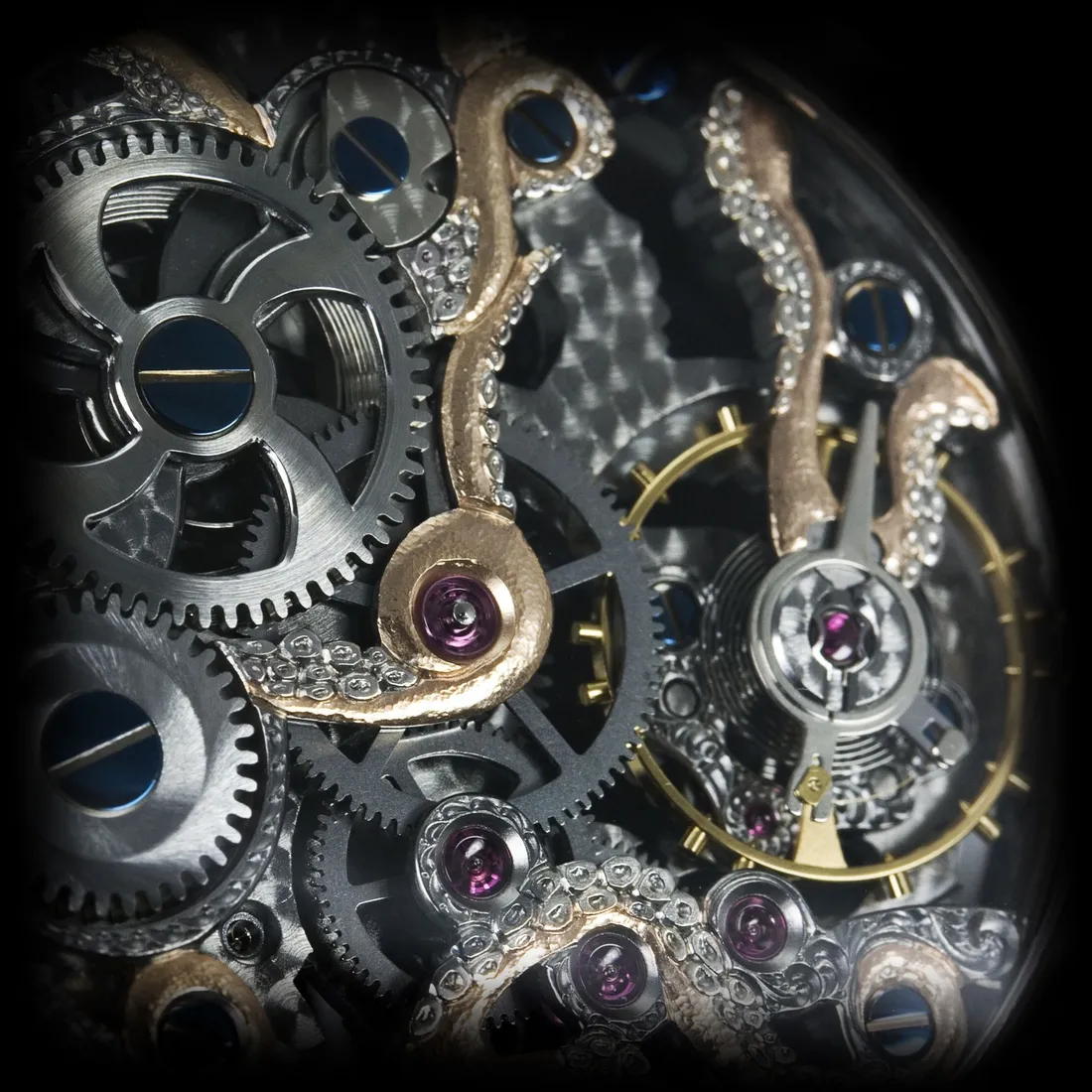
The fine cuts the master works into the bridges by hand throw deep games of shadow and brightness across the surface of the metal as the light shifts, exactly as the chromatophores ripple in the skin of an octopus. The watch changes its shell according to the room it stands in and the light that falls on it. Once the whole movement has been skeletonised and engraved by hand it is electroplated, divided between rose gold and black and white rhodium, and the difference between the grey and the gold comes from there.
The arms of the octopus embrace the wheels and the ruby jewels of the movement the way they would wrap a rock on the ocean floor. That hand-wound movement measures thirty-six point six millimetres, carries seventeen jewels, beats at eighteen thousand half oscillations an hour and runs for forty-six hours when it is wound. What turns beneath the octopus is the strength its owner gives it once a day with his own hand.
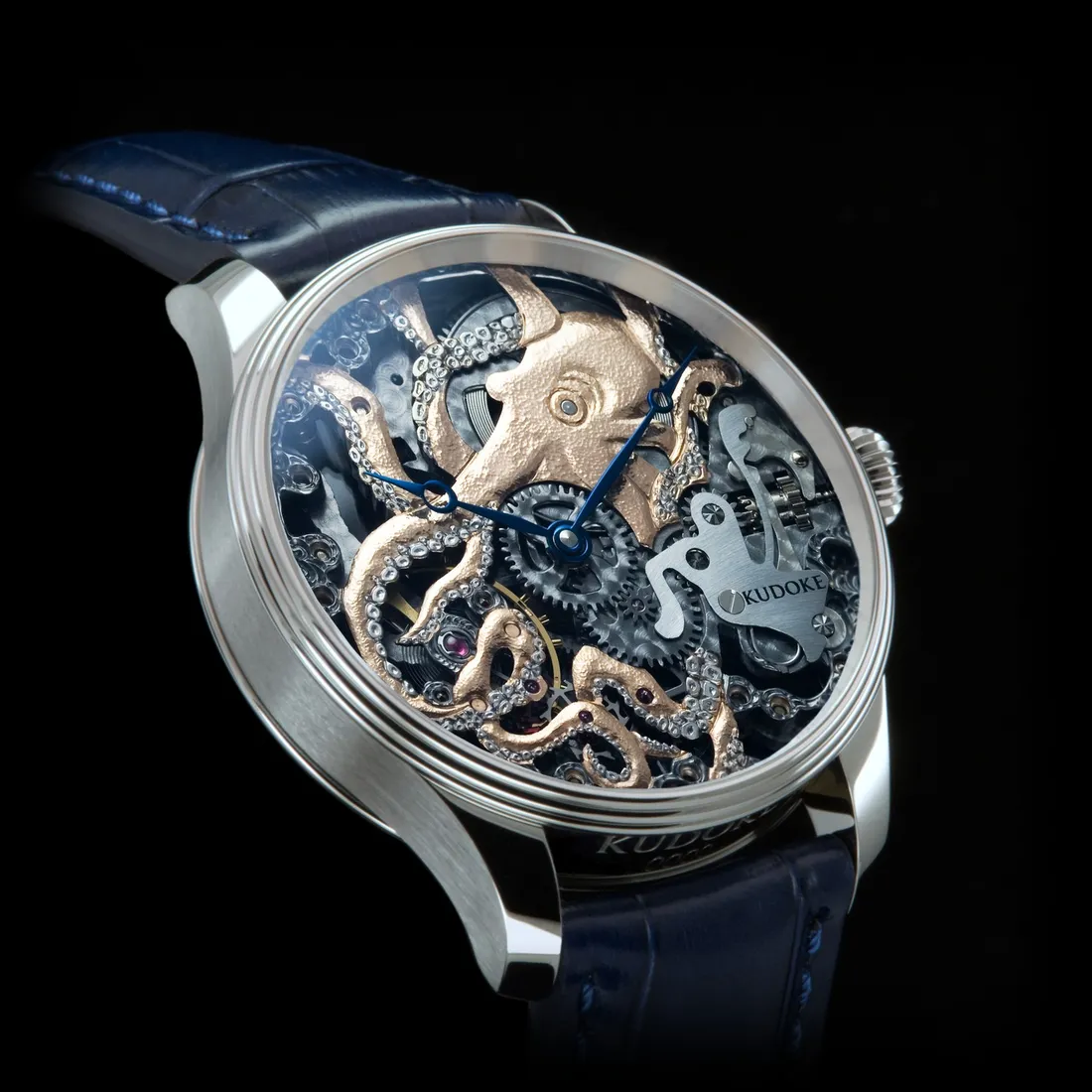
The slender hands that come down from the centre do not owe their colour to any ordinary painting. When steel is annealed with heat the micro structure at its surface oxidises and the metal takes on that mesmerising, deep, royal blue. Between those heat-blued hands and the copper-based blue blood in the veins of the octopus a flawless analogy is drawn. Just as the blue blood of the octopus is a divine safety valve carrying the vital oxygen that keeps it alive in the deepest, darkest and hardest conditions of the sea, so the heat-blued hands that come down from the centre of the watch are the artery that holds the breath of time inside a mechanical ocean and gives the wheels their life. Both blues are a sign of having stepped outside the ordinary, of existing in extreme conditions, and of grace.
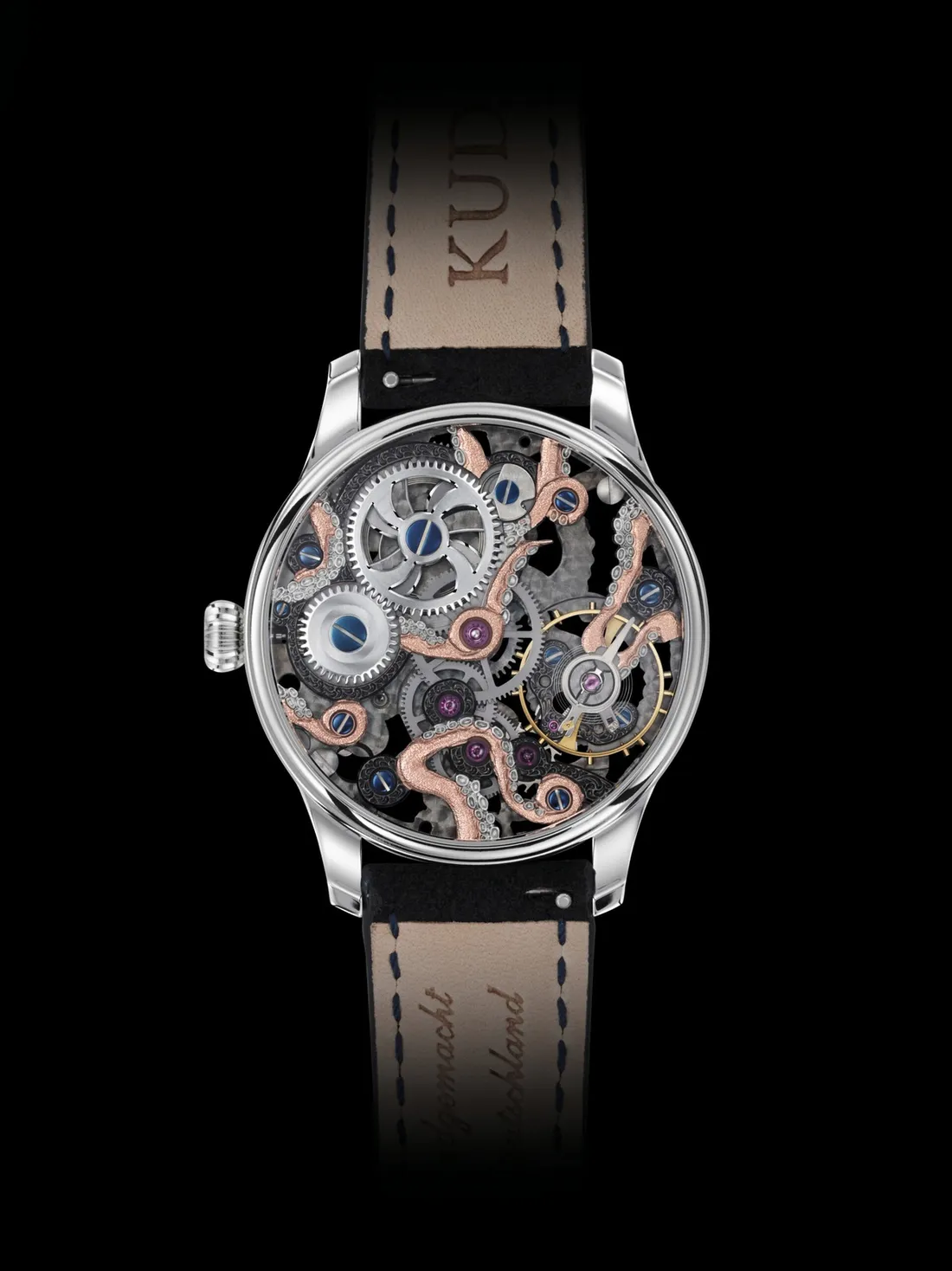
One is the philosophy of the octopus, which shows the courage of living without armour in the depths of the ocean and tears down the rules of the food chain with its copper-based blue blood, its flexibility and its distributed consciousness; the other is the Kudoke Kunstwerk KudOktopus, which breaks the rigid rules of German watchmaking, engraves that wild and fluid intelligence of the sea into a set of wheels, and turns that blue blood into a mechanical life with its heat-blued hands. It starts at nine thousand and twenty-seven euros before tax.
As those heat-blued hands coming down from the centre record the passage of time over this mechanical current in grey and gold, they whisper something to us: do not try to seize time; flow inside it as the octopus does, put down your armour, and be free within this fluid universe.
The watch in the words of its maker: Kudoke, Kunstwerk KudOktopus