Roland Barthes’ famous essay “The Death of the Author” and Umberto Eco’s theory of the “Open Work” shout exactly this truth: the moment a work of art or a piece of high watchmaking leaves the workshop and is placed before the public, the designer’s intentions and the brand’s marketing language are nothing more than worthless footnotes. The work has become an object in its own right, independent of the watchmaker and the designer who brought it into being. From then on it is born again, each time, in the mind of whoever looks at it, studies it and passes it through their own philosophical filter.
That is why, standing in front of this $360,000 piece from the Jacob & Co. workshops, we push aside the shallow label written on the brand’s business card and read the work again with our own freedom of mind.
Throughout human history, fear and ignorance invented imaginary idols and set them over the sky and over time. Figures said to rage when it thundered, figures said to swallow time, figures said to churn the seas. The less able man was to understand his own helplessness and the immense laws of the universe, the more readily he gave the name of god to the stones he carved with his own hands and to the tales he built in his own mind.
Yet the universe is the stage of a perfect and absolute order whose balance was set by a single Creator. The owner of time is no character from a tale, and the reins of the cosmos are not in the hands of some imagined creature with muscles like a man’s. The sole owner of dominion and of time is the one divine power that brought it into being out of nothing, with no partner. Idolised shadow gods are no more than mental illusions, condemned to dissolve in the light of the truth.
It was in the middle of exactly that confusion that Stoic philosophy rose from the towers of thought in ancient Rome and insisted that man should look not at idols, but at the unshakeable laws laid down by the real owner of the universe.

The Silent Revolt of the Stoics
No Roman thinker in their right mind believed in the jealous, raging, appetite-driven figures acted out in the theatres. While the great names of Roman Stoicism buried those imaginary figures the crowd had idolised, they laid time, the will and existence itself on a table of genuine contemplation.
Seneca and the Shortness of Life
Seneca’s line, that we complain of how little time we have and yet spend it as though it would never run out, that life is not short but we make it short, is the hardest slap ever delivered to the ignorance that mistakes time for an enemy. People imagine that time is a merciless beast trying to swallow them. Seneca answers that time is the fairest capital the Creator has granted a human being. Whoever burns it on gossip, on ambition, on superstitious dread devoted to false gods is murdering his own lifetime with his own hands. Trying to conquer time is ignorance; the real matter is to flow through that river spotlessly, with a quiet soul.
format_quote"Trying to conquer time is ignorance; the real matter is to flow through that river spotlessly, with a quiet soul."
Hasan Bekmezci
Epictetus and Being Master of Your Own Mind
Born a slave, and turned into one of the greatest thinkers in history by freeing his own mind, Epictetus insists that what troubles you is not events themselves but your own judgements about them. While people surrendered to fear begged imaginary figures in storms, in earthquakes and in plagues, and slaughtered offerings to them, Epictetus taught something else: the hurricanes out there, the wars, the crises and death itself are not in your hands. The only thing in your hands is your own mind. Even if the world collapses outside, if you can make your mind an unshakeable citadel, no storm can bring you down.

Marcus Aurelius and the Meditations
The man at the head of the vast Roman Empire wrote these lines in his tent at night while sitting on a throne by day: the universe is change, and life consists of our thoughts about it. That entire emperor saw the emptiness of the idols his people worshipped, and reminded himself that the cosmos is governed by a single cosmic reason, a single supreme will, and that man is no more than a modest observer in that great procession.
format_quote"Even if the world collapses outside, if you can make your mind an unshakeable citadel, no storm can bring you down."
Hasan Bekmezci
Not an Idolised God but the Fine Work of Art and Mechanics
However much Jacob & Co. reaches for mythological references in the marketing world, that magnificent presence on the dial offers no superstitious god. It offers an anatomical emblem of the deep respect man feels for the universe and for time.
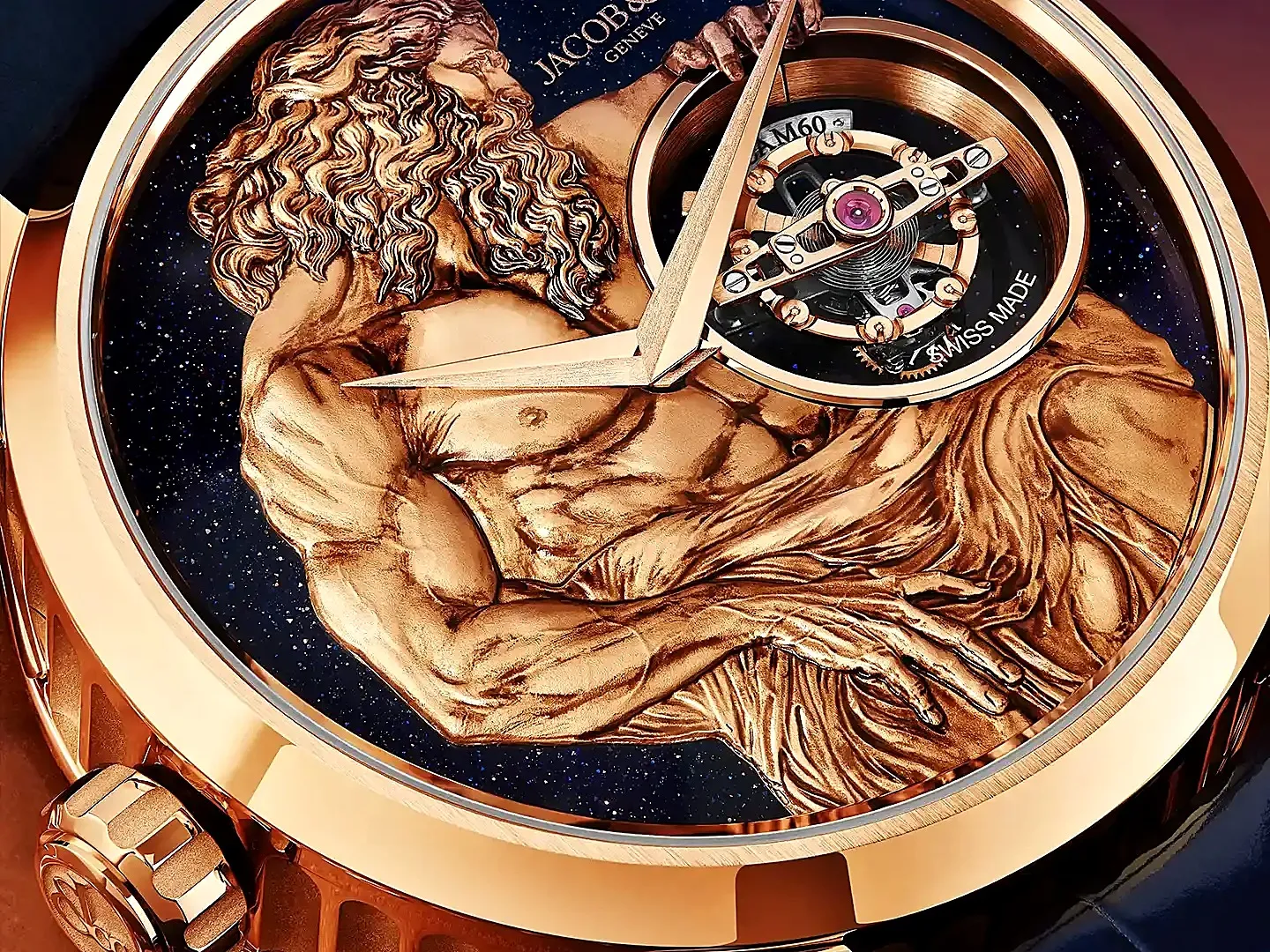
The ground of the dial is blue aventurine. Aventurine is a glass with copper crystals embedded in it, so its glitter is not pigment but metal breaking the light. It is not a colour imitating the night sky; it is a night built out of tiny grains of metal that genuinely throw light back at you. The order a man sees when he lifts his head has been summoned into a circle three centimetres wide.
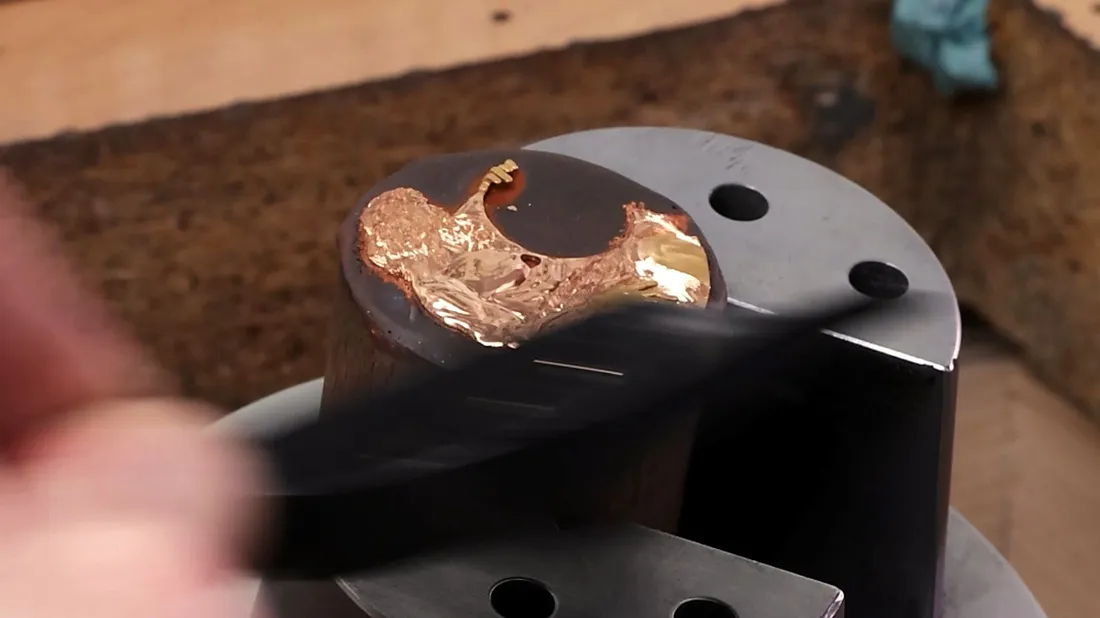
The figure above it is 18K rose gold, carved and finished entirely by hand under a microscope with a graver. Every surface, from the fibres in the chest to the fall of the drapery, is the result of a separate decision: where to leave it matte, where to take it to high polish, which edge the light should break on. A part that comes out of a mould is identical every time. A part that comes out of a hand carries the angle that hand gave it that day.


One Turn Every Four Seconds: a Record-Breaking Carriage
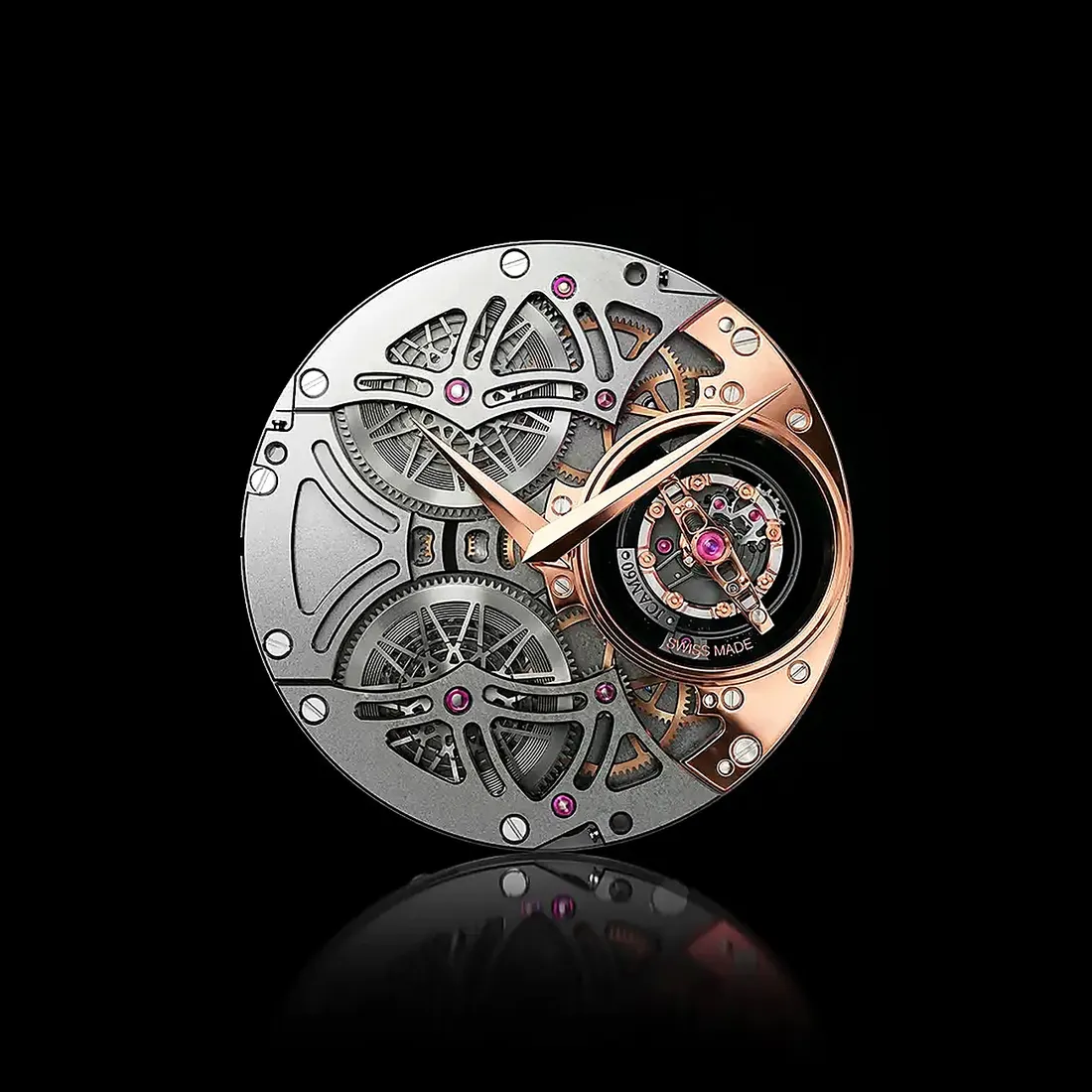
The real matter in this piece is a figure most people miss. In very nearly every watch on Earth a tourbillon carriage makes one full turn in sixty seconds, because that is a natural rhythm which can also serve as a seconds indication. Here the carriage turns once every four seconds. That is fifteen times faster than the norm, and a world record for a wristwatch.
Physics sends the bill for that. As the carriage speeds up, friction and energy consumption rise, and as the torque from the mainspring falls the amplitude of the oscillation degrades. Jacob & Co. therefore built a constant force device into the movement: an arrangement that releases energy not straight from the mainspring but from an intermediate spring rearmed six times every second. The carriage is turned with the same force in the first hour of the reserve as in the last.
And one thing needs correcting: this is not a flying tourbillon. The carriage does have an upper bridge, but that bridge is made of sapphire crystal. The engineering was solved not by removing the bridge but by making it transparent. A support that hides nothing beneath it, the horological equivalent of a glass beam in architecture.

format_quote"The engineering was solved not by removing the bridge but by making it transparent. A support that hides nothing beneath it."
Hasan Bekmezci
The Column, the Bow and the Caseback
The case sits inside the same philosophical frame. The flanks of the 18K rose gold body, 44.5 mm across and 18.10 mm tall, are derived from the scrolling volutes on the capitals of Ionic columns. The profile of the watch is a section through the load-bearing column of a temple, not through the statue of a god but through the architecture that holds the statue up.
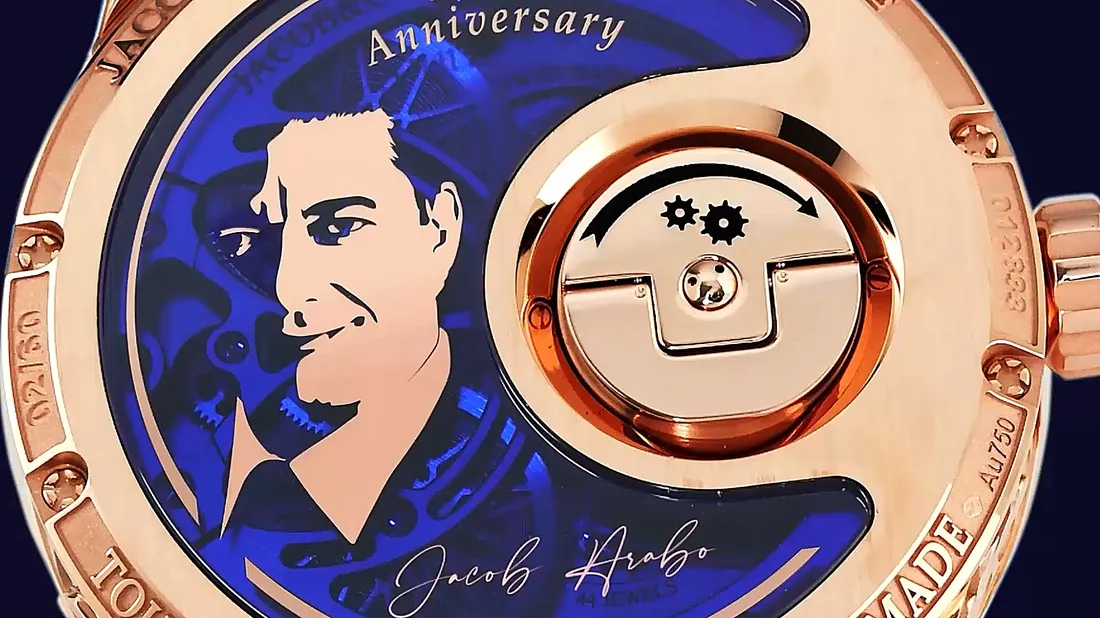
The crown sits on the left and is devoted to a single task: setting the time. The right-hand side is given over to the tourbillon, so that when the watch is worn, the only thing emerging from under the cuff is that fast carriage in constant motion. Winding is done instead with a flip bow set into the caseback. That is the bow at the neck of a pocket watch, brought back onto a wristwatch: to wind it you must take it off and hold it in your hand, which is to say you must set aside time for it.
The caseback itself is blue sapphire crystal, carrying the portrait and the signature of the house’s founder, Jacob Arabo. Calibre JCAM60 is hand-wound, made of 282 components, beats at 21,600 vibrations an hour or 3 hertz, and runs 60 hours from a full wind. Water resistance is 30 metres, the strap is blue alligator and the folding buckle 18K rose gold. Only 60 pieces were made.

While the fictional shadow gods of mythology sink into the ground, the precise laws of physics laid down by the Creator of the universe, and the mechanical art man produces by understanding those laws, turn in this piece into an endless contemplation.
What comes out of the hand of a man who can make his mind an unshakeable citadel is a carriage that turns on its own axis every four seconds. And that carriage obeys no god. It obeys only the law.
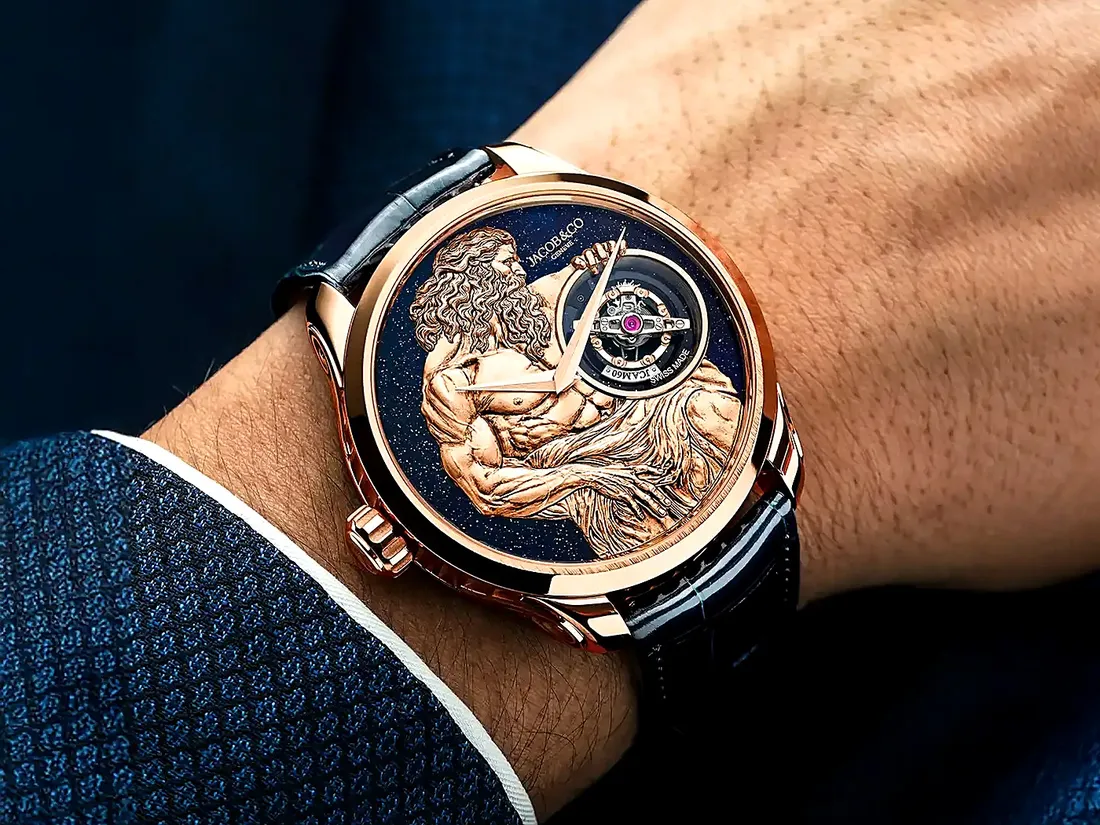
Craft and Technical Detail
Four-second tourbillon: the carriage makes one full turn every four seconds instead of the customary sixty. That is fifteen times faster than the norm and a world record for a wristwatch. Its upper bridge is sapphire crystal and conceals nothing beneath it.
Constant force device: it releases energy from an intermediate spring rearmed six times every second, so the carriage receives the same force at the beginning and at the end of the power reserve.
Calibre: JCAM60, hand-wound, 282 components, 21,600 vibrations per hour or 3 hertz, 60 hours of power reserve. Functions: hours and minutes.
Winding and setting architecture: the crown sits on the left and is dedicated to time setting alone; the movement is wound with a flip bow set into the caseback.
Dial: a blue aventurine ground carrying a relief in 18K rose gold, carved and finished by hand under a microscope; 5N red gold dauphine hands.
Case: 44.5 mm across, 18.10 mm tall, 18K rose gold, with flanks derived from Ionic column volutes; anti-reflective sapphire crystal; water resistant to 30 metres.
Caseback: blue sapphire crystal bearing the portrait and signature of Jacob Arabo.
Strap and clasp: blue alligator leather with an 18K rose gold deployment buckle.
Production: 60 pieces; reference JA060.40.AA.AA.A.