Introduction: A Fluid Revolution
The watchmaker settled the loupe into his eye beneath the dim light on his bench. For centuries, mechanical watchmaking had been governed by the same unchanging rule: a spring is wound, wheels turn, and hands of brass or steel move across a fixed dial, defying gravity. A case full of air, metal parts and glass. In the heart of watchmaking, time had always flowed within this dry little chamber.
But when the calendars showed 2013, and as this philosophy was later perfected, the world of industrial design decided to break all the boundaries of luxury watchmaking with the mysterious world of liquids. Benoît Mintiens, the Belgian designer who created Ressence, wanted to turn the act of looking at a watch from a physical depth into an 'optical illusion' that plays with reflections. This vision merged with the philosophy of fluid, organic form that Marc Newson, the greatest living legend of industrial design, taught the world. The result was this Ressence Type 3, carrying the shared aesthetic genes of two brilliant minds, its upper chamber entirely filled with oil, and winner of the 2026 Red Dot: Best of the Best award.
Now let us take a short journey into how this machine, which has left the design world in awe, feels on the wrist, and then examine the mechanical architecture behind it.
The Story on the Wrist: Time Flowing from Marc Newson's Pebble
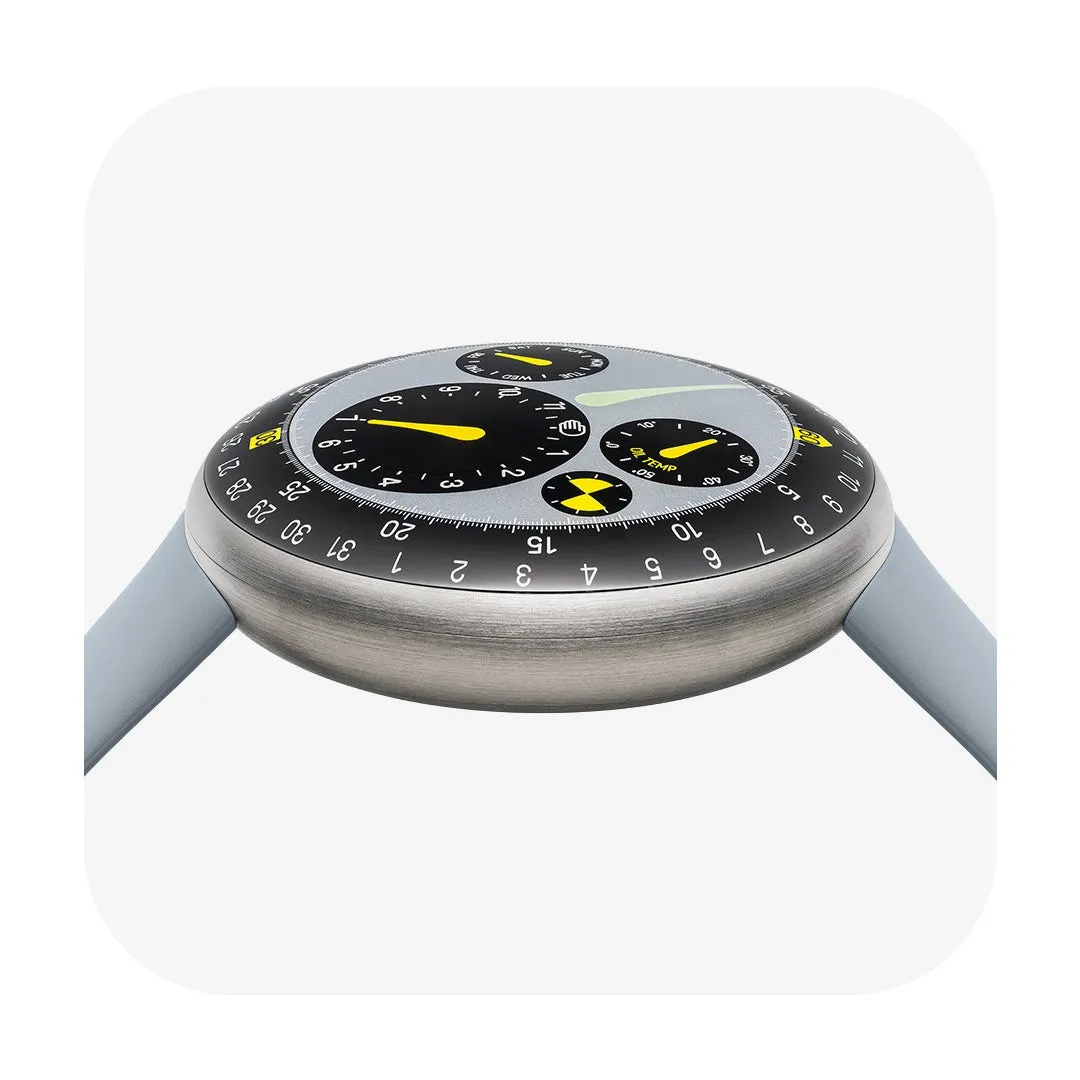
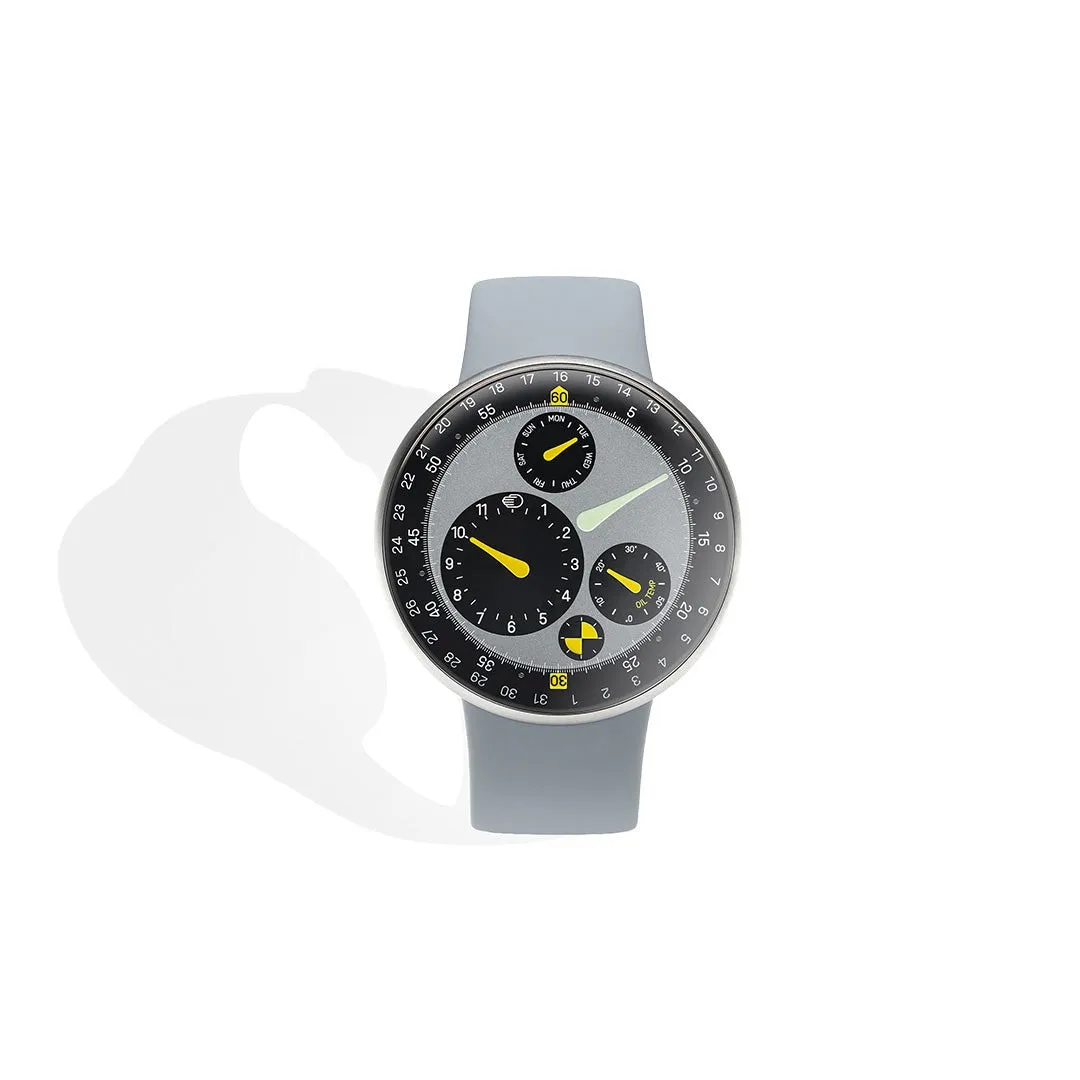
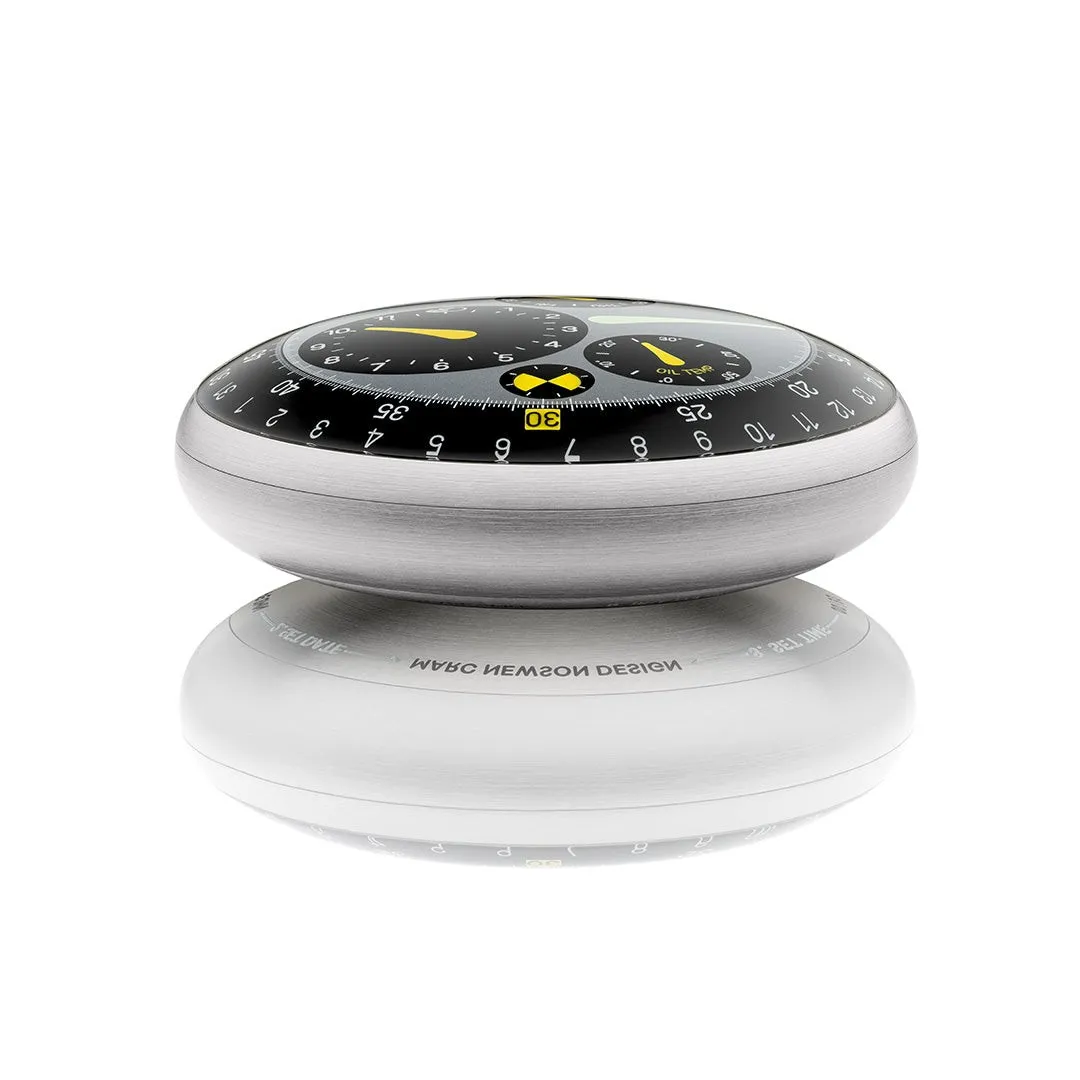
Imagine you are sitting in a quiet café in Istanbul, looking out over the Bosphorus. On your wrist is a watch that, seen from the outside, has neither a crown nor depth in the usual sense. Only a vast sapphire crystal dome, glittering like a diamond over a smooth, satin-finished titanium body, as though a pebble picked up from the seashore. This flawless, cornerless, water-worn pebble form is the soul of the iconic biomorphism (organic fluidity) design language of Marc Newson, who was also part of the original Apple Watch design team, breathed into a watch.
Your friend at the next table looks at your watch and asks, surprised: 'The screen protector and the pistachio-green graphics of the smartwatch on your wrist are so vivid, what brand is it?' You smile. You put your money not into a smart screen, but into a mechanical watch produced by human genius and crowned with the world's most prestigious design award.
You tilt your arm slightly. The watch stands in full profile, at a 180-degree horizontal angle. Normally you could not read any watch from this angle; the glass glares, the hands blur into one another. Yet when you look at this watch, those vivid graphic lines and time indications stand as crisp as if printed like ink directly onto the glass. Stranger still, time flows but the hands do not turn. The entire dial turns. As the large minute indication advances, the small rings showing the hours, the date and the days shift around it too, like planets in a system around the sun. Your friend puts a finger on the glass, thinking he will touch a digital screen. But beneath that glass lies a millions-of-dollars of R&D, a flawless marriage of pure chemistry and mechanics.
Two Geniuses: Newson and Mintiens
Two names decided the fate of this watch; both designers, both revolutionaries who came from 'outside' the world of watchmaking. Benoît Mintiens is a Belgian industrial designer. Before founding Ressence in Antwerp in 2010, he spent more than twenty years designing everything from trains to medical devices, from aeronautics to consumer products. The view he brought to watchmaking is born precisely of this 'outsider's' eye: for Mintiens, a watch is not a jewel to be decorated, but an information interface that conveys time in the purest, most legible way. He threw away the crown, removed the classic hour and minute hands, and turned the dial into a three-dimensional object; for to him, every unnecessary detail was a sin of design.
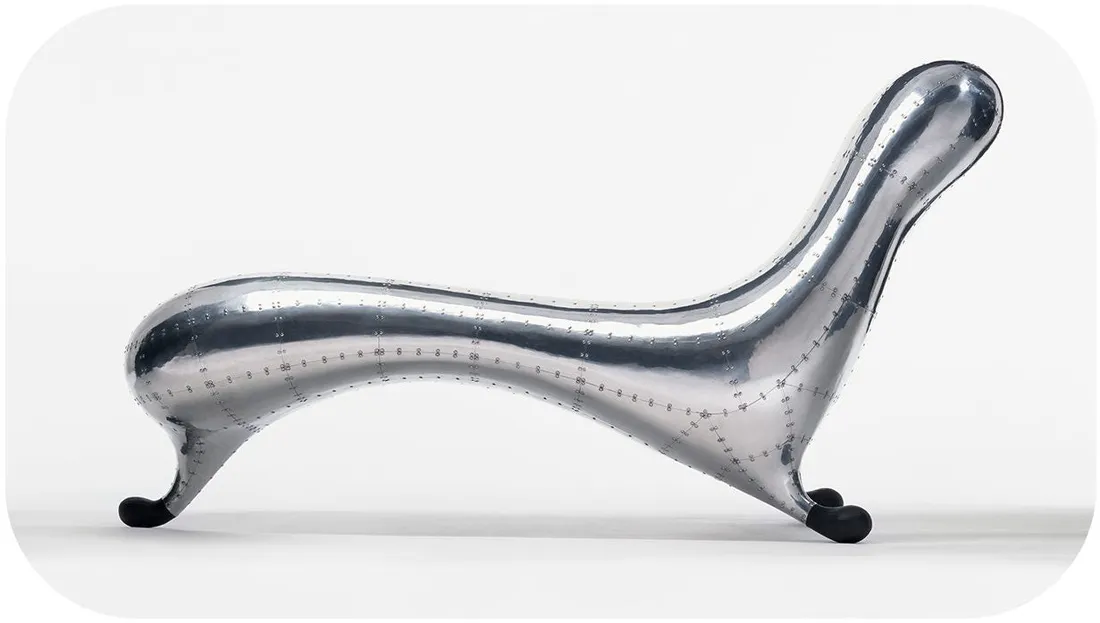
Marc Newson (b. 1963, Australia), meanwhile, is considered the most influential living industrial designer. His Lockheed Lounge of 1986, a biomorphic chaise longue in aluminium, became one of the most expensive contemporary works of design history ever sold at auction. Newson has left his mark on everything from the aircraft cabins of Qantas to Nike shoes, from Louis Vuitton to Montblanc, and in 2014, at Jony Ive's invitation, joined Apple and took part in the design of the Apple Watch. But his ties to watchmaking reach much further back, to Ikepod, the brand he founded; that smooth, cornerless 'pebble' form finds new life today in Ressence's domed case.
The shared language of the two designers is to erase the unnecessary and to exalt organic, fluid form. When Newson's biomorphic aesthetic merges with Mintiens's liquid engineering, the result is less a watch than a design manifesto that fits in the palm of your hand.

Part I: The Optical Illusion and the Chemistry of Oil
The most important detail giving this watch that digital-screen smoothness that earned it the Red Dot jury's title of 'Best of the Best' is that the watch's upper chamber is filled to the brim with medical-grade pure silicone oil.
Under normal circumstances, light refracts as it passes from air into glass, and then again as it drops from the glass into the air gap inside the watch. This refraction returns to our eyes as reflection, glare and dial depth. To solve this problem, Ressence used a special oil developed in the laboratory. The refractive index of this oil is exactly the same as that of the vast dome-shaped sapphire crystal above the watch.
When light enters through the glass, it finds beneath it not air but a liquid of the same density as itself. As a result the light travels straight on, unbent and unrefracted. Our eye cannot perceive the distance between the glass and the dial. This chemical harmony of glass and oil before light is what creates that AMOLED-screen-like illusion your friend saw.
Thermo-Compensation: Controlling the Expanding Oil
By the laws of physics, liquids expand in heat and contract in cold. To solve this problem, Ressence built inside the watch a balancing system called bellows, made of seven micro flexible metal rings. As the oil expands these bellows close, and as it contracts they open. The little thermometer indicator with pistachio-green detailing on the right side of the dial (OIL TEMP) actually reports to you mechanically the temperature of the oil inside at that moment and the state of the bellows.
Part II: ROCS (Ressence Orbital Convex System)
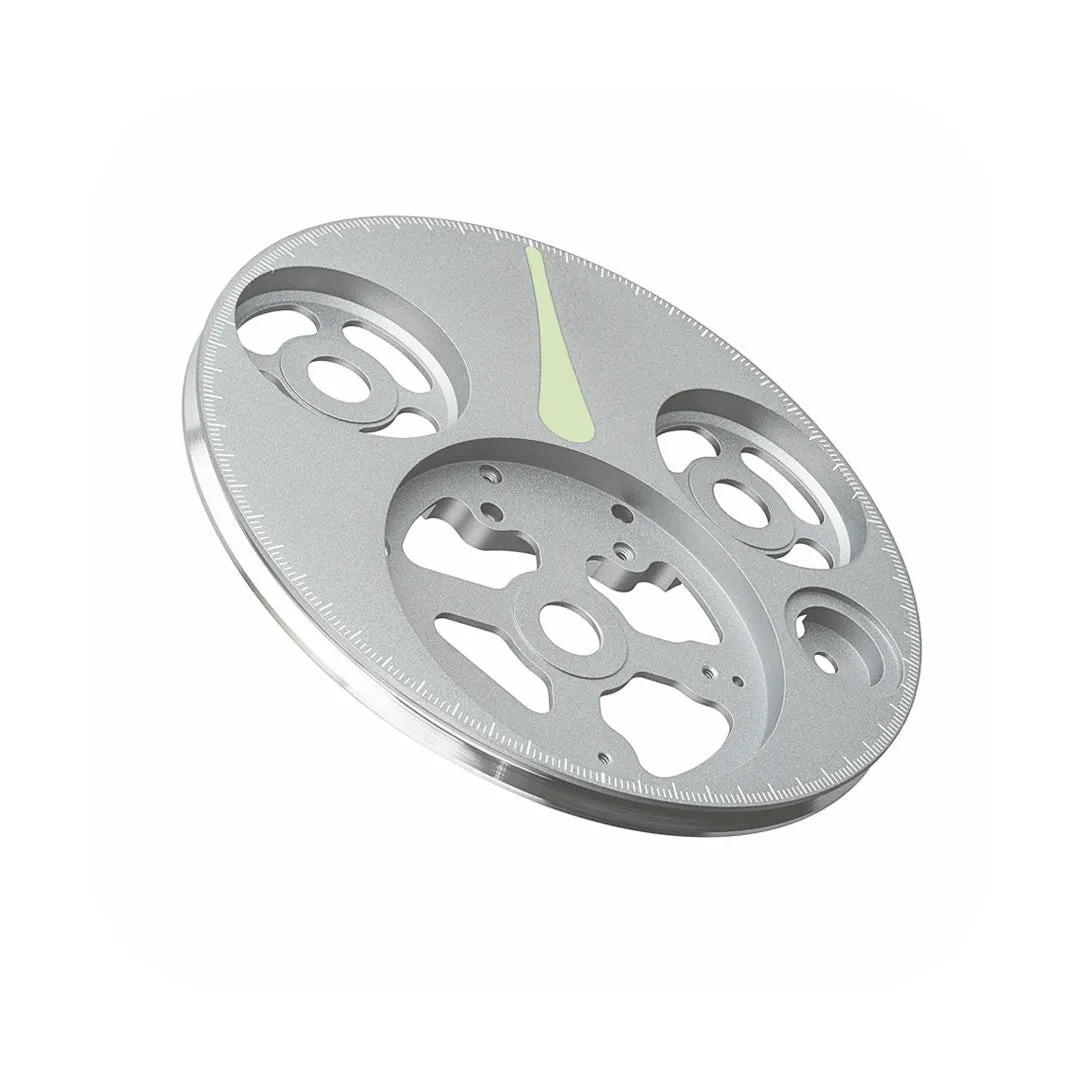
In traditional watches the hour and minute hands overlap and turn on a central axis. In this model there is no fixed central axis. The brand's patented planetary module, called ROCS 3, is used instead. This module is made of three-dimensional, curved discs in constant motion.
The main dial itself is the minute hand (it shows the minutes). While this main dial turns once around its own axis every 60 minutes, it drags all the other sub-dials upon it (hours, day, date, thermometer) along with it. Thanks to this 'central-axis-less rotating dial' logic that Marc Newson began in his Ikepod watches and that Benoît Mintiens carried to its peak in this watch, the watch takes on a completely different visual composition every minute of the day.
Part III: The Separation of Two Worlds and Magnetic Power Transmission
The greatest question that comes to mind is this: how can a movement run entirely within oil without drowning? Do the balance wheel or the mainspring not grow heavy in liquid? Ressence solved this problem by turning the watch into a two-storey structure. Inside the watch there are two separate compartments, never touching, divided by a titanium wall.
The lower compartment (the dry world): here sits a modified, high-precision automatic movement (calibre). This compartment is entirely dry, without a single drop of oil, and filled with air like a traditional watch; it produces the mechanical energy the watch needs. The upper compartment (the liquid world): the place where only the ROCS dial system and the pure silicone oil are found.
Power that crosses the walls, micro-magnets: since there is no hole, axis or mechanical connection between these two chambers, how does the dry movement below turn the oil-filled dial above? The answer is the genius of magnetism. Powerful micro-magnets are placed on the topmost wheel of the movement below. On the base of the ROCS module above (within the oil) sit matching magnets of exactly the opposite polarity. As the movement below turns, the rotational force it produces crosses the sealed titanium wall between them through the magnetic field of attraction and drags the indications above along with it.
Part IV: The Disappearance of the Crown and 'Best of the Best' Ergonomics
The greatest force behind this watch receiving the 2026 Red Dot jury's 'Best of the Best' award is that superior ergonomics, the product of Marc Newson's philosophy. There is no mechanical protrusion (crown) on the case to catch on your hand or spoil that smooth pebble feel.
So how is this watch wound and set? To set it, you must turn it over and rotate the sapphire crystal cap on its back by hand. The clever logic here is this: when you hold the watch flat and turn its back, the movement senses this and the caseback shifts into winding (energy-storing) mode. When you turn the watch completely over and rotate its back, the movement shifts into time-setting mode. The back of the watch, in other words, serves as the world's most functional and aerodynamic winding panel.
Conclusion: A Timeless Design Manifesto
This current Ressence model, with its satin-finished Grade 5 titanium case, the curved date ring at the edge of the dial and the Red Dot: Best of the Best title it justly received in 2026, is not merely a timekeeper. It is one of the most refined peaks in the history of horology, where Marc Newson's legacy of fluid design blends with Benoît Mintiens's genius of liquid engineering.
As you take the last sip of your coffee in that café on the Bosphorus, you look at your watch once more. Time no longer hides behind dry and metallic wheels. Time seems to drift within a clear liquid, in a weightless void of space, shimmering with the award-winning pistachio-green graphics of 2026.