Time Afloat in the Waters of the Côte d'Azur
On the dazzling shore of the French Riviera, the Côte d'Azur, at that calm hour when the afternoon sun paints the turquoise waters of the Mediterranean gold. After the intense sessions of the International Congress of Cosmology and Advanced Physics, two women of science had given themselves to the cool water to shake off the fatigue of the day: the astrophysicist Dr. Selen Vance, and the theoretical physicist and relativity researcher Prof. Dr. Maya Thorne.
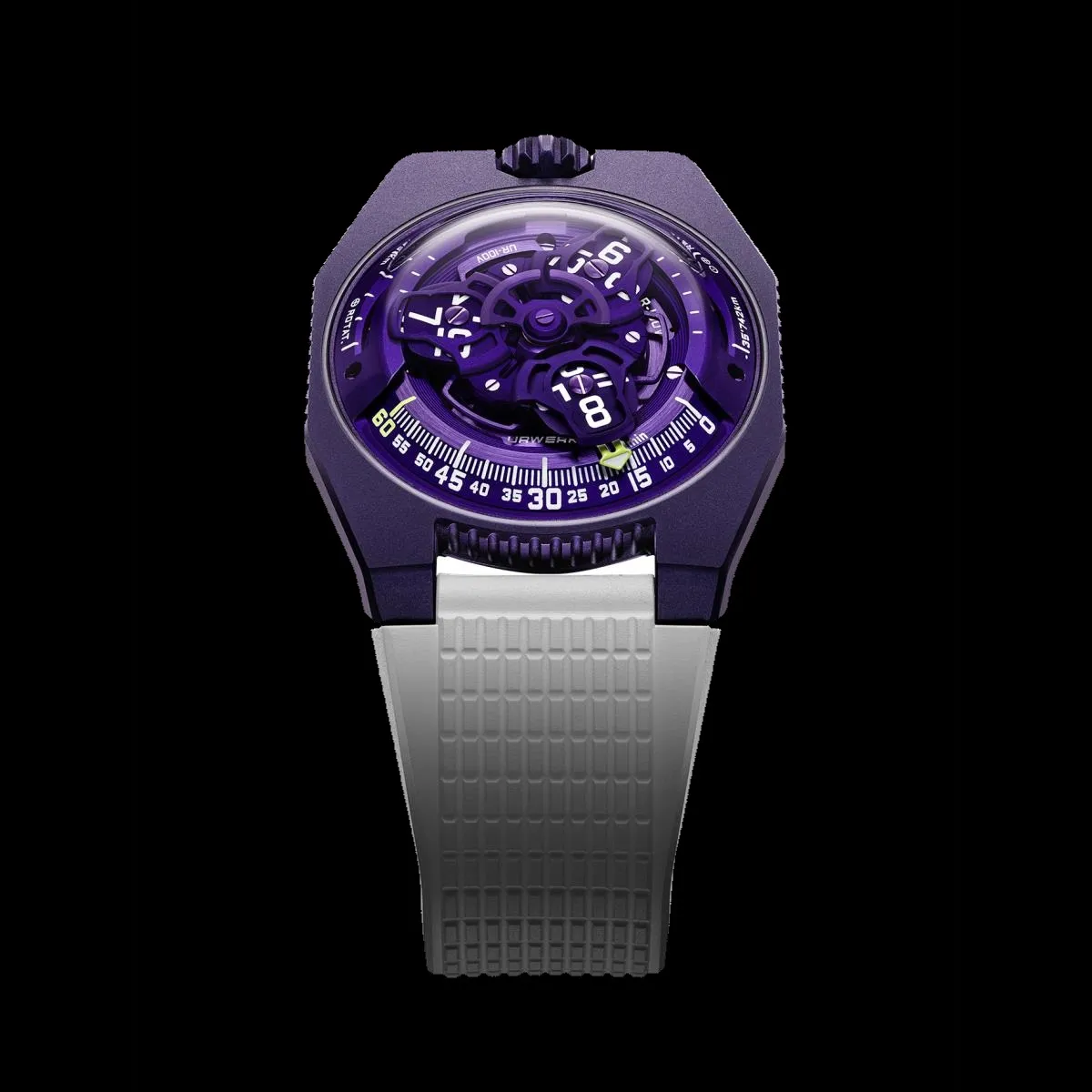
As she drifted on her back at the surface, Maya turned her head and looked at Selen's left hand resting above the water. Sunlight filtering through the clear Mediterranean struck the unusual, sharply angled titanium body on Selen's wrist. Gold and rhodium glints reflected from the dial danced across the surface of the water.
Maya raised her eyebrows in curiosity: "Selen, are you seriously swimming in the middle of the sea with that strange mass of metal on your wrist? Do you have some obsession with measuring time without leaving the water, or is that a submarine module on your arm? Hey, what is this watch?"
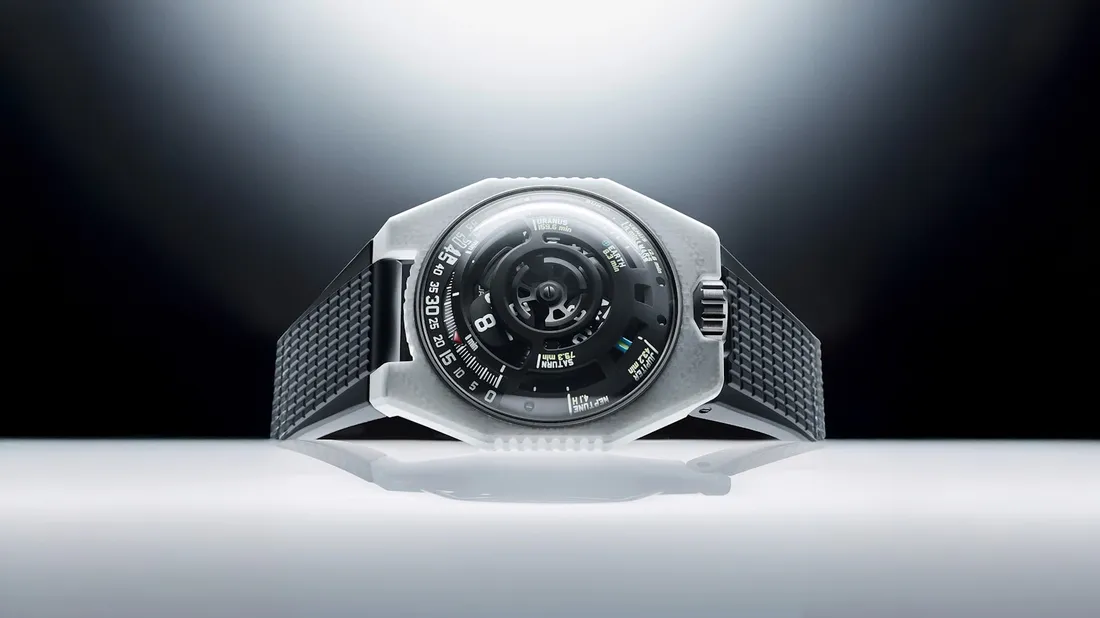
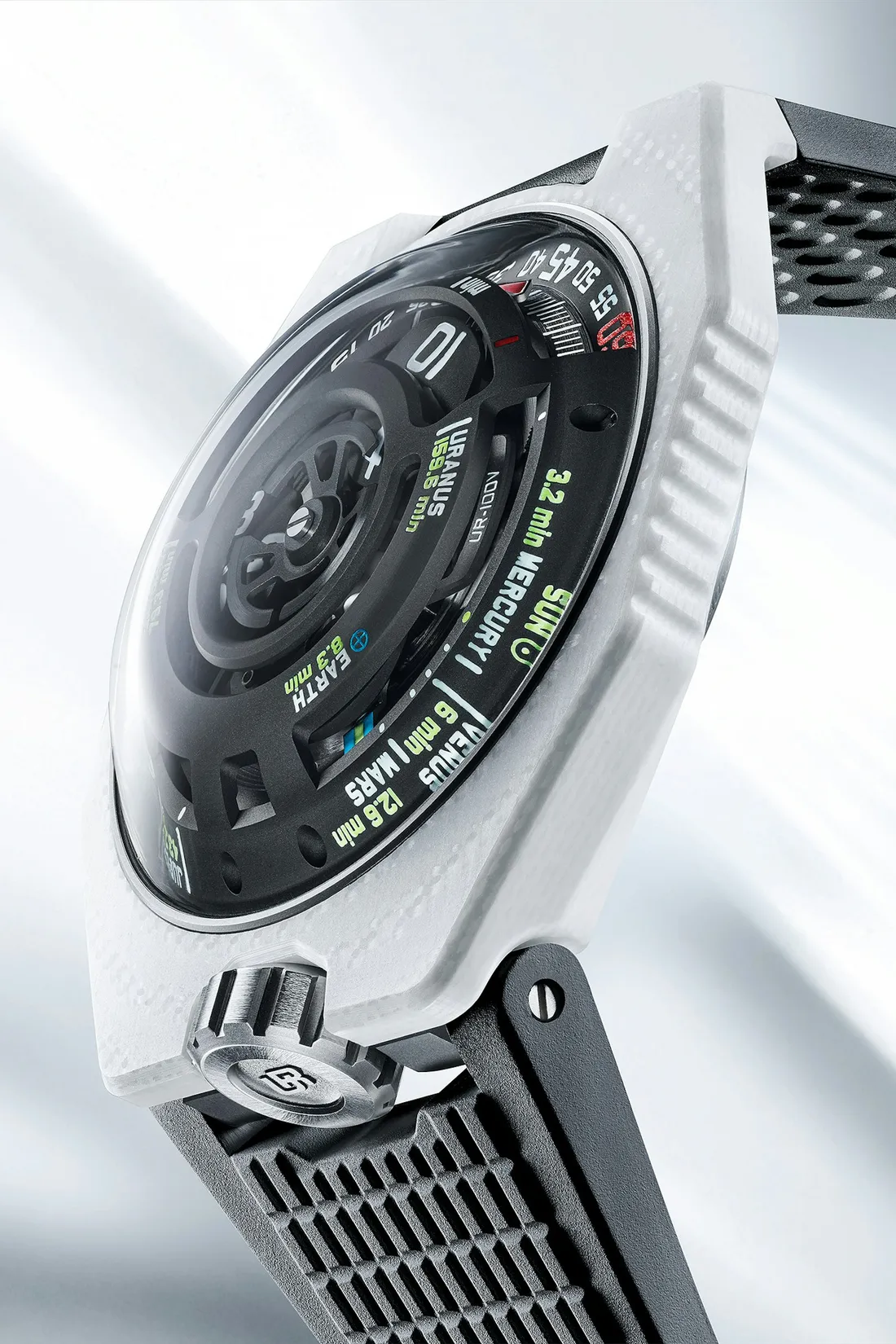
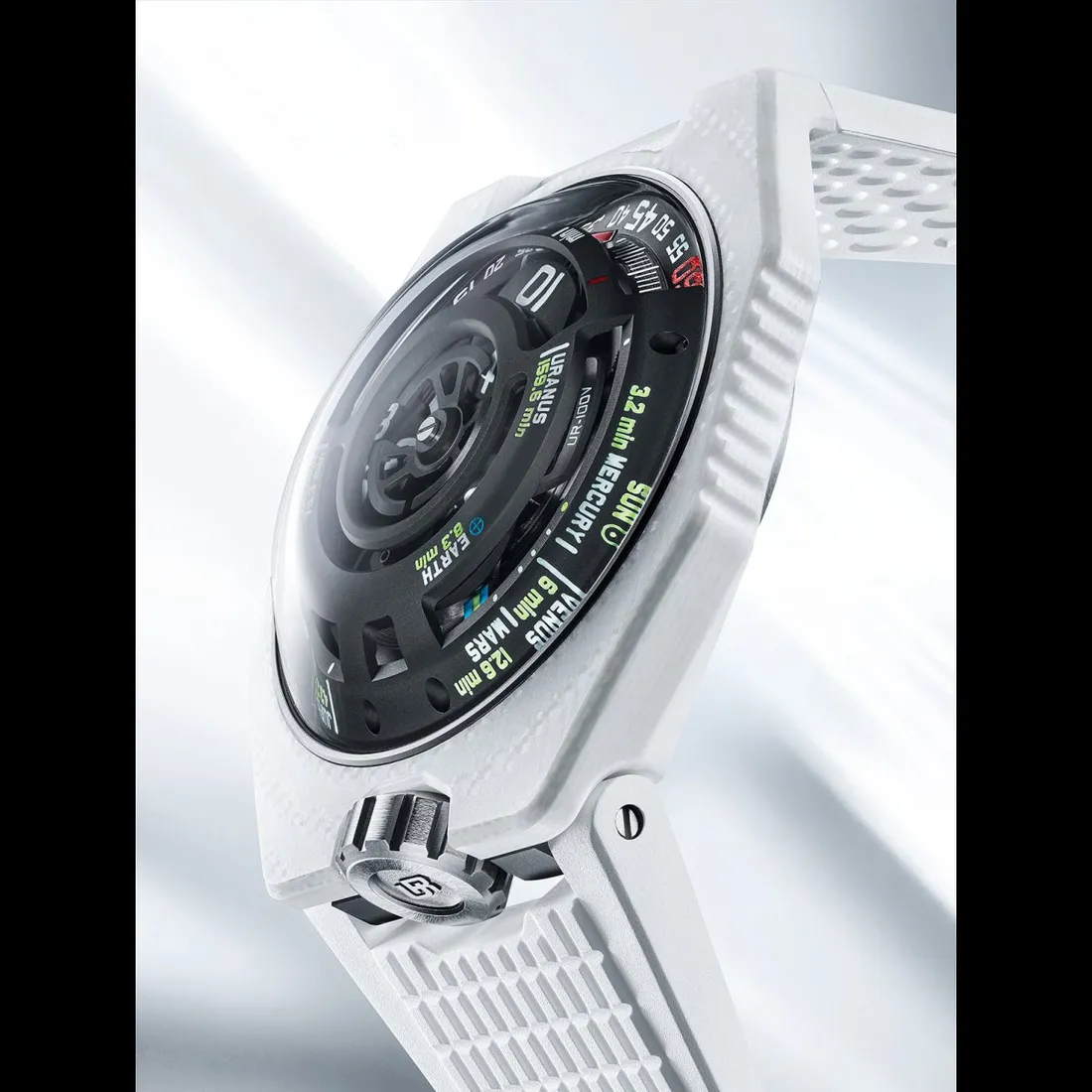
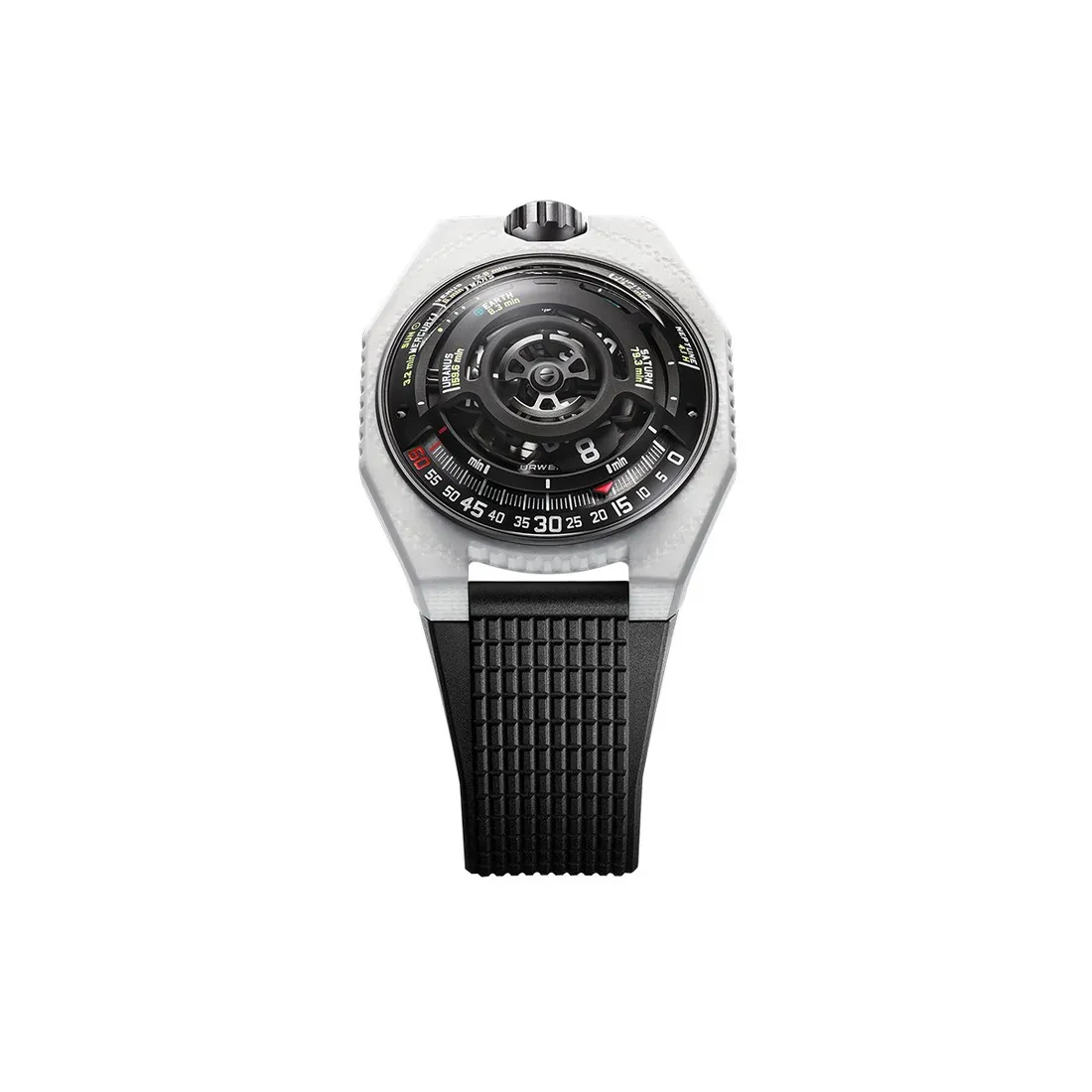
Laughing, Selen lifted her arm from the water and dried it. With its titanium case, its angled sapphire crystal and an architecture recalling a space capsule, the watch shone among the droplets: "This is a very special piece made by an independent watch brand called Urwerk, Maya: the UR-100V SpaceTime. Do not worry, it withstands pressure and water. But the real point is not that it is waterproof; this watch does not offer us time merely as hours and minutes, it measures how far we travel through space within time."
The Geniuses Behind the Watch and a Collaboration With Astrophysicists
Maya laughed in astonishment: "Urwerk? Who are these people? How could they possibly measure with a mechanical watch how many kilometres we travel through space within time?"
"There are two unconventional minds behind the brand, Maya," said Selen, pointing to the angles of the dial. "One is Felix Baumgartner, the other Martin Frei. Felix is a third-generation Genevan watchmaker. His childhood passed among the wheels of antique pendulum clocks and chronometers, and he is something of a genius in mechanical precision. Martin Frei, on the other hand, is a futurist painter and industrial designer. He blends science fiction, architecture and the geometry of space to perfection."
As Maya came closer to examine the watch, she asked: "But how did a watchmaker and a designer master the astronomical data needed to fit universal orbital speeds onto a dial?"
"That is exactly the fascinating part!" said Selen. "While designing this watch, Felix and Martin worked for months with astrophysicists and astronomers. They converted the real orbital calculations of the solar system, and the precision of the Earth's rotation at the Equator, into micro-mechanical gear ratios. So every micro gear tooth on that dial was cut directly from an astrophysical equation."
Where Does 100,000 Kilometres an Hour Come From?
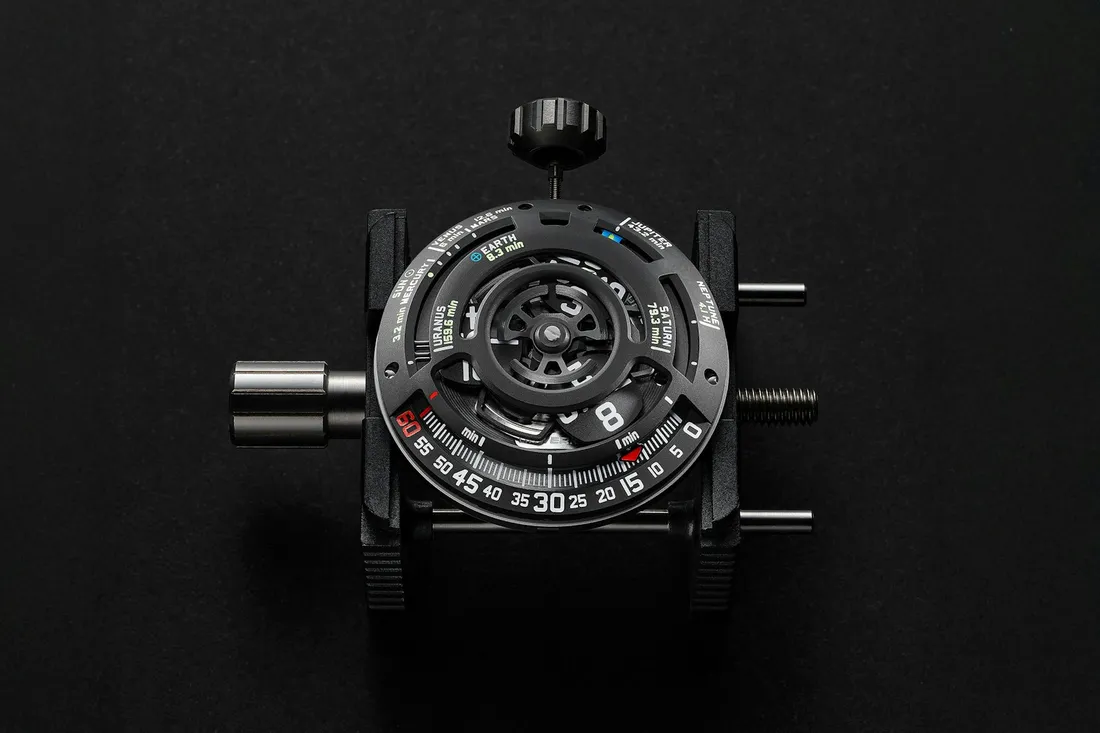
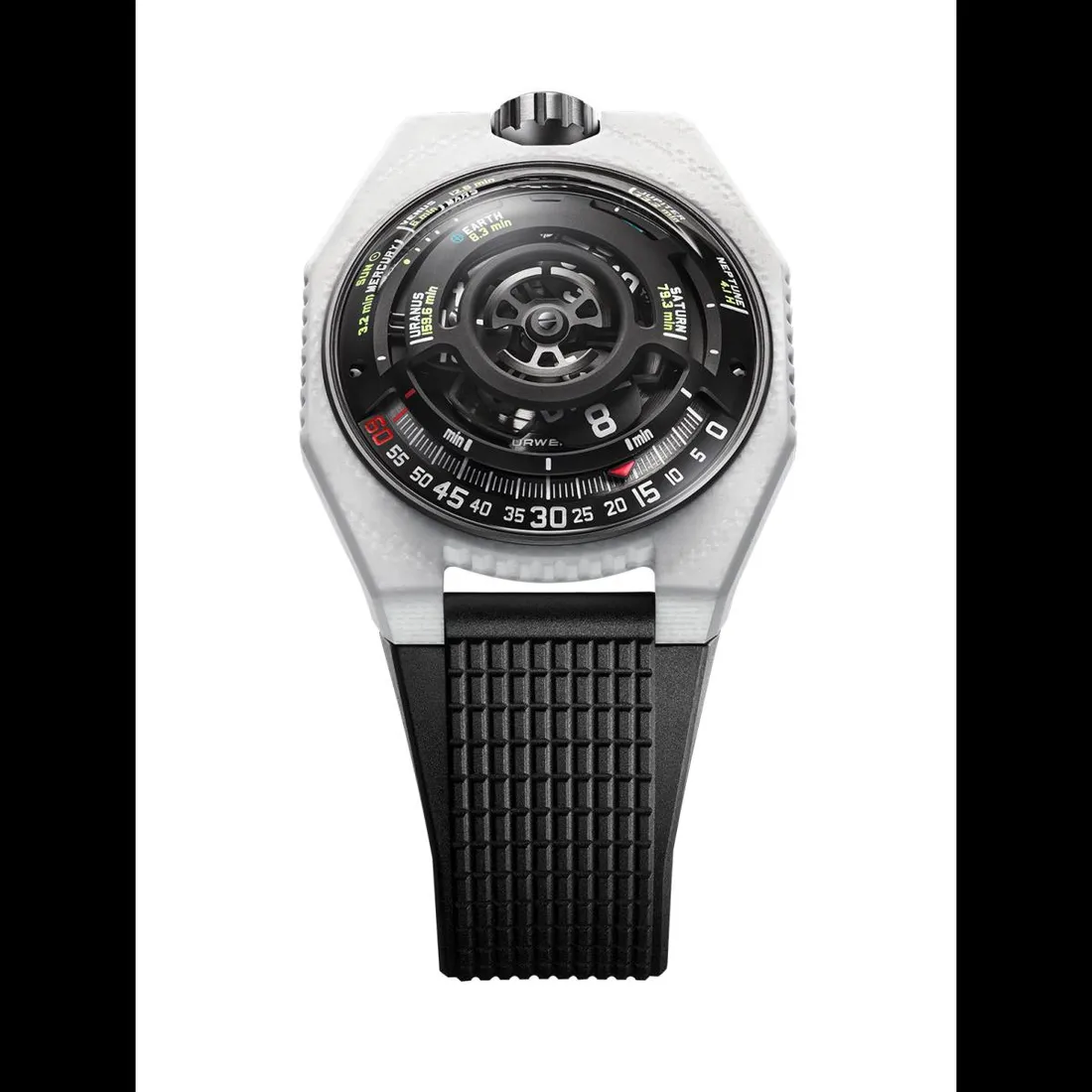
Maya focused on the details of the dial: "There are no hour and minute hands as we know them. As your arm moves, a three-armed structure turns on the dial."
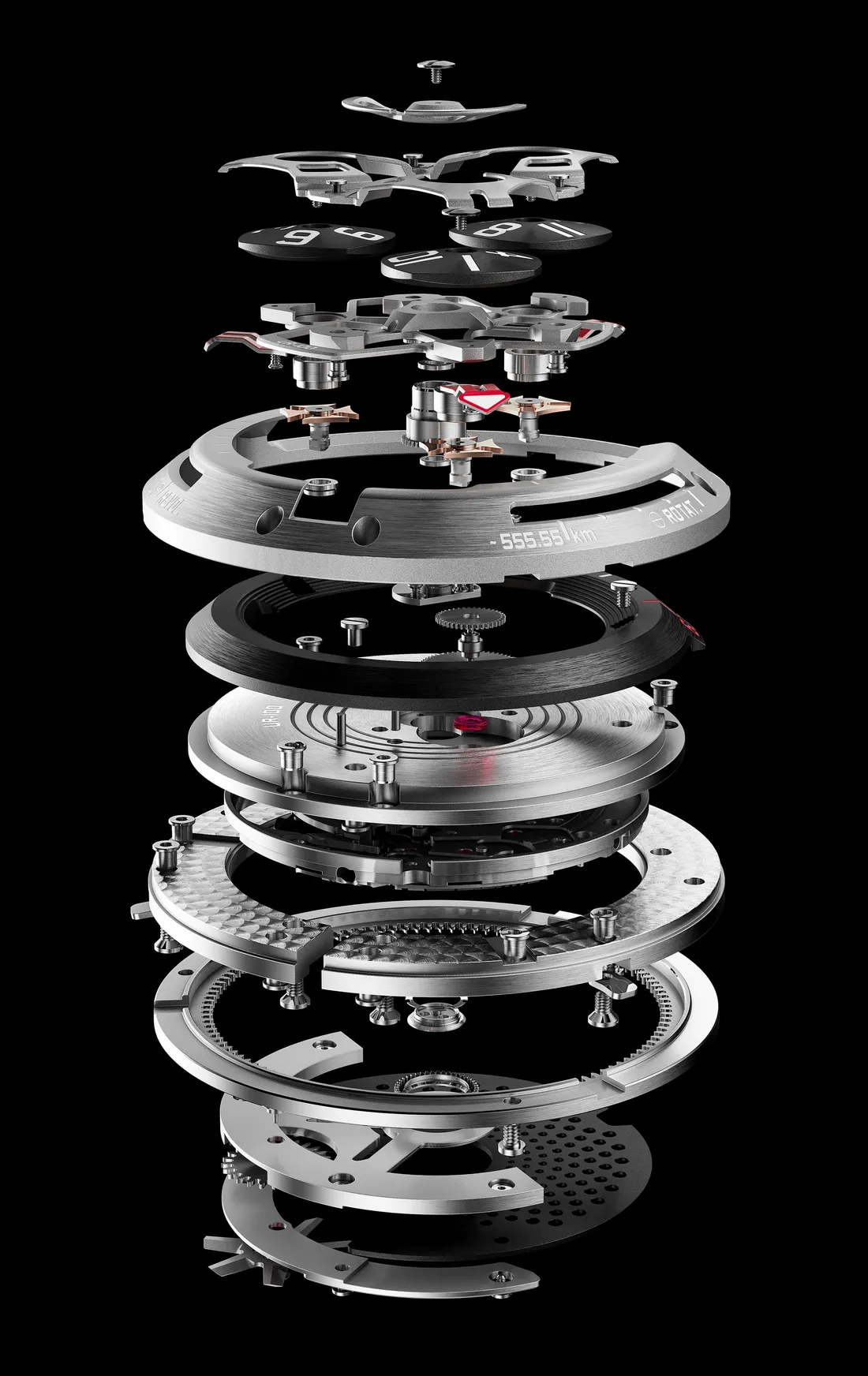
"They are called orbiting satellites, Maya," said Selen. "A three-armed carousel system glides on its own axis like planets turning around the Sun. When one of the hands completes 60 minutes it does not disappear; it enters a special aperture at ten o'clock. While the Earth turns on its own axis at the Equator, we travel 555.5 kilometres through space in 20 minutes. In that 20-minute interval, the watch shows exactly this distance we have covered. The other hand on the opposite arm simultaneously enters the aperture at two o'clock and measures the vast 35,740 kilometres the Earth covers in 20 minutes on its orbit around the Sun."
Giving herself to the rhythmic waves of the sea, Maya thought: "Wait a minute, Selen. You said the Earth is hurled around the Sun at more than 100,000 kilometres an hour. Where on earth does this 100,000 kilometres come from? How do we make that calculation?"
Selen smiled and explained it step by step: "The calculation is so simple, Maya, that you could find it at once with primary-school arithmetic! Look:"
1. The distance between the Earth and the Sun is on average 150 million kilometres. The Earth draws a full circle around the Sun.
2. When you go around a circle, the path you cover is about 6 times the radius. So if you multiply 150 million kilometres by 6, what do you get? About 900 million kilometres! That is the total distance the Earth walks around the Sun in one year.
3. And how many hours are there in a year? There are 365 days in a year, and 24 hours in each day. Multiply 365 by 24 and you get 8,760 hours.
4. Now the final step: if we divide the total distance we travelled (900 million kilometres) by the total time (8,760 hours), do you know what comes out? About 107,000 kilometres an hour!
"So what we mean when we say we are moving at more than 100,000 kilometres an hour comes exactly from this simple division!"
Maya laughed in astonishment: "Incredible! So while we are floating calmly here in this water, we are moving through space at 107 thousand kilometres an hour. Then why do we not feel the slightest jolt or wind?"
"Because there is inertia and constant speed, Maya. Just as you can drink your tea without spilling a drop inside an airliner travelling at 800 kilometres an hour. Because the Earth is not accelerating, that is, it does not suddenly brake or accelerate, we perceive this immense speed as complete stillness."
format_quote"While we float calmly in this water, we are moving through space at 107 thousand kilometres an hour."
Prof. Dr. Maya Thorne
How Were the Times to the Planets Calculated?
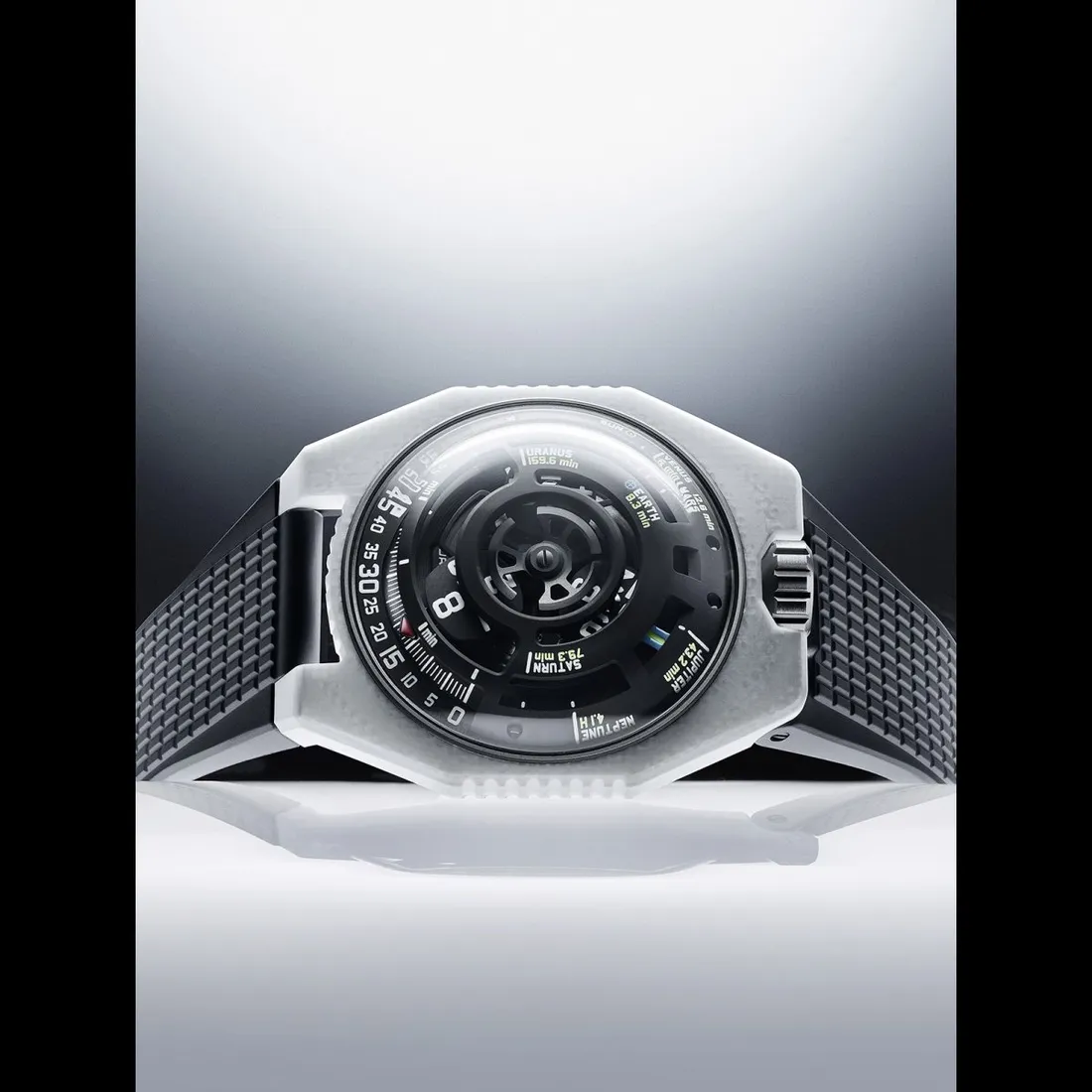
Maya looked carefully at the other micro inscriptions on the dial: "Selen, there are the planets of the solar system on the dial with times beside them: Mercury 3.2 min, Venus 6.0 min, Earth 8.3 min, Mars 12.6 min, Jupiter 43.2 min, Saturn 79.3 min, Uranus 159.6 min, Neptune 4.1 H. What do these mean and exactly how are they calculated?"
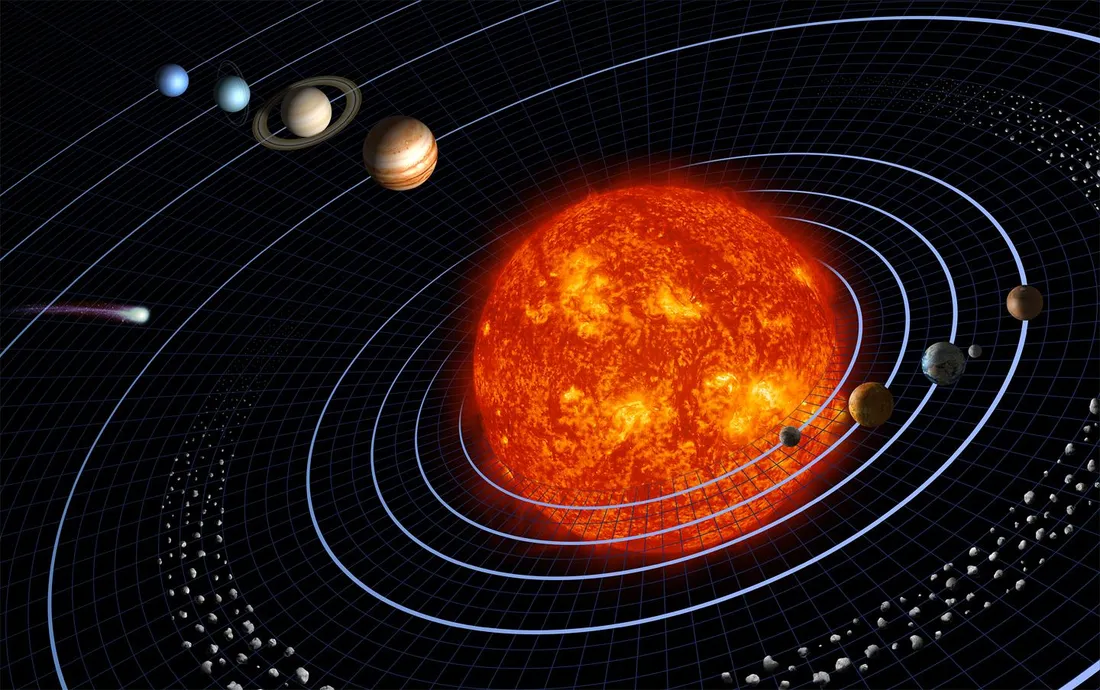
Selen explained with a smile: "That is a wonderful detail, Maya! These times written on the dial show in how many minutes a drop of light leaving the core of the Sun reaches each planet. The logic and the arithmetic are so simple: light runs through the vacuum of space at 300,000 kilometres a second. Since there are 60 seconds in a minute, light covers 18 million kilometres in one minute. Now, when we divide the planets' distance from the Sun by these 18 million kilometres, those times on the dial appear one after another:"
1. Mercury (3.2 min): the closest planet to the Sun, the distance between them about 58 million kilometres. Dividing 58 million by 18 million, we find that light takes exactly 3.2 minutes to reach Mercury.
2. Venus (6.0 min): it is 108 million kilometres from the Sun. Dividing 108 million by 18 million, the arrival time of light at Venus comes out at exactly 6.0 minutes.
3. Earth (8.3 min): we are 150 million kilometres from the Sun. Dividing 150 million by 18 million, we see that the light reaching us left the Sun 8.3 minutes ago (that is, 8 minutes and 20 seconds). The sunlight warming our faces right now actually comes from a past of 8 minutes ago!
4. Mars (12.6 min): the Red Planet is on average 228 million kilometres from the Sun. Dividing 228 million by 18 million, light takes 12.6 minutes to reach Mars.
5. Jupiter (43.2 min): the largest planet of the solar system is 778 million kilometres from the Sun. Dividing 778 million by 18 million, light takes 43.2 minutes to arrive at Jupiter.
6. Saturn (79.3 min): the ringed giant is about 1 billion 427 million kilometres from the Sun. Dividing that vast distance by 18 million, light takes 79.3 minutes (about 1 hour 20 minutes) to reach Saturn.
7. Uranus (159.6 min): the ice giant is 2 billion 870 million kilometres from the Sun. When we do the arithmetic, light can only get there in 159.6 minutes (about 2.6 hours).
8. Neptune (4.1 H): the outermost planet of the solar system is a full 4 billion 500 million kilometres away. For light to reach here takes 246 minutes, that is, in the abbreviation written on the dial, about 4.1 hours!
format_quote"The sunlight warming our faces right now actually comes from a past of 8 minutes ago."
Dr. Selen Vance
How Was the Distance to the Planets Measured?
Maya asked, shaking her head: "All well and good, Selen. But since humankind did not take a giant tape measure into space, how could men in the 17th century measure how many million kilometres away Mercury or Mars was? What does parallax angle mean? Explain it to me so that not a single question mark is left in my head!"
Selen opened her arms wide and explained: "Let us start with a wonderful experiment you can do right now, Maya. Stretch out your arm and raise your thumb. First close your left eye and look at your thumb with your right eye only. You will see that your thumb lines up with an object on the wall behind. Now, without moving at all, close your right eye and open your left. Your thumb will appear to have suddenly shifted to the right or the left, will it not?"
"Yes, it shifts!" said Maya.
"But did your thumb really move? No! Why did it appear to shift? Because there is a distance of 6 centimetres between your left eye and your right eye, and your two eyes look at the object from different angles. This apparent shift of an object against the background behind it, when viewed from two different points, is called parallax, and the angle that forms is called the parallax angle."
"And how did the astronomers of the 17th century use this in space? Here is the real historical example: in 1672 the French astronomer Cassini stayed in Paris. His colleague Richer went to South America. There were exactly 7,000 kilometres between the two cities. Just as in the two-eye experiment, instead of a person's two eyes they used two cities on Earth!"
"On the same night, in the same second, both looked at the planet Mars. While the man in Paris saw Mars in front of a distant star A, the man 7,000 kilometres away saw Mars in front of star B. Just like the shifting of our thumb, Mars had shifted too! Knowing the 7,000 kilometres between the two cities and how much Mars had shifted, they built a giant triangle. From this triangle, whose base and angle were known, they calculated to the millimetre how many million kilometres away Mars was from us!"
Maya listened with widening eyes: "A wonderful method! And now to today. How do space agencies measure this now? Give me a complete and clear example of the calculation from our own day too."
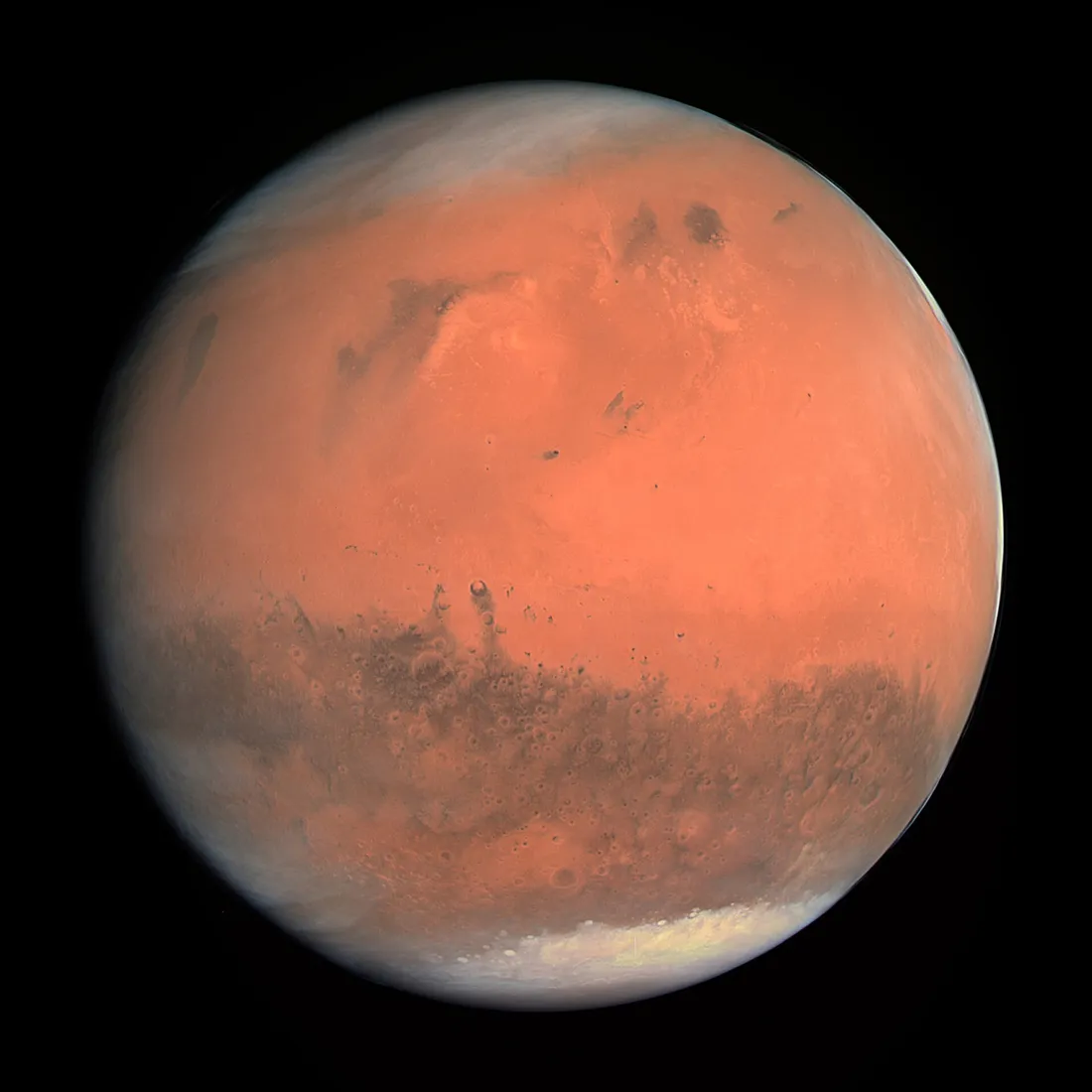
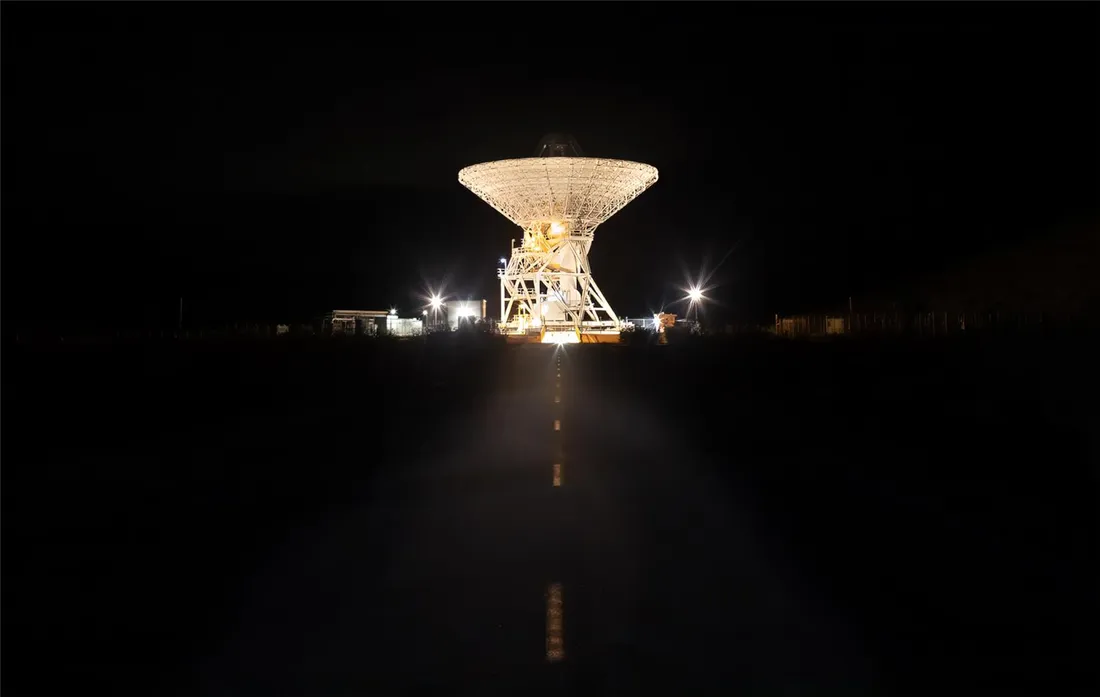
Selen laughed and went on: "Today our work is far easier! Now we have invisible arms that travel at the speed of light: radar waves! Look, a clear example from our day: NASA sends a powerful radar signal to Mars from its giant dish antenna in California. This radio signal travels through the vacuum of space at 300,000 kilometres a second."
"When Mars comes to its closest position to us, the radar signal we send strikes the rocks of Mars and returns to Earth. We hold the stopwatch: the signal's round trip takes exactly 366 seconds. Half of those 366 seconds is the outward journey, half the return. So the signal took exactly 183 seconds to reach Mars."
"Now let us do the arithmetic: if something travelling 300,000 kilometres a second moves for 183 seconds, how many kilometres does it go? Multiplying 300,000 by 183 we find exactly 54 million 900 thousand kilometres! So we have measured, as easily as child's play, that Mars was exactly 55 million kilometres away from us at that moment!"
Maya nodded in admiration: "Throwing a radio signal into space, holding a stopwatch and finding the distance. Incredibly clear and clean logic!"
The Layers Where the Photon Is Trapped: 170 Thousand Years of Darkness
Maya lifted her head and looked at the sun in the sky: "And why is that photon of light trapped for 100,000 to 170,000 years after it is born in the core of the Sun, before it reaches the surface, Selen?"
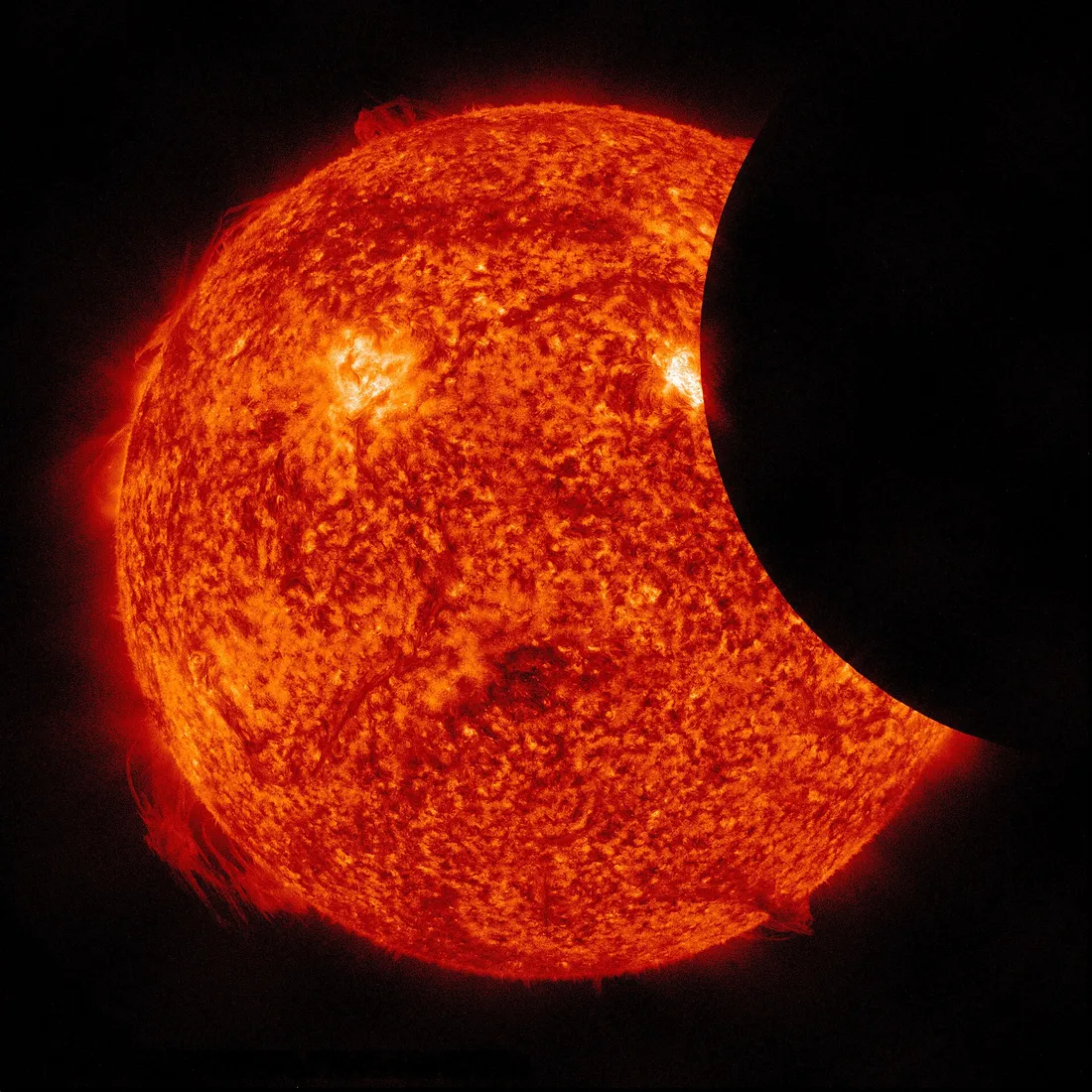
"Because the inside of the Sun is not an empty chamber but a terrifying plasma soup, Maya!" said Selen. "The photon born in the core cannot advance even a millionth of a millimetre before it collides with an electron. In this process we call a random walk, it changes direction millions of times and stays trapped. Because the Sun's internal density constantly changes, the time it takes to reach the surface fluctuates between 100 thousand and 170 thousand years. But the moment it escapes the surface, moving at the speed of light through the vacuum, it reaches the planets in exactly those times written on that dial."
format_quote"Light that takes 170 thousand years to reach the surface arrives here in eight minutes once it is in the vacuum."
Dr. Selen Vance
A Cosmic Waste of Space and an Ancient Thinker of the East
As the waters of the Mediterranean lapped gently at the shore, Maya fell into deep thought: "All these vast planets, light years, billions of galaxies. Sometimes one cannot help asking, in a universe this immense, are we the only ones?"
Selen smiled: "Remember that famous line of Carl Sagan's: if we are alone in all this universe, it would be an awful waste of space."
Maya asked: "And what reflections are there in philosophical thought about this cosmic breadth?"
"One of the ancient thinkers of the East sums this up with very clear and modern logic, Maya," said Selen. "He says that the Creator, who possesses infinite art and power, would not leave a single point idle in the vast universe He created. He stresses that a will which fills even a tiny drop of water with thousands of creatures invisible to the eye would not leave stars and planets billions of kilometres across as empty, lifeless heaps of stone. He states that every heavenly body is filled with living things suited to its own conditions."
format_quote"If we are alone in all this universe, it would be an awful waste of space."
Carl Sagan
The Thin Armour of the Atmosphere and Professor Kröner's Astonishment
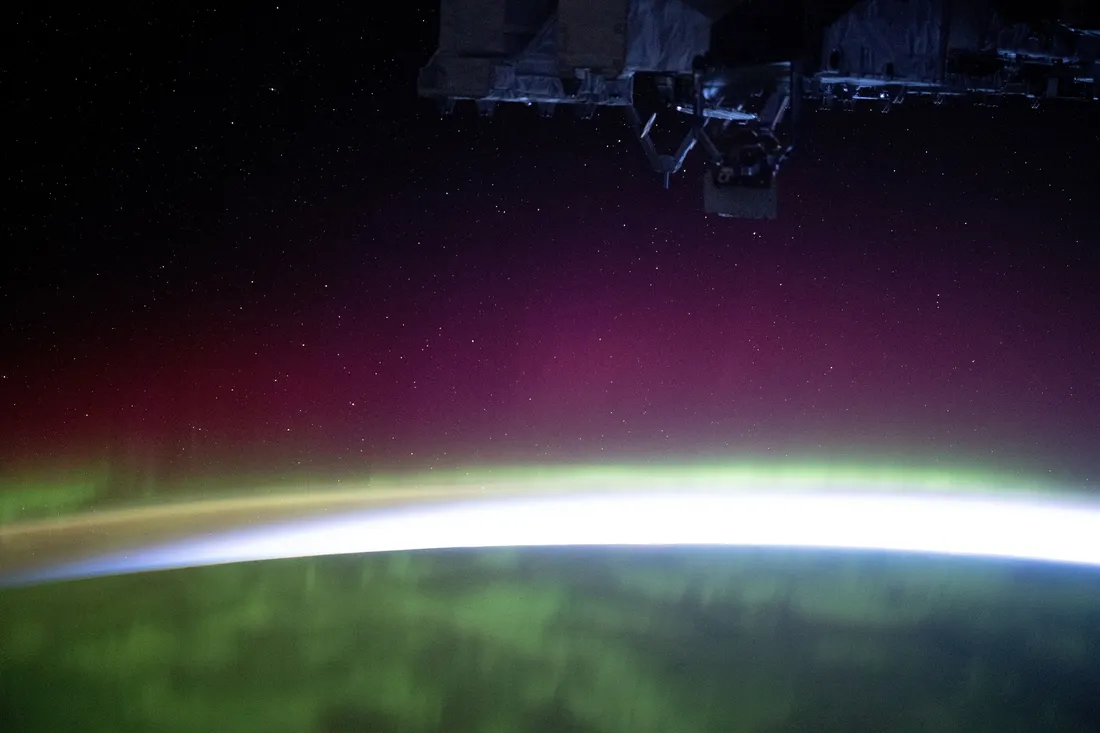
Maya turned her face to the last light of the setting sun: "That inferno of 15 million degrees in the core of the Sun, the deadly radiation hurled from space. We are in the middle of a cosmic slaughter that could destroy us at any moment. Yet in the midst of these immense dangers humankind is protected not by a thread of cotton but by a miraculous engineering: the fine veil of our atmosphere."
Selen added: "Absolutely! The magnetosphere bends the solar wind and deflects it to the poles as auroras; the mesosphere burns up and destroys, by friction, the tonnes of meteors that fall toward the Earth every day; the ozone layer forms an ultraviolet shield. Without these layers the oceans would evaporate and our planet would turn to desert."
Maya smiled: "Do you know how this protective armour, which today's astrophysics certifies with modern instruments, is expressed in the Holy Book? In the Holy Qur'an, in Surah Al-Anbiya, verse 32, it is stated exactly thus:"
format_quote"We made the sky a protected canopy; yet they turn away from the signs within it."
The Holy Qur'an, Surah Al-Anbiya, 32
Selen added a striking anecdote: "Do you know what the world-renowned German scientist Prof. Dr. Alfred Kröner, head of the Institute of Geology at the University of Mainz, said when he examined these verses on the atmosphere and the sky in the Qur'an, Maya?"
format_quote"It is impossible for a person in the 7th century, unaware of nuclear physics, of the magnetosphere and of the protective layers of the atmosphere, and unable to read or write, to have formed this sentence with his own mind. That details modern science is only beginning to grasp were expressed in that age is clear proof that the knowledge came from a divine source."
Prof. Dr. Alfred Kröner
Titanium, Ceramic and the Architecture of a Capsule
As they swam toward the shore, Maya examined the watch one last time: "This case is unusual too. Neither round nor square; like a capsule."
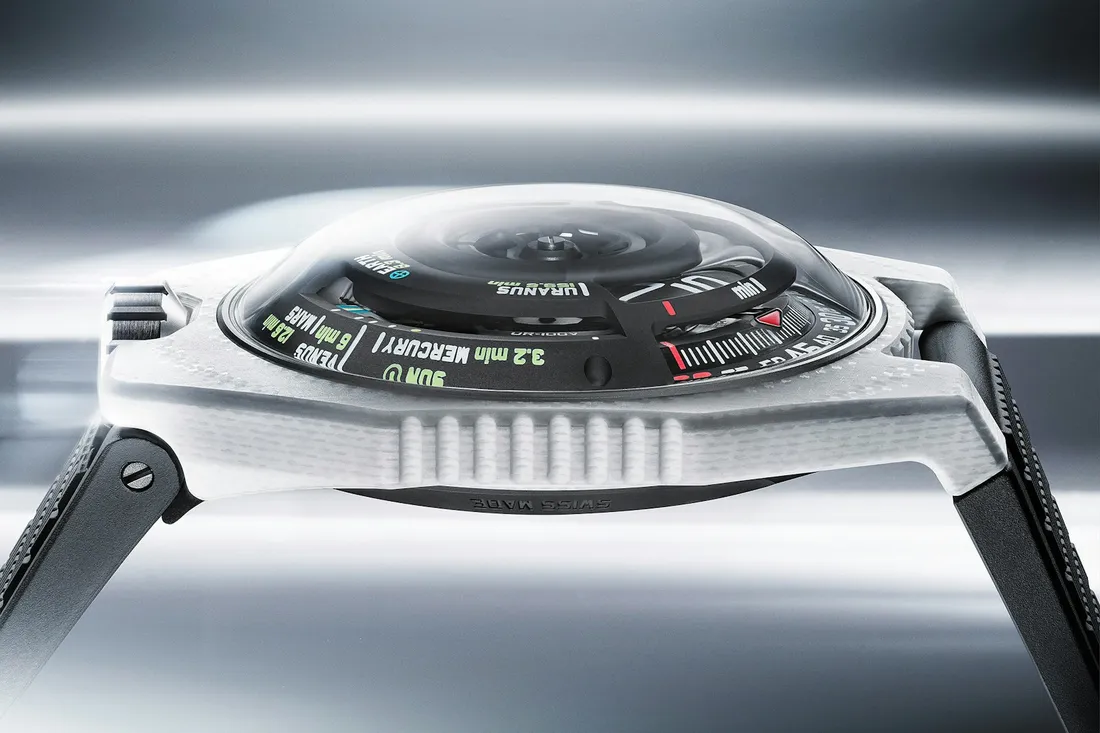
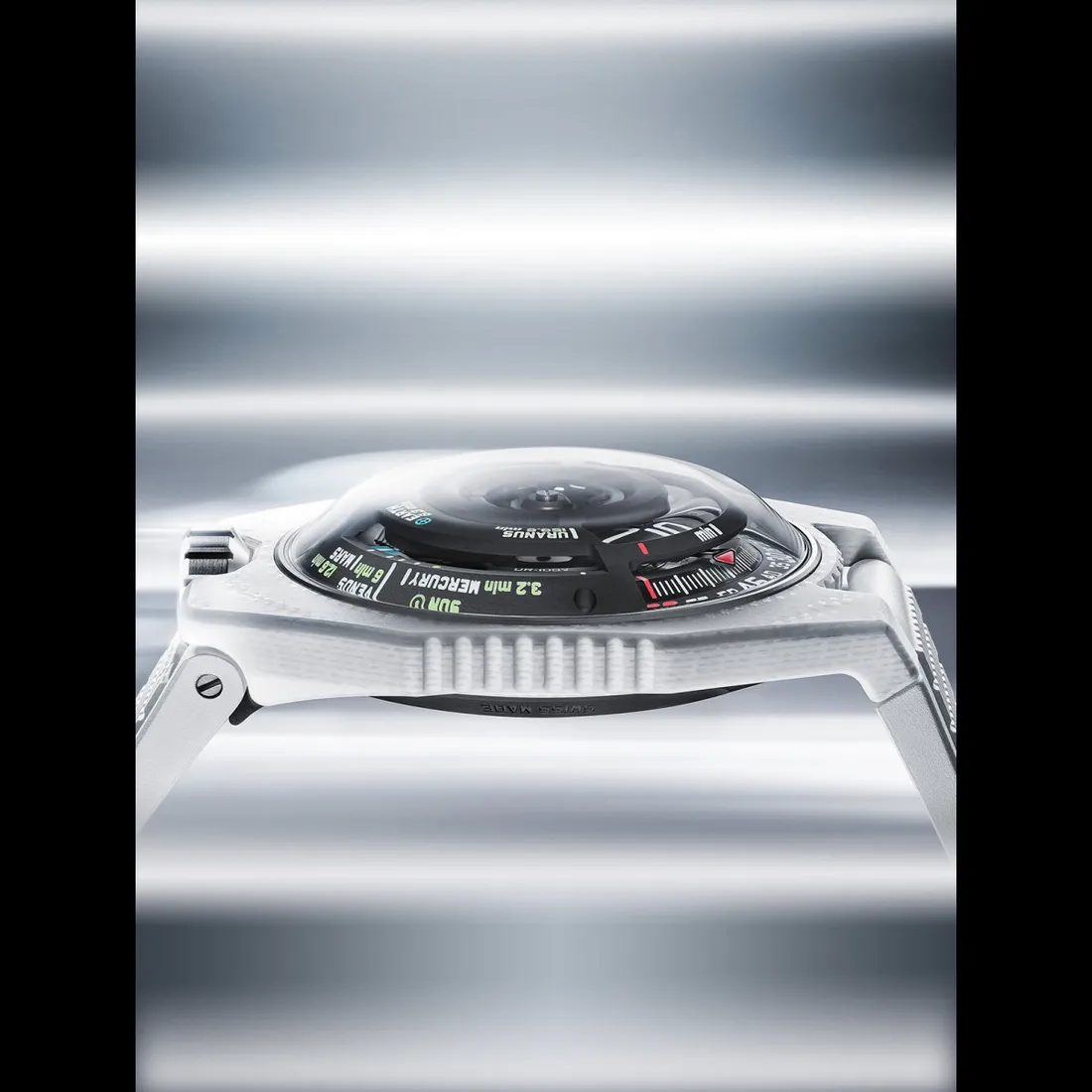
"Because that is how it was designed," said Selen. "The case is 41 millimetres wide and titanium. Because titanium is far lighter than steel, even a body this voluminous puts no weight on the wrist. And the sapphire crystal above it is not flat but angled: it rises like a dome so that the orbiting satellites beneath it touch nothing as they turn."
"There is a ceramic version too," she added. "Ceramic is made by firing aluminium oxide at very high temperature; the result is a surface many times harder than steel, which neither scratches nor fades. The idea of a space capsule is told better by ceramic than by metal: a material indifferent to heat, to wear and to time."
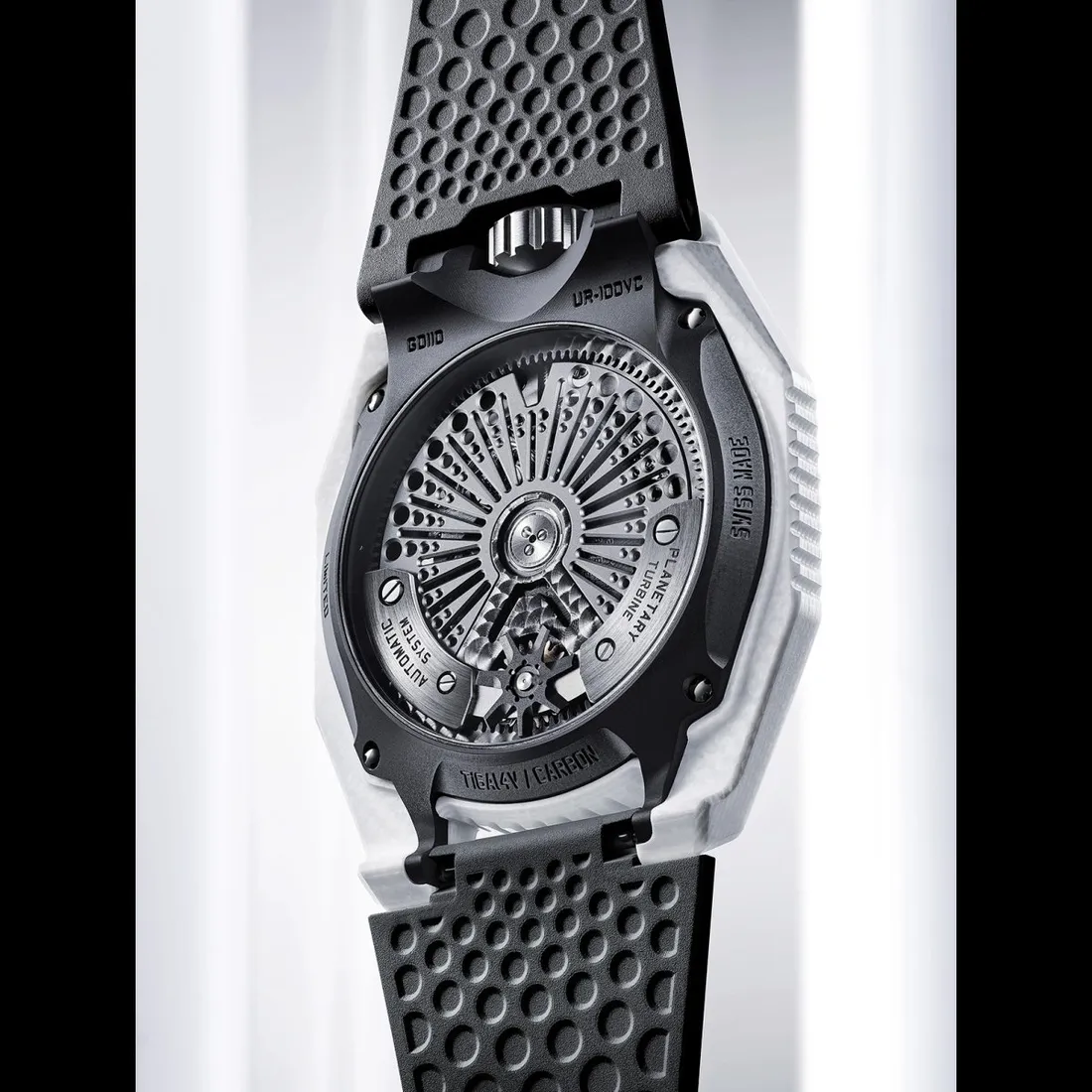
"The heart inside is automatic," said Selen, shaking her arm. "Every motion of your wrist turns a rotor inside and winds the mainspring. But Urwerk has added an air turbine here too: when the rotor begins to spin too fast, this tiny turbine brakes it by pushing air. So sudden movements do not tire the movement. This watch, like a spacecraft, both gathers and restrains its own energy."

Time Beyond the Waters
The two women of science began slowly to swim toward the beach. When they came ashore, the last light of the setting sun was about to vanish beneath the horizon of the Côte d'Azur.
Looking at the Urwerk UR-100V drying on Selen's wrist and at the 35,740-kilometre orbital scale on the dial, Maya smiled: "Humankind believes it has imprisoned time inside these little titanium cases it makes. And yet we are space travellers, moving at a dizzying speed through the expanding fabric of the universe, beneath a sheltered sky."
Adjusting the strap of her watch, Selen finished: "And even these most advanced micro-mechanical marvels we make in order to measure time do nothing, in the end, but bow with respect before that great cosmic order."
As night fell over the Mediterranean, the two researchers went on walking along the beach, talking of that unending harmony of the universe, of time and of cosmic balance.