
On 6 October 2026, the Royal Swedish Academy of Sciences in Stockholm set its seal on a physical truth that has changed the way humanity looks at the universe. The 2026 Nobel Prize in Physics went to Francis Halzen, who caught the most mysterious messenger particles in the universe with the immense observatory he built beneath the glaciers of the geographic South Pole. The Academy’s citation names two things: his decisive contributions to the IceCube Neutrino Observatory, and the discovery of high-energy neutrinos of astrophysical origin. The physicist, eighty two years old and Belgian born, works at the University of Wisconsin-Madison.
The prize was a tribute to the courage of listening to the darkest heart of the universe not by looking at the sky but by burying oneself in ice two kilometres underground. And this physical truth could take concrete form in fine watchmaking only in one masterpiece: the Girard-Perregaux Quasar Light, whose case and bridges are all carved from a single block of sapphire crystal, and which sets time floating in a void beyond material obstacles.
To understand how the universe works we must look first at the other particles on the stage and then at the neutrino, nicknamed the ghost. When a supernova explodes or a black hole swallows matter, light and charged particles are scattered outward. Protons carry an electric charge, and the immense magnetic fields of the universe deflect them like toys; working out where an arriving proton came from is like guessing which tree a leaf blowing in a storm fell from. Light travels in a straight line but cannot escape matter. Light leaving the centre of a black hole’s surroundings cannot pass through the dense clouds of gas and dust and is trapped there.
What we call a photon is a grain of light, and it interacts with matter extraordinarily strongly. Trillions of photons are born in the very heart of an exploding star; but the matter there is so dense and the medium so full of plasma that a photon strikes the atoms around it the moment it is born. Imagine dropping blue ink into the exact middle of a sponge. Looking from the outside of the sponge, you cannot see the inner point where the ink first fell; the ink only spreads outward, striking pore after pore. A photon is like that. The photons that reach us are only those that could escape from the outermost surface of the explosion.
format_quote"Thanks to the photon we see not the heart of the event but only its outer shell."
Hasan Bekmezci
It is exactly here that the neutrino comes onto the stage. A neutrino is a subatomic particle whose mass is very close to zero and whose electric charge is neutral. Suppose the walls of the room we are in were made of steel. Throw a tennis ball at the wall and it bounces back; hold up a light and it stops at the wall. A neutrino passes through that steel wall, and through the whole Earth, swinging its arms as though there were no matter there at all. Because it enters into no appreciable interaction with matter, it comes out of the exact zero point of the explosion or the black hole; it is caught neither by the wall of plasma around it nor by the clouds of cosmic dust. It brings us the pure information of that zero point, undistorted.
Tens of billions of neutrinos pass through the nail of your thumb every second, and that figure is not a guess. In the heart of the Sun four hydrogen nuclei fuse into one helium nucleus, and exactly two neutrinos are released in that single fusion. The combined mass of the four hydrogen atoms is seven parts in a thousand heavier than the helium atom that forms; that vanished sliver of mass becomes, through the equation that binds mass to energy by the square of the speed of light, an energy of twenty six point seven million electron volts. The total energy the Sun scatters into space each second is three point eight times ten to the twenty sixth watts. Dividing the total by the energy of one reaction shows that about two times ten to the thirty eighth neutrinos are produced in the Sun’s core every second. They spread outward as an immense sphere; dividing by the surface area of that imaginary sphere of a hundred and fifty million kilometres’ radius, and working out the share falling on one square centimetre, we arrive at about sixty five billion neutrinos a second. As you read these lines you feel nothing of that crowd passing through your nail.
The wisdom in the neutrino’s existence runs far deeper than the catching of it. The Sun and all the stars of the universe are immense spheres of hydrogen. For two protons to fuse and start the reaction, one of them must turn into a neutron. But in nature a proton and a neutron cannot freely turn into one another on their own; the only force in the universe that brings this about is the weak nuclear force, and the product of that force is the neutrino. Had there been no neutrino and no weak force, no neutron could form when two protons met, fusion could not be lit, and the stars would never have caught fire; the whole universe would have remained dark, cold clouds of gas. And even if a star did catch, without the balance of energy the neutrinos carry away, the nuclear engine would run out of control and the Sun would either explode outright or collapse under its own gravitational pressure.
Neutrino production is therefore a delicate safety valve that tunes the engine’s running speed to the millimetre. The Creator has appointed the neutrino both as the hidden architect that lets the universe shine and as the incorruptible black box of the universe. A neutrino leaving an explosion in the furthest corner of the universe travels for billions of light years, caught by no cloud of gas and no magnetic field, carrying the pure information it held at the moment it left, and tells us the first second of that explosion.
The real subtlety in the question of whether the photon reaches us is this: the photon certainly does reach the Earth and light the sky, but it brings us the information not of the deep core where the event happened but only of the outermost surface. A photon born in the core of the Sun wants to escape at the speed of light the moment it is born. But the Sun is not hollow; it is an ocean of plasma of unimaginable density. Within a billionth of a second the photon strikes a proton, changes direction, rebounds; it strikes an electron and rebounds again. It is absorbed by the medium and released again, and so loses the original information of the deep core.
Imagine an immense stadium packed solid with ten million people standing shoulder to shoulder. A man trying to run outward from the very middle is thrown back, to the right, to the left, at every millimetre. In a straight line he would be out in seconds; because of these random rebounds it takes him a hundred thousand years, by some calculations a hundred and seventy thousand. Once at the surface of the Sun, the light then reaches the Earth in eight minutes. The light warming our faces today is a shining that was born in the heart of the Sun while humanity was still living in caves.
format_quote"The light warming our faces today is a shining that was born in the heart of the Sun while humanity was still living in caves."
Hasan Bekmezci
The neutrino, because it does not interact with mass, sees straight through that crowd of ten million the moment it is born in the core, as though they were not there at all. It takes only two seconds to travel from the centre of the Sun to its surface, and eight minutes and twenty seconds to reach the Earth from there. The neutrino is the only messenger that tells us not what the Sun was like a hundred thousand years ago but the living state of its core at this very moment. In an air crash the black box preserves the flight data even when the outer body has burned entirely; the mergers and explosions in the deepest reaches of the universe are the same. Light and matter are trapped in that terrible medium or scattered at the outer surface, but the neutrino records the pure temperature, pressure and timing of the moment of the explosion and brings it to us as an undistorted photograph of the first second.
The question that occupied Francis Halzen was this: how do we turn this invisible messenger, which passes clean through everything, into concrete knowledge? Catching a neutrino called for an immense, still and perfectly transparent medium. Sea water was murky, and carried both the biological glow of living things and radioactivity. Halzen turned his eye to the geographic South Pole, to the point where the Amundsen-Scott station stands. The ice there had formed as snow accumulated over thousands of years was compressed under an immense weight; that pressure had driven every bubble of air out of the ice and turned the layer into the clearest crystal block on the planet. A small forerunner called AMANDA, built in the mid 1990s, proved that this ice was suitable for seeing energetic neutrinos.
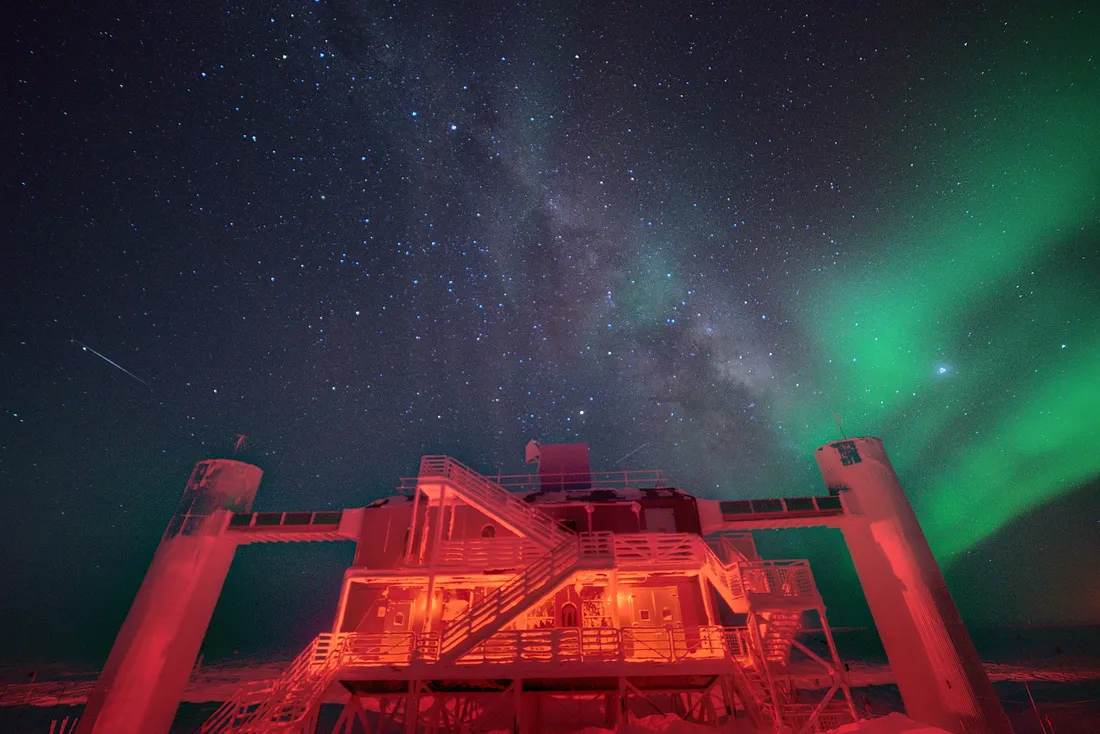
Halzen and his team melted holes sixty centimetres across into the ice with hot water drills. The drill descended at about two metres a minute, and a separate drill was used for the top fifty metres of compacted snow; a hole was finished every two days, and the deployment of a string took eleven hours on average. Eighty six strings in all were set between one thousand four hundred and fifty and two thousand four hundred and fifty metres. Each string carries sixty sensors seventeen metres apart, and the strings sit on a hexagonal grid a hundred and twenty five metres wide. Each of the five thousand one hundred and sixty digital optical modules in the ice holds a photomultiplier tube twenty five centimetres across. The eight central strings were set more closely to form the inner detector called DeepCore, which brings the observatory’s energy threshold down to about ten giga electron volts. On the surface stands IceTop, eighty one stations that work both as a veto detector and as an observer of cosmic rays.
The last string was lowered into the ice on the evening of 18 December 2010, bringing to an end a construction that had run through seven austral summers. The total cost was two hundred and seventy nine million dollars, of which the American National Science Foundation provided two hundred and forty two million. The University of Wisconsin-Madison leads the project, and more than forty institutions worldwide carry out the research programme. In the sixteen years since deployment, fewer than a hundred of some five thousand five hundred sensors have gone out of service.
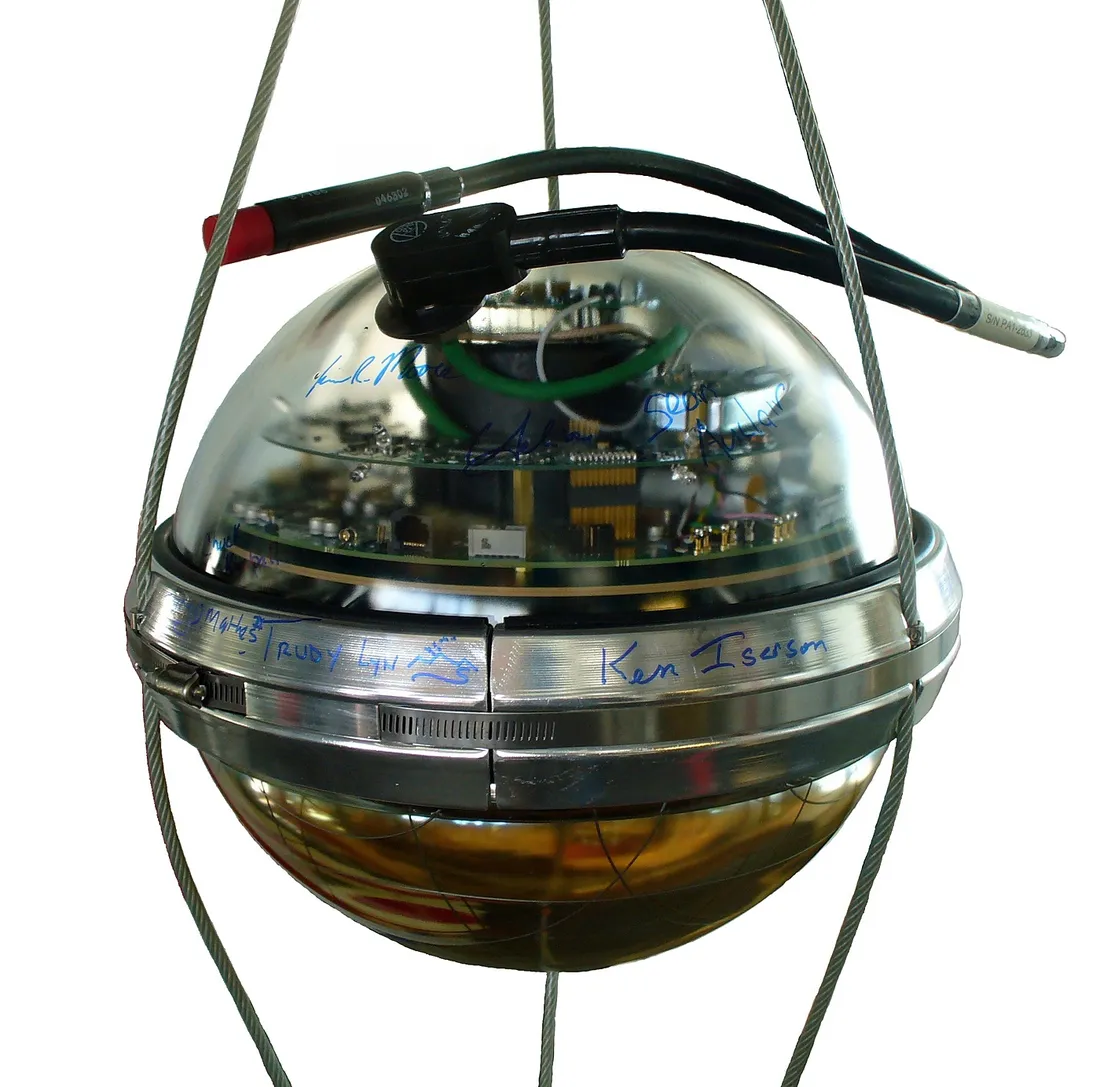
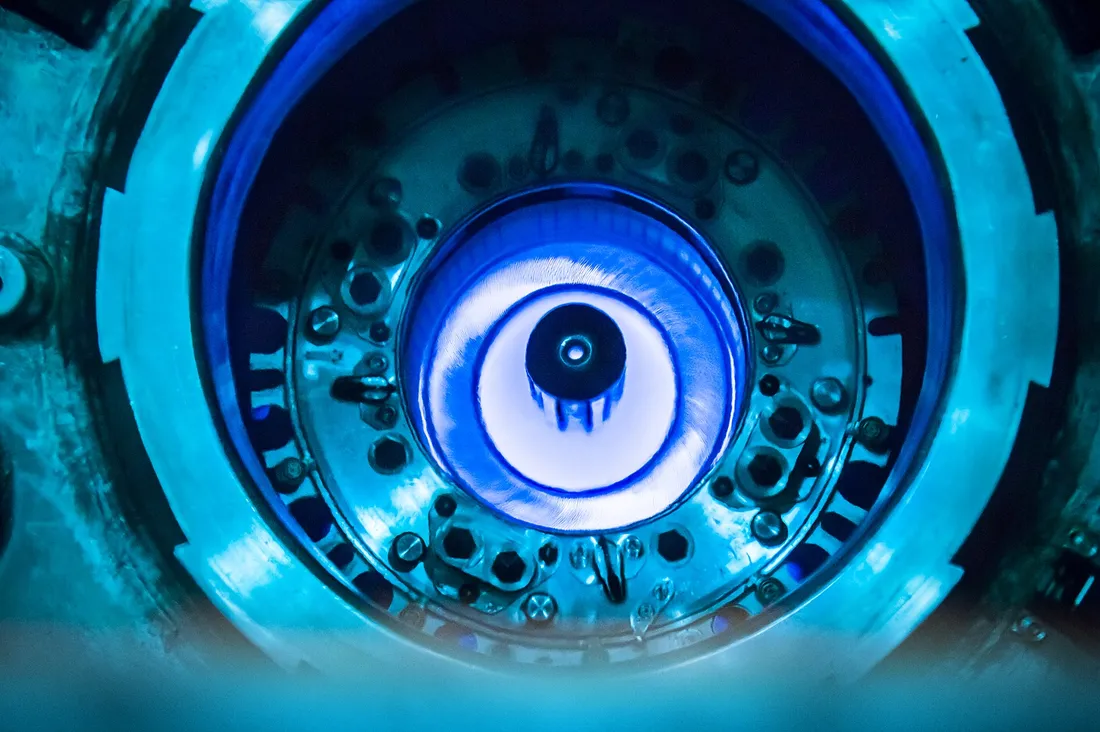
A neutrino is not seen directly. When it collides with an atomic nucleus in the ice, electrically charged secondary particles appear, and the real event begins there. When a jet aircraft travels faster than sound it leaves a cone of sound behind it. Light travels at three hundred thousand kilometres a second in a vacuum, but once inside ice its speed falls, because of the refractive index, to about two hundred and twenty five thousand. The secondary particles born in the collision exceed that speed inside the ice and leave behind, exactly like a sonic boom, a cone of bluish light. This is called Cherenkov radiation. The buried sensors mark the direction and the arrival time of that blue light, the data is sent to the IceCube Laboratory on the surface, and the computers there turn the messages of the individual modules into a pattern of light that shows from which direction and with what energy the neutrino came.
And what good is this discovery to humanity? The answer stands on three pillars. First, we used to watch the universe only through optical telescopes; thanks to neutrino observatories we have now begun to hear it as well. The moment a neutrino signal arrives, optical and infrared telescopes around the world are turned to those coordinates, so that the moment a black hole swallows matter can be watched live for the first time. Second, neutrinos were thought to be massless; but it turned out that they oscillate, changing type as they travel, and this showed that there are gaps in the standard model of particle physics. Every break of this kind in fundamental physics opens the door to the materials science and energy technology of the future, just as quantum mechanics gave birth to semiconductors and computer chips. Third, because neutrinos can pass through planets, they will in time let us map the structure of the Earth’s core as though taking an X-ray of it.
The architecture of that immense, transparent observatory Francis Halzen set beneath the South Pole ice finds an unexpected counterpart in watchmaking, in the Girard-Perregaux Quasar Light. In the maison’s own description the watch takes its name from the most brilliant of astronomical entities, the quasar, and carries transparency to the extreme. Its case is carved from a single disc of sapphire; producing curves of such transparency took more than two hundred hours of work and hundreds of separate operations. Like the bubble-free block of ice kilometres beneath the South Pole, it carries the light that arrives from outside into the heart of the mechanism without obstructing it at all.

The watch has no conventional dial. The arrow-shaped bridges of Girard-Perregaux, the house’s best-known signature, are made in this model entirely of transparent sapphire. When you look at the watch, the wheels and the tourbillon cage float in the void as though holding on to nothing, exactly like a neutrino travelling through empty space or through the ice of the South Pole. The mechanism is visible but the structure that holds it is invisible, just as neutrinos make the universe shine by their presence while remaining unseen themselves.
Every photon that falls on the dial passes through the sapphire body without meeting any obstacle, and scatters glints when it strikes the mechanism within. One source of that glittering is the barrel: Girard-Perregaux has made it of ruthenium. A metal of the platinum family, produced in extremely limited quantities, it crystallises with a brilliance like that of diamond and throws light in every direction. To achieve that flawless gloss inside the movement, three times the usual amount of sapphire was used, with a diamond and chemical polish of the maison’s own.
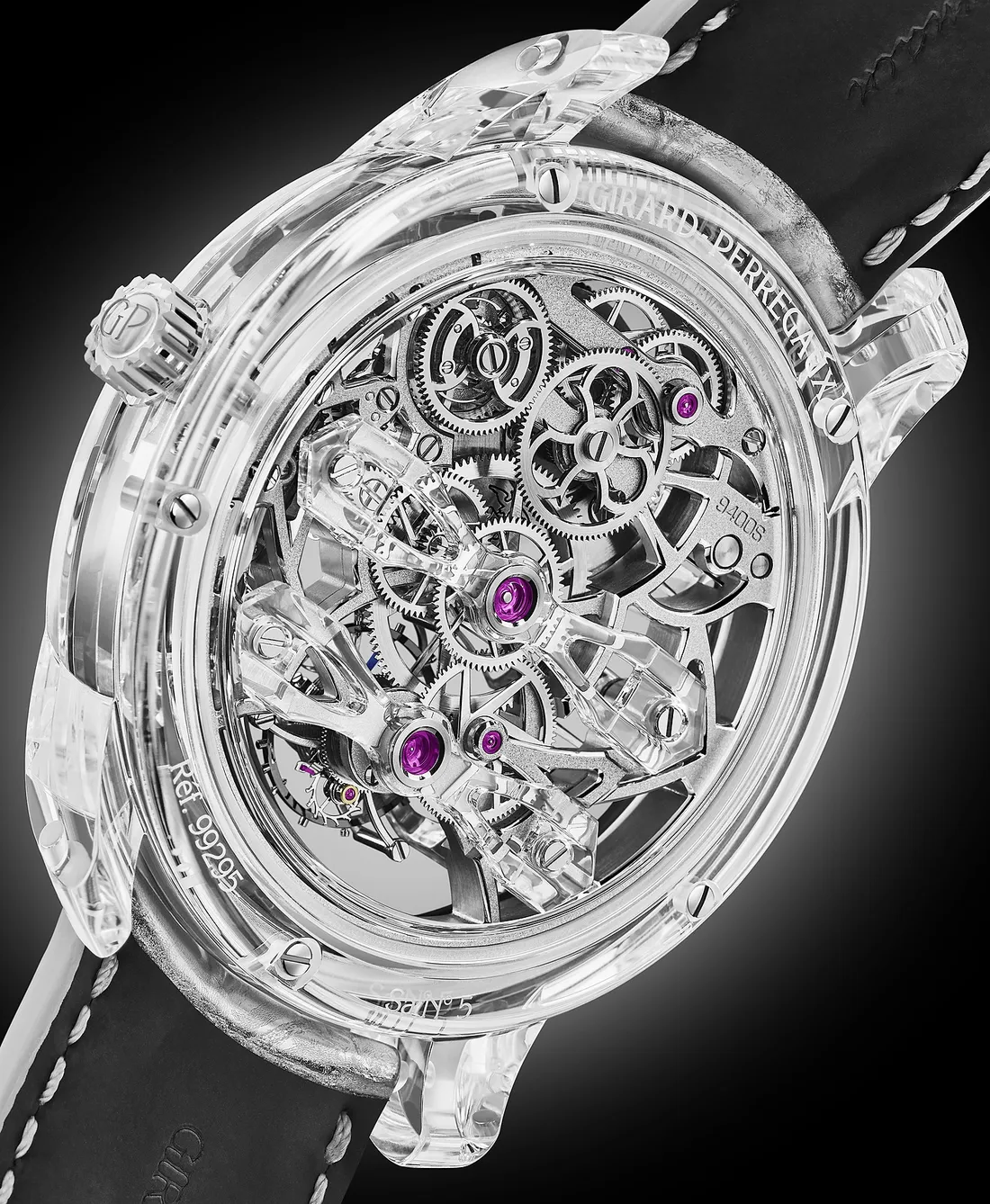
The dimensions confirm that transparency. The forty six millimetre case is fifteen point two five millimetres thick and water resistant to thirty metres. The skeleton movement winds itself, beats three times a second and carries sixty hours of power; there is no indication beyond hours, minutes, seconds and the tourbillon. The unidirectional automatic winding that drives the tourbillon cage works through a micro-rotor in white gold, engraved with the manufacture’s eagle. The fabric strap with its metallic effect closes on a folding buckle. The Quasar Light was presented in February 2020 and made in only eighteen examples, priced at two hundred and ninety four thousand Swiss francs.
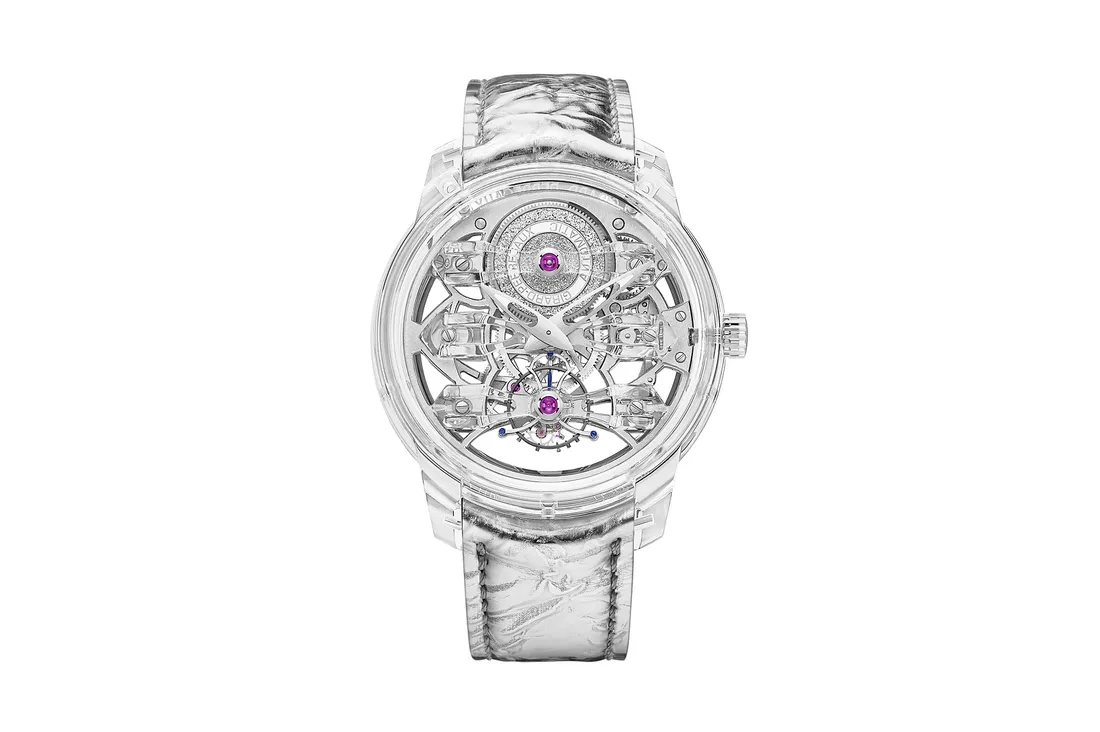
The IceCube discovery that won the 2026 Nobel Prize in Physics and the Girard-Perregaux Quasar Light are two separate summits of the human mind’s passion for catching what cannot be seen. One turns the dark ice thousands of metres beneath the South Pole into an immense transparent telescope and catches ghost messages arriving from the most distant past of the universe; the other makes a shield of the transparency of synthetic sapphire and carries to our wrist a flow of time independent of material obstacles.
Both set their seal on the same truth. When you descend to the deepest point of matter and of darkness, what remains is only light, order, and a high design that makes that order visible.
format_quote"When you descend to the deepest point of matter and of darkness, what remains is only light, order, and a high design that makes that order visible."
Hasan Bekmezci
The watch on its maker’s own site: Girard-Perregaux, Quasar Light