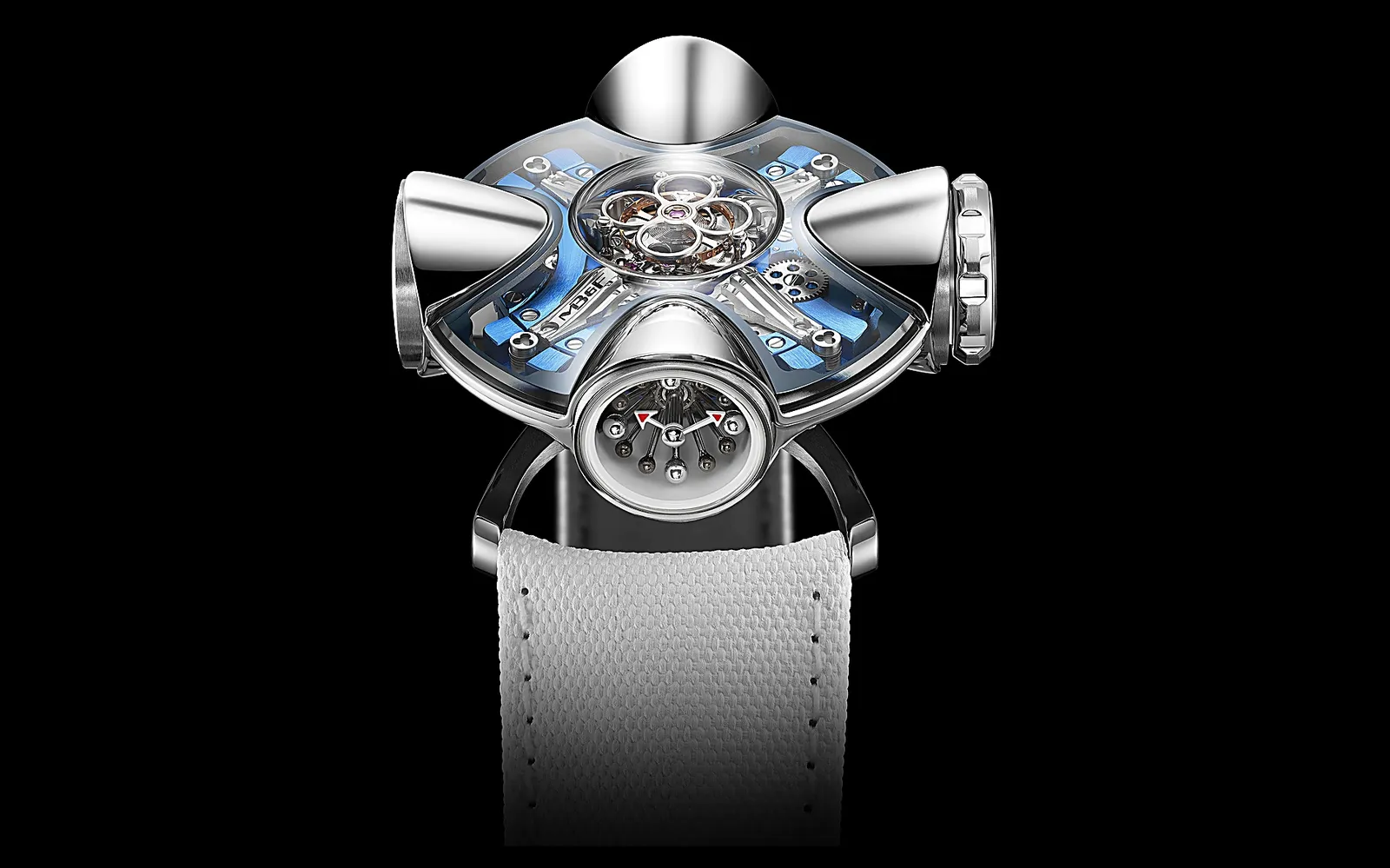
Picture a watchmaker at midnight, held spellbound by the smallest wheel he has put under the loupe. Brass wheels meshing with one another, the rhythm of an unerring balance, the cold beauty of steel. Man supposes he has caught perfection in the mechanical arts. Yet if every watchmaker on earth and in the history of medicine, every brilliant inventor and every specialist in micro engineering were gathered together, they could not come near the architecture that ticks away in the heart of a single living cell, which is to say DNA; before its art they would stand helpless.
format_quote"Man can build machines that measure time; but the Creator has made a biological masterpiece of three billion letters that lives time and copies itself."
Hasan Bekmezci
The human genome is an immense library of code made of four building blocks: adenine, thymine, cytosine and guanine. The Creator has hidden a person’s height, the colour of their eyes, the lines of their face and even the way they draw breath in that software of four letters.
Let us bring this library to mind through analogies that are hard to hold. If a biologist sat down and tried to print on paper the DNA code held in a single cell nucleus of your body, what would come out is two hundred and sixty two thousand pages of unbroken text. Imagine thick novels of five hundred pages each, set side by side; it would be a library of five hundred and twenty four volumes. If a person tried to read their own genetic book without stopping, night and day, at a rate of two letters a second, that marathon would take forty seven years.
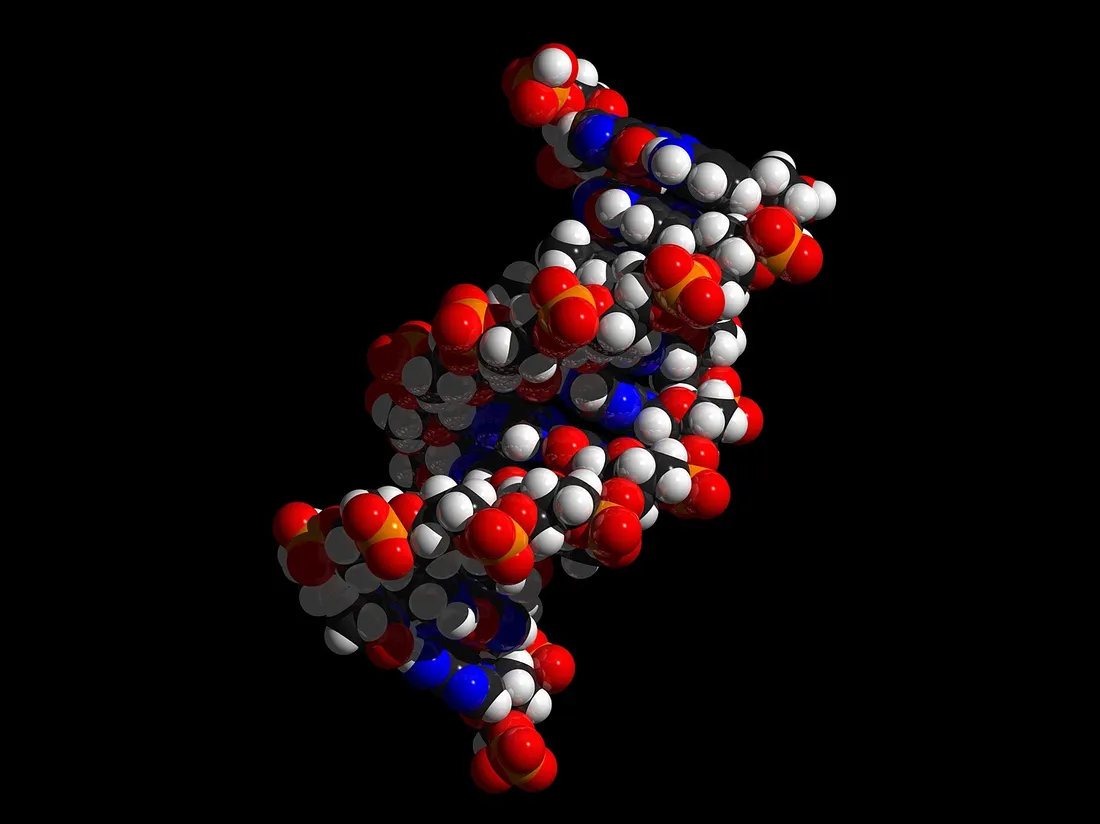
Even in the most precise mechanical watch in the world, parts can be reduced only down to a certain limit in microns. The art of compression in DNA lies beyond the human mind. The thread of DNA in a single one of our cells is two metres long when laid end to end. If you joined the DNA of all the trillions of cells in the human body end to end, the thread you got would reach a length beyond imagining, enough to travel between the Earth and the Sun hundreds of times.
The Creator has fitted this thread, kilometres long, inside a cell nucleus barely visible under a microscope, by winding it onto spools called histones. This engineering is many times more complex than folding a tarpaulin the size of a football pitch and placing it inside the head of a pin. And the thread does not lie there as a dead ball of wool; the part that has to be read is unwound, and the part whose work is done is wound back.
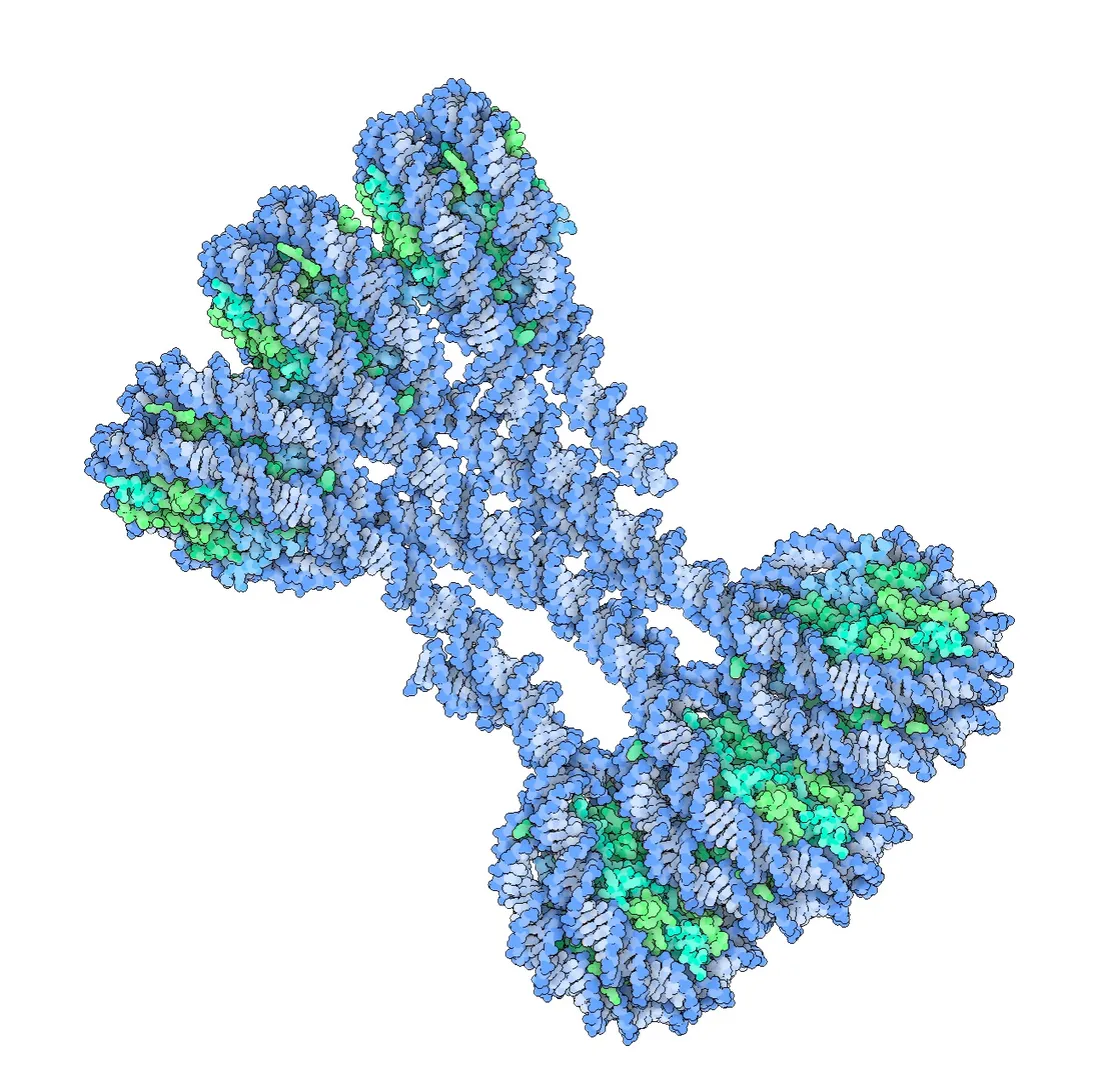
The most advanced supercomputers and artificial intelligences of our day run the whole world on a logic of zero and one. The Creator, meanwhile, has coded the human being in an architecture of four letters. Just as a single zero becoming a one brings software down in the world of computing, the order of letters in DNA carries exactly that kind of delicacy.
format_quote"Just as a single zero becoming a one brings software down in the world of computing, the order of letters in DNA carries exactly that kind of delicacy."
Hasan Bekmezci
This vast library of two hundred and sixty two thousand pages and five hundred and twenty four volumes is in so fine a balance that cystic fibrosis, the illness a small girl called Maya struggles with at every breath, comes of a shortfall of three letters among those pages. In the commonest form of the disease, three letters describing a single link in the chain of one protein drop out; everything else is where it should be. We can liken it to a single word set wrongly in a vast aircraft assembly manual of five hundred and twenty four volumes. That tiny error causes the lungs to fill, at the level of the cell, with a thick mucus, and the breath to be cut off.

This architecture of the human genome, the four letters of the code and the layered structure that protects it, finds an unexpected horological counterpart in the HM11 Architect from MB&F, the house in independent watchmaking that recognises no limits. The HM11 turns a watch case into a miniature home: four parabolic rooms are set around a single central atrium. MB&F describe the structure by taking Le Corbusier at his word, that a house is a machine for living in, and making it literal.
The four rooms do four different jobs. One shows the hours and minutes, one the power reserve, one the temperature between minus twenty and plus sixty degrees Celsius, and the fourth carries the winding crown, made of sapphire and unusually large at close to ten millimetres across, through which the movement can be seen. The ninety degree angle between the rooms lets you turn the house so that whichever room you want faces you. For the reader, that fourfold arrangement brings to mind four letters set around one centre; the four letters too work around a single core, and no one of them can take the place of another.
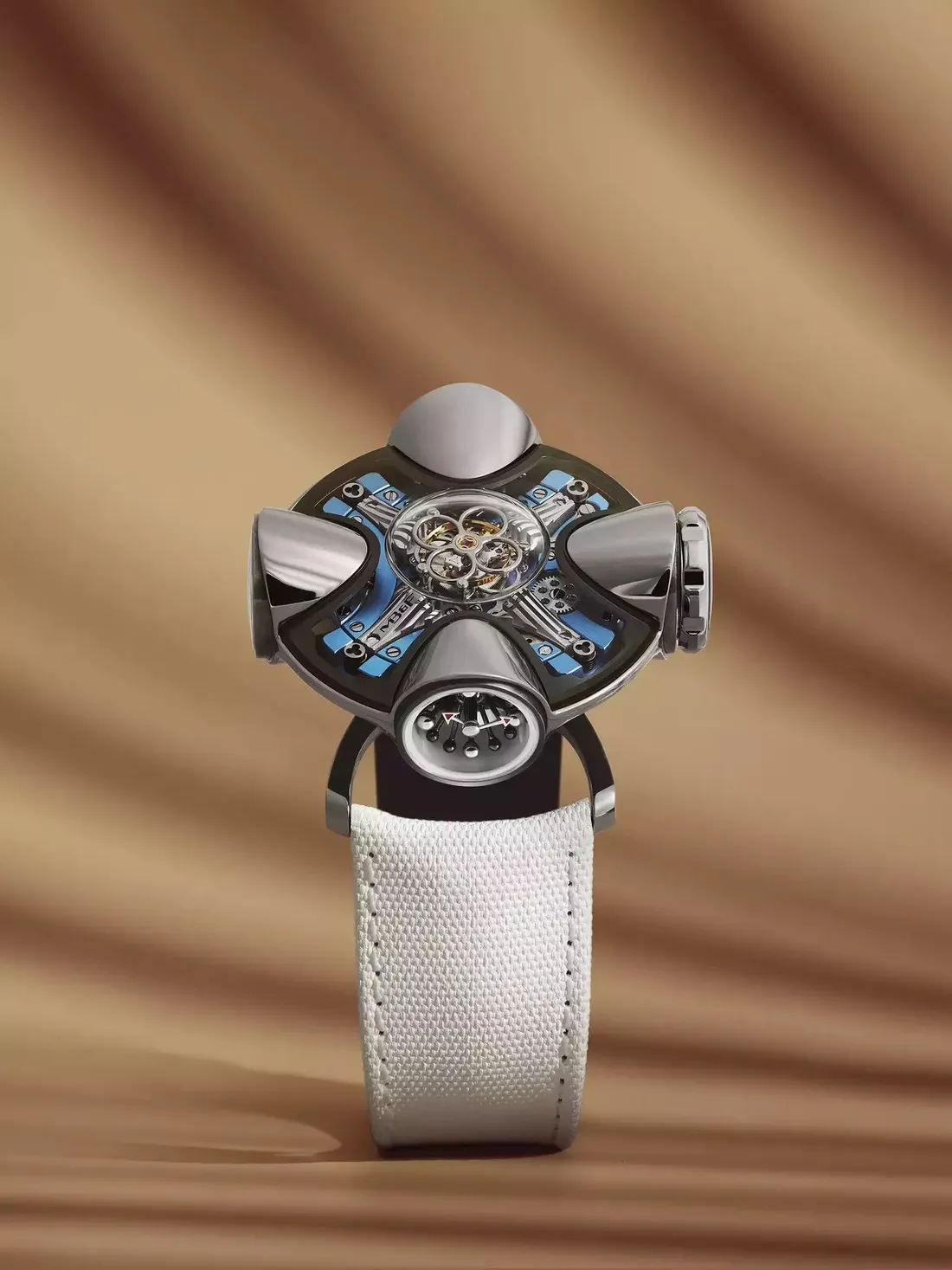
At the heart of the house, beneath a double-domed sapphire roof, a central flying tourbillon rises. On their own page MB&F liken the quatrefoil shape of its upper bridge to two things: the clerestory windows of some of humanity’s greatest temples to its Creator, and a zygote beginning to divide at the moment of conception. For a watch house to set those two comparisons side by side in its own technical text is an unexpected gift for the subject of this piece.
The way the movement is wound continues the same circular logic. The HM11 has no winding stem to pull; to wind the movement you turn the entire house clockwise on its foundations. The motion that carries time forward is, in other words, the rotation of the structure about its own axis. That the helix, by turning about its own axis, both keeps the information and allows itself to be opened and copied, recalls for the reader exactly this winding gesture.

The dimensions confirm the architecture. The case, in grade 5 titanium, is forty two millimetres across and twenty three millimetres high; it is built from ninety two components and is water resistant to twenty metres. The three-dimensional movement inside works with bevel gears and a flying tourbillon, is made of three hundred and sixty four components and twenty nine jewels, beats two and a half times a second and carries four days, ninety six hours, of power. The top, the back and the window of each chamber are separate sapphire crystals. The Architect versions were limited in 2023 to twenty five pieces each, with a blue dial plate or a rose gold one.
That a temperature indication should be here is no accident either. In a living body the range in which enzymes work is a few degrees; outside that range the library becomes unreadable. The first condition of a house, and of a cell, is that it can hold its temperature.
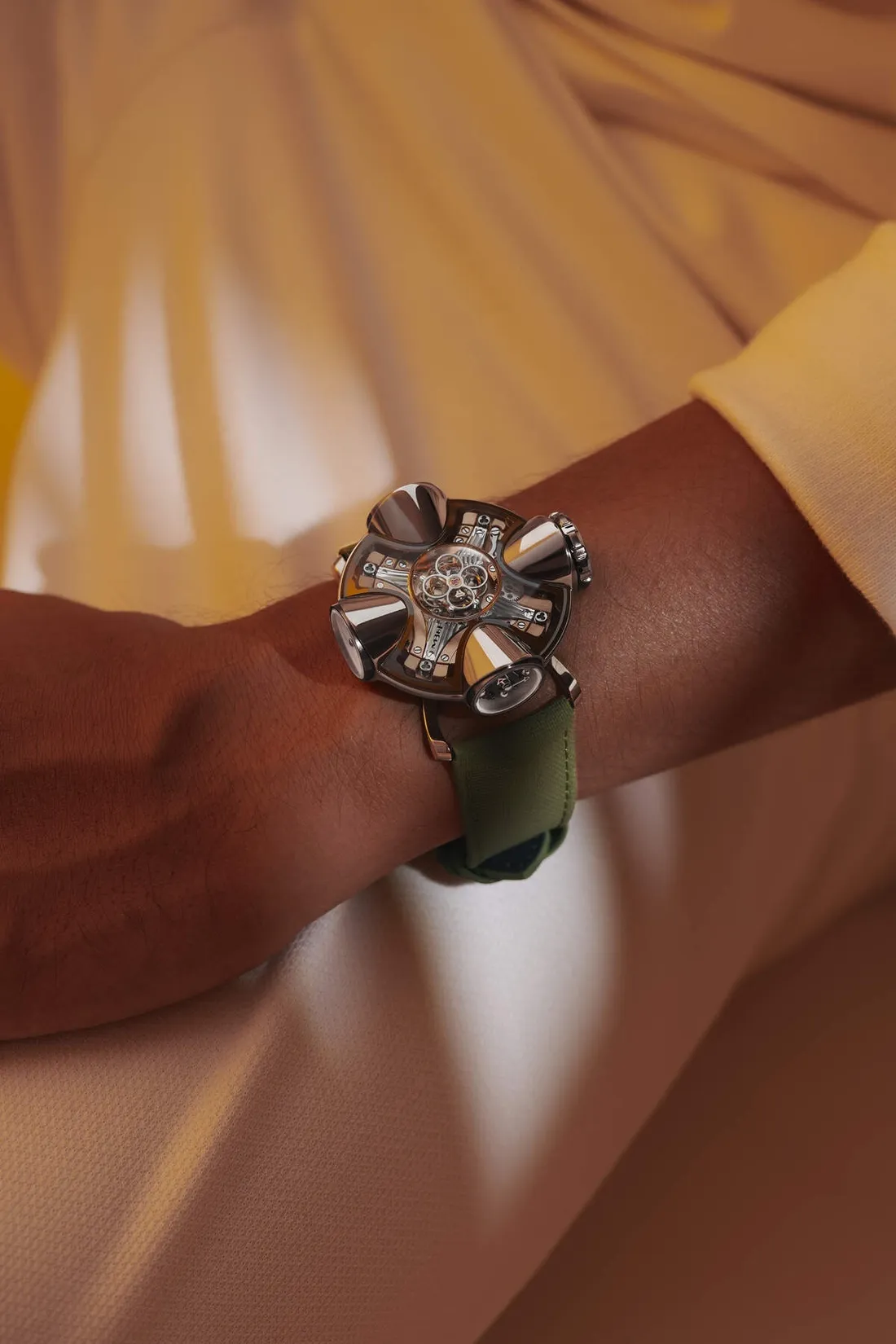
The human body is delicate enough to be shaken by a shortfall of three letters within its three billion letter code; and yet it holds a creation vast enough that, as the code is read, wonders become visible. If every watchmaker were gathered together they would still have to bow before that art in DNA. The MB&F HM11 Architect is a tribute to that vast creation and to the power of science, offered on the wrist with four rooms and a single centre.
format_quote"If every watchmaker were gathered together they would still have to bow before that art in DNA."
Hasan Bekmezci
The watch on its maker’s own site: MB&F, Horological Machine N°11