Traces of Existence on the Giza Plateau
As the red sun of late afternoon descended upon the Giza Plateau, three friends sat on an open terrace overlooking the thousands-of-years-old stone blocks of the Great Pyramid. A developmental embryology researcher, Prof. Dr. Arthur Vance; a scholar of sacred texts and comparative religion, Prof. Dr. Gabriel Thorne; and an obstetrician and gynaecologist, Dr. Elena Rossi.
As steam rose from the mint teas before them, Gabriel fixed his gaze on the monuments on the desert horizon and mused: “Perhaps seeking the trace of eternity among lifeless stone blocks is one of humanity's most ancient consolations, Arthur. And yet the true layer of life and continuity takes shape in the womb, where a cellular silence reigns. While the stones crumble in time and scatter on the wind, that hidden order which carries existence from one generation to the next flows on without a single deviation.”
Arthur nodded gently: “As an embryologist, that is exactly what I feel at the microscope when I watch that first instant, the division of a single cell. Two cells from two invisible worlds unite, and within weeks a universe is born, its heart beating, its brain folding, its organs woven stitch by stitch. The pyramids may be a tremendous audacity of the human mind; but beside the biological architecture built silently within an embryo, everything else remains a mere lifeless shadow.”
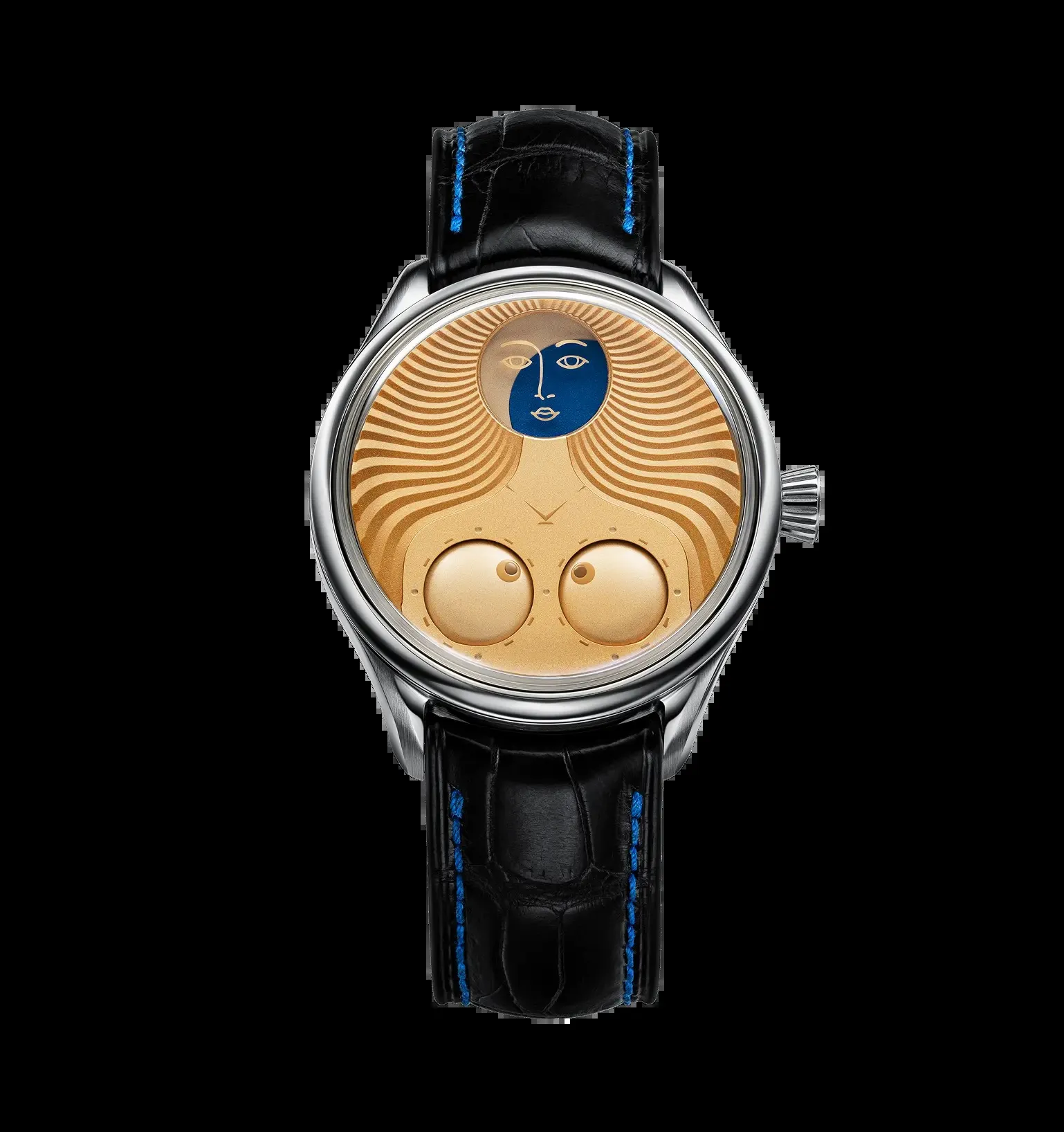
Just then Elena reached her left hand toward the table to take hold of her tea glass. The desert sun struck the stainless steel case of the watch slipping out from her cuff, and the twisted, warm-toned golden reliefs on its dial. A circular beam of light slipped from the dial and appeared on the wooden table.

A Surprise on the Table: The Texture Reflected from the Wrist
Arthur's eye was suddenly caught by the watch on Elena's wrist. The design, with no hour or minute hands and full of organic lines and circular forms, drew his attention. “Wait a moment, Elena,” said Arthur, leaning forward. “What is that watch on your wrist? Those circular lines on the dial and the Moon indicator at the top, they recall a biological form, the bond between mother and child in those first layers of existence.”
Gabriel too drew closer with curiosity: “A craftsmanship that makes its rhythms feel very different. It has a depth that sets it apart from the usual measurers of time.”
Elena smiled. The watch, with its stainless steel case, its blue-stitched alligator strap, and the signature of Konstantin Chaykin, a legendary name in independent watchmaking, gleamed on her wrist.
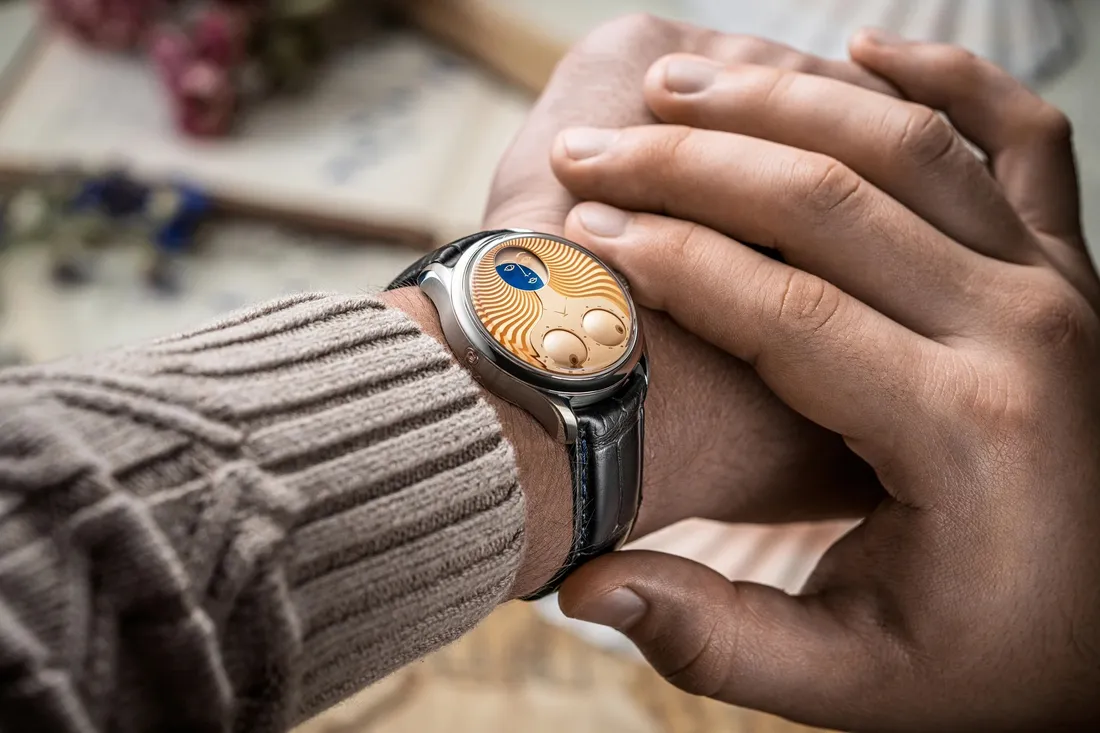
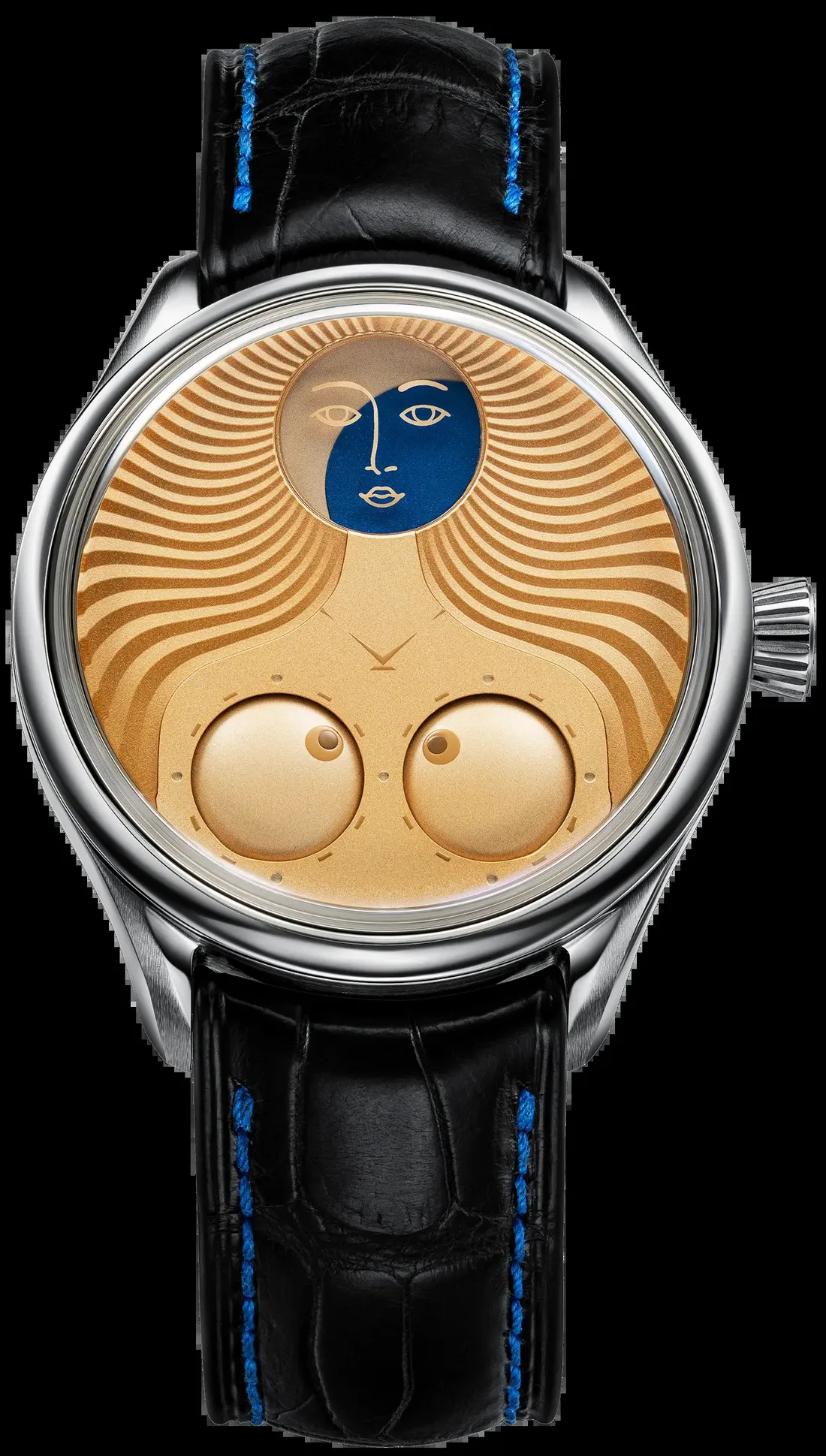
“The piece on my wrist is a special work by Chaykin,” said Elena in a calm tone. “Instead of presenting time with familiar mechanical indicators, he has turned it into a dial that alludes to the anatomy of motherhood and to the source of life. Those two circular areas in the form of a breast are in fact the discs indicating the hours and the minutes. And the window at the top follows the phases of the Moon. It presents time not as a routine flow, but as a reflection of that essential rhythm which keeps life standing.”
The Art of High Watchmaking: Konstantin Chaykin and the Mechanics of the Venus
When Arthur wished to examine the watch more closely, Elena unfastened its buckle and laid it on the table. Arthur and Gabriel began to study it, spellbound, as though examining a piece of biological tissue under a microscope.
Arthur looked up at Elena: “Elena, that beyond your medical expertise you have such detailed command of independent high watchmaking (haute horlogerie) truly astonished us! You analyse the microscopic details of the watch with the precision of a biologist.”
Elena smiled and pointed with her finger to the craftsmanship on the dial: “Watchmaking and embryology are far closer friends than we think. Both are built with micron tolerances invisible to the eye. Look, this layered structure on the dial is entirely hand-applied guilloche (a wavy motif) work. The twisted gold-plated lines form a striking contrast with the matte, circular brushed surface beneath. Instead of classic hour and minute hands, two independent regulator discs set upon sapphire discs are used. The circular disc on the left shows the hour, the one on the right the minute.”
Gabriel took the case in his hand and turned it over. Through the transparent sapphire crystal case back, the mechanical heart of the watch was visible. “Those patterns and bridges behind the movement are magnificent too,” said Gabriel.

Elena continued to explain the details: “The mechanism you see in the case back is an automatic calibre with a special module developed by Konstantin Chaykin in his own workshop. Chaykin is a member of the Academy of Independent Watchmakers (AHCI) and an independent genius with more than 90 patents. On the bridges of the movement used here, hand-executed anglage (the bevelling and polishing of bridge edges) and Cotes de Geneve patterns stand out. On the plate beneath the wheels, traditional perlage (circular stippling) has been applied. The special motifs engraved on the rotor and the heat-hardened screws turned a warm blue are proof of the deep respect Chaykin holds for micro-mechanics.”
Arthur added with deep admiration: “Frankly, that the piece on your wrist is not only aesthetic but an engineering marvel holding dozens of patents and micron-scale handwork behind it is tremendous. As an embryologist, it is impossible not to respect this precision.”
Biological Depth: Fetal Microchimerism and Cellular Healing
Arthur took a deep breath, looking at the circular lines on the dial: “That it presents mechanical lines through a biological narrative is quite striking. For pregnancy, far beyond a growth visible from the outside, is a cellular dialogue established between two beings that leaves one in awe. Our research in recent years into fetal microchimerism shows how deep and unimaginable an engineering this bond holds.”
Gabriel leaned forward and asked: “What sort of cellular mechanism lies in its details, Arthur?”
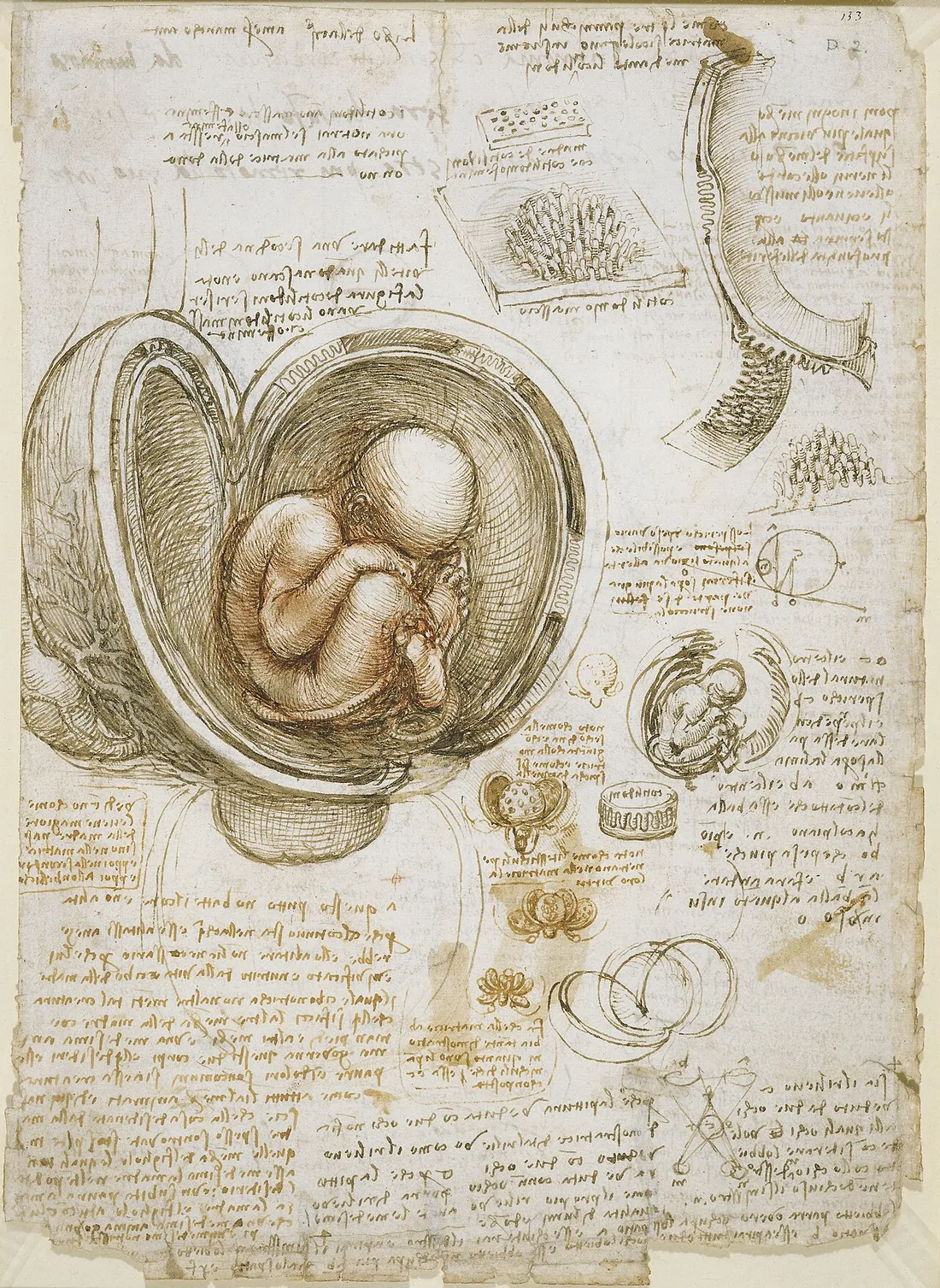
“The structure we call the placenta, contrary to belief, is not merely a passive filter allowing the passage of nutrients; it is a two-way, miraculous cellular highway,” said Arthur, his eyes shining. “In the very first weeks of development, pluripotent stem cells carrying the baby's genetic code cross the placental barrier and seep into the mother's bloodstream. Rather than destroying this foreign genetic material, the mother's body embraces it with a flawless immune tolerance. And the truly astonishing process begins here.”
These tiny stem cells patrol the mother's bloodstream like silent sentinels. If tissue damage, a myocardial infarction or cellular harm arises in the mother's heart, the baby's cells leave the bone marrow and migrate straight to the heart. There they turn into specific cardiomyocytes (heart muscle cells) and into new tubular vascular tissue, repairing the mother's heart. The same occurs in liver damage, in neuronal injuries in the brain, or in skin wounds. While still in the womb, the baby becomes a biological architect repairing the mother's body cell by cell.
Elena nodded and added: “And the most striking part is that this cellular bridge is not temporary.”
“Exactly!” Arthur went on. “This cellular inheritance does not end with birth. These stem cells passing from baby to mother continue to live for 30, 40, even 50 years after birth in the mother's bone marrow, brain, heart and other organs. And there is more still: in a woman's body there are cellular traces not only of the child she herself carried, but also ones passed to the mother from an elder brother or sister and waiting there, and even ones the mother received from her own mother. At the cellular level, a mother carries the biological memory of her whole family and lineage in her heart and body. What we call in medicine 'being two lives' is in fact a hidden cellular interlocking that lasts for generations.”
A Living Chemistry: The Instant Transformation of Milk
Elena took a sip of her tea and continued: “As an obstetrician, there is another process that leaves one in silent wonder every single time: that sudden transformation at the moment of birth. Throughout pregnancy, hormones running high suppress milk production. The instant birth is complete, with a sudden change in the hormonal picture, prolactin steps in.”
The tissue that until that moment stood entirely silent becomes, within a few hours, the most delicate, most sterile biological structure in the world. The colostrum that comes first is the initial protection that covers the baby's immune system like armour.
“The most striking aspect of the process is this: while the baby nurses, through the vacuum effect the baby's saliva is sensed by receptors at the nipple. If the baby has met a microbe that day, the body reads this chemical signal instantly and, within a few hours, updates the content of the milk by preparing antibodies specific to that very microbe. In other words, breast milk is a living, dynamic fluid that takes shape according to the baby's immediate need.”
A Cosmic Parallel: The Moon and Biological Balance
Gabriel, looking at the Moon-phase window at the top of the watch, spoke up: “Placing the Moon indicator at the top of the watch carries a harmony too deep to be coincidence. When we look at that silent balance in the sky, we remember how the order on earth would be dragged into chaos were it not for the Moon. That cosmic force, governing the tides in the oceans with its gravity and fixing the axis of the Earth, opens a sheltered space for life on the surface of the world.”
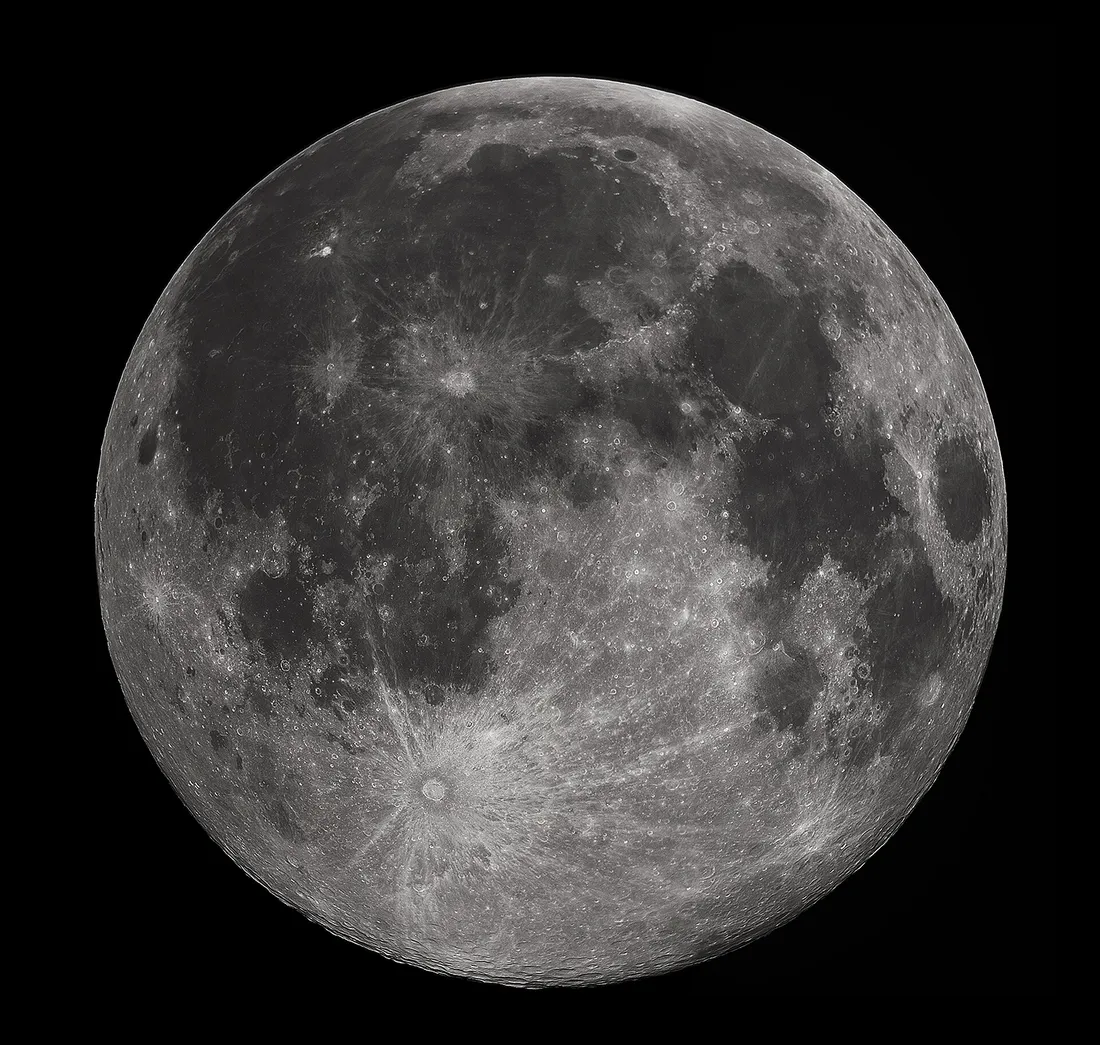
Arthur smiled: “An apt observation, Gabriel. The relationship between mother and child shows a great parallel with this cosmic balance too. That sheltered fluid environment within the womb is governed by rhythmic hormonal fluctuations. The mother's heartbeat, circulation and biological rhythm are the central hub that orders the complex processes of the developing being. Just like the Moon that keeps the earth in balance, the mother is that unshakeable stabiliser in the child's own inner universe.”
Sacred Texts and the Astonishment of Scientists
Gabriel turned his gaze to the setting sun on the horizon: “While today's science examines these cellular bonds and biological processes under the microscope, the elegance and accuracy with which the ancient sacred texts express these stages lead one to deep reflection. Indeed, in the Chapter of Al-Mu'minun in the Holy Qur'an, as the stages of development in the womb are listed, after the 'nutfa' (drop) the concept of 'alaqa' is used. Alaqa describes both 'a clinging tissue' and 'a leech-like sucking structure.' Indeed, the embryo in the first weeks clings to the womb just like a leech and is nourished from there. The 'mudgha' that follows depicts, in a most concise way, the indented structure upon that first tissue as it begins to take shape.”
Arthur cut in, asking with curiosity: “These descriptions truly shake me as an embryologist, Gabriel. And how do independent physicians and embryologists who encounter these texts today react?”
Gabriel replied with a smile: “They experience exactly this astonishment, Arthur. For example, Prof. Dr. E. Marshall Johnson, Director of the Daniel Baugh Institute of Thomas Jefferson University and Professor of Anatomy, when he examined these stages in the Qur'an, made a clear observation as a scientist: that describing the embryo's developmental stages in such detail in the 7th century, when there was not even a microscope, could not be explained by the scientific knowledge of that day, and that here the presence of a divine knowledge was inevitable. Likewise, Prof. Dr. T. V. N. Persaud, Professor of Anatomy at the University of Manitoba and author of Basic Concepts in Embryology, one of the most prestigious references in our field, emphasised with similar wonder that it would be impossible for an illiterate person to arrive on his own at such deep and accurate knowledge about the nature of the universe and of human physiology, and that this could only be explained by divine revelation and inspiration.”
Arthur listened, nodding: “That truths humanity has only just begun to unravel under the microscope were expressed so clearly centuries ago points to a tremendous divine order. And what of the reflections in the other ancient texts?”
“In Psalm 139 of the Psalms a similar poetic expression stands out: 'Your eyes saw me while I was yet unformed; it is You who wove me together like a cloth in my mother's womb.' In the sacred texts the womb is depicted as a hidden sanctuary, protected from the outside world, where existence is woven with wisdom. That picture, expressed centuries ago with the word 'weaving,' is nothing other than what we see today as cells arranging themselves one upon another to build tissues and organs.”
The Impermanence of Stones and the Continuity of Truth
The three friends fell silent for a while. As the desert wind gently rippled the napkins on the table, the Pyramids of Giza stood as majestic silhouettes in the twilight of evening.
Gabriel took another sip of his tea and completed his thought: “To believe that by raising up enormous stone blocks one will triumph over time is perhaps a human illusion. True time is measured not by stone, but by that tremendous design of existence. Every new heart set beating within a woman's body is a mark deeper and more lasting than all these pyramids.”
Arthur, looking at the watch on Elena's wrist and the Moon indicator on the dial, concluded: “Even these fine mechanisms that humankind produces to seize time can, in the end, go no further than an expression of admiration before that great order and design.”
As darkness settled over the plateau, the three scientists went on speaking of the deep and unchanging rhythm of time, of existence, and of motherhood.

Technical Specifications
Calibre: K.18-25, automatic winding. The indication module is produced by the Konstantin Chaykin Manufacture.
Base movement: Swiss-made La Joux-Perret G200, modified for the Konstantin Chaykin Manufacture; diameter 34.5 mm, thickness 7.9 mm (with module), 28,800 vibrations per hour, 30 jewels (base movement 24, module 6), 68 hours power reserve.
Functions: artistic indication of time with disc indicators for hours and minutes and a moon-phase display. Case: stainless steel, diameter 40 mm, thickness 12.9 mm, case back with a sapphire window secured by 6 screws. Dial finishing: abrasive blasting with different fractions, relief guilloche, multi-layer lacquer, a lens in the moon-phase aperture. Strap: an exclusive leather strap with a classic stainless-steel buckle. Limited edition: 99 pieces.
Editor's Note
This text was written as a shared basin of contemplation where the art of high watchmaking, the immense depth of biology, and the sacred rhythm of existence converge. It is dedicated by our flaneur.lu editor-in-chief Hasan Bekmezci, with deep love, respect and gratitude, to the two most precious spans of time in his life: his beloved wife Zeynep Bekmezci and his one and only daughter Nil Bekmezci.