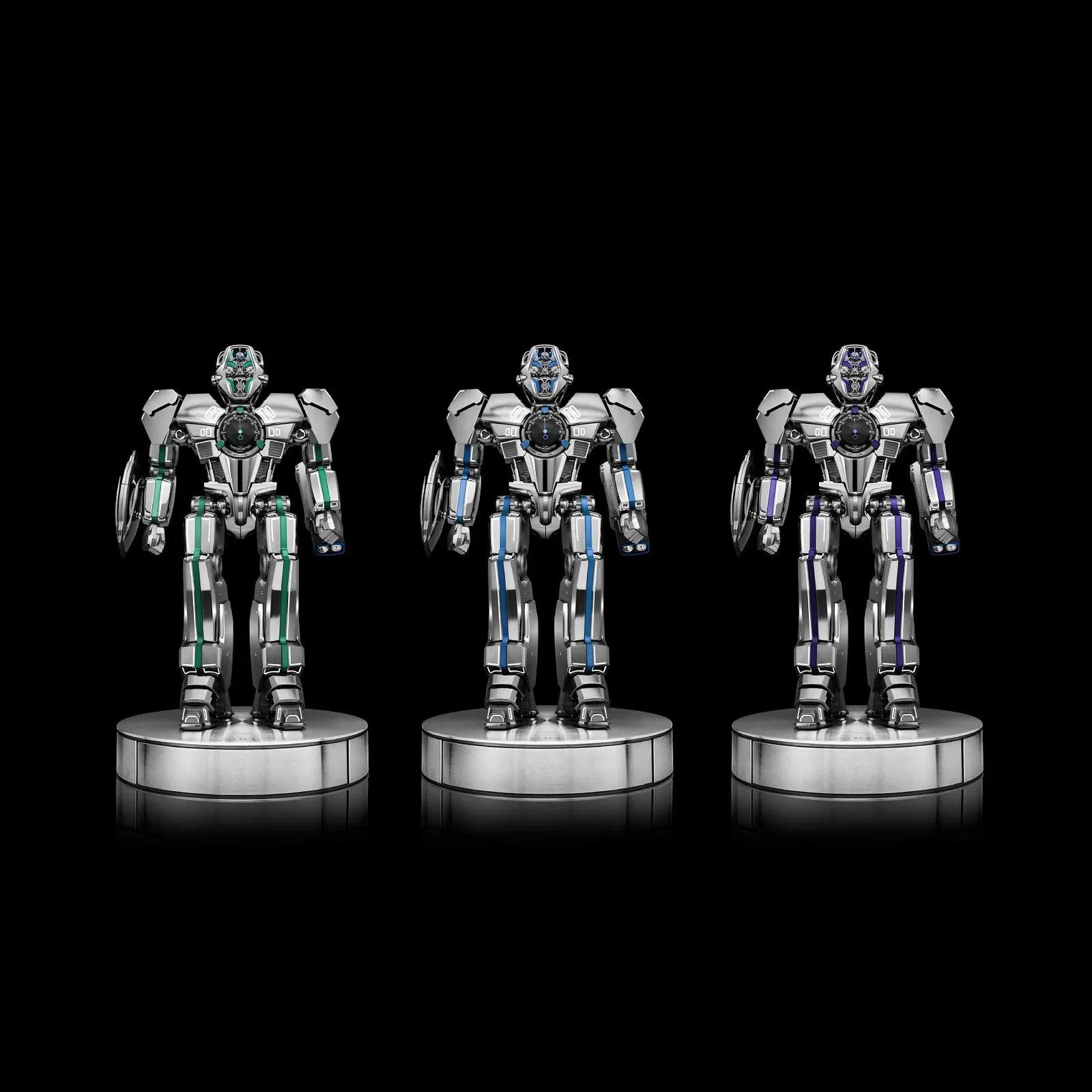
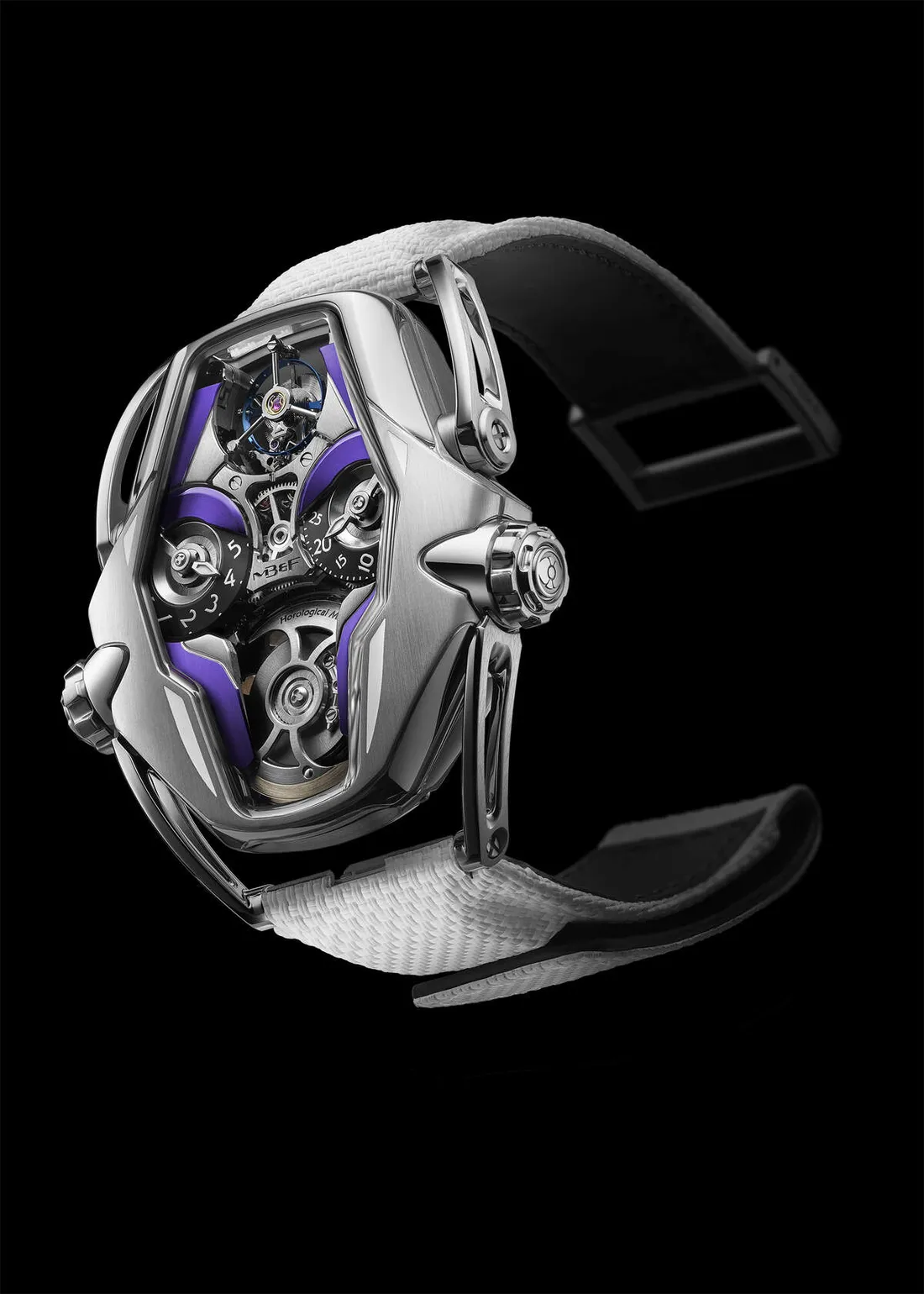
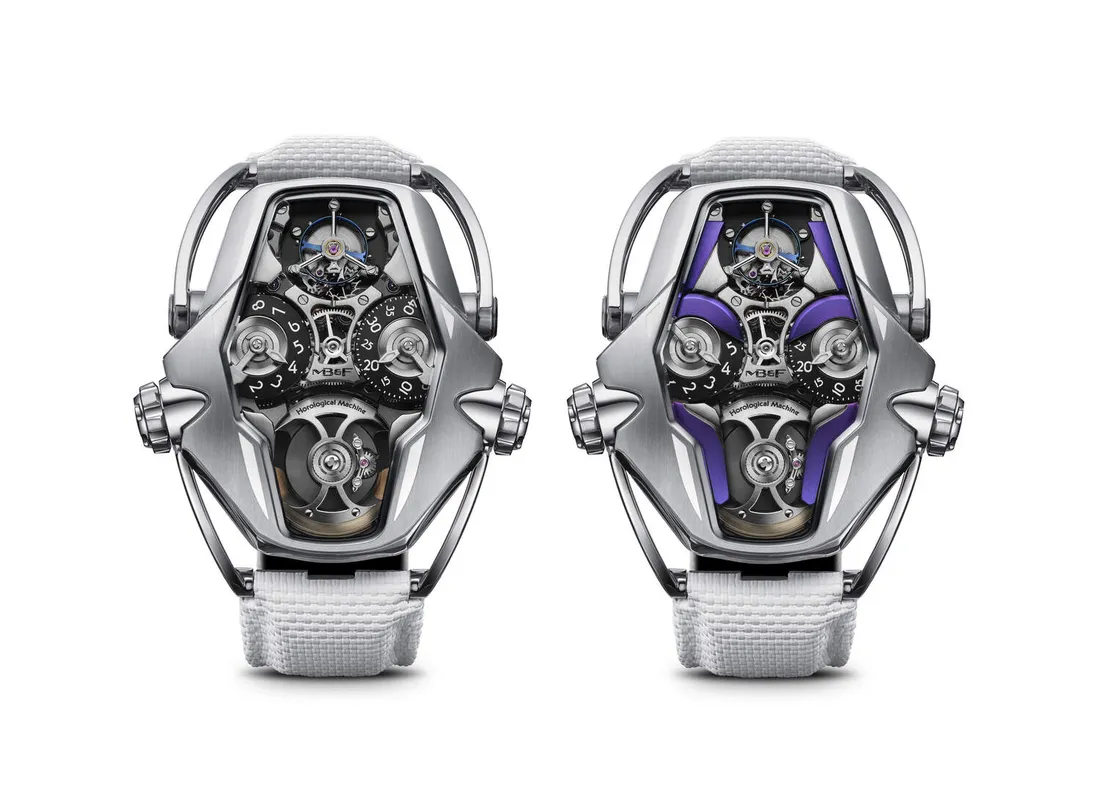
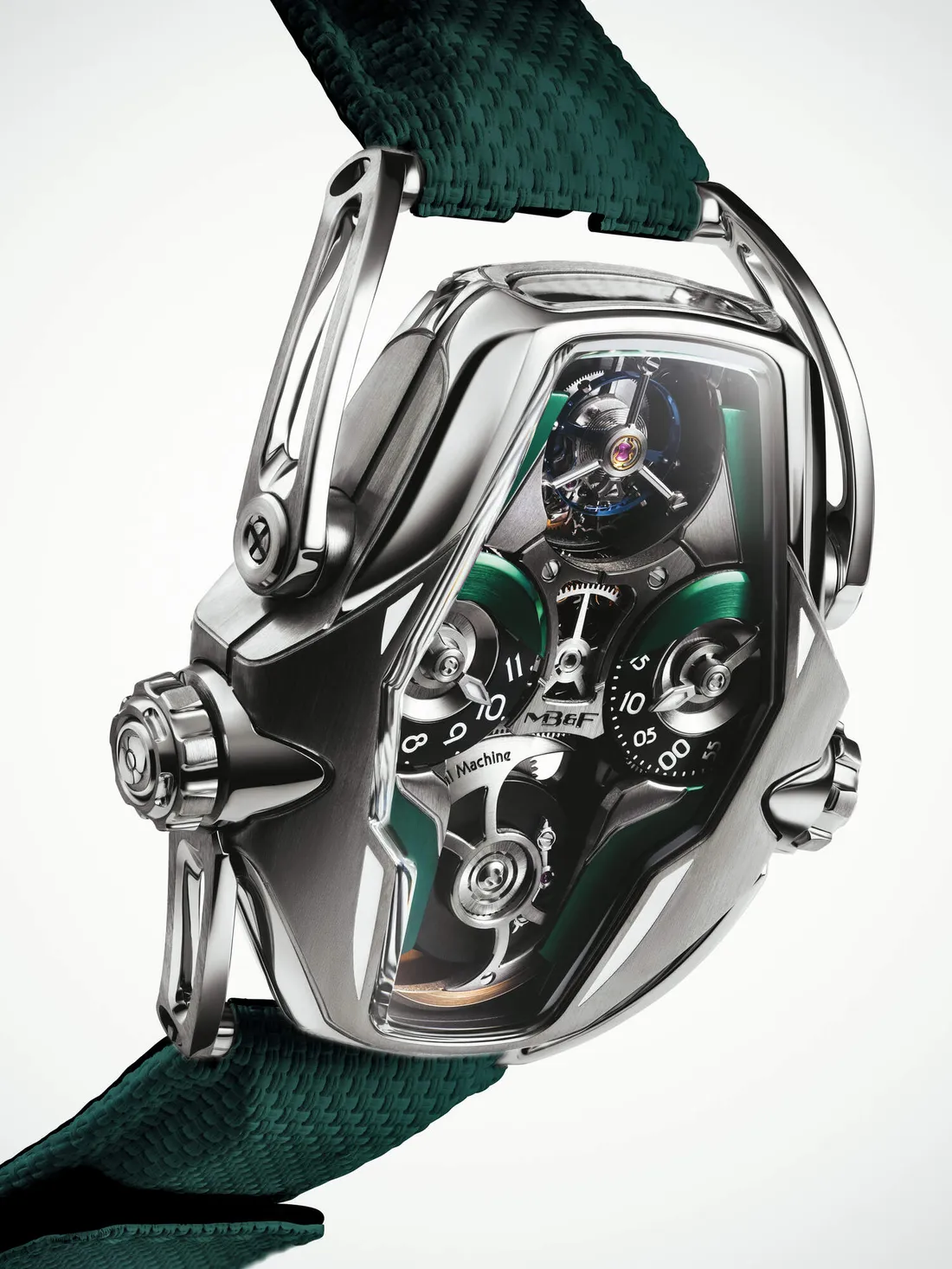
There is a moment, the first time you stand before it, when you forget you are looking at a watch. Two luminous discs regard you like eyes; a dome of sapphire rises between them like a brow; behind the crystal something turns, slowly, the way a pupil widens in dim light. You lean in, and the machine seems to lean back. Maximilian Büsser and Friends, MB&F, is no stranger to sending shock waves through haute horlogerie, but the Horological Machine N°12 The Guardian returns to the raw, uncompromising, radically science fiction genetics of the brand's earliest Horological Machines.
Because this is not an ordinary wristwatch; it is a cybernetic life form that rules over time and strikes a symbiotic pact with the outside world. The masterpiece is the radical union of two relentless elements: the ultra complex HM12 wristwatch that lives on your wrist and bends time, and a towering 38 centimetre mechanical sculpture, The Guardian, built to shield it from the merciless entropy, the shocks and the temperature swings of the world outside.
So let us do something unusual for a watch review. Let us approach The Guardian the way a biologist approaches an organism, a physicist a system of forces, an engineer a tolerance that should not be possible. Let us count its parts, follow its energy, and ask the oldest question we know: how does a heap of lifeless components learn to keep time, to move, to seem almost alive?
format_quote"The genome is an alphabet of four letters, a movement an alphabet of springs and wheels; in both cases a single letter, alone, means nothing at all."
Part I: A Mechanical Duo from the Future's Past, and a Robotic Armour
With this piece MB&F tears up every contract about what a watch is supposed to be. The Guardian is not merely an object but a character, a three dimensional creature that happens to tell the time. And no creature exists alone, which is why the watch arrives with a guardian of its own. When watch and robot are counted together, they reach one of the highest component densities haute horlogerie has ever seen.
This dual architecture is far more than luxury; it is a cosmic armour that renders, in micromechanical form, a living organism's instinct for self preservation and for the continuation of its kind. The watch produces time; the robot stands over that time and protects it.
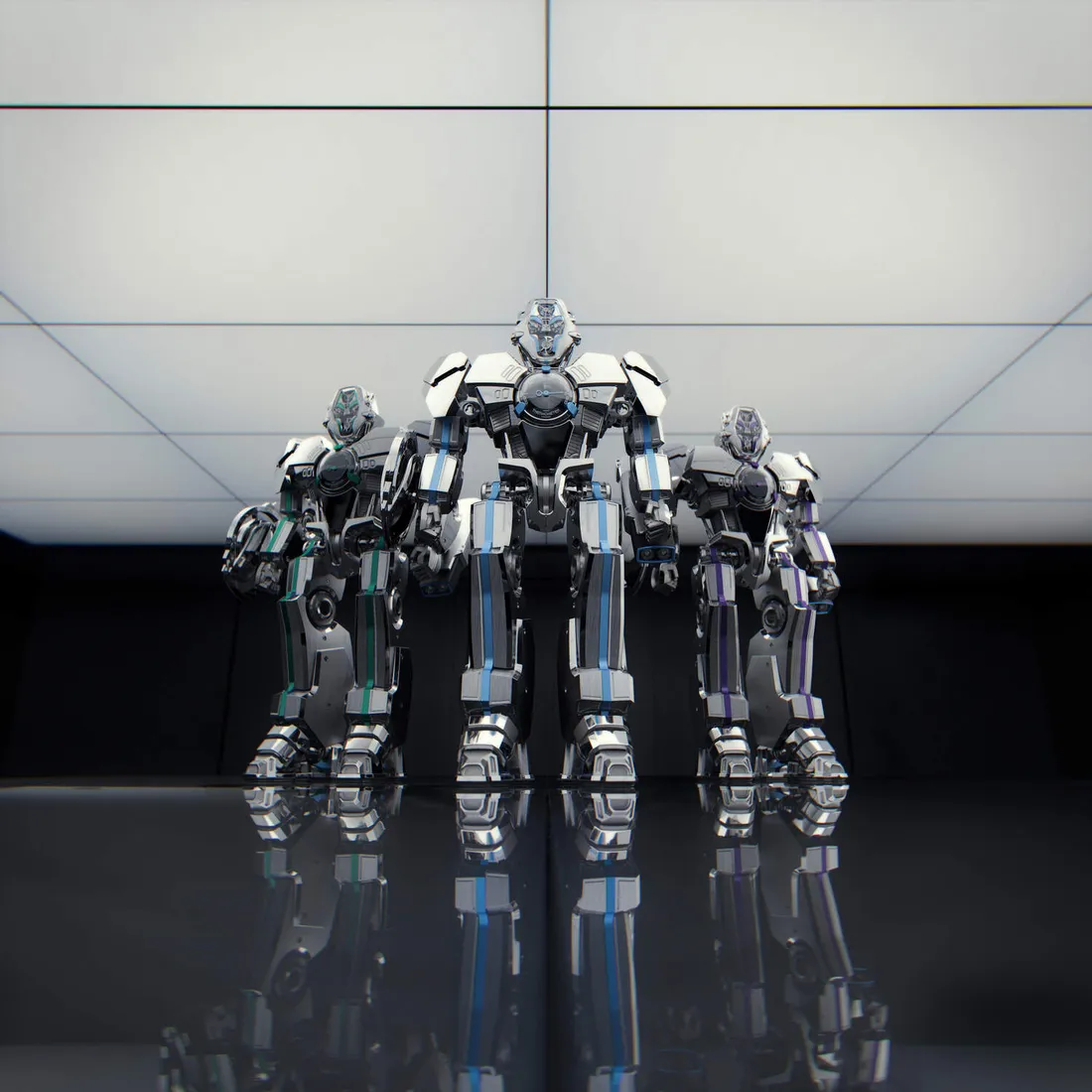
This 38 centimetre robotic guardian rises like a noble sculpture, and within it carries a fully mechanical thermometer and precision engineering tools designed specifically for the care and adjustment of the watch. The wristwatch lifts from your arm and mounts into this larger figure, which then keeps watch over it through the night. The guardian, it turns out, has a guardian of its own.
Part II: A Cellular Analogy, and the Anatomy of a Fifteen Hundred Part Organism
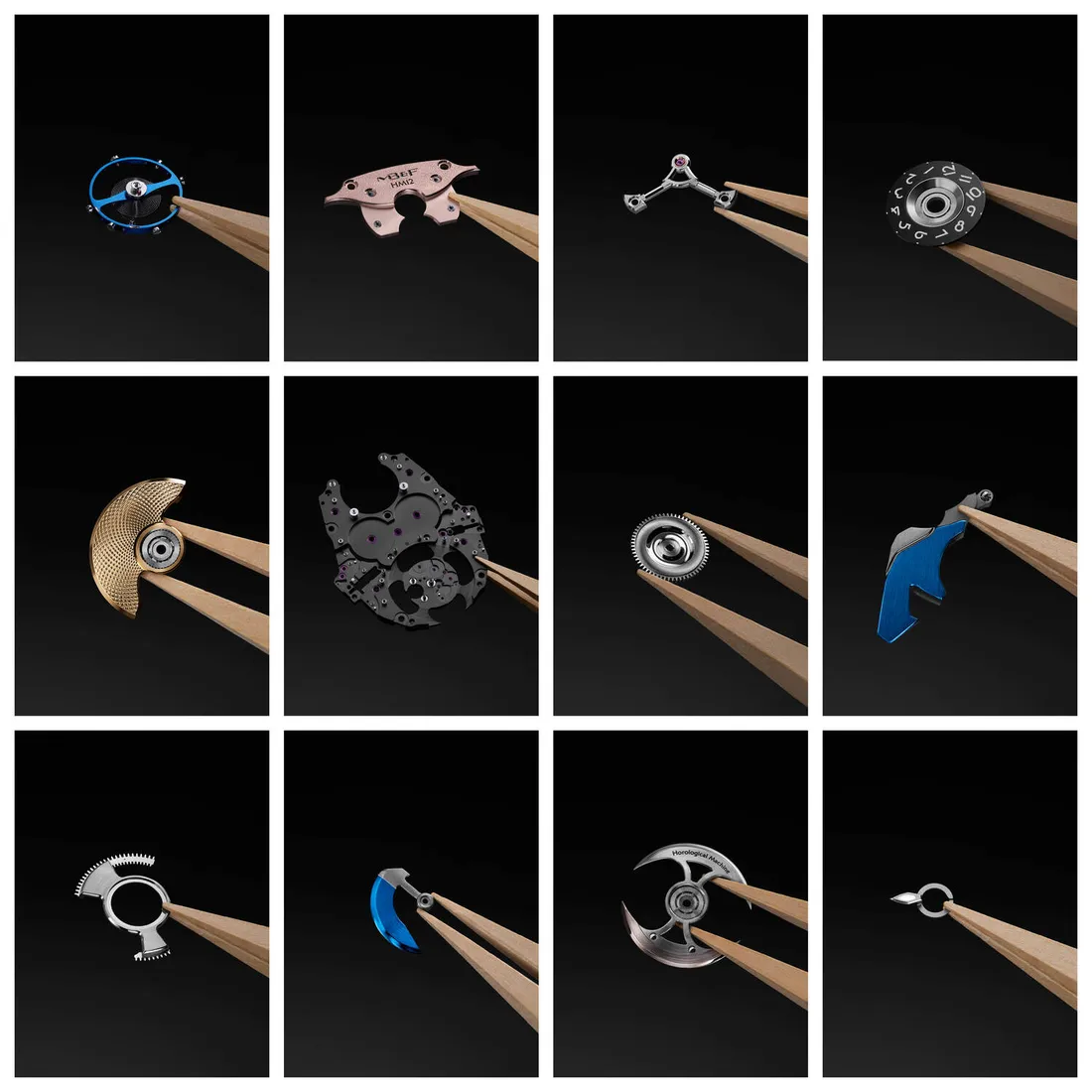
To grasp the full anatomy of this combined unit, you must set aside the vocabulary of watchmaking and turn instead to the flawless order of biology, to chains of DNA and to cellular adaptation. The HM12 and its Guardian comprise, in total, nearly fifteen hundred independent components, and that density is no cold heap of metal thrown together at random. Each part, like an organelle inside a cell, holds a vital task.
Here is the strange part: not one of those fifteen hundred components contains the time, and not one contains the creature. Search the mainspring and you will not find three o'clock hiding inside it. The hour is nowhere in the parts; it lives only in their arrangement. And this is precisely the trick biology pulled long before any watchmaker. Not one of your roughly thirty seven trillion cells contains you; no single rung of your DNA spells your name. The genome is an alphabet of only four letters, a movement an alphabet of springs and wheels, and in both cases a single letter means nothing at all. Life and timekeeping are both feats of arrangement.
The Double Sided Micro Rotor: The Cell's Power Plant, the Mitochondrion
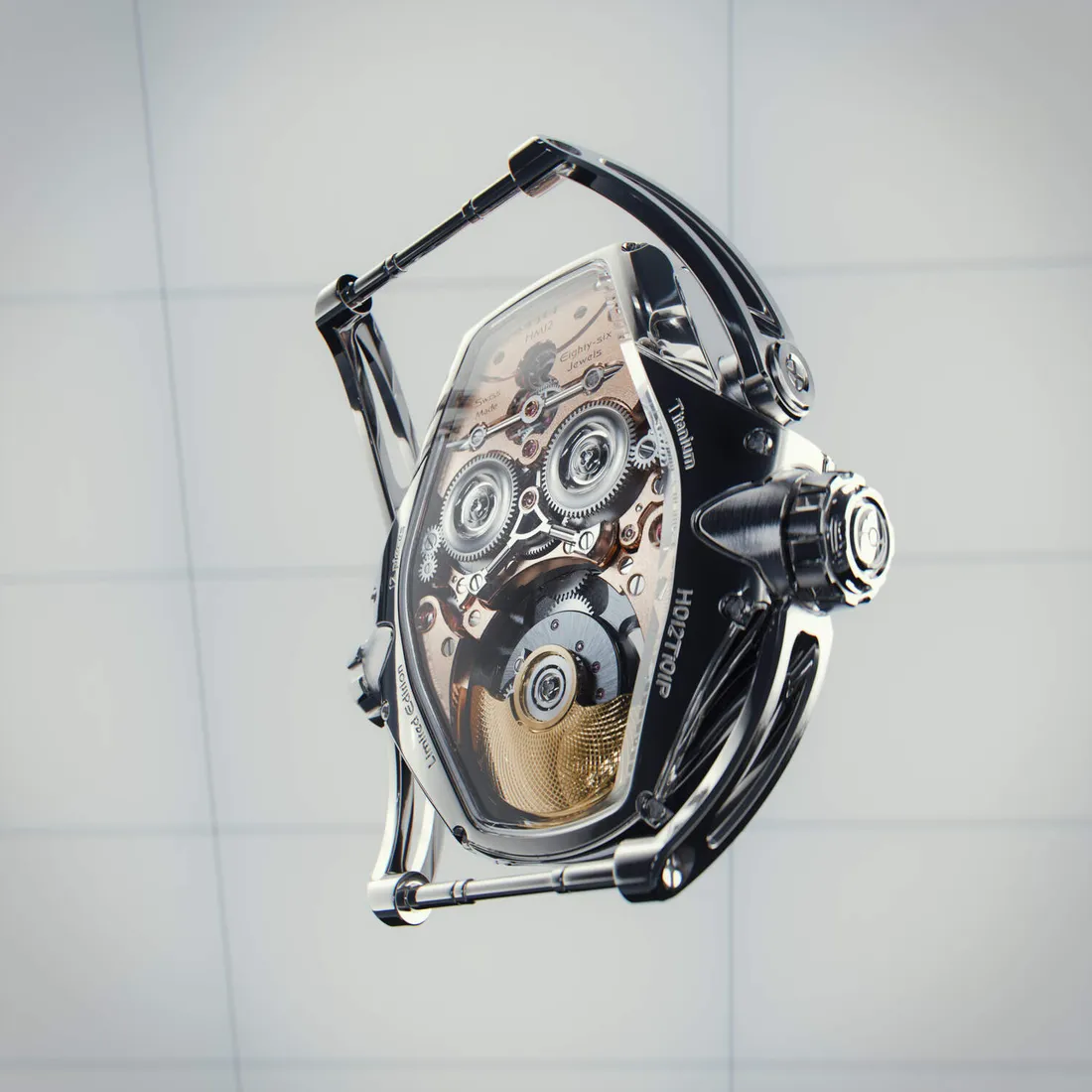
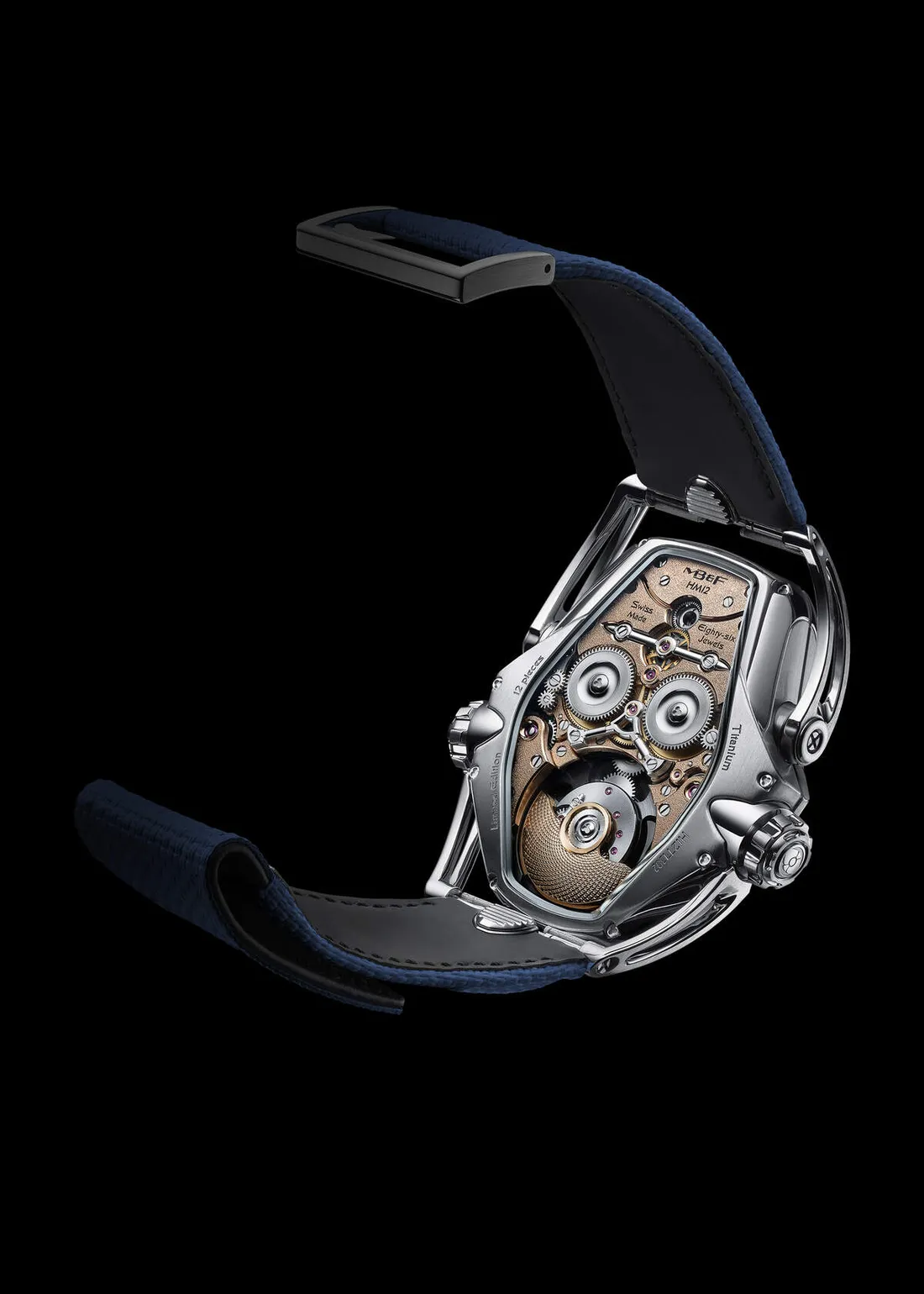
In biology the mitochondrion is the power plant that produces the ATP a cell needs and keeps life running. The double sided micro rotor at the heart of the HM12 takes on exactly that role. Unlike the coarse, heavy rotors of conventional watches, this part is a microscopic feat of engineering hidden deep in the movement by a vertical architecture. Where a standard rotor gathers energy from a single face and a single direction, this double sided design turns even the smallest, millimetric tremor of your wrist into kinetic energy on both the clockwise and the counterclockwise swing.
The body does precisely this: it never stores the energy of food in its raw form but captures it first and converts it into something it can keep. As the rotor feeds a flawless flow of torque to the mainspring, it breathes an uninterrupted life energy into the watch's mechanical DNA, like a cell endlessly pumping ATP. Yet the real beauty lies in releasing that energy slowly, because energy spent all at once is not power but catastrophe, an explosion in a watch and a fever in a body. The escapement parcels it into tiny, equal beats, just as the cell burns its sugar not in a single flash but in the measured steps of the respiratory chain.
The Flying Tourbillon: A Cell Nucleus Against Gravitational Mutations
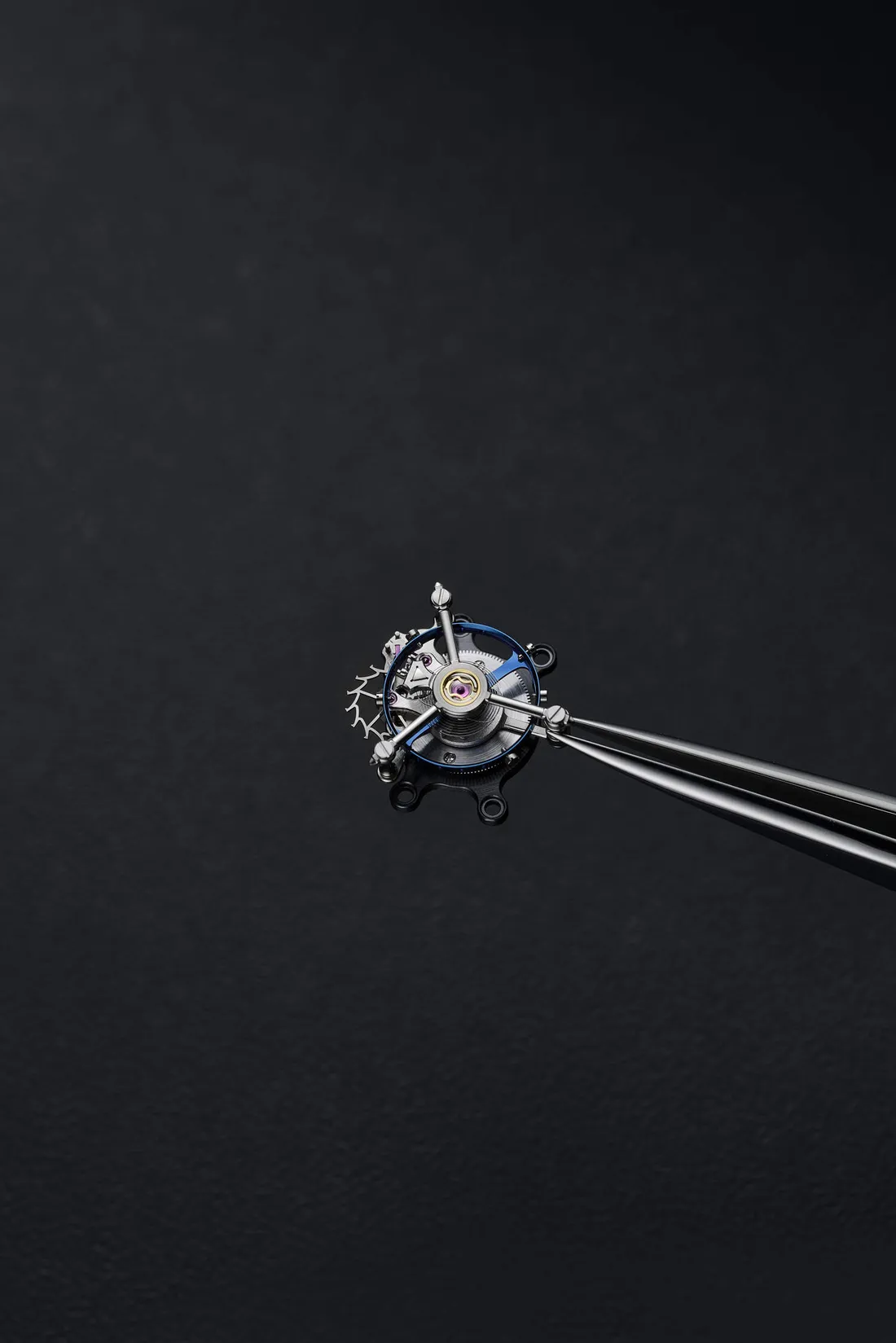
A tourbillon is a cage that neutralises gravity's position dependent errors on the balance by rotating on its own axis. But the one in the HM12 is a rule breaking flying tourbillon. A classic tourbillon has steel bridges holding the cage from both below and above; this lends security but kills visual depth. In a flying tourbillon the upper bridge is removed entirely, and the cage is cantilevered from a single point at the base of the movement alone. This invites an almost unthinkable risk of instability and imprecision, for a cage with no support from above can slip from its axis at the slightest shock.
To reduce that risk to zero, the engineers of MB&F balanced the cage's centre of gravity and its titanium alloy parts to within microns. Hanging as though tethered to nothing at all, this cage behaves like a cell nucleus shielding its chromosomes from outside forces and holding them in flawless order. And spinning overhead, this nucleus is the conscience of the system: while gravity ceaselessly tries to mislead the balance, the tourbillon passes through every position until the errors cancel one another into silence, just as enzymes proofread the strand and snip out a misread letter, just as homeostasis nudges a drifting temperature back to true. Precision, in metal as in flesh, is never the absence of error but its tireless correction.

Instantaneous Jumping Hours: A Quantum Leap and Genetic Coding
Conventional hands show time as a linear river, ceaseless but with no clear edges. The HM12 instead treats time as quantum packets, as the instantaneous expression of a genetic code. The disc in the left eye does not turn continuously; it accumulates time second by second, storing the mainspring's torque in a dedicated jumper spring behind it. The moment the watch strikes the sixtieth minute, that stored energy is released in a microscopic explosion and the disc leaps to the next numeral within milliseconds. In the right eye the minutes flow on, trailed by a hand sweeping its quiet arc.
This instantaneous leap resembles the flawless coding steps of DNA replication: it makes time visible not as a blur but as a crisp, decisive jump. And because the displays stand upright beneath their domes, The Guardian asks to be read not with a glance from above but lifted to meet your eyes. You do not check this watch; you face it. Reading the hour becomes a small conversation between two faces, one of flesh and one of titanium.

format_quote"Just as enzymes snip out a misread letter, precision, in metal as in flesh, is never the absence of error but its tireless correction."
Part III: The Face Shield Complication and the Microscopic Summit of Hand Finishing
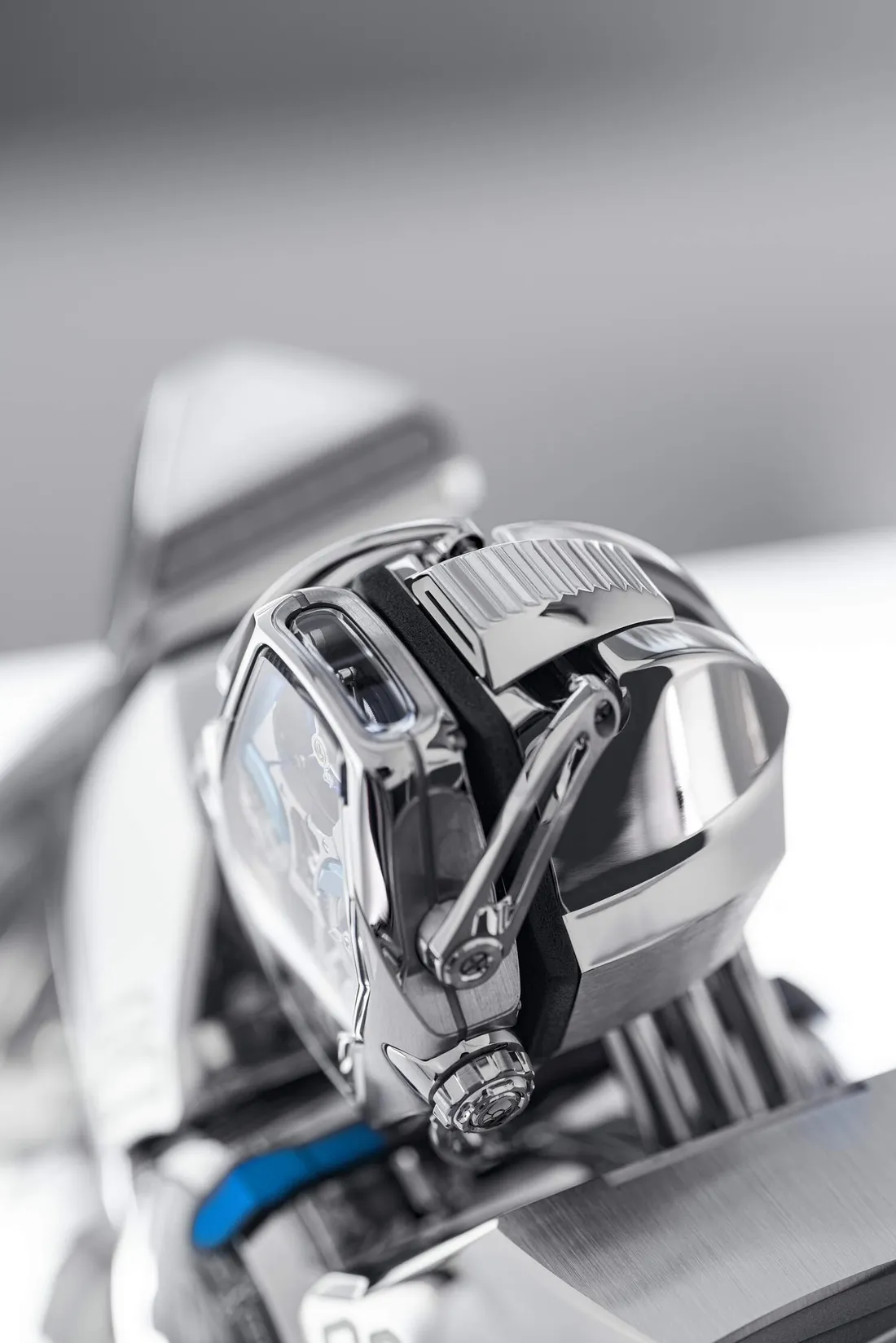
On top of the case sits a wholly new complication that MB&F has given to the language of horology: the Face Shield. It is a moving mechanical shield that protects the watch's delicate face, its flying tourbillon and its jumping hour discs from the destructive forces of the world outside. It works exactly like the visor of an astronaut's helmet, or like the selectively permeable cell membrane that guards a cell from viruses and toxins: it opens the watch's futuristic anatomy to the world when you wish, and hides it behind unshakeable armour when you do not.
And this complication is a machine in its own right: built from more than two hundred dedicated components, entirely independent of the movement that keeps the time. It measures nothing and regulates nothing; its sole reason to exist is presence, drama, the most human gesture a face can make, the blink. Biology did this first and called it the eyelid, that ancient gesture that earns the body not a single calorie yet saves a face from being a mask.
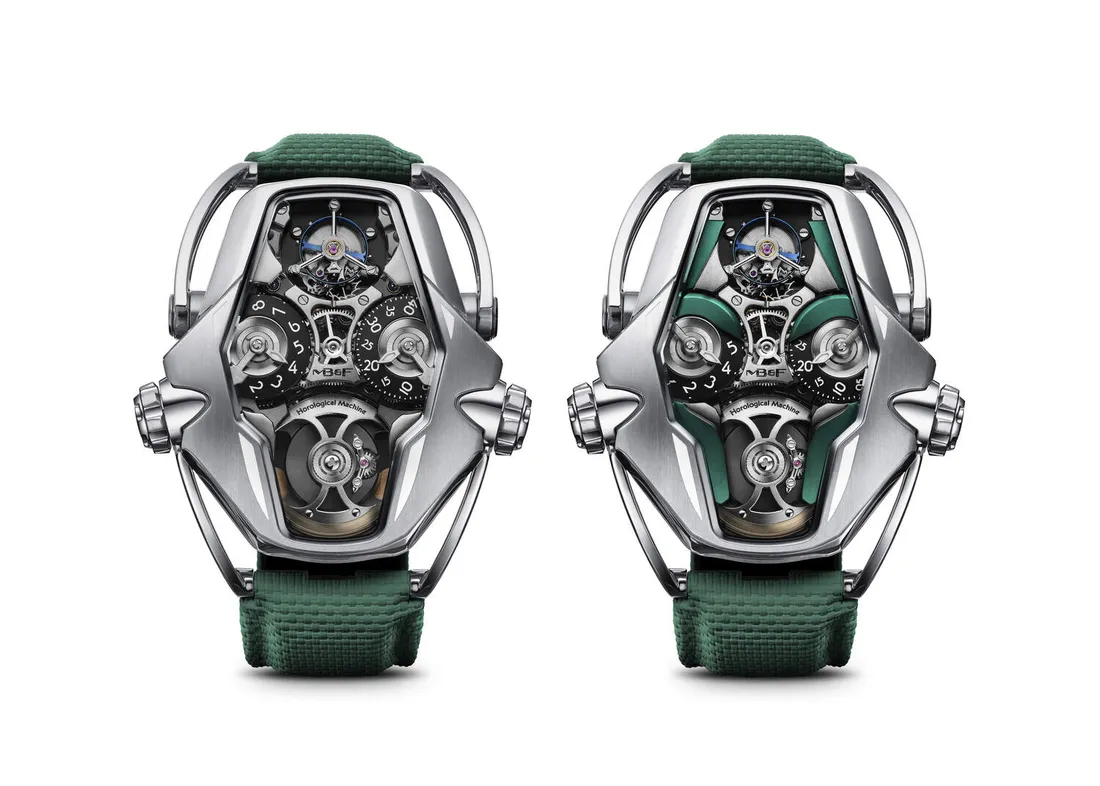
Beneath this science fiction shell lies, by a startling contrast, the strictest and most conservative traditional high watchmaking finishing. The edges of each of the fifteen hundred parts have been brought to a mirror shine by human hands under a microscope, using traditional wooden polishing tools, in the patient art that watchmaking calls anglage, the breaking of an edge. The anthracite and deep green tones on the plates may be achieved with modern NAC coatings, but every brushing and every polish upon them is the work of hundreds of hours of human labour.
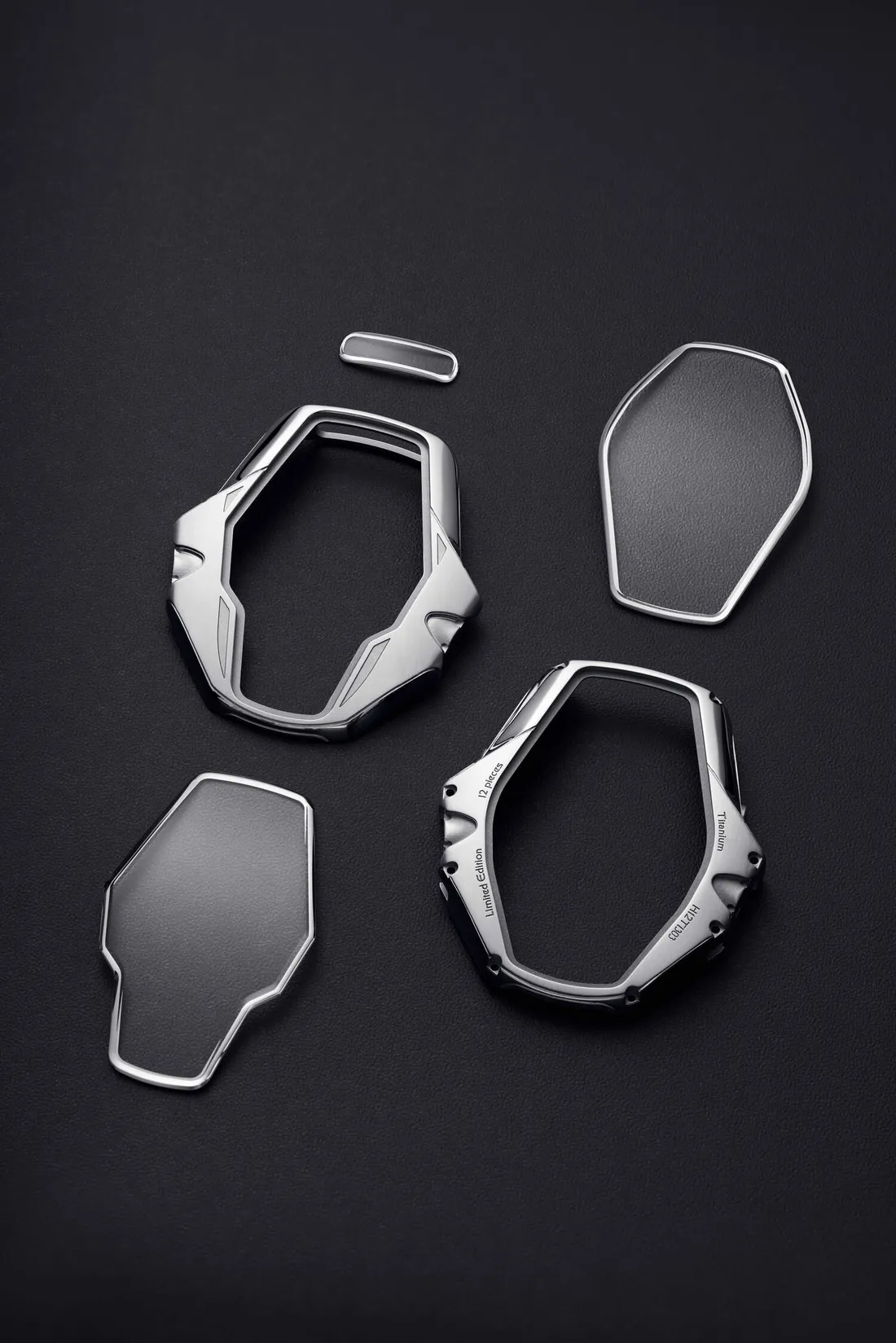
The architecture itself is devoted to light: the case is built upward in Grade 5 titanium and crowned with three separate sapphire crystals. Sapphire, born of molten alumina and second only to diamond in hardness, is very nearly perfect glass; it refuses opacity the way a cell under a microscope refuses to keep its secrets. Light floods in from several directions and the mechanism is left with nowhere to hide.
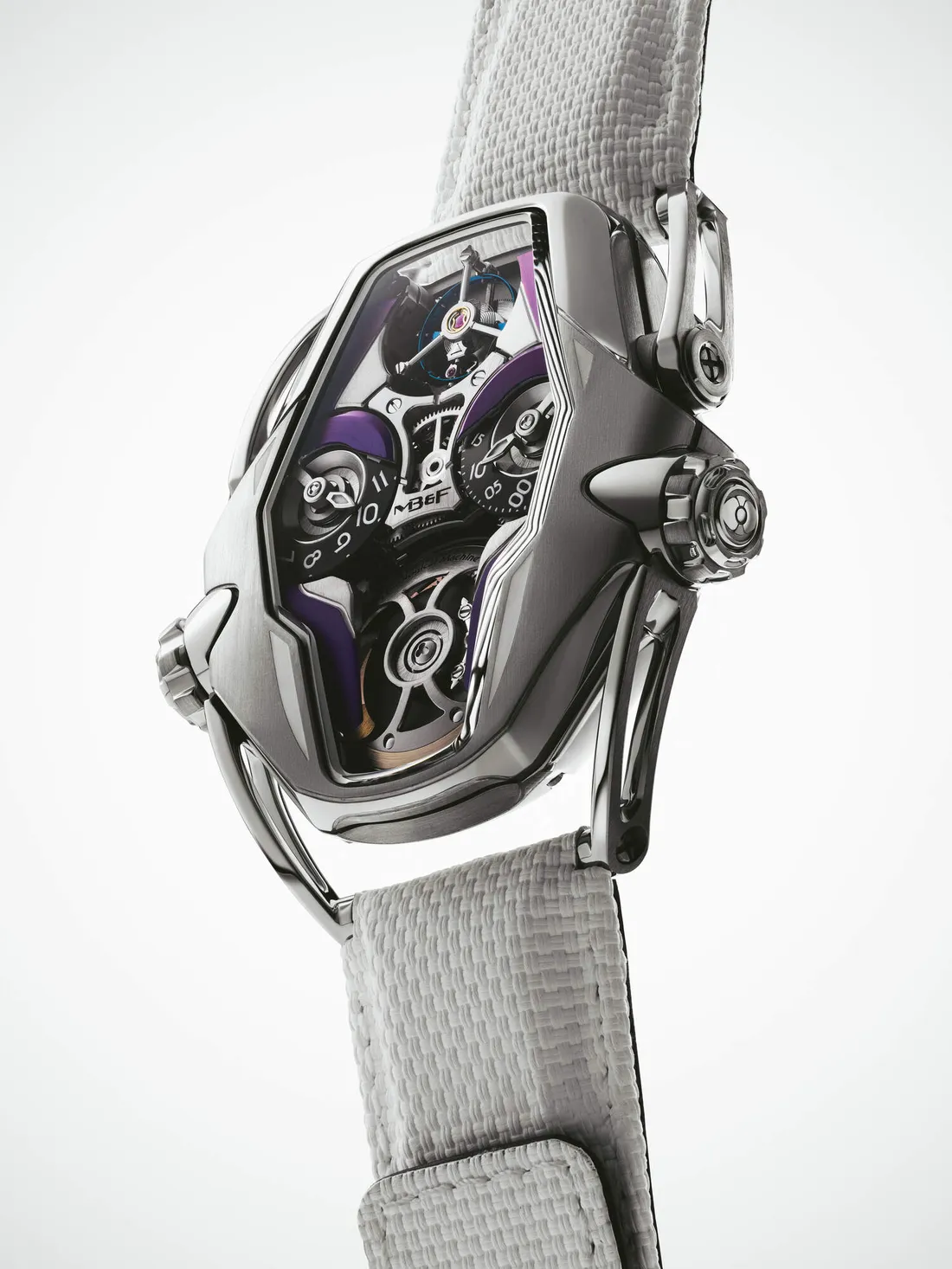
The Guardians of Time: Thirty Six Cybernetic Organisms
This extraordinary cybernetic organism will be offered only to those who carry a very particular collector's DNA: in three colours, green, blue and purple, only twelve pieces of each, three limited editions in all and, in the end, a population of thirty six. The entire living species is rare enough to gather around a single long table.
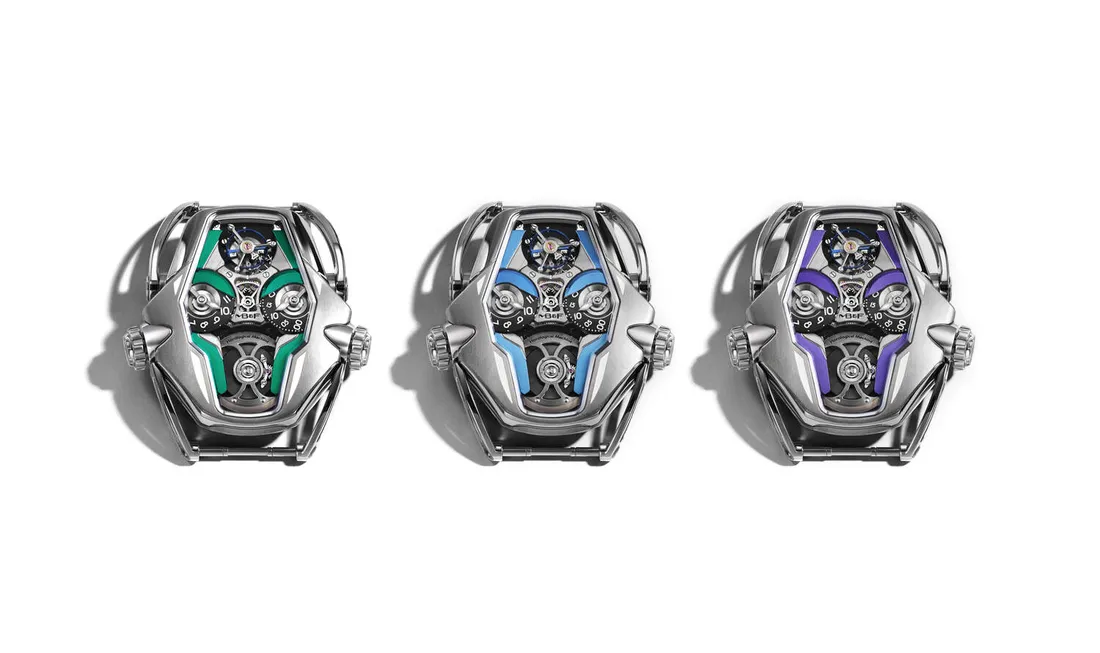
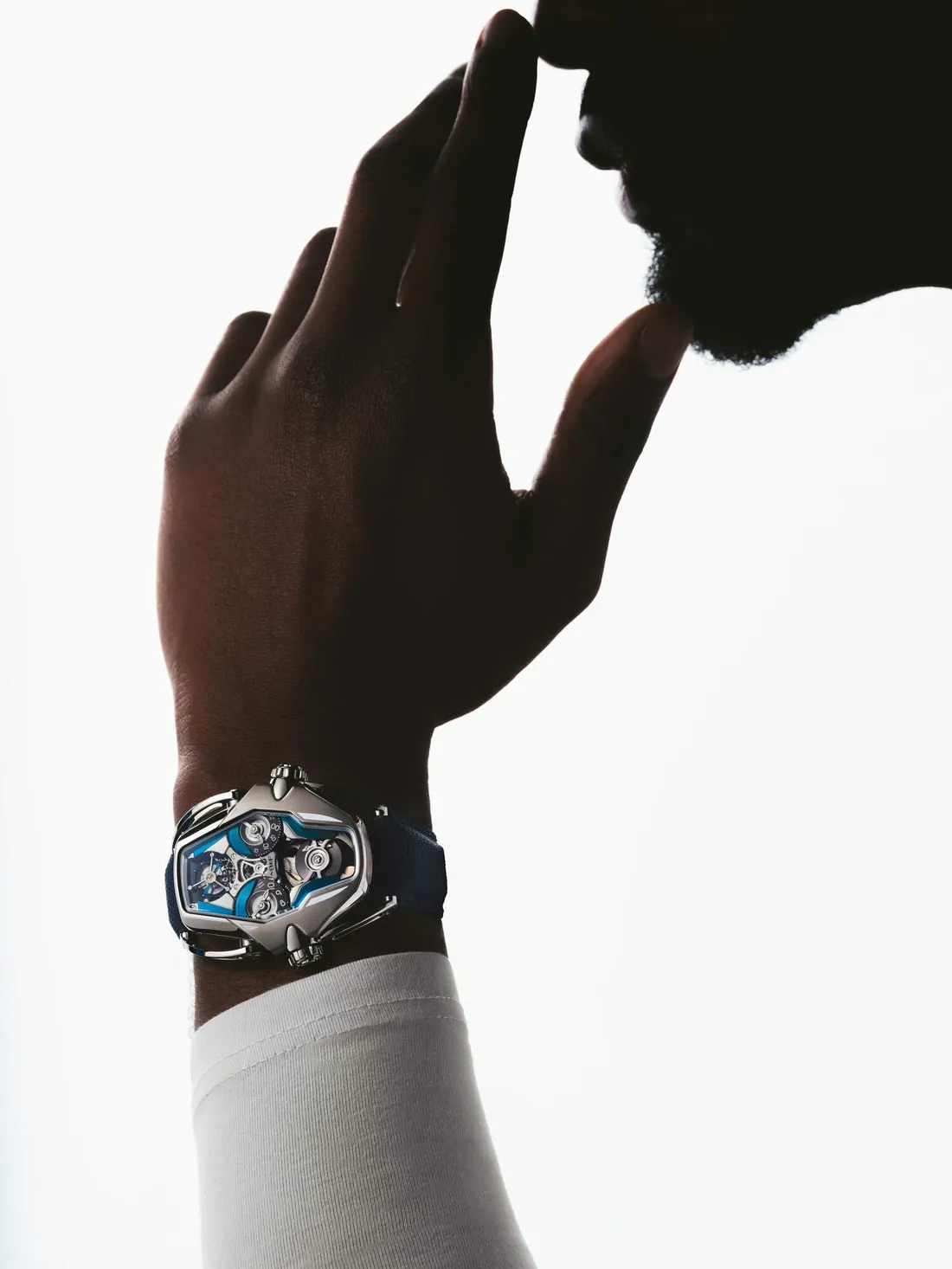


format_quote"As a mitochondrion spends its energy drop by drop, as an embryo weaves itself from lifeless parts, so too The Guardian: from dead metal it brings forth something very much like living."