The chronograph is not a genteel invention. When it appeared, what people wanted to measure was clear enough: how many seconds a horse took to reach the end of a track. The chronograph came out of the needs of the wager and the race, and for a long time it stayed the name of an instrument rather than of a jewel.
Tiffany & Co. sold its first chronograph in 1866, and this year marks the hundred and sixtieth anniversary of that date. A jeweller selling a chronograph looks odd at first. But in nineteenth century America Tiffany was not only a jeweller; it sold watches, regulated them, and was one of the shops that told the country what the correct time was.
This watch takes up that double identity, and puts its solution somewhere interesting.
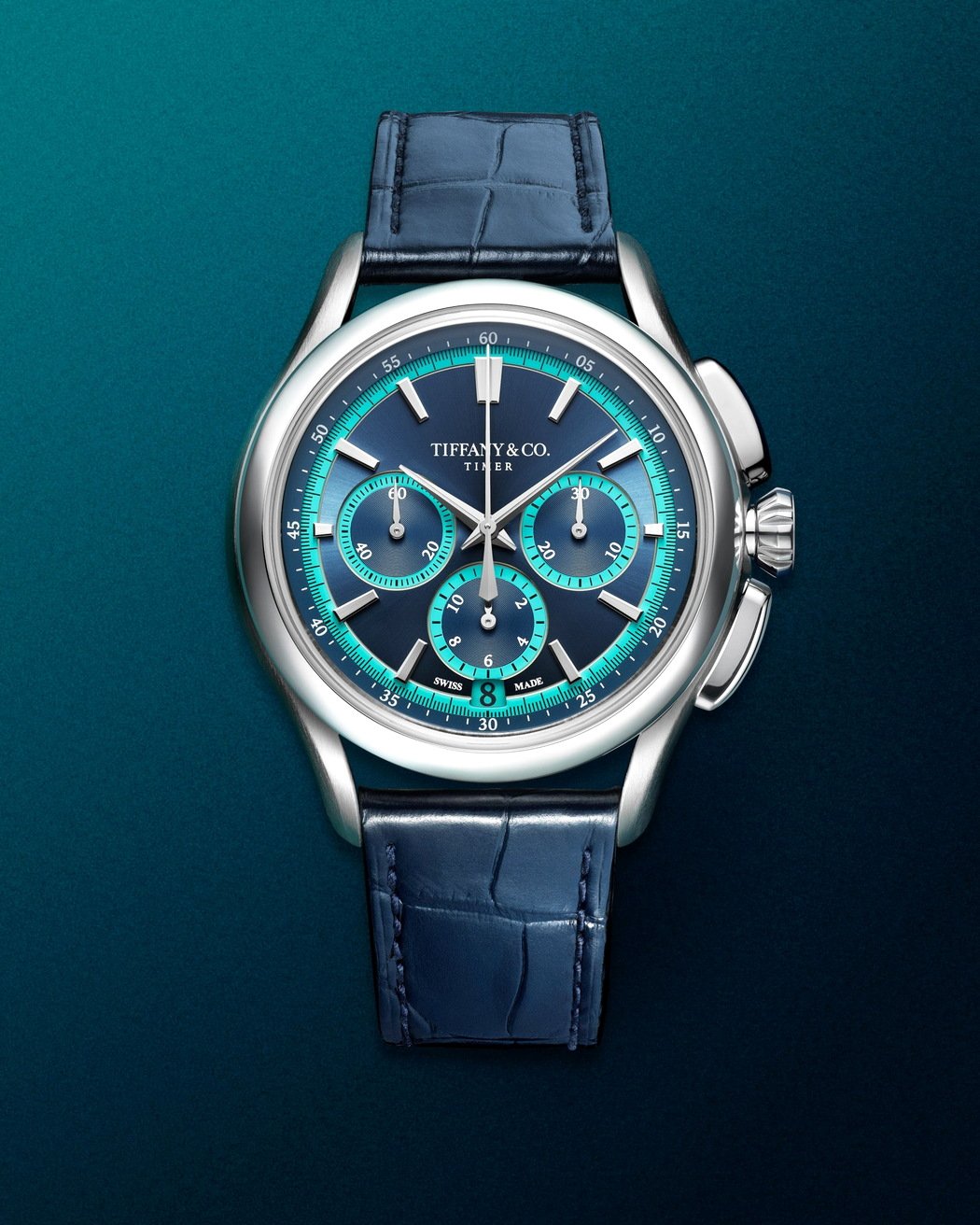
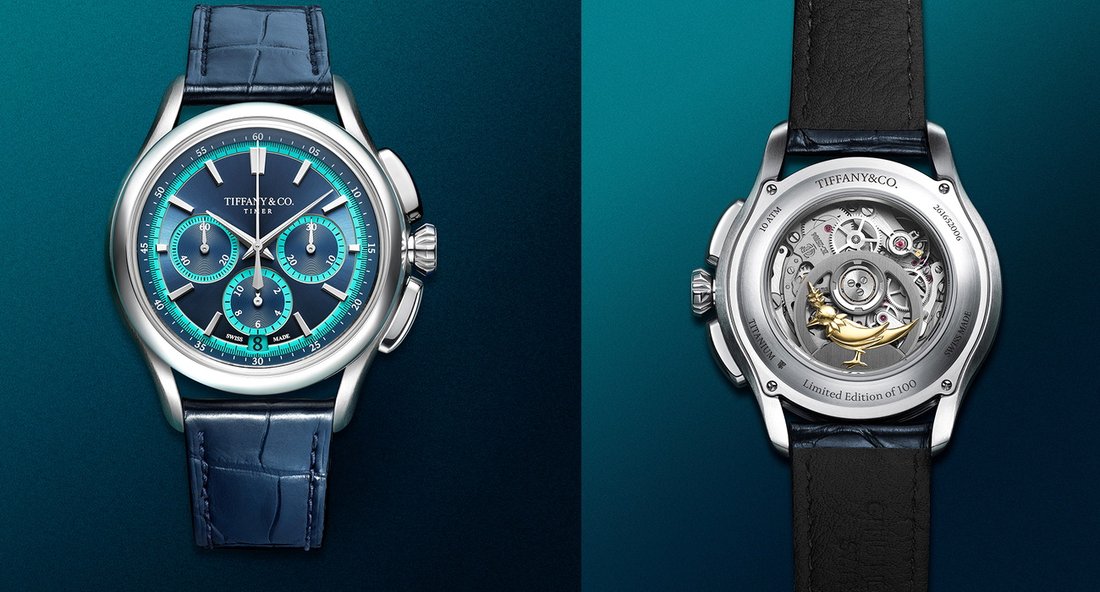
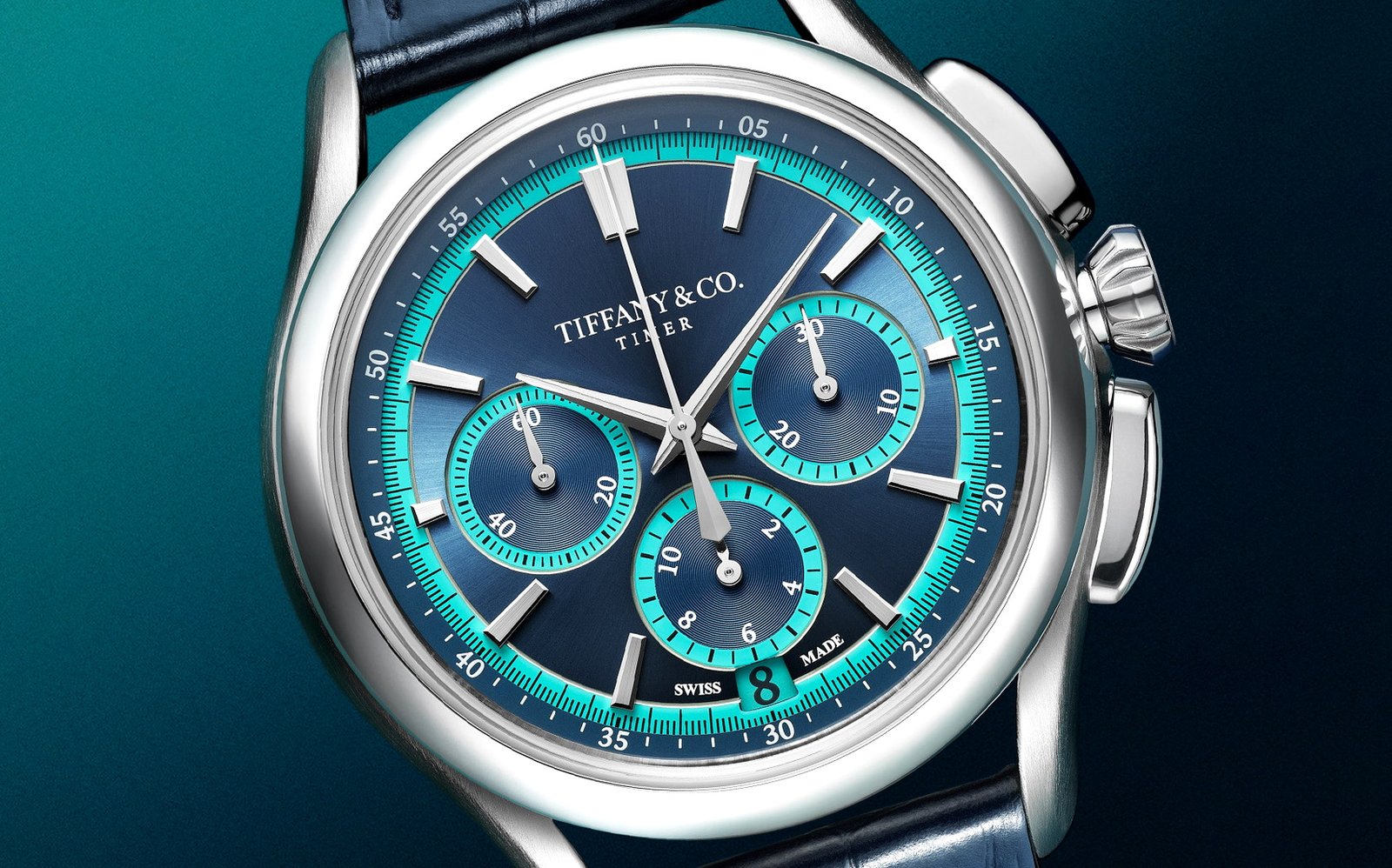
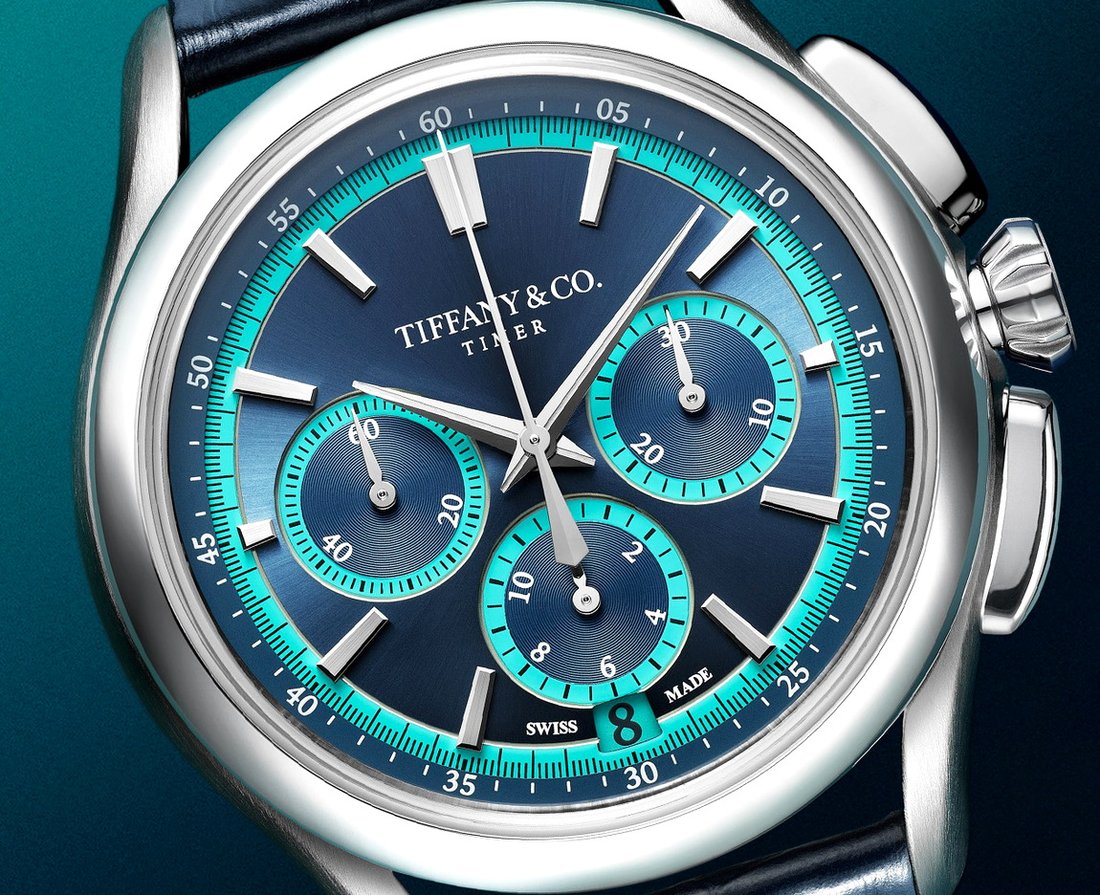
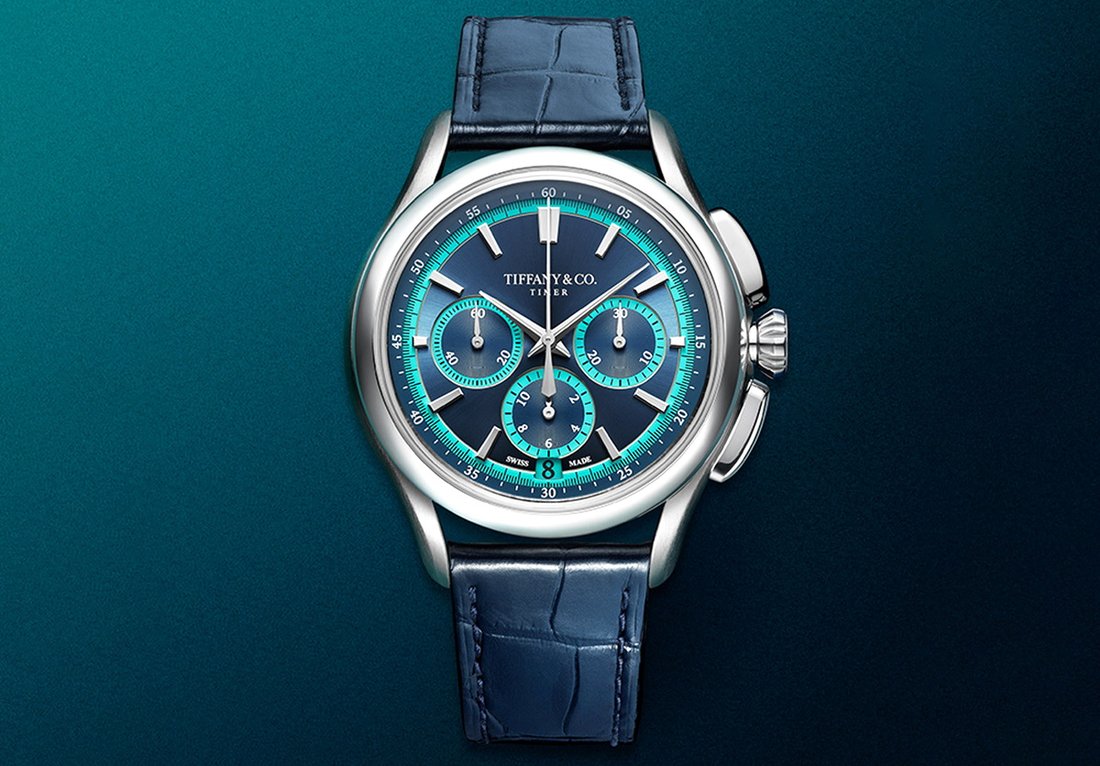
From the front this is an instrument. The case is titanium: lighter than steel, matte and grey. The bezel is platinum, a heavy and cold metal. Putting the two together sets up a balance that is both visual and physical: light body, heavy rim.
The dial is navy, with the house’s own blue used on it. That blue is an accent rather than a ground here: it shows up around the counters and on the scale ring without taking over the dial. Legibility on a chronograph dial comes from the hierarchy of colours, not their number. The main hands are white, the counter hands thinner, the scale blue; the eye follows that order by itself.
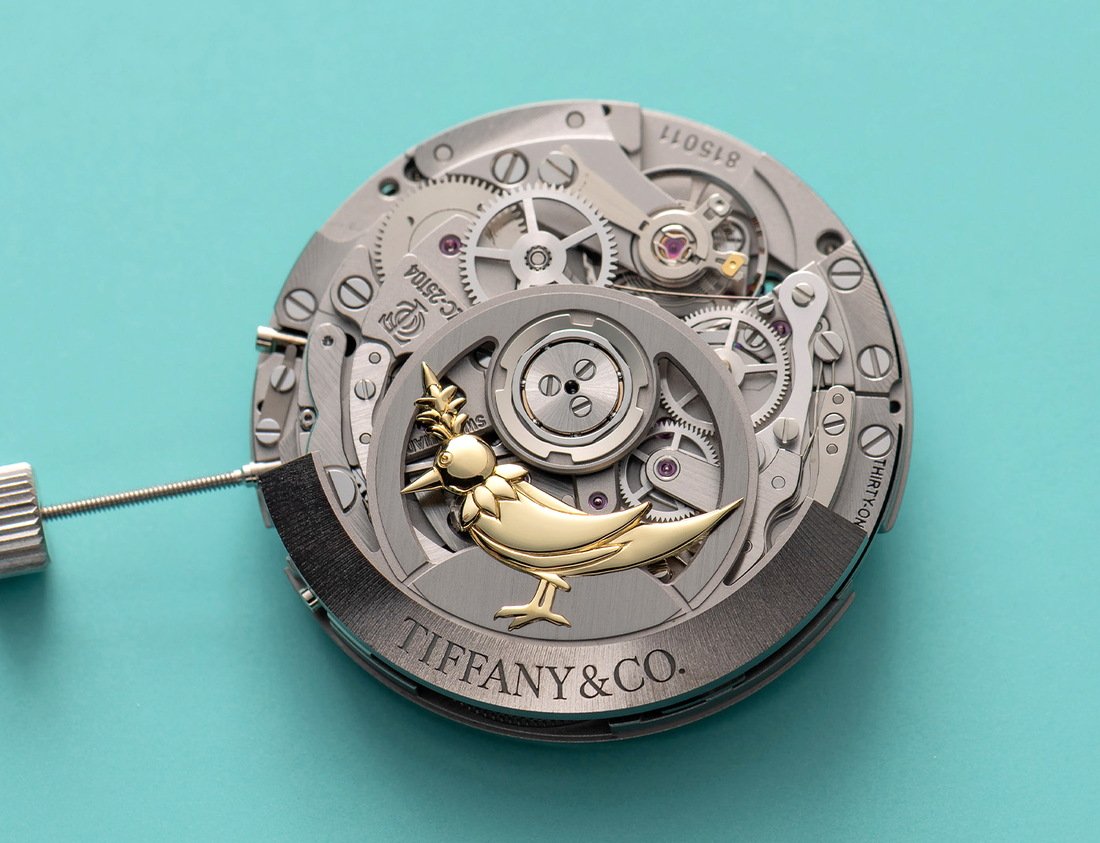
Inside runs a version of Zenith’s El Primero 400 adapted for this watch. The El Primero, introduced in 1969, is a high-frequency automatic chronograph, and that frequency is why it can measure a tenth of a second. The precision of a chronograph depends on how often the balance oscillates; the faster it swings, the finer the second can be divided.
format_quote"Legibility on a chronograph dial comes from the hierarchy of colours, not their number."
Alex Mourin
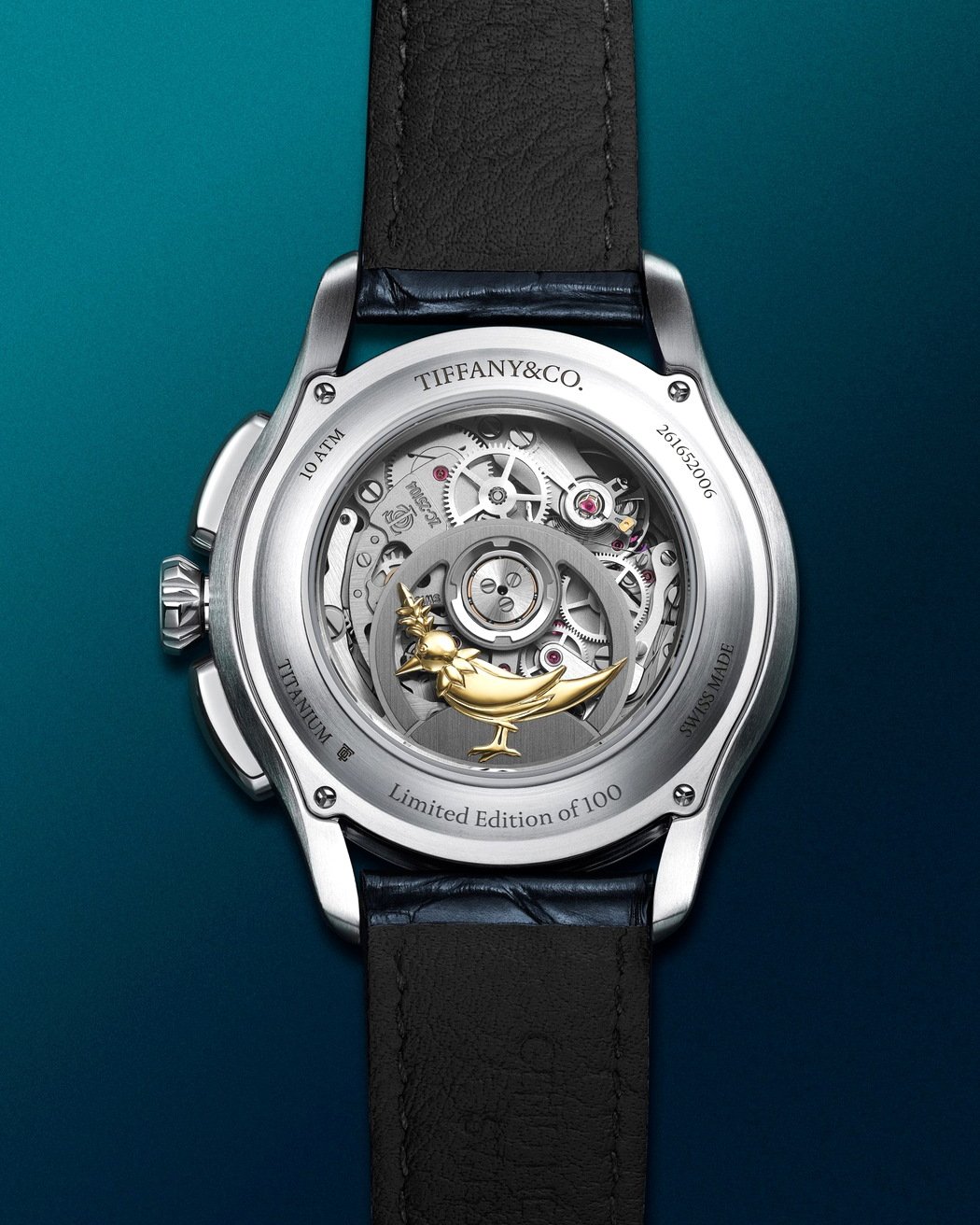
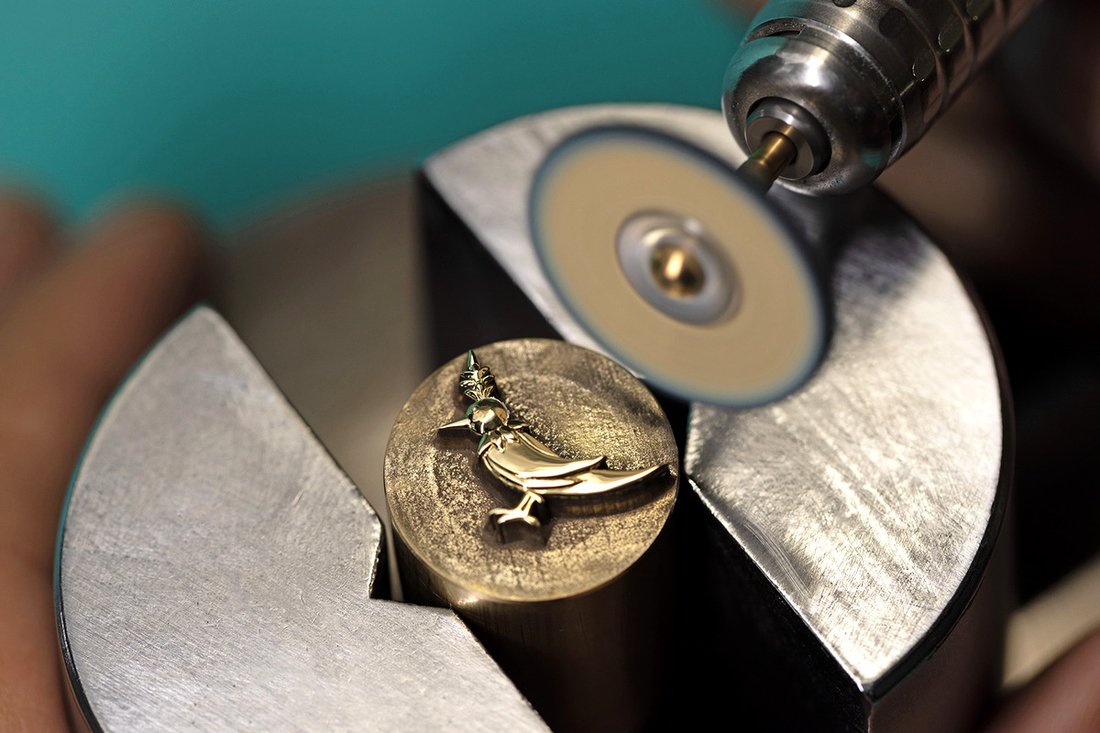
The real decision is at the back. The rotor turning under the sapphire is not a plain metal disc; a bird hand-sculpted from 18K gold sits on it. Perched on a rock, that figure is drawn from a jewellery design that appeared at the house in the nineteen-sixties and became its signature.
Putting a sculpture on a rotor is not technically easy. A rotor has to be balanced; its mass must be concentrated at one point so that a movement of the arm will carry it through a full turn. Any mass added on top disturbs that balance. The figure therefore cannot be placed at random: its position is calculated around the centre of gravity, and it cannot be made thicker than it needs to be.
More interesting than that, though, is where the figure sits. There is not one ornament on the dial. All the jewellery has been put where nobody can see it unless you turn your wrist over. That is the most elegant decision a jeweller can make while building an instrument: putting the display at the back rather than the front.
format_quote"All the jewellery is put where nobody sees it unless you turn your wrist. The display goes at the back, not the front."
Alex Mourin
format_quote"On your wrist you are carrying an instrument. Take it off and what is left in your hand is a jewel."
Alex Mourin
A forty millimetre case and a run of one hundred make this a collector’s piece. But the story is not in the number.
For a jeweller, measuring time was always the second business; the first was beauty. In this watch the two sit in the same body and in a stated order: measurement first, ornament second. On your wrist you are carrying an instrument. Take it off and what is left in your hand is a jewel.