A Genius in a Dark Room: A Tribute to Hugo Junkers
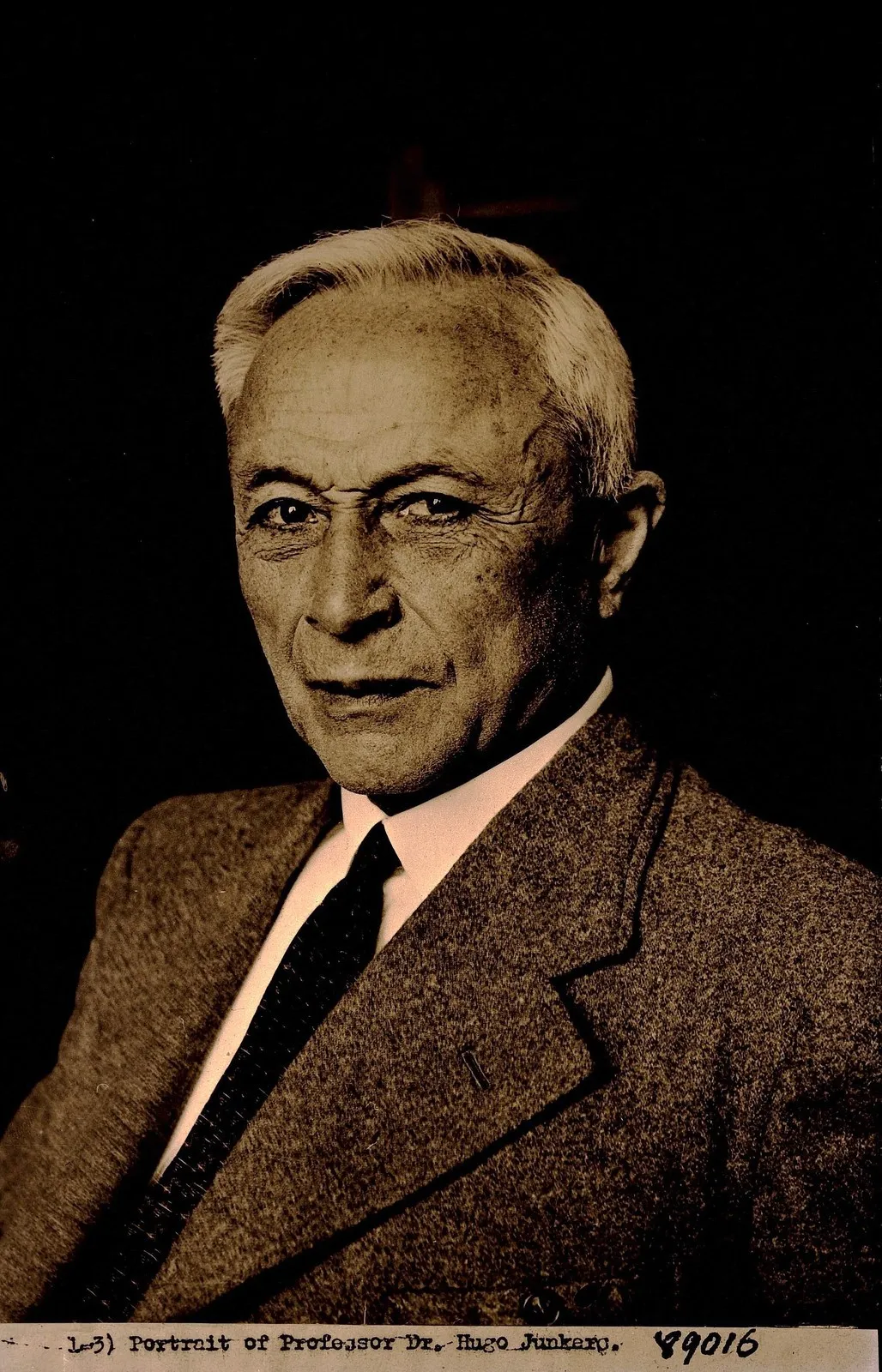
Where human imagination ends, ideologies begin, and how tragic it is that the brightest minds are always driven before the gun barrel of history's darkest eras. Hugo Junkers was not merely an engineer who understood the language of metal; he was a genius who dreamed of reconciling humanity with the sky, and who shared the same humanist philosophy as his friend Albert Einstein, the man who best understood the language of the universe and of physics. Yet his story, like the characters in Anton Chekhov's melancholic provincial tales, would move step by step toward a proud solitude, its nobility undiminished, and toward a tragic end.
Let us turn the gears of chronology back to the years when fascism had not yet fully seized Germany. The National Socialist German Workers' Party had not yet come to power, and Adolf Hitler had not yet taken the chancellor's chair. Yet the party's perverse interest in aviation and military power was already wearing down Hugo Junkers's door. From the very first moment, with his pacifist, democratic and libertarian identity, Junkers stood against this dark ideology and openly rejected militarism in every form.
When the calendars showed 1933 and Hitler became chancellor, the light knocks at the door gave way to a savage siege. Hermann Goring and his men launched a systematic psychological war to seize Junkers's genius and his factories. Junkers brushed aside the Nazis' offers of an aviation ministry and their pressure for military production. The price of this upright stance was heavy: under Goring's direct threats, the old man was first forced to hand over the greater part of the company shares he loved more than his life. That was not enough; he was sent into exile from Dessau, the land to which he had devoted his life. For a scientist torn from his laboratories and production lines, life in exile was no different from a living death.
At last, the final act of this tragic drama closed on the evening of 3 February 1935, in the study of that silent house of exile near Dessau. While a freezing German winter reigned outside, Junkers sat at his desk, preparing to meet his 76th birthday in deep contemplation. At that very moment the silence outside was broken by the rhythmic, cold sound of hard boots. The black-uniformed shadows of Hitler and Goring burst in as if breaking down the door, to strike the final blow and seize the last patents that remained to him. They set a shattering ultimatum before the old genius: either he would surrender his last technological secrets to the Nazi war machine, or he would be utterly destroyed. Junkers did not bend a single millimetre before those fascist boots and said No. But that noble, weary heart could bear no more of the years of systematic persecution, the exile and the unjust pressure that erupted in the room at that instant. With a merciless pain piercing his chest, in that dark room, at his desk, he closed his eyes to life from a heart attack.
While the Nazis, after his death, forcibly seized his factories and the aircraft that bore his name and drowned the world in blood, the noble soul of Hugo Junkers had not bowed to that pressure, even at the cost of his life. The Junkers watches we wear on our wrists today are monuments not to that militarist madness, but to the tragic genius of this honourable man.
From Wood to Steel: The Revolutionary Birth of the F13
Hugo Junkers was not only an engineer but a visionary who changed the fate of aviation. During and after the First World War, the world still saw aircraft as fragile toys made of wooden laths, fabric and bracing wires. These cloth aeroplanes could not withstand damp, rain or wind, and shattered like splinters in the slightest accident. Seeing that the future of aviation could not be built from such primitive materials, Junkers made a revolution that broke every rule.
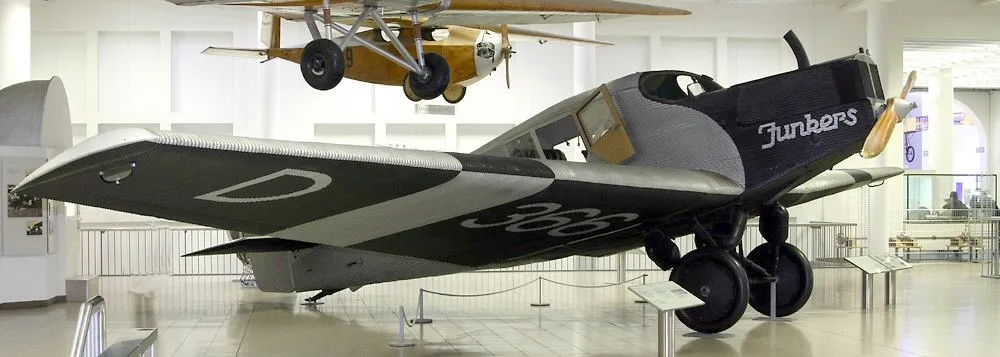
Junkers introduced duralumin, a light yet incredibly strong aluminium alloy, into aviation. But metal sheets left flat tended to bend and flex. He solved this by making the sheets corrugated. Meeting the sky in 1919, the Junkers F13 was the world's first all-metal, single-wing (monoplane) passenger aircraft. Inside it had an enclosed, heated cabin in which passengers could travel in comfort. This metal design, which completely demolished the world of wood and cloth, became the milestone of modern civil aviation.
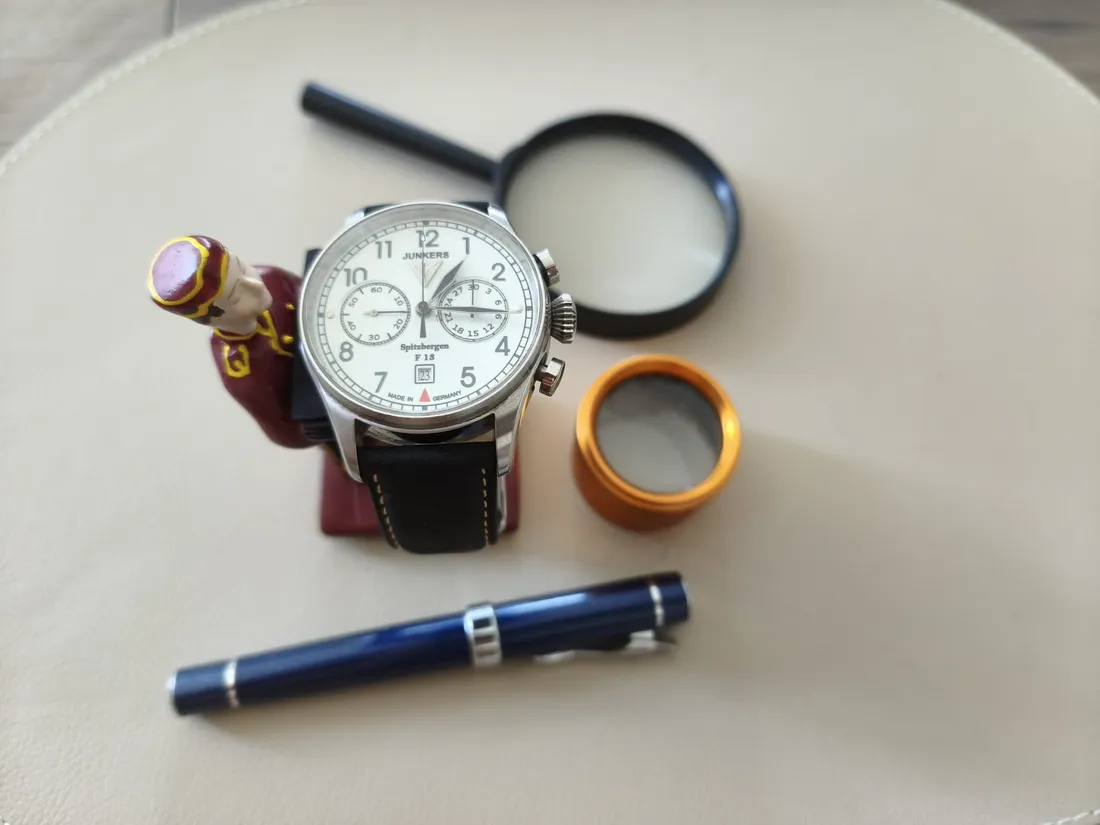
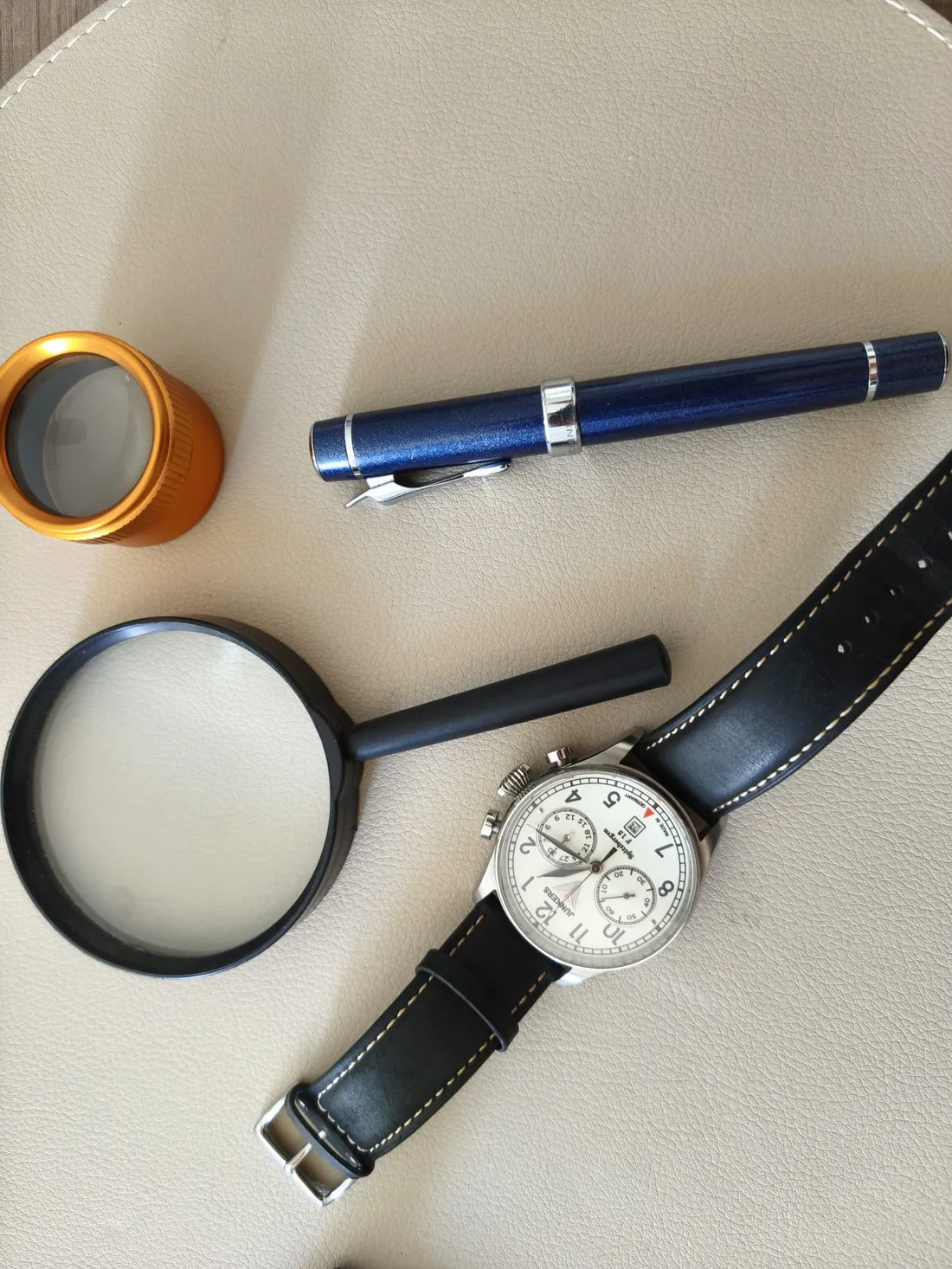
Spitzbergen F13: A Steel Bird in Glacial Skies
The Spitzbergen F13, which gives its name to the watch that is the subject of our article, is dedicated to one of the most extreme polar flights in aviation history. In 1923, a Junkers F13 built entirely of corrugated duralumin carried out reconnaissance flights over the Spitzbergen islands, in the deadly, freezing and merciless geography of the North Pole. But what was the real reason these aircraft ventured into that pitiless glacial hell?
In those years the poles were both a strategic unknown for global cartography and the discovery of new sea routes, and the very heart of meteorological forecasting. To predict the weather of Europe and the world, one had to unravel the air currents of the poles. Moreover, in an era with no satellites, it was of vital importance to test the safety of potential transatlantic aviation routes passing over extreme points such as Spitzbergen.
In that polar climate, where compasses went mad with magnetic deviation, where navigation became impossible and pitch darkness and whiteout reigned, the mechanical endurance of the aircraft and the pilots' ability to measure time with millisecond precision were a matter of life and death. The Junkers Spitzbergen F13 was designed with inspiration from the beacons that shone in that glacial darkness.

The Quantum Alchemy of the Dial: An All-Super-LumiNova Night Sun
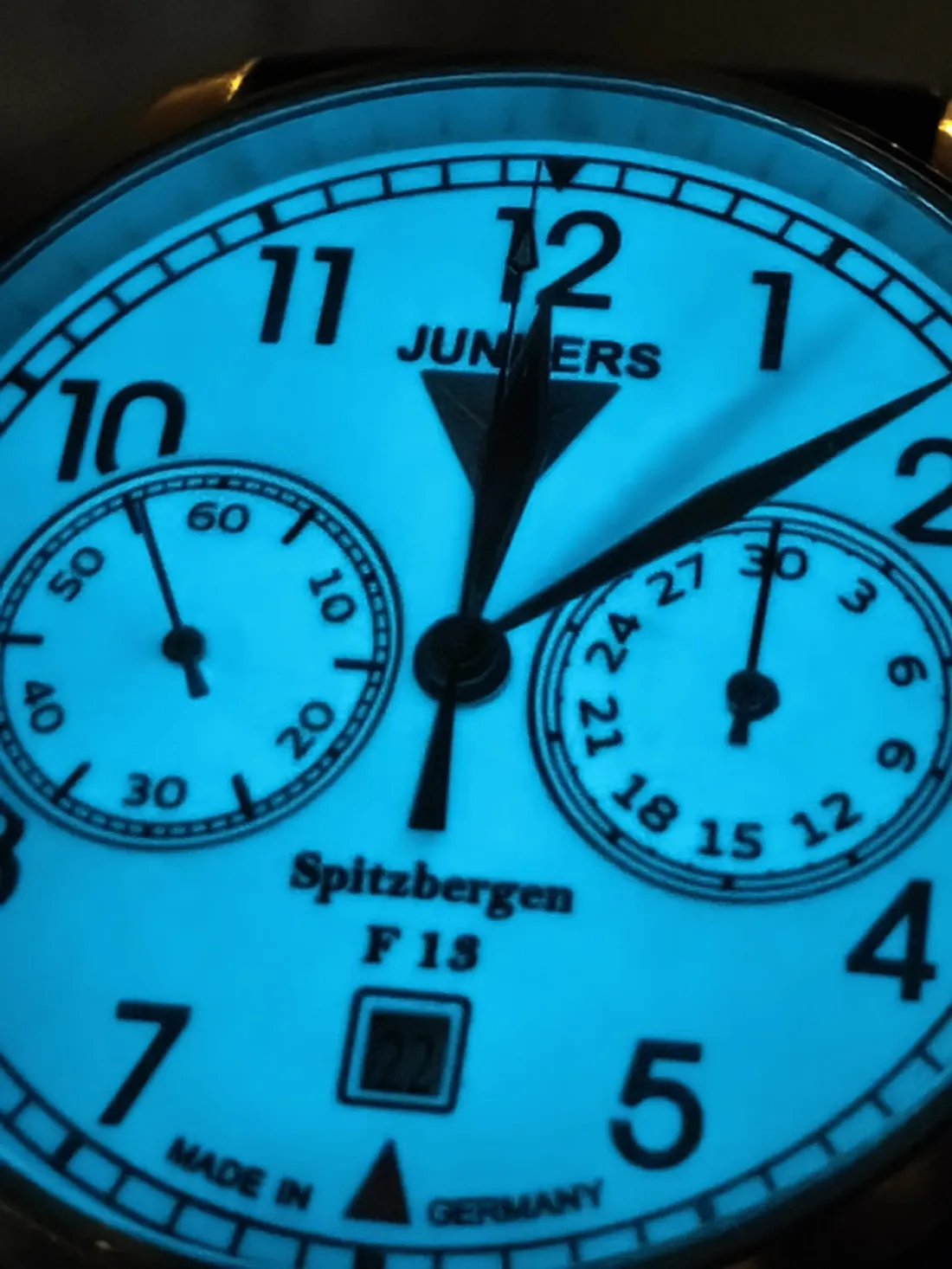
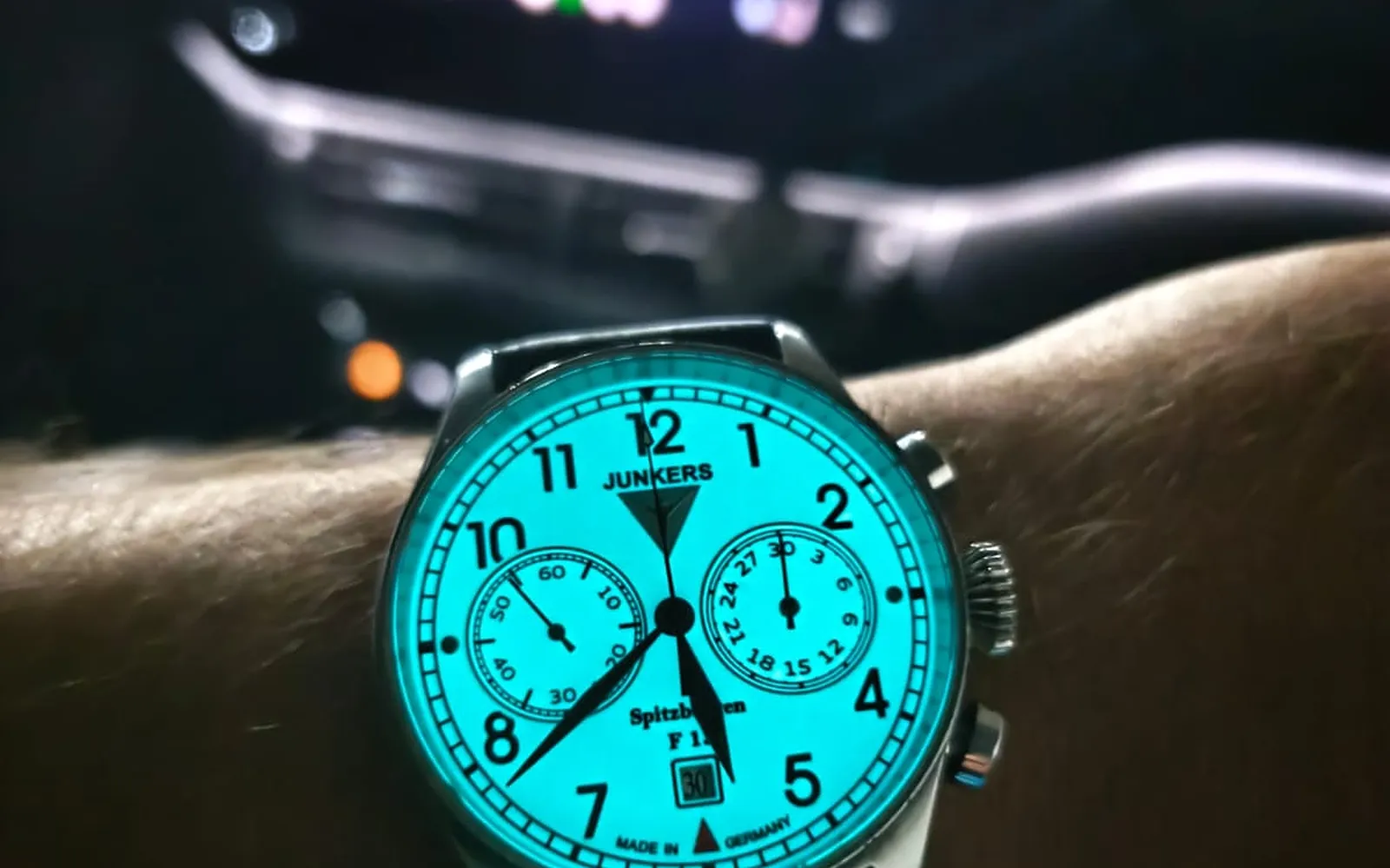
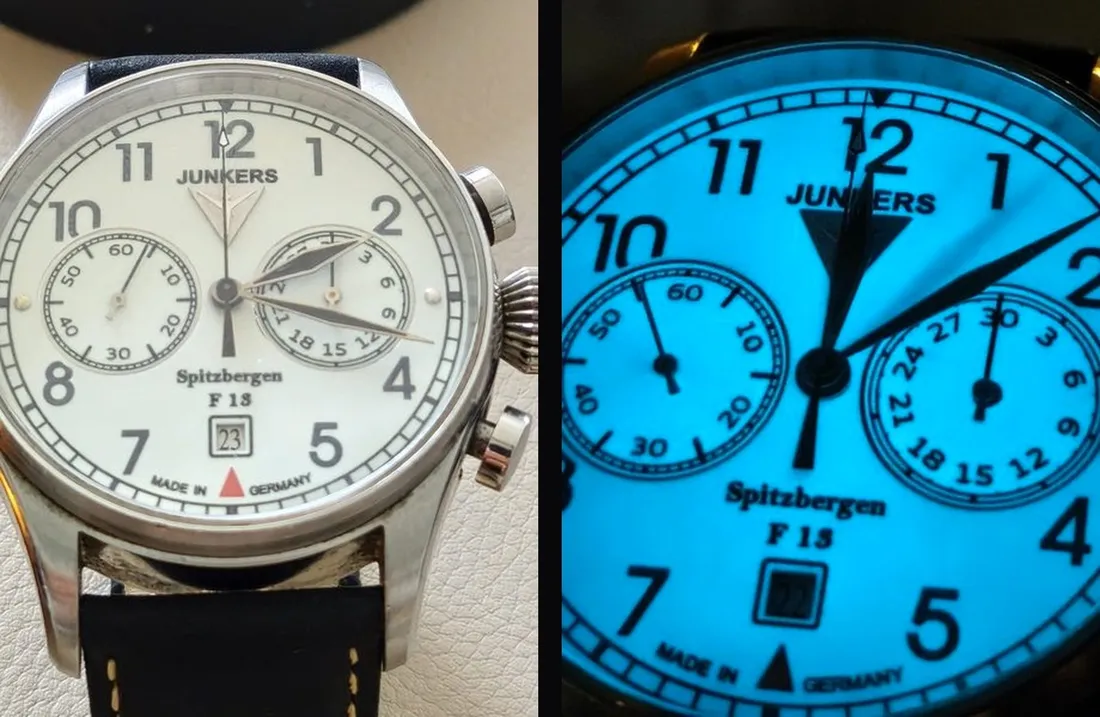
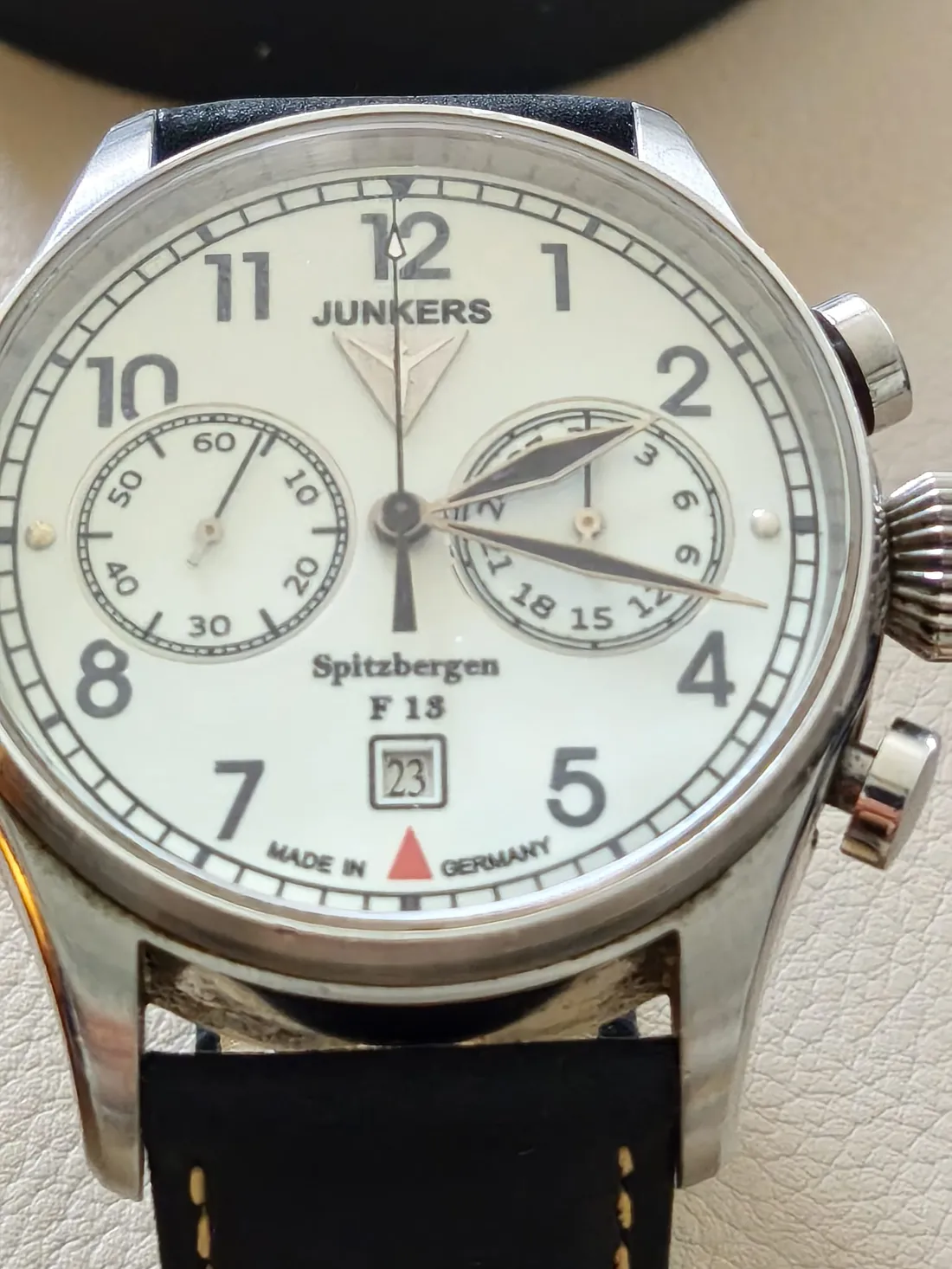
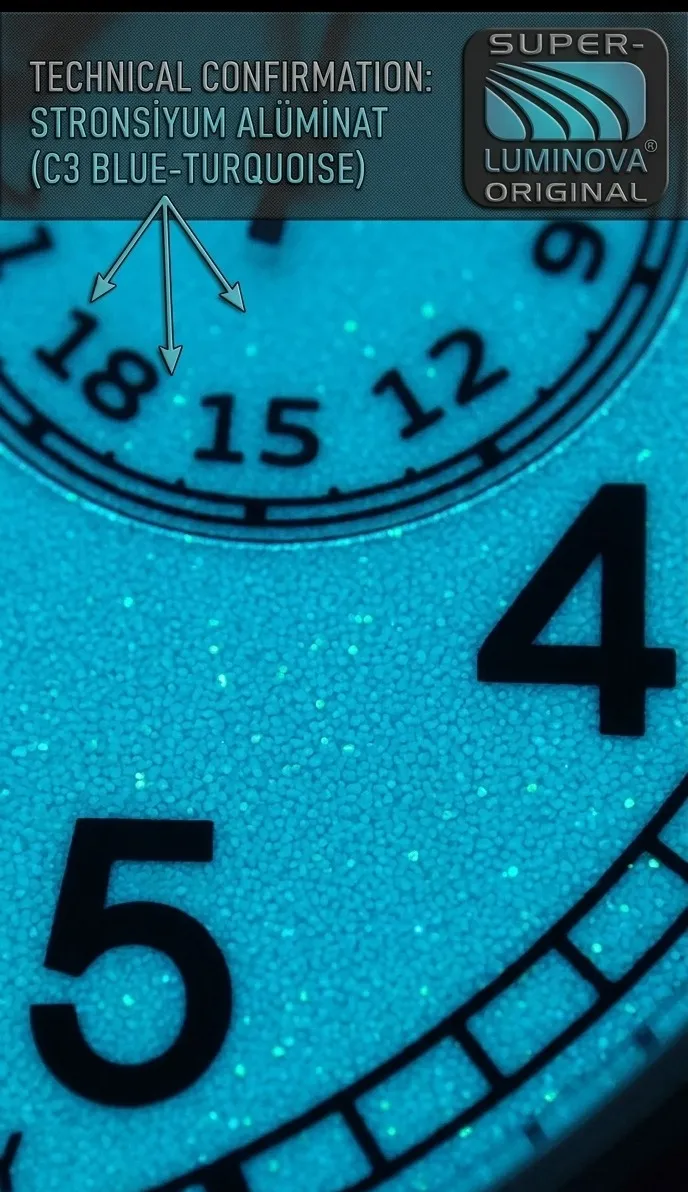
When we look at the watch's design codes, the first thing that strikes us is that not only the hands, as in traditional watchmaking, but the entire dial glows (a Full Lume Dial). This is no ordinary phosphor paint; it is cosmic dust, forged in the universe's wildest nuclear laboratories, kneaded with quantum mechanics. The strontium-aluminate-based Super-LumiNova pigment used on the dial draws its power from the deepest processes of the cosmos and from rare earth elements:
Strontium aluminate (the host lattice): formed in the hearts of old Red Giant stars, as iron atoms patiently swallowed free neutrons over billions of years (the s-process). It acts as a vast energy reservoir that absorbs light and traps it within.
Europium (the activator, the light engine): born in the terrifying apocalyptic moments when two neutron stars collided in space at millions of kilometres per second (the r-process). When it absorbs photons from daylight, it hurls electrons up to higher energy levels and releases that energy in the dark.
Dysprosium (the co-activator, the keeper of time): born, like europium, of the r-process, this element forms quantum traps along the electrons' return paths, releasing the light piece by piece over many hours.
These pure powders, produced in Switzerland, are worked onto the dial like a canvas. Elegant and cream-white by day, the dial, once it enters a darkness resembling the polar night, sees the electrons of europium and dysprosium leap from their quantum wells to create an explosion of light. Until morning the watch radiates an uninterrupted, homogeneous and mesmerising green-blue energy, exactly like the aurora borealis over the glaciers of Spitzbergen. This is the secret of its price-performance supremacy; a lumen quality sealed into this dial at an intensity you will not find even in luxury Swiss watches costing thousands of dollars.

The Rhythm of the Heart: The Legendary Poljot 3133 Movement
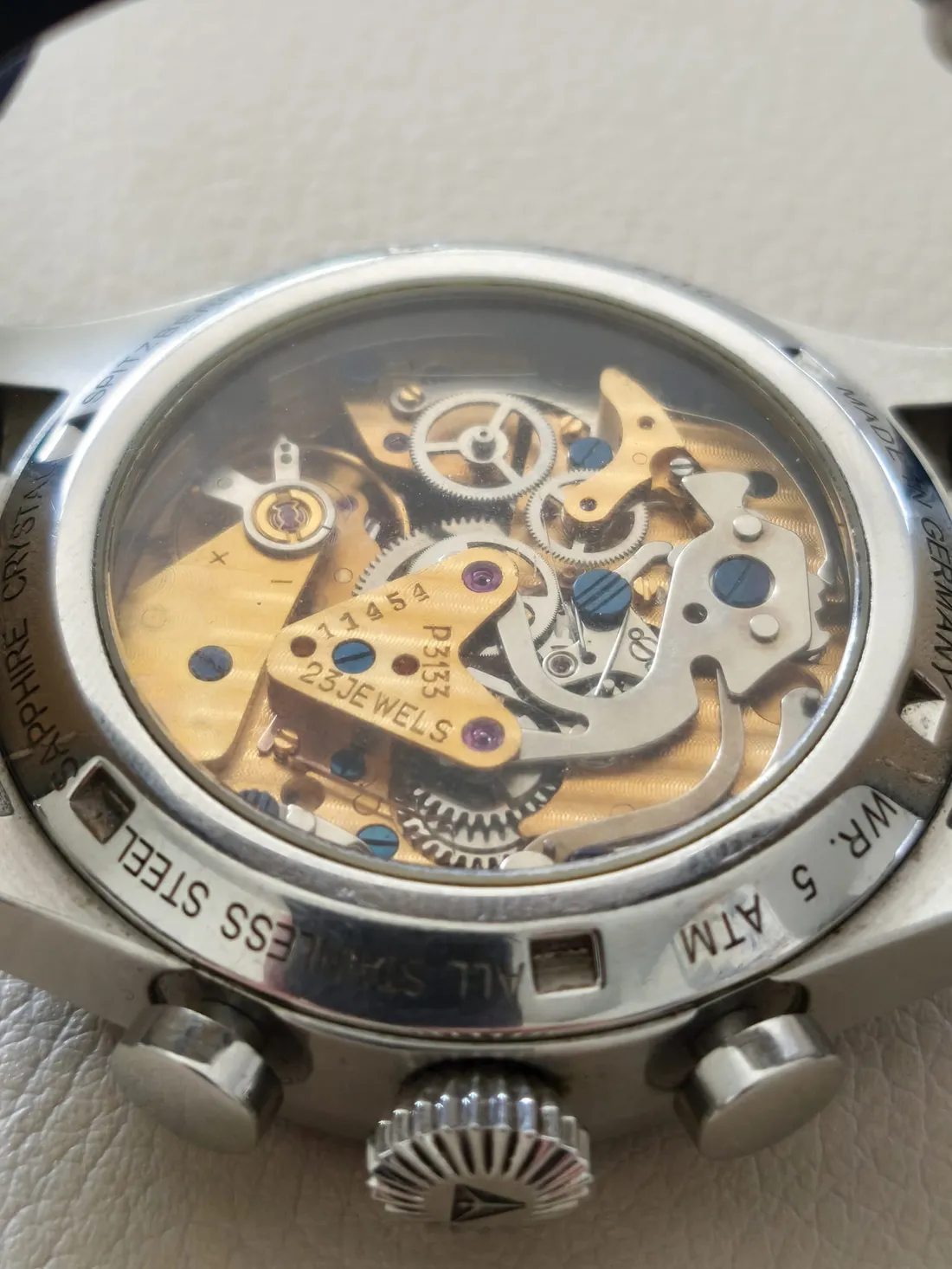
Now to the pure mechanical power behind it, the force that turns this watch into an object of horological desire. At the heart of the Junkers Spitzbergen F13 lies the legendary Poljot 3133 hand-wound chronograph movement, one that carries Swiss genetics but was forged with Russian steel.
A Swiss-Russian Escape in the Midst of the Quartz Crisis
In the 1970s, as the wave of quartz watches from Japan razed the Swiss watch industry to the ground, the legendary Swiss movement maker Valjoux sold the production machinery and all the patent rights of the Valjoux 7734, the king of luxury chronographs of its day, to the Soviet Union, to the Poljot factory.
The Touch of Soviet Engineering
When Russian engineers took delivery of this Swiss nobleman, they did not merely copy it; they turned it into something like a Siberian tank:
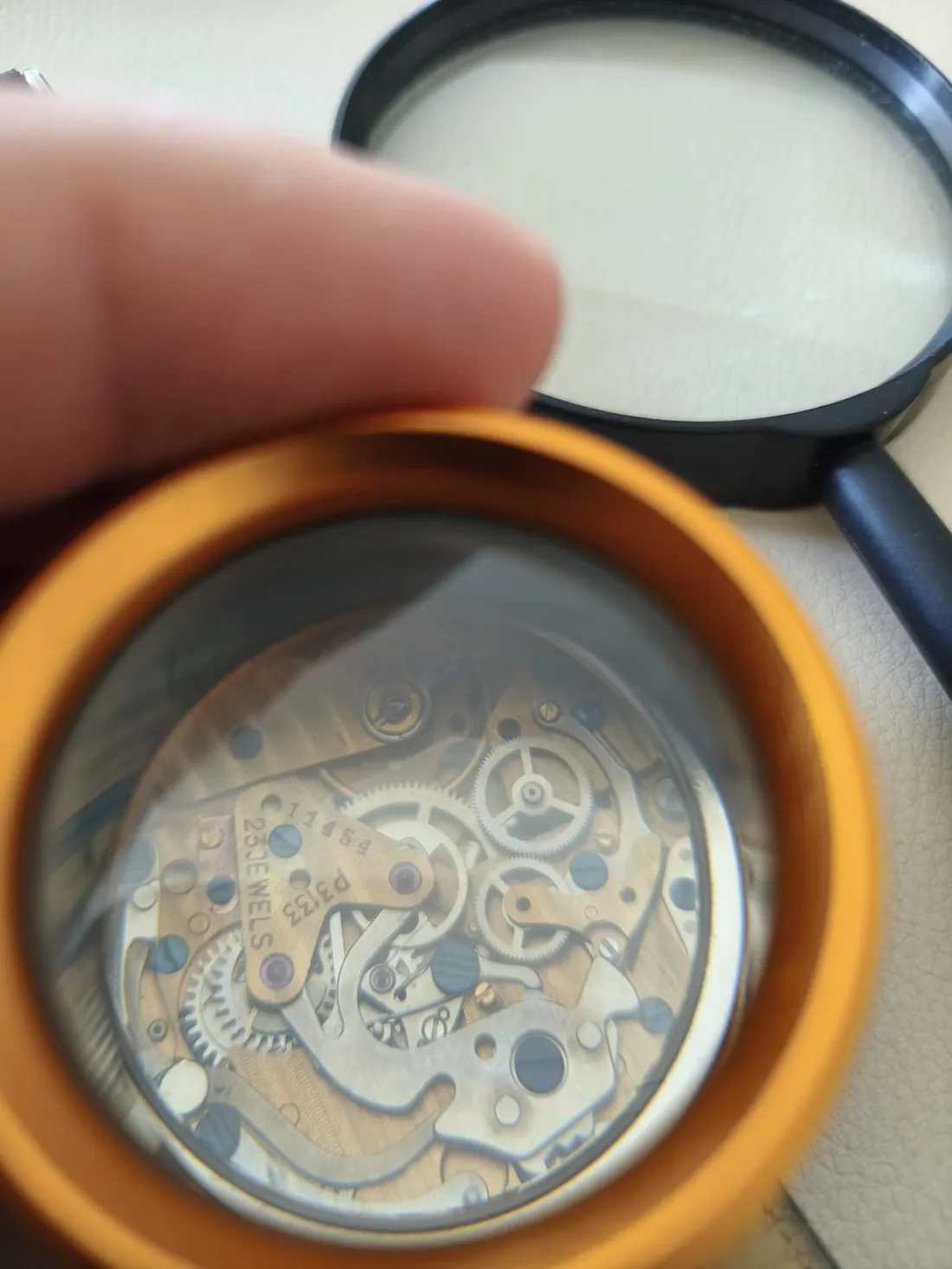
• The number of jewels was raised from 17 to 23 for less friction.
• The balance beat was raised to 21,600 vph for higher precision.
• Its durability reached such a level that it became the standard movement for Soviet air-force units and cosmonauts.
437 Days in Space: The Valeri Polyakov Record
And where did this movement prove its worth, my friend? When the Russian cosmonaut Valeri Polyakov broke the record for the longest human stay in space by remaining aboard the Mir space station for a full 437 days, a watch powered by the Poljot 3133 was ticking away on his wrist. We are speaking of a movement that did not give up even in weightlessness, under cosmic radiation, in zero atmospheric pressure.

A Visual Feast: Geneva Stripes and Golden Wheels
Junkers designed the back of this watch as transparent sapphire crystal. When you turn it over, you see how the Soviets' raw mechanical power has been adorned with Swiss aesthetics. Those wavy Geneva Stripes (Cotes de Geneve) on the bridges, the polished screws, and the mechanical dance of the golden wheels that begin to flow like a river the instant you press the chronograph pusher... The deep tick-tick you hear when you raise it to your ear is the sound of that 400-day solitude in the void of space.
Conclusion: The Meeting Point of Time and History
The Junkers Spitzbergen F13 is not merely an instrument that shows the time. It is a living history book that brings together on a single wrist the noble soul of Hugo Junkers, who never bowed to Hitler; the friendship of Einstein; the glorious revolution in which aviation passed from cloth to metal; the freezing polar history of Spitzbergen; the Soviet Poljot 3133 movement that bent time for 437 days in the void of space; and the quantum dust of stars that died billions of years ago.
If a true price-performance legend is to be sought in the world of horology today, there are very few other watches that carry so deep, so lived and so proud a story behind them. Every time you look at your wrist, on that glowing dial you will see not merely the time, but humanity's immense macro-cosmic bond with the sky and with science; and you will feel it in the mesmerising dance of the northern lights.