The Depth of Time in the Glacial-Flour Waters of Lake Neuchâtel
At the foot of the Jura Mountains, as the first light of day parted a smooth layer of mist, Lake Neuchâtel settled into an almost fairy-tale silence. Tens of thousands of years ago, during the Ice Age, colossal masses of ice sliding down the valleys crushed the hard granite rocks in their path under tremendous pressure and ground them to powder. This micron-scale crystalline mineral dust, which mountain folk and sailors call "glacial flour", mixed into the lake with the meltwater and gave the water its distinctive, semi-translucent, legendary colour, somewhere between turquoise and milky white.
In the middle of this lake that nature had shaped over millennia by crushing and transforming rock, a wooden boat rocked gently. Listening to the soft shimmer of the oars in the water, the old horological master Marc-Antoine drew a deep breath and gazed at the glacial-flour waters. Beside him, his young pupil Laurent, a gifted craftsman trained in the workshops of Geneva and Le Locle, watched his master in silence.
Marc-Antoine rested his hands on his knees and murmured: "How quickly time passes, Laurent... Just like the glacial flour settling to the bottom of this lake, the days of our lives slip away in silence. Sometimes I think these seconds and minutes we measure on Earth are merely a refuge for the human mind. If the Earth stopped turning on its axis, or when we pass to another planet, or beyond this mortal world into that realm of eternity, will there be any such thing as time? Step by step we are moving toward that infinity where time does not exist and space is bent."
Laurent listened to his master’s deep and philosophical words with respect: "You are right, master. Physicists say time is relative; but every time I look, I see a flawless rhythm and balance in the cosmos. From this Earth to the realms beyond, everything is created with such fine tuning that what we call time is really an earthly manifestation of that divine architecture."
Marc-Antoine nodded with a smile: "Very true, my boy. And we watchmakers are but humble craftsmen, trying to fit a small fragment of that divine architecture, that cosmic rhythm, between wheels of brass and steel."
format_quote"What we call time is really an earthly manifestation of that divine architecture."
Laurent

A Startling Discovery: The Future on a Traditional Master’s Wrist
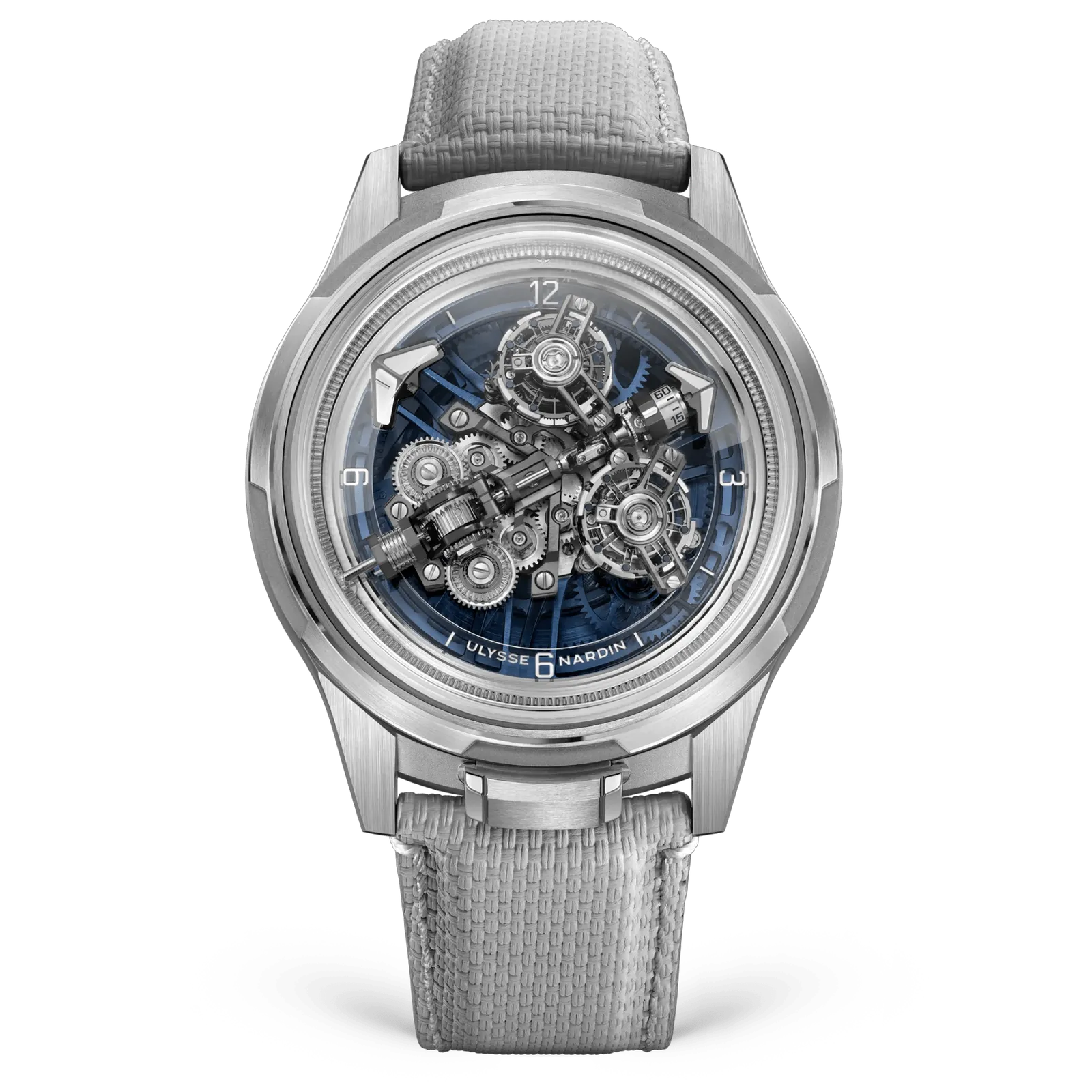
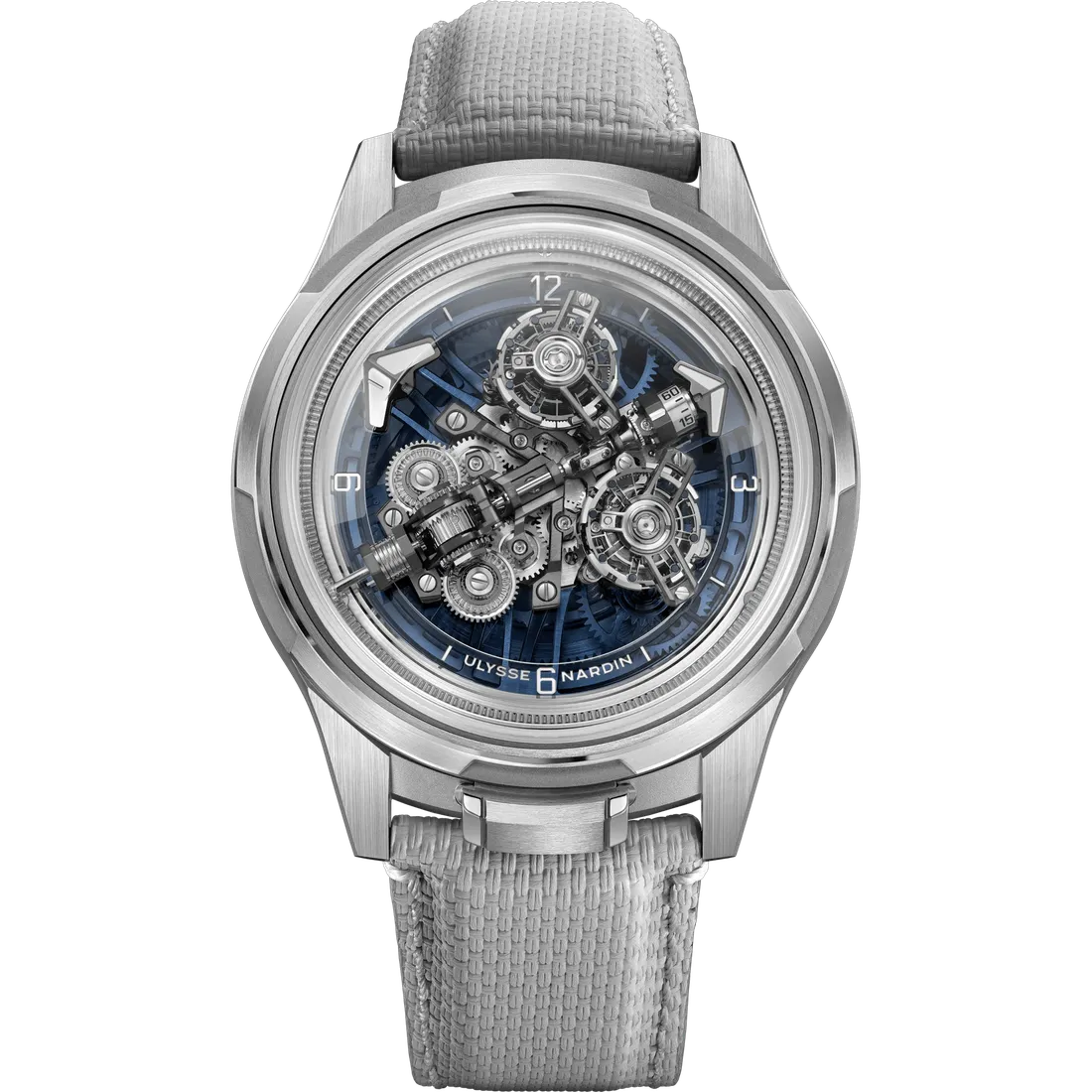
When Marc-Antoine raised his hand to straighten his sleeve, the first ray of the morning sun struck his wrist, and for an instant Laurent could not believe his eyes. On the wrist of Marc-Antoine, considered a monument of traditional watchmaking, a man who had devoted his life to polishing bridges with wooden pegs and to hand-worked Grand Feu enamel dials, there was no classical watch. Instead sat a dazzling, revolutionary masterpiece whose futuristic lines evoked space technology: the 2026 flagship of the Ulysse Nardin Freak.
Unable to hide his astonishment, Laurent asked: "Master! Am I seeing this correctly? You, the man who regards the slightest mechanisation in the workshop with suspicion, who holds traditional handcraft sacred... that watch on your arm, is it a Ulysse Nardin Freak?"
With a proud and affectionate smile, Marc-Antoine brought the watch closer to his young colleague: "You are surprised, aren’t you, Laurent? You are wondering whether this old man has abandoned the traditional craft. Never! Look, my boy, traditional watchmaking, the Geneva stripes we work by hand, the enamel dials carved and fired one by one, is our immortal soul. It is the summit of human labour, of the light of the eye, of aesthetics. No technology can replace the artistic soul a master breathes into a dial. But the Freak... the Freak is the mind and the future of mechanical watchmaking."
format_quote"The Freak is the mind and the future of mechanical watchmaking."
Marc-Antoine
The Historical Rupture and the CSEM Laboratory
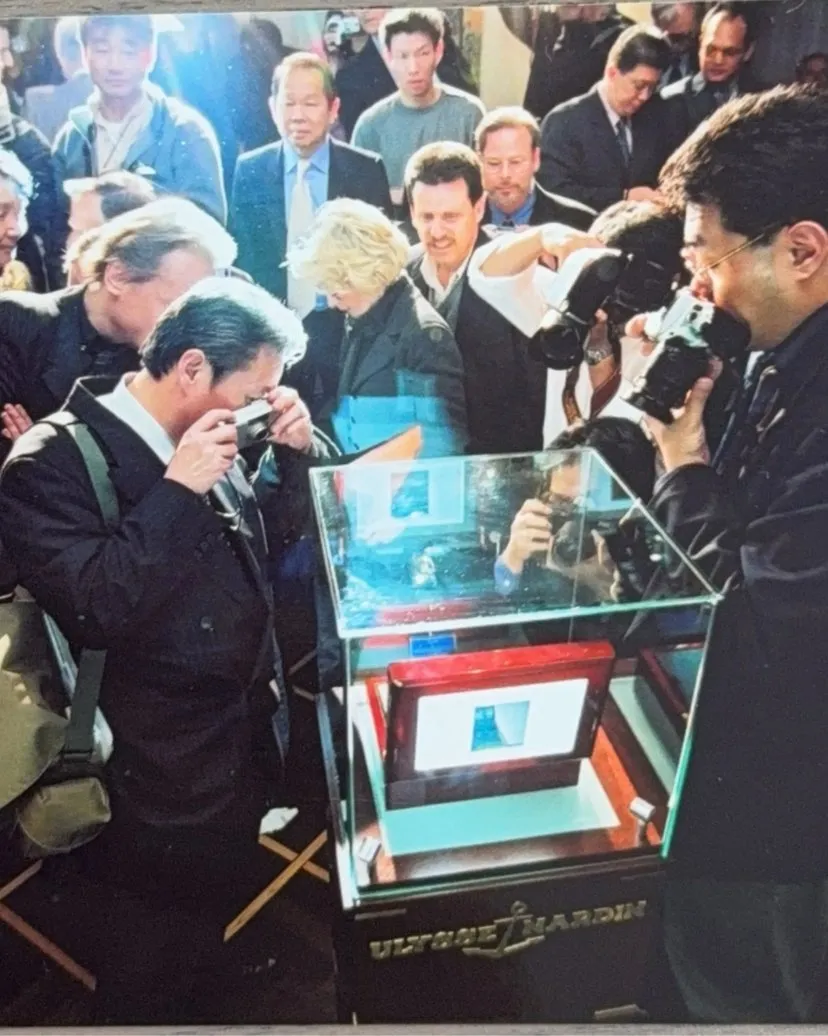
Gazing in admiration at the 2026 Freak on his master’s wrist, Laurent asked: "Master, they always tell the story of the Freak. When the legendary chairman Rolf Schnyder and the genius watchmaker Ludwig Oechslin launched this project in 2001, the watch world was shaken. But how was that famous silicon revolution at the heart of this watch born? How did Switzerland’s vast CSEM Laboratory become part of it?"
Fixing his eyes on the far shore of the lake, Marc-Antoine replied: "CSEM (Centre Suisse d’Electronique et de Microtechnique) is Switzerland’s temple of micro-engineering and space technology, my boy. They produce micron-scale parts for space rockets and medical devices. Ludwig Oechslin knocked on CSEM’s door to overcome the greatest physics crisis mechanical watchmaking had failed to solve for centuries."
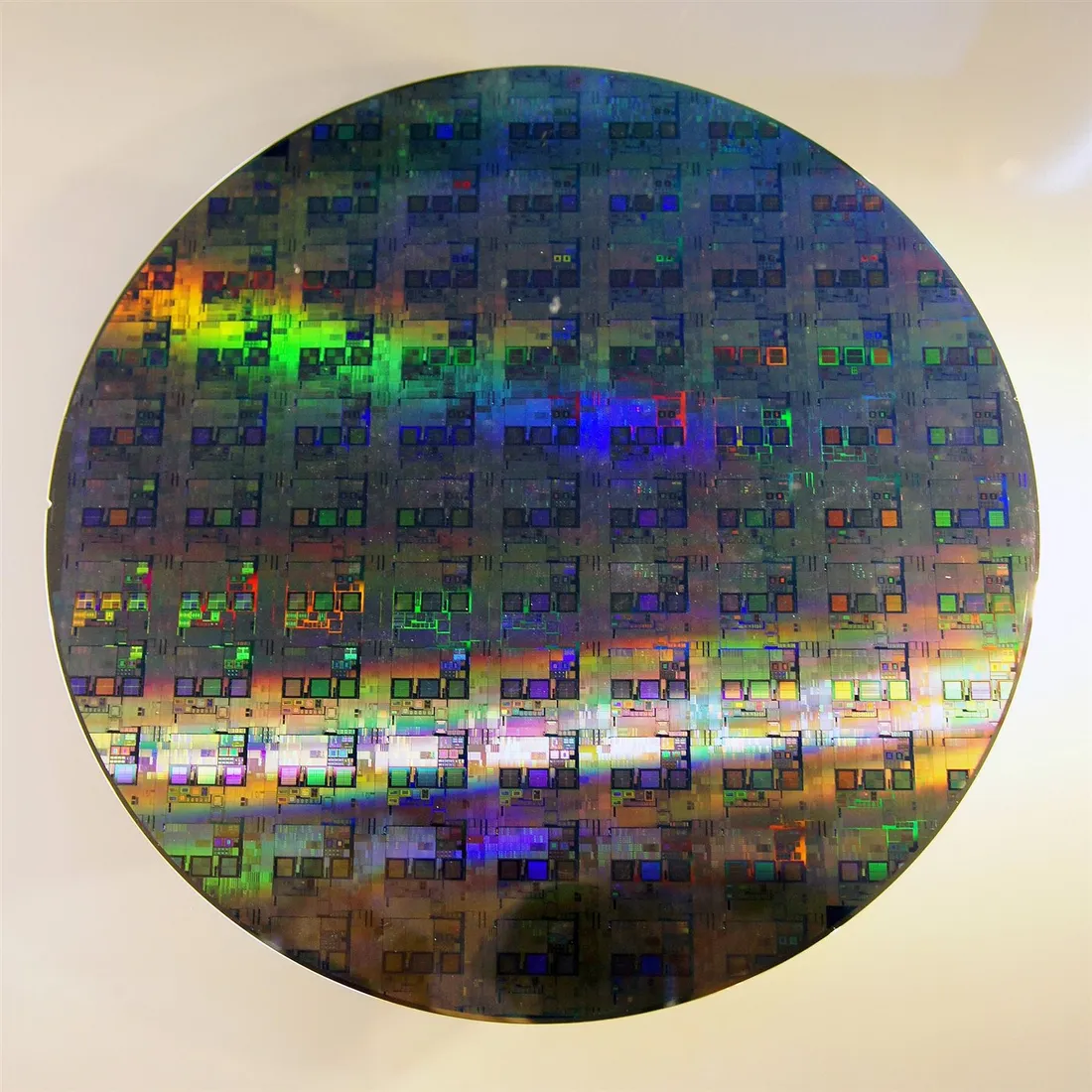
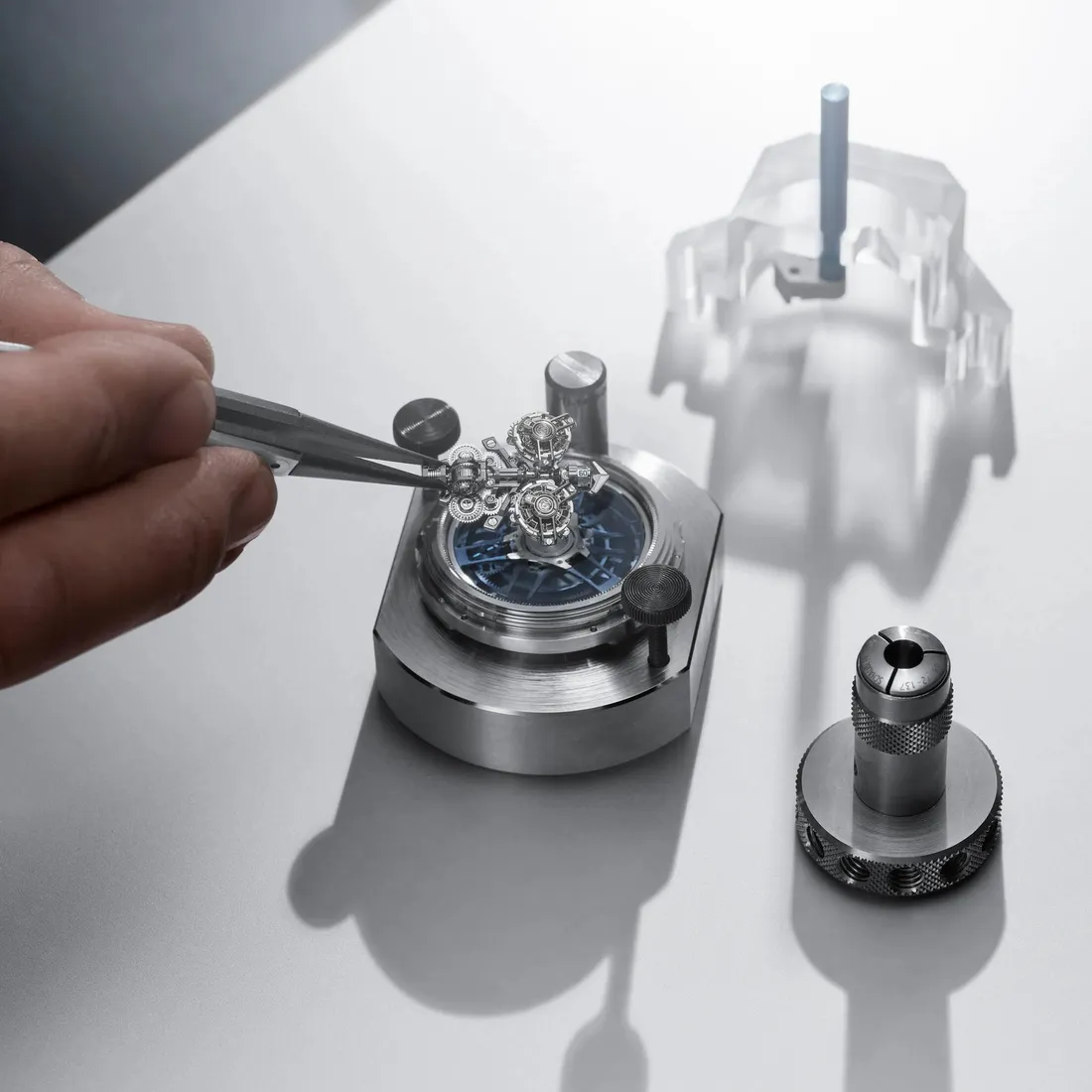
"They adapted to watchmaking a plasma technology used in microchip manufacturing, called DRIE (Deep Reactive Ion Etching). A gas plasma carves the pattern drawn on a silicon wafer through a mask, at the molecular level, with vertical and razor-sharp edges. In this way they succeeded in producing silicon escapement and balance parts of sub-micron precision and near-atomic smoothness, a finish that traditional lathes and mills could never reach. You could polish a piece of steel by hand for days and never arrive at this surface."
Rewriting Mechanical Physics, and the Swing Analogy
Laurent asked: "Master, in the workshop we use felt and abrasive for days to polish a single steel part. What is the real miracle of silicon in the physics of watchmaking?"
Marc-Antoine: "Remember what the father of watchmaking, Abraham-Louis Breguet, said two centuries ago: Give me the perfect oil, and I will make you the perfect watch. In traditional mechanical watches the greatest enemy is friction and drying oils. You apply oil to a steel wheel; over time that oil dries, thickens and ruins the watch’s precision."
"Now picture the traditional Swiss lever escapement as a child on a swing in the park. On every pass you push hard on the child’s back to give momentum. During that contact there is tremendous friction, impact and loss of energy. The silicon Dual Direct Escapement that Ulysse Nardin developed with CSEM, on the other hand, is like two magic hands standing on either side of the swing, pushing it gently and in perfect rhythm with almost no contact at all."
"The surface of silicon is smooth at the atomic level; its coefficient of friction is nearly zero. So the need for lubrication is largely eliminated. Where there is no oil there is no wear; where there is no wear, drift over time becomes impossible. What is more, silicon is unaffected by magnetic fields and far more stable against temperature change than steel. This is how the laws of physics in mechanical watchmaking were rewritten."
format_quote"Where there is no oil there is no wear; where there is no wear, drift becomes impossible."
Marc-Antoine
An Architecture With No Dial, No Hands and No Crown
Laurent: "Incredible engineering! And architecturally the Freak is one of a kind in the world. There is no classical dial on the watch, no hour and minute hands either."
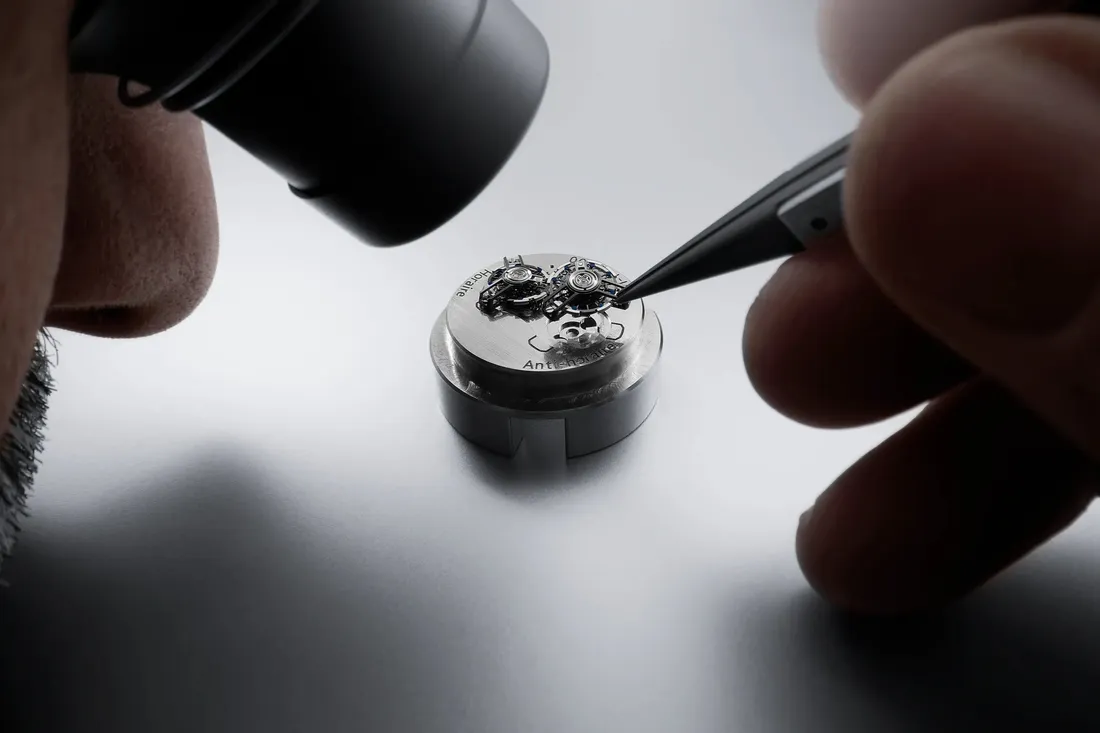
Marc-Antoine: "Exactly! The movement itself is like a flying carousel that makes one full turn on its own axis every 60 minutes along a circular track. The bridge on top of the movement indicates the minutes, and the rotating disc beneath it shows the hour. To read the time you do not look at a dial but directly at the working mechanical heart. The watch has removed the curtain between the display and the movement entirely."
"And you will not find a winding crown on the case either. To set the time, you lift the locking clip at 6 o’clock and turn the front bezel. To wind the movement, you turn the watch over and rotate the case back, winding the great barrel directly with your hand. Everything speaks the pure language of engineering, stripped of ornament."
The Summit: The 2026 Flagship Freak
Laurent leaned even closer to the watch on his master’s wrist. As the sunlight struck the body of the 2026 Freak, the mechanical organs on the face began to shimmer like a living organism. "Master, here is the flagship Freak unveiled at the fair, the one that has swept through the horological world this year! Where has Ulysse Nardin taken its engineering with this latest model? What do those two inclined balances on the face mean?"
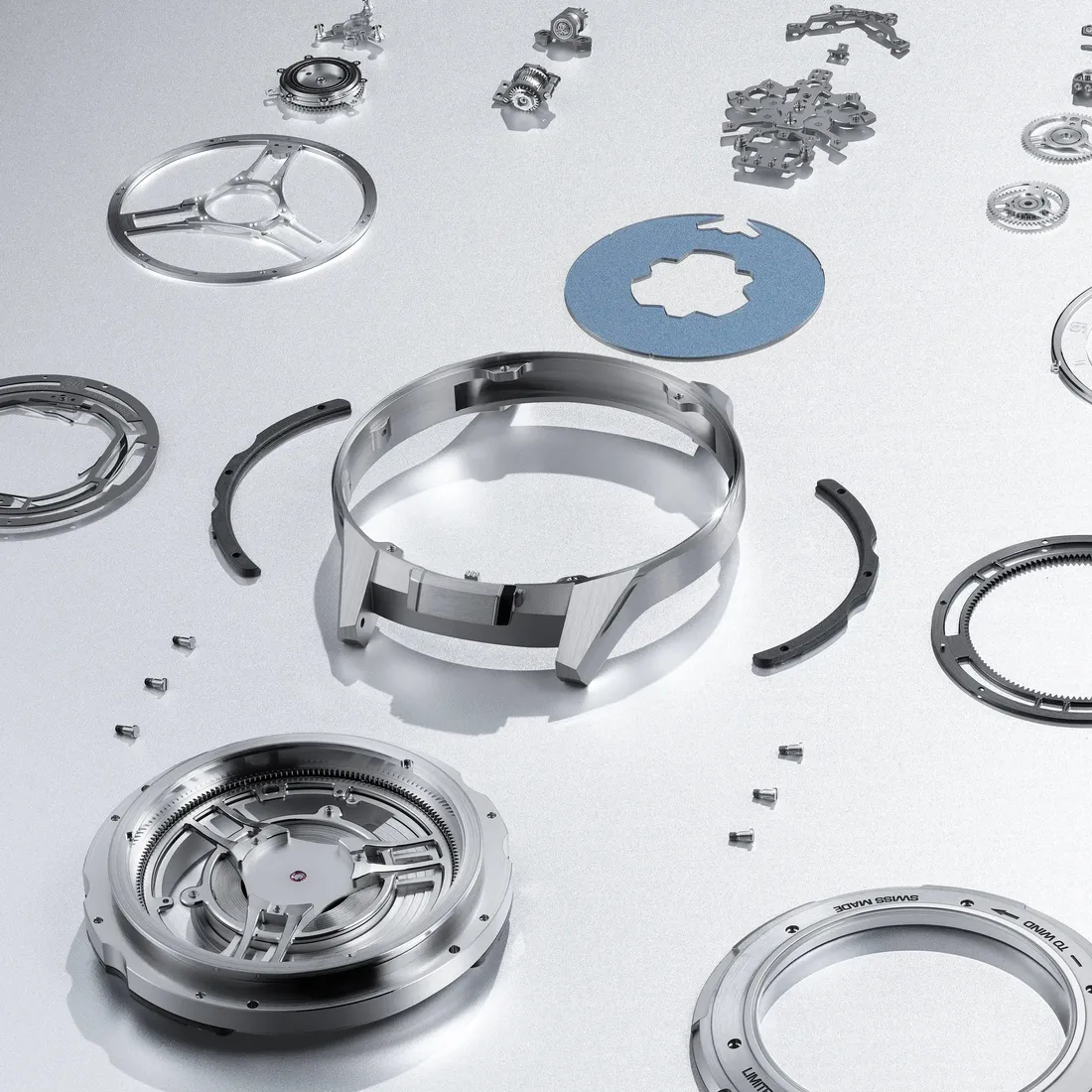
Marc-Antoine showed the watch with pride: "Here is the very detail that seats this model at the summit of watchmaking history, my boy. The movement uses twin silicon balances (Twin Inclined Oscillators), each set at a 10-degree incline. Facing different angles in space, these two oscillators are linked by a precise differential between them. Even if the motion of your wrist makes one balance drift in one direction, the differential instantly averages and balances it with the data from the other. The deviation drops to nearly the level of a quartz watch."
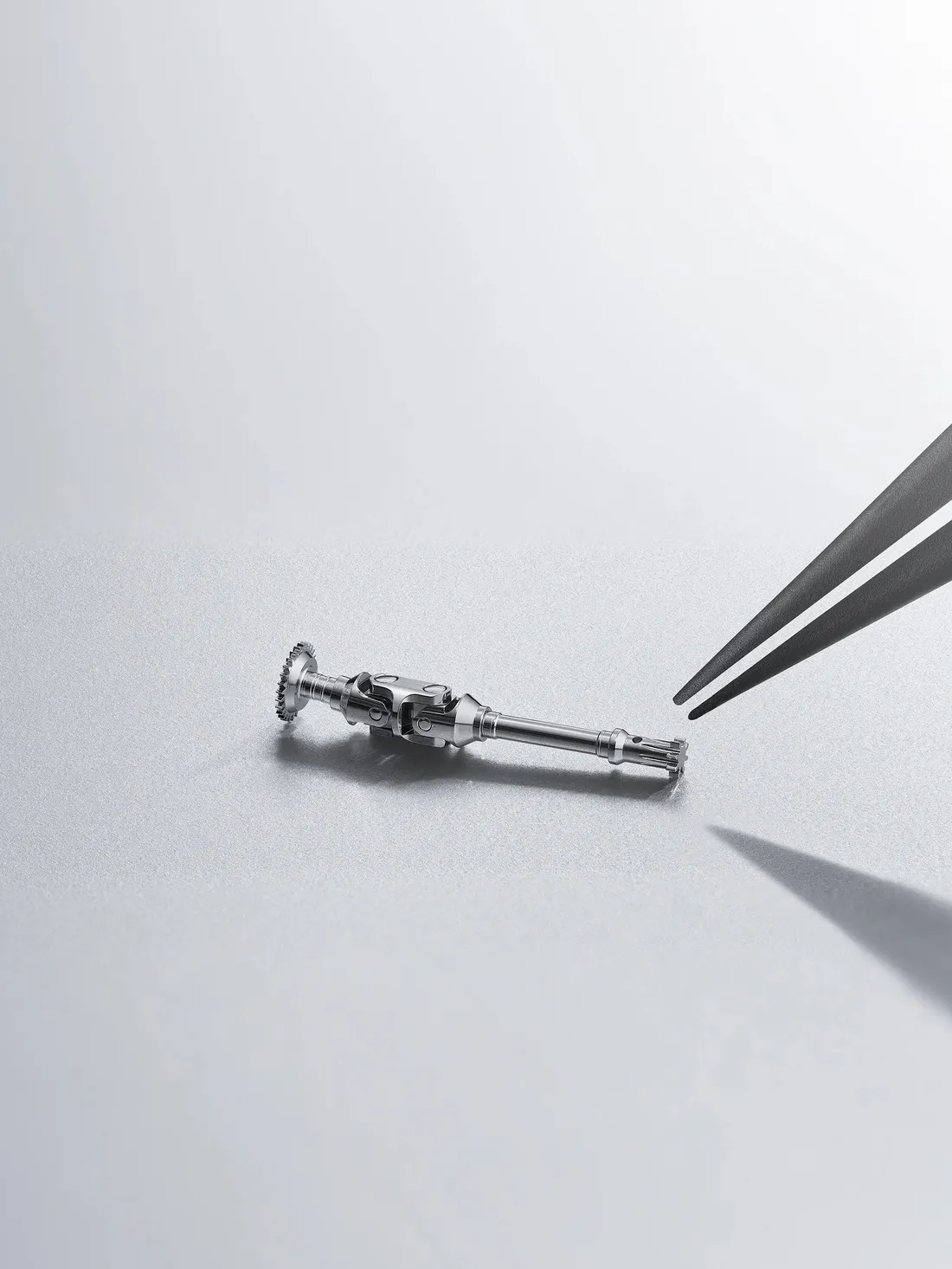
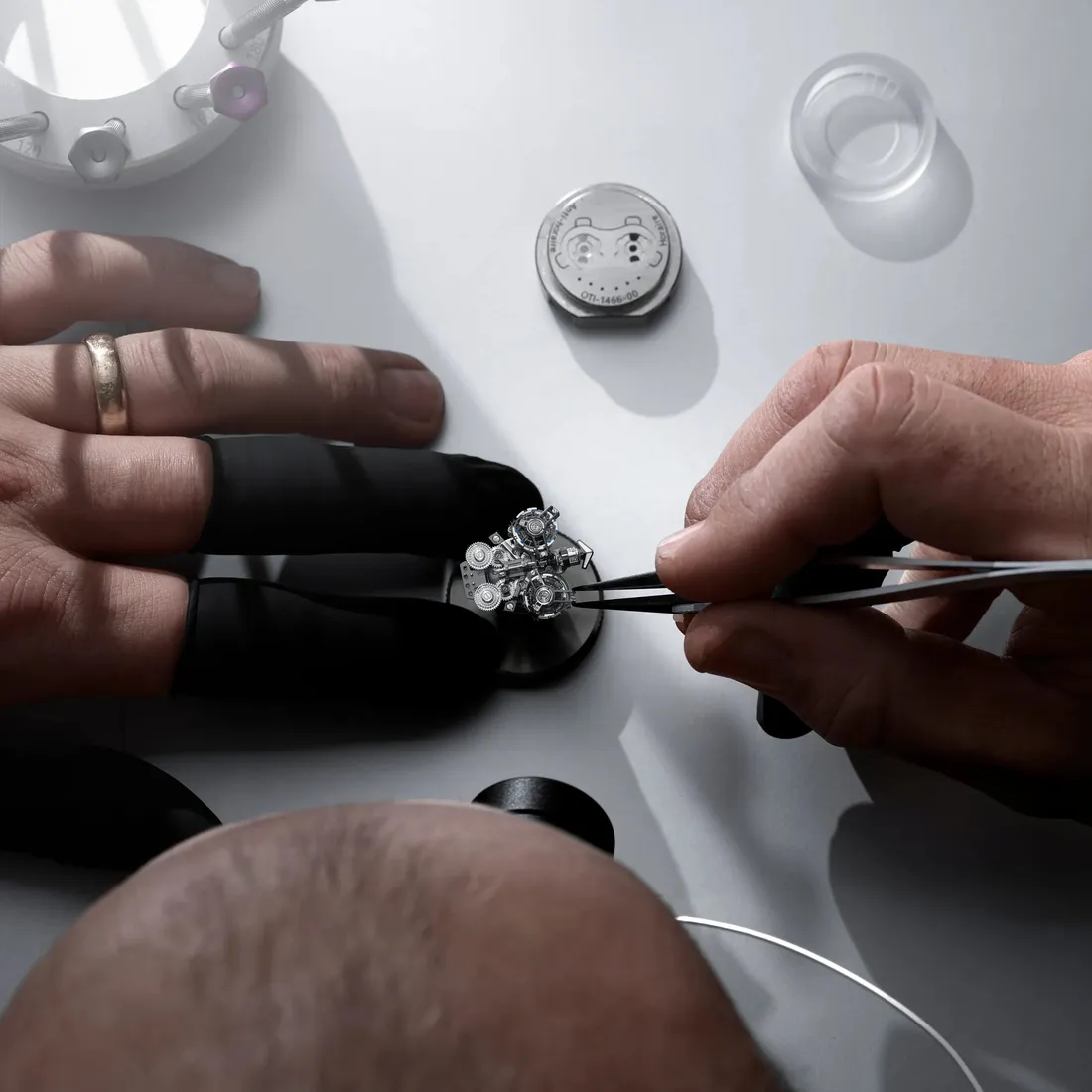
"And that differential is no ordinary one: at roughly 5 millimetres in diameter it is the smallest differential in the world, housing 69 tiny parts together with ceramic ball bearings. As for the bright texture on the material, that is the patented DiamonSil technology: the silicon parts are coated with a layer of synthetic diamond. The infinite hardness of diamond and the feather-lightness of silicon are united in a single body. For this watch, the very concept of wear has passed into history."
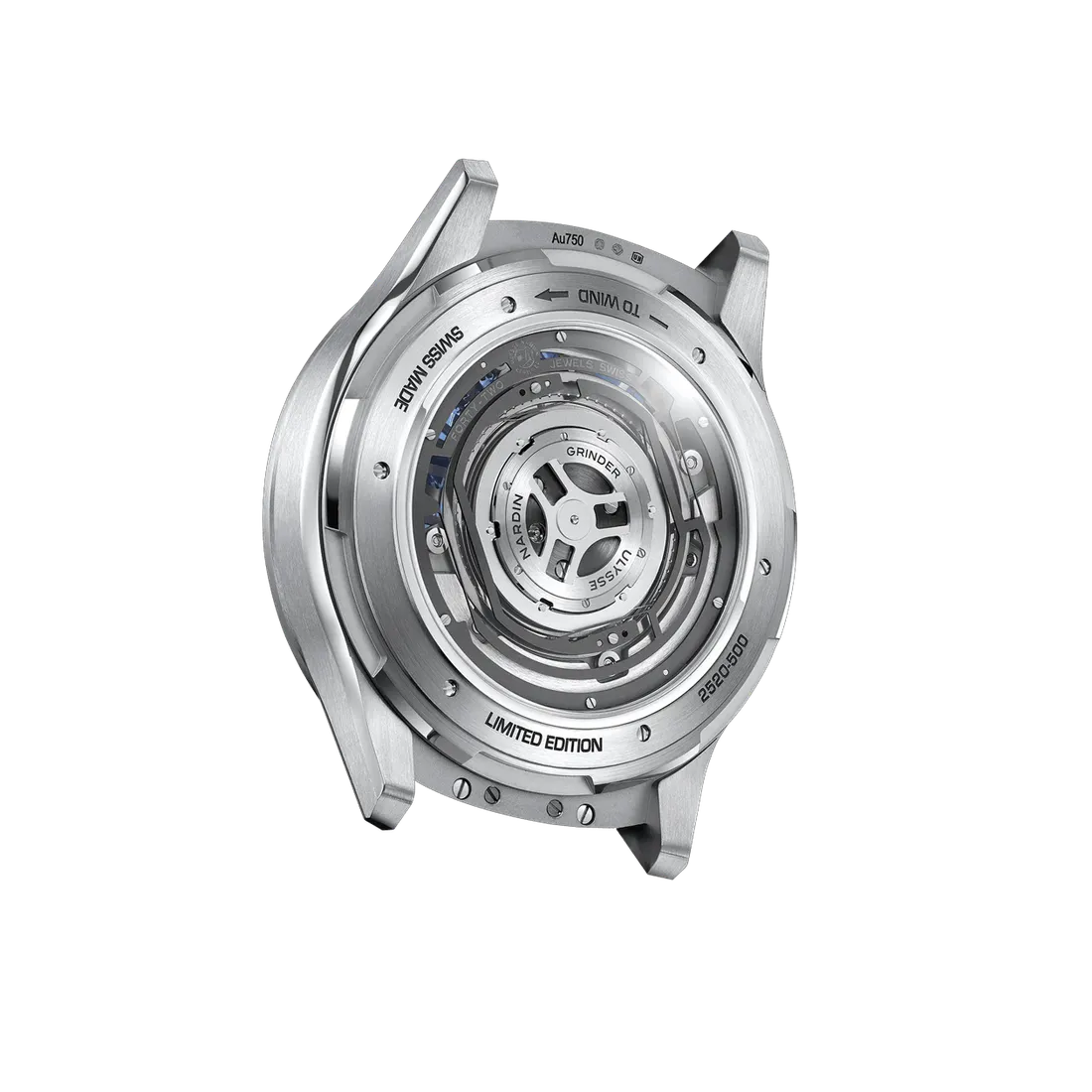
"Look, too, at this Grinder automatic winding system. In traditional automatic watches the rotor stores energy only while turning in certain directions. In the Grinder system a special four-bladed frame converts even the smallest, faintest micro-tremor of your wrist into mainspring energy at once; its efficiency is nearly double that of traditional rotors. The harmony between the lines of the futuristic, lightweight case and the rose-gold details turns this watch into an architectural sculpture."
At the heart of this flagship beats the UN-252 self-winding caliber: 511 parts, 42 jewels, a frequency of 2 x 2.5 Hz (2 x 18,000 vibrations per hour) for its twin oscillators, roughly 72 hours of power reserve, two DiamonSil escapements, titanium bridges and a gimbal system that keeps its balance. Measuring 44 mm, this masterpiece is limited to just 50 pieces.
A Voyage Toward the Future and Eternity
The sun had risen over Lake Neuchâtel, and the glacial-flour waters had begun to glow with a mesmerising turquoise light. Marc-Antoine pulled once more on the wooden oars. The boat glided toward the shore, cutting through those miraculous waters born of glaciers crushing thousand-year-old rock.
Marc-Antoine: "You see, Laurent... Just as the magnificent colour of this lake was born from glaciers crushing and transforming granite, so the Ulysse Nardin Freak broke the hardened dogmas of watchmaking and offered mechanical horology a whole new future. The handwork of our traditional masters, the enamel dials and polished bridges, are our roots; the silicon revolution and futuristic architecture that the Freak represents are the wings that carry us into the future. As long as those two wings beat together, humanity’s reverence for time, and for the Supreme Artist who created that time, will endure forever."
Laurent looked one last time at the 2026 Freak masterpiece on his master’s wrist. The diamond-coated silicon balances at the heart of the watch shimmered, together with the play of light upon the lake, in the flawless rhythm of time flowing toward eternity.
format_quote"Tradition is our roots; the silicon revolution is the wings that carry us into the future."
Marc-Antoine