
The ancient Greeks loved exaggeration. Creatures with a trillion bodies, dragons spitting fire from the sky and winged giants flew through their poems. For them the scale of a tragedy was measured by the number of the monster’s arms. The modern reader worked it out long ago: the death of a three-bodied giant with red wings on his back is a childish fable next to the silence of one person waking up on a Monday morning with a broken heart.
That understanding is the real secret behind the award of the 2026 Nobel Prize in Literature to the Canadian poet, philologist and essayist Anne Carson. Carson took the dusty, overblown mythology of ancient Greece, scraped at it with her fingernails, caricatured it, emptied it out, and drew from it a shattering fiction that tears the lungs out of the person living now.
So what did this woman write, that the literary world went down on its knees?
format_quote"The death of a three-bodied giant is a childish fable next to the silence of one person waking up with a broken heart."
Hasan Bekmezci
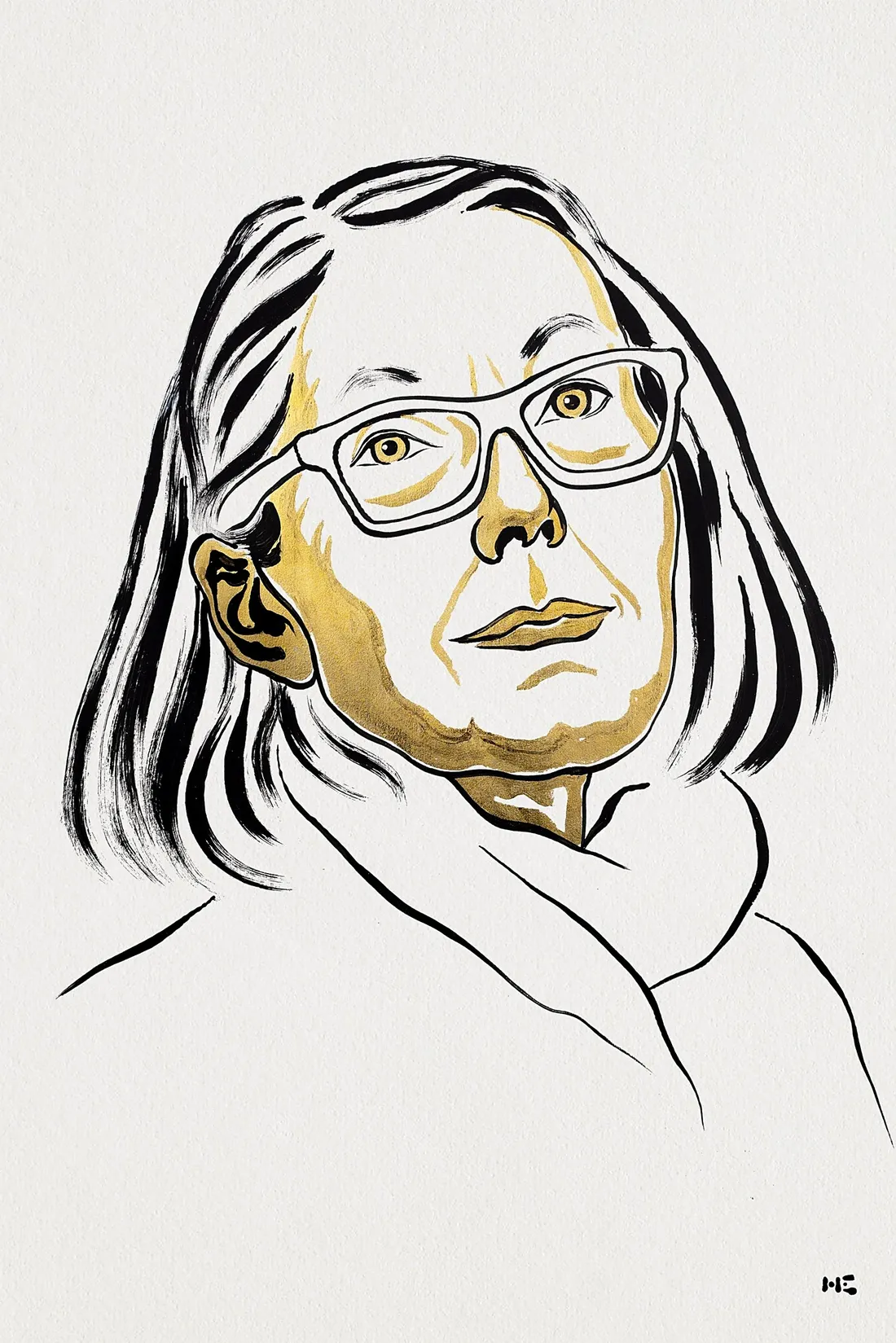
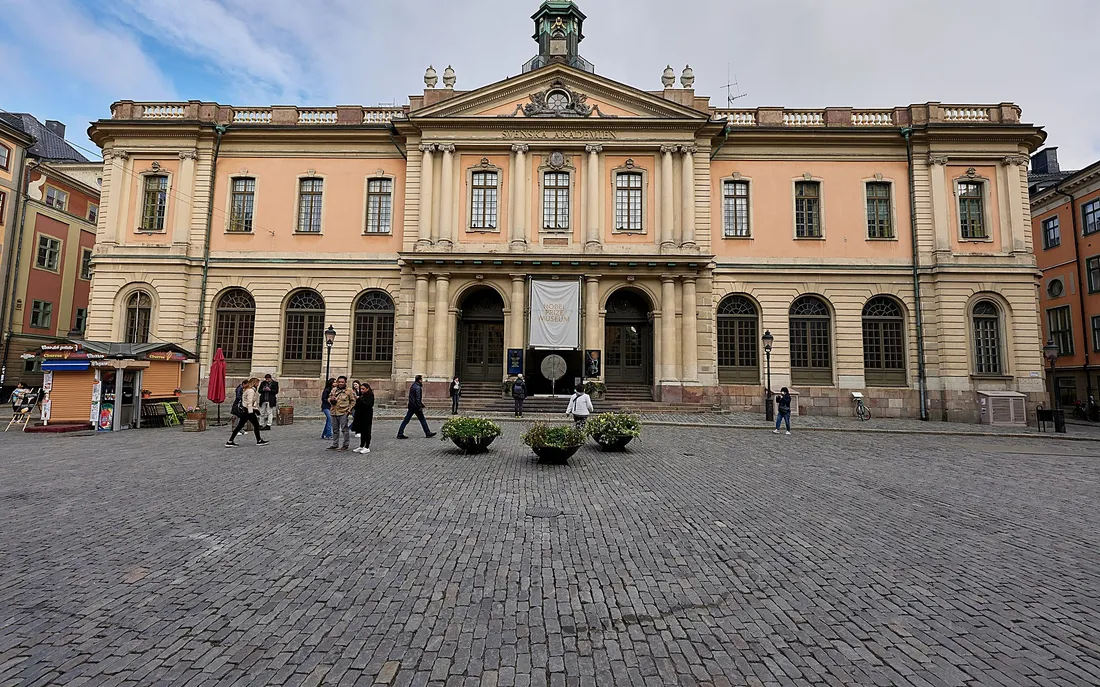
The Swedish Academy wrote in its citation that her bold and inventive body of work, carried on in playful dialogue with the classical tradition, has made new forms for contemporary literature. The chairman of the Academy’s literature committee said that almost everything she has produced stands at a single crossing point: where a philologist’s obsession with words meets a poet’s desire for new meaning.
Carson is seventy six and a professor of classics. She was in Iceland when the prize was announced, and was reported to have been listening to the wind when the news reached her.
In the old mythology Geryon was a cheap giant figure with three bodies and red-painted wings who lived on a red island; Herakles kills him and takes his cattle. In Autobiography of Red Carson begins by quietly making fun of that mythological absurdity.
Geryon’s three bodies go; the wings stay. Carson turns him into a red winged boy living in the world we are in now: ashamed of his own monstrosity, gay, fragile, adoring his mother, bullied and then abused by his older brother. That is exactly why he begins his autobiography; writing is an act of self-preservation for him. Then he grows up, falls in love with Herakles, and is left.
The book is a novel written in verse, and it is not even handed to us as a novel. Carson first writes an essay asking what difference Stesichoros made, then gives her own translation of the scraps of poetry left by him, then adds three appendices on the blinding of that poet. The narrative proper stands in the middle of the wreckage, in forty seven short chapters. And an invented interview with Stesichoros closes the book.
Geryon, meanwhile, photographs without stopping. A photograph is a piece torn out of the real; like the fragments left of a broken poem.
This is where Carson’s genius lies: she takes the giant of mythology and turns him into the tragedy of the modern person who waits at bus stops and presses the shutter of a camera while dying of loneliness.
format_quote"She takes the giant of mythology and turns him into the tragedy of the modern person waiting at a bus stop."
Hasan Bekmezci
The second great blow that enchanted the Swedish Academy is The Beauty of the Husband, which Carson describes as a fictional essay in twenty nine tangos. Here she writes neither an ornate poem nor a classical novel. She draws the map of a marriage, a betrayal and a collapse in the rhythm of the tango.
The form of the book is the dance itself: long lines and short lines come in turn, a step forward is taken and then a step back. Each of the twenty nine tangos opens with a short, half-legible fragment of Keats, and the book is dedicated to him. His famous line from the ode on a Grecian urn, “Beauty is truth, truth beauty”, therefore lies under the whole book like a knife, and across twenty nine tangos Carson puts that line on trial. The narrator calls herself sometimes I and sometimes the wife; the man she calls only the husband. The husband is a poet and an appalling liar. At the end of the book there is a thirtieth entry, and it gives the last word to him. The book won the T. S. Eliot Prize in 2001.
These twenty nine tangos Carson wrote are like a bony slap across the reader’s face. They leave neither romanticism nor false humanism behind.
The exact twin, in the world of haute horlogerie, of this merciless and rhythmic architecture with which Anne Carson pulled traditional literature down and built it again, is the IWC Big Pilot’s Watch Constant Force Tourbillon.
This watch plays with watchmaking’s own mythological traditions exactly as Carson does. IWC takes that heavy, overblown, functional pilot’s watch of the Second World War. But, just as Carson stripped Geryon, it strips the dial. It works the black dial in louvred rings set inside one another and opens an enormous tourbillon window at nine o’clock.

In a mechanical watch the torque falls as the mainspring empties; the rhythm of the watch can falter, exactly like a collapsing marriage. IWC’s calibre 94800 works through the maison’s own patented constant force mechanism, set inside the tourbillon cage. The device cuts the escapement off from the direct flow of power coming down the gear train and delivers perfectly even impulses to the escape wheel.
The result is this: as the torque in the mainspring falls away, the balance wheel goes on oscillating at virtually unchanged amplitude. Combined with the tourbillon, which offsets the effect of gravity on the oscillating system, an unshakeable rhythm is set up in the middle of chaos. Like the tango itself: the step falls with the same weight every time, even when the dancer is tired.

Just as Carson carried a Greek text two and a half thousand years old into the streets of today, the Double Moon display at two o’clock follows the sky of both the northern and the southern hemisphere at once, and by the maison’s calculation drifts by a single day only after five hundred and seventy seven and a half years. The time running under this case is built to stay true on a scale that comfortably outlasts a human life.


The case is forty six point two millimetres across and made of 18-carat Armor Gold, an alloy whose improved microstructure makes it markedly harder than conventional red gold, which means a great deal on a watch this size that is meant to be worn every day. The hour and minute hands are gold-plated and filled with Super-LumiNova. The strap is black rubber lined with Alcantara, and its folding clasp is Armor Gold again.
The movement is wound by hand and runs ninety six hours off two barrels. To match the gold and black of the watch it has been blackened from end to end, and it is watched through the sapphire back.




Anne Carson won the Nobel because she pulled down the caricatured myths of ancient Greece, brought the winged giants down to bus stops, and put the existential ache of the modern person on paper in those shattering sentences.
The IWC Big Pilot’s Constant-Force Tourbillon, with that constant-force tourbillon cage dancing under an 18-carat Armor Gold case, is the hardest engineering answer the human mind has set against the chaotic collapses of torque brought on by time and gravity.
One of them hones words like a knife and brings time to heel; the other locks micro wheels like a metronome and turns seconds into sculpture.
format_quote"One hones words like a knife and brings time to heel; the other locks micro wheels like a metronome and turns seconds into sculpture."
Hasan Bekmezci
Editor’s note: Flâneur salutes Anne Carson, winner of the 2026 Nobel Prize in Literature, with respect. This piece was written in deference to more than forty years of work that turned a broken ancient text into a modern novel and widened the form of literature itself.
The watch on its maker’s own site: IWC Schaffhausen, Big Pilot’s Watch Constant Force Tourbillon