
20 July 1969. For the first time, humankind sets foot on another world. As Neil Armstrong's boot touches the dust of the Moon, on an astronaut's suit there is a watch counting every second of that perilous journey: the OMEGA Speedmaster. The only watch NASA certified for manned missions after gruelling tests. The first watch to reach the Moon was as serious as a chronometer.
Years later, Swatch took this legendary Moon watch and carried it to everyone's wrist; and as a special salute to 1969, it hid a real piece of gold inside. The story of the Bioceramic MoonSwatch Mission to the Moon 1969 lies precisely in that small touch of gold.
The Gold of 1969
To celebrate the success of Apollo 11, OMEGA created in 1969 the first gold Speedmaster in its history: the legendary BA145.022. This gold chronograph was presented at a special gala to the astronauts and to those who had contributed to the mission; from that day on, the gold Speedmaster became a badge of honour of the space age. The Mission to the Moon 1969 is a direct tribute to that golden icon.
A Moon Watch for Everyone: the MoonSwatch
In 2022, OMEGA and Swatch signed a collaboration that shook the watch world: the Bioceramic MoonSwatch. This collection, which sent thousands queuing outside the shops, turned that costly legend of the Moon into a pleasure within reach of millions, in a durable and colourful material. The Mission to the Moon is the family's most faithful member; with its black case and classic Speedmaster lines, it salutes the original Moon watch directly. The 1969 version adds to that faithful model a secret made of gold.
Eleven Grams of Gold and Apollo 11
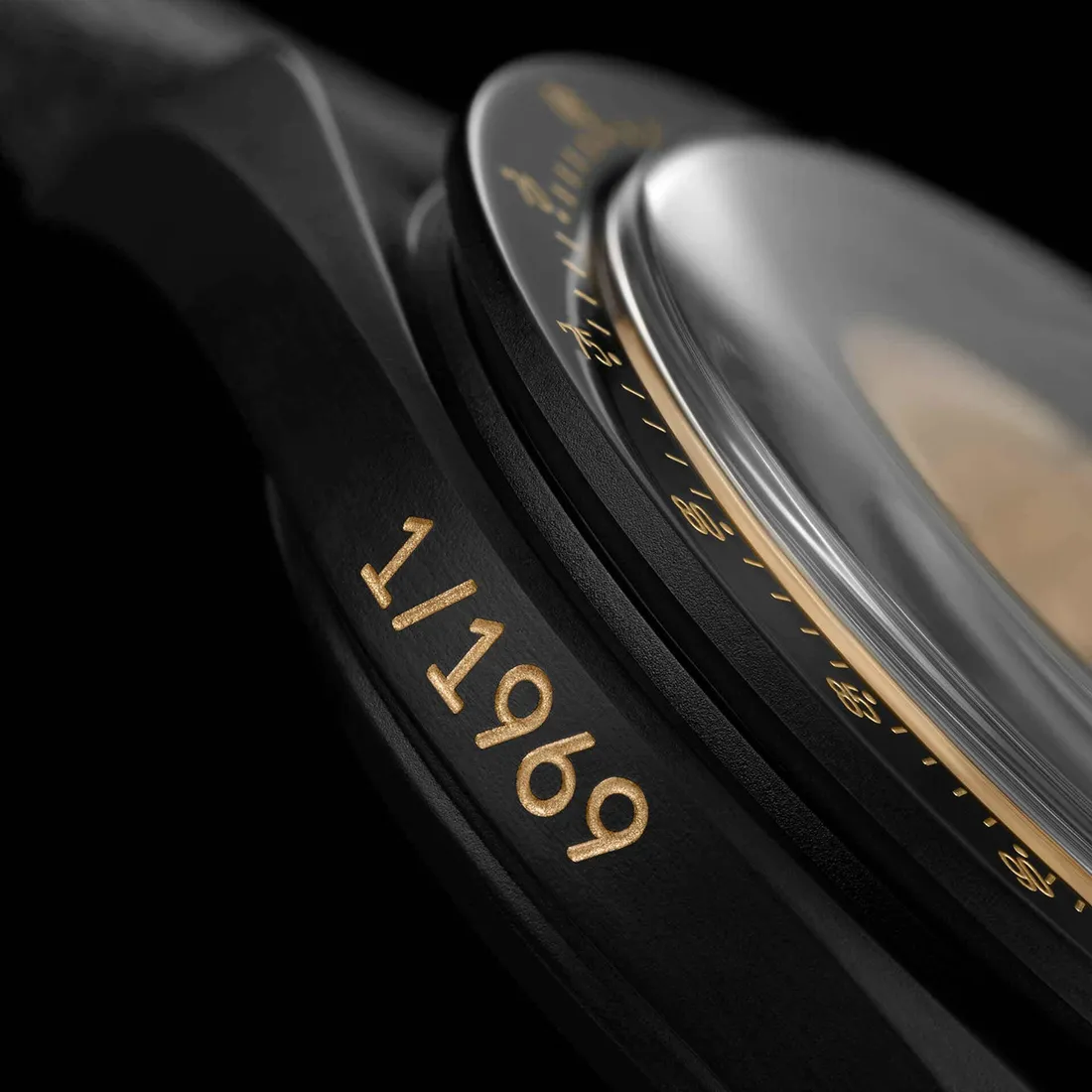
The gold in this watch is no ordinary ornament. The 18-carat OMEGA Moonshine Gold components set into the chronograph weigh exactly eleven grams in total, a subtle nod to the number of Apollo 11. But the truly striking thing is the origin of this gold: for this limited edition, Swatch melted down genuine OMEGA spare parts dating from 1969 and transformed them into 18-carat Moonshine Gold. The glint on your wrist is, in fact, a tangible piece of history, melted from 1969 to today.

The Dial and the Details
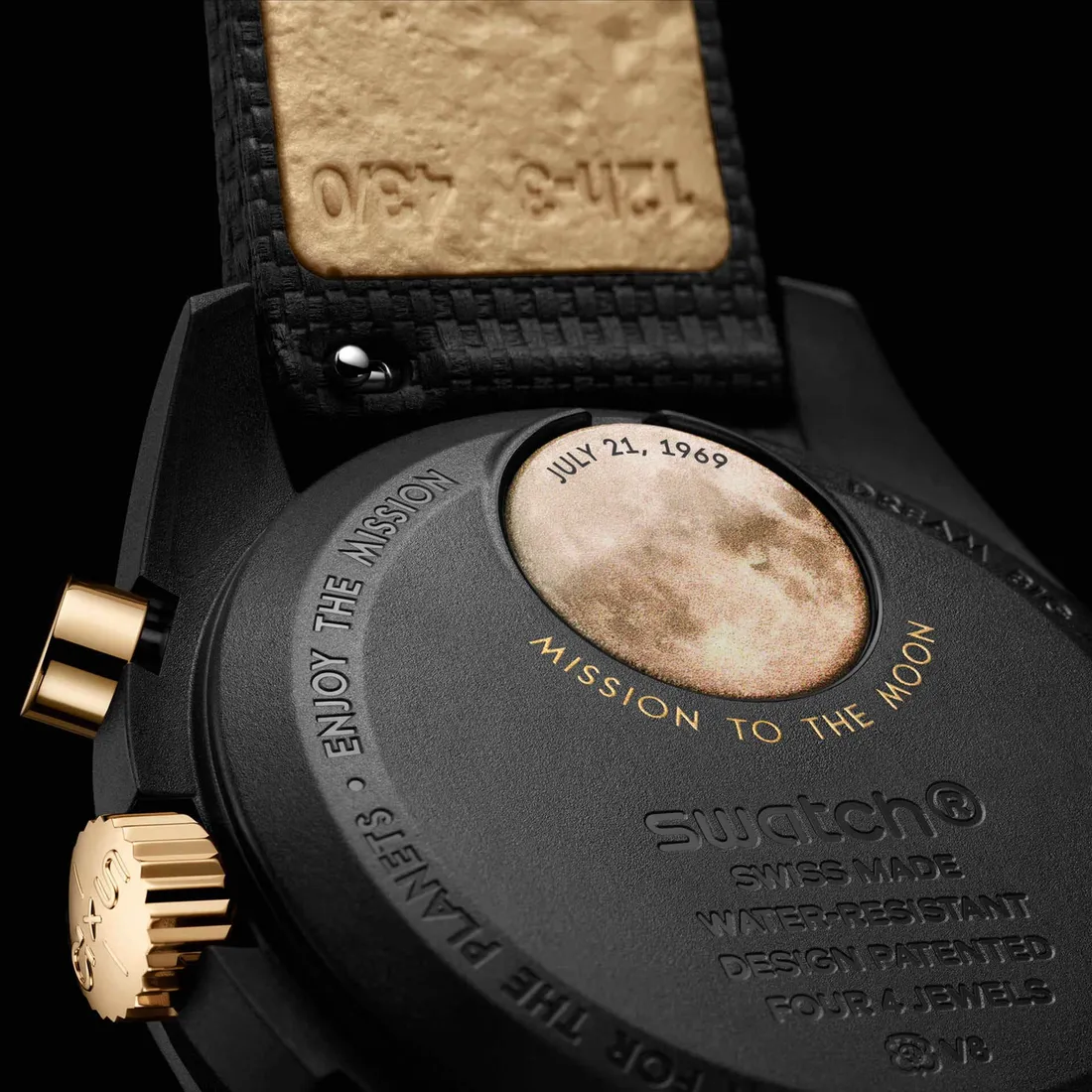
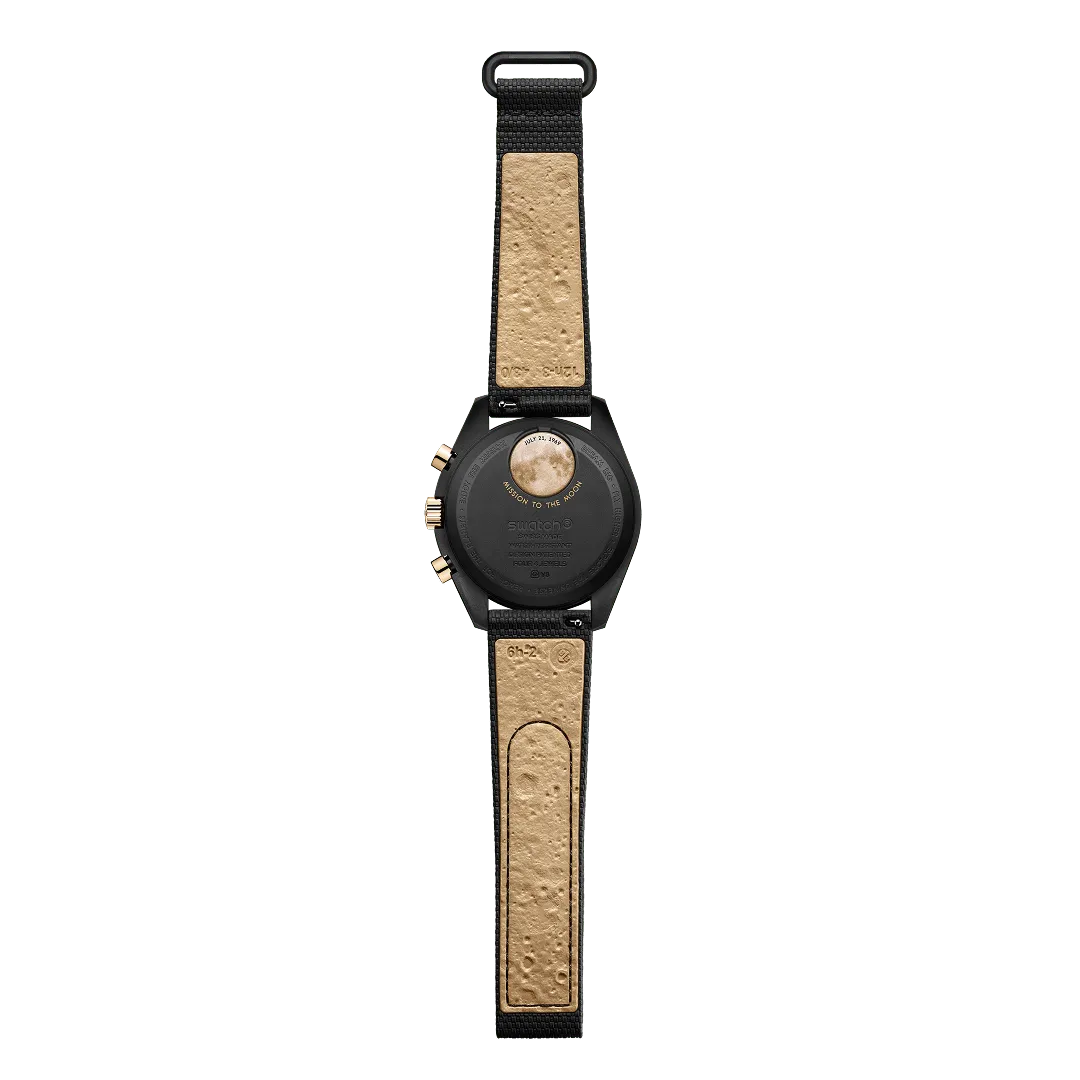
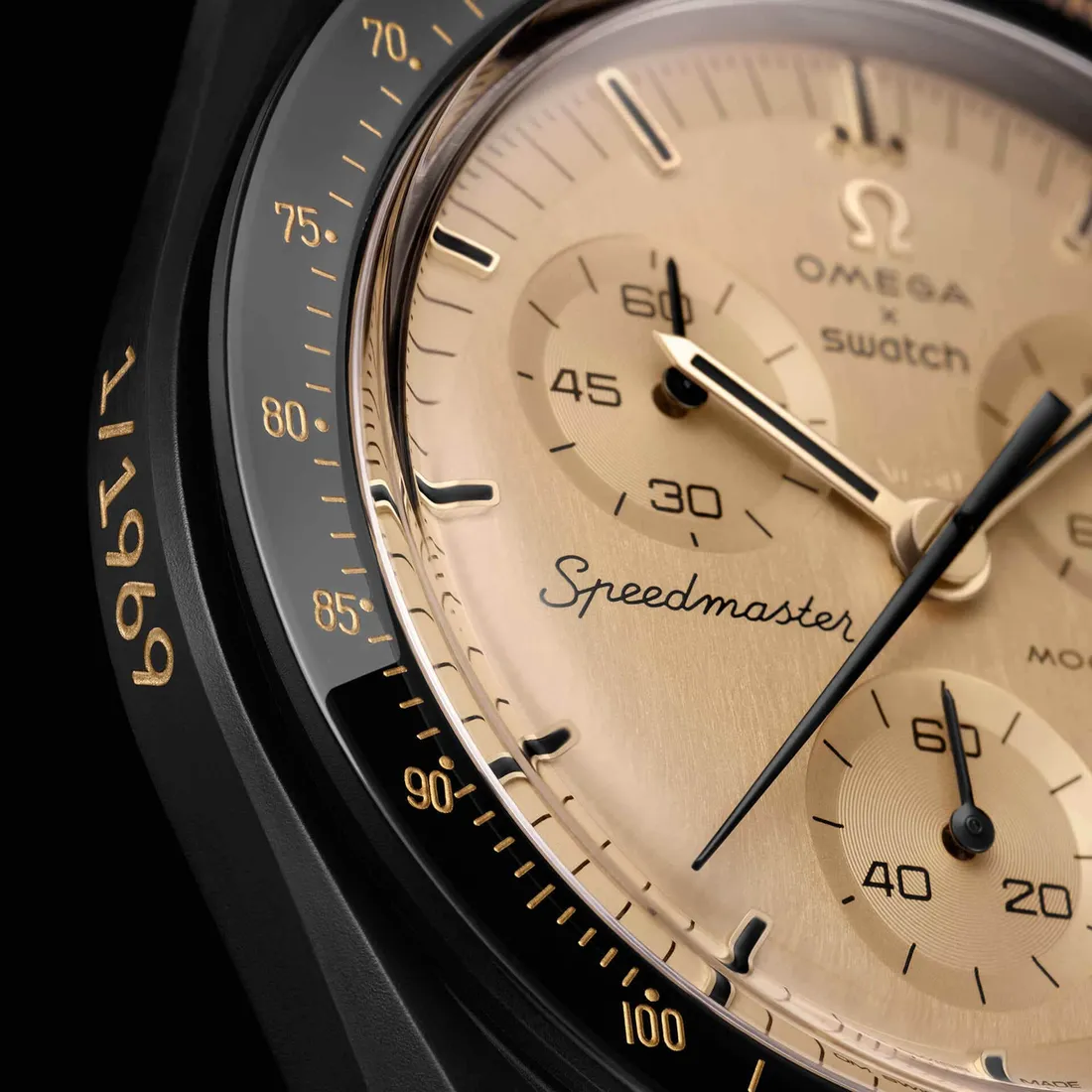
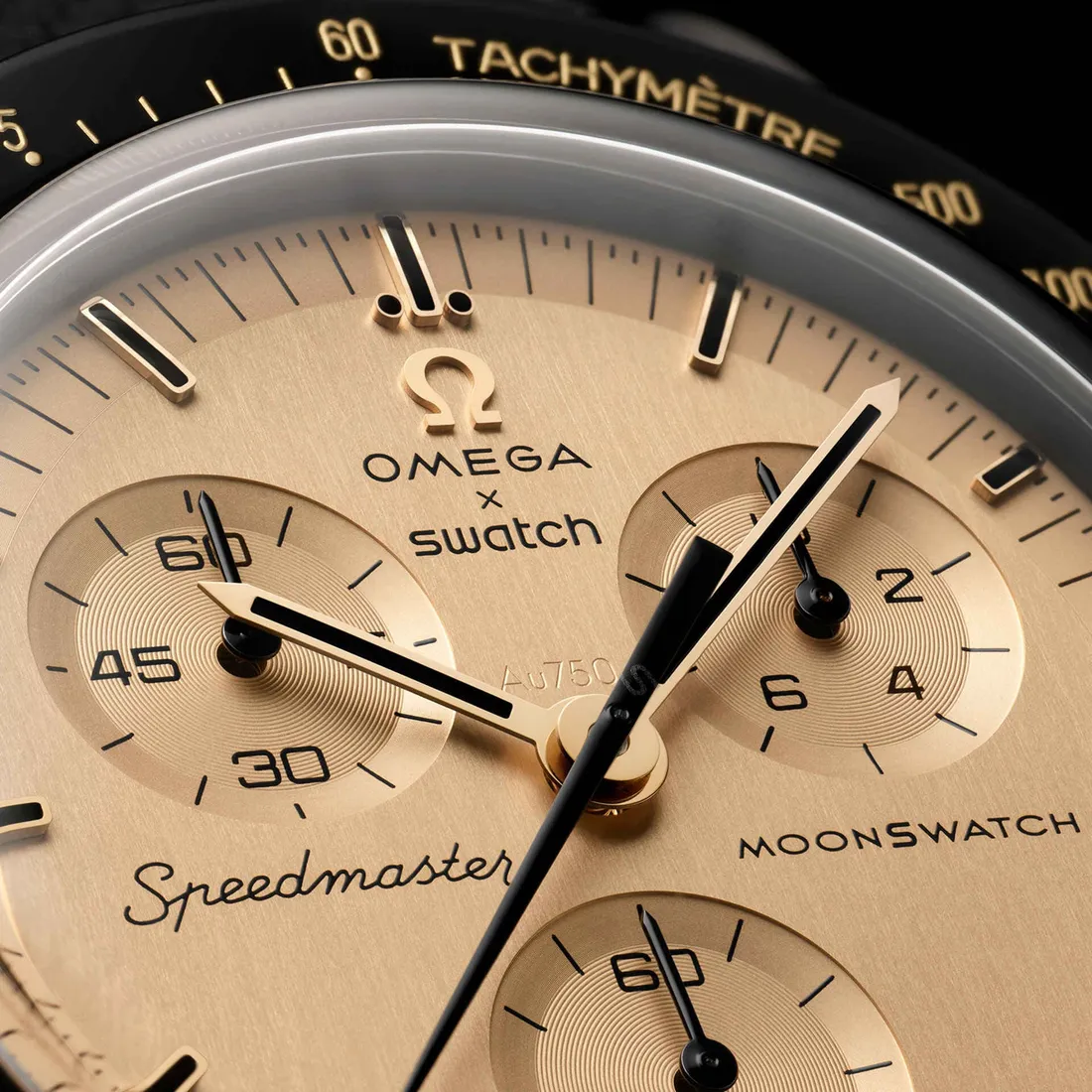
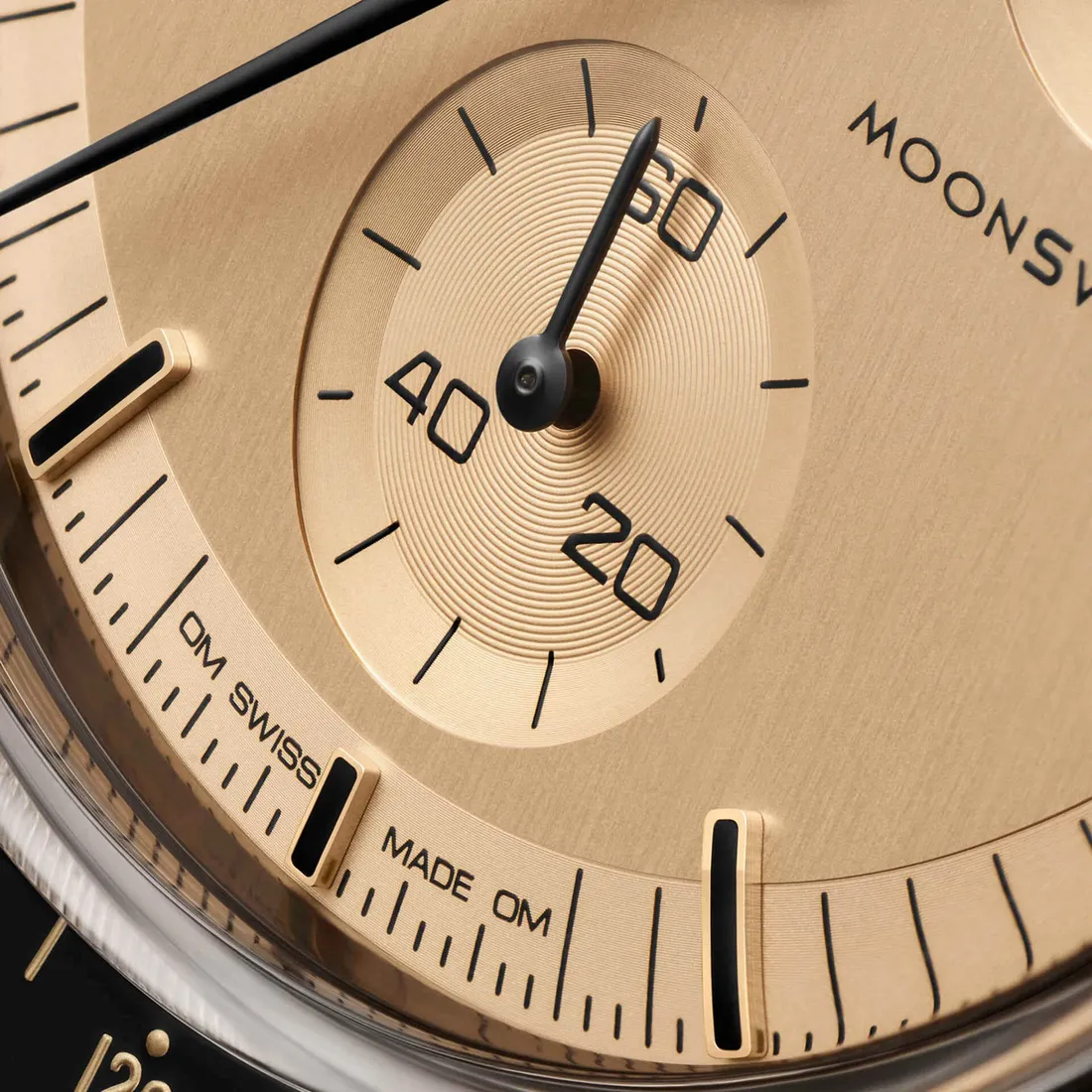
Every detail whispers that deep-rooted heritage. A vertically satin-brushed champagne dial, bevelled hour indexes in gold heightened with black lacquer, a golden tachymeter scale on the black Bioceramic bezel, and a gold OMEGA logo and typography... all drawn from the gold Speedmaster of 1969. And the words 'JUL 21 1969' and 'MISSION TO THE MOON' on the caseback never let you forget where this watch belongs.
The Technical Side: Bioceramic and Quartz
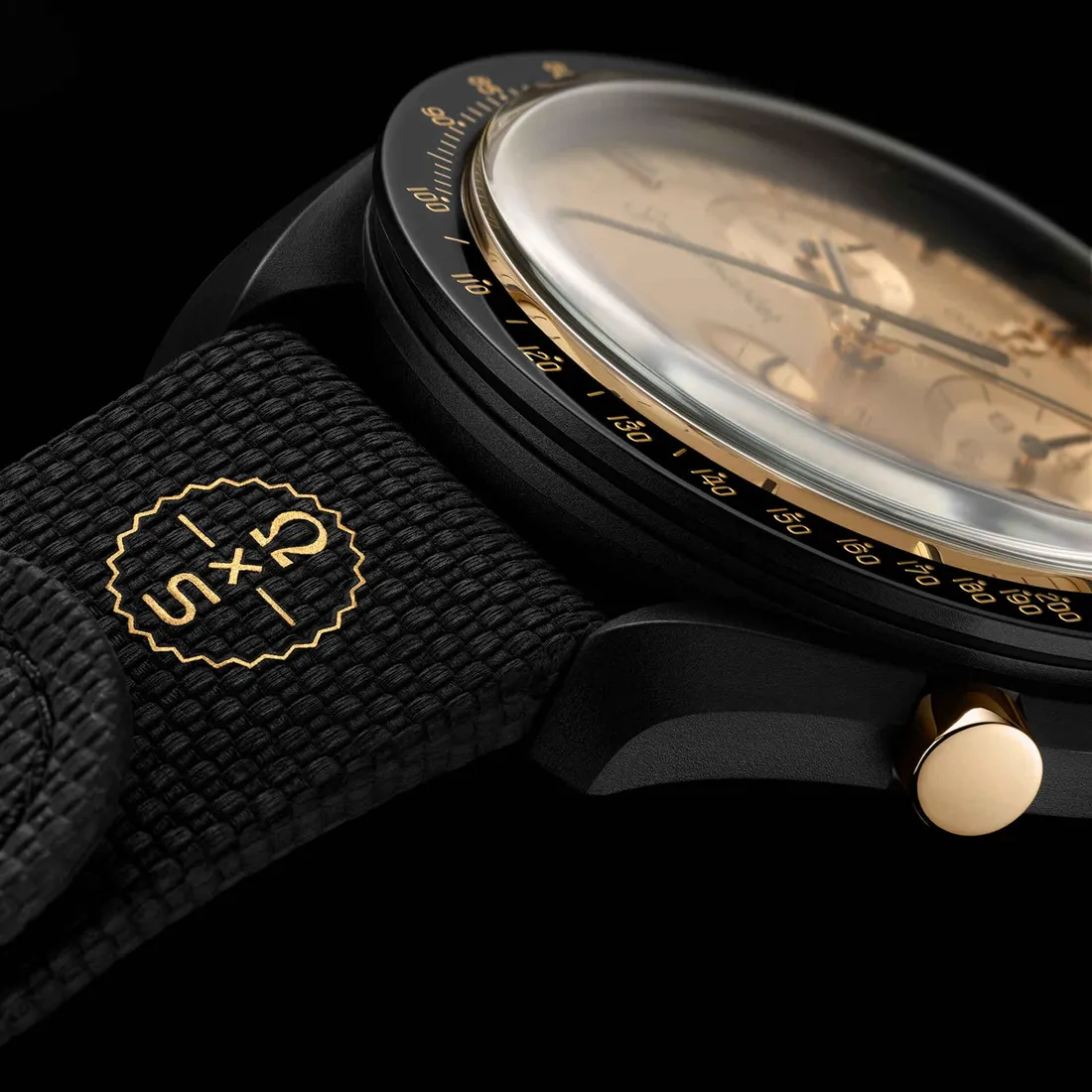
The case is made of Swatch's signature Bioceramic material: two-thirds ceramic and one-third bio-sourced plastic derived from castor oil. Light yet sturdy, with a matte, silky texture. Within the forty-two-millimetre case runs a quartz chronograph movement; battery-powered, reliable and maintenance-free. The watch is water-resistant to three bar (about 30 metres) and sits on the wrist on a Velcro strap. It costs 600 euros; and, just like its predecessors, it falls to a lucky few by way of a draw and an application.
To the Moon and Back
In 1969 a handful of people went to the Moon and came back; at their side was only a watch, a faithful chronometer. Half a century later, the spirit of that journey descends once more to the wrist, inside an accessible Bioceramic chronograph, with a real piece of 1969 gold. The Mission to the Moon 1969 is neither a million-euro complication nor the draft of a masterpiece; but it is a time capsule that is fun, clever and grounded in a solid story. Sometimes the value of a watch lies not in the grams of gold it carries, but in the weight of the moment it holds.