Nearly everything in watchmaking proceeds by addition. You add a wheel, a clutch, a spring, a bridge. If something is missing it is made and fitted. If a part goes wrong it comes out and another goes in. Skeletonising is the single exception to that order. The skeletoniser works by subtraction, and everything subtracted is permanent. The place where the saw slipped, the corner where the file pressed too hard, will not come back. Cutting a bridge for two months and ruining it in the last half hour is one of the oldest fears in the trade.
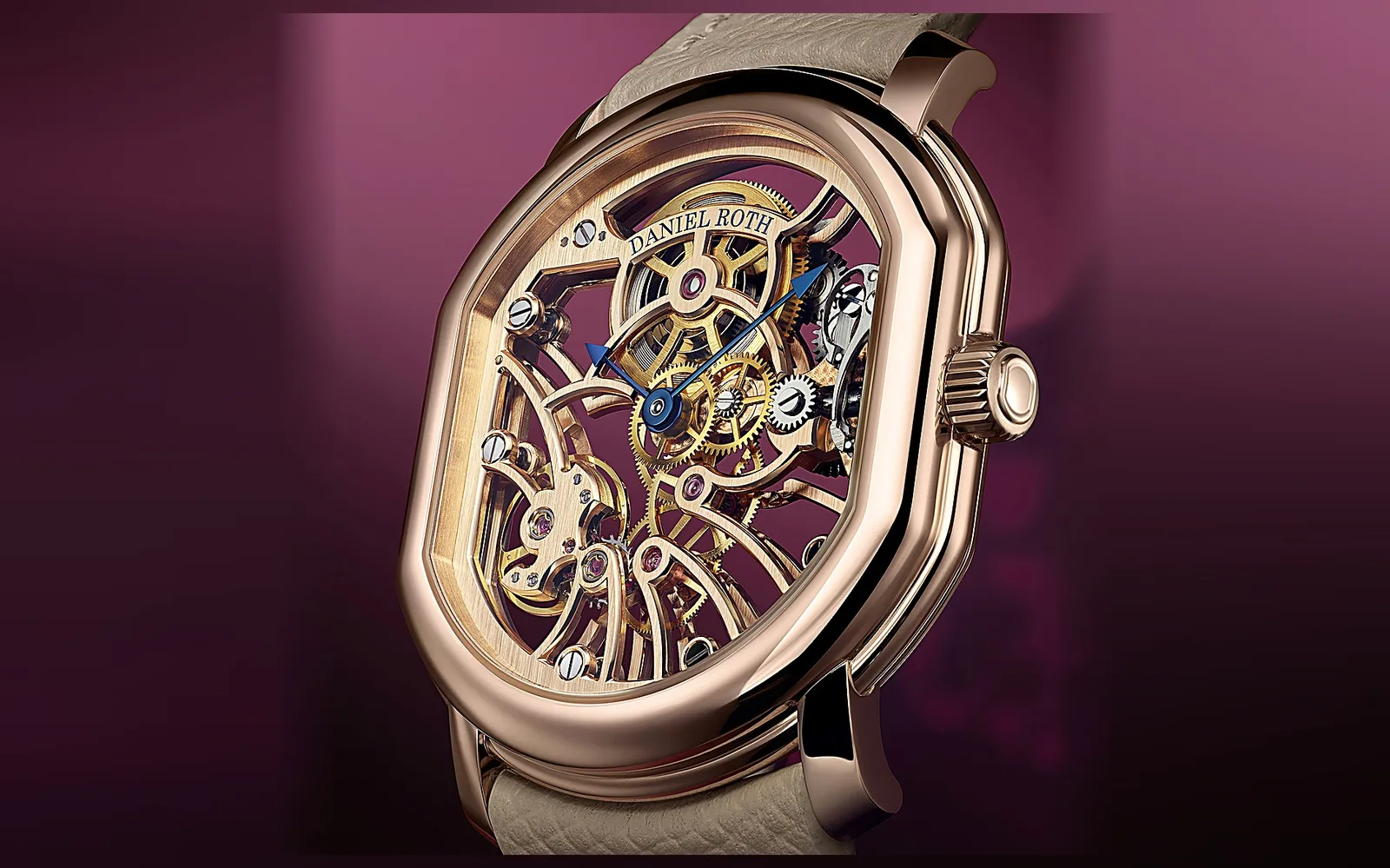
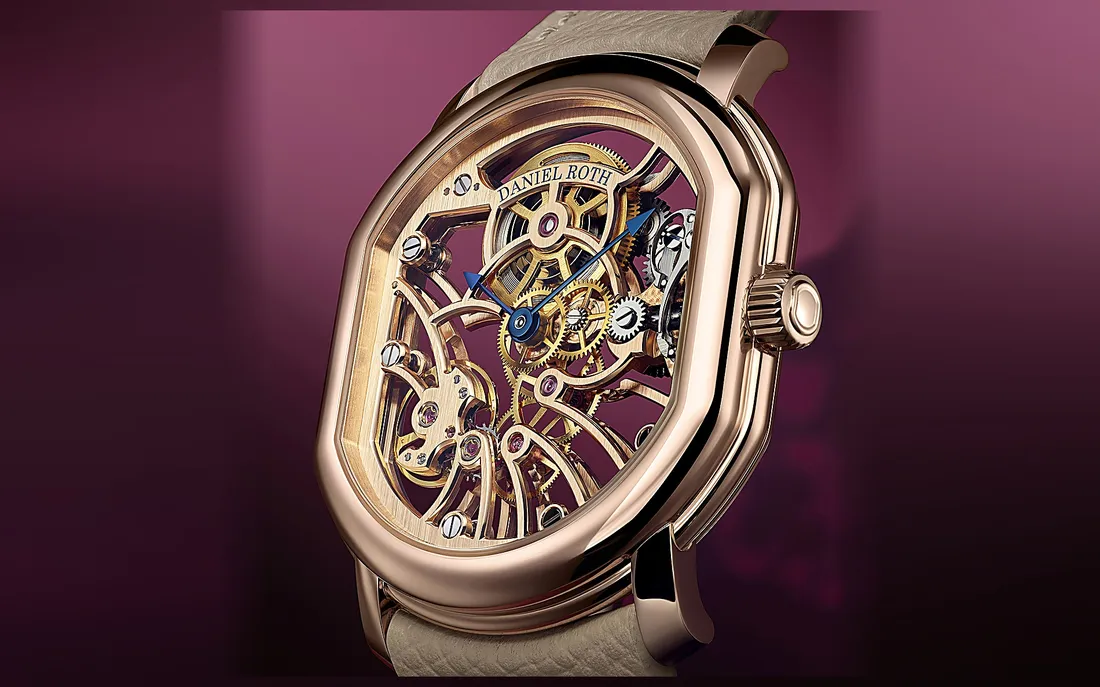
The Extra Plat Rose Gold Skeleton adds gold on top of that fear. The bridges and the plate are solid 18-carat 5N rose gold. Not brass, not German silver: gold, which is soft, ductile, clings to the file and will not easily hold a sharp edge.
The house’s story starts in 1988. That year Daniel Roth set out under his own name, and for his first work he chose his favourite complication, the tourbillon. He did not put it in a conventional round case but in a shape of his own drawing: a body formed by two ellipses sharing a centre, one lying across, one standing upright. Neither quite round nor quite rectangular, that silhouette became the signature of the brand. The same year a twenty-five piece souscription order arrived from Asprey of London, and the name Daniel Roth moved at once to the front row of independent watchmaking.
Today that name is produced at La Fabrique du Temps Louis Vuitton, under two master watchmakers: Michel Navas and Enrico Barbasini.
format_quote"In crafts that work by adding, a mistake can be repaired. In crafts that work by taking away, the mistake becomes the work."
Hasan Bekmezci
The calibre is called the DR002SR and is derived from the existing DR002. But derivation here does not mean drilling a few holes in the bridges of an existing movement. The bridges and plates have been reconfigured for openworking from the start, and the aim is described as achieving maximum transparency while optimising structural rigidity. That sentence can sound like marketing, yet the entire engineering of skeletonising hides inside it.
In a movement the plate and bridges are not decoration; they are structural members. Each wheel sits on two bearings, and the alignment between those bearings has to be held to within microns. When the watch is dropped, when the arm swings hard, or simply when the temperature shifts, a bridge flexes. Flexing moves the axis of the bearing, a moved axis changes how deeply the teeth engage, and that reports straight back to the rate. What you remove when you remove metal is not weight. It is stiffness.
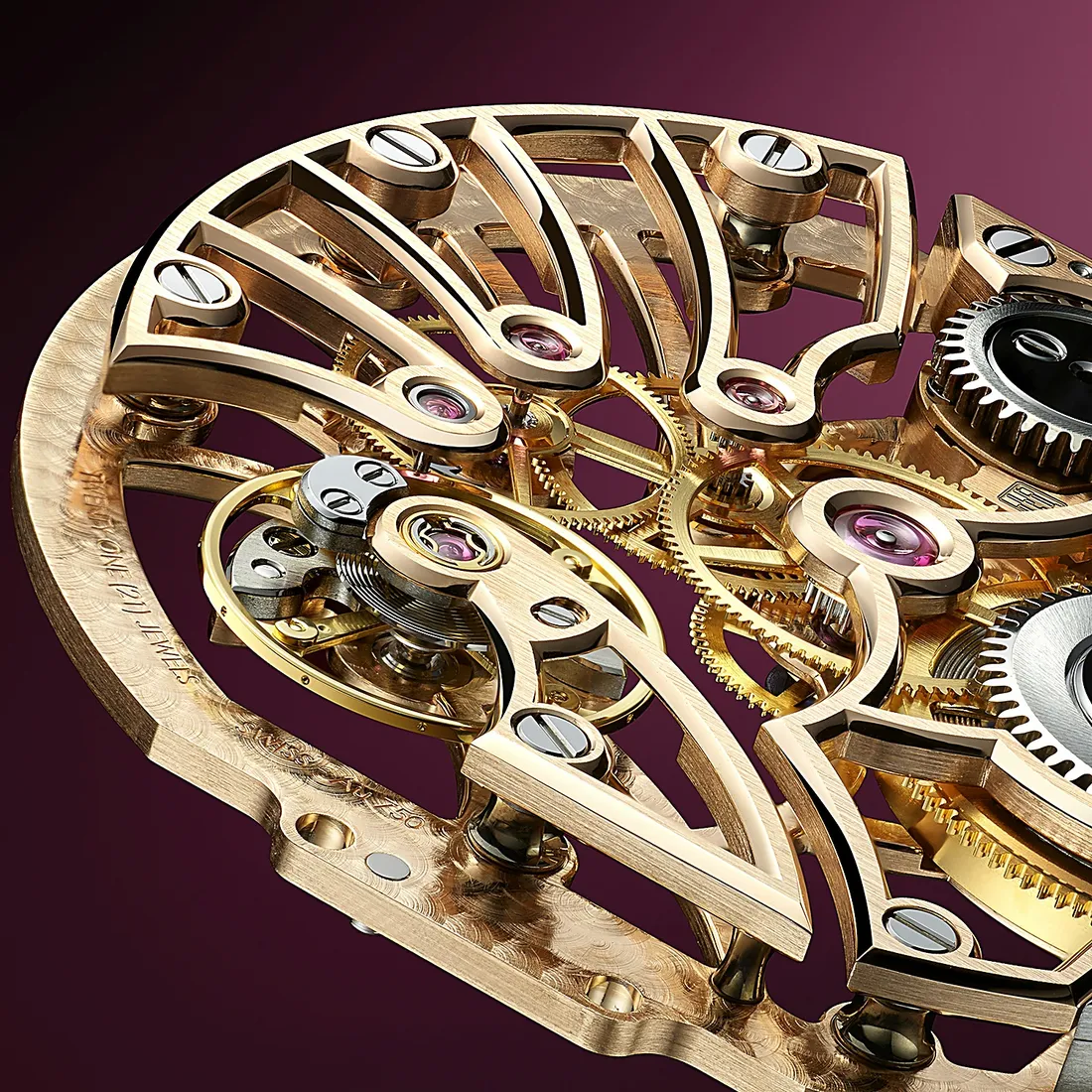
Picture two people doing this work: the constructor rebuilding the movement, and the ajouré specialist who will cut and finish it.
The constructor starts greedy. Take some from here too, empty out this triangle, let the wheel behind show through.
The specialist raises a hand. Every new opening is two new edges, and every edge will have to be chamfered. But the count of edges is not the real issue. Every new opening creates an internal angle wherever two edges meet coming inward. And the internal angle is the thing that changes the whole economics of this craft.
The constructor’s answer is in the calculation. What gets removed is decided by load, not by beauty. You map the lines of force running through the bridge, you empty the regions that carry nothing, you leave the regions that carry something. The limit is set by flex, not by taste.
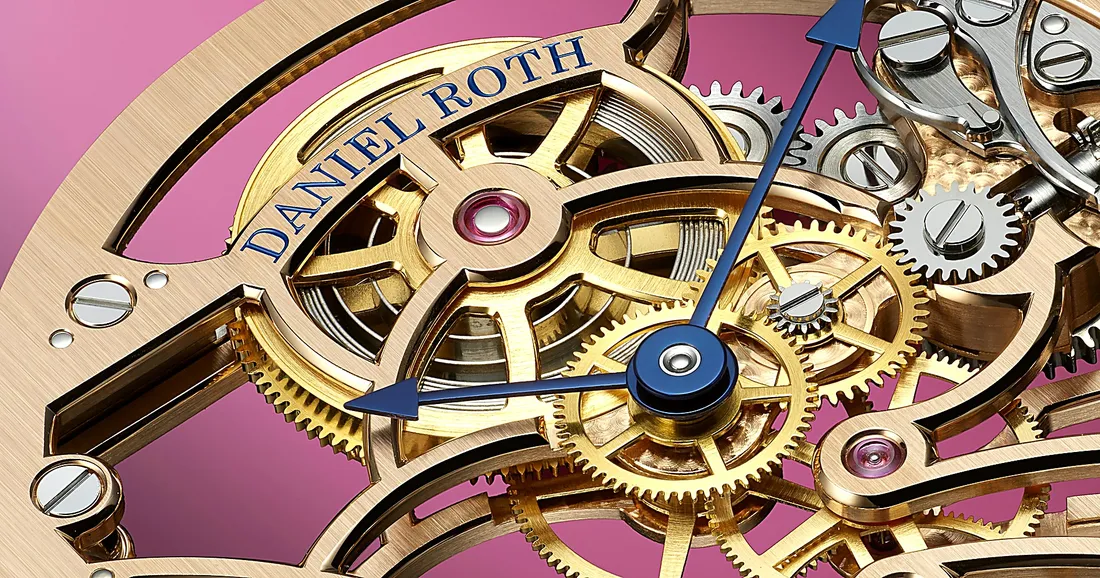
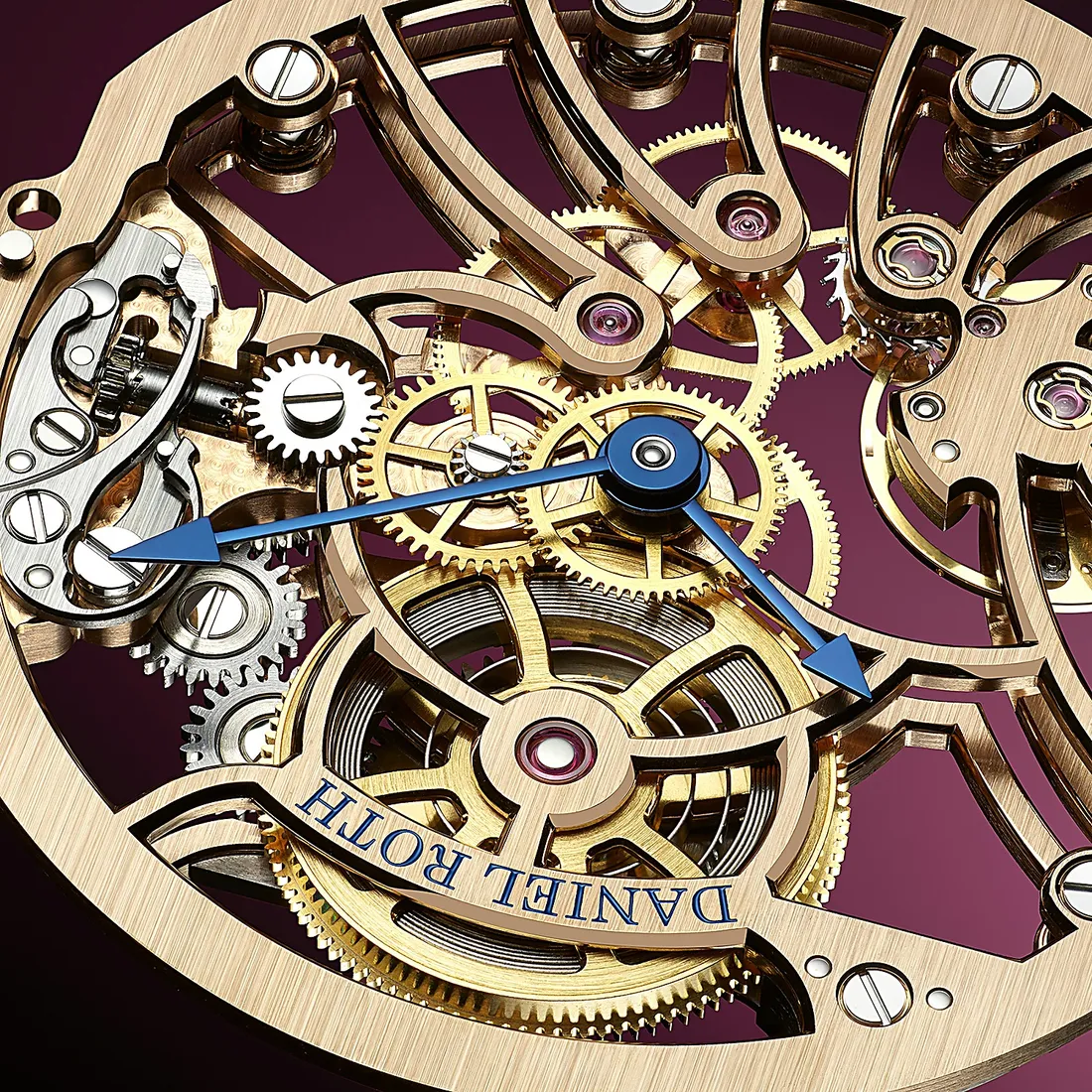
The internal angle deserves explaining, because it is the most honest way to judge how a movement has been finished. The edge of a bridge is cut back at forty-five degrees; this is called anglage. On an outward-facing, convex corner a machine can do it. A rotating cutter runs through comfortably.
On a corner that closes inward, where two edges meet in a sharp V, the machine is helpless. Every rotating tool has a radius, and that radius stops it reaching the bottom of the corner. It leaves a small roundness there, every time. A crisp internal angle can only be made with a hand-held file and a burnisher, over and over, patiently. This is why serious collectors count the internal angles first. An internal angle cannot be faked; it is either there or it is not.
Skeletonising multiplies that count. A closed plate contains a handful of internal angles; a cut-out lattice contains dozens. The hours and the risk grow in exactly the same proportion.
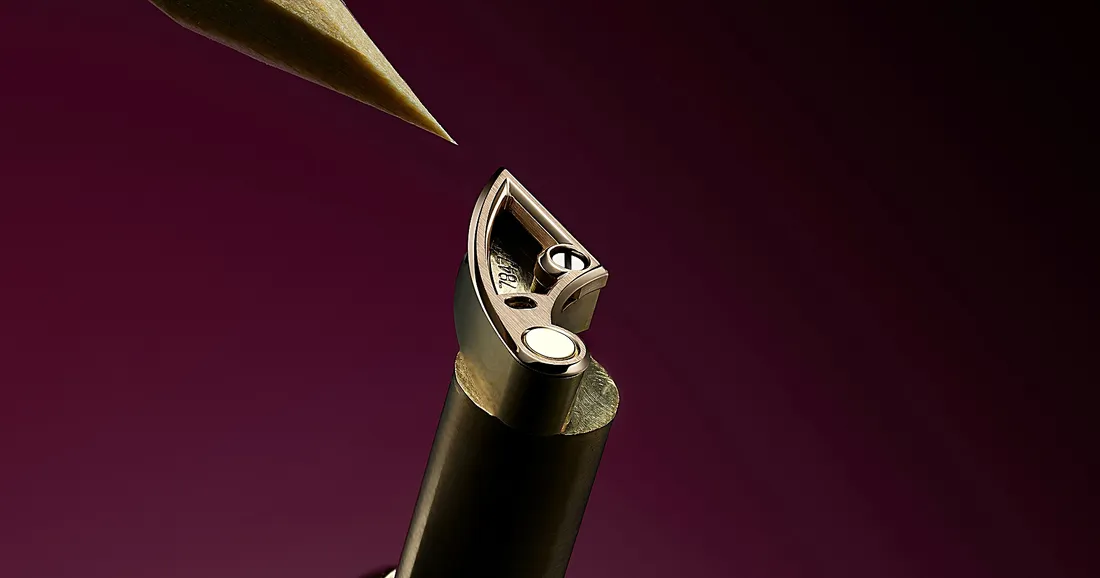
format_quote"An internal angle is not the finisher’s signature. It is the record of how many hours the finisher stood there."
Hasan Bekmezci
Then there is the material. Brass and German silver cut cleanly, hold together under the file and give a crisp edge. Gold does not. It is soft and ductile; it packs into the teeth of the file, it smears rather than cuts, and it wants to round off the very edge you are trying to keep sharp. Holding an internal angle crisp in gold is several times harder than holding the same angle in brass.
In return, gold has a kind of honesty. Brass bridges are usually rhodium or nickel plated; the plating covers small faults and lays a uniform brightness over the surface. Solid gold has no plating and no hiding place. The surface you see is the metal itself. The two master watchmakers of La Fabrique du Temps, Michel Navas and Enrico Barbasini, say that finishing a skeletonised calibre of this nature demands complete mastery of traditional technique. The sentence is modest. Its claim is not.
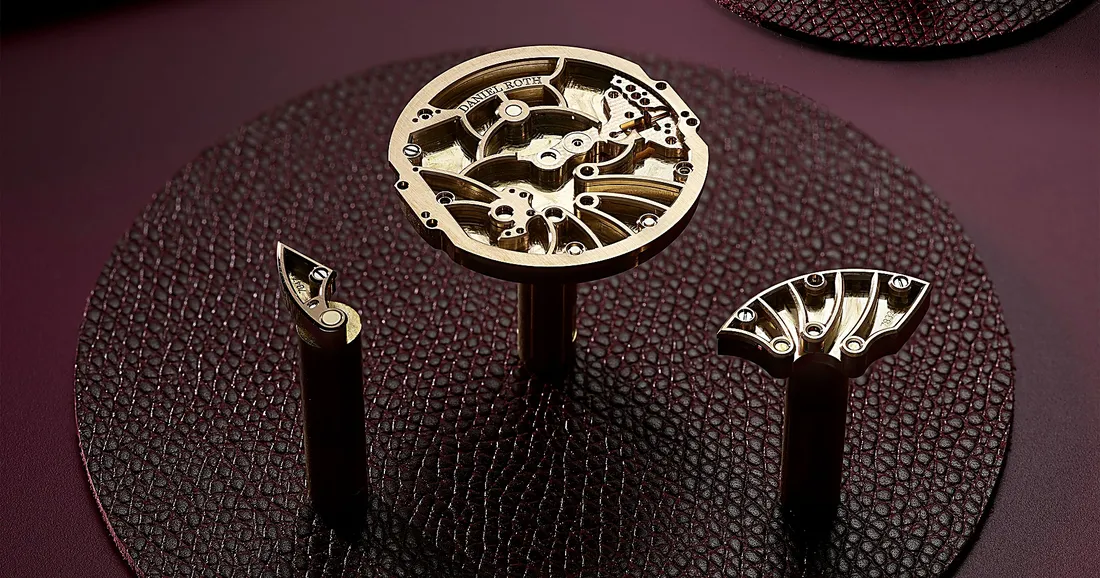
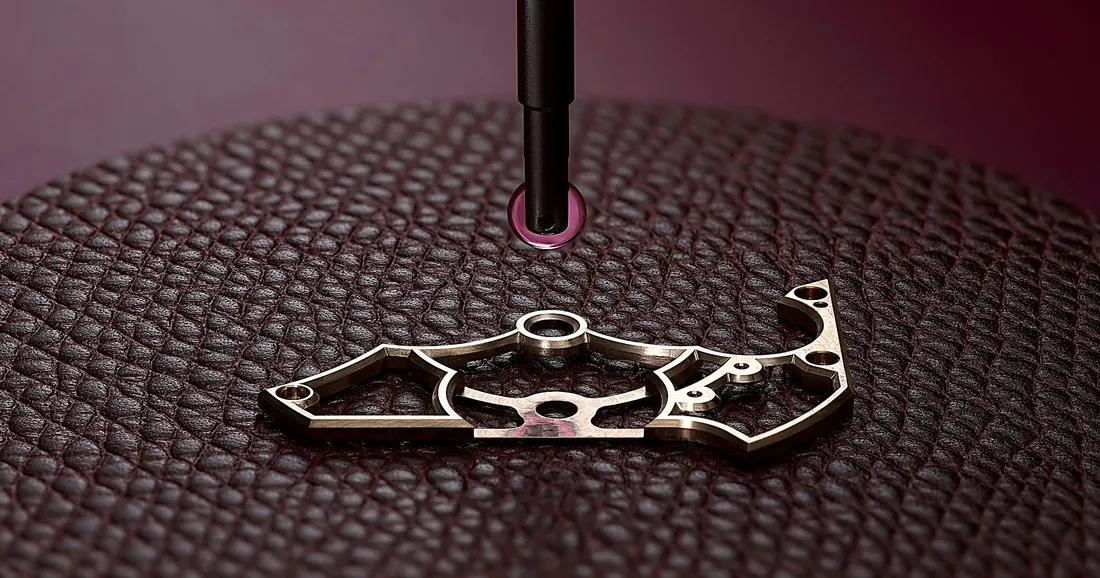
The resulting movement measures thirty-one by twenty-eight millimetres and is only 3.1 millimetres thick. It is built from one hundred and forty-one components and twenty-one jewels, beats at four oscillations a second and runs for about sixty-five hours. It is wound by hand. The case is 5N rose gold, 38.6 by 35.5 millimetres, 6.9 millimetres deep, water resistant to thirty metres and supplied on a twenty-millimetre calfskin strap.
The figure that stands out among these is 6.9 millimetres. A skeletonised movement usually gets thicker, because material is added back to compensate for the stiffness that was lost. Here the opposite has happened: the geometry of the bridges was rebuilt so that both the thinness and the transparency survive.
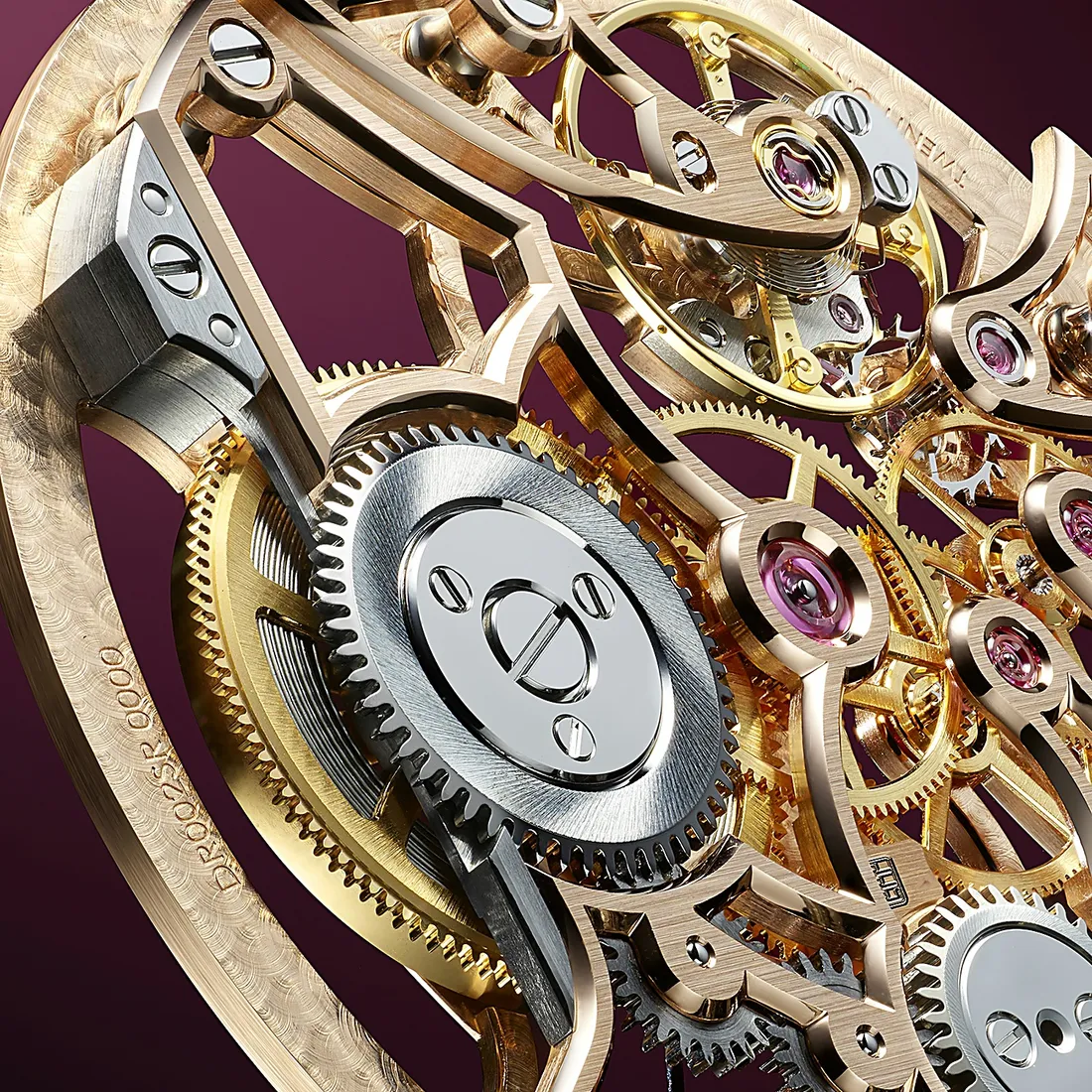
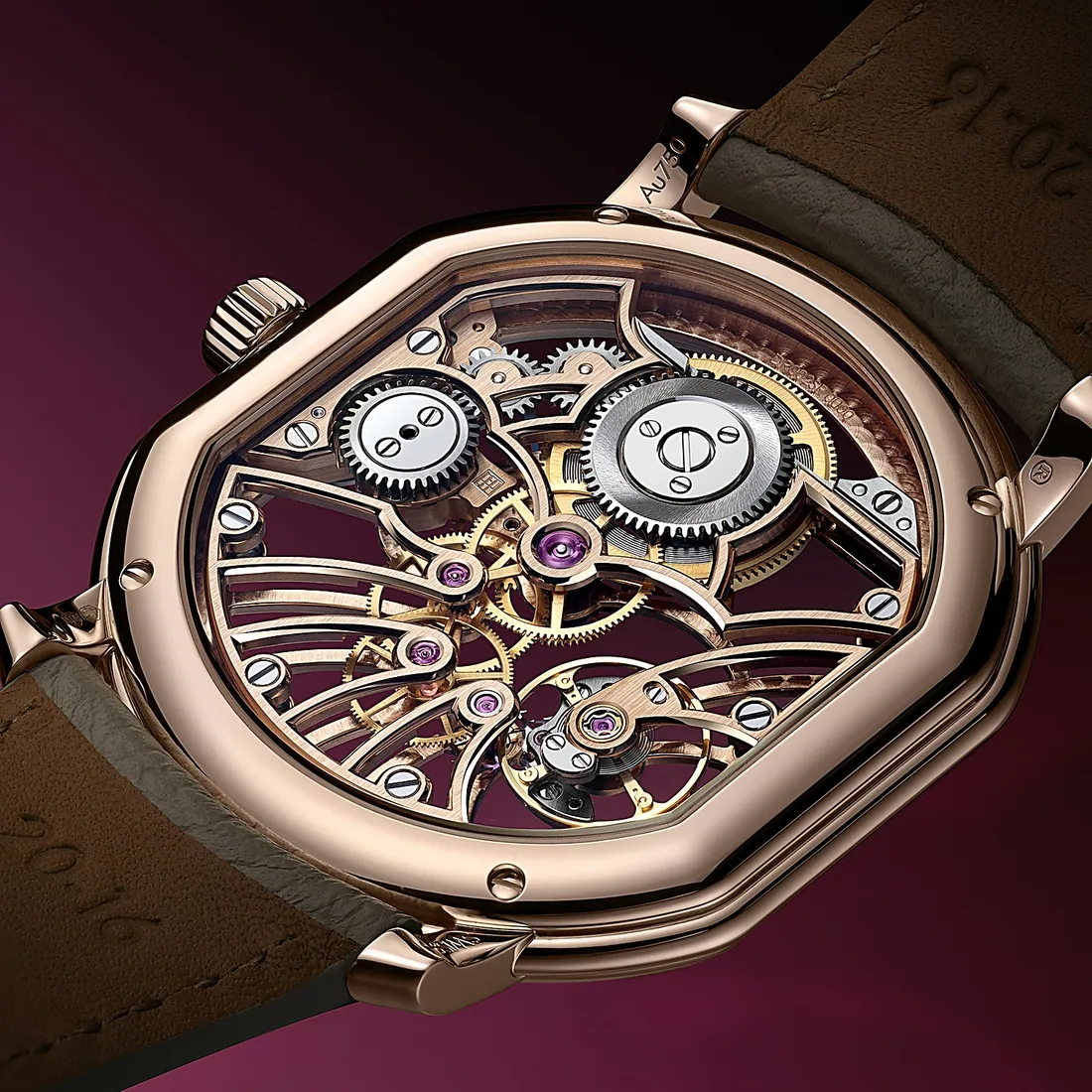
The price is 85,000 Swiss francs before tax, and production, in the house’s own words, runs to extremely small quantities. It is a reminder that in a skeletonised calibre the material is not what sets the price. Solid gold is expensive, but what is truly expensive is the years of the hand that can cut it without spoiling it.
The watch is nominated in the Essential category at the 2026 Grand Prix d’Horlogerie de Genève. At first the category looks wrong: how can a watch cut away everywhere be essential? Yet once you think about what skeletonising is, the name settles. What survives the cutting is only what is genuinely needed. Ornament goes, the surface that hides things goes, unnecessary mass goes. What you are left holding is the skeleton of the mechanism, which is to say the part it cannot do without.
format_quote"To skeletonise is not to decorate. It is to remove from a mechanism everything it could manage without."
Hasan Bekmezci
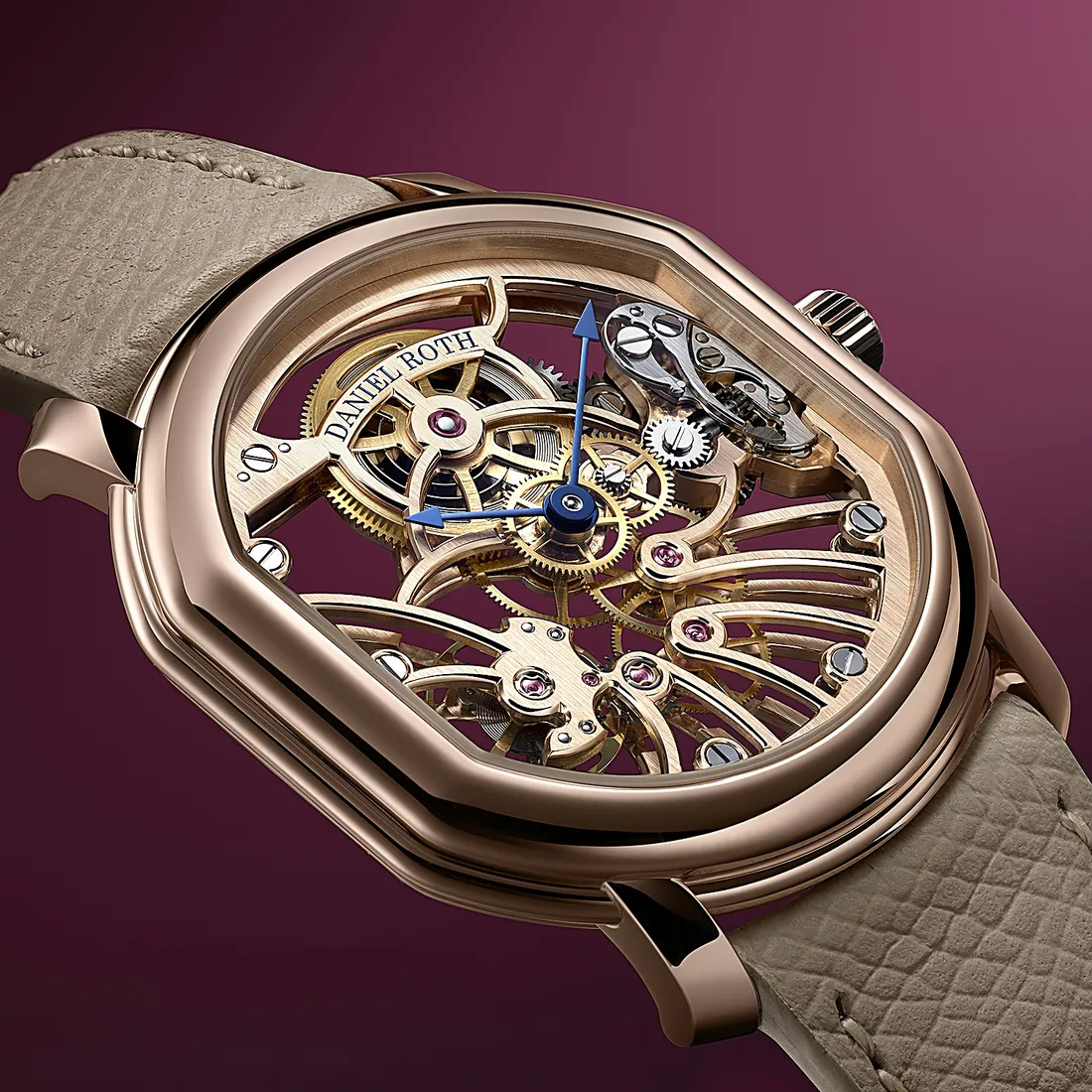
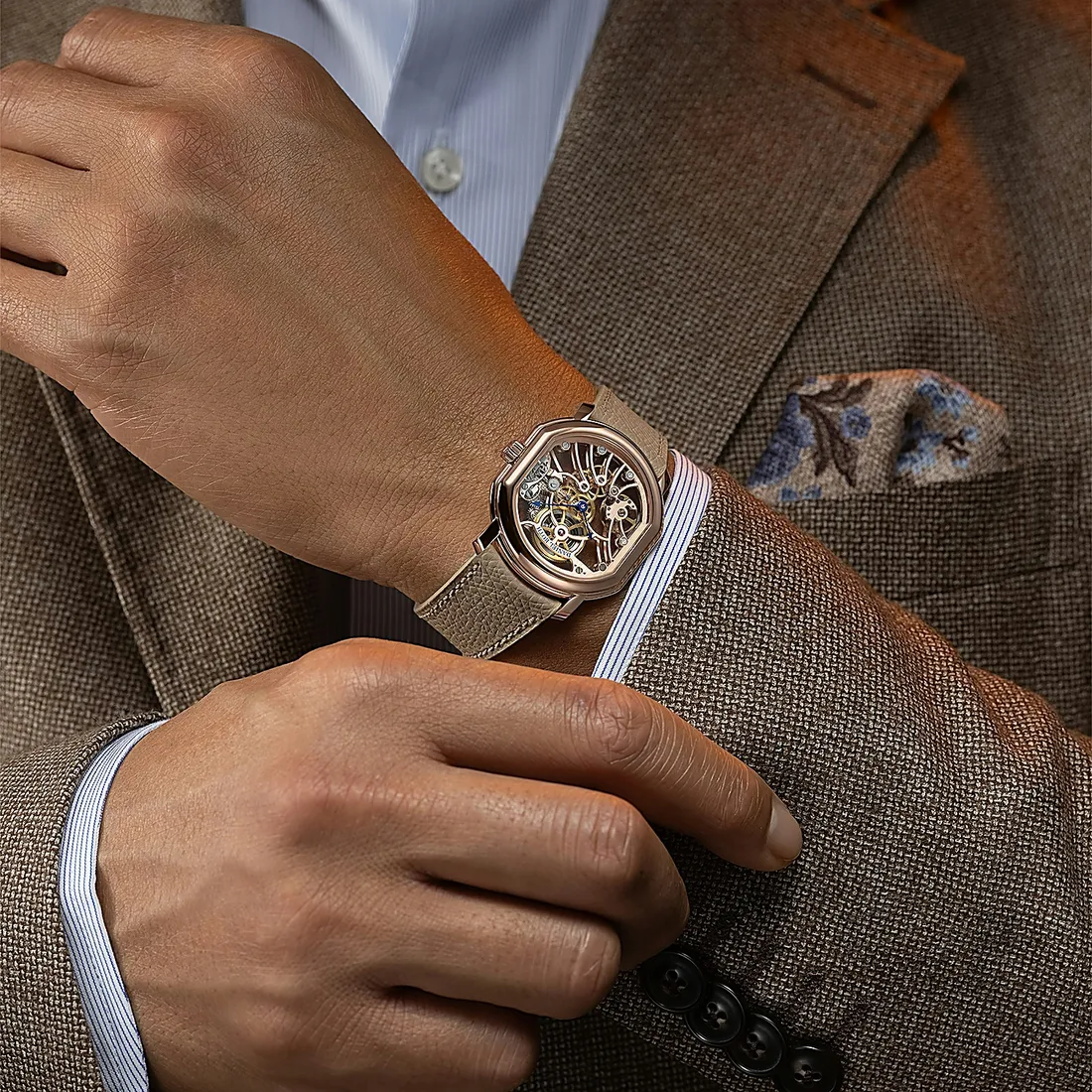
Worn, the most striking thing about this watch is neither the gold nor the cutting. It is the light. A closed dial hands light back from its surface; a skeleton lets light pass through. Look at it across a day and the colour of the window behind you, of the desk lamp, of the sky, filters through the mechanism, and the same watch looks different every hour. Daniel Roth’s double ellipse has been the same line for thirty-eight years. What goes inside it is an answer argued out afresh every time.