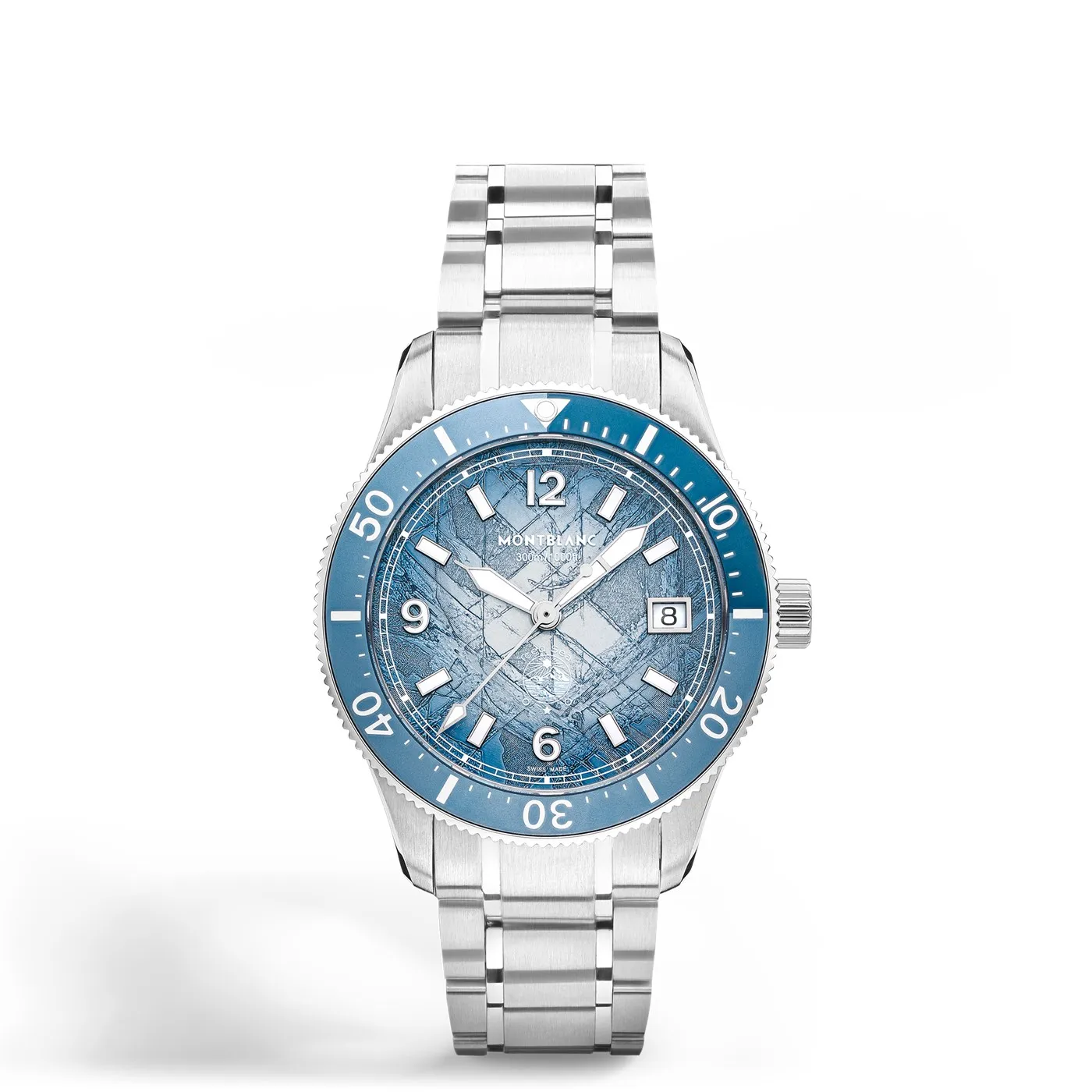
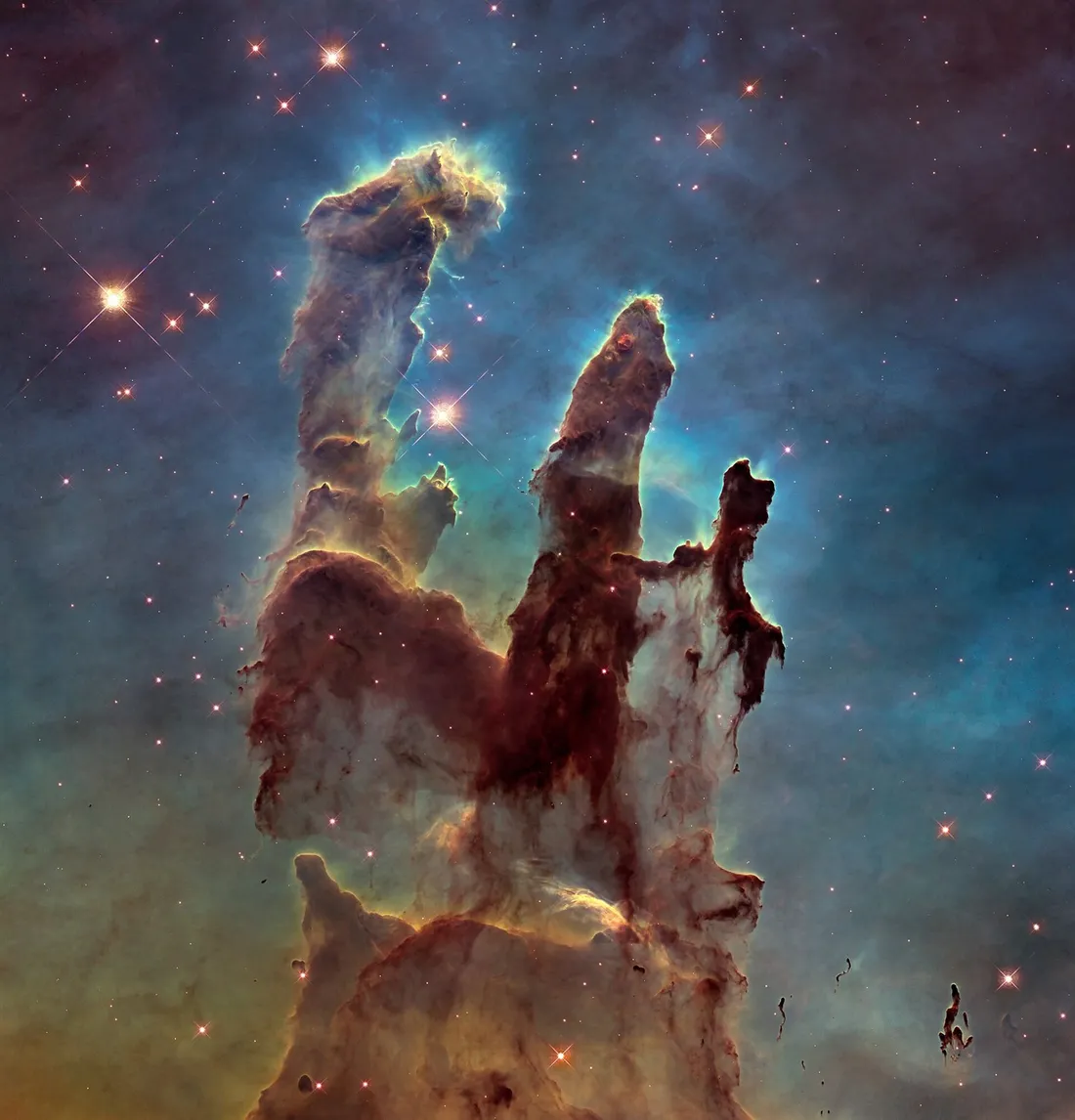
The Story: Beyond the Milky Way, at the Heart of the Absolute Vacuum
"To think we are alone in the universe is like looking at a single glass of water drawn from the ocean and claiming there are no fish in it. Life is not an atmospheric privilege; it is the universe’s way of seeking its own consciousness under different thermodynamic conditions." This saying is attributed to Carl Sagan, and it feeds the imagination behind this watch.
Millions of light years from our own world, picture an imaginary exoplanet orbiting an extinguished binary star. Here the sky is not blue; what forms the atmosphere is not the air we know but dense, oxygenless clouds of gas covering purple seas of liquid methane. On this planet, where the temperature approaches absolute zero, there is neither a breath of life nor any carbon-based life as we know it. And yet, under the different laws of physics in the depths of the universe, the possibility of highly conscious beings, perhaps made of crystalline silicates and exotic matter, strains the mind.
In their world, oxygen is not a life-giving element but a destructive, poisonous one that instantly burns, corrodes and destroys everything it touches. Their time flows in an absolute vacuum into which no oxygen molecule can seep, where there is neither atmospheric friction nor wear.
And so, in the minds of the Montblanc masters in the Villeret valley of Switzerland, perhaps precisely this question arose: could humanity’s mechanical watchmaking heritage cross the safe borders of the Earth’s atmosphere and keep time flawlessly even in the darkest, oxygenless vacuums of the cosmos?
This question became, for the masters, a quest as philosophical as it was mechanical. They did not merely make a dive watch; they set out to design a mechanical work of art that would cross the limits of life on Earth and withstand the timelessness of the universe’s most extreme, oxygenless corners. Zero Oxygen technology is a visionary homage that reaches from humanity’s confined atmosphere to the absolute vacuum of outer space and of alien galaxies.
An Art Inherited from a Forgotten Ancestor: Gratté-Boisé and the Mer de Glace Dial
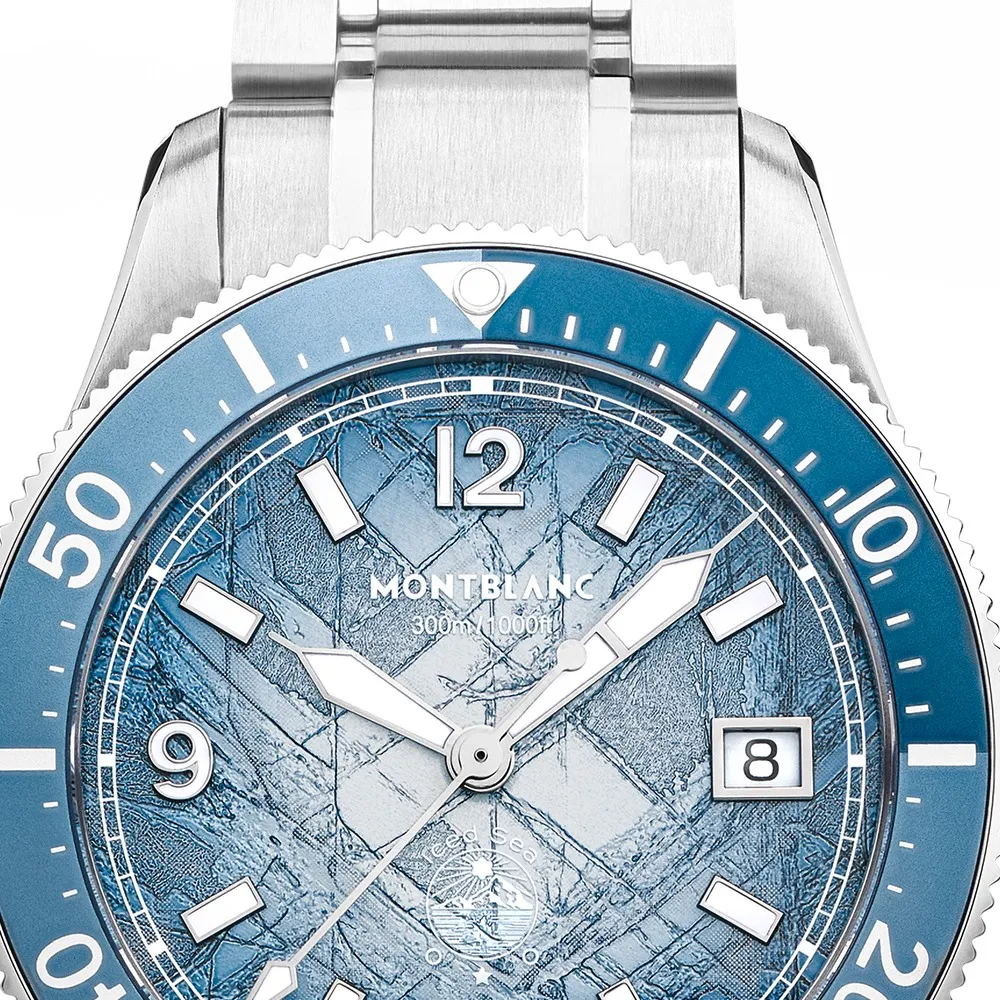
The deep, light-absorbing glacier texture you meet when you look at the dial is not the product of an ordinary print, a laser engraving or a chemical coating. To carry the thousand-year-old ice cracks at the heart of Mer de Glace, the legendary sea of ice in the Alps, onto the dial, Montblanc revived Gratté-Boisé, an ancestral technique of watchmaking history that had almost vanished.
Completing a single dial requires more than thirty complex stages and over 40 hours of uninterrupted handwork. The process begins with the preparation of hard wood: the master shapes blocks of high-density hardwood such as dried oak and boxwood by hand, like micron-scale gravers. These wooden tips are dipped into a micro-abrasive paste made of diamond dust and special mineral oils.
Then comes the scraping (gratté) stage: thousands of circular, vertical and diagonal strokes are applied with the wooden tips onto a brass plate only 0.5 mm thick. The master must control the pressure he applies to the metal every second; if the pressure is even a milligram too much, the thin plate buckles and days of labour are ruined in an instant. This organic friction of the wood fibres against the metal creates millions of micro-cracks on the plate, each of a completely different depth and angle. The dial then passes through a special black anodising and a gradual colouring process.
The resulting structure, though only 0.5 mm thick, offers a three-dimensional optical depth that, when you look at the dial, draws you into a frozen glacier crevasse metres deep.
The Invisible Engineering: Zero Oxygen Technology
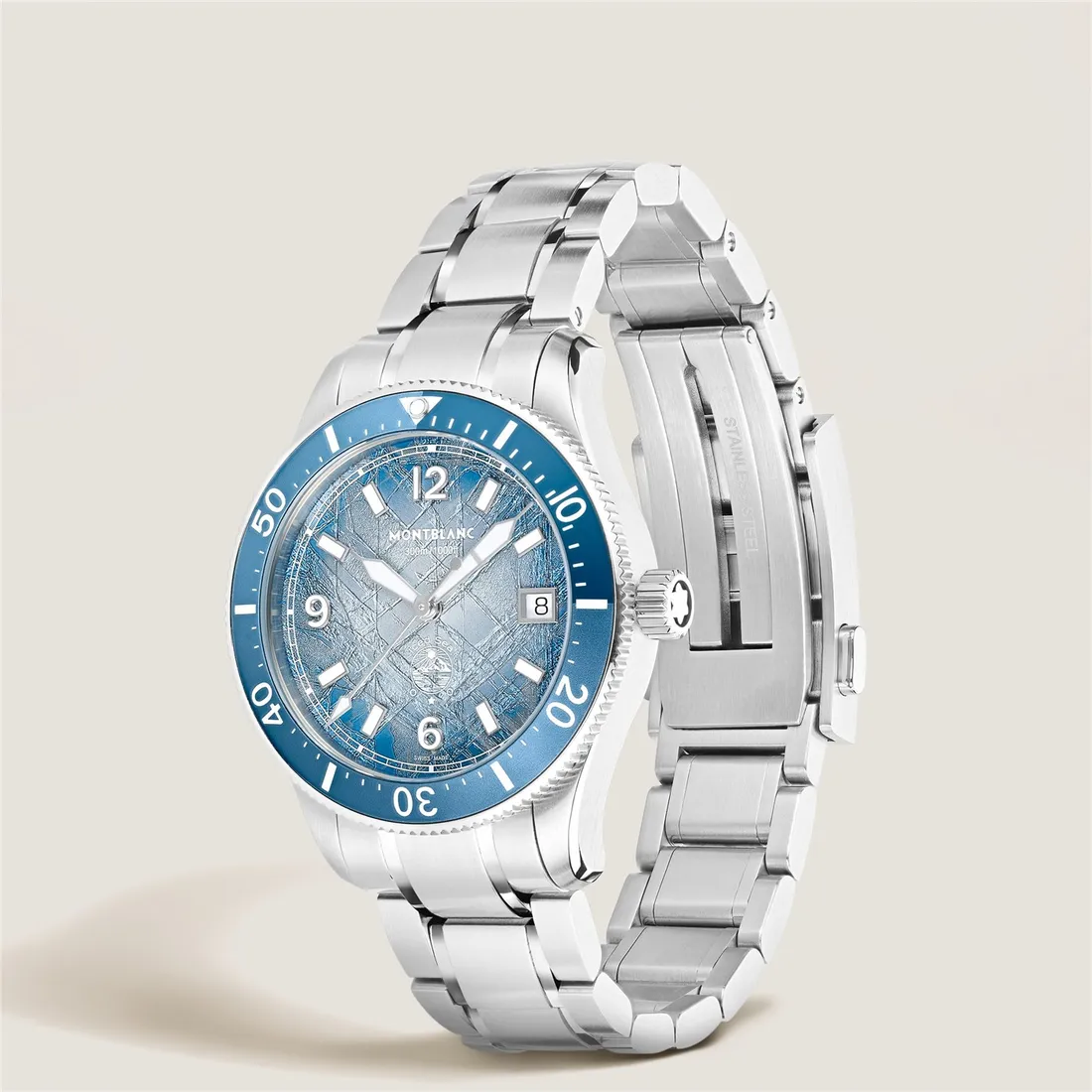
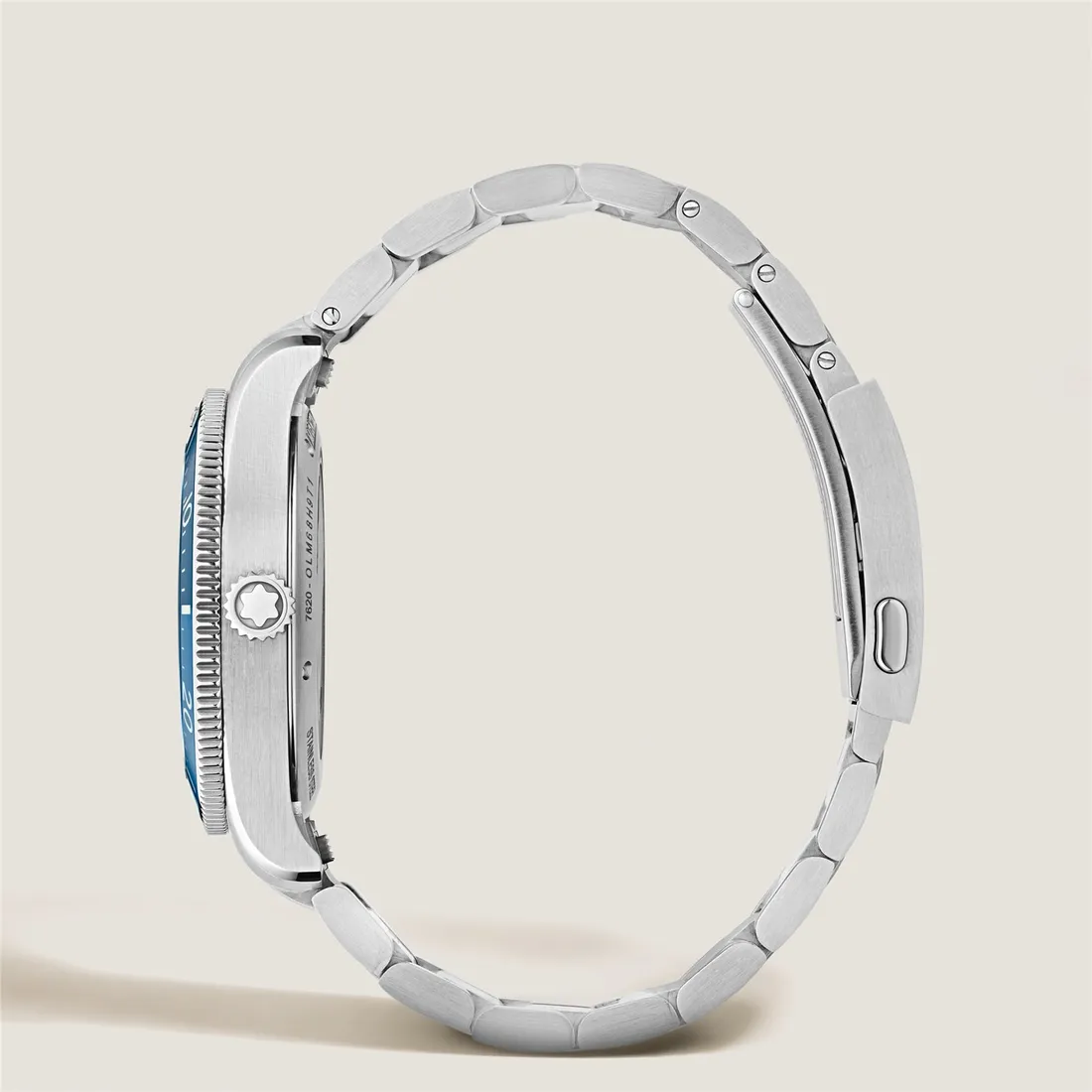
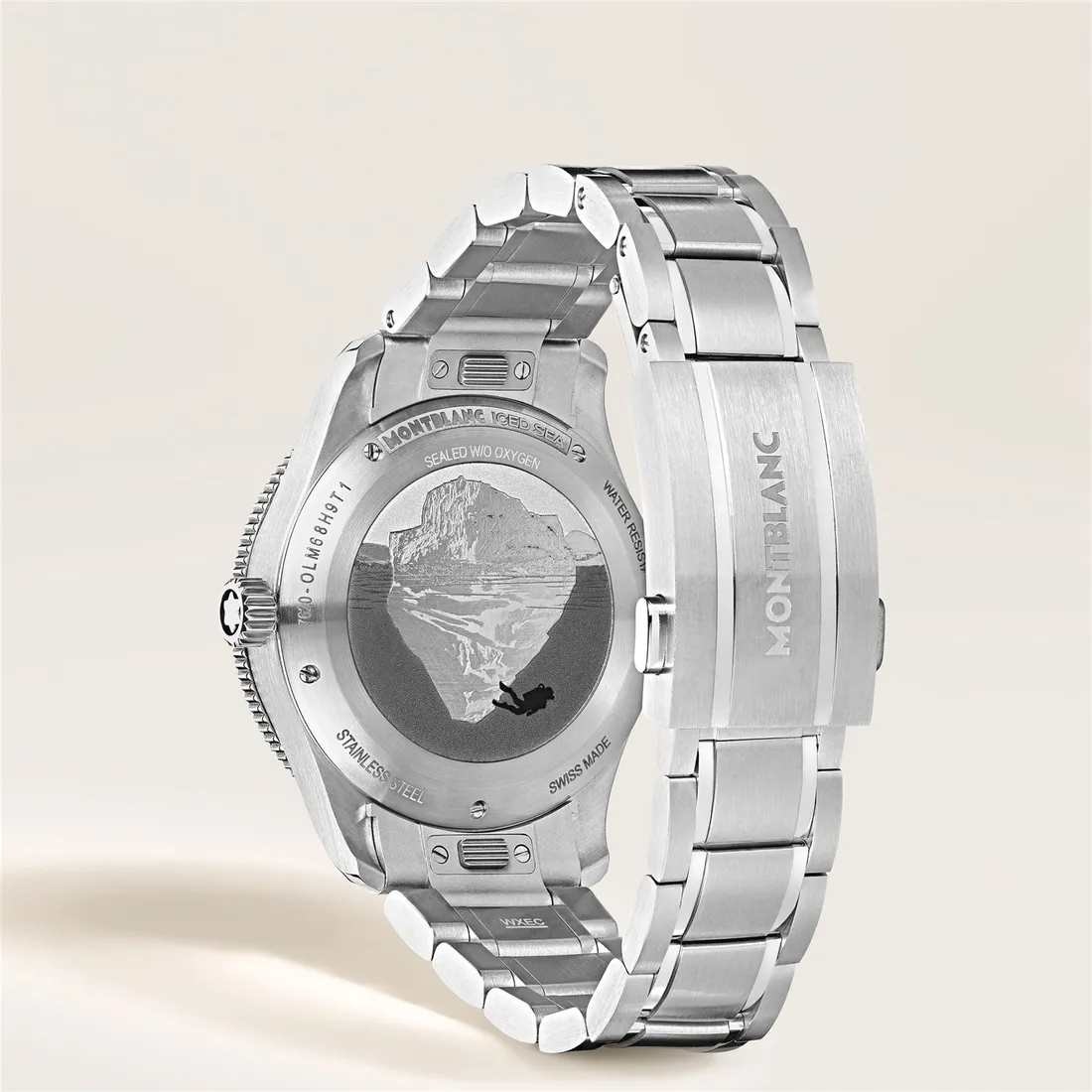
To prevent even a single oxygen molecule from entering as the case is closed, Montblanc developed a special sealing process inspired by the medical and aerospace industries.
First comes evacuation: after the MB 24.17 calibre is placed in the case, the whole assembly is taken into a pressurised vacuum chamber (a glove-box) isolated from atmospheric air; powerful pumps draw out all the air and micro-level moisture inside the case, creating a zero-pressure vacuum. Then comes the injection of inert nitrogen: in place of the evacuated air, 100 percent pure nitrogen (N₂) gas, which reacts chemically with nothing, is introduced. Finally comes hermetic sealing: while under this pure nitrogen atmosphere, the case is sealed with its double-gasket crown and caseback. The moment the case closes, it severs its bond with the Earth’s atmosphere forever.
This technology has two vital results. First, absolute fog-proofing: the fog that forms on the inner surface of the sapphire crystal in freezing cold is in fact the condensation of moisture hidden in the air inside the case; because there is no moisture or oxygen inside, the watch never fogs, even under the most extreme thermal shocks. Second, the non-ageing of the oils: the synthetic oils that reduce the friction of the wheels oxidise, dry out and harden as they meet oxygen; in an oxygenless nitrogen environment the oils keep their structure, so wear drops to almost zero and service intervals stretch to decades.
Physics and Thermodynamics: Entropy, the Ideal Gas and the Dew Point
This engineering is a direct triumph of the laws of thermodynamics and chemical kinetics.
The high electronegativity of the oxygen molecule (O₂) starts the reaction by pulling electrons from metal atoms and from organic oil molecules. The oxidation of iron runs like this: 4 Fe + 3 O₂ → 2 Fe₂O₃. The reaction rate is given by v = k · [Fe]ᵃ · [O₂]ᵇ; when the oxygen concentration [O₂] is reduced to zero, the reaction rate v also becomes zero. Oxidation becomes chemically impossible, and the increase of entropy in the direction of corrosion is halted.
The behaviour of the gas inside the case is explained by the ideal gas law: PV = nRT. Here n is the number of moles inside the case. In a conventional watch, the number of moles of water vapour that enters the case with the air is greater than zero. When the temperature drops suddenly, the saturated vapour pressure falls rapidly according to the Clausius-Clapeyron relation: ln(P₂ / P₁) = (ΔH / R) · (1/T₁ − 1/T₂). The instant the partial pressure of the water vapour in the case exceeds the saturated vapour pressure at the falling temperature, the gaseous water liquefies; the dew point is crossed and fog forms on the crystal.
But because Montblanc, in the vacuum chamber, evacuates all the water vapour in the case and brings the number of water molecules to zero, not a single water molecule remains to change phase even as the temperature approaches absolute zero (0 K). Reaching the dew point becomes physically impossible, and the crystal keeps its clarity forever. It is like looking for a fish in a glass of water: the absence of evidence does not prove that nothing is there. But in this case there truly is nothing: no oxygen, no moisture, and no molecule to age time.