The Line Left by the Tide
In a small harbour on the Atlantic coast, in the half-light of morning, the sea had drawn back. A wet line remained on the rocks: a mark made of salt and weed, showing how far the water had come the night before. The marine biologist Iris measured that line every morning; to her, the shore was the most honest calendar in the world.
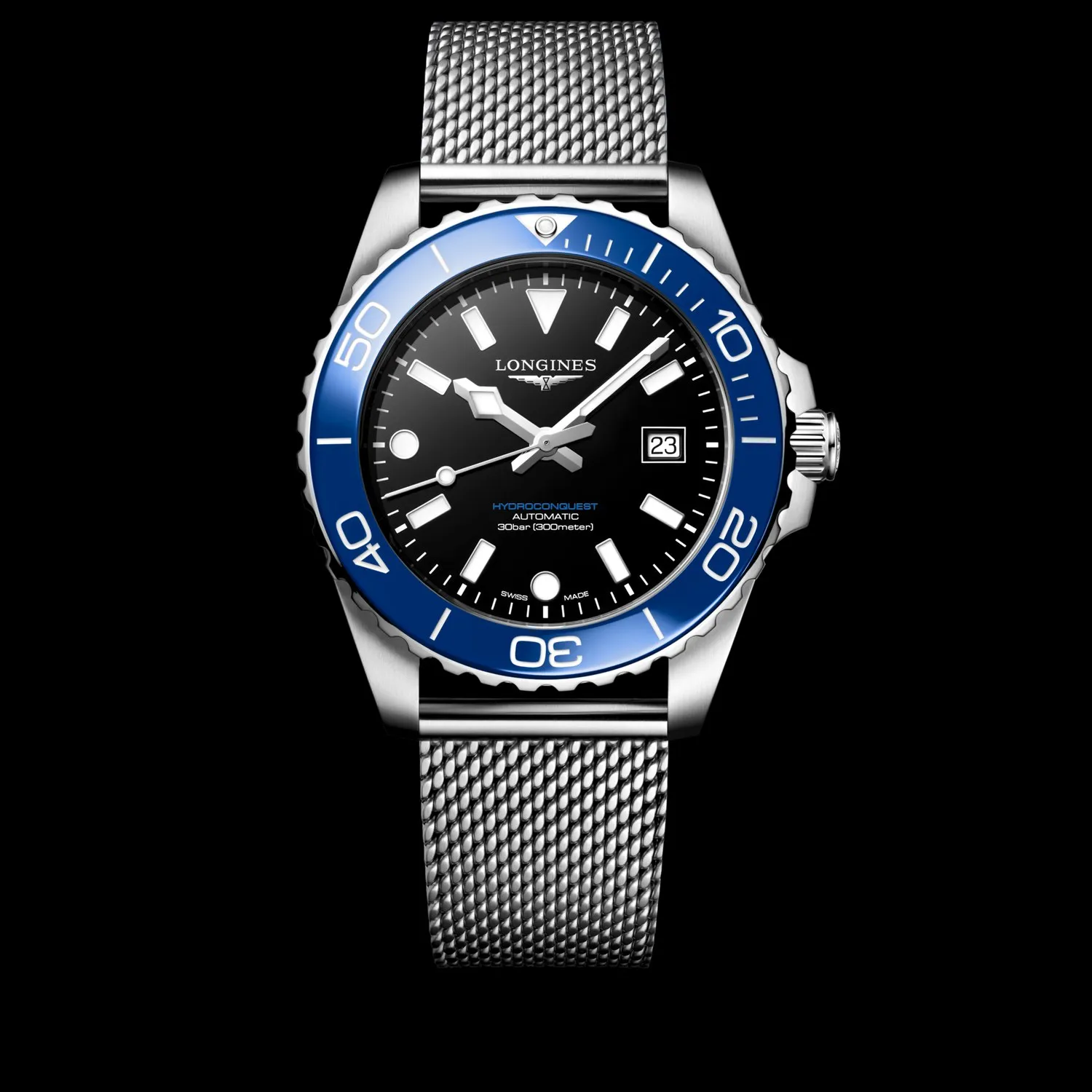
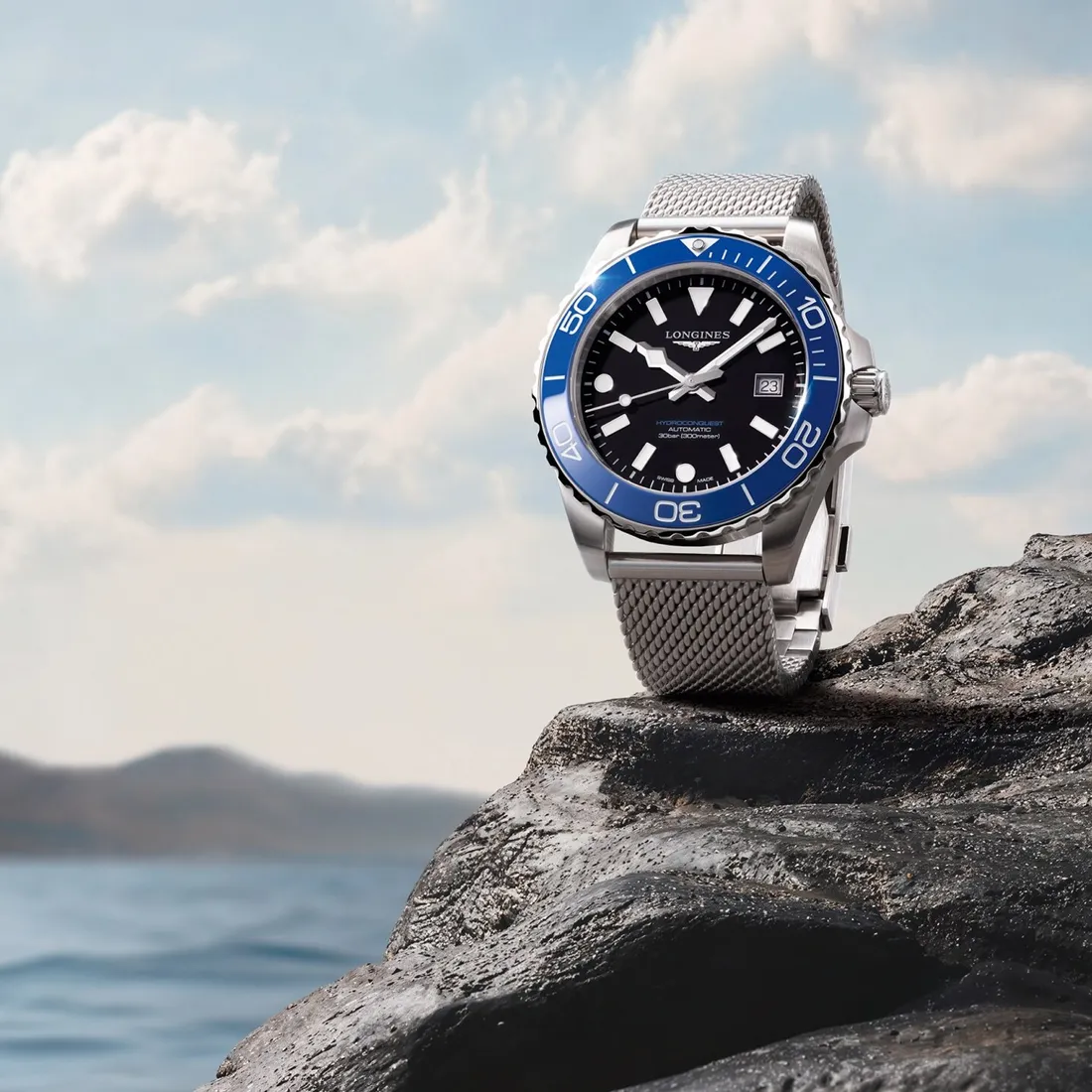
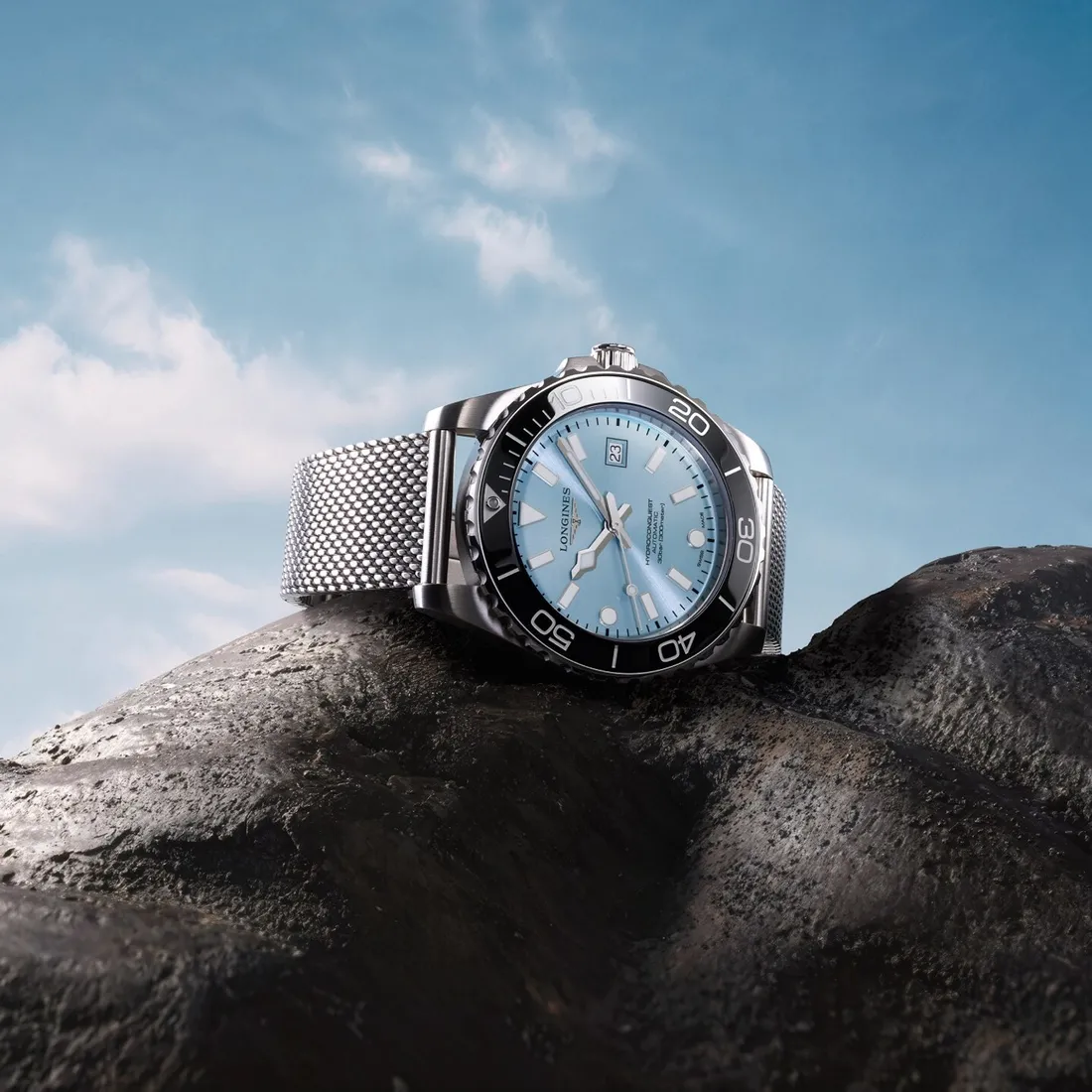
Theo, the fisherman who had just tied up his boat, came over. Two generations lay between them, yet they read the same water. "The tide went out early today," said Theo. Iris nodded and looked at her watch; on her wrist was a diving watch whose bezel tended toward that ice-blue tone of the shallows.
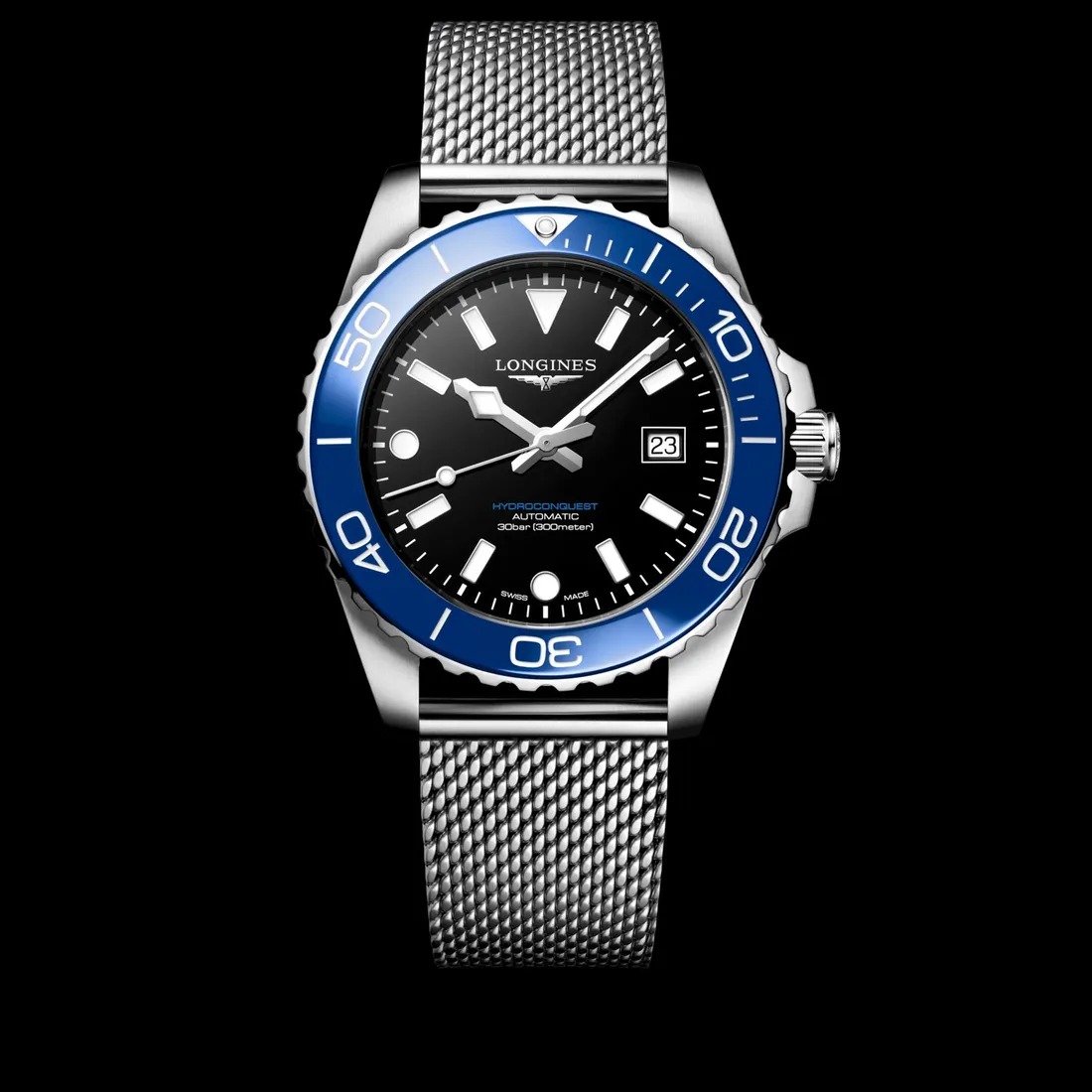
"Is it new?" asked Theo. "A Longines HydroConquest," said Iris. "The collection has existed for years, but this year it was renewed from top to bottom. And its name is no accident: 'hydro' means water, 'conquest' means conquest. Not conquering the water, perhaps; but being able to work inside it."
The Ceramic Bezel: Why It Is as Hard as Glass
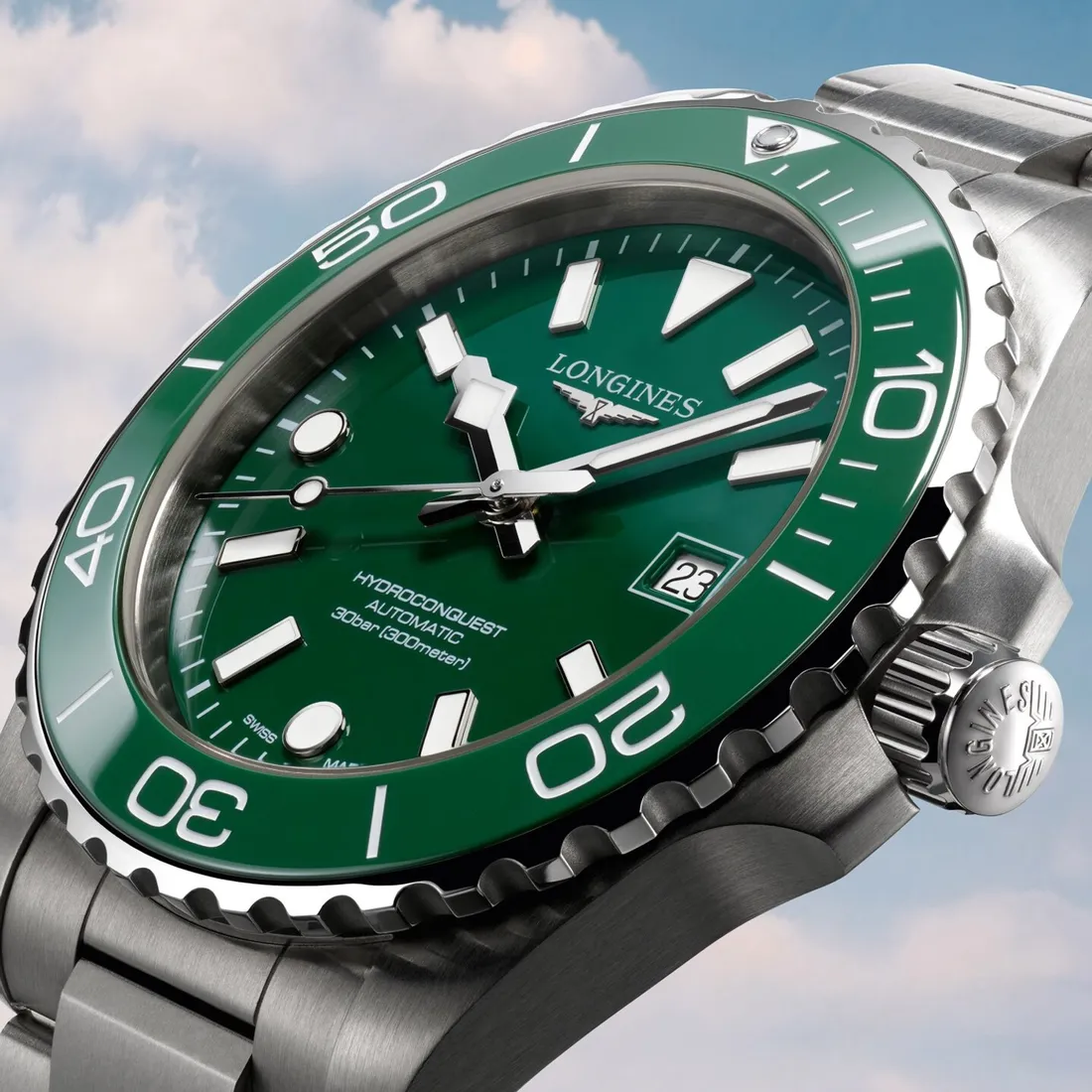
Theo ran his finger over the bezel. "This surface is strange," he said. "Not cold like metal, and not a single scratch." Iris smiled: "Because it is not metal but ceramic. It is made by firing aluminium oxide powder at very high temperature; the result is a surface almost as hard as sapphire."
"For a diver that matters greatly," she went on. "The bezels of older diving watches were aluminium; seawater and sun would fade them within a couple of seasons, and knocking them against the boat would strip the paint. Ceramic neither fades nor scratches; ten years from now it is the same colour as today. And the numbers on it are not painted but engraved and filled with metal. So even the numbers do not wear away."
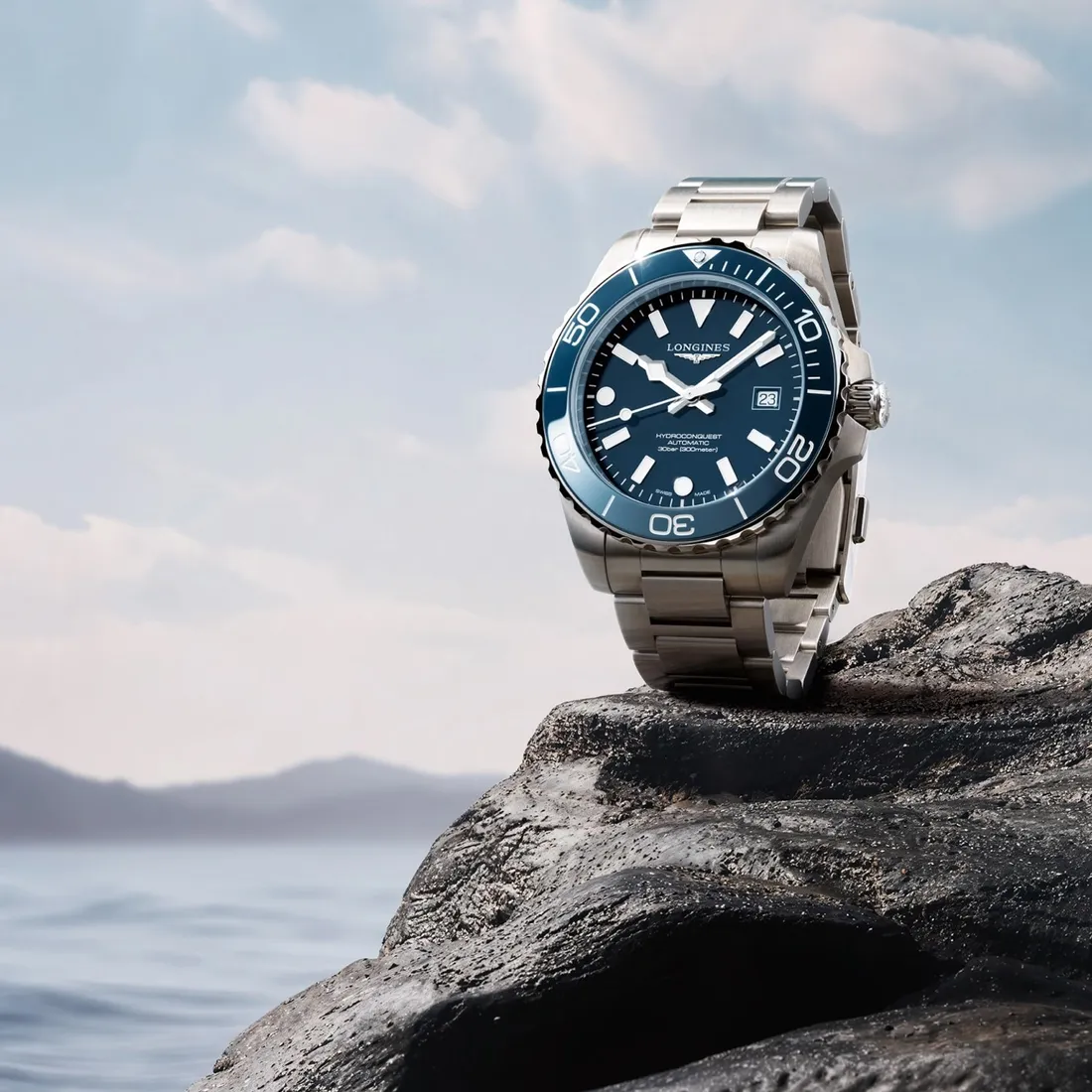
"That is also why the colours look this deep," Iris added. "This new generation comes in green, navy, black and this ice blue. I chose this one because it is the colour of shallow water; I wanted the colour I look at every morning on my wrist."
format_quote"Ceramic neither fades nor scratches; ten years from now it is the same colour as today."
Iris
Safety That Turns One Way
"Why do you turn this bezel?" asked Theo. Iris rotated it; small clicks were heard. "Before I enter the water I bring that triangle marker over the minute hand," she said. "That way I read at a glance how long I have been down. For a diver an air tank is measured in minutes; what matters is not what time it is, but how many minutes have passed."
"And note: it only turns one way," she added. "Anticlockwise. If I knock it against something in the water, the bezel can only shift so as to show more elapsed time. So even a mistake pushes me to surface early. That is design taking human error into account."
"The case is water resistant to three hundred metres," said Iris. "I never go deeper than thirty; but that surplus is not showing off, it is a safety margin. The limit of a tool should always lie far beyond your own."
format_quote"The limit of a tool should always lie far beyond your own."
Iris
A Silicon Spring Against Magnetism
"And what is inside it?" asked Theo, pointing to his boat's engine. "My boat is full of magnets; they even throw off my compass." Iris's eyes lit up: "That is the most important change in this new generation. Inside runs Longines's own calibre, and the little spiral spring at its heart is made of silicon."
"That spring is what determines a watch's accuracy," she explained. "The balance wheel swings at the same rhythm every second as that spring tightens and relaxes. But when the spring is steel, magnets stick parts of it together, shorten it, and the watch starts running minutes fast each day. Silicon is not a metal; a magnet simply does not see it. So the boat's engine, speakers, your phone case; none of them can affect this watch."
"There is also a map of the world engraved on the case back," said Iris, turning the watch over. "Longines first used this 'planisphere' engraving on its models showing two time zones; now it has come to the back of this diving watch too. A nice reminder for someone who works at sea: this water has a place on a map."
Four Colours, One Shore
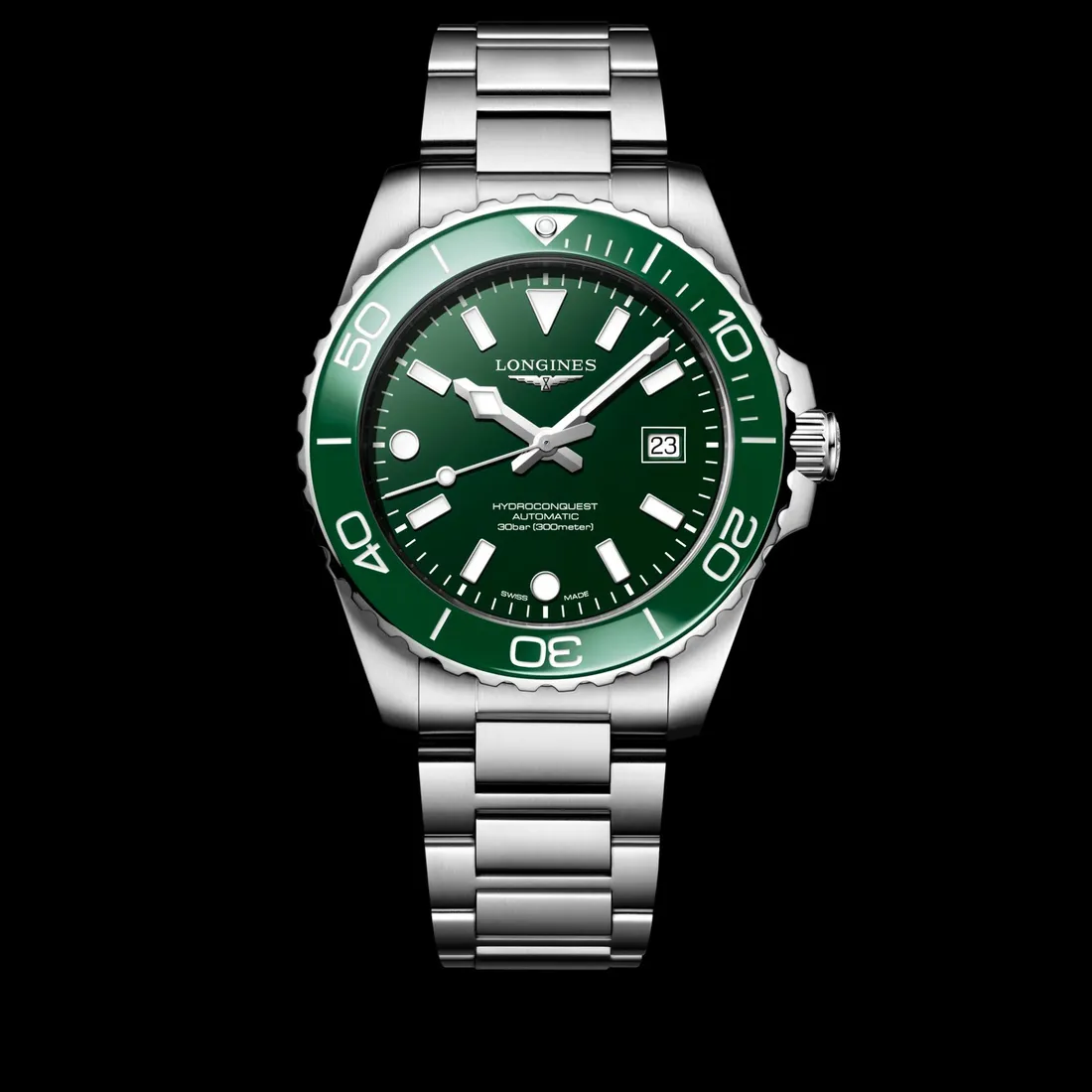
Theo looked at the other colours: one green, like forest; one navy, the colour of open sea; one black, the colour of a night watch. "They are all the same water," he said, "but at different hours."
"Well put," said Iris. "The sea changes colour many times a day. In the morning it is this ice blue; at noon it turns navy; before a storm it goes green, and at night black. Longines has given this not in a single model but in four separate interpretations. You can choose the colour of whichever hour you work in."
"The bracelets change too," she added. "Some steel, some a fine woven mesh. The mesh dries faster when it gets wet and salt does not gather between the links; that is why I prefer it."
And It Will Fill Again
As the sun climbed, the sea began to return. Iris wrote her measurement in her notebook; Theo loosened his boat's rope. The wet line on the rock slowly went under the water.
"I do not measure time," said Iris as she closed her notebook. "I measure when the water comes and when it goes. But to do that I need something on my wrist that does not stop, does not mind getting wet, and is not afraid of magnets. This watch does not only tell me the time; it gets wet along with me."
The sea erased the line on the rock and went away, to draw it again in the evening. On her wrist, a small piece of the same colour remained.