A Rainy Workshop in Glasgow
North of Glasgow, on the third floor of a building converted from an old textile mill, the same grey light always fell through the windows. Scotland's rain was a habit here; light was a luxury. The stained-glass maker Fiona had spent twenty years making coloured windows for churches; she knew how glass holds light, and which colour comes alive in which weather.
That day Callum, a young watch designer who worked on the same floor, knocked at the door. He had a small box in his hand. "I want to show you something," he said. "But first I need your opinion, because this is not my trade, it is yours."
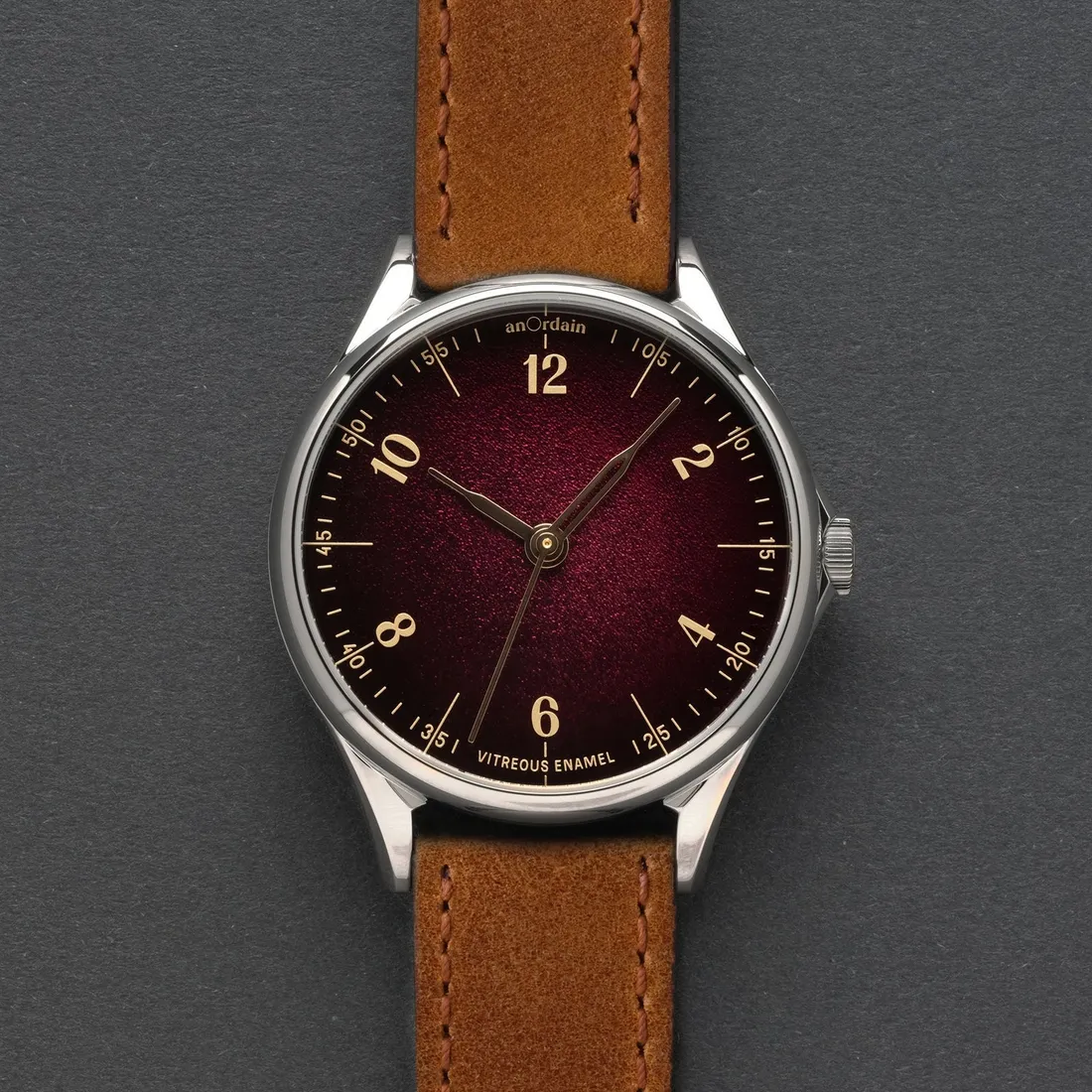
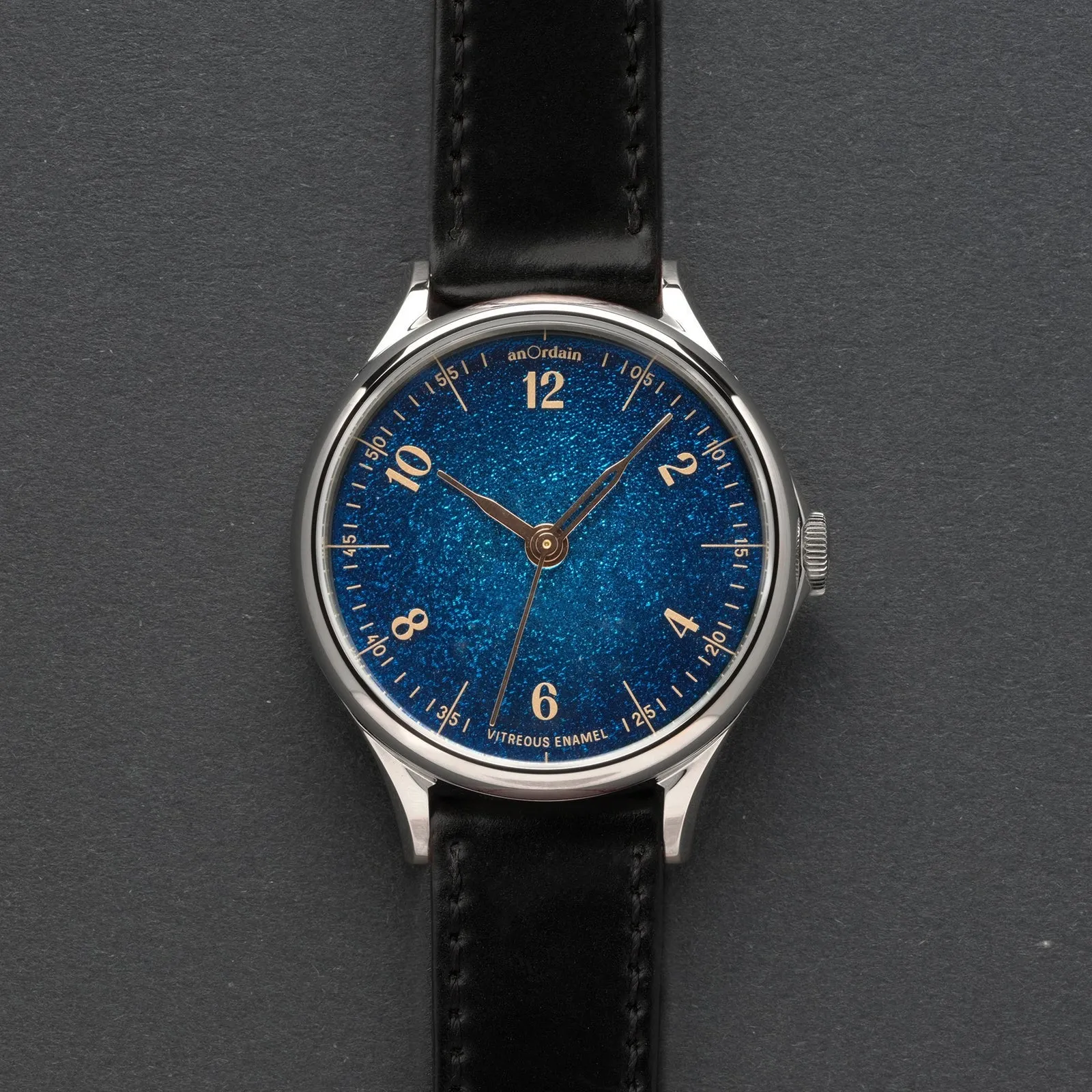
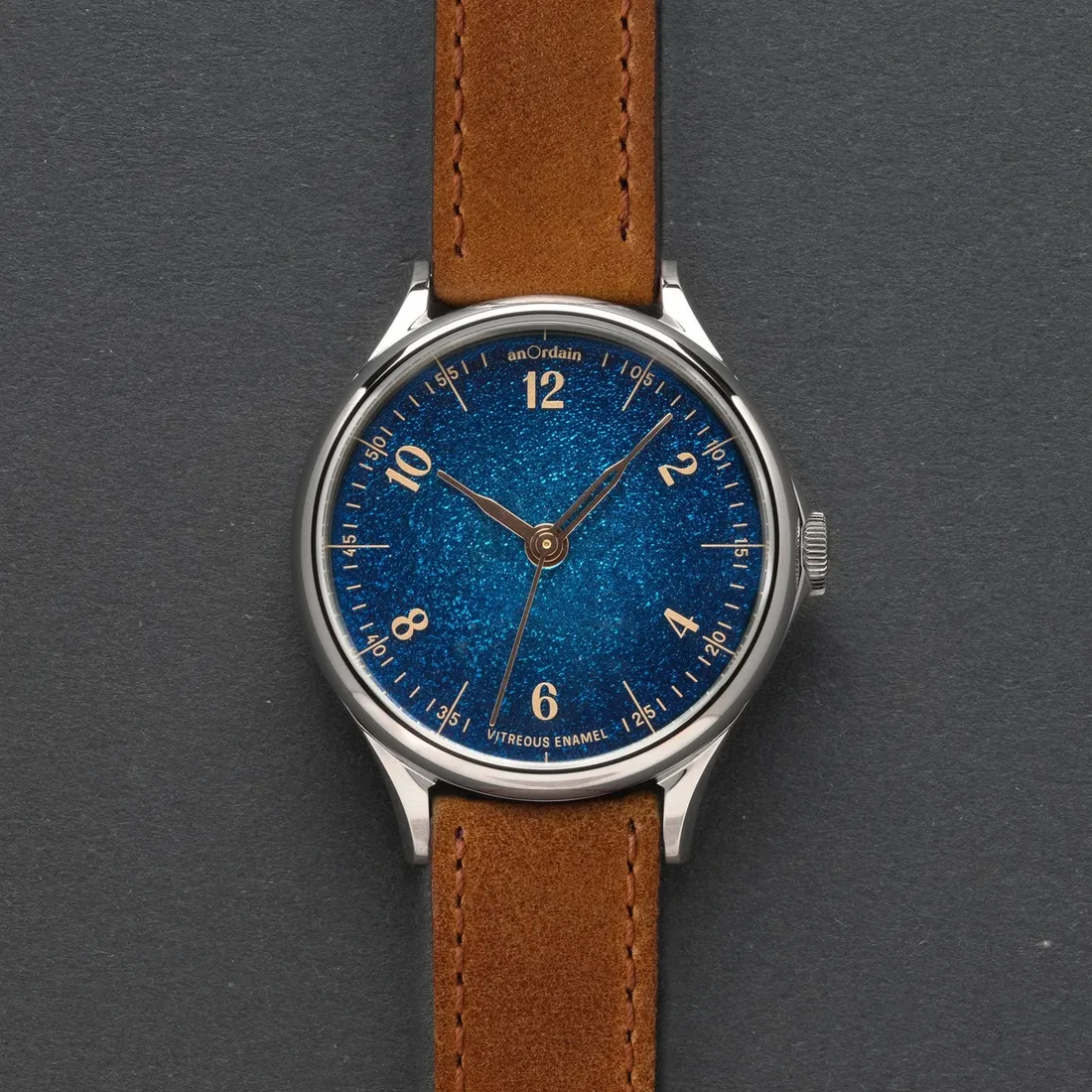
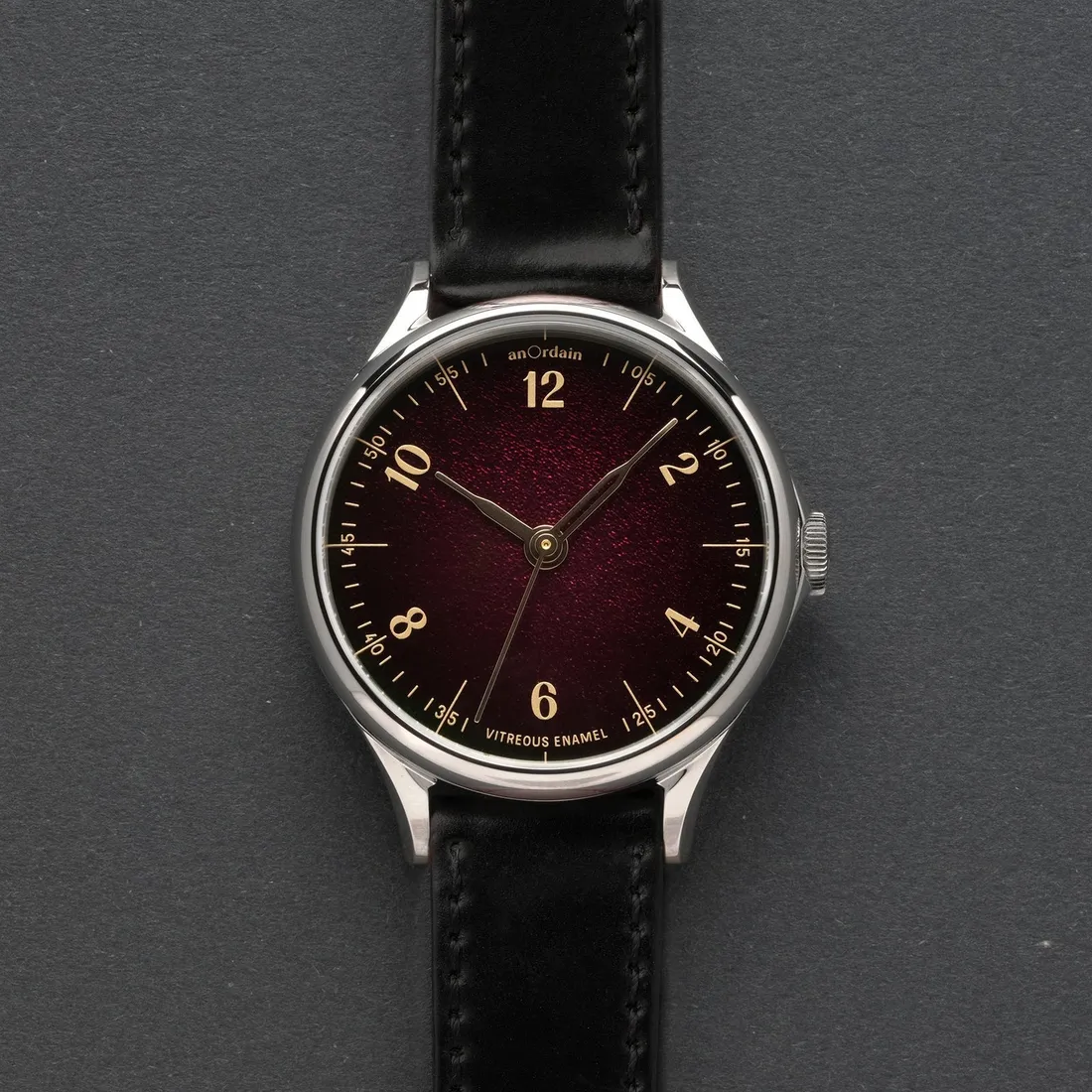
He opened the box. The dial of the watch inside was the very opposite of the grey weather outside: a deep, vivid blue, darkening from the centre toward the edges. Fiona fell silent for a moment, then turned the watch toward the light. "This is not paint," she said quietly. "This is glass."
What Enamel Is: A Contract Between Powdered Glass and Fire
"You are right," said Callum. "It is called vitreous enamel. Glass is ground to a powder; then it is laid in a thin layer over a metal dial plate and goes into the kiln. At around eight hundred degrees the powdered glass melts and fuses to the metal. When it cools it is no longer a separate coating; it is one body with the metal."
"I do this with church glass," said Fiona, "but there the glass itself is coloured. Where does the colour come from here?" "From metal oxides," said Callum. "Tiny quantities of metal added to the glass powder determine the colour: cobalt gives blue, iron green, manganese purple. So the colour on the dial is not a pigment but a mineral."
"And here is the hardest part," he added. "This is not done once but layer upon layer. For each layer the dial goes back into the kiln; some dials are fired six or seven times. On every trip through the kiln the dial can crack, bubble or shift in colour. That is why most of the dials made end up in the bin."
format_quote"The colour on the dial is not a pigment but a mineral."
Callum
Fume: Light Darkening From Centre to Edge
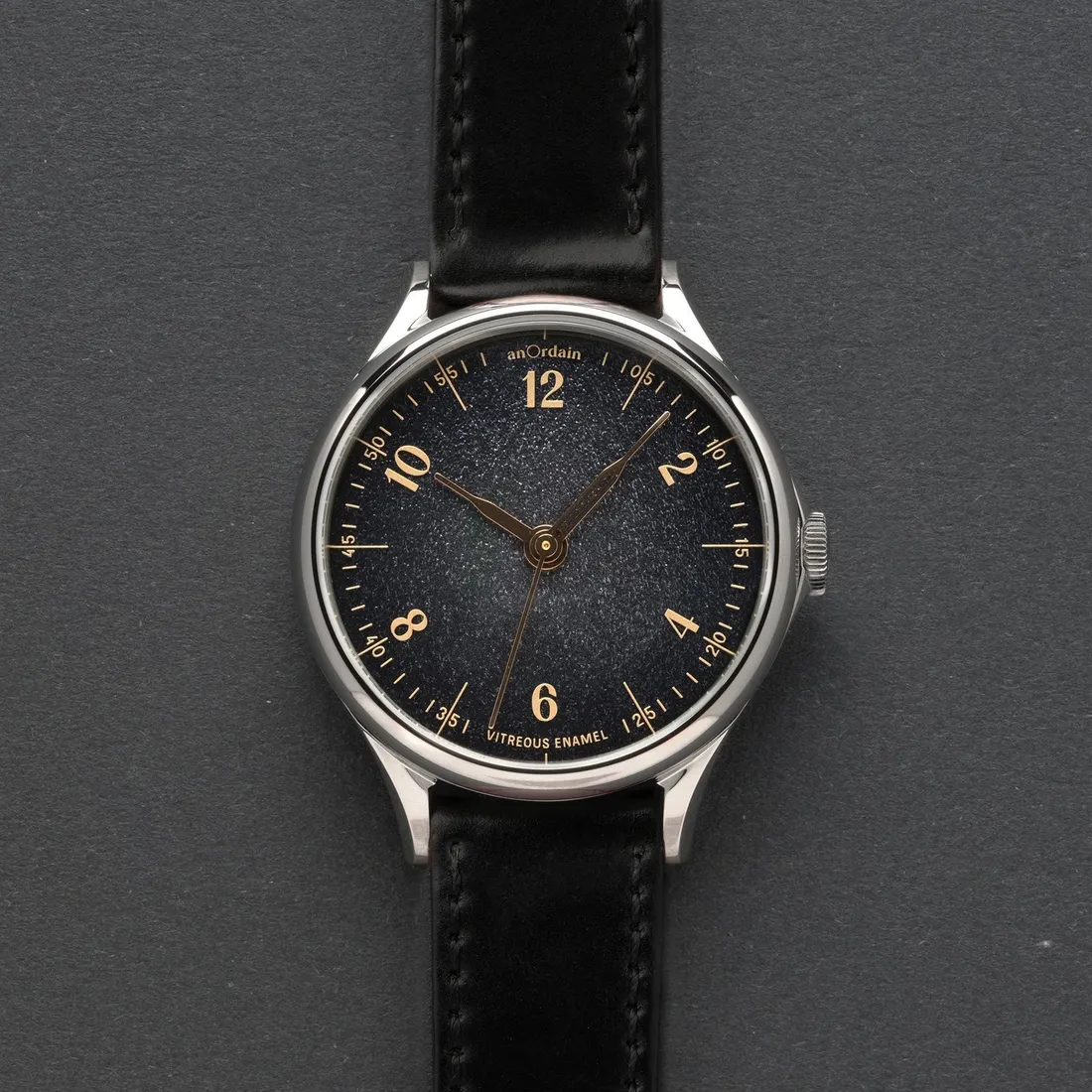
Fiona did not run her finger over the dial; she only tilted it. The blue was bright in the middle and almost like night at the edges. "How do you make that transition?" she asked. "We call it fume," said Callum; "smoked, in French. More layers of enamel are applied to the edges of the dial than to the centre; as the layer thickens, the colour deepens. So it is not a gradient of paint but a gradient of thickness."
"And that is exactly why no two dials are the same," he went on. "The thickness of a hand-applied layer can never be repeated to the millimetre. In a factory that counts as a defect; here it is a signature."
Fiona nodded: "It is the same with church glass. Two panes from the same kiln are never identical. For years I explained that to clients like an apology. You sell it as a feature." Callum laughed: "Because it is one. If a machine made a surface, it has no story at all."
format_quote"In a factory that counts as a defect; here it is a signature."
Callum
The Name of a Loch
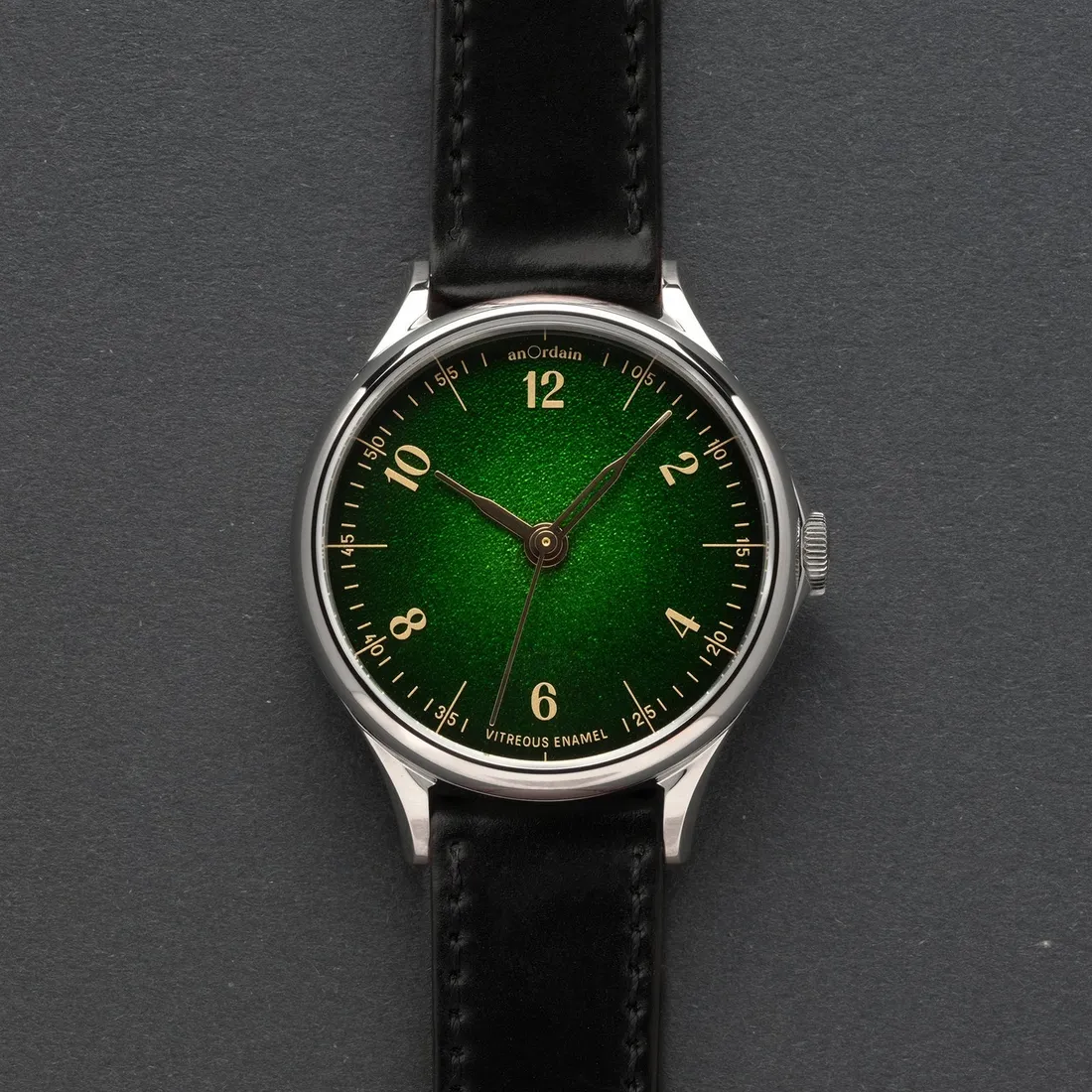
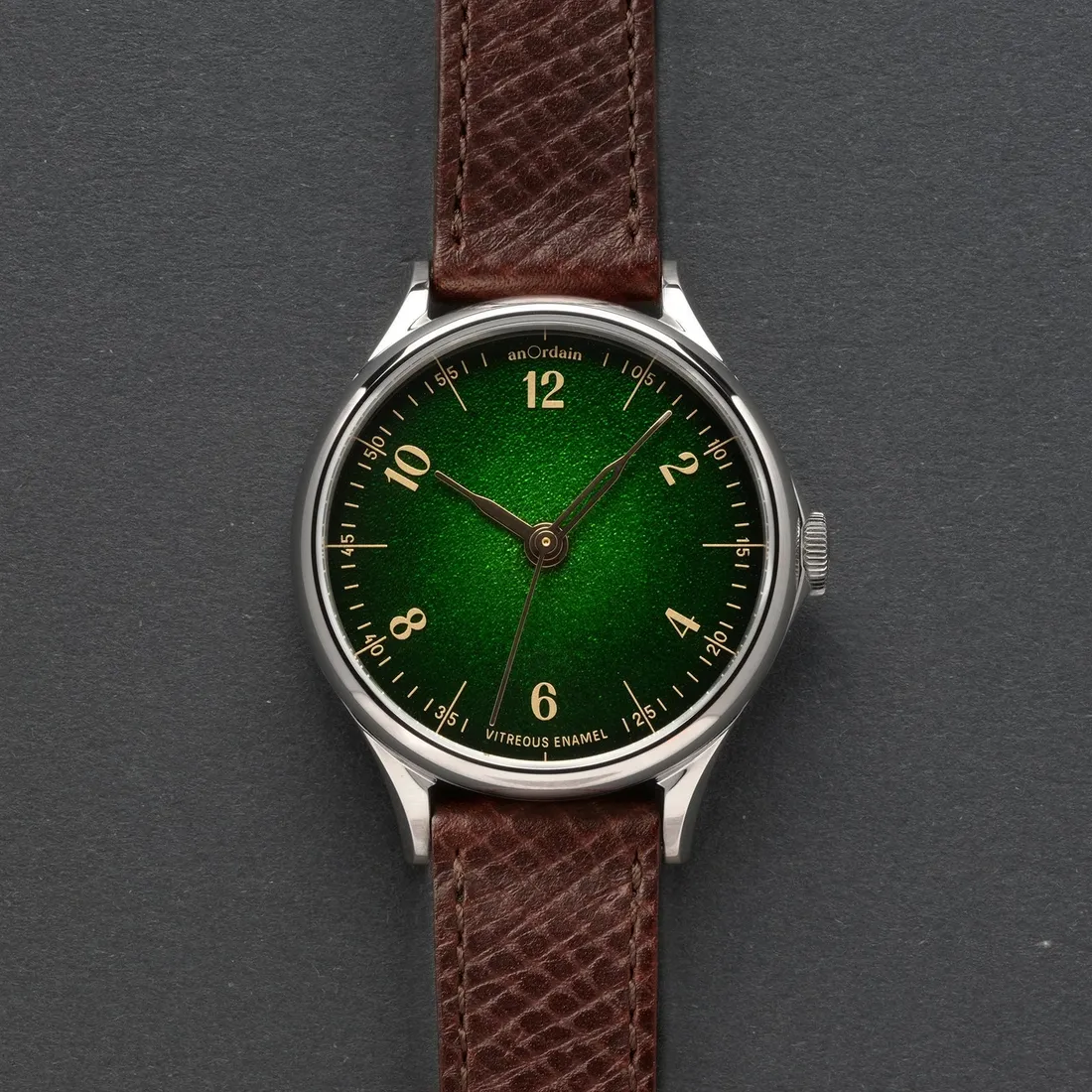
"What is your brand called?" asked Fiona. "anOrdain," said Callum. "The name of a small loch in the northwest of Scotland: Loch an Ordain. Our founder went walking there, saw the colour of the water, and decided to start this. That is why the names of our dials come less from colours than from places: Payne's Grey, Plum, Pine."
"And here in Glasgow the team doing this work does not exceed ten people," he added. "We trained our enamellers from scratch ourselves; because almost no one in Britain still knew this craft. Our first two years passed without producing a single sellable dial."
Fiona was moved. "So before you founded a watch brand, you had to re-found a craft." "Exactly," said Callum. "If we could not make the dial, there would be no watch."
The Simplicity Around the Dial
"The rest of the watch is very plain," said Fiona. "Is that deliberate?" "It is obligatory," said Callum. "If the dial is this alive, everything else has to be silent. The case is 38 millimetres, steel and unshowy. The hands are slender and gold-toned; there is just enough of them to reflect light without disturbing the colour of the dial."
"The numerals are special too," he added. "They are not printed onto the dial but applied before the final layer of enamel is fired; so the numerals stay beneath the surface, inside the glass. Even if you rubbed the dial with your finger they would not come off; because they are under glass."
"And inside there is a Swiss-made, hand-wound movement," he said. "Not automatic; you wind it yourself every morning. That is not a shortcoming but a choice: we think it natural that someone who buys an enamel dial should give that watch a minute of their morning."
Making Colour in a Grey City
In the late afternoon the rain began again. Fiona handed the watch back to Callum but could not take her eyes off the dial. "I have worked with glass for twenty years," she said. "But I had never seen so small a piece of glass say so much."
"I think the reason is this," said Callum, looking out of the window. "Most of the year in this city is grey. Where a person cannot see colour, they learn to make it. Church windows were born the same way: if light does not come inside, you paint the light yourself."
Fiona smiled and turned back to the half-finished glass panel on her own bench. Outside, Glasgow was grey; in two workshops, at different scales, the same thing was being done: painting light with fire.