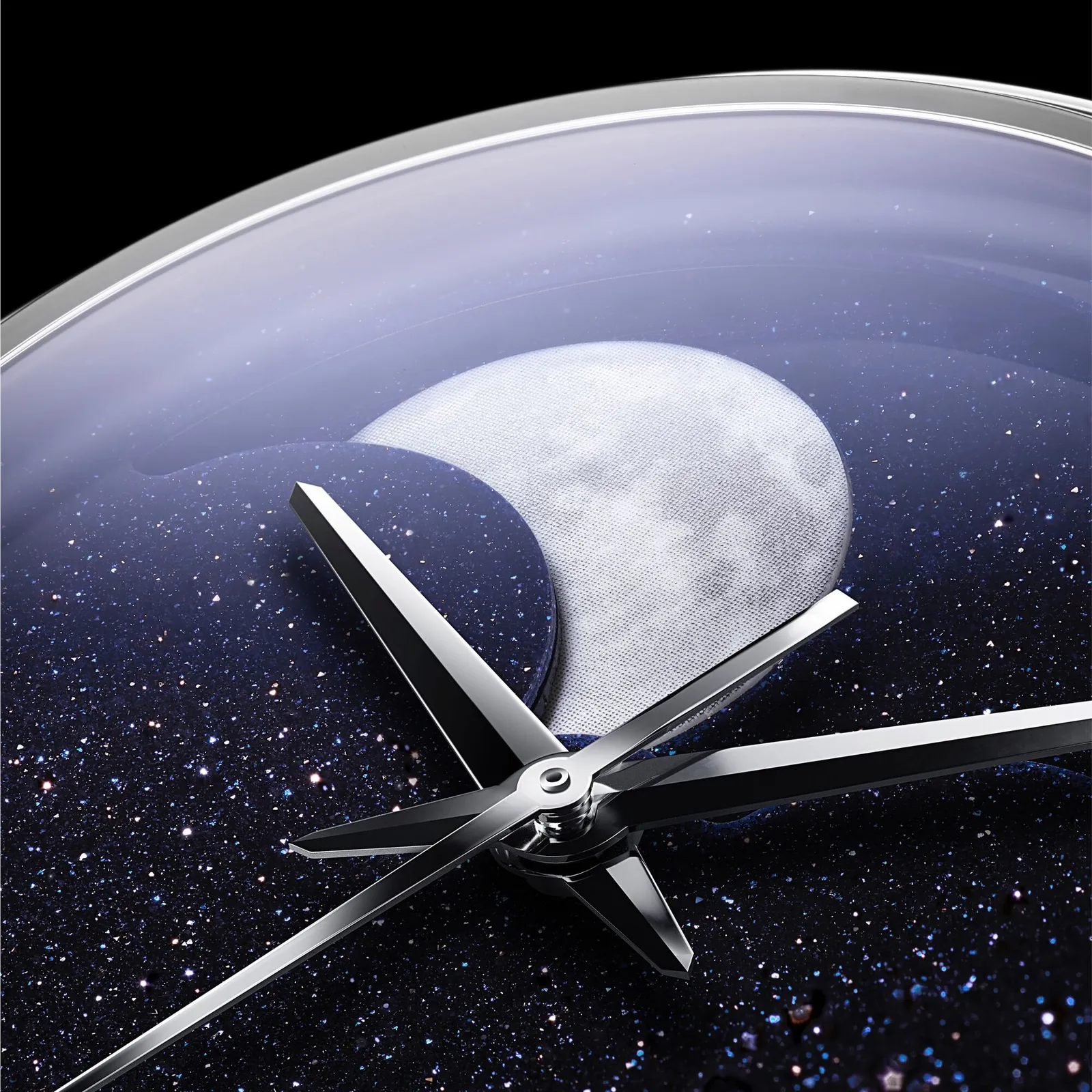
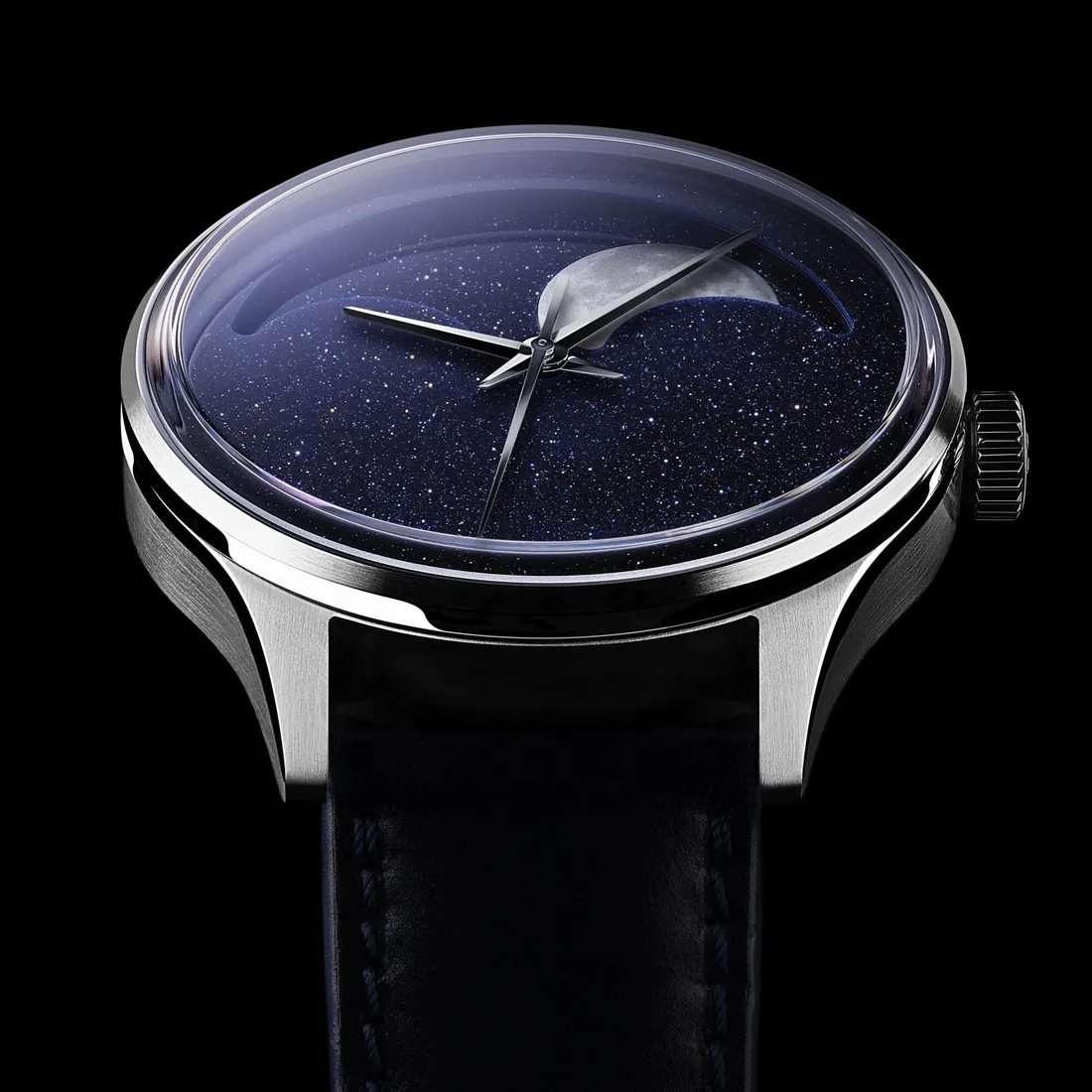
For thousands of years humankind has looked up at the same pale silver disc: the moon that rules the tides, sets the calendars and inspires the poets. Now you can wear that sky, that starry night and the moon drifting gently through it, on your wrist. The Christopher Ward C1 Moonphase is a pocket planetarium that fits the heavens into a 40.5 millimetre steel case.
Nominated for the 2024 GPHG, the Oscars of watchmaking, this watch carries the signature of the British brand Christopher Ward. Thanks to the brand's direct to customer philosophy, an elegance and complexity normally seen at far higher prices comes down to an attainable 2,915 euros. At its heart beats the JJ04 moonphase module, developed in house on a Sellita SW220 base.
format_quote"The sky that rules the tides, sets the calendars and inspires the poets, now worn on your wrist: a pocket planetarium."
A 400 Year Old Murano Accident: The Starry Dial
This dial is not painted; it is a genuine piece of glass, aventurine. Its story reaches back to seventeenth century Venice and the glass masters of Murano. As the tale goes, a master accidentally let copper filings fall into the molten glass; once cooled, the glass had become a night sky with thousands of tiny stars glittering inside it. The Italians called this accident a ventura, by chance. The deep blue dial of the C1 Moonphase is made of this very glass; when the copper oxide flakes within it catch the light, a real field of stars appears on your wrist. And because the glass is handmade, every dial is unique: nowhere in the world is there a second watch with exactly the same scattering of stars as yours.
In Step With the Heavens: A Moon Good for 128 Years
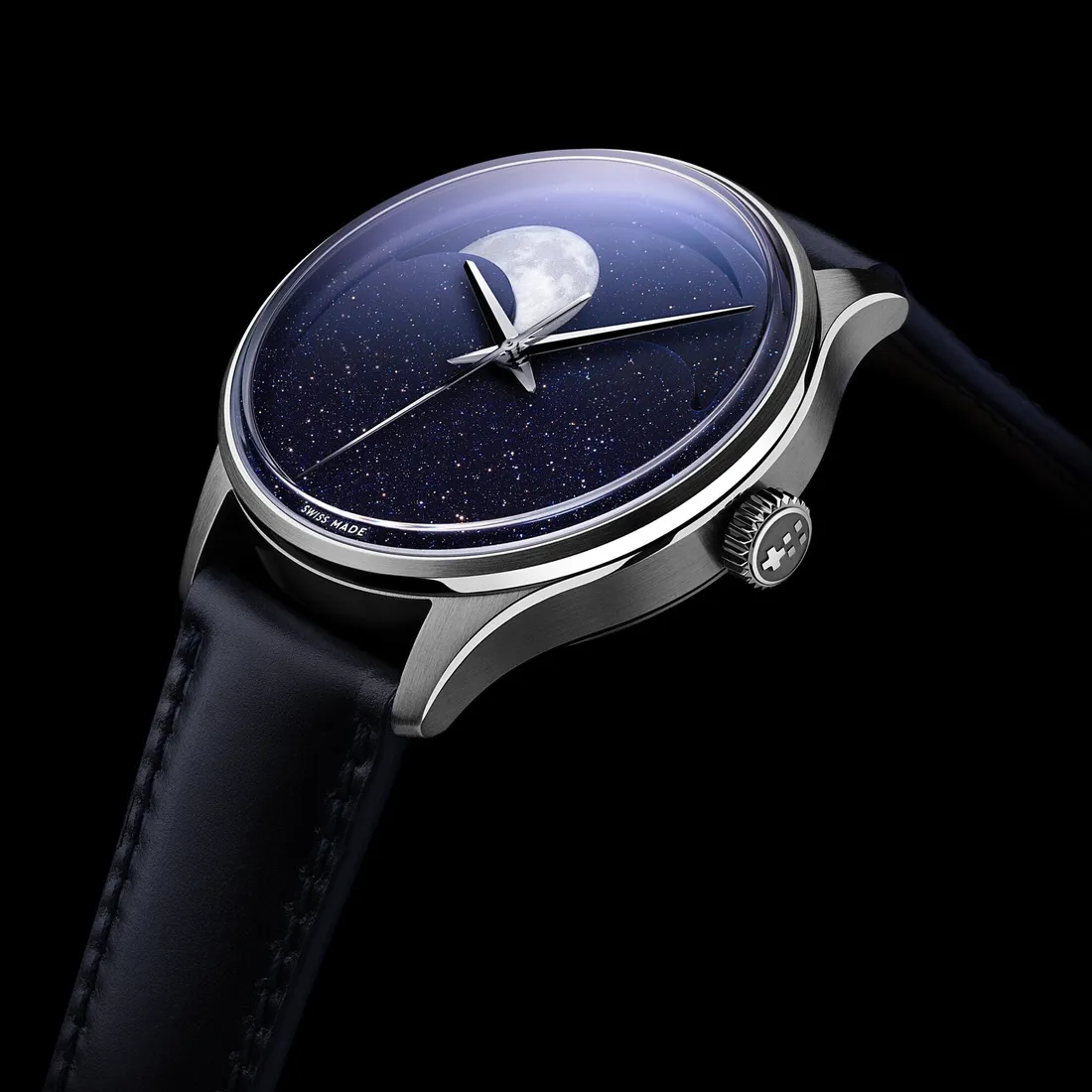
The moon takes exactly 29 days, 12 hours and 44 minutes to complete a phase, to pass from one full moon to the next. Imitating that awkward fraction with gears is one of watchmaking's most elegant tests. An ordinary moonphase accumulates a full day of error every few years; the JJ04 module of the C1 Moonphase is calculated so precisely that it needs a single day's correction only after 128 years. You could wind this watch today and pass it to your grandchild, who could pass it to theirs; even after you, your children and their children are gone, the moon would have drifted by just one day.
What is more, this moon does not jump one tooth forward each night as it does on most watches. Just as the real moon glides without pause across the sky, this moon advances slowly and continuously, linked to the hour hand. You cannot catch it moving, but each morning you look it has grown a little fuller or a little thinner, exactly like the real one overhead.
Always the Same Face: The Loyalty of the Moon
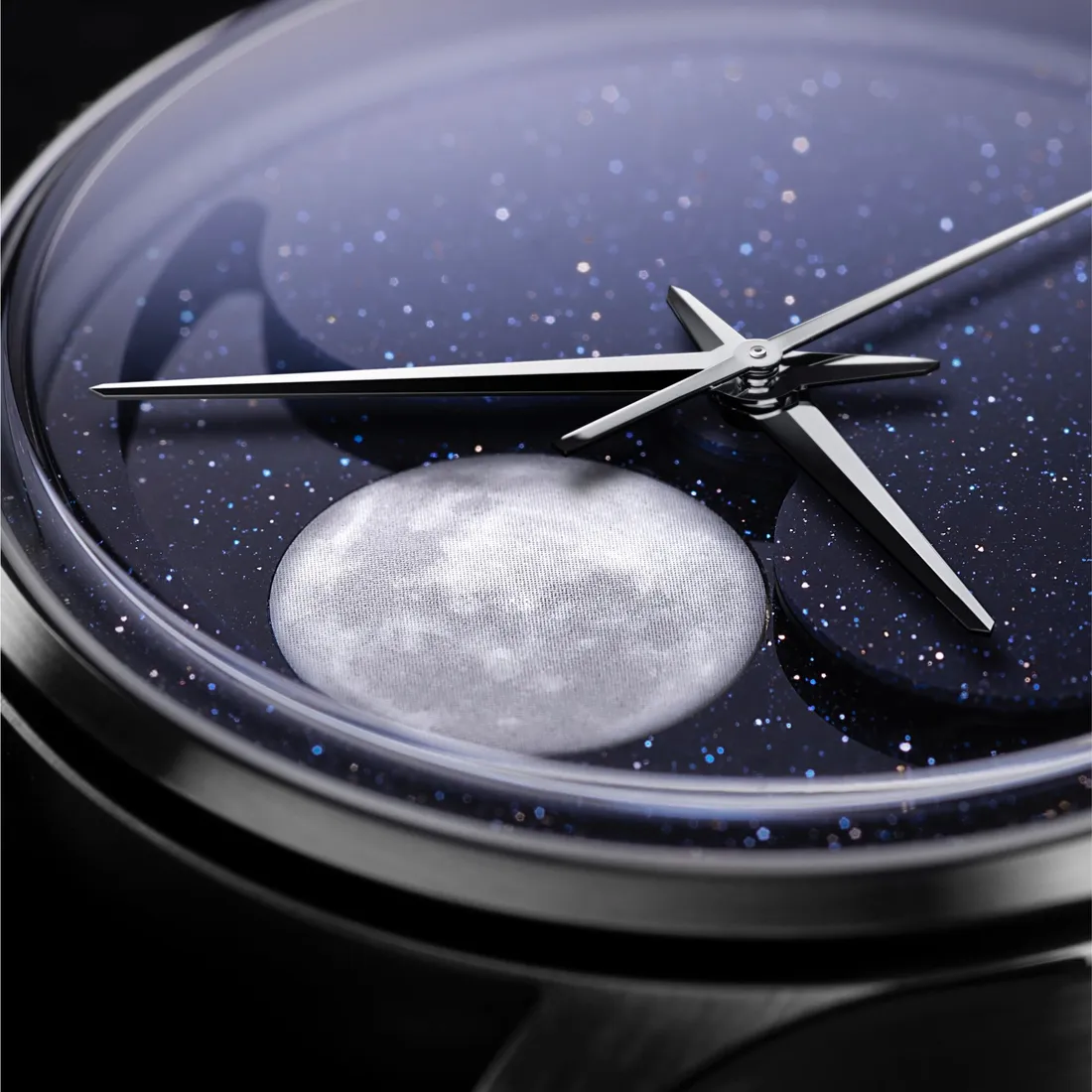
Here is something most people do not know about the moon: we always see the same face of it. Billions of years ago Earth's gravity locked the moon's spin so tightly that it turns once on its own axis in exactly the time it takes to orbit us; as a result it never turns its back to us. The familiar light and dark patches we see, the pattern people call the man in the moon, therefore never change. And the moon drifts about four centimetres farther from us every year; this faithful companion, however slowly, is on a long farewell.
The C1 Moonphase renders this faithful moon on two discs, made of a special material called Globolight, a blend of ceramic and photoluminescent pigment. Given three dimensional depth by a four colour print, this moon is twenty five percent larger than on earlier models, and when the lights go out it glows not green but a cold, white light like the real moon. Look at your wrist in the dark, and a tiny copy of the one in the sky looks back at you.
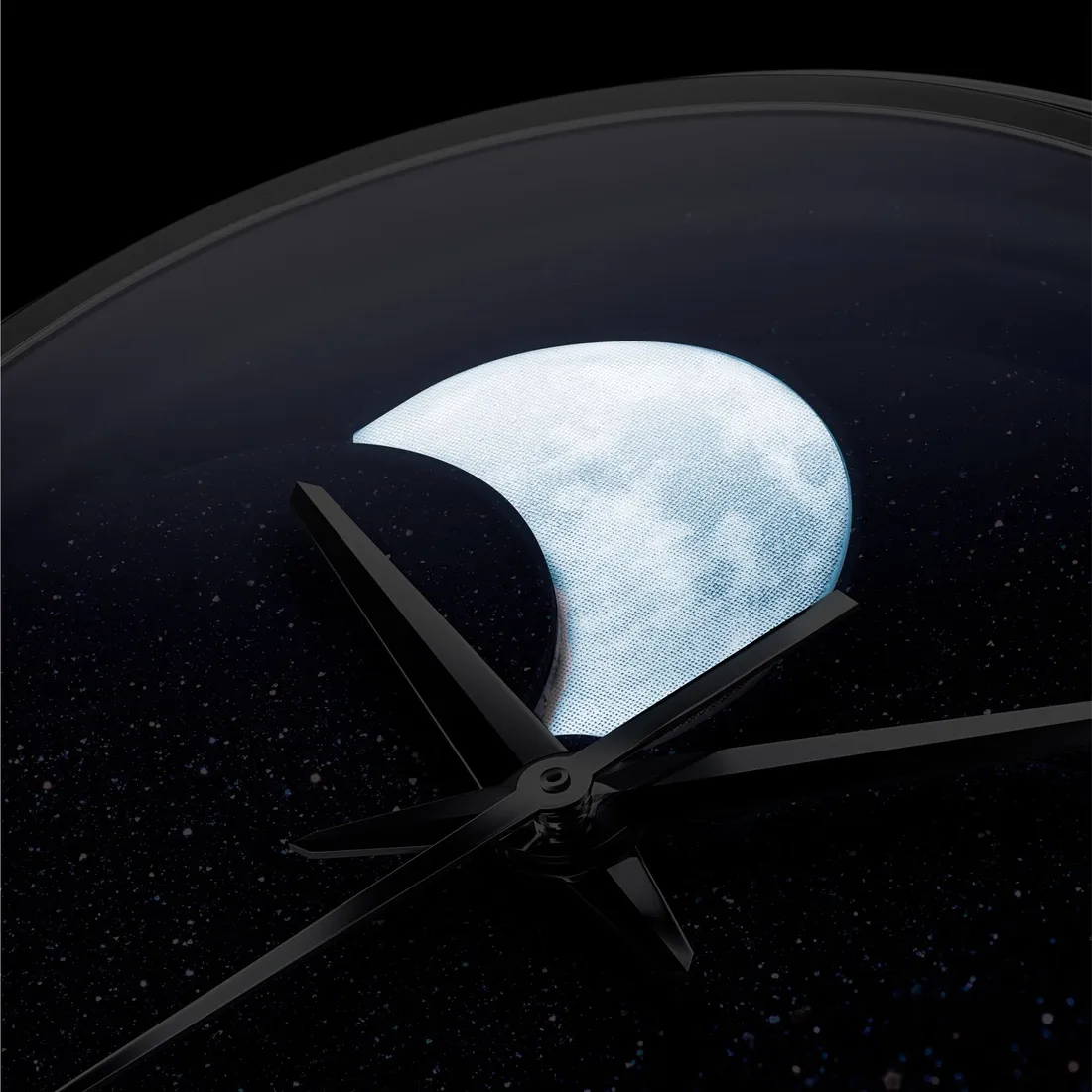
format_quote"The moon has shown us the same face for billions of years; this watch tells that loyalty by trapping the whole sky inside a pane of glass and a few wheels."
An Attainable Sky: Christopher Ward
What makes all this poetry extraordinary is, once again, the price. A 40.5mm marine grade steel case, box sapphire crystal domed on both sides, an automatic calibre, 38 hours of power reserve and 28,800 vibrations an hour, all for 2,915 euros. The watch comes on a slim 127 link Consort steel bracelet or a dark blue Italian leather strap, and through the sapphire back you can watch the DLC coated rotor with its twin flag engraving. Christopher Ward turns a sky once only admired behind glass into something you can actually wear.
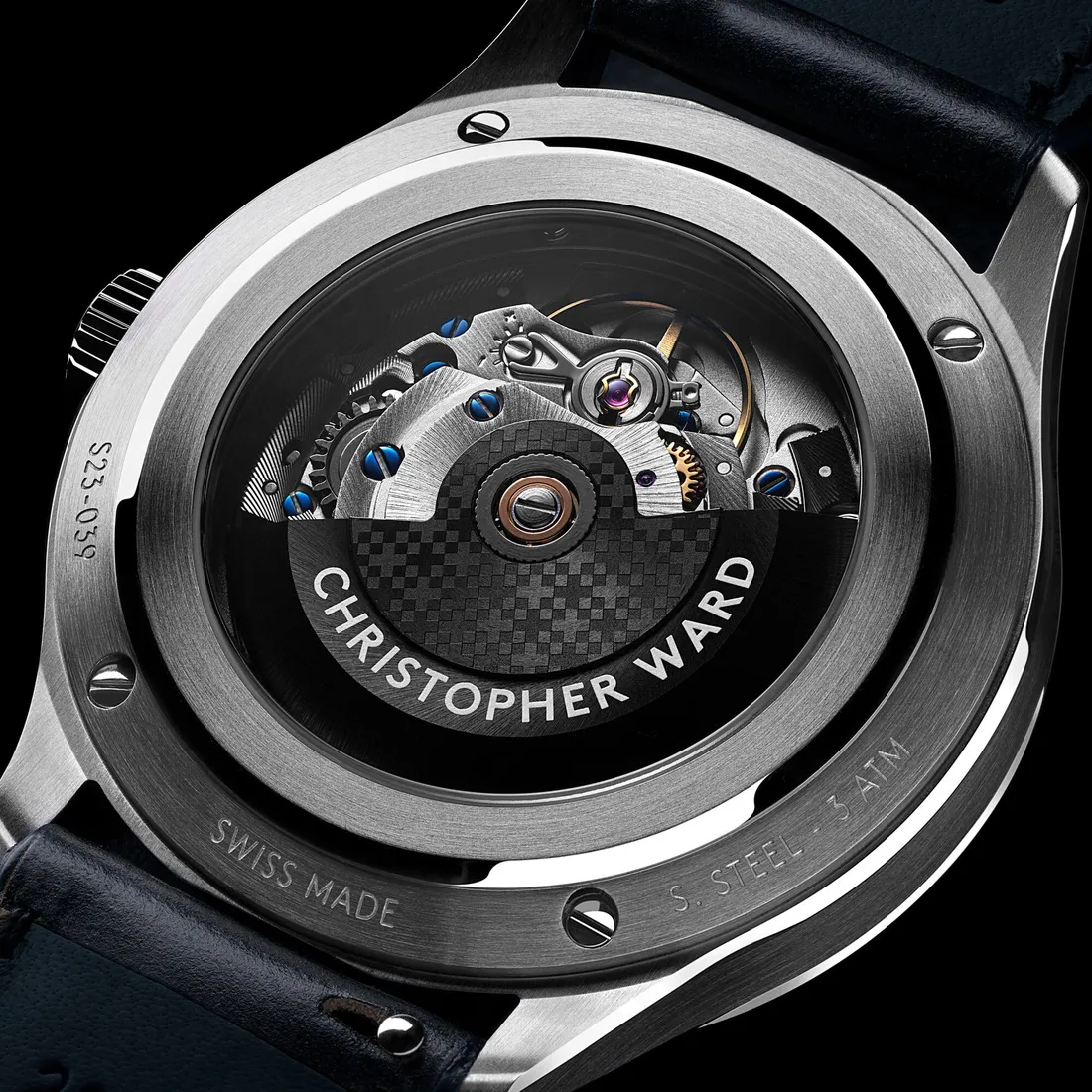
The Christopher Ward C1 Moonphase shows not only the time but the rhythm of the sky. The stars in its aventurine dial, a moon that will stay faithful for 128 years, and all of it at a price within everyone's reach. This watch reminds us that even when you do not always have time to look up at the sky, the sky can always be on your wrist.
format_quote"You may not always have time to look up at the sky; but with this watch, the sky is always on your wrist."