format_quote"Majesty asks that causes stand before the reason like a veil; unity asks that behind that veil no cause should truly act. The cause is what is seen; the cause is not what does the work."
An ancient thinker of the East
The Silence of the Desert, the Ragged Edge of the Moon and Baily’s Beads
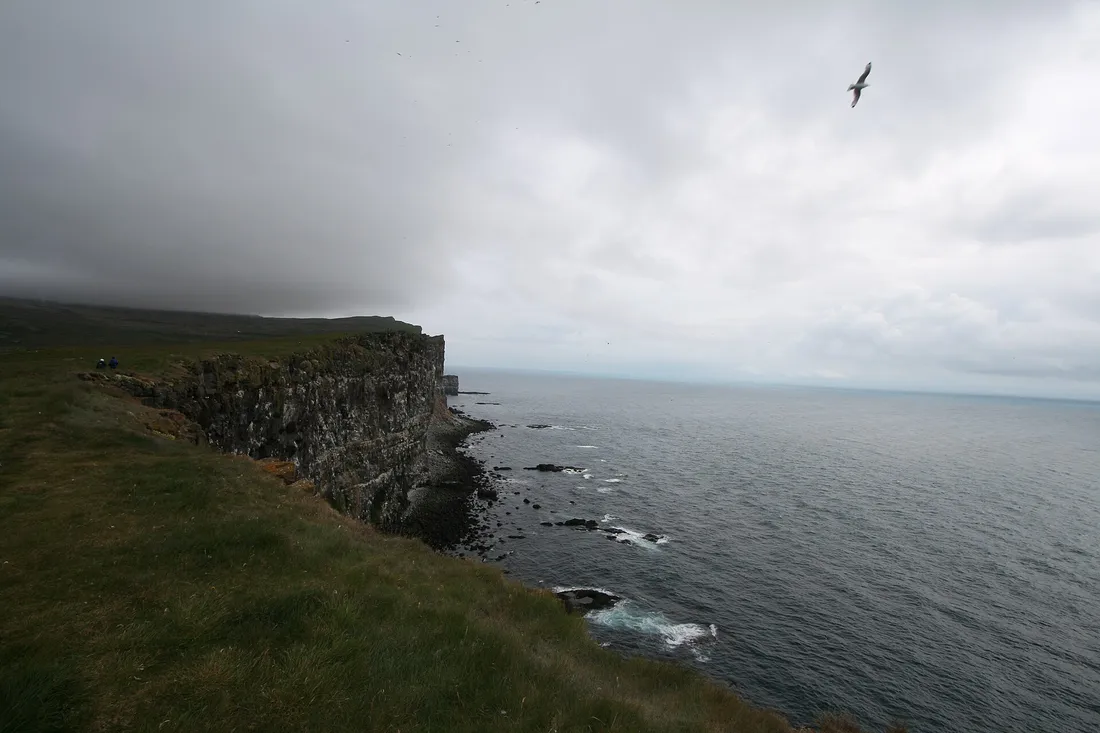
On the evening of Wednesday 12 August 2026, at the north-western tip of Iceland, on top of the cliffs of Látrabjarg, the wind stopped without warning. This is the westernmost point of Europe: a wall of rock running for fourteen kilometres and rising in places to four hundred and forty metres, with hundreds of thousands of seabirds spending the summer on it. Two scientists, the astrophysicist Dr Kaelen Voss and the quantum opticist Dr Clara Lindqvist, had set a portable spectrograph on its tripod in the grass and were looking west, out over the Atlantic.
For today’s eclipse this cliff had a distinction. After crossing Greenland and the ocean, the Moon’s shadow first touched land at 17:43 at the Straumsnes lighthouse to the north, then swept the country at three thousand four hundred kilometres an hour. Of anywhere in Iceland, Látrabjarg would hold totality longest: two minutes and thirteen seconds. The Sun stood twenty-four degrees above the horizon in the western sky; the corona would not hang overhead but just above the ocean.
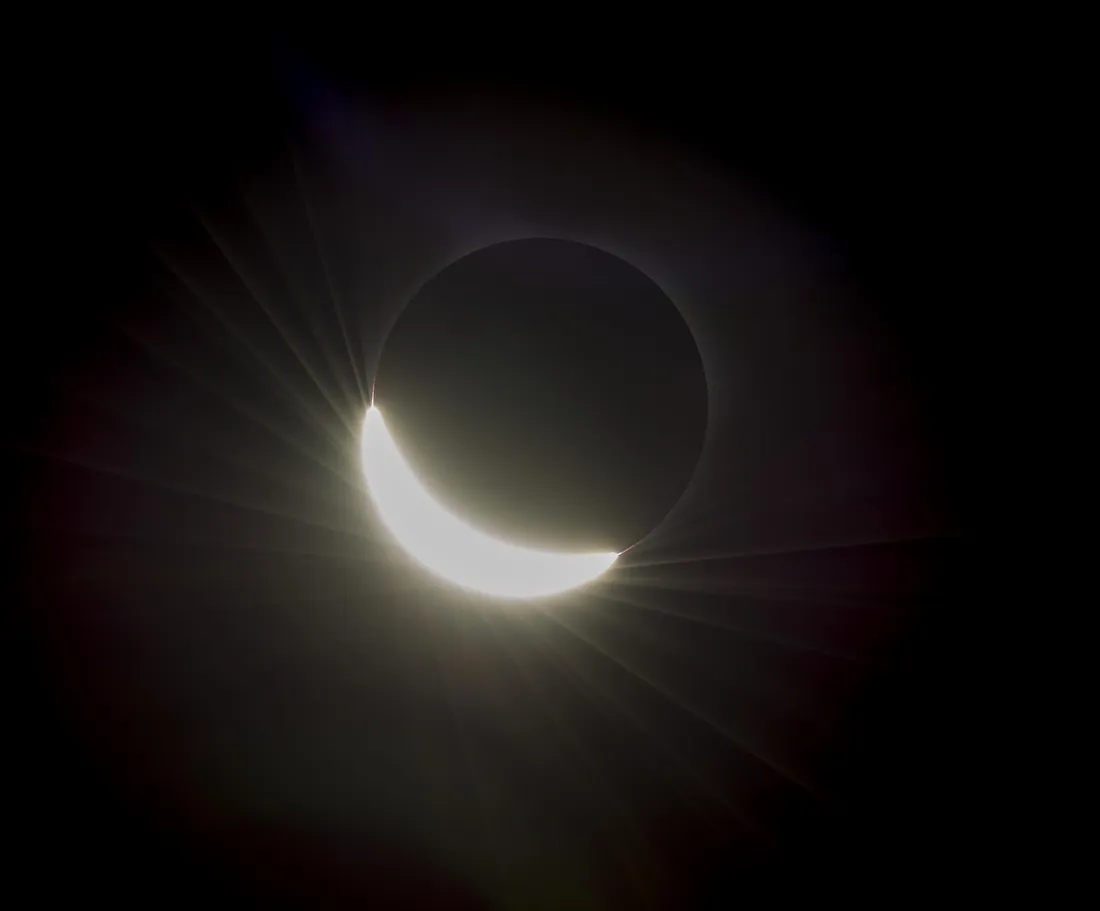
Just before the dark disc of the Moon closed over the burning circle of the Sun, Dr Clara pointed at the screen.
"Kaelen, look. In that last second before the Sun goes, look at those ruby-coloured droplets of light appearing along the edge of the Moon. Like a bright diamond necklace scattered across the sky."
"Baily’s beads," said Kaelen. "The old astronomers thought the Moon was a smooth, perfect marble sphere. Those beads are the signature in light that proves it has a living topography of mountains, vast craters and deep valleys."
At that moment the noise from below the cliff stopped. Hundreds of thousands of gulls, terns and puffins had taken the withdrawal of the light for evening and fallen silent all at once. Neither of them spoke for a while, because at Látrabjarg silence is a thing you can hear in the literal sense.
"And how exactly did Baily find this out?"
"On 15 May 1836 Francis Baily was watching an annular eclipse from Jedburgh in Scotland. He saw that the light along the Moon’s edge did not cut off all at once but broke into bright points of different sizes. Picture it like this: think of the shutters on an old wooden house. If the shutter were made of smooth sanded plastic, the light would die along a single line the moment it closed, as if cut with a knife. But if the shutter is old, with knotholes and splinters and gaps between the boards, light leaks through in drops as you close it. From those drops Baily understood that the Moon is not a smooth glass marble but a wooden shutter."
"And in numbers?"
"The mountains along the Moon’s limb rise past five kilometres in places. In the sky that is a roughness of about one three-thousandth of the diameter of the lunar disc. Baily’s beads are a height map read with the naked eye from three hundred and eighty-four thousand kilometres away."
"And what did those apparently simple grains of light give us?"
"Three doors," said Kaelen. "First, the map of the Moon. With no spacecraft yet in existence, we calculated for the first time from Earth the height of the lunar mountains and the depth of its valleys, from the size of those beads and the order in which they went out. Second, the diameter of the Sun. It is hard to say where the true edge of the Sun ends, because its light blinds you and the rim blurs. The fractions of a second in which the beads appear and vanish give you that boundary to a hundredth of a second of arc; whether the Sun’s diameter has changed over the centuries is still tracked by this method."
"And the third?"
"Prediction itself. Once the profile of the Moon’s limb had been mapped, we could compute not only the hour of a future eclipse but the edge of the shadow track on the ground to within metres. That limb profile data is still used today in spacecraft orbit calculations and in the laser ranging of the Moon."
The Chromosphere, Fraunhofer’s Lines and the Quantum Fingerprint
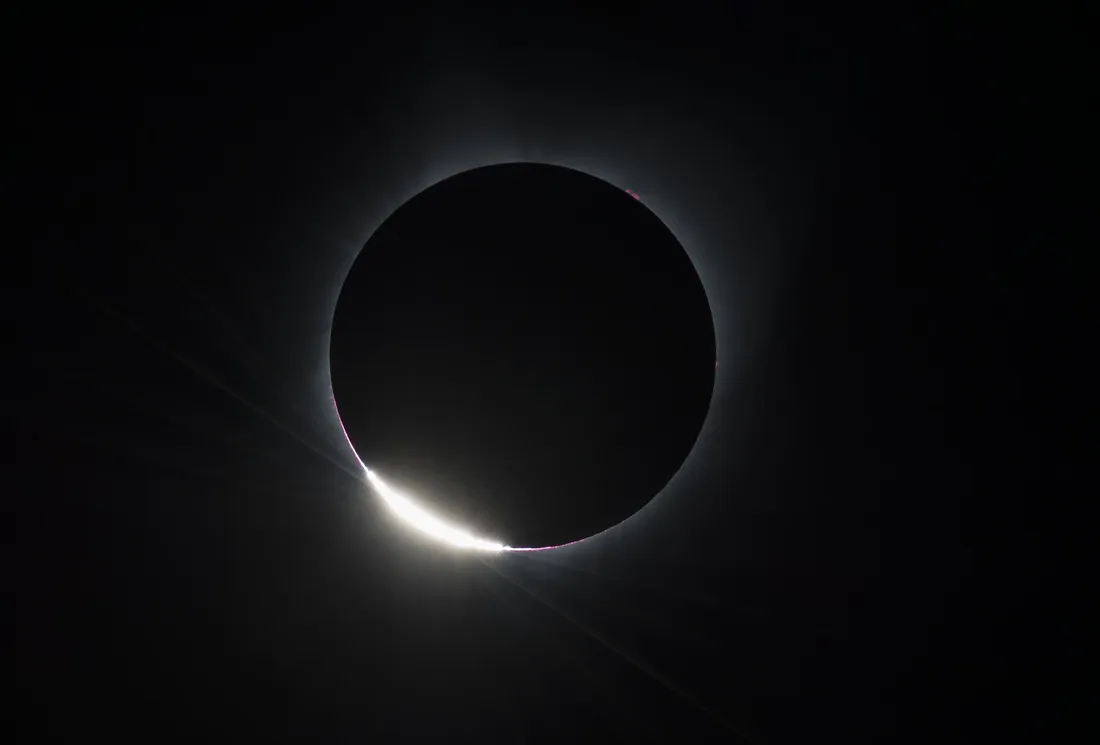
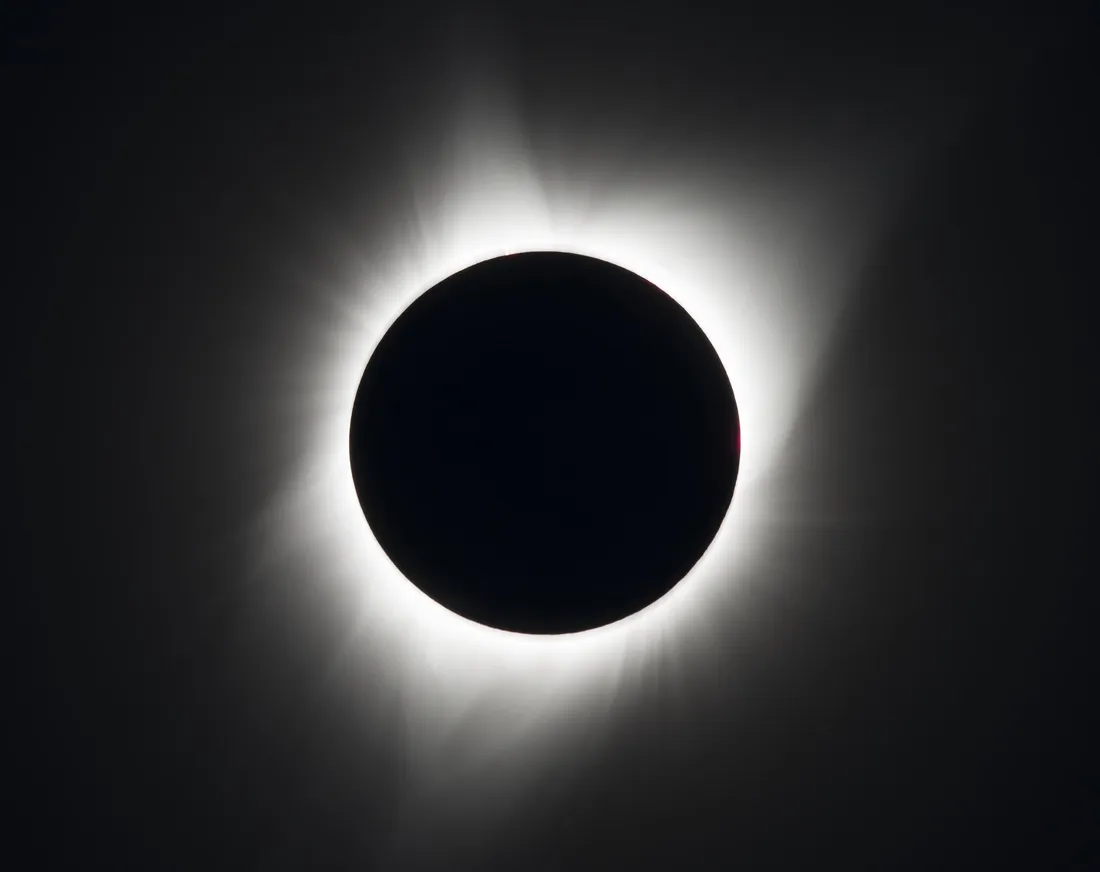
When the Sun went out completely, a thin flame-red layer appeared around the black disc of the Moon: the chromosphere.
"When the blinding outward glare of the Sun was withdrawn, the red layer beneath appeared," said Clara. "You once told me that without the light bursting from this layer, and without the discoveries of the nineteenth century, we could never have worked out the chemistry of the universe. How exactly did Fraunhofer and Kirchhoff do it?"
"This is the finest detective story in the history of science," said Kaelen. "In 1814 Joseph von Fraunhofer passed sunlight through a very fine glass prism he had made himself. A prism normally spreads light into a rainbow. But when Fraunhofer looked closely at that rainbow, he saw hundreds of thin, jet-black lines across the colours, as if someone had taken a razor to it. He counted five hundred and seventy-four of them and labelled the strongest from A to K. Those letters are still in use."
"Why did he see something without knowing what it was?"
"Because he had no explanation, only a pattern. Forty-five years later Gustav Kirchhoff and Robert Bunsen found the explanation in a laboratory. When they burned sodium, the light produced a bright yellow pair falling exactly where two black lines sat in the solar spectrum. Burn iron and you got the lines of iron; burn hydrogen and you got the lines of hydrogen."
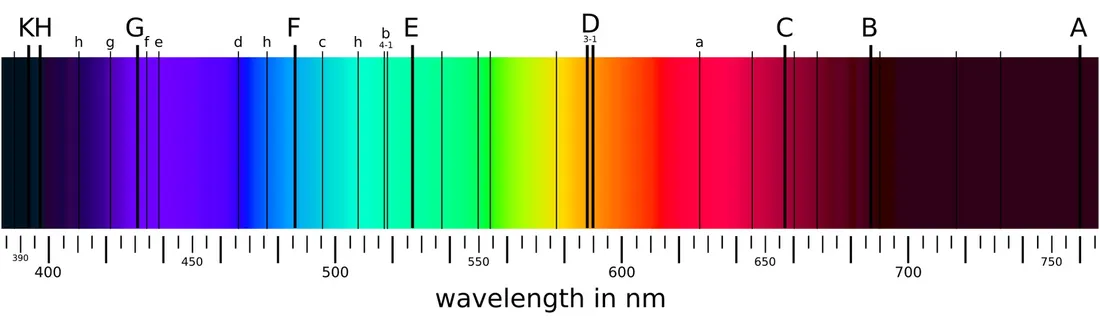
"A barcode, then," said Clara.
"Exactly. Hold a scanner to the lines on a bottle in a shop and the machine tells you what the product is. Every atom in the universe has a barcode like that in light. Hydrogen has one, iron another. The reason is quantum mechanics: the electron of an atom can only jump between particular energy steps, so it can only absorb or emit particular colours. The steps differ for every element, so the barcode differs for every element and can never be counterfeited."
"And why are the lines black?"
"Because the hot surface of the Sun emits all colours at once, while the cooler layer of gas just above it absorbs the colours matching its own barcode. The absorbed colour never reaches us and leaves a gap in the spectrum. Now notice the magic of an eclipse. When the Moon covers the bright emitting surface and leaves only the cooler layer exposed, that layer stops absorbing and starts emitting. Every line that was black flips in an instant and blazes. It is called the flash spectrum and it lasts a second or two."
"And what did the discovery win us?"
"Three things. First, knowing without going. Nobody can travel to the Sun and take a sample. But by reading the barcode of light through a prism we learned, sitting where we are, that the Sun is about seventy-three per cent hydrogen and twenty-five per cent helium by mass, with iron, magnesium and calcium inside it."
"Second?"
"The chemical map of the universe. Today we know whether there is water vapour or oxygen in the atmosphere of a planet on the far side of the galaxy by one method only: as the planet crosses in front of its star, we read the lines missing from the light filtered through its air. We are not looking at the planet. We are looking at the colour of its shadow."
"And third?"
"The expansion of the universe. The barcode lines of distant galaxies always come out shifted towards the red from where they sit in the laboratory. The pattern is identical, but the whole of it has moved. That means the source is receding, and the further the galaxy, the greater the shift. The largest discovery of the twentieth century came out of black lines having moved a millimetre sideways."
"What a door to understanding," said Clara. "And in this fine alignment, what is the Creator’s intention?"
"Notice this," said Kaelen. "Had the Moon been a smooth marble we could not have seen Baily’s beads, and we could not have solved the mountains of the Moon or the exact diameter of the Sun. Had the apparent size of the Moon not covered the Sun to precisely the right measure, we could have seen neither the chromosphere nor that flash spectrum, and we might have learned to read the barcode of atoms a century later. By covering the glare like an enormous curtain, the Creator lays out for us the deepest secrets of matter and the flawless balance of celestial mechanics. The covering of the visible is the condition for reading the invisible."
format_quote"The covering of the visible is the condition for reading the invisible."
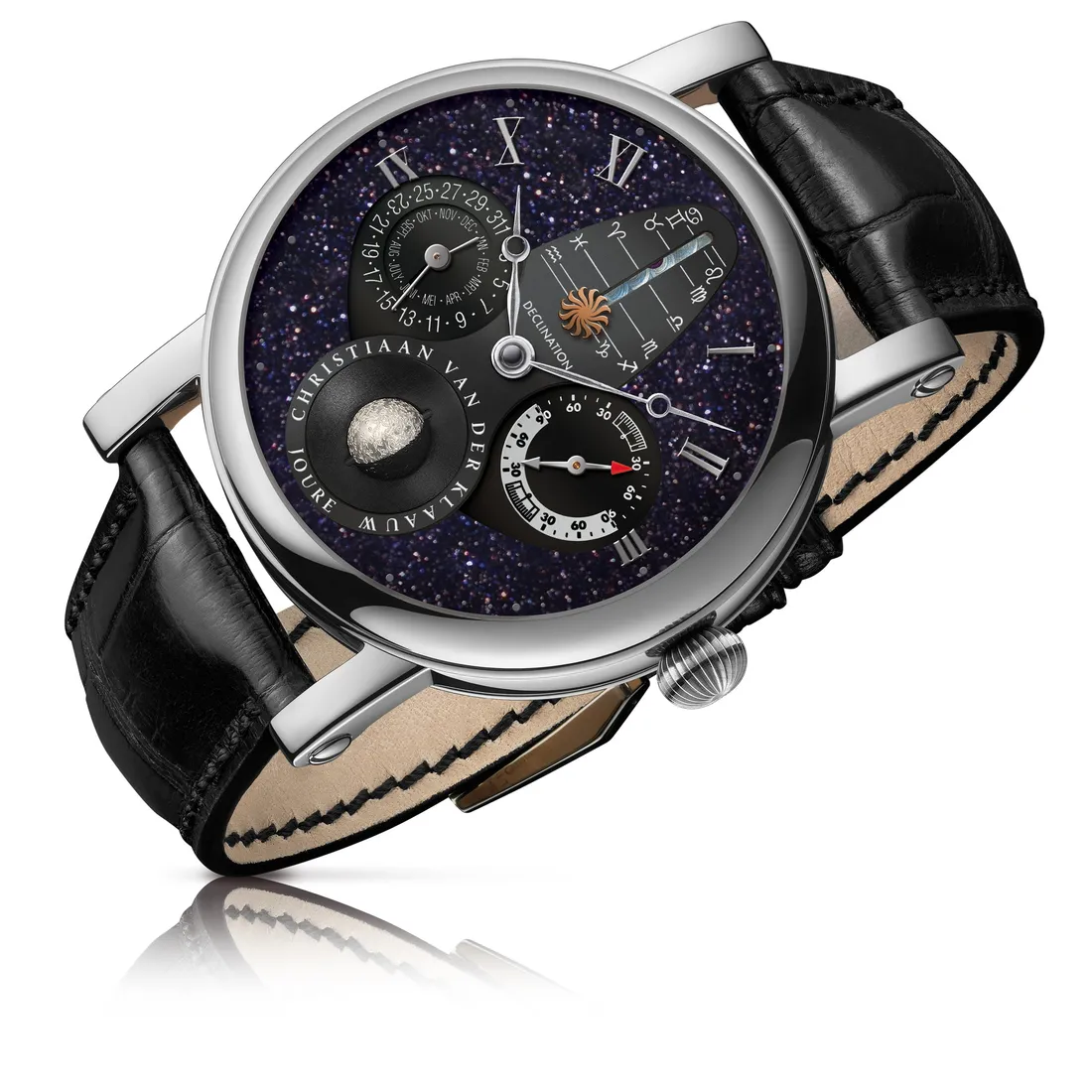
Cosmic Watchmaking on the Wrist: The Christiaan van der Klaauw Real Moon 1980
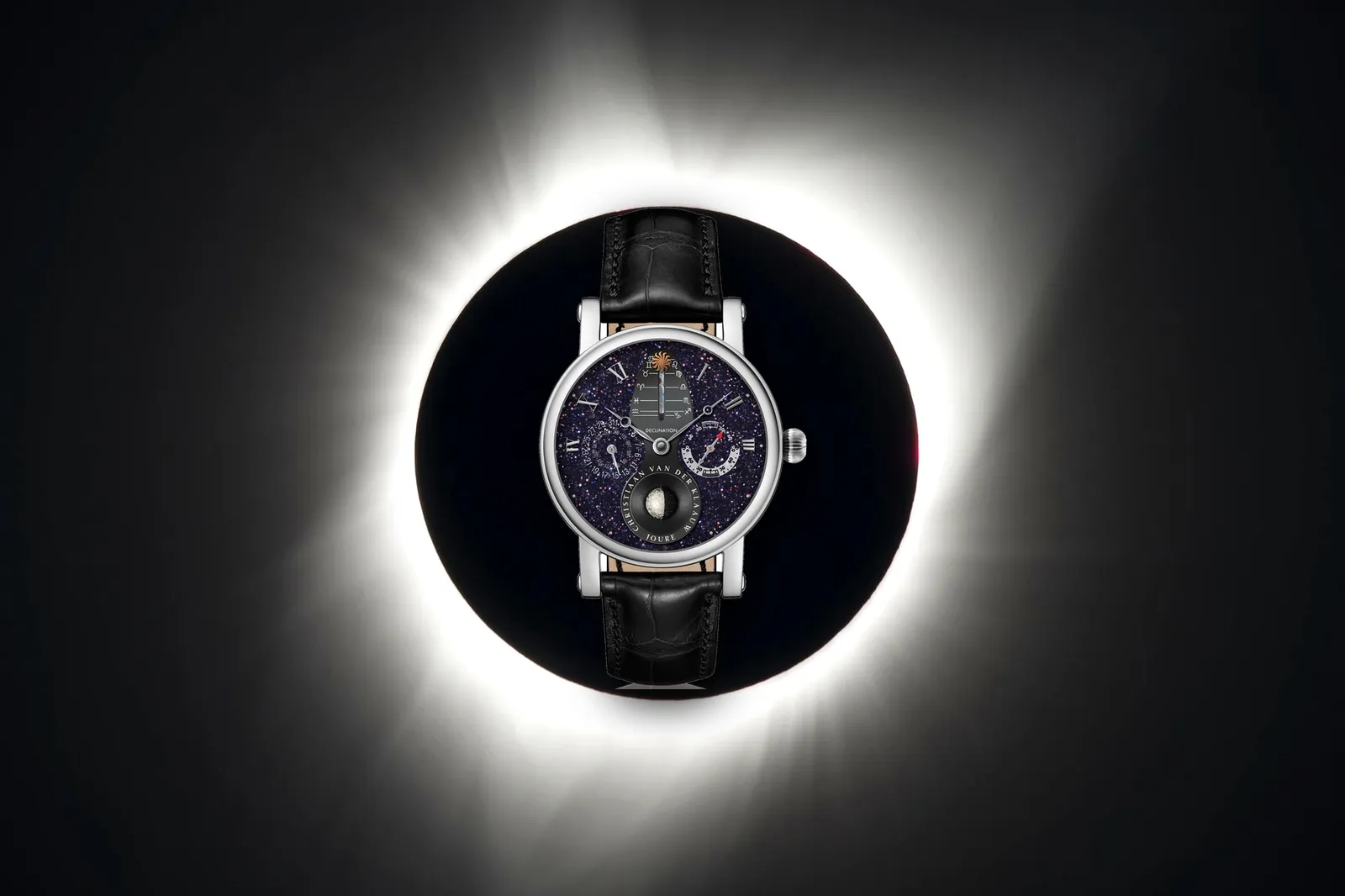
In the darkness of totality Dr Clara glanced at the watch on her arm. On her wrist was the masterpiece of the only independent house in the world that makes nothing but astronomical complications: the Real Moon 1980, out of the Christiaan van der Klaauw workshop in the Dutch town of Joure.
"Clara, while we talk about this crossing of nodes in the sky, the dial on your arm seems to be speaking the same language as the telescope here. How does that mechanism know about an eclipse?"
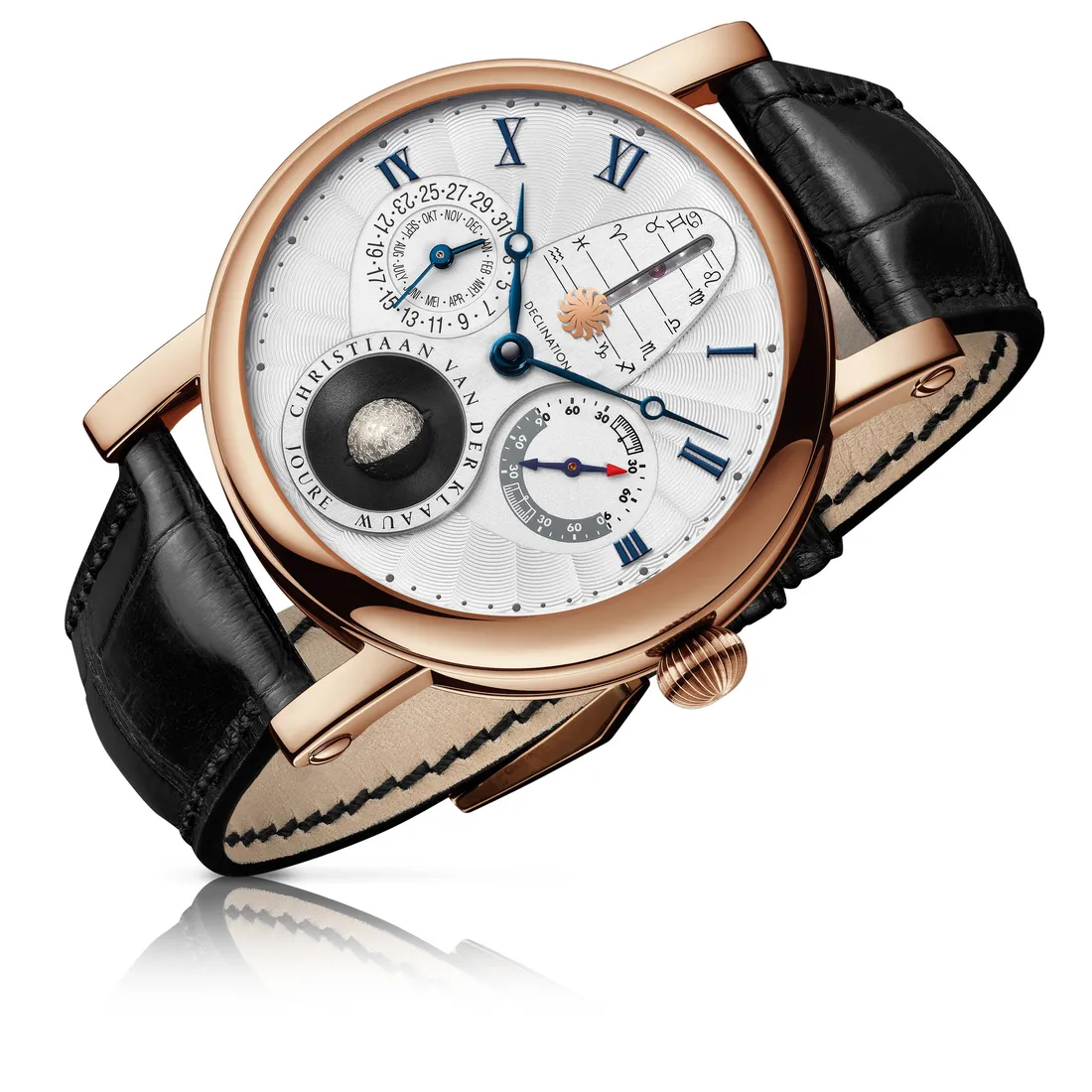
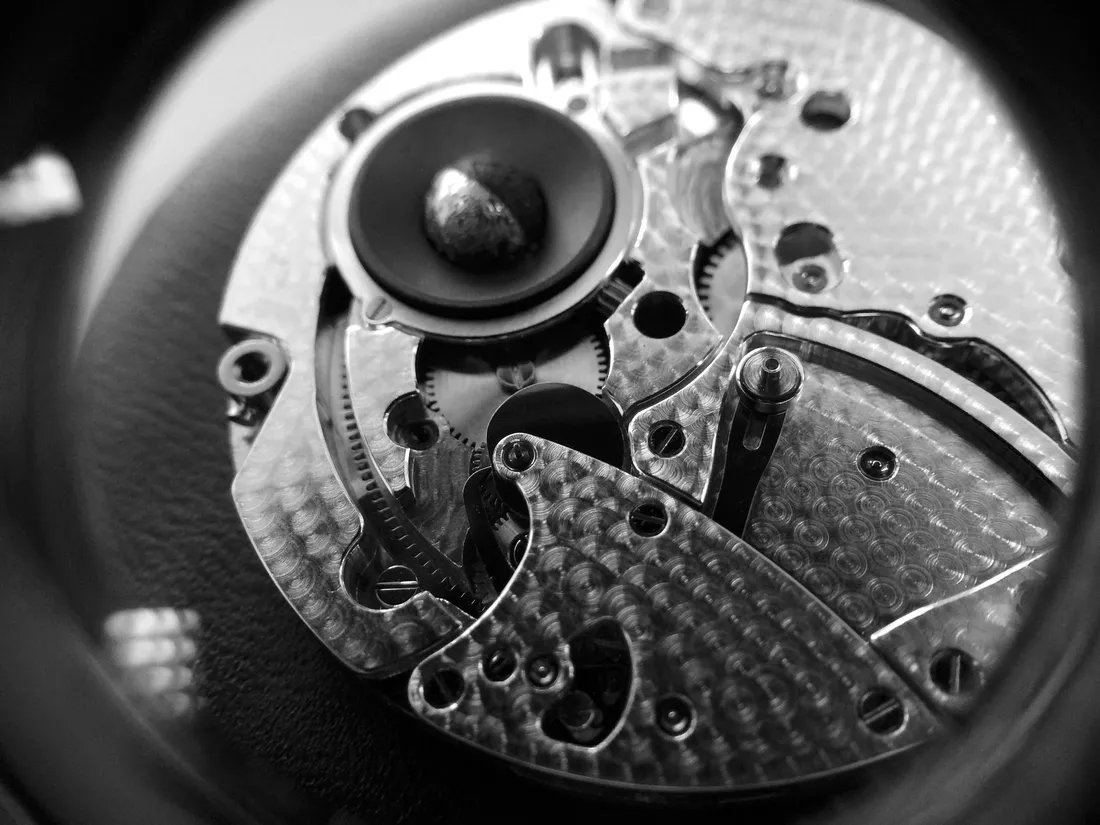
"Let us start with the most visible part," said Clara. "The thing sitting inside that black aperture at six o’clock is not a disc but a real sphere. A tiny moon turning on its own axis, one half polished and one half darkened. In an ordinary watch the moonphase is shown by a flat disc with two moons painted on it, passing behind a window."
"And that disc is wrong."
"Inevitably. That disc has fifty-nine teeth, so one turn divides into fifty-nine days and two months come to twenty-nine and a half. But the true synodic month is twenty-nine days, twelve hours, forty-four minutes and three seconds: twenty-nine point five three zero five eight eight days. That forty-four second difference accumulates and produces a full day of error every two years and seven and a half months. Here the gear ratio has been built to chase the remainder; the maker gives one day of drift in eleven thousand years."
"How is that possible?"
"You cannot write a fraction onto a wheel; the number of teeth has to be a whole number. The only thing to be done is to bring the ratio of two whole numbers as close as possible to the true value. You look for the fractions that best approximate twenty-nine point five three zero five eight eight, then spread that ratio across the product of two or three wheels. It is as much a problem in number theory as in watchmaking."
"Now to the real question," said Clara. "Why, when there is a new moon and a full moon every month, is there not an eclipse every month?"
"Picture two hula hoops. The first is the plane in which the Earth goes round the Sun. The second is the plane in which the Moon goes round the Earth. If the two hoops were exactly parallel, laid flat on a table, we would get one solar and one lunar eclipse every single month without fail. But the Moon’s hoop is tilted by five degrees and nine minutes."
"Five degrees sounds like nothing."
"Not in the sky. The disc of the Sun is about half a degree across. If the Moon is more than about a degree and a half off the plane at new moon, the shadow never touches the Earth at all. Five degrees is nearly ten times the allowance. So at most new moons the Moon passes silently above or below the Sun and its shadow falls into empty space."
"And where the two hoops cross?"
"There are only two points. We call them the nodes. An eclipse happens only if the new or full moon falls near one of those two points."
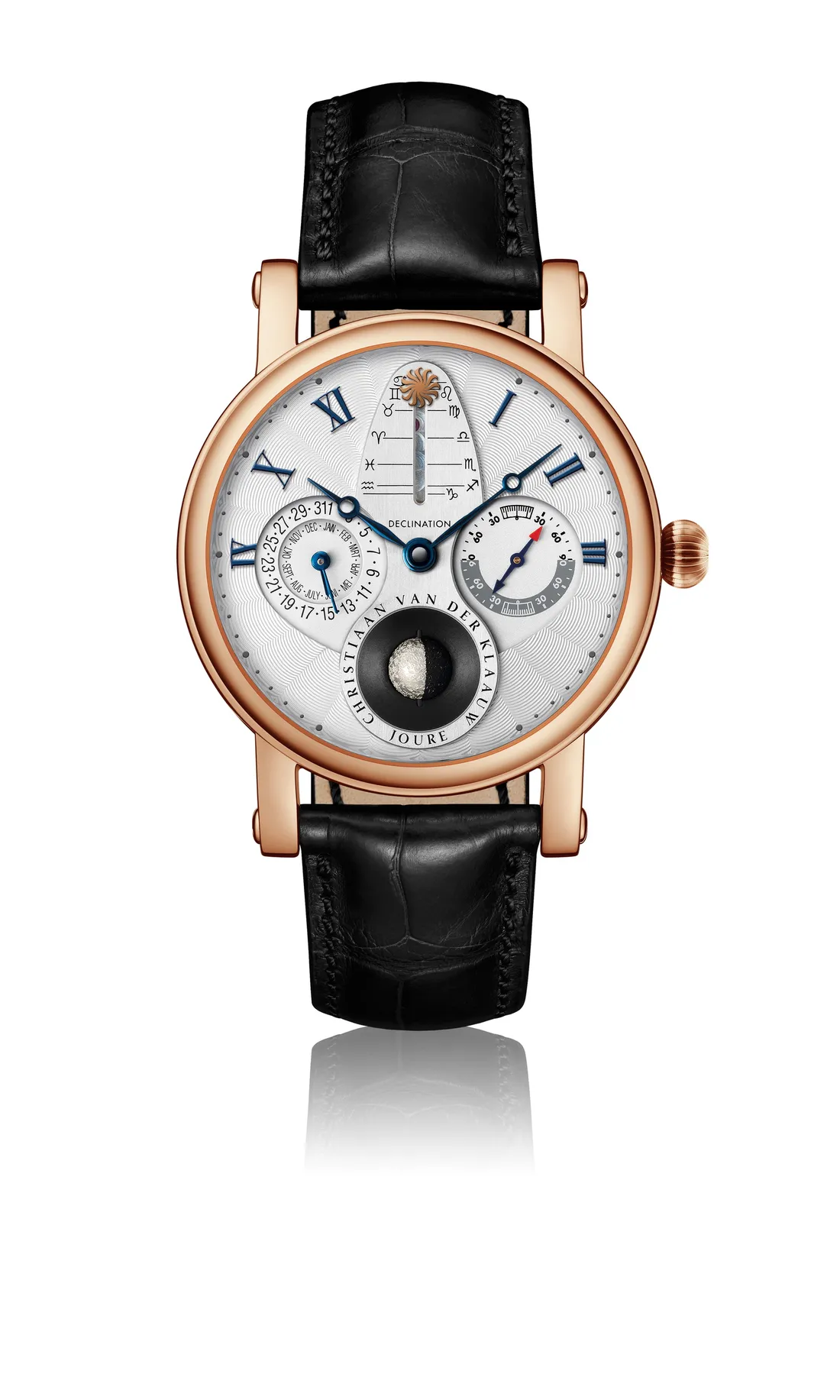
"Let me put it as a railway," Clara went on. "Call the Sun a train running on the first line and the Moon a train on the second. For the two to meet, being on the same line is not enough; both must be on that single crossing bridge at the same moment. And there is a third trick here: the bridge itself will not stay still."
"The nodes drift."
"Backwards, slowly. The line of nodes makes a complete turn of the sky in eighteen point six years. Which is why the Sun’s return to the same node takes not three hundred and sixty-five days but three hundred and forty-six point six two. We call that the eclipse year. The consequence: every hundred and seventy-three days an eclipse season opens, and within that window at least one solar eclipse has to occur."
"And the watch computes this on a wrist."
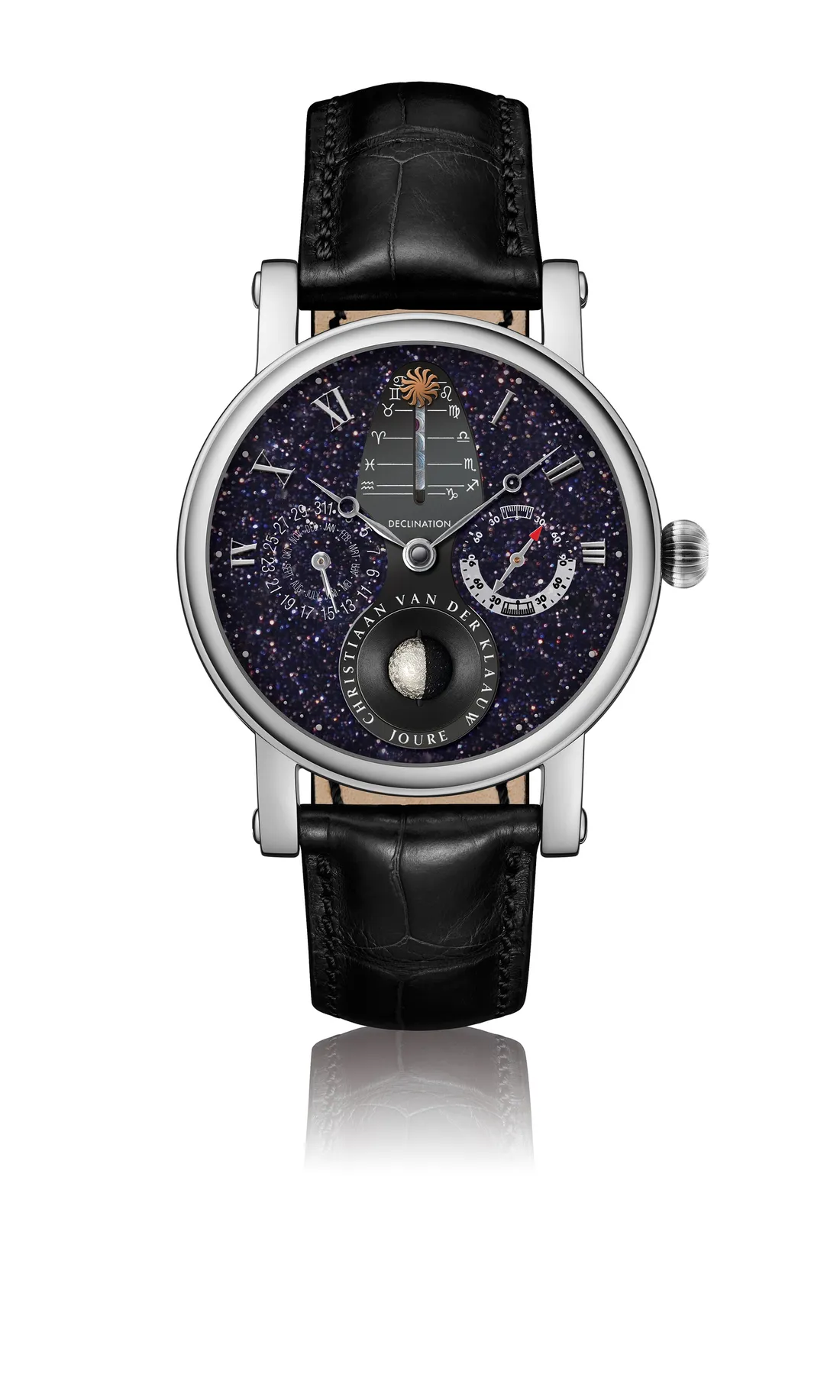
"That small dial at three o’clock exists for exactly that. One train of wheels inside drives the Moon’s twenty-nine point five three day phase train, while a second drives the twenty-seven point two one day node train. Tie two different periods together and you get a beat; when the two come into line, that is, when the eclipse hand enters the marked sector on the dial, there is a solar or lunar eclipse somewhere on Earth. What has just happened in the sky has happened on my wrist as well."
"And what is that arc at twelve?"
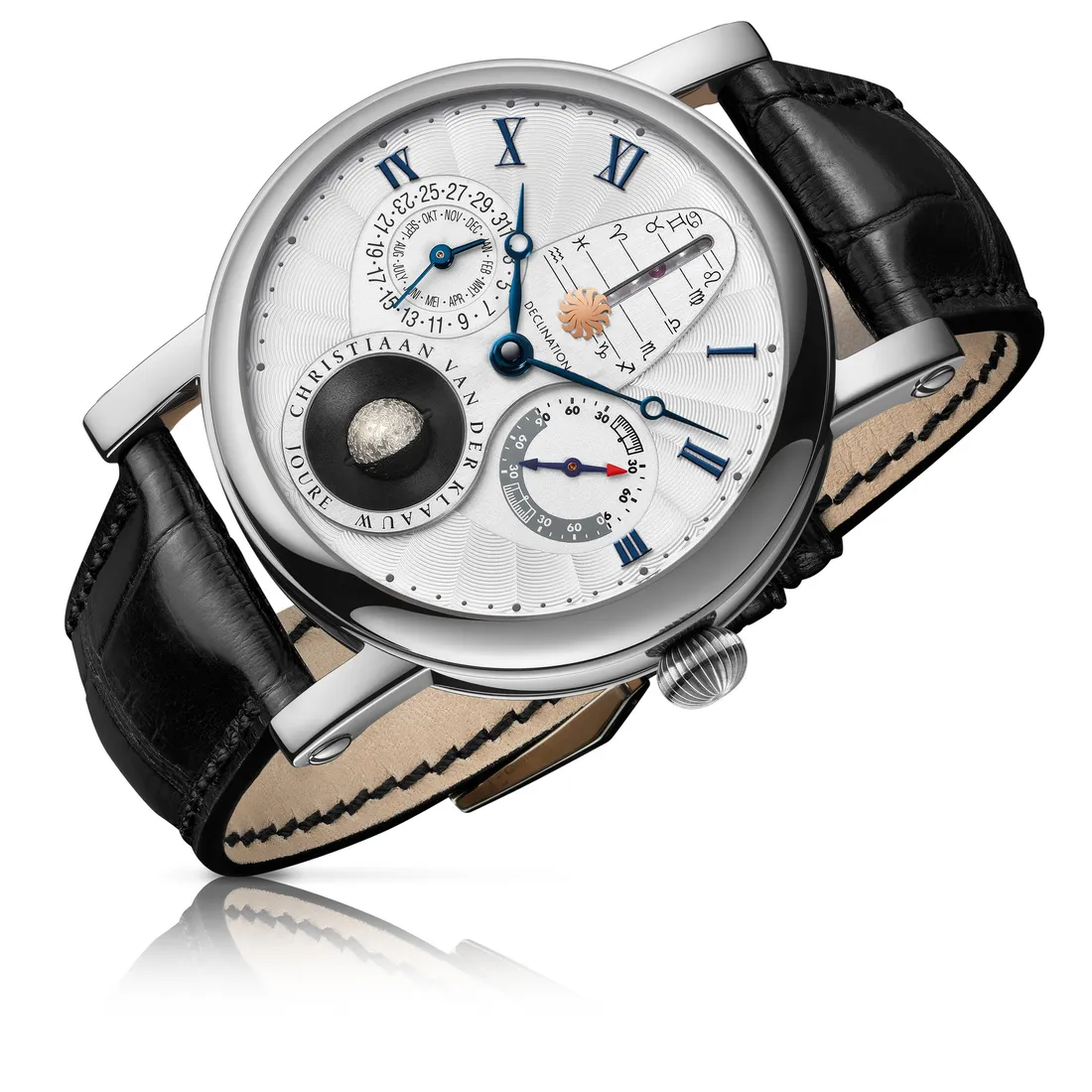
"Declination. The height of the Sun with respect to the celestial equator, which is to say the very thing we call the seasons. The small sun symbol, which is also the house’s logo, climbs to the top of the arc at the start of summer and sinks to the bottom at the start of winter. The same arc also tells you how long the day will be. And notice: this indication is a relative of the eclipse indication, because both are consequences of the same thing, the tilt of the Earth."
"And there is a date at nine."
"Day and month. Let us not forget it: this watch is as much a calendar as it is an instrument. It does not merely say that there is an eclipse; it says what day it is."
"And what is inside?"
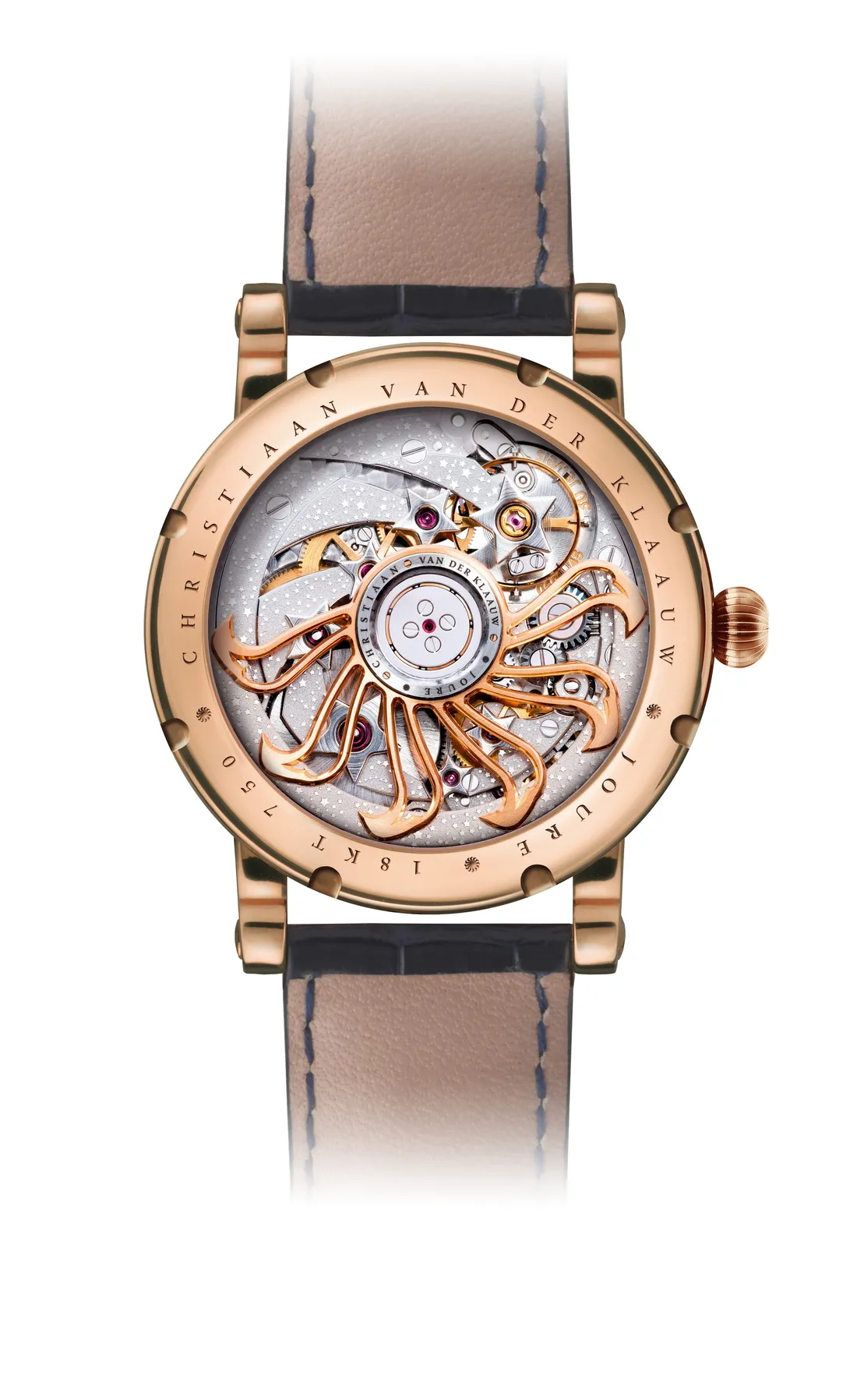
"A CVDK manufacture calibre, automatic, thirty-two jewels, sixty hours of reserve fully wound, with the Real Moon 1980 module on top of it. The case is forty millimetres, sapphire front and back. And enjoy this detail: the rotor is cut in the shape of a sun, the signature of the house. Every time you swing your arm, the thing winding the watch is a sun turning on the other side of the dial."
"And there is an award, I think."
"European Watch of the Year in 2012. But that is not what moves me. What moves me is this: this house makes nothing but astronomical watches. No chronograph, no diver, no sports model. For forty years they have worked on a single question. How does the sky fit onto a wrist."
The light came back. The orange band above the ocean spread out again across the whole horizon, and below the cliff the colony began to shout again as if nothing had happened.
Clara looked at her watch one last time. The eclipse hand was about to leave the marked sector; the sphere went on turning on its axis, at a slowness nobody would ever notice.
"I have noticed something," she said. "What happened in the sky today was two orbits crossing at a single point. The thing on my wrist computes that same crossing. The only difference is that one happens on a scale of three hundred and eighty-four thousand kilometres and the other in forty millimetres. And both obey the same number."
format_quote"One happens on a scale of three hundred and eighty-four thousand kilometres, the other in forty millimetres. Both obey the same number."
Hasan Bekmezci