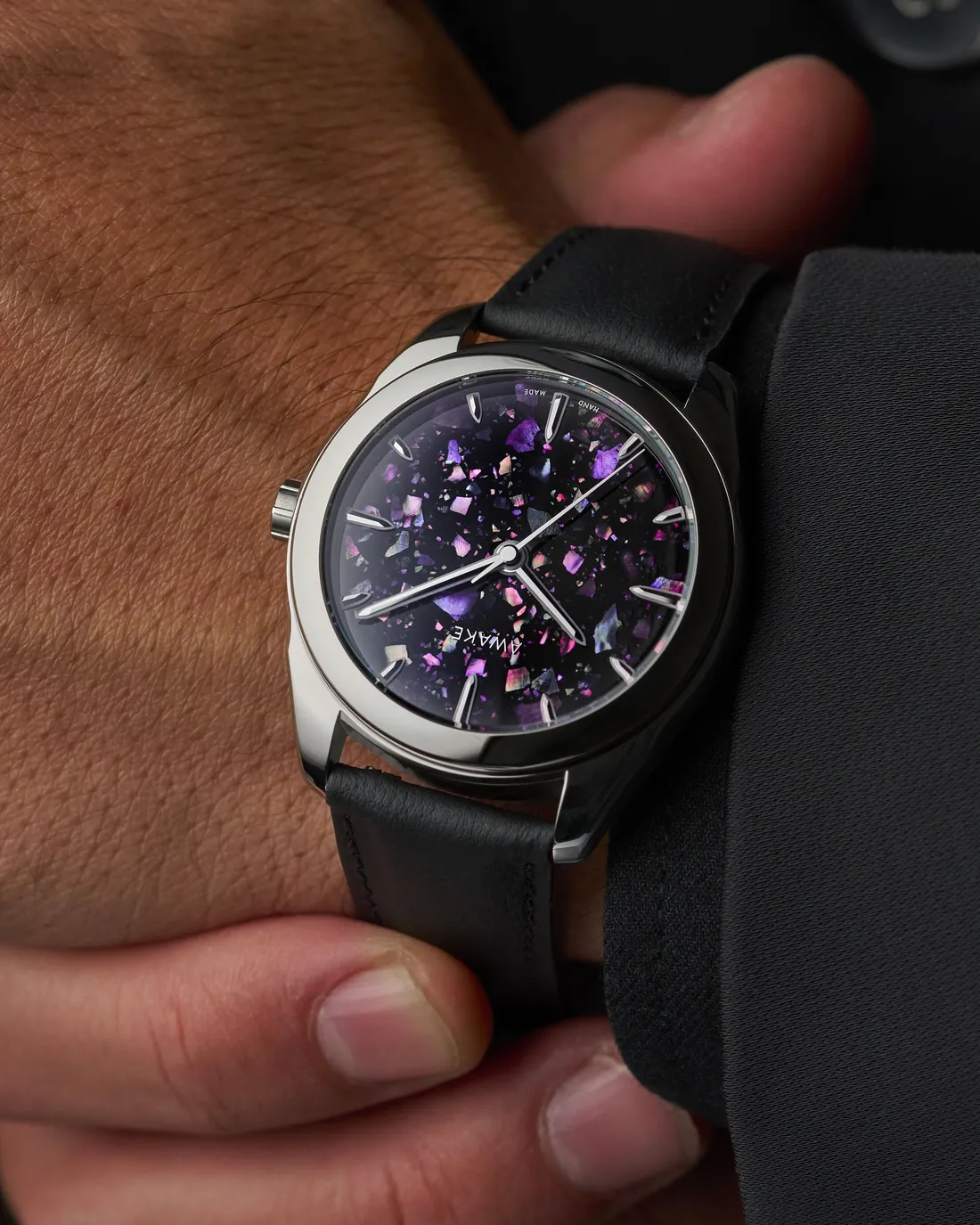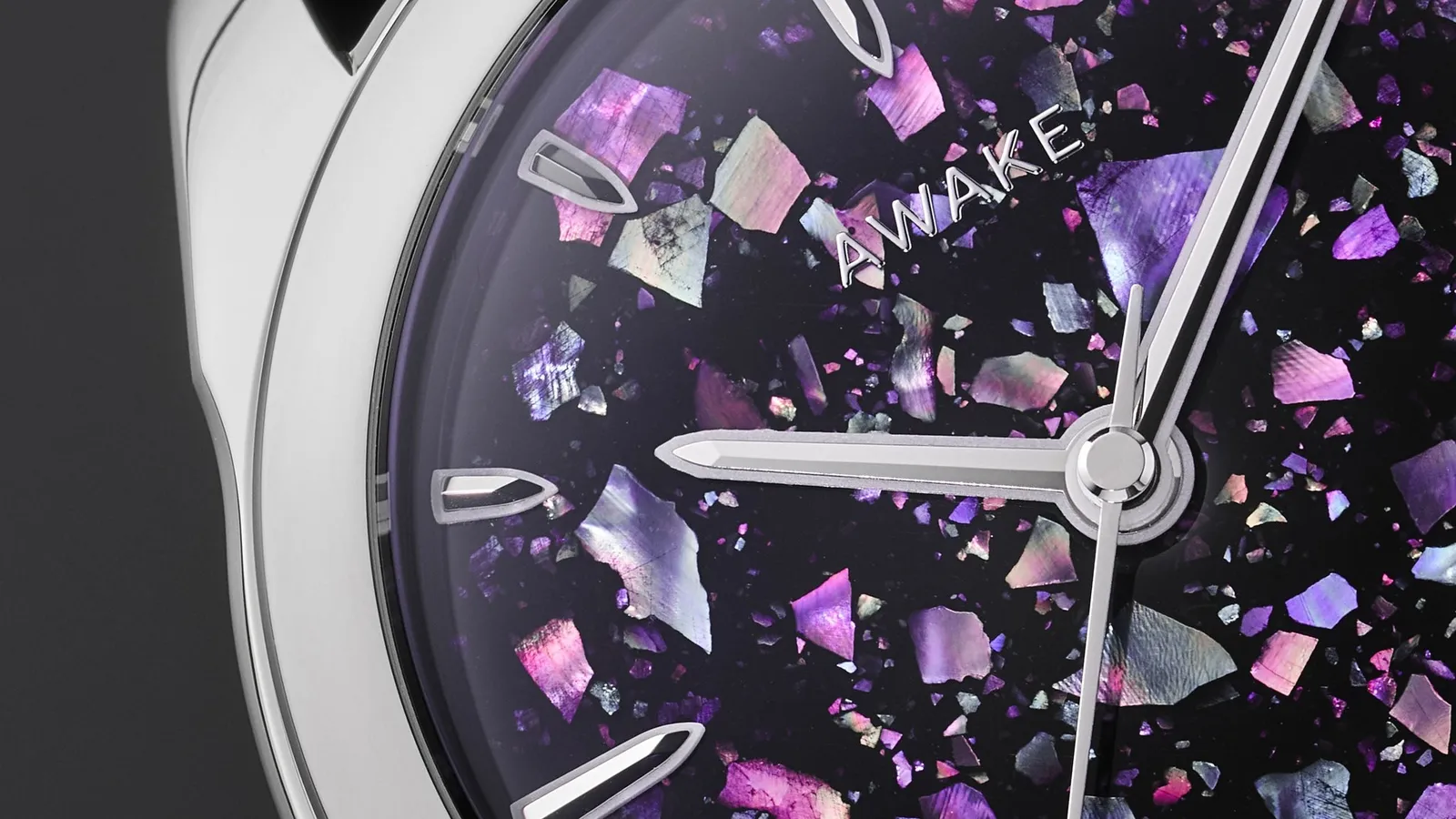
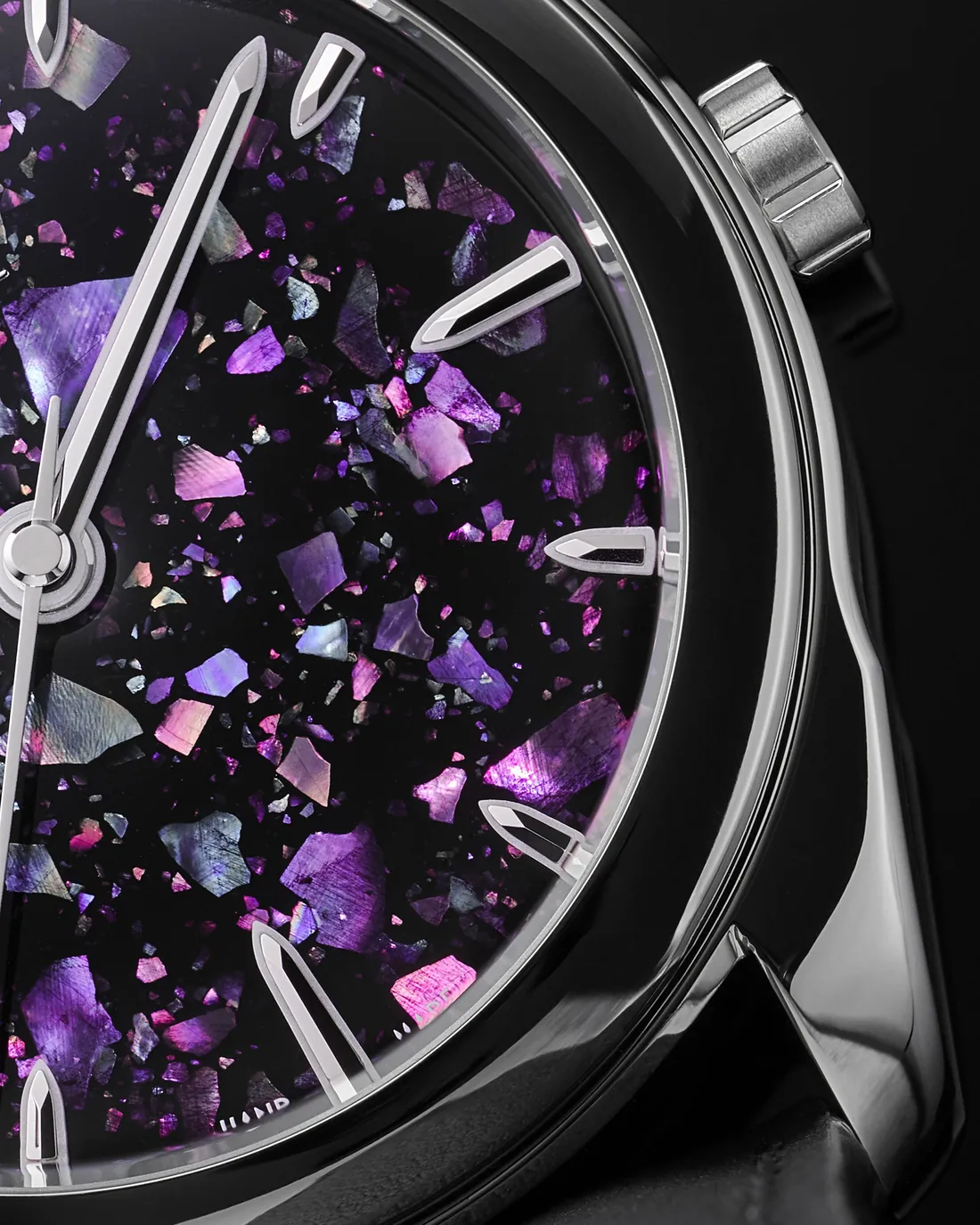
Look inside an oyster. That smooth, rainbow-sheened inner surface is called mother-of-pearl, or nacre. The dial of the Awake Sơn Mài Fragments Pink is a mosaic woven from hundreds of tiny fragments of that nacre. Each shard, scattered across a black lacquer field, throws back a different colour as you move your wrist: purple, magenta, blue, pink. The dial does not sit still; it shimmers like a rainbow.
Behind this dial lie a thousand-year-old Japanese art, a small miracle of physics, and the handwork of two continents. Let us explore together the art called Raden, why nacre shines, and how Awake fit all of it into an attainable watch. We will also take, one by one, its light, its movement and its strap.
Raden: A Thousand-Year-Old Art of Shell
Raden is the art of inlaying luminous fragments of shell into lacquer or wood. Its roots reach back to China, to the Tang dynasty of the seventh to ninth centuries; from there it passed to Japan in the eighth century, during the Nara period. Some of the oldest surviving examples are still kept in the Shōsōin repository in Nara. It reached its height in the Heian and Edo periods, adorning lacquer boxes, writing sets, the lute known as the biwa, and temple decoration.
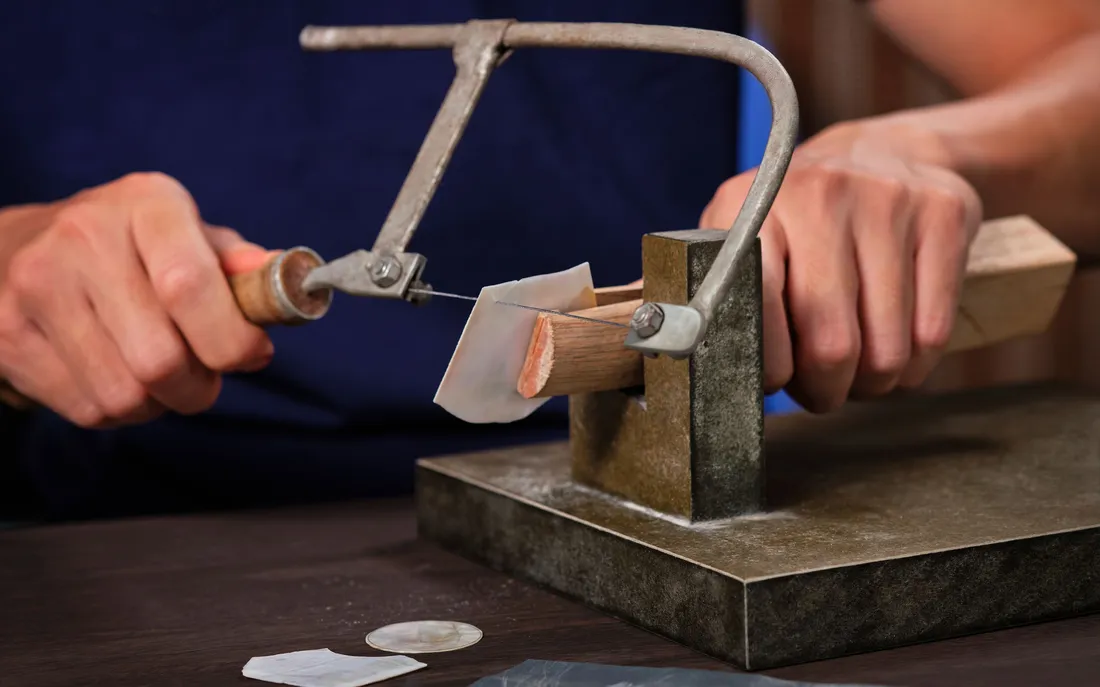
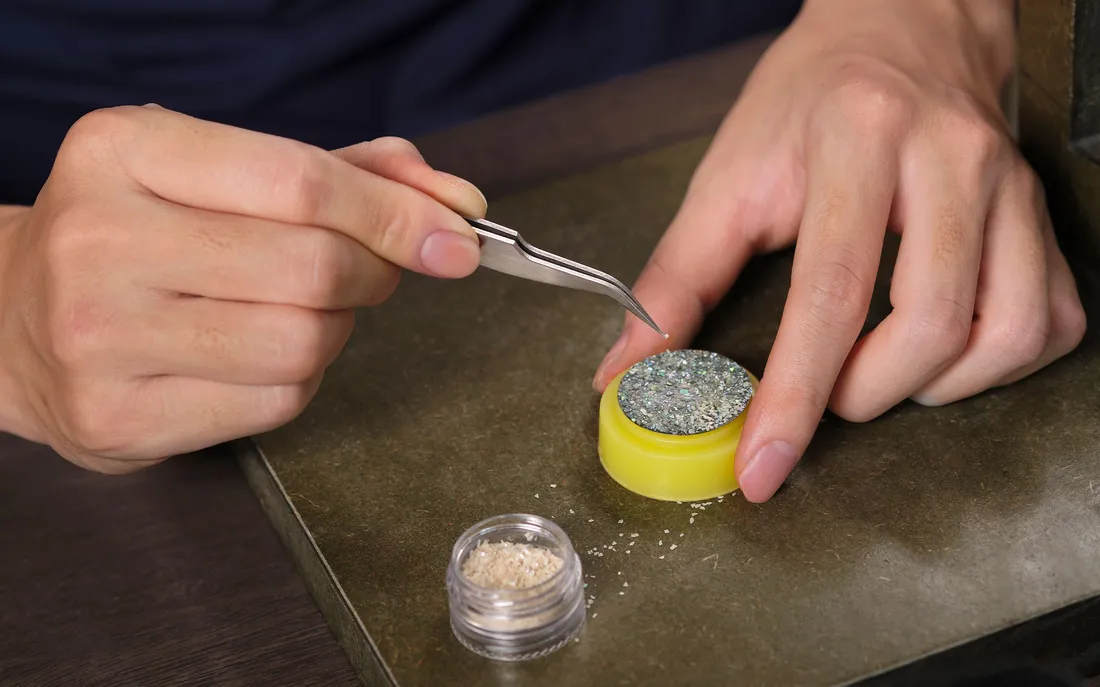
Even the name is telling: one of the characters that make up Raden means spiral seashell, the other inlaid ornament. The artisan slices the nacre layer of a shell (oyster, abalone) as thin as paper, cuts it into the desired shapes, and sets it into the lacquer. The thin-slice method releases all of the shell’s iridescence.
Awake takes this ancient art in a contemporary direction: instead of a single motif, a mosaic of hundreds of shell fragments. That is where the name comes from: Fragments. Because each piece is laid at its own angle, the dial becomes a living surface that shifts endlessly with your point of view.
Why Does Nacre Shine? The Rainbow Inside the Light
Now to the physics, because the secret of nacre hides not in a pigment but in light itself. Mother-of-pearl is in fact made of microscopic, transparent platelets of calcium carbonate (aragonite); these platelets are stacked layer upon layer, like the bricks of a wall, with a thin organic mortar between them.
Here is the magic: the thickness of each platelet is very close to the wavelength of visible light. When light strikes these transparent layers, some reflects off the top and some off the bottom, and these reflections interfere with one another. Some colours are reinforced, others cancelled. The result is that magical glow that changes with the angle. It is called structural colour; it is exactly the same phenomenon as the rainbow on a soap bubble, a butterfly’s wing, or a film of oil. The colour of nacre is not a pigment but light itself, split by its own architecture.
Now imagine: hundreds of tiny fragments with this quality, each laid at a different angle on a single dial. Every time you turn your wrist, dozens of shards throw back dozens of different colours. The dial is not a fixed image but a living mosaic that plays with light.
format_quote"The colour of nacre is not a pigment; it is light itself, split and recombined in its microscopic layers. The same rainbow as on a soap bubble, on a butterfly’s wing."
A Dial Where Two Continents Meet
Awake’s signature is to bring together the crafts of two different cultures on a single dial. The nacre mosaic, from the Japanese tradition of Raden, is united with Vietnam’s centuries-old art of Sơn Mài lacquer. Vietnamese artisans apply a natural lacquer, drawn from the sap of the lacquer tree, over the shell fragments, layer upon layer, dozens of coats deep.
Natural pigments are worked between these layers, and on the Pink version there emerges a depth of purple and pink reminiscent of a setting sun. Because each coat of lacquer is applied and dried one at a time, the shimmer of the nacre seems to rise from beneath these translucent layers, as if from below the surface of water. A single dial takes about fifteen hours of handwork.
And, just like nacre, no dial is identical to another. The pattern of the shell, the scatter of the fragments, the angle of the light; all differ on every piece. The one on your wrist is unique in the world. The case, meanwhile, is recycled 316L steel; 39 millimetres, with a sapphire crystal.
A Light in the Dark: Super-LumiNova and the Coiffe Signature
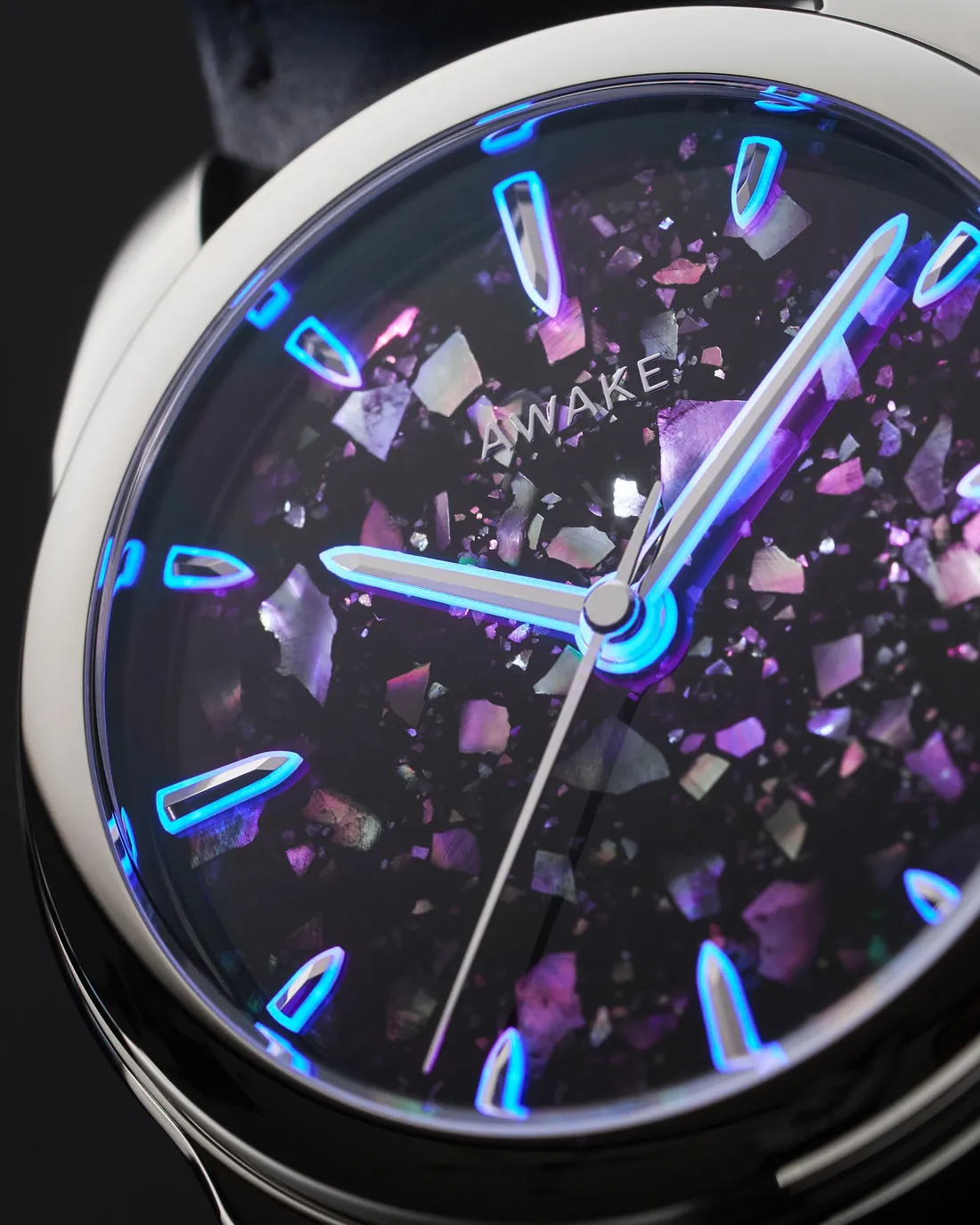
If the nacre shines by day, the watch must have a light of its own by night. For this, Awake uses Super-LumiNova BGW9 on the hands and markers. It is a phosphor that soaks up light and releases it slowly in the dark; by day it looks whitish, and in darkness it glows with a bluish light.
The physics runs like this: the crystals of this phosphor are enriched with rare-earth elements, and when they absorb light their electrons fall into a high-energy, temporary trap. Then, as those electrons slowly return, they release the energy as light. Think of a sponge that draws in light and wrings it out slowly in the dark.
Awake’s true signature, though, is the design it calls the coiffe. This detail, its name French for a headdress or crown, brings together polished, brushed and finely engraved textures on the hands and hour markers. The result is a play of light and shadow; an interpretation of what art calls chiaroscuro, the strong contrast of light and dark. By day these faceted steel surfaces catch the light, and by night the Super-LumiNova within them glows. So the watch speaks through the rainbow of nacre by day, and a blue shimmer by night.
Its Heart: The La Joux-Perret G101 and a Tungsten Rotor
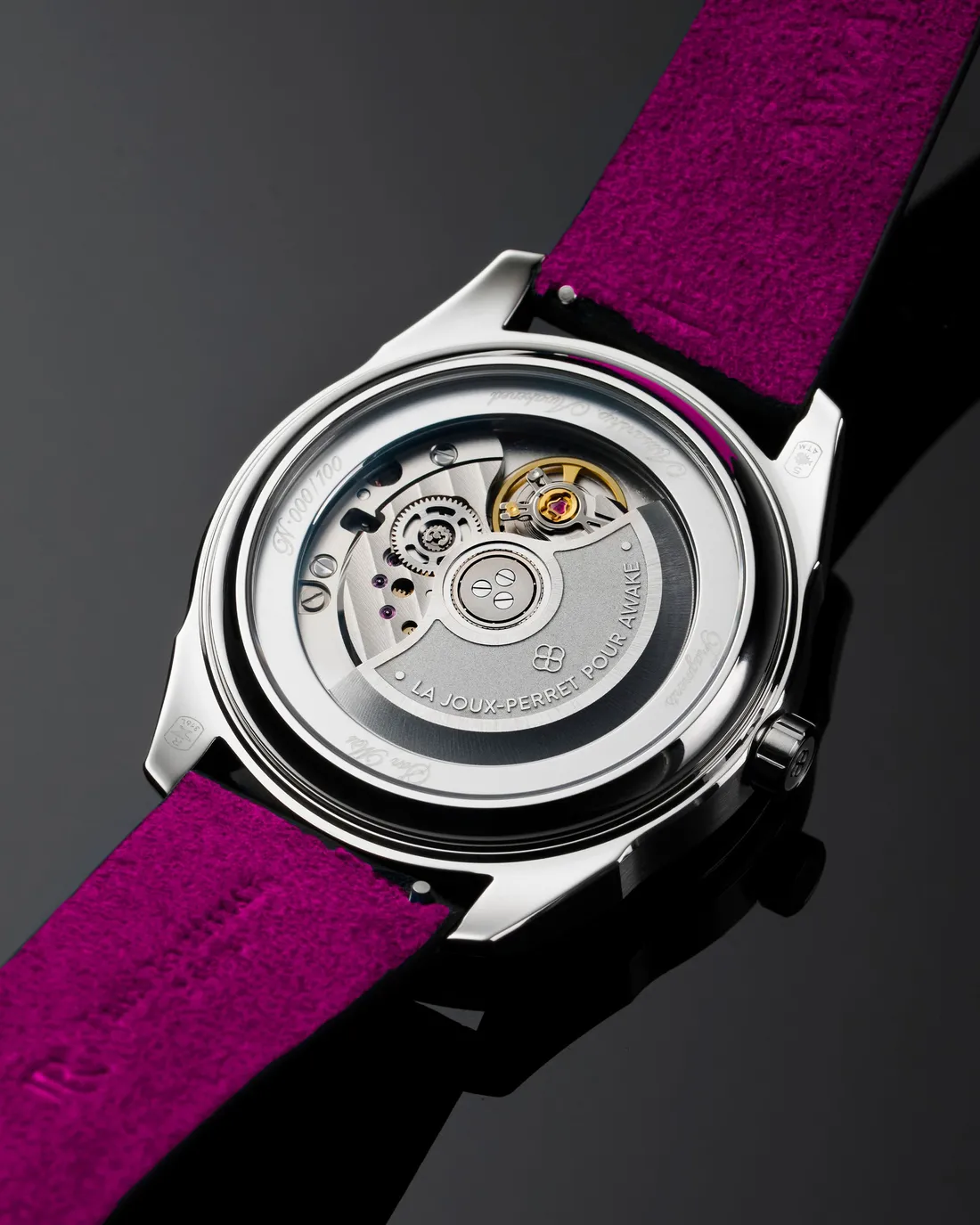
Beneath all this art beats a dependable Swiss movement: the La Joux-Perret G101. Automatic, at 28,800 vibrations an hour (4 Hz) and with 24 jewels, this calibre’s greatest asset is its 68-hour power reserve. Take the watch off on Friday evening and leave it on the table, and you will still find it running on Monday morning.
Awake added a bespoke touch to this movement: a custom rotor made of tungsten. Why tungsten? Because it is very dense, that is, a heavy metal; even a small rotor gathers more energy with every motion of your arm and winds the spring more efficiently. This rotor is designed with alternating concave and convex surfaces, finished in turn with brushed, micro-beaded and polished textures.
You can watch all of it through the sapphire caseback; the ring around the back, meanwhile, is laser-engraved and finished with a micro-beaded texture. The art on the front of the dial, then, continues on the back of the movement.
From Strap to Price: An Attainable Art
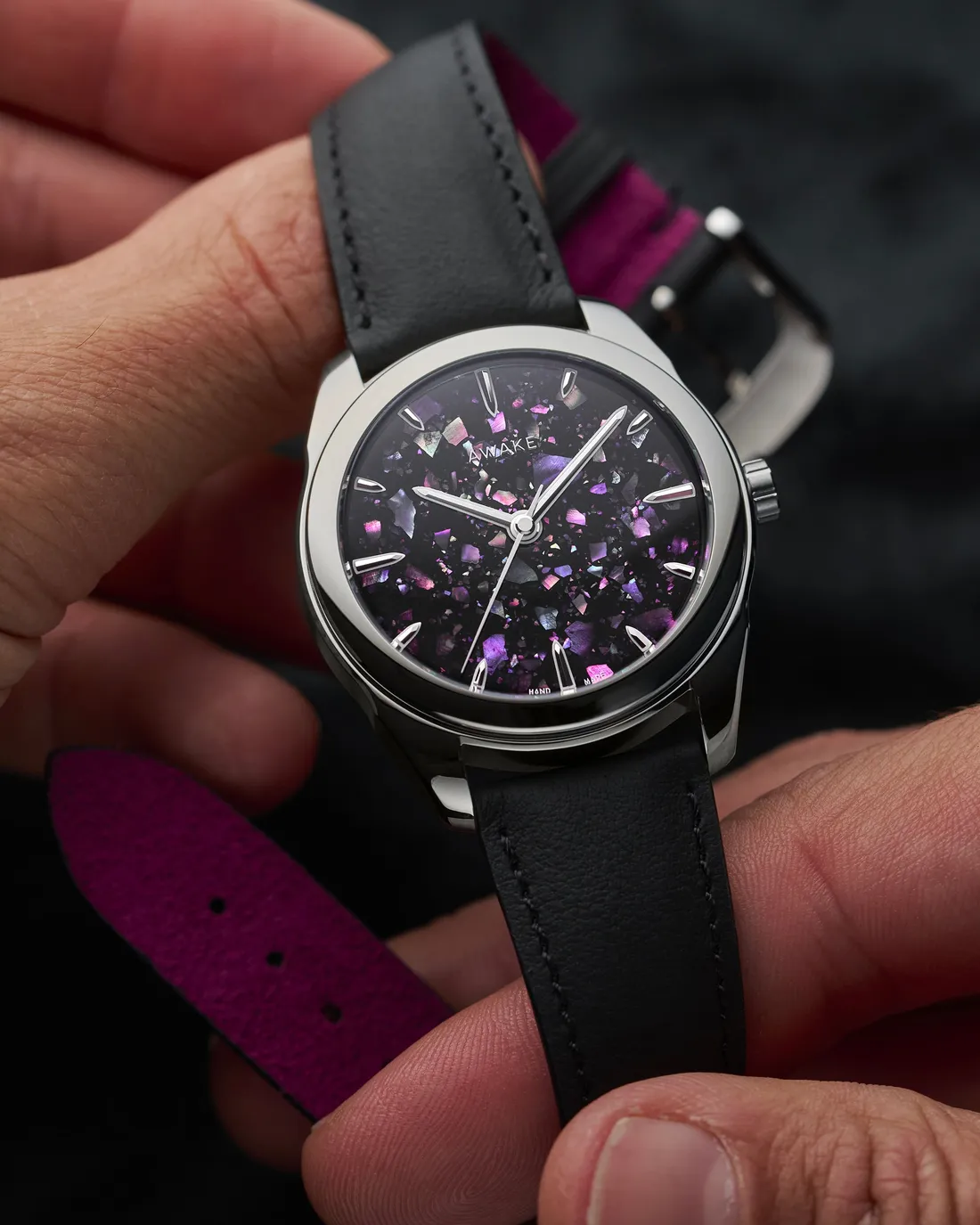
The care lavished on detail continues in the strap. It is signed by Jean Rousseau, the venerable French atelier that has been making straps in Paris since 1954. Matte black calfskin, lined with Alcantara in a purple that echoes the dial, and worked with tone-on-tone stitching. It is finished with quick-release presto spring bars and a hollowed buckle in recycled steel.
Now let us put it all together: a thousand-year-old Japanese art of Raden, centuries-old Vietnamese lacquer, a Swiss-made calibre and the strap of a master French atelier. Each of these alone would be part of a luxury object. By any reckoning, such a combination should cost a fortune.
Awake offered it for 2,700 euros, and in only 100 pieces worldwide. Not cheap; but given the real handwork and the rare crafts within it, an attainable masterpiece. This is the brand’s philosophy: Artisanship, Awakened. This dial is a small mosaic where artisans from around the world come together; just like the shell fragments upon it, arriving from different cultures to meet in a single beauty.
format_quote"True luxury is not the shine of a logo but the shimmer of a human hand. On this dial, Awake brought together the crafts of the world, just like fragments of nacre, into a single beauty."