The porcelain bowls that reached Europe from China in the sixteenth century were a riddle. Thin, nearly translucent, ringing when struck and able to hold boiling water without cracking; nothing in European pottery was related to it. Its price was measured against gold, and nobody knew how it was made.
The king of Saxony put an alchemist on the problem. The man had originally been commissioned to make gold; when he failed, he was told to make porcelain instead, and he worked for years inside a fortress under watch. He found the formula at the beginning of the eighteenth century. The same king once handed a neighbouring ruler a troop of cavalry and took porcelain vases in exchange.
A material puts people through that much only when it is not what it looks like. Porcelain is not a colour. It is a firing regime.
There is a distinction here that most people blur, and the entire story of this watch rests on it. Enamel and porcelain are not the same thing.
Enamel is powdered glass laid over a metal plate and melted. Metal underneath, glass on top; the two expand at different rates, which is why an enamel dial can crack as it cools. Porcelain contains no metal at all. It is a clay-based body shaped and fired at high temperature, and as it fires the minerals inside it vitrify so that the material becomes a single substance throughout.
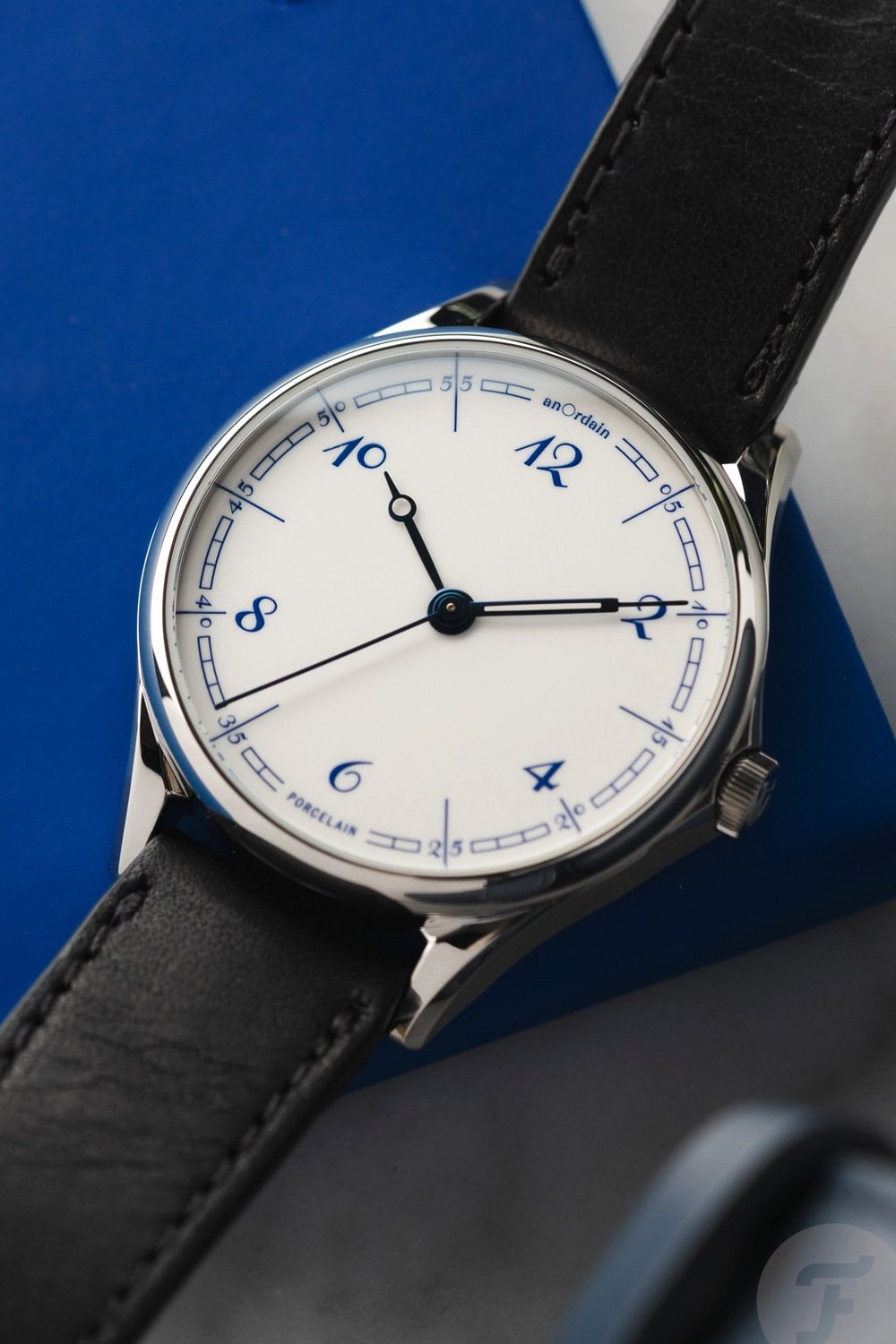
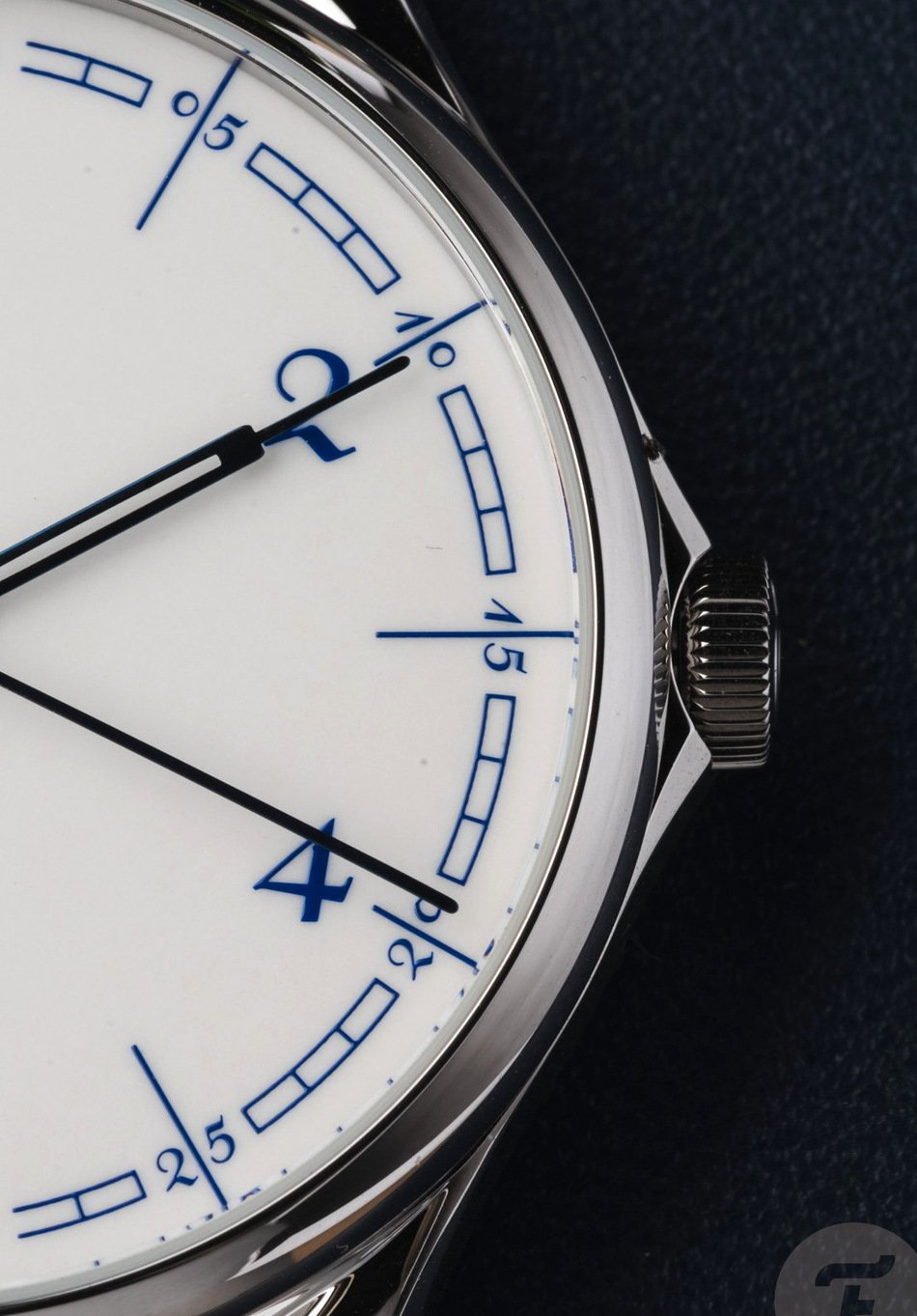
The result is visible. The white of enamel sits on the surface and gives a hard gloss. The white of porcelain takes the light a little way into the surface, scatters it over a few tenths of a millimetre and hands it back. That is why porcelain white looks slightly soft, slightly milky. Seen from five centimetres away the difference is small; on a wrist it is the whole difference.
What anOrdain does is exactly that: make the dial genuinely out of clay and fire it in a traditional pottery kiln. The work is done in the brand’s own Glasgow workshop.
format_quote"The white of enamel sits on the surface. The white of porcelain takes light a little way in and gives it back. On a wrist that is the whole difference."
Louis Lorent
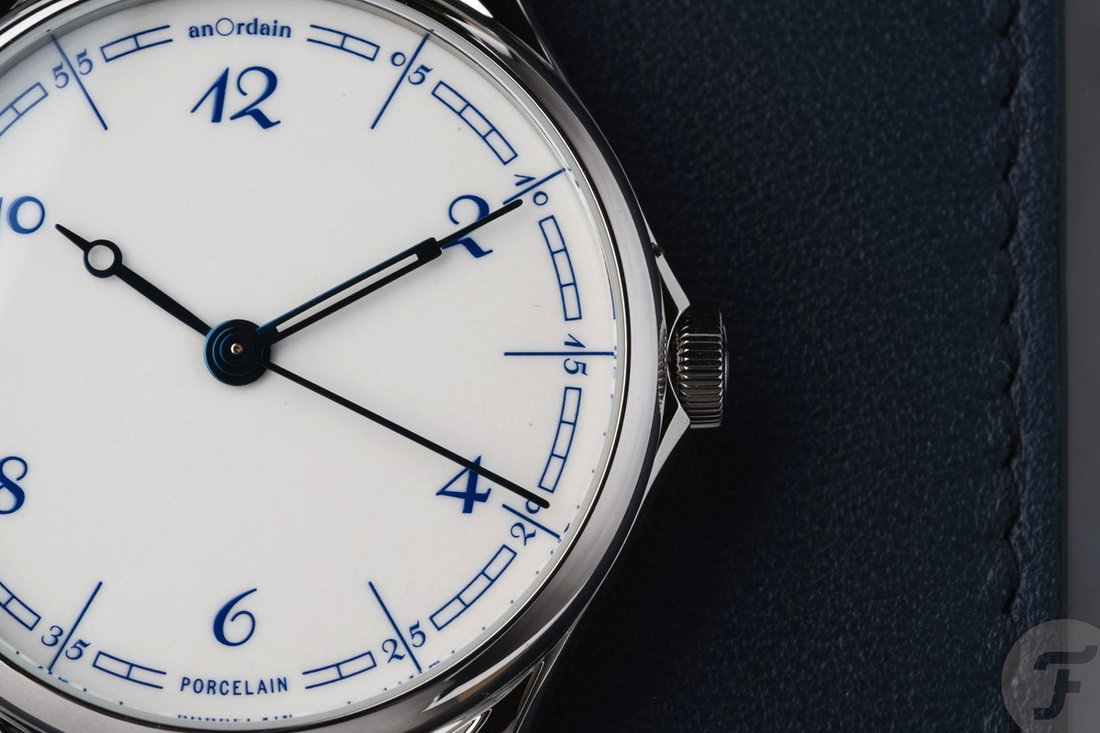
A porcelain dial carries a difficulty of its own: shrinkage. Clay loses a portion of its volume in the kiln, and the loss is slightly different in every batch and every firing. On a plate it does not matter. On a thirty-eight millimetre dial, a deviation of a tenth of a millimetre means the hole for the hand arbor is no longer centred. Dials are therefore made larger than the target, measured after firing, and only the ones that held are used.
Then there is flatness. A disc softened in a kiln can bow very slightly under its own weight. There is a movement behind the dial and the hands must sweep parallel to the surface; a bow means a hand rubbing somewhere in its travel. Which is why the workshop measures every piece individually after the kiln.
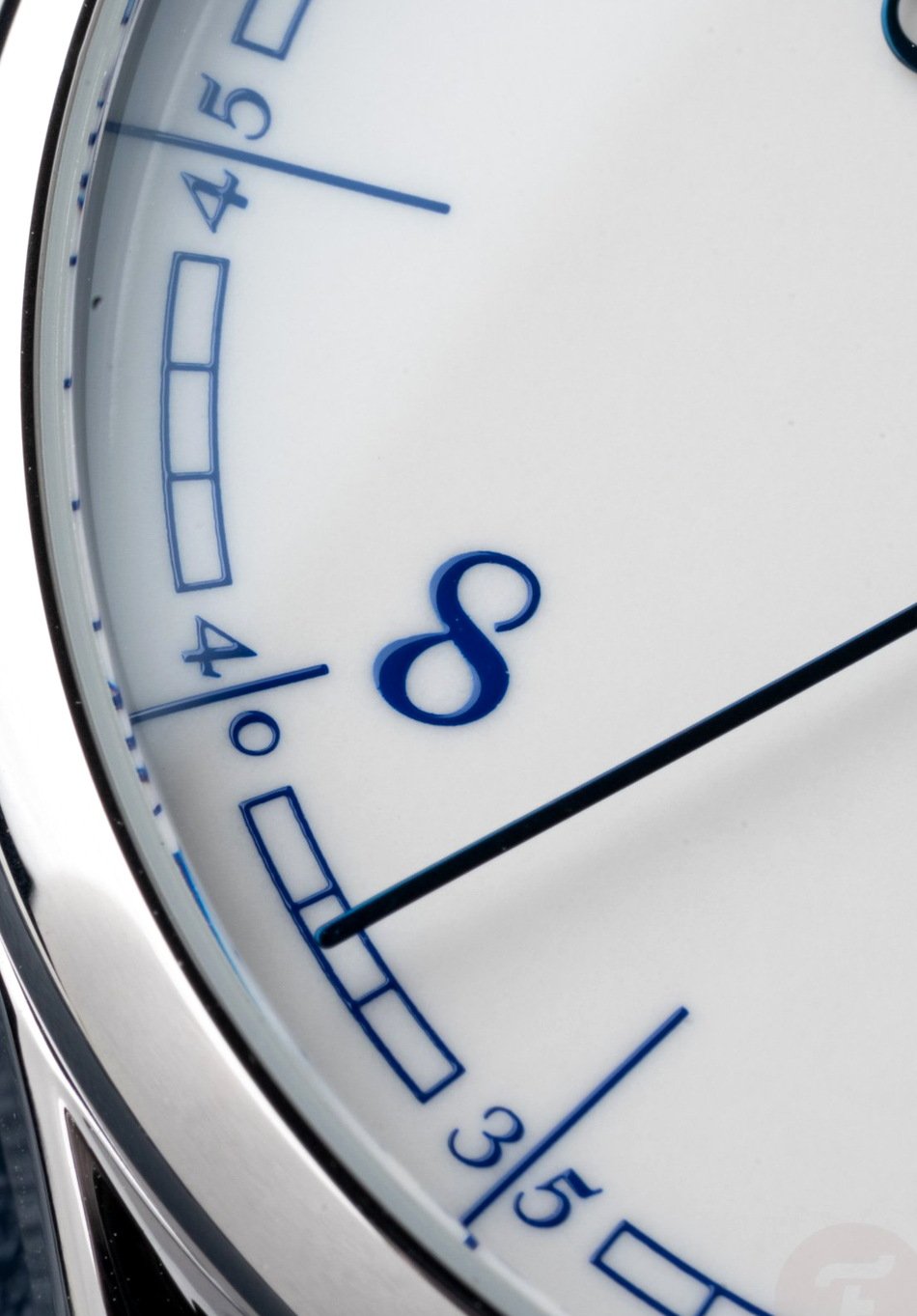
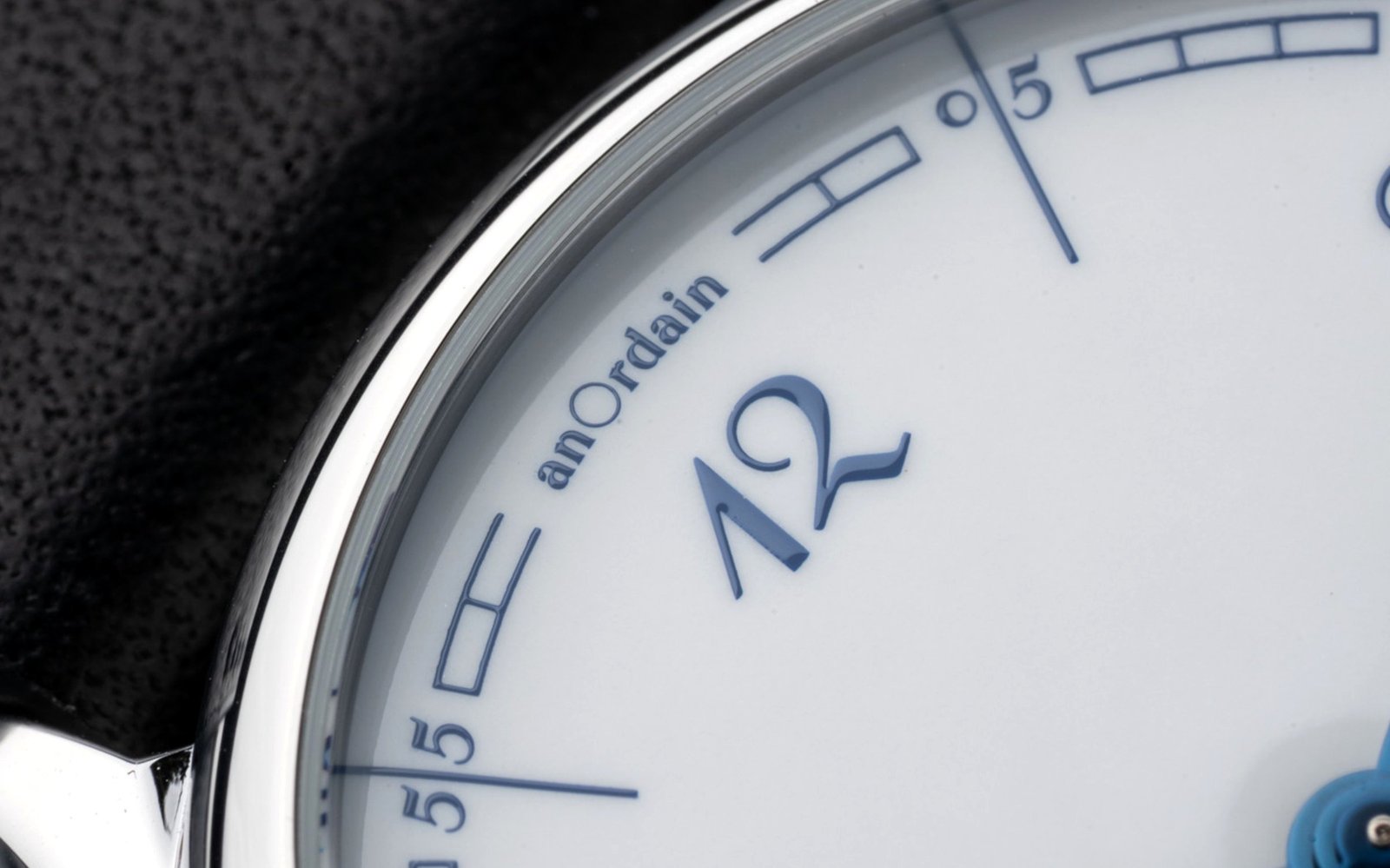
The numerals on that dial come from a different craft again. They were drawn specifically for this watch, and the person who drew them is not a watchmaker but a typographer: Kia Tasbihgou.
It usually goes unnoticed that a dial is a typographic object first. You have twelve numerals, all of different widths, all of which must sit on a circular path, and none of which may look heavier than its neighbour. On a magazine page you fix the spacing of letters by opening the gaps; on a dial the gaps are fixed, because the circle is fixed.
In the numerals Tasbihgou drew, the terminals thicken slightly while the stems stay thin. The reason is technical rather than aesthetic: a line printed onto porcelain spreads a little as it fires. A numeral drawn thin comes out of the kiln at the right weight. These numerals were drawn for a kiln, not for paper.
format_quote"These numerals were drawn for a kiln, not for paper. A line printed on porcelain spreads as it fires, so you draw it thin to have it come out right."
Louis Lorent
format_quote"That is the best thing about knowledge: once it is found, nobody needs to imprison anybody for it again."
Louis Lorent
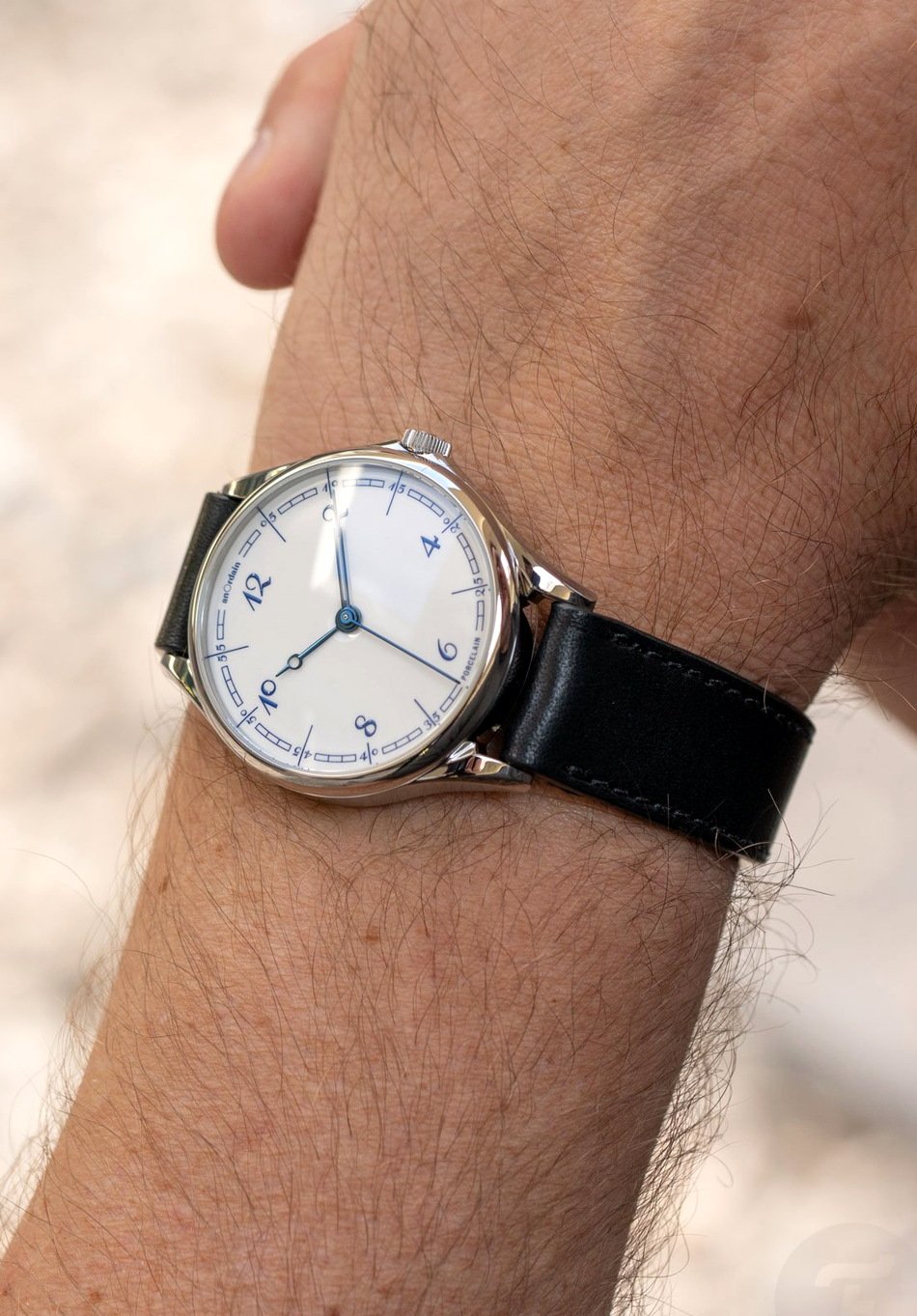
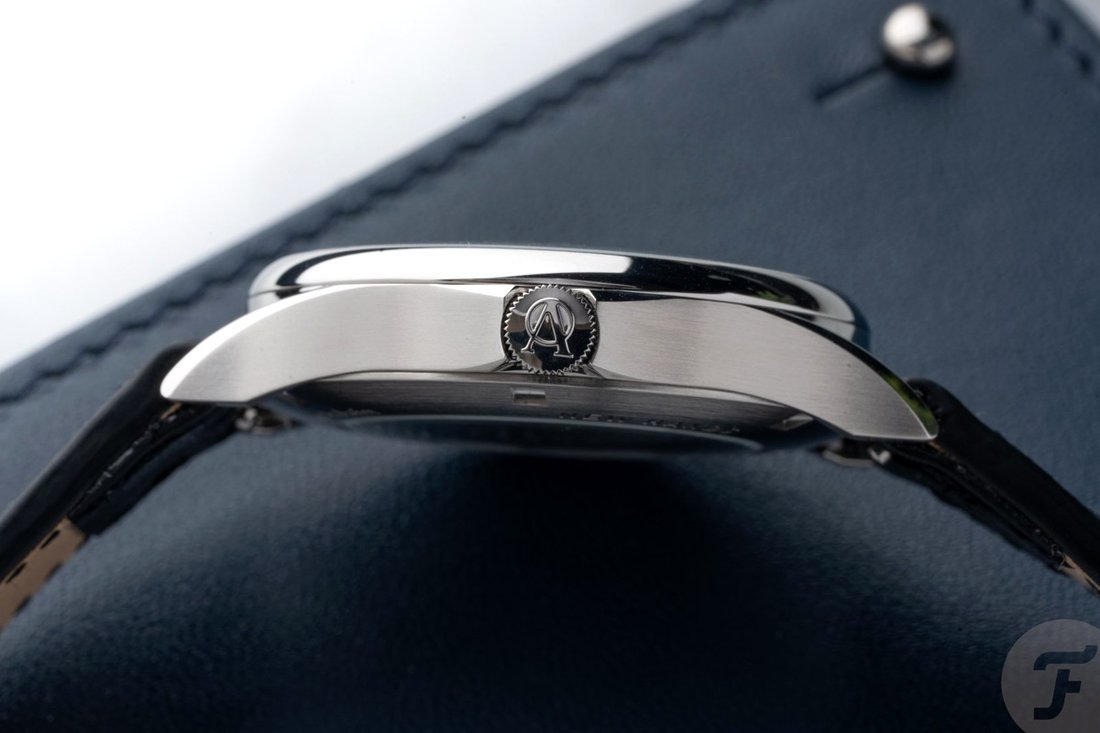
The dimensions are this watch’s quietest virtue. Thirty-eight millimetres across, forty-six lug to lug and eleven thick: a case below today’s average that goes under a cuff. The return to smaller watches gets discussed as a fashion, when in fact these proportions were normal for a century and it was the interval in between that was the anomaly.
anOrdain’s enamel-dialled models come with a long waiting list. One of the reasons this porcelain model exists is precisely that: a dial from the same hands, available without joining the queue.
The substance a king once locked an alchemist in a fortress for is now fired in a workshop kiln and worn on a wrist. That is the best thing about knowledge: once it is found, nobody needs to imprison anybody for it again.