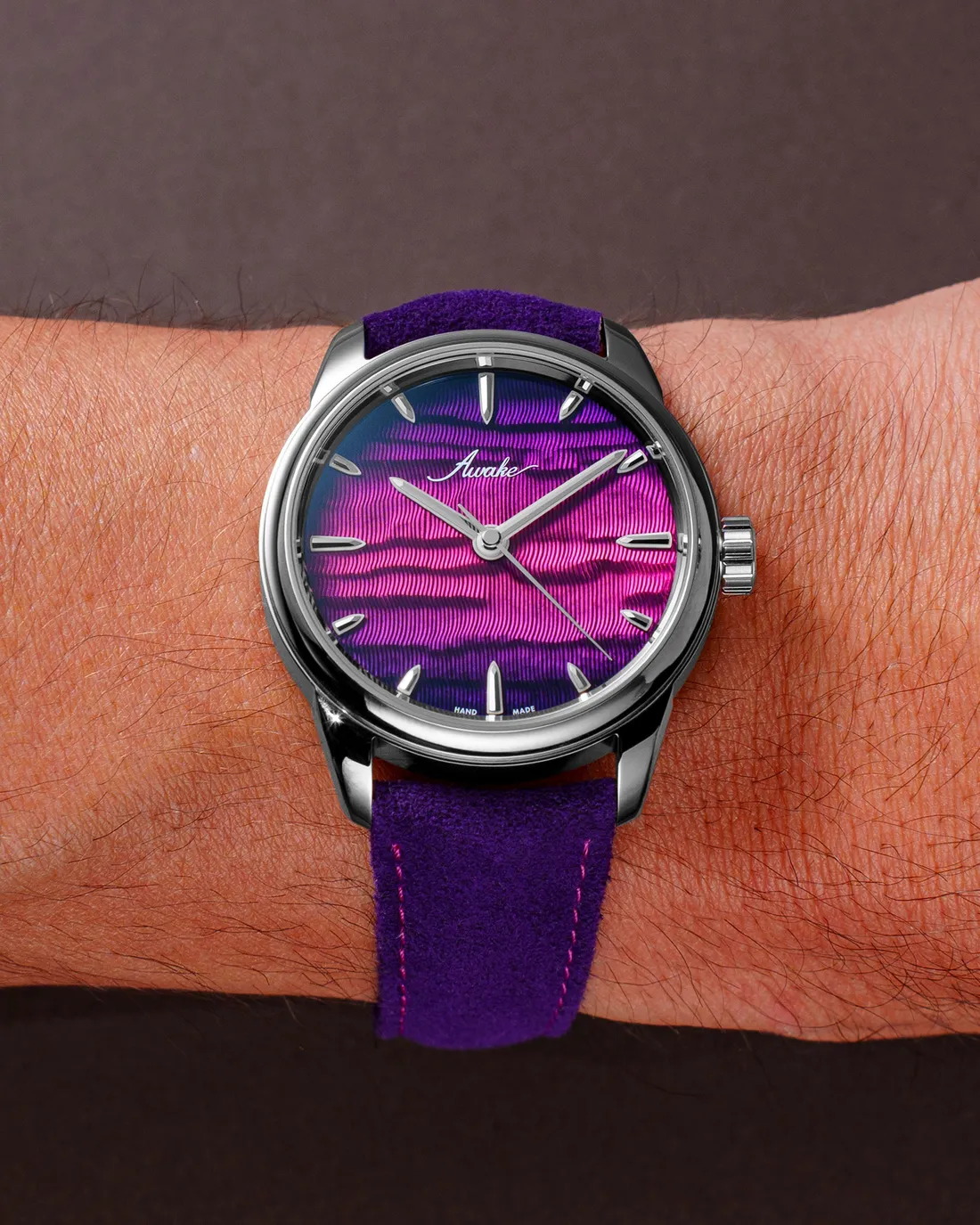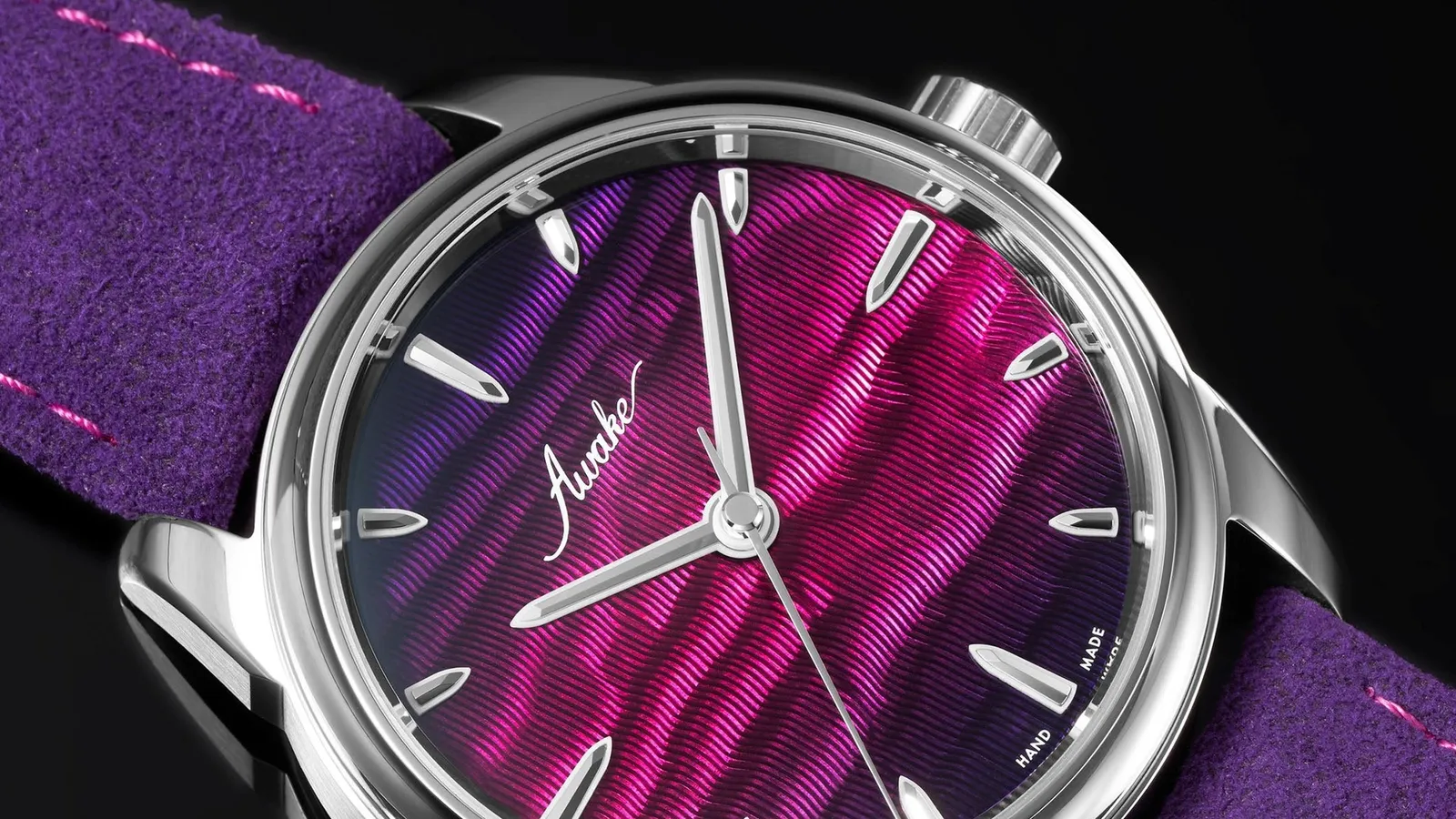
Most watch dials are a printed surface; dead, flat, motionless. But some dials are carved. Hundreds of tiny grooves are cut into the metal by hand, and those grooves catch the light. Every time you move your wrist the dial glints, ripples, seems almost to breathe. This is called guilloché. And the Awake Guilloché Main Sunset brings this two-century-old art back to life on a dial painted in the colours of a setting sun.
In this piece I will tell the story of guilloché from its very first use to today; why people fall in love with these dials; and perhaps the loveliest part of all: how craftsmanship of this quality, together with the great story behind it, can be offered at an attainable price.
What Is Guilloché? A Two-Century Art of Light
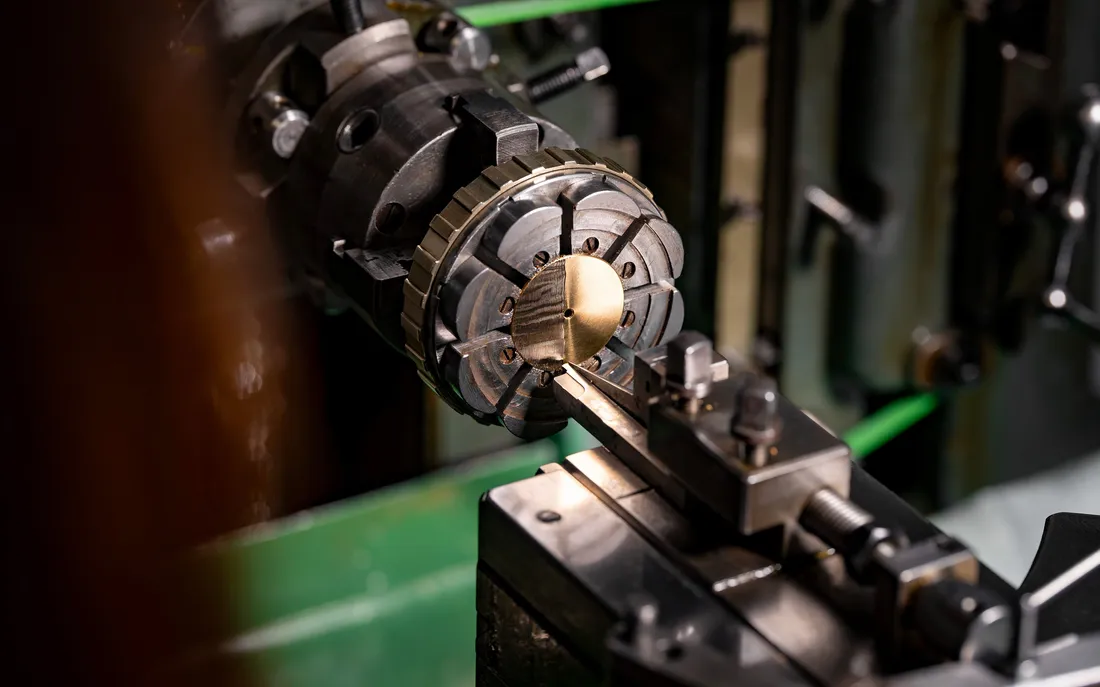
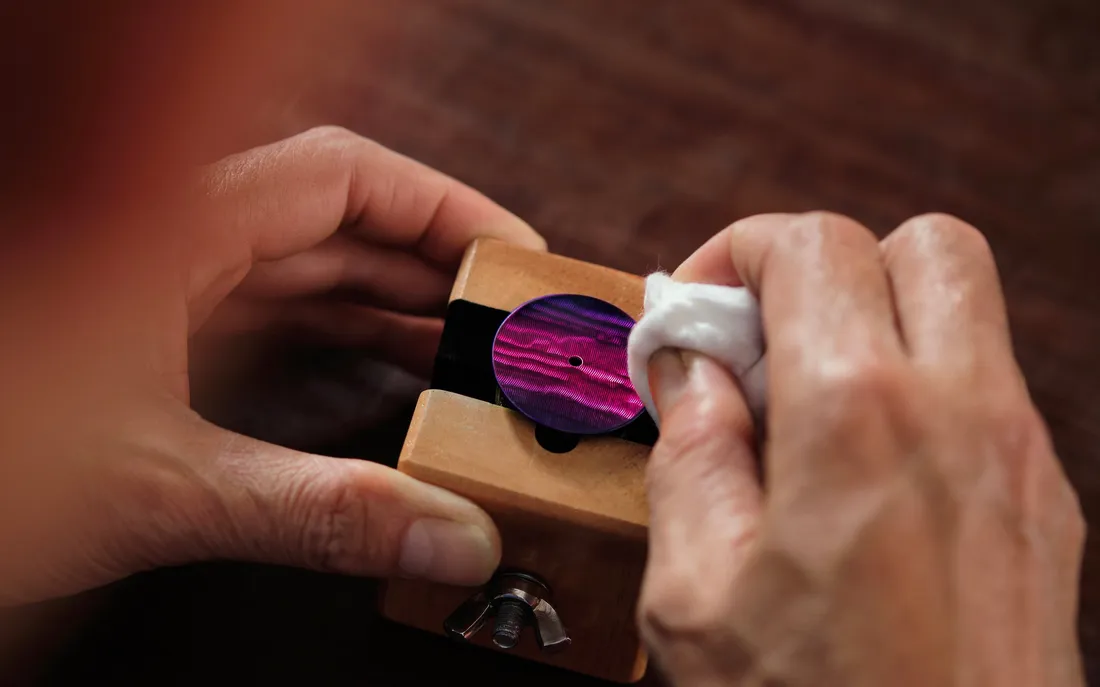
Guilloché is the art of engraving extremely precise, repeating geometric patterns into metal with a hand-cranked lathe. Here is the secret: the cutting tip stays still; what actually moves is the workpiece, driven against it by patterned cams called rosettes. The artisan turns the lathe by hand, and the metal, following the path the cams trace, is cut against the tool to reveal the pattern. So the pattern is not printed; it is carved, one groove at a time.
The art traces back to the sixteenth century and the tradition of ornamental turning that decorated wood and ivory. Its name is said to come from a French engineer named Guillot. In the seventeenth and eighteenth centuries it adorned gold snuffboxes and jewellery. But the man who first brought guilloché to the watch dial was the genius of watchmaking, Abraham-Louis Breguet, in the late 1780s. And not for beauty alone: the patterns divided the dial into zones, broke up glare and made the sub-dials easy to tell apart. Function and beauty, in a single texture.
Two kinds of machine are used. The rose engine, with its undulating rosettes, draws curved, flower-like patterns. The straight-line engine draws straight, parallel lines. Awake’s artisans, in the workshop of the Renzetti family in Italy, use exactly these nineteenth-century straight-line machines, guided entirely by hand.
The Patterns and a Dying Craft
Guilloché has a language, an alphabet of its own. Clous de Paris, a hobnail pattern of tiny pyramids; grain d’orge, the barleycorn; soleil, the sun, radiating in rays from the centre; vagues, evoking waves; and panier, the basketweave. The pattern on Awake’s dial is a draped moiré inspired by the 1930s, spreading in wave after wave; a texture that stirs like water in the light.
But the bitter truth of this art is that it is nearly dead. The number of masters who can perform hand-guilloché barely exceeds the fingers of one hand worldwide. Requiring years of apprenticeship at a lathe, demanding patience and a steady hand, the craft slowly vanished before the ease of machine-stamping a guilloché look. A few workshops, like the Renzetti family’s, are among the last strongholds carrying this two-century-old knowledge into the present.
Why Do People Love Guilloché So Much?
The answer hides in a single word: light. A printed dial reflects light flatly; always the same, always still. But in guilloché, hundreds of grooves each catch and throw back the light at a different angle. As you turn your wrist the dial glints, darkens, ripples. Like the difference between a still pond and a water surface catching the sun and stirring. One is dead, the other alive.
Second, depth. Guilloché is not a printed image but a true relief; it holds light and shadow and gains a three-dimensional texture. Third, and most important: the human hand. Every hand-made guilloché dial is a little different, carrying the artisan’s breath; a uniform machine-stamped imitation is soulless. Knowing that a person bent for hours over a two-century-old lathe to make this dial gives it a value all its own. And there is a deep heritage: when you wear a guilloché dial, you connect directly to Breguet and to watchmaking’s most revered two centuries.
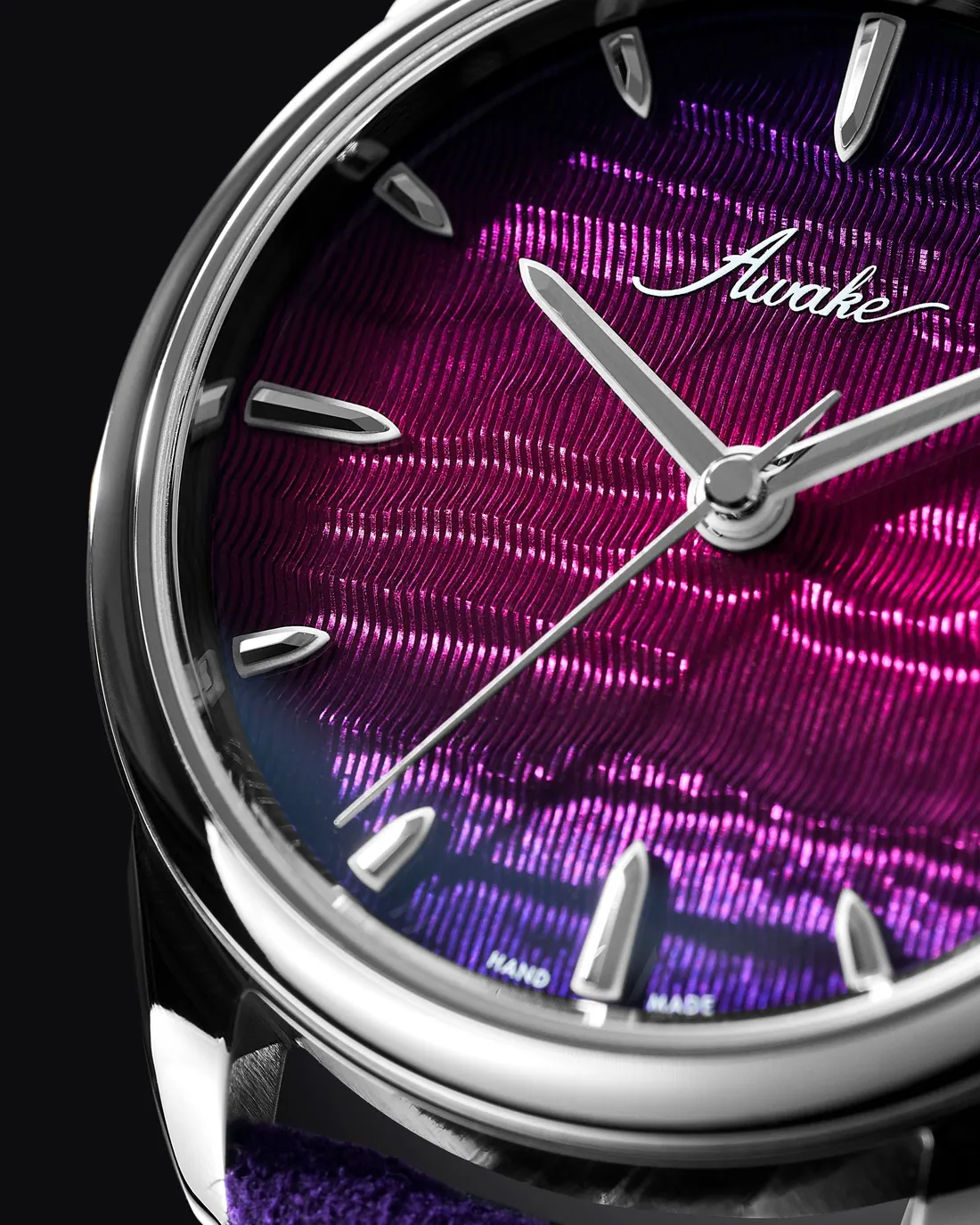
format_quote"A printed dial reflects light flatly; guilloché catches it, bends it and throws it back. One is a dead surface, the other alive."
The Awake Sunset: Two Continents’ Craft on One Dial
The true magic of the Awake Guilloché Main is that it brings together two ancient arts from two different continents on a single dial. First Italy: the Renzetti family engraves the hand-guilloché into the dial’s metal. Then Vietnam: master lacquerers from Hanoi, with the centuries-old Sơn Mài tradition, apply lacquer coloured with natural pigments, layer upon layer. For the first time in the history of watchmaking, these two crafts come together.
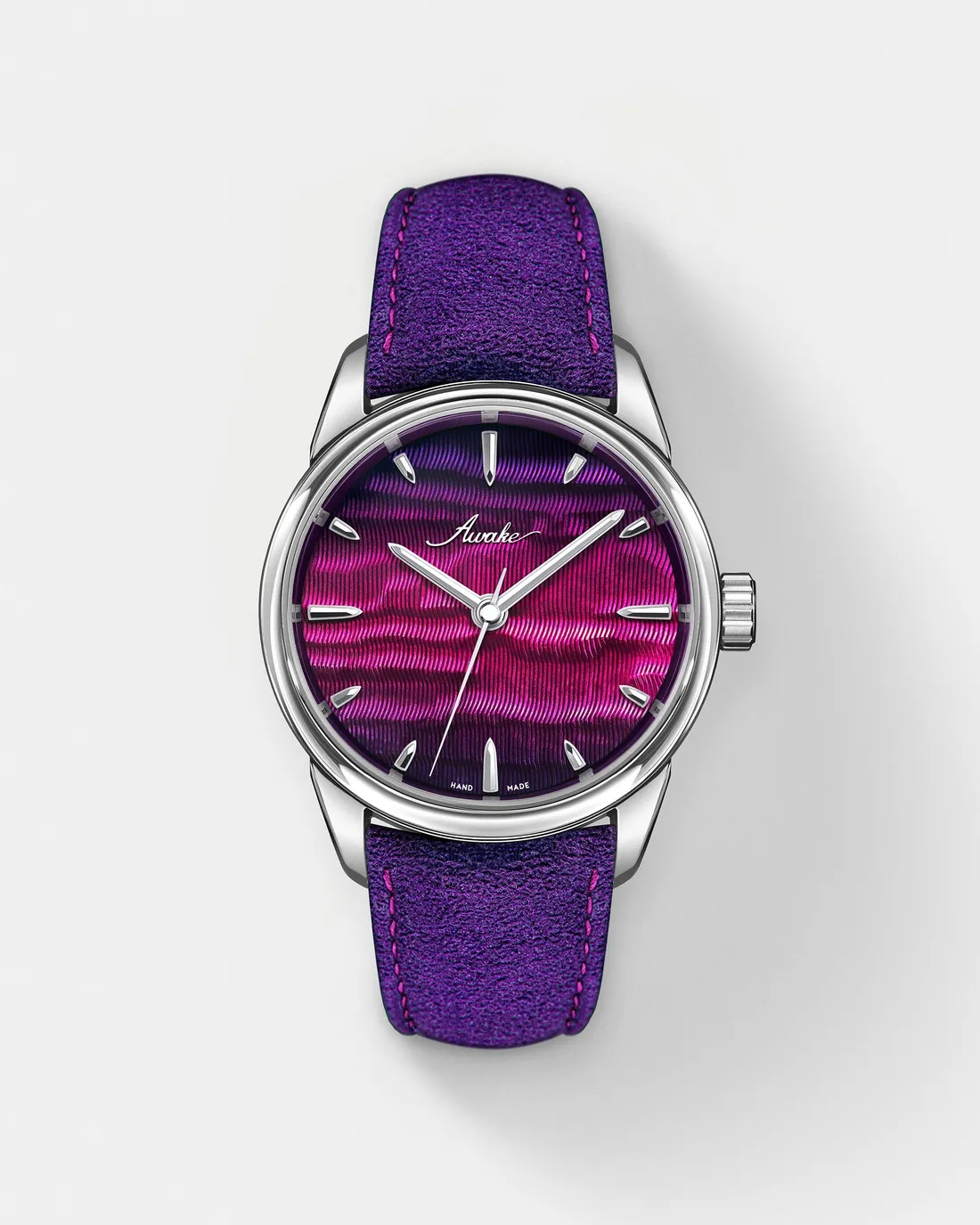
Here is the ingenious part: Sơn Mài lacquer is translucent. Light passes through the coloured lacquer layers, strikes the guilloché grooves beneath, and returns. So the colour does not sit on the surface; it rises from the depth of the dial, from within. On the Sunset, this becomes a gradient of purple, magenta and pink reminiscent of a setting sun. A single dial takes about fifteen hours of handwork, and each one, with the tiny variations in its grooves, is unique in the world.
Beneath all this beats a serious mechanism: the Swiss-made La Joux-Perret G101 automatic calibre, at 28,800 vibrations an hour with a 68-hour power reserve and a custom tungsten rotor. The case is 38 millimetres, 316L steel, water-resistant to 100 metres, with a domed sapphire crystal. And the strap is signed by the French maison Jean Rousseau. Elegance, then, lives not only in the dial but in every detail.
Three Colours: Sunset, Dawn and the Northern Lights
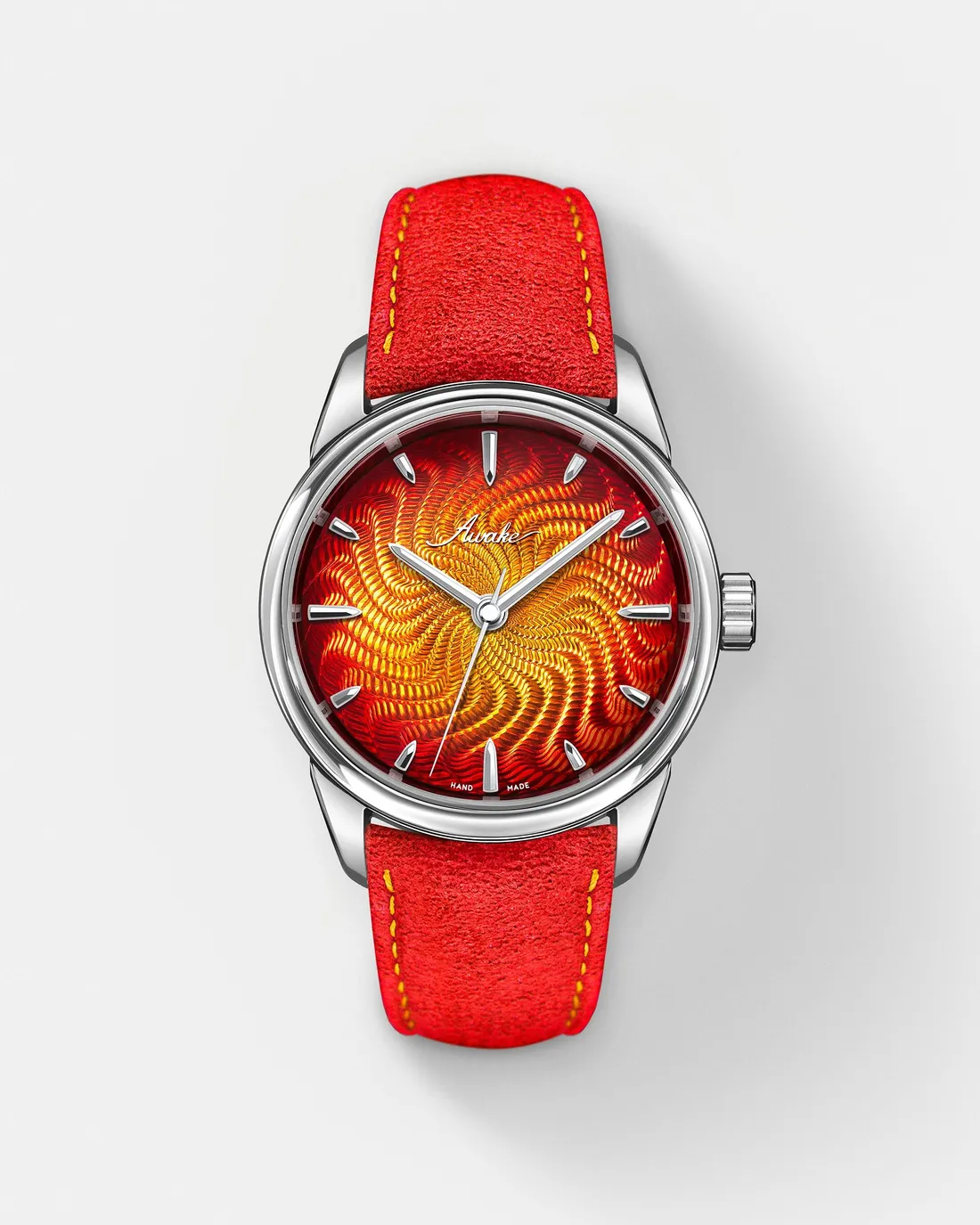
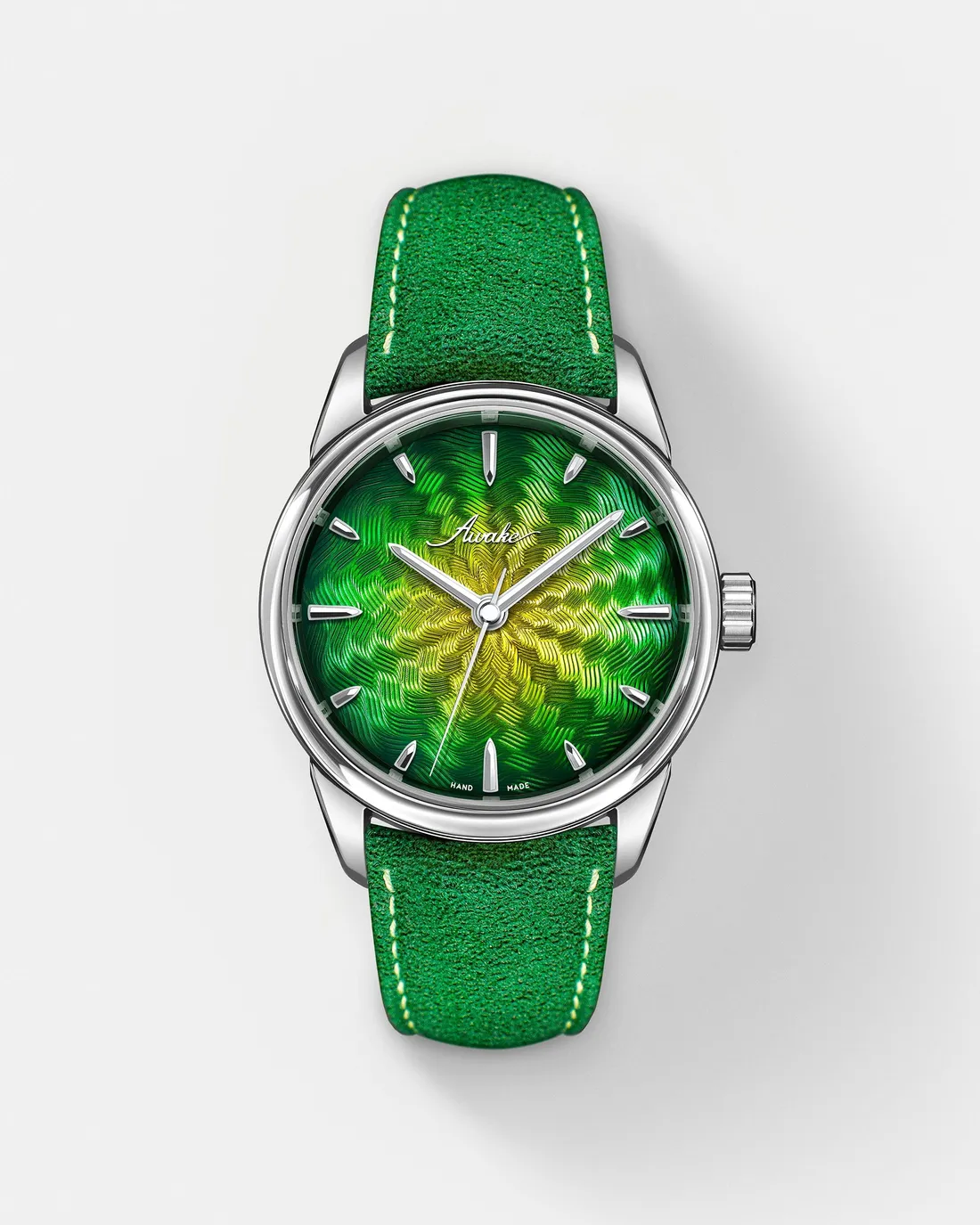
The Guilloché Main comes in three colours, each dedicated to a moment of the sky. Sunset, the watch in our hands, carries the purple, magenta and pink twilight of a setting sun. Alba, Latin for dawn, carries the orange and crimson fire of the first light of day. And Borealis takes its name from the northern lights, the aurora borealis, and its legendary green glow.
All three are the work of the same two crafts, yet all three are an utterly different mood. One is the end of the day, one its beginning, one the sky’s most magical spectacle. And each colour is limited to just 200 pieces in the world.
An Attainable Masterpiece: Luxury Redefined
Now for the most striking part. Hand-guilloché is one of watchmaking’s rarest arts; traditionally you find it only on the dials of giants like Breguet, Vacheron or Voutilainen, on watches costing tens of thousands, even hundreds of thousands of euros. Add to it a second rare craft, Vietnamese lacquer, and a Swiss-made calibre. By every rule, this watch should cost a fortune.
Awake offers it for 3,180 euros. This is not a cheap price, of course; but for a watch carrying genuine hand-guilloché, hand lacquer, a Swiss movement and a French strap, limited to 200 pieces, it is a small fraction of what this craft normally commands. And that is exactly the point: luxury is defined not by a big logo or a shocking price, but by real human labour and rare skills; and this time, that labour is within reach.
This is Awake’s very promise: Artisanship, Awakened. The brand sees itself as a meeting ground for artisans from around the world. On this dial, Italy and Vietnam, a lathe and a brush, a two-century tradition and the present day, all meet within 38 millimetres.
format_quote"True luxury is not a big logo but the time of a human hand. Awake found a way to put the mastery of two continents on your wrist without paying a fortune."