Morning on the river is the half hour when the mist lifts off the water. On the mud of the bank lay a long log. For thirty minutes it did not move. Then two small domes at one end of the log turned towards the water, and I understood that the log was an animal.
That stillness is not laziness but arithmetic. An animal that takes its body heat from outside chooses the moment it will spend energy. A crocodile can drop its heart rate to a few beats a minute; waiting under water, its metabolism very nearly stops. And at the end of that wait comes the strongest bite ever measured in a living animal. The same body is both the slowest and the most sudden thing in the river.
What has astonished me for years, though, is the pattern of dots along the jaw. The skin over a crocodile’s jawbone carries thousands of tiny domes, pressure organs more sensitive than a human fingertip. In total darkness it registers the ring made by a single drop hitting the surface and works out its direction. This animal does not look at the water. It reads it.
And one more thing: the crocodile’s heart has four chambers. That is unusual among reptiles and closer to the arrangement in birds and mammals. It allows the animal to reroute the flow of blood on a long dive and choose where the oxygen goes. Inside that body lying there like a log, a very finely tuned piece of plumbing is at work.
The most striking thing about this design is its age. The body plan of the crocodile has barely changed for a very long time. The long snout, the eyes and nostrils set level along the top of the head, the tail flattened from the side, the bony plates across the back. When a solution stays in place that long, it means the problem it solves was extremely well stated.
The tenderness is the part nobody expects. Hatchlings call from inside the shell, and the mother, hearing them, opens the nest. Then, using the jaw that produces the strongest bite on Earth as if it were a spoon, she takes them up one at a time and carries them to the water. Where an egg is struggling to break, she presses it gently against the roof of her mouth to help it open. The same organ is a weapon and a cradle within the same day.
Its place in the ecosystem follows the same doubling. In the dry season crocodiles work into the mud and open pockets of water, keeping those hollows clear by using them. When the river withdraws, the only water available to the fish, birds and grazing animals of a region is often a hole a crocodile dug. The most feared animal in the basin is the one holding the basin together through drought.
format_quote"The same jaw is a weapon and a cradle within the same day. Strength and tenderness can be written into a single organ."
Hasan Bekmezci
That body on the bank was translated into an entirely different material in Geneva in the summer of 2026. Vacheron Constantin announced a set of six pieces titled Métiers d’Art Tribute to the Animal Kingdom, all of them under the house’s One of Not Many Crafts Programme, which pairs a craftsperson from outside watchmaking with the watchmakers of Geneva.
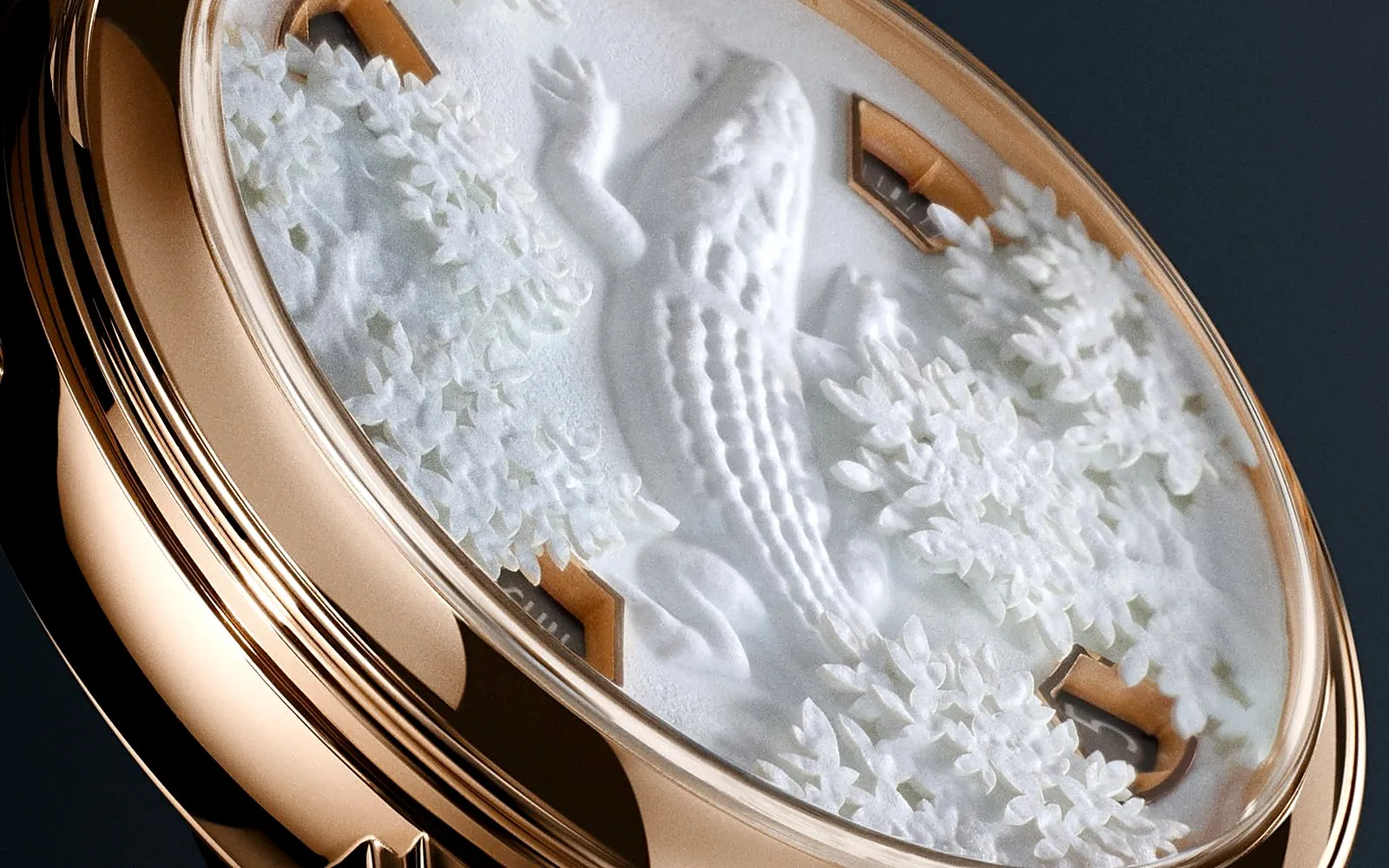
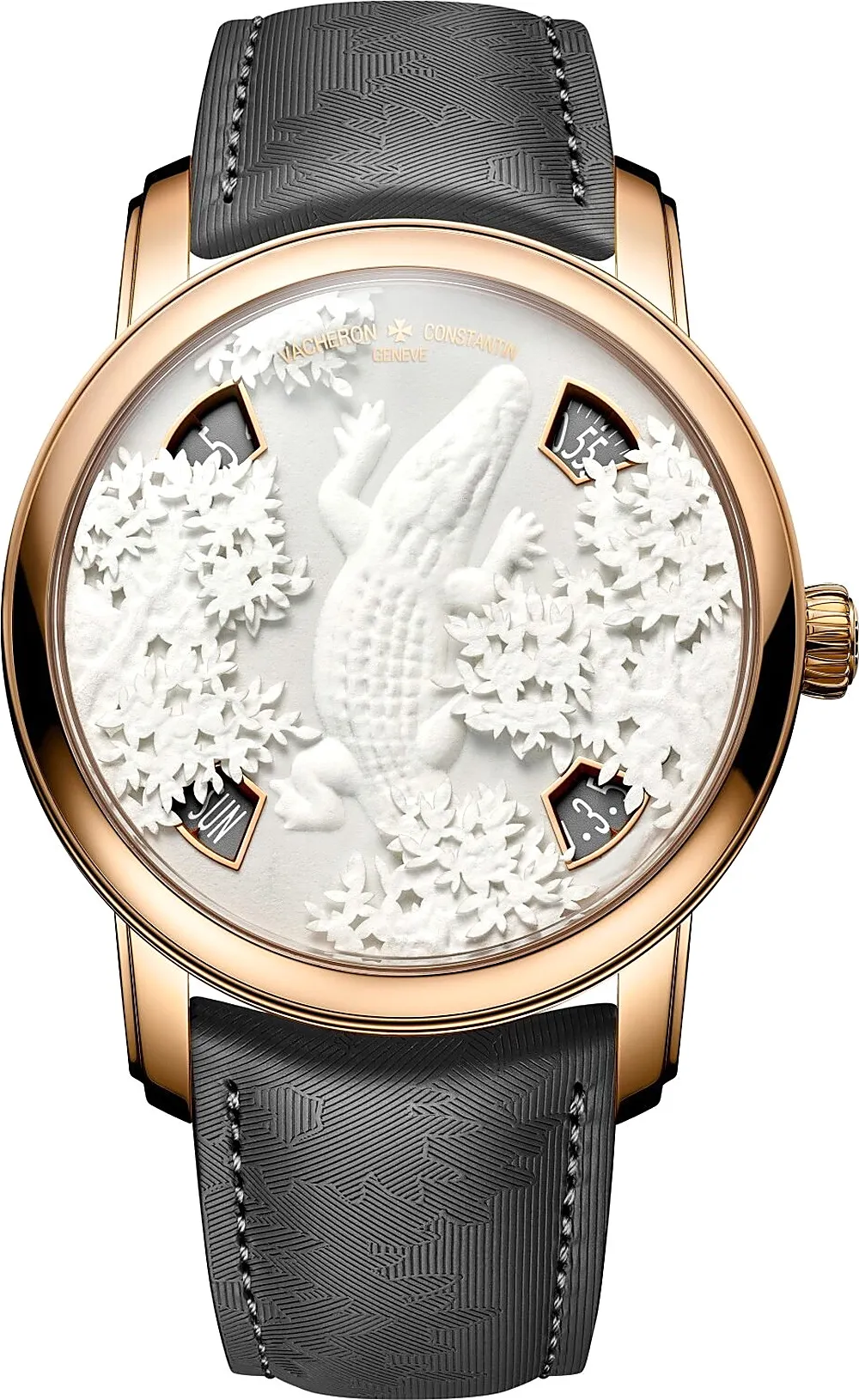
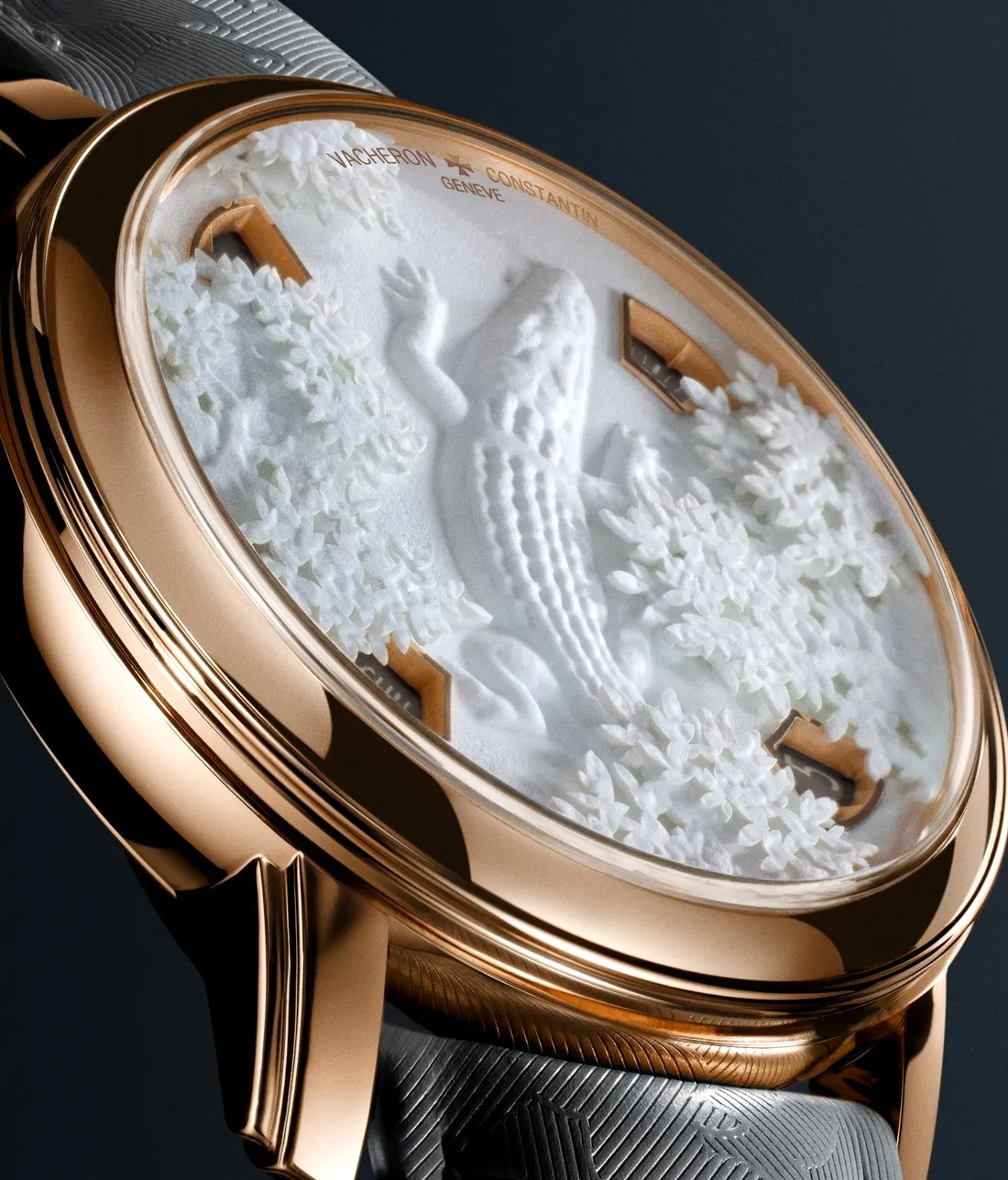
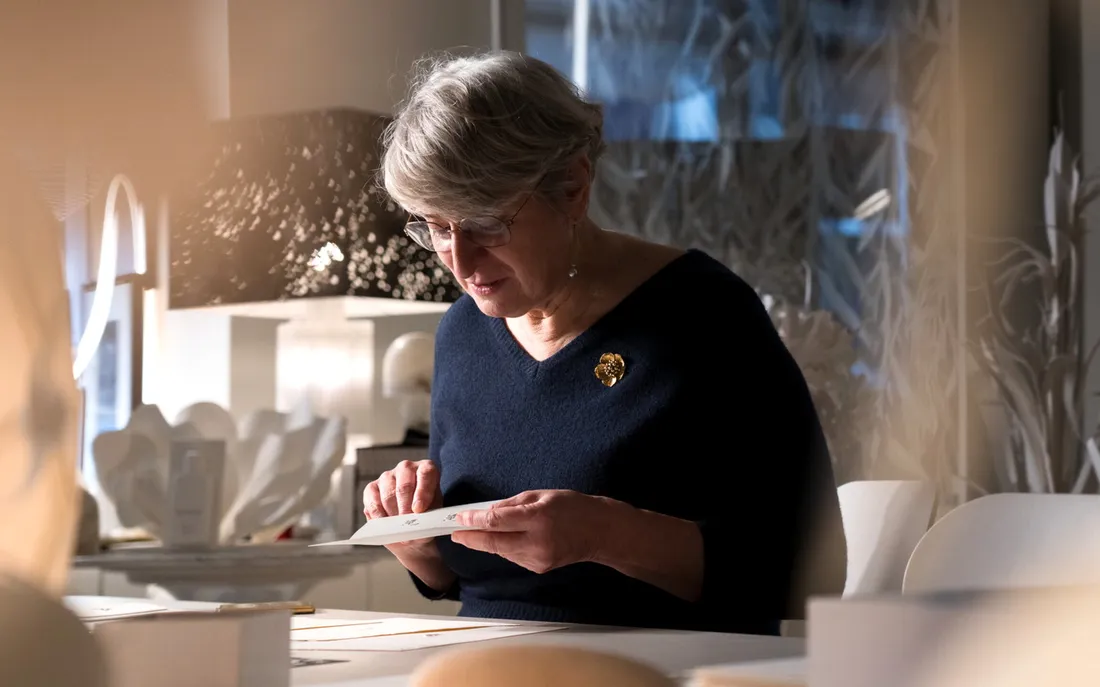
The piece that fell to the crocodile is called Papercroc, reference 7630A/000R-H202, and its dial is the work of the Parisian paper artist Marianne Guély.
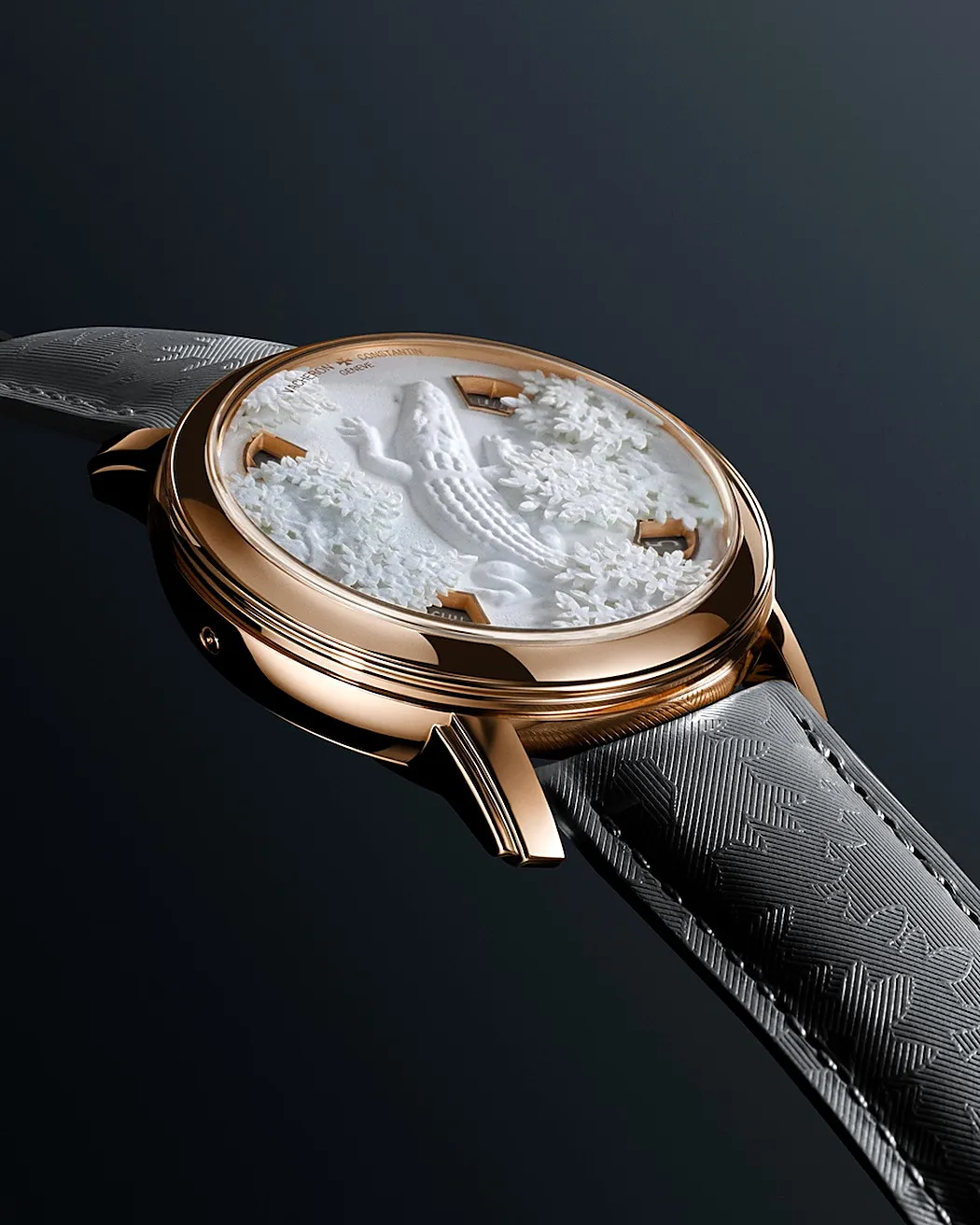
There is no colour anywhere on it. You see nothing but white cotton paper. The plates along the back, the ridges of the tail, the claws, the fold of the eyelid and the vegetation around the animal are all drawn in relief, which is to say by differences of height alone. With no colour there is no line either, and only one instrument remains: shadow.
That choice turns the dial into a living surface. Under flat light the figure softens and almost disappears; tilt the wrist and the shadows deepen and the animal arrives all at once. The dial of Papercroc is a drawing that changes with the angle of the viewer. An enamel dial always shows the same thing. This one shows something different in every light.
format_quote"There is no colour on this dial and there is no line. Only one instrument remains: shadow."
Hasan Bekmezci
Embossing paper does not mean adding anything to a sheet. It means permanently rearranging its fibres. Cotton-fibre paper is chosen for the work because its long fibres take a shape rather than tearing when stretched. Dampened and pressed into a die, the sheet remembers its new form and keeps it as it dries. The process is not reversible. A relief pressed wrongly cannot be corrected; the sheet is discarded and the work begins again.
Scale is again what governs everything. Making the dorsal plates of a crocodile legible across thirty millimetres requires holding the depth of the relief to tenths of a millimetre. Press too deep and the paper tears; press too lightly and no shadow forms, so the figure vanishes. The usable interval is very narrow and lies entirely in the hand of the maker.
Then there is durability. Paper swells with humidity and shrinks as it dries. Once mounted on the dial plate that movement has to stop, and the surface has to stay perfectly flat, because a mechanism is turning immediately behind it and every tenth of a millimetre of height is spoken for.
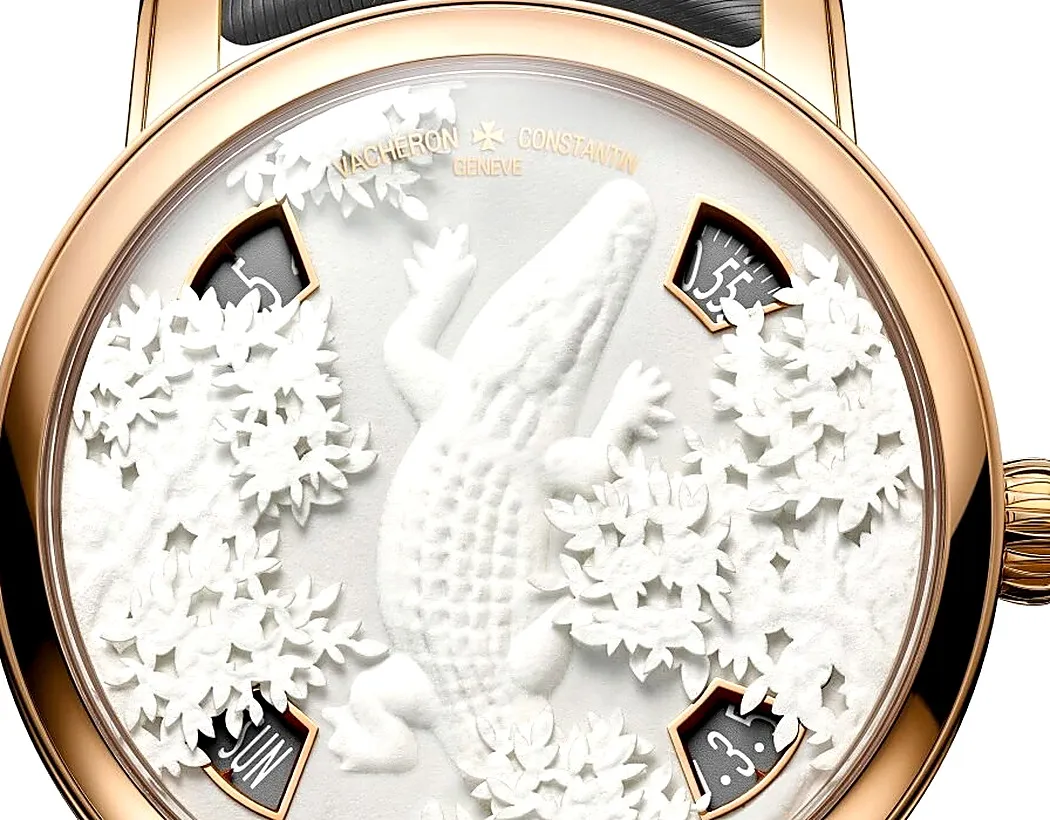
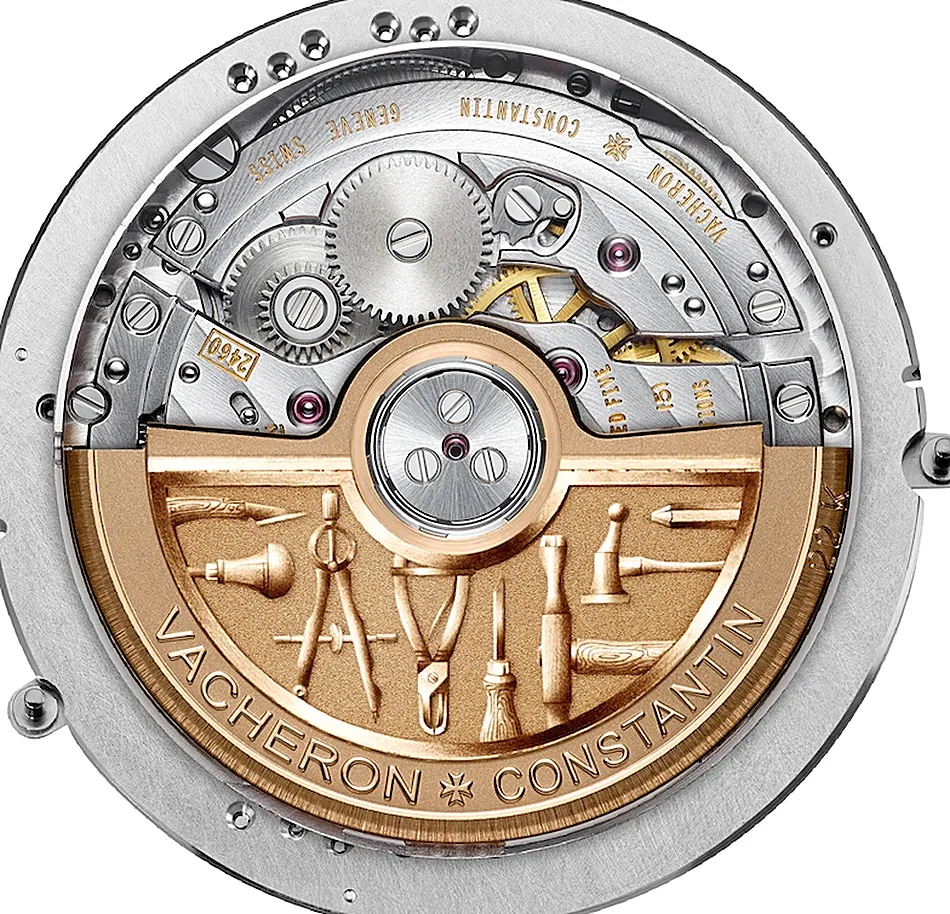
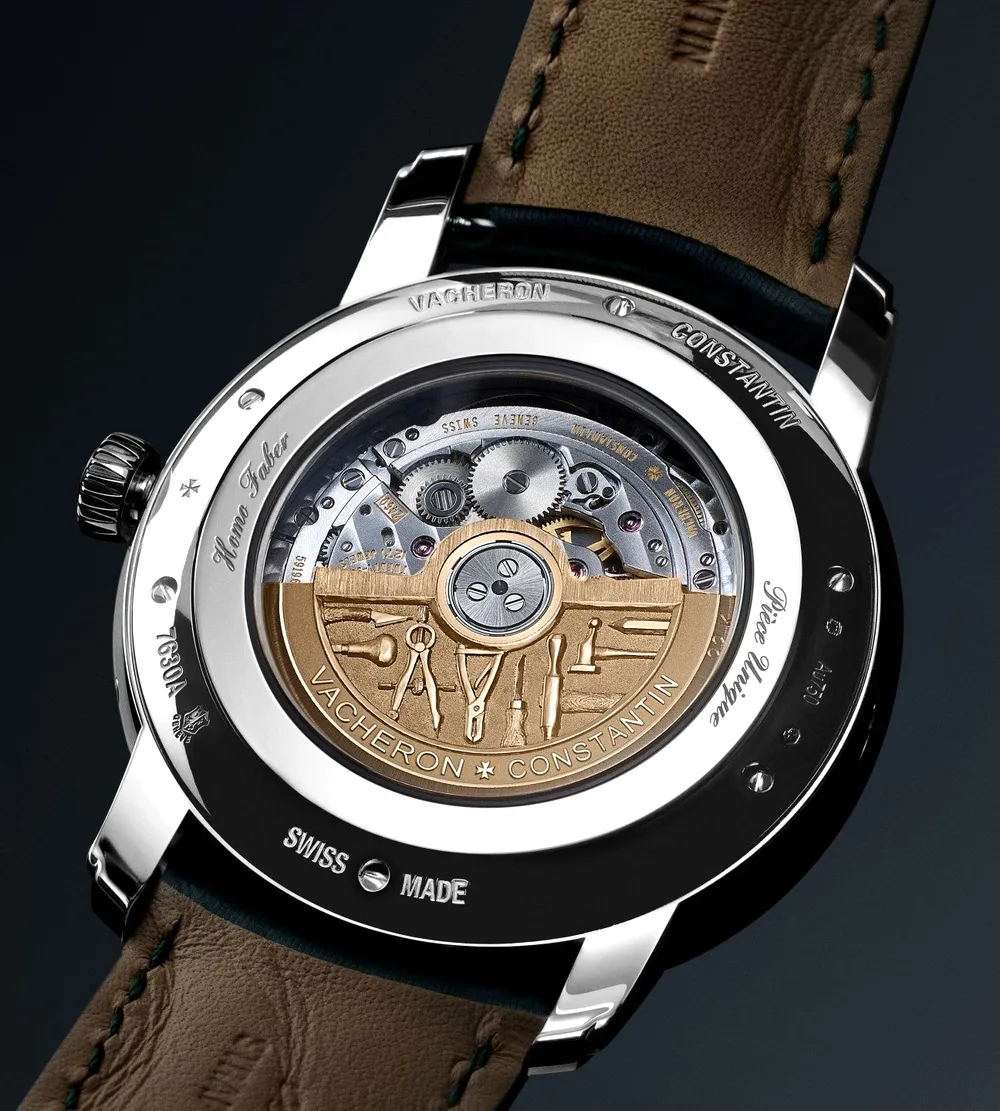
The most radical decision is the absence of hands. Inside runs Vacheron Constantin’s calibre 2460 G4: two hundred and thirty-seven parts, self-winding, 28,800 vibrations an hour, forty hours of reserve. The G4 refers to four indications, and all four sit at the rim of the dial rather than the centre. Jumping hour at upper left, dragging minute at upper right, jumping day at lower left, dragging date at lower right.
On this dial that arrangement is more than a preference. The shadow of a hand would mix with the shadow of the relief and make the figure unreadable. The moment the centre is cleared, the dial stops being an instrument and becomes a bas-relief. The 12.9 millimetre height of the forty-two millimetre pink gold case exists for the same reason: roughly four millimetres of space sit between the embossed surface and the sapphire, so the paper never touches the glass and has the distance it needs to cast a shadow.
The choice of pink gold for the case is deliberate too. Surround a white surface with a warm metal and the white reads whiter. In white gold, dial and case would dissolve into one another.
format_quote"The most heavily armoured creature alive, made from the most defenceless material available."
Hasan Bekmezci
The real idea behind Papercroc lives here. Six animals were translated into six materials in this collection, and each time the material says something about the animal. What is said here is a plain contradiction: the most heavily armoured creature alive, made from the most defenceless material available.
The plates on a crocodile’s back are ossified armour; paper tears under a fingernail. The crocodile has kept the same shape for tens of millions of years; paper is finished by a glass of water. On one surface, the most durable design in the natural world sits beside the most temporary substance in the workshop. And the strange part is this: because it is paper, that crocodile is born again in every light.
The log on the bank did not move for half an hour. This dial does not move either. Figures run through the windows, the animal stays in the middle, and when you turn your wrist the plates along its back drop into shadow one by one and it appears again. The patience of a waiting body, recorded on a surface that has nothing but shadow to work with.