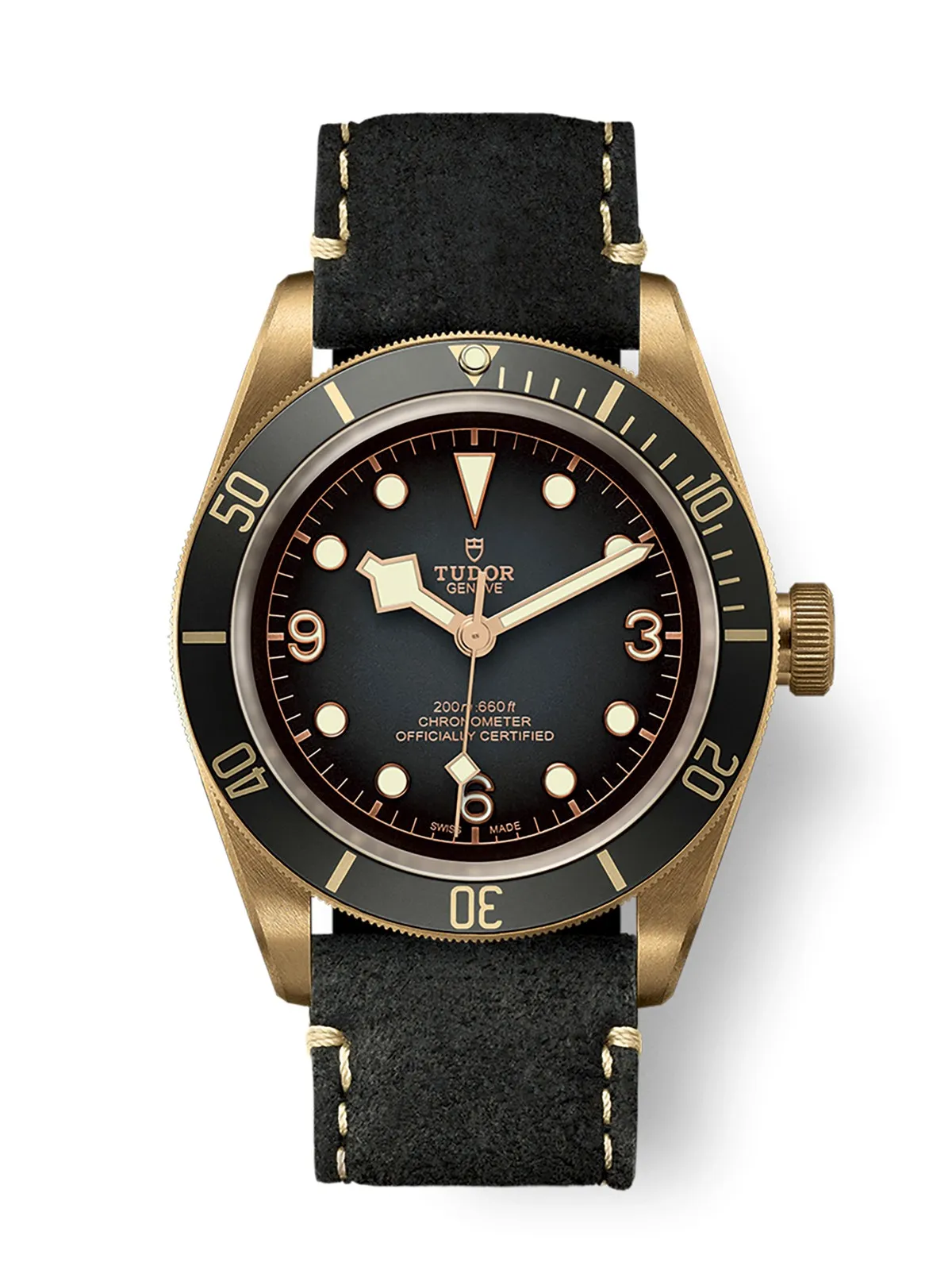
Just before stepping aboard the cargo ship leaving the Port of Brest, the young sailor and captain-to-be left all his savings with the old watchmaker on the quay. The watch he held was not made of gleaming, sterile steel. Its case was cast from that heavy, warm bronze from which old ship propellers are made. In those first days it shone like a freshly cast ingot of gold, mirroring the deck lights, dazzling the eye.
“This watch will grow up with you, my boy,” the old watchmaker whispered after him. “I don't say take good care of it; I say live it.”
The first three weeks passed on the calm waters of the Atlantic. The sweat from the young sailor's skin and the light morning mist that settled over the ship slowly took possession of the watch's raw brilliance. The bright yellow gave way to a mature whisky tone, and then to the warm brown of an autumn leaf. Just as its owner shed his rawness and became a sailor, the watch lost its childish shine and took on a grave identity.
The Dust of the North and the Birth of Green
In the middle of an ocean that seemed endless, every day was the same as the last; the sense of time dissolved. Until that famous storm caught the ship. For three days, great waves battered the deck. As the young sailor stood watch at the helm, his hands raw from gripping the ropes, the salt ocean water flung by the waves struck the bronze case on his wrist every second.
When the storm subsided, the first ray of sun sifting through the mist fell upon the watch's dial. The young sailor looked at it in astonishment: in the recesses of the storm-battered bronze case, at the edges of the bezel and in the grooves of the winding crown, those famous oxide-green stains called verdigris had begun to appear.
He would later learn this was no accident. Bronze is not a pure metal but an alloy, mostly of copper and aluminium. When copper meets the oxygen and moisture of the air, and above all the salt, the chloride, of seawater, it forms a layer of oxide on its surface; those matt browns and greens are the colours of that reaction. Verdigris is, in truth, a contract copper signs with salt. The salt water had burned the bronze but not washed it away; that green layer was the medal of those three terrible days in which the ship had brought the Atlantic to its knees. A stainless-steel watch would have come out of that storm with only a few scratches; the bronze, however, had imprisoned the storm within its own body.
A Lifetime on the Bridge
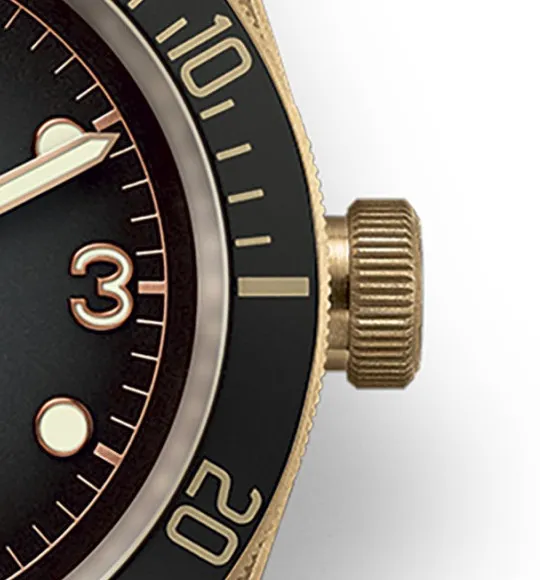
The years passed. The young sailor was now a captain with greying hair and a face lined by the wind. The watch on his wrist was no longer the watch of that first day. Some parts of the case had taken on the look of a jet-black antique from rubbing against the captain's jacket. But the large winding crown he wound every day kept shining like a brass candlestick, cleansed of its patina by the constant touch of his fingers. Only that one point of the watch was bright; for that was the place where the captain said to his watch, every day, I am here.
One evening, filling in the logbook, the captain looked at his watch. In the dark browns of the case he saw the damp of the ocean, in the greens at its corners the great Atlantic storm that had changed his life, and in the brightness of the crown the discipline of thirty passing years.
The thing on his wrist was no longer an instrument for telling time. It was a logbook of metal, needing no ink, that would not be erased even if the ship capsized.
The Identity Card of an Icon: the Black Bay Bronze
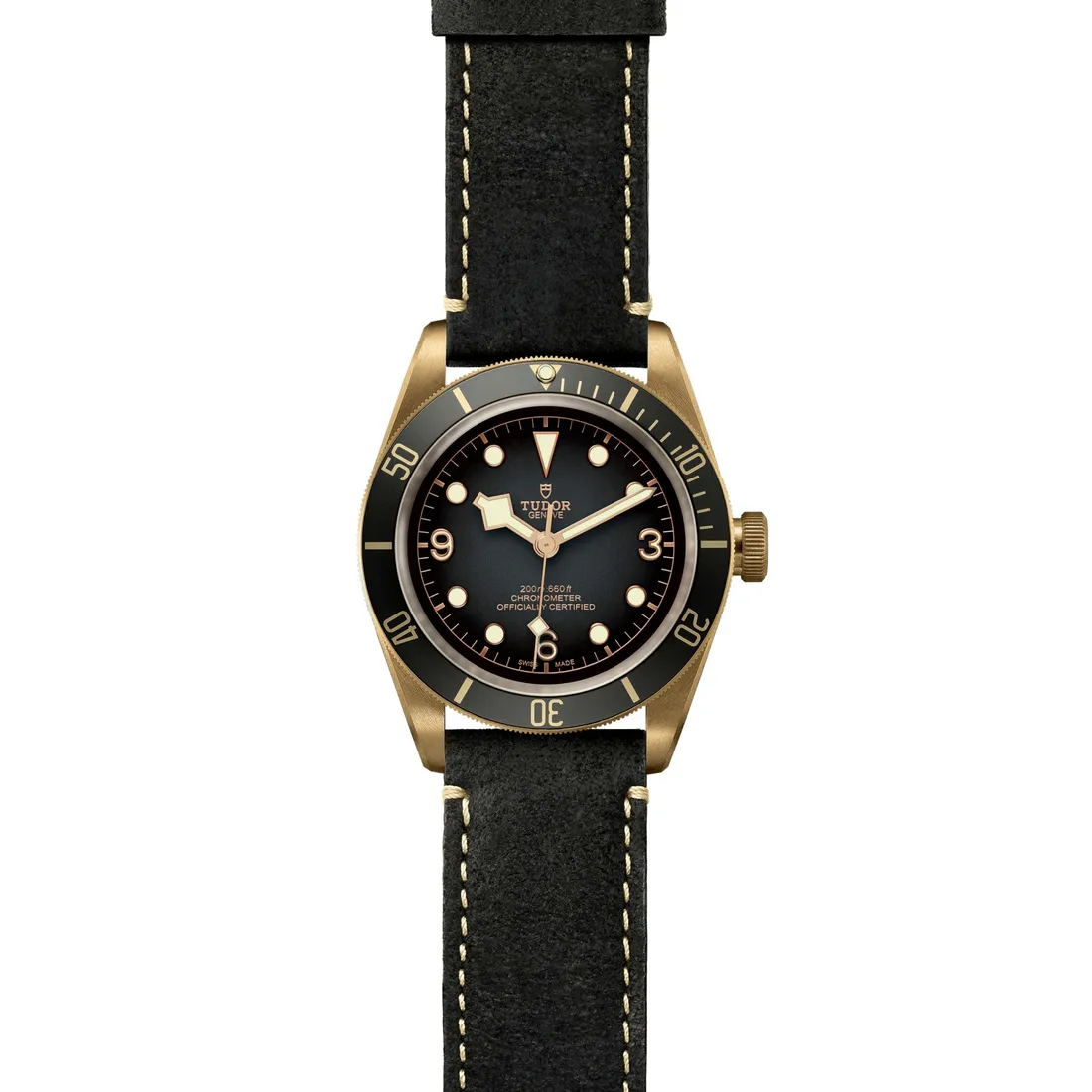
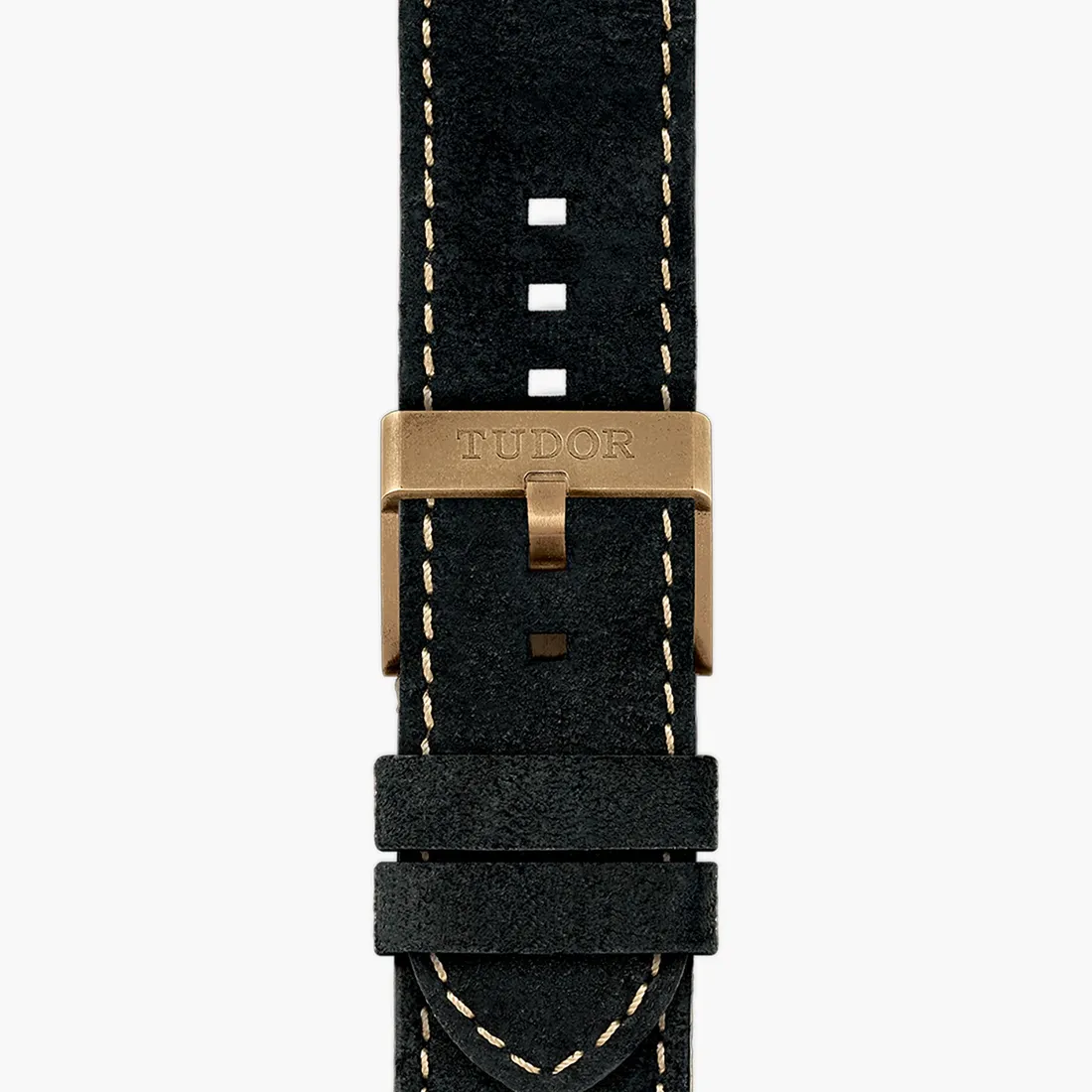
The hero of this story is Tudor's Black Bay Bronze, reference M79250BA-0001. Its forty-three millimetre case is forged from precisely that living material we have described, high-resistance aluminium bronze, and it takes on a different patina with every owner over time; you will never find two aged Black Bay Bronzes exactly alike in the world. With its slate-grey domed dial, its unidirectional bronze bezel, its screw-down bronze crown and its two hundred metres of water resistance, it is offered at a price a sailor with savings in his pocket could reach, four thousand eight hundred euros.
But what truly sets the Black Bay Bronze apart from an ordinary diver's watch is hidden beneath that bronze case. For this watch forges its own heart as well.
Forging One's Own Heart: The Difficulty of an In-House Movement
In the world of watches, most brands do not make their own movement; they buy ready-made calibres from suppliers such as ETA or Sellita. The reason is simple: to design and mass-produce a movement from scratch is the most expensive and most difficult undertaking in watchmaking. It requires years of research and development, millions of euros of investment in tooling and machinery, an army of expertise reaching from metallurgy to micro-engineering, and the production of every part to a tolerance of a thousandth of a millimetre. To make your own calibre is to forge your own heart.
After many years of using ready-made movements, Tudor took a great step in 2015 and began producing its own Manufacture calibres. The MT5601 beating inside the Black Bay Bronze is one of them. This self-winding movement has a full seventy-hour power reserve; take it off on a Friday evening and put it on again on Monday, and it will still be running. It uses an antimagnetic silicon balance spring and a variable-inertia balance regulated by weights rather than an index; all of this serves a single aim: a precision that will not drift for years.
The Trial of a Chronometer: COSC
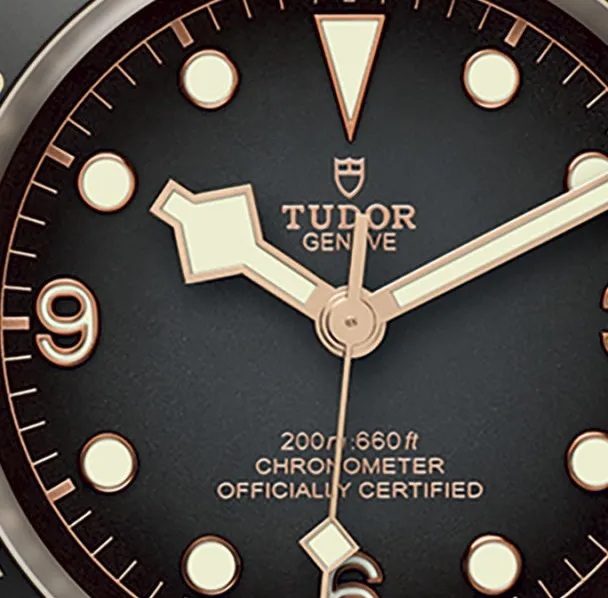
The two words written in small letters on the lower half of the dial are, in truth, like a diploma: Chronometer Officially Certified. For a watch to call itself a chronometer, it must pass the examination of Switzerland's independent official body, the COSC (Contrôle Officiel Suisse des Chronomètres). And this examination is applied not to the whole watch, but to each individual movement.
The process runs thus: each movement is kept under observation in a laboratory for fifteen days. It is tested in five different positions (dial up, dial down and three vertical positions) and at three different temperatures (eight, twenty-three and thirty-eight degrees). It is judged by seven separate criteria; but the most famous is this: the movement's average daily rate must remain between minus four and plus six seconds. In other words, in a world where even a single second matters, a chronometer has a margin of at most about five seconds. A movement that fails this trial can never earn the right to write those two words on its dial. Tudor puts every single MT5601 through this examination.
In the Same Noble Tone
The ocean had struck the watch, the watch had come to resemble the captain, and time had painted them both in the same noble tone. This is the secret of a bronze watch: it promises not to stay flawless, but to live. Every scratch is a memory, every green stain a storm, every gleam on the crown a habit.
Perhaps the old watchmaker was right from the very start. This watch was not to be taken care of, but to be lived. For it was a logbook of metal, needing no ink, that would not be erased even if the ship capsized; and every page of that logbook was written by the life of its owner.