Some names in watchmaking never stand in the window. They stand behind it. For forty years Dominique Renaud was one of those names. The workshop he founded in 1986, Renaud et Papi, later sold to Audemars Piguet, designed the hardest complications for the largest houses in Switzerland. The minute repeater or the split-seconds mechanism inside a famous watch on your wrist may very well have been drawn by his pencil, even though another name is printed on the dial. His colleagues call him the watchmakers’ watchmaker.
In 2026, in his seventies, he founded a brand under his own name for the first time. Houses founded this late in a career usually read like a memoir: the master gathers the finest things he has made and makes them once more, this time signed. Renaud did the opposite. He went after the most basic assumption in the field he had given his life to. The speed of the balance.
A modern mechanical watch typically runs at four full oscillations a second, which is 28,800 vibrations an hour. The industry has moved in that direction for half a century, because a fast balance has an obvious advantage: a shock from outside does proportionally less harm to a system that is being impulsed eight times a second. Arm movements, knocks and changes of position are absorbed more quickly.
The price is paid quietly. Eight impulses a second means the escapement touches the balance 28,800 times an hour. Every touch is a disturbance. Every touch is friction, wear and oil consumed. A fast balance produces noise in order to drown out noise.
format_quote"Speed is not the name of stability in a watch. Stability is the name of the time the balance is left alone."
Hasan Bekmezci
The Pulse60 goes the other way. Its balance makes one complete swing per second, which is to say it runs at 1 Hz. Sixty oscillations a minute, the rate of a human heart at rest. It is the lowest frequency in mechanical watchmaking being made today. Only 7,200 vibrations an hour, so the escapement touches the balance four times less often. The second is completed by a single journey out and back, and the rest of the movement is organised around that one breath.
The classic problem with a low frequency is this: the slower the balance, the more a single external event affects it. Low-frequency watches have therefore historically been regarded as sensitive but fragile. Renaud’s answer was to change not the frequency but the mass.
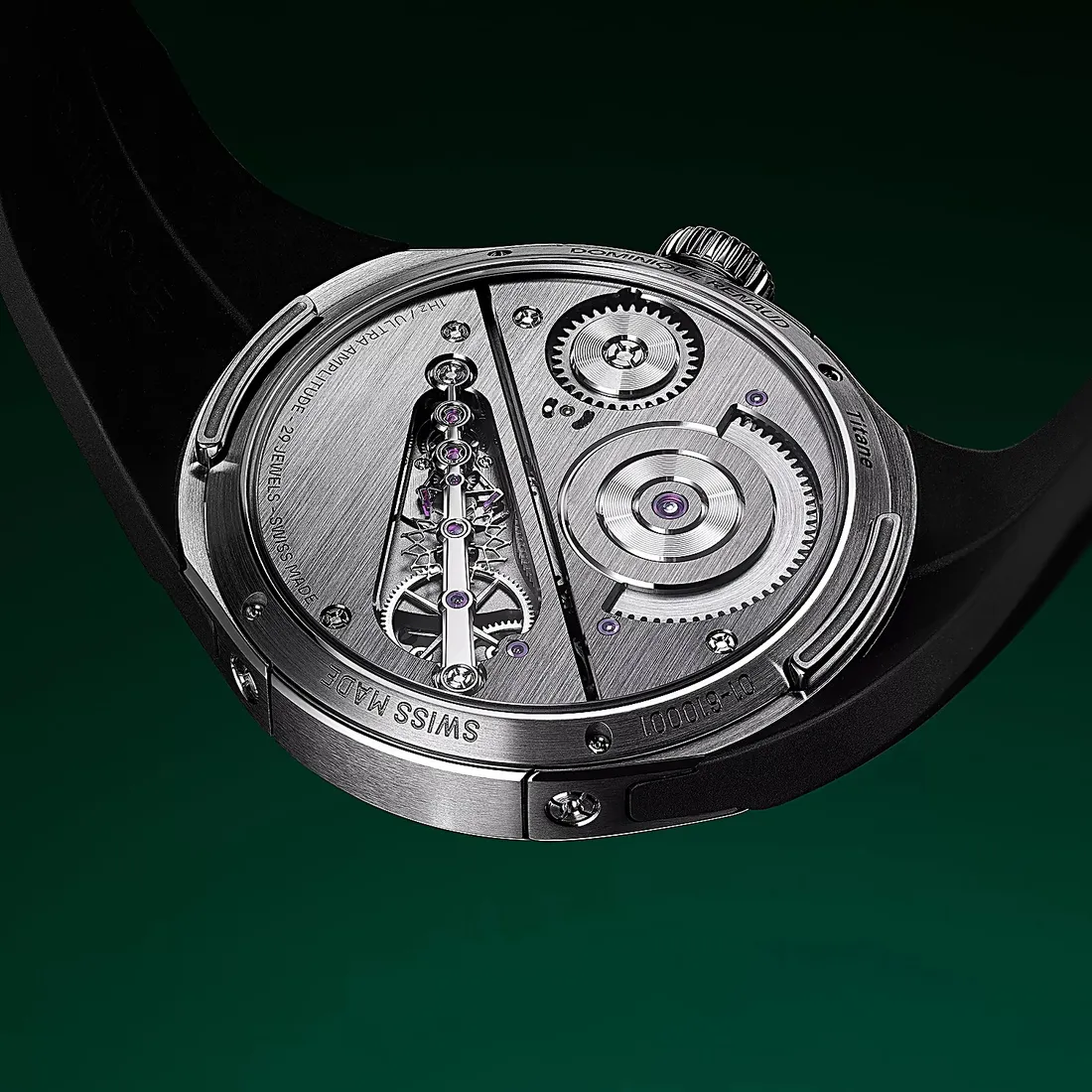
The Pulse60’s balance wheel is twenty millimetres in diameter. For a wristwatch that is an extraordinary figure, a number that belongs to the world of marine chronometers. A large diameter means the mass is distributed far from the axis of rotation, and that means a high moment of inertia. A balance with high inertia cares far less about variations in the force reaching it and about shocks. The brand’s own image is a good one: it works like the long pole of a tightrope walker. The pole carries weight outward, calms the centre of gravity and swallows small tremors. The balance likewise becomes a slow, wide, settled swing. The hairspring has been scaled to match, at fifteen millimetres across.
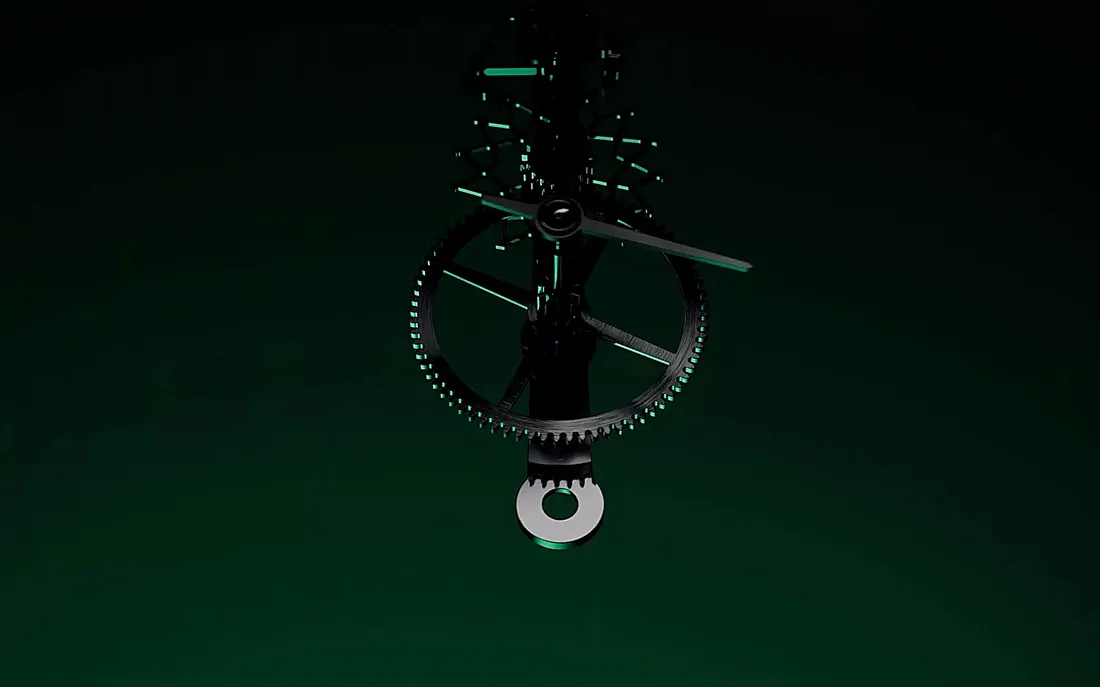
The real invention starts after that. In a conventional watch the amplitude of the balance, the arc it sweeps on each swing, cannot rise above a certain angle. Past roughly three hundred and sixty degrees the impulse pin strikes the back of the pallet fork. Watchmakers call this knocking, and the consequence shows immediately: the watch starts to run fast. In classical architecture, in other words, high amplitude is not a goal but a hazard.
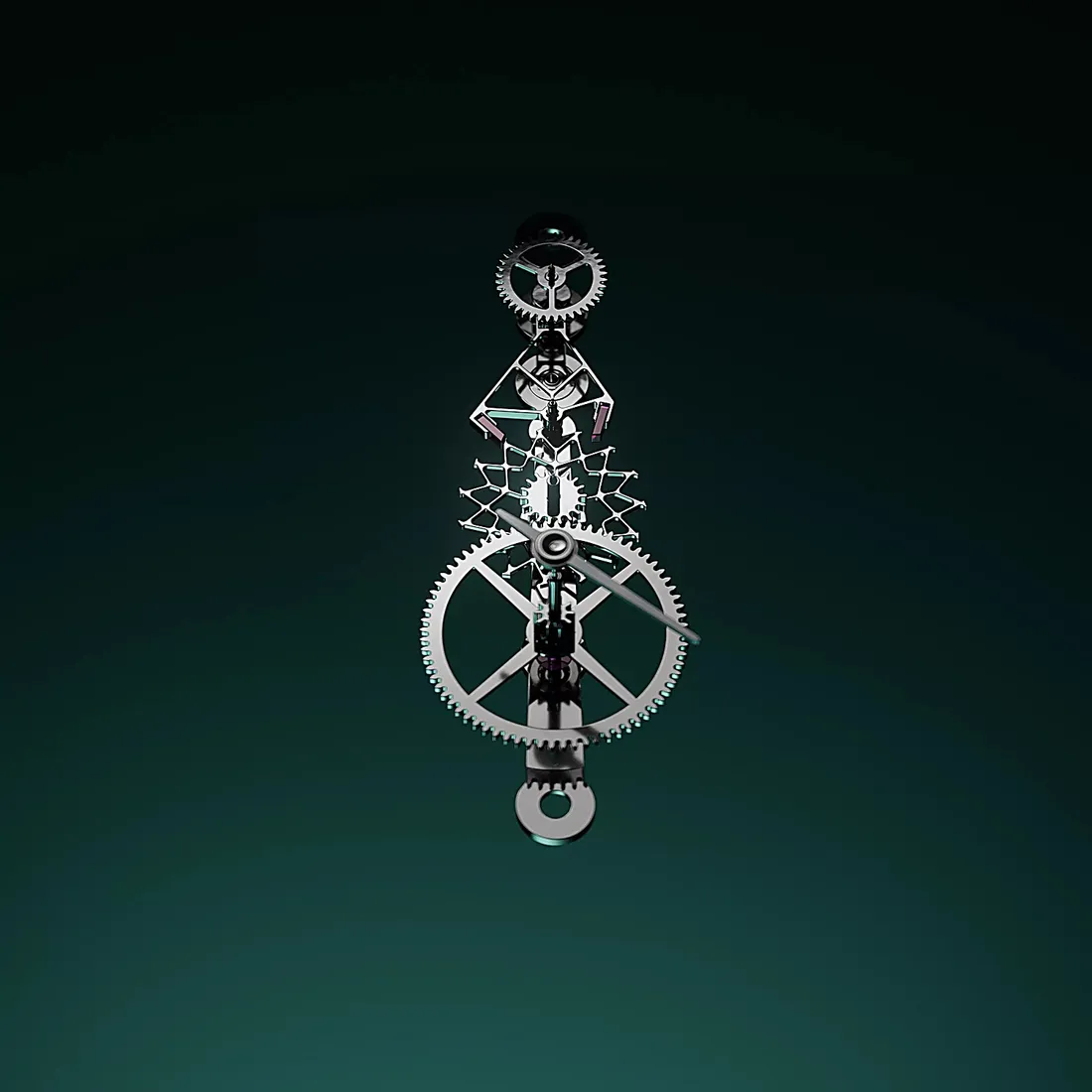
Renaud redesigned the trio of balance, roller and impulse pin from scratch, and an amplitude beyond three hundred and sixty degrees became possible without knocking. The brand borrows its image from engines: a traditional movement is like a car running just under the rev limiter, hitting the stop at the slightest extra load. The Pulse60 runs a long way below that stop. When a disturbance arrives, the amplitude stays inside the safe zone.
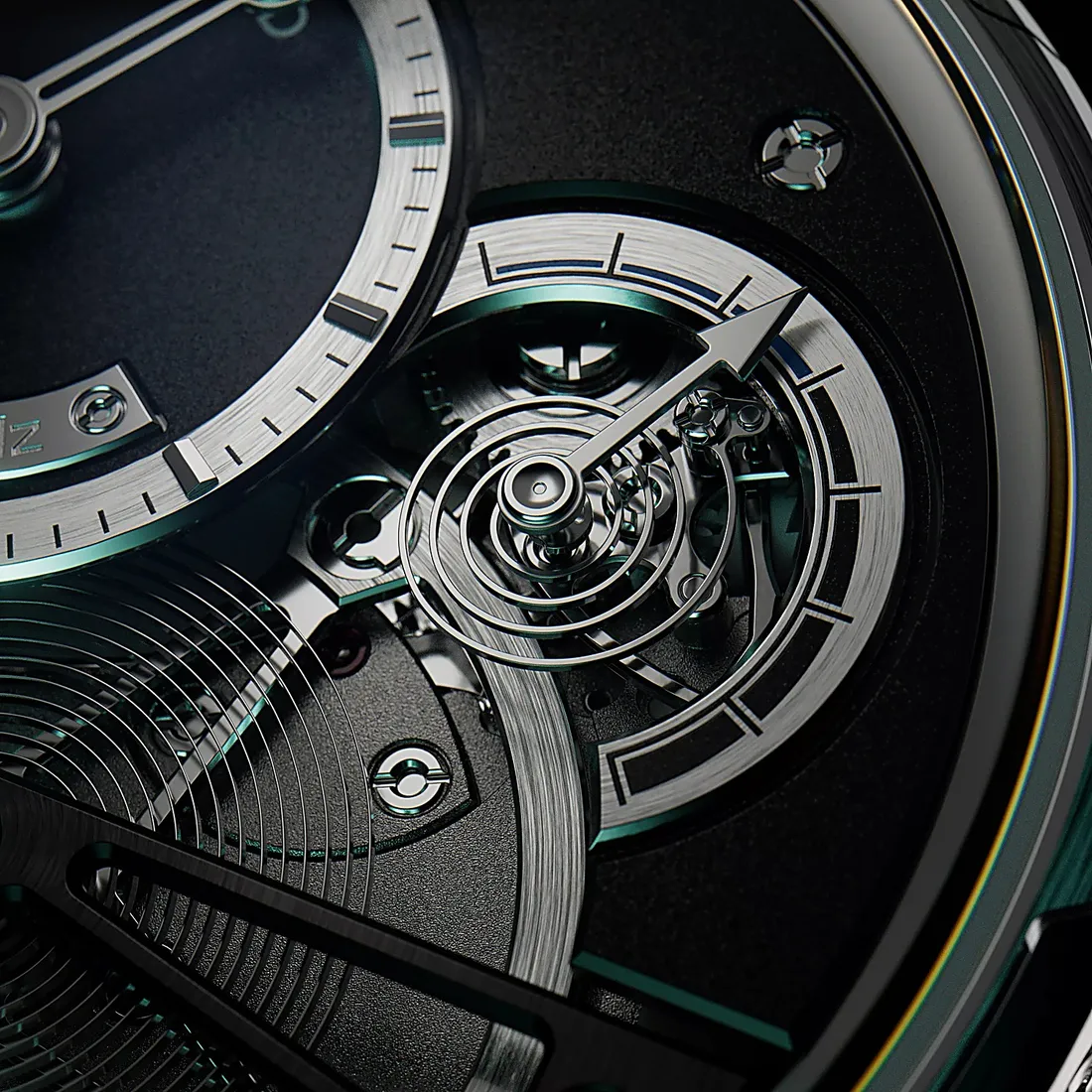
To see why high amplitude helps, divide the life of the balance in two. For part of its swing the balance is in contact with the escapement, and for part of it the balance is free. While free, it obeys only its own dynamics; while in contact, it also inherits the escapement’s flaws. As amplitude grows, the arc over which the balance is free grows longer, and the share of contact in the whole shrinks. The balance is left to itself for longer.
Lowering the frequency works in the same direction. Seven thousand two hundred touches an hour instead of 28,800, a quarter of the interference. Put the two together and the result is this: the balance is disturbed less often, and between disturbances it is left alone for longer. Physics has a notion of the ideal oscillator, a theoretical object that swings forever at the same period without receiving any energy from outside. No such thing exists in the real world. The whole architecture of the Pulse60 is an effort to move one step closer to it.
format_quote"The ideal oscillator can never be built. But how close you came can be measured, and the entire seriousness of watchmaking lives in that measurement."
Hasan Bekmezci
Picture a young régleur hearing about this architecture for the first time, someone who has only ever regulated movements running at 4 Hz.
His first objection: that balance is too heavy. On the wrist every arm movement will shove it about, and the positional differences will grow.
The inventor’s answer is the reverse. It is not shoved about precisely because it is heavy. A light balance surrenders easily to an outside force; a heavy one dissolves that same force in its own inertia. Marine chronometers were built with large balances for two hundred years for exactly this reason; they were the one instrument that had to stay right while the ship rolled.
His second objection: there are four days of power reserve, but at a low frequency changes in torque are felt more. Amplitude will fall as the mainspring runs down.
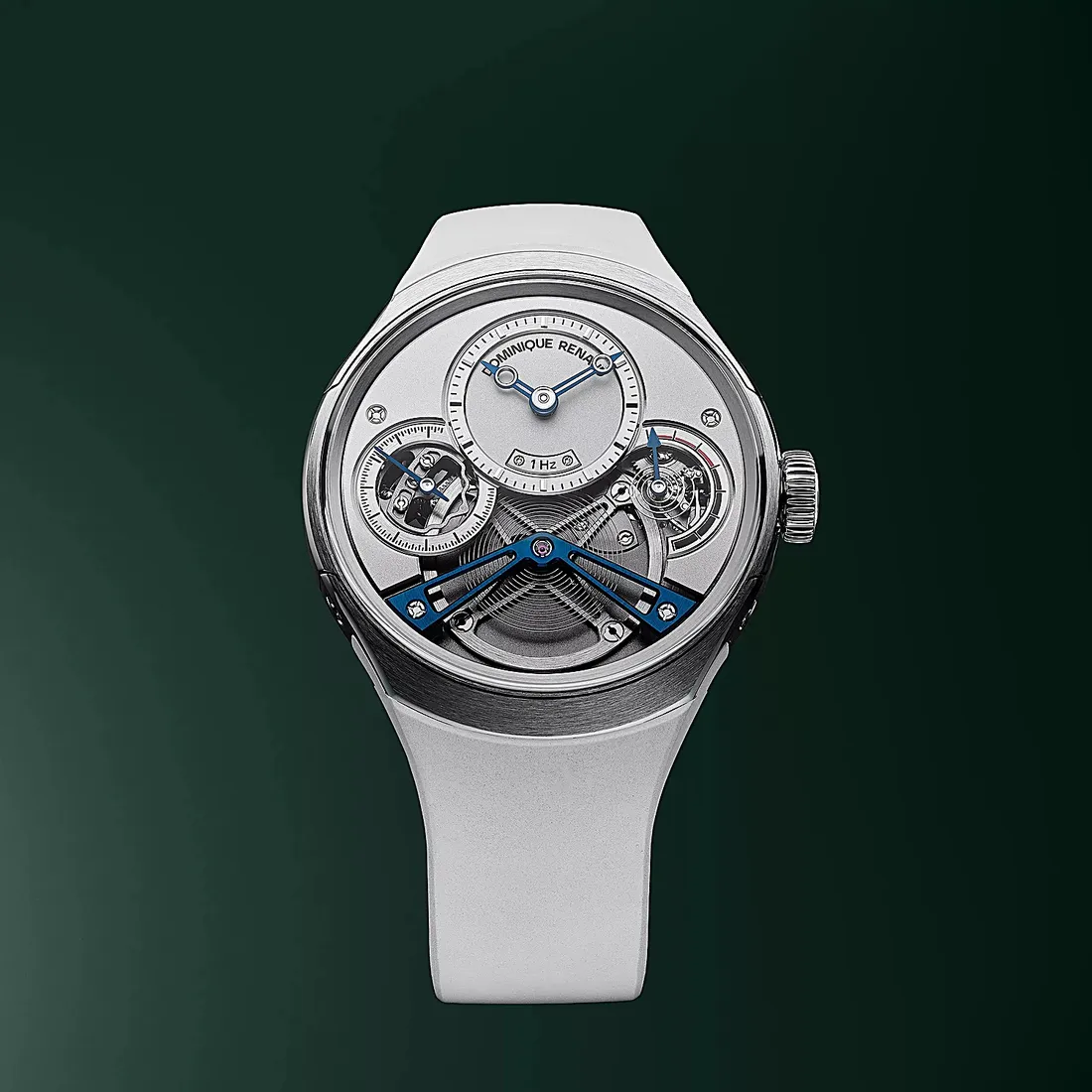
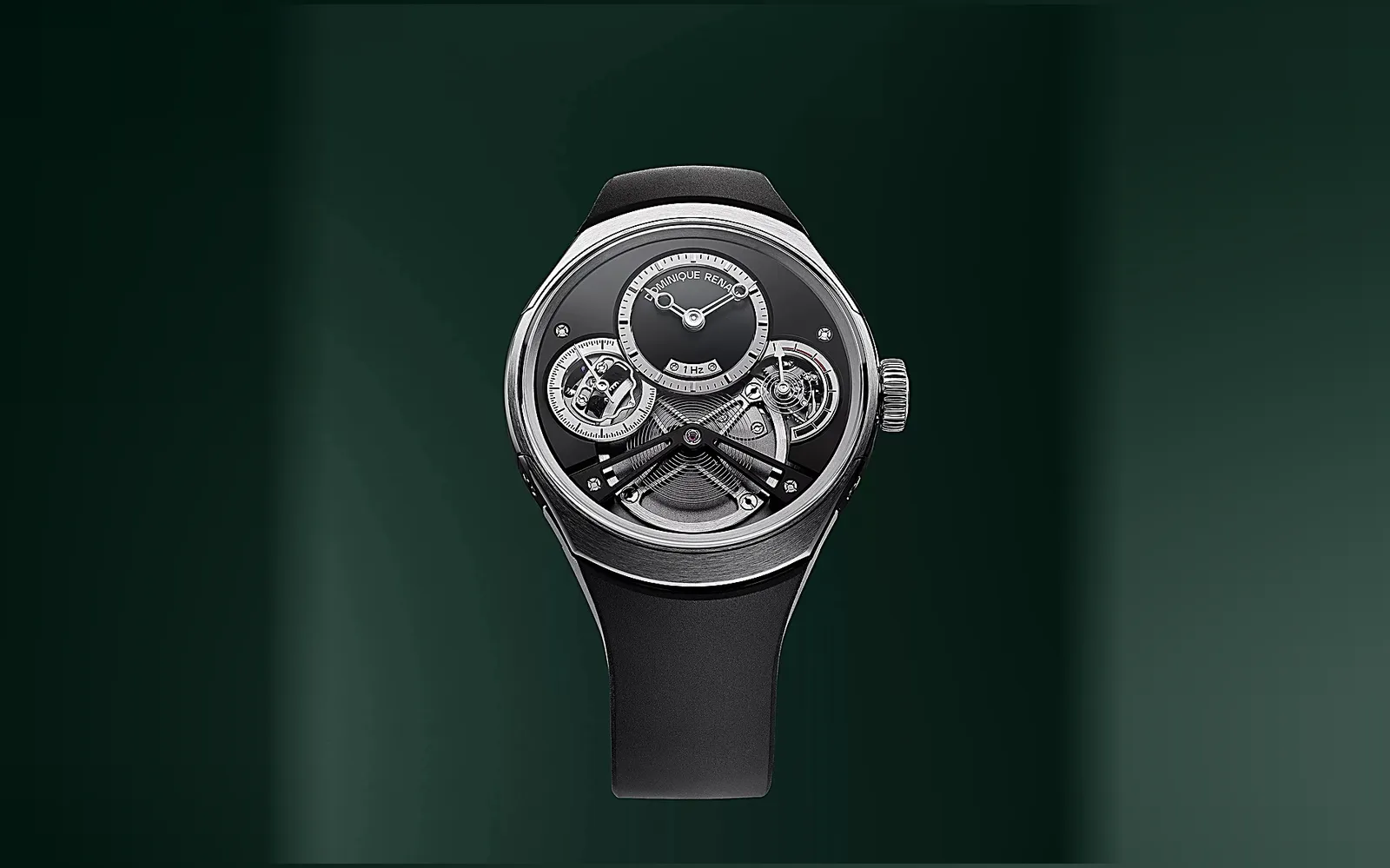
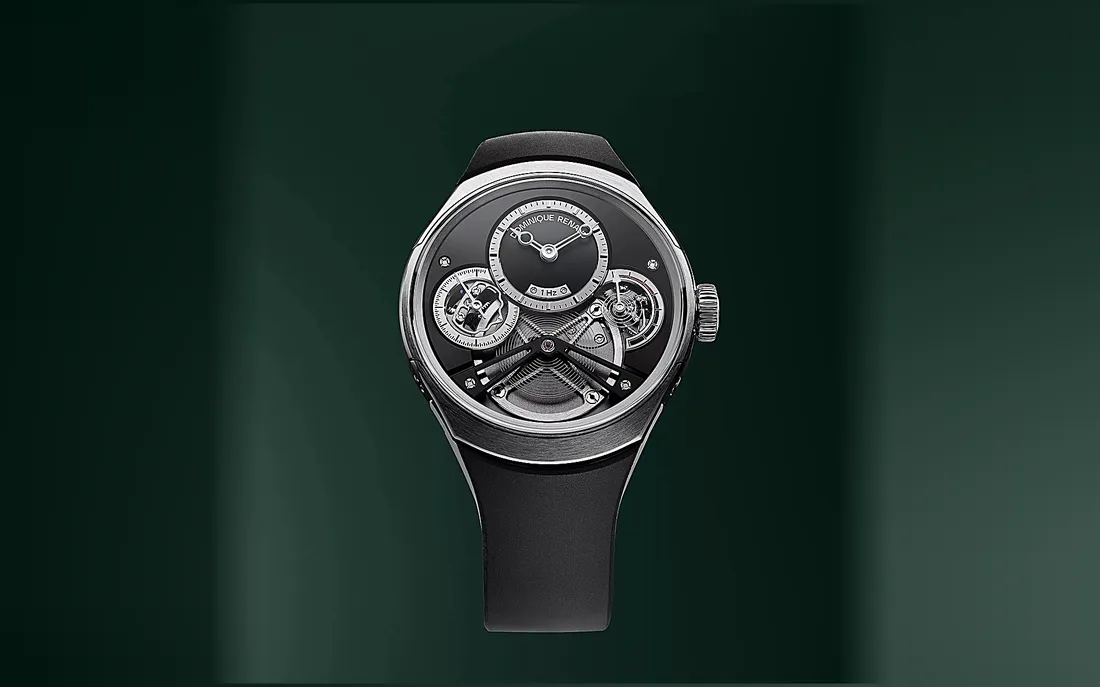
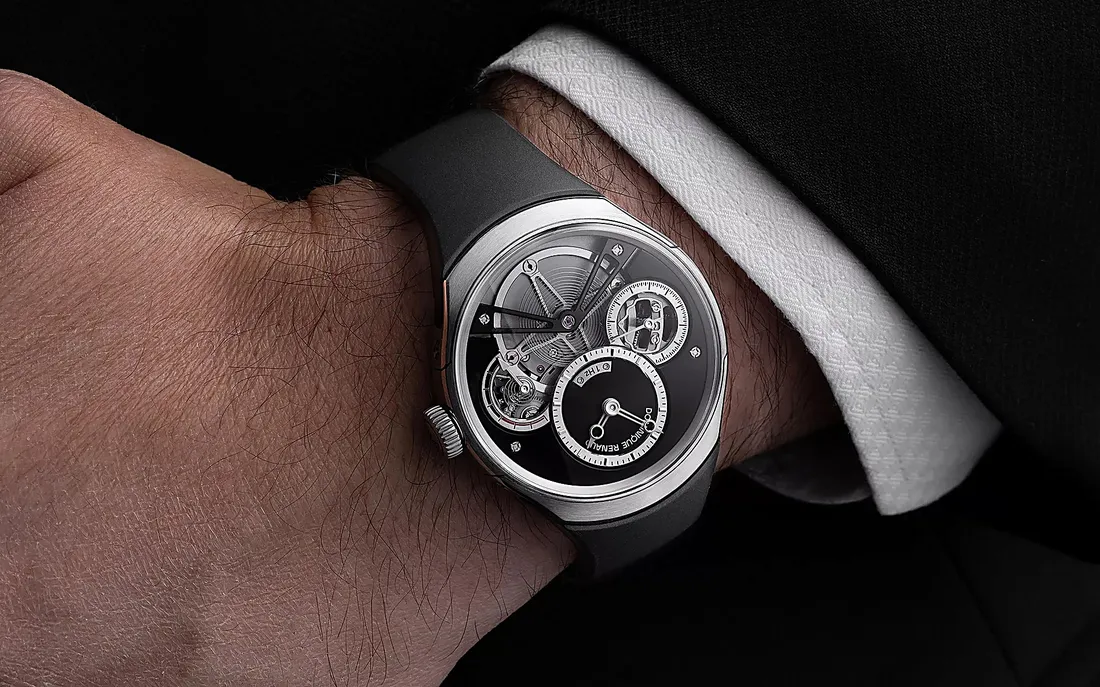
The inventor points at the dial. There is a torque indicator at three o’clock. The information is not hidden, it is printed. The movement tells you the state of its own energy, because in this architecture the state of the energy is directly tied to how accurate the watch is.
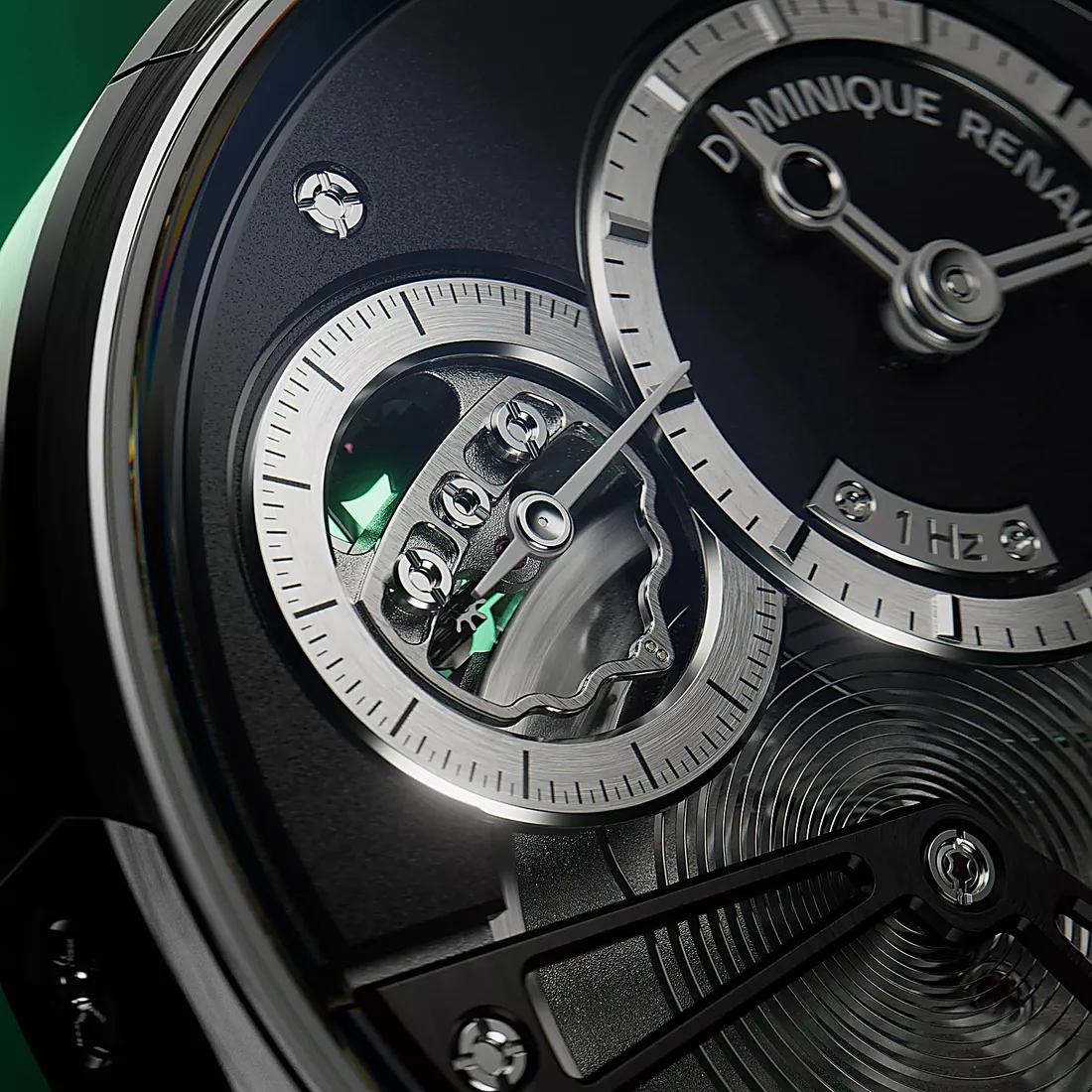
The dial itself continues that logic. Hours and minutes sit in the counter at twelve. At nine o’clock is the most elegant detail on the watch: a natural dead half-second. Since the balance makes one complete oscillation per second, the escapement advances twice a second. So the seconds display steps twice a second by itself, with no additional mechanism at all. In other watches a dead-beat seconds is a separate complication that demands extra wheels and its own escapement. Here it falls out of the architecture.
Regulation is not in its usual place either. It is handled by a patented offset index system. The movement measures thirty-three millimetres across and runs for four days.
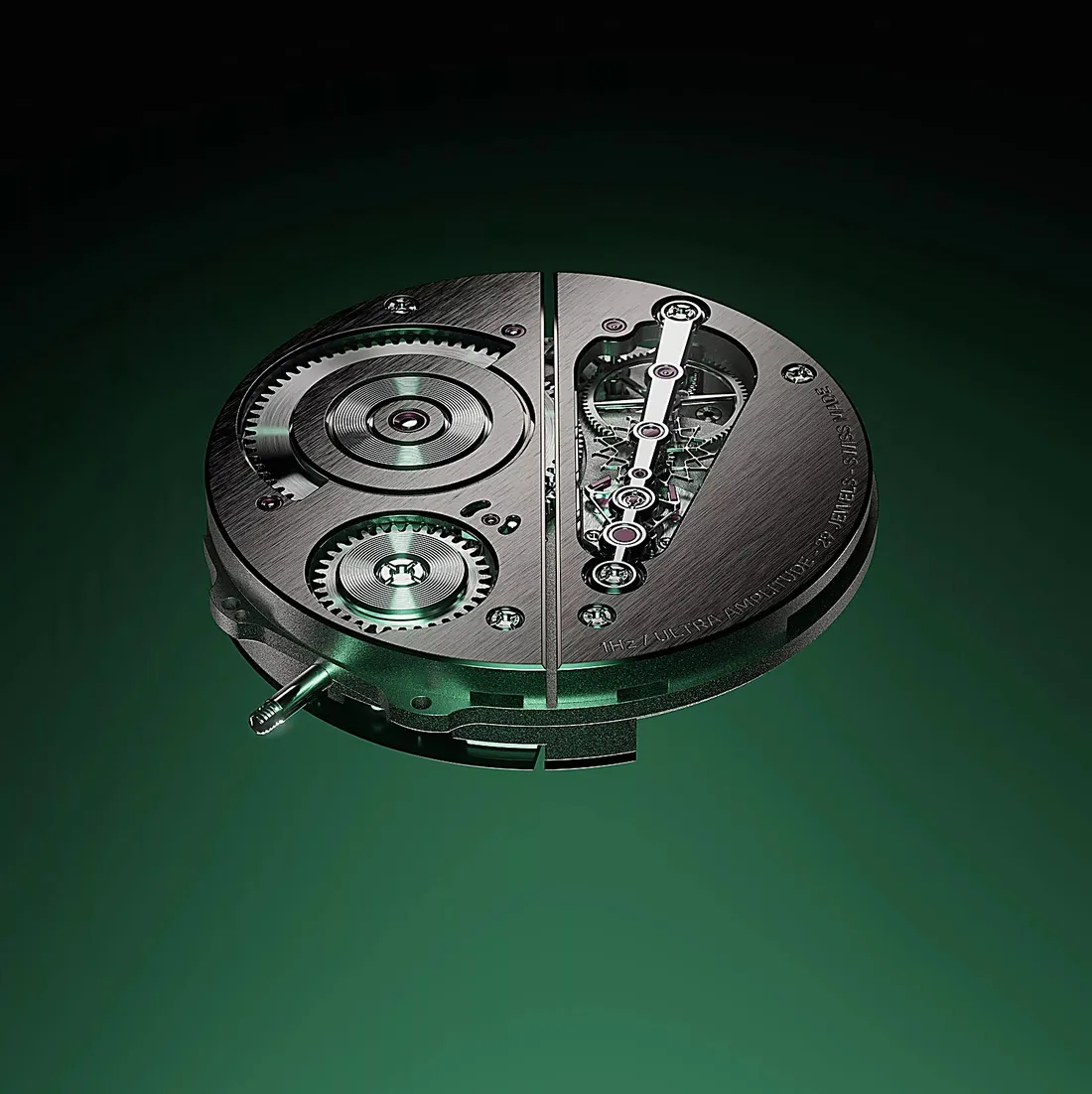
The case is Grade 5 titanium, forty millimetres by forty-four, twelve deep. Domed sapphire at the front, flat sapphire at the back, both with anti-reflective treatment. Three atmospheres of water resistance. The strap is rubber and comes off at the push of a button. The whole architecture reads from the outside at once, and the line Renaud chose for his house comes from Louis Sullivan’s essay of 1896: form ever follows function.
The brand is based at Tolochenaz, in the middle of the Swiss watchmaking arc. Renaud does not work alone there; as he has throughout his career, he moves forward by sharing the design, arguing about it and testing it. The Pulse60 is not one man’s obstinacy but a team’s answer, gathered around one man’s question.
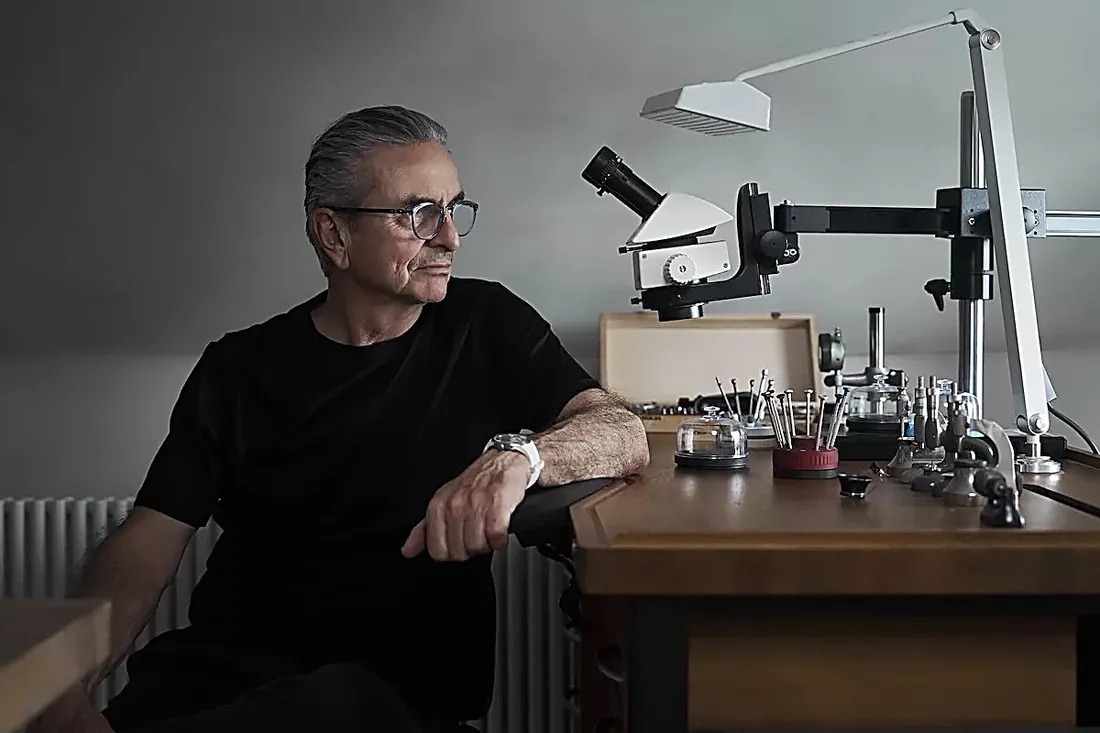
format_quote"A man who spent forty years not signing other people’s dials finally signed his own, and the part he changed was the one nobody can see."
Hasan Bekmezci
The Pulse60 Titanium Black is nominated in the Complication category at the 2026 Grand Prix d’Horlogerie de Genève. The category name is a little misleading, because there is no complication here in the classical sense. No calendar, no repeater, no chronograph. The complexity is not on the dial but in the most fundamental part beneath it. Adding something to a watch is always the easy move; the hard one is to go after a number everyone has accepted as settled for two hundred years.
And that is what you hear when you put it on. The fast, thin chatter you are used to is gone. In its place is a slow, wide, calm pulse. Sixty to the minute. The same as your own.