A watch does not measure time. It counts it. The difference between those two verbs is this entire article.
Below are five places, and in each of them two scientists are working. None of the five knows about the others, and all five are wrestling with the same question. In every scene there is also a watch on the table that answers that scene’s question mechanically. At the end, all of them will meet in a room that is nowhere.
Fourteen Hundred Metres Underground
At the bottom of an old mine gallery, in a laboratory where the rock filters out cosmic rays, two people are waiting. The astroparticle physicist Dr Ilse Reinhardt has spent fifteen years looking for something she has never seen. Across from her, the theoretical cosmologist Dr Kwame Adjei is trying to explain why it cannot be seen.
"Another empty month," said Ilse. "Fifteen years, zero signal."
"Zero signal is a result," said Kwame. "Most of the mass of the universe is made of something that never speaks to light. We do not see it, but we know it is there from the rotation of galaxies: the stars at the rim turn far faster than the visible mass permits. And then there is whatever is pushing the expansion of the universe faster and faster; we call it dark energy, which is not an explanation but a confession."
"That should feel familiar," said Ilse. "The nineteenth century stood in the same place. They thought light needed a medium to travel through and called it the aether. Invisible, weightless, filling everything. In 1887 Michelson and Morley set out to measure that medium and found nothing at all. Finding nothing is the most productive failure in the history of physics; relativity came out of it."
Kwame pointed at the watch on the table. "I am glad you brought that. It does the exact opposite of our job."
"How so?"
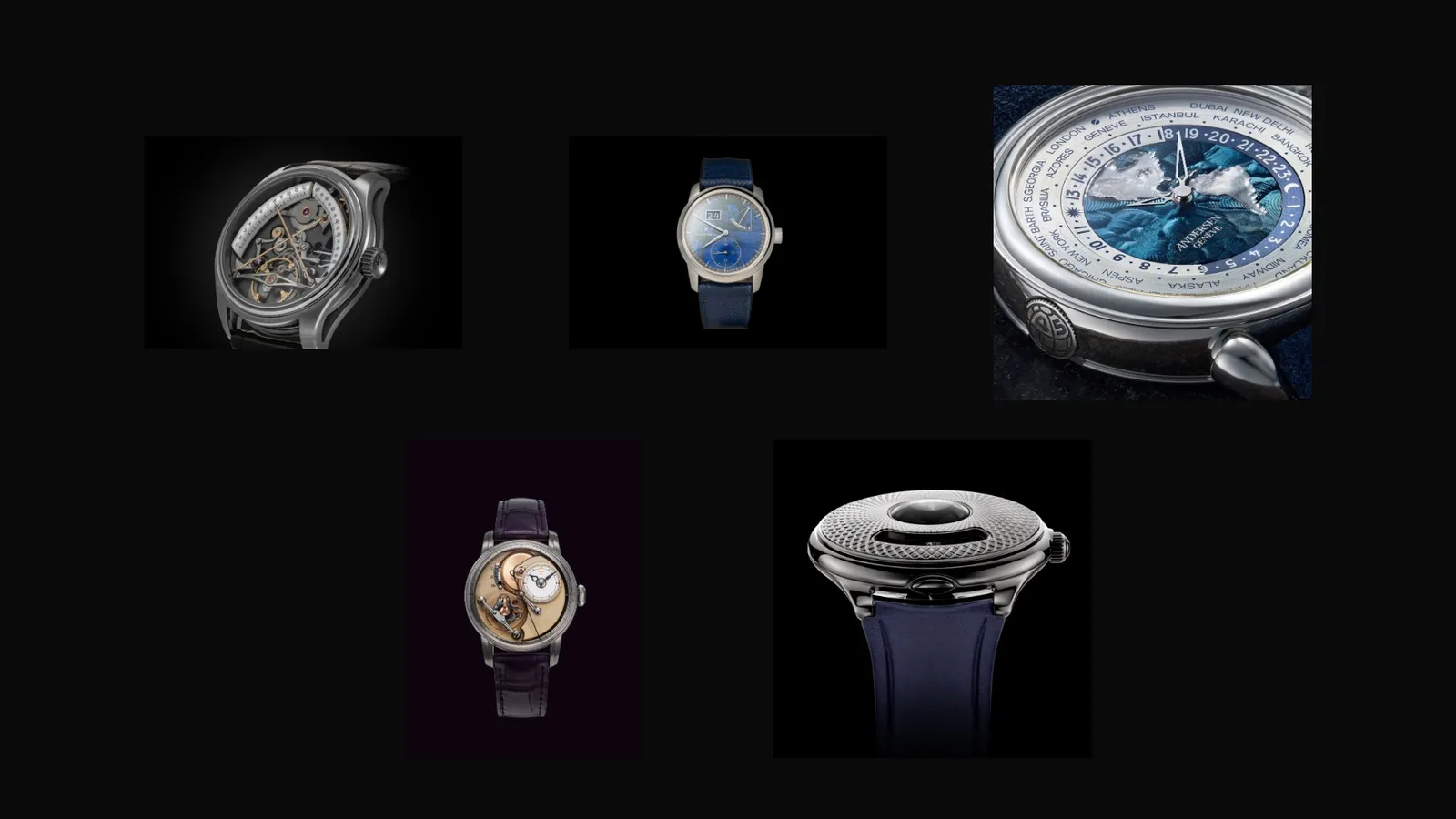
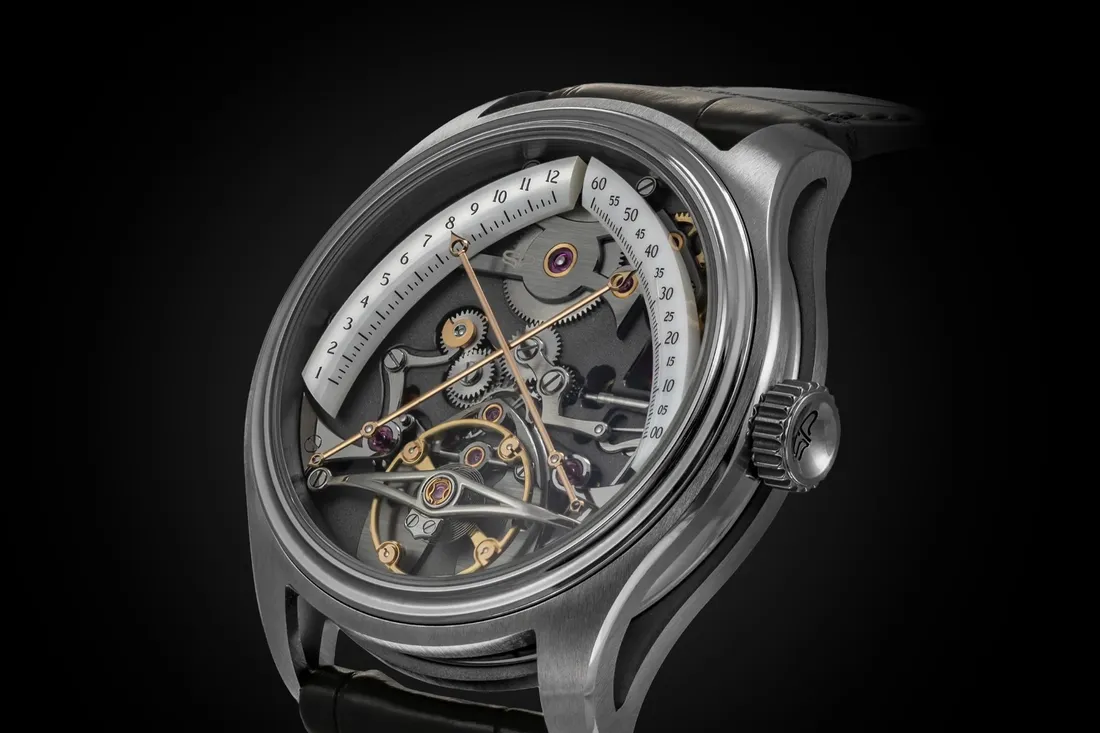
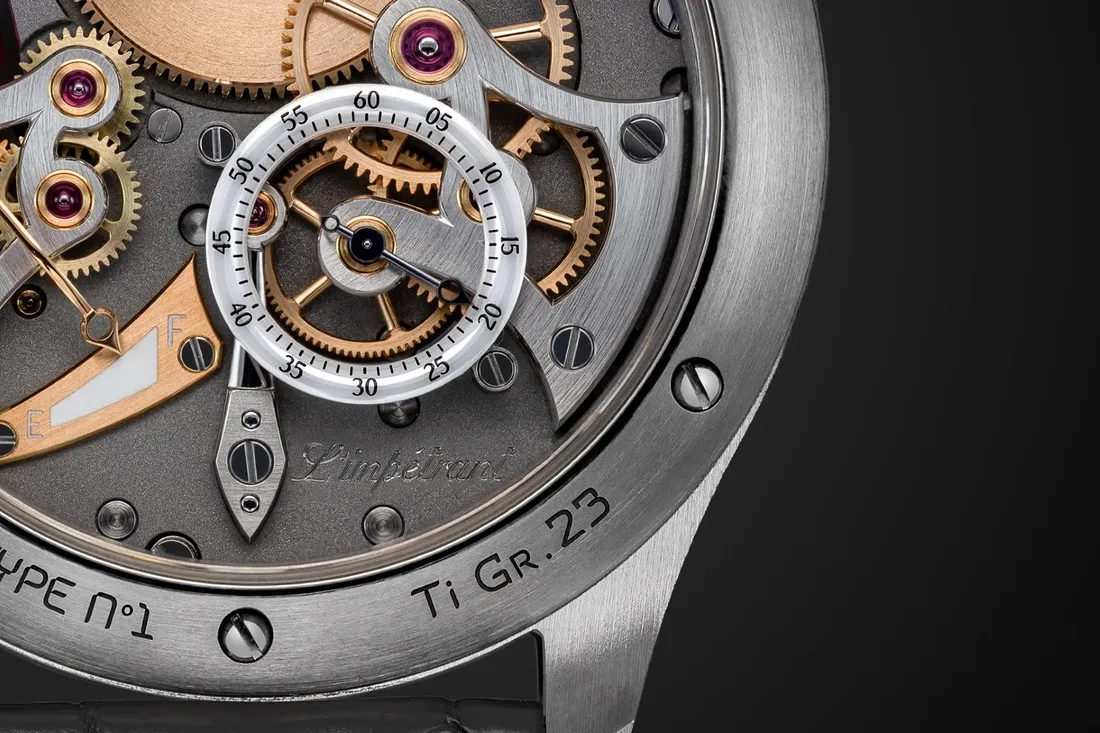
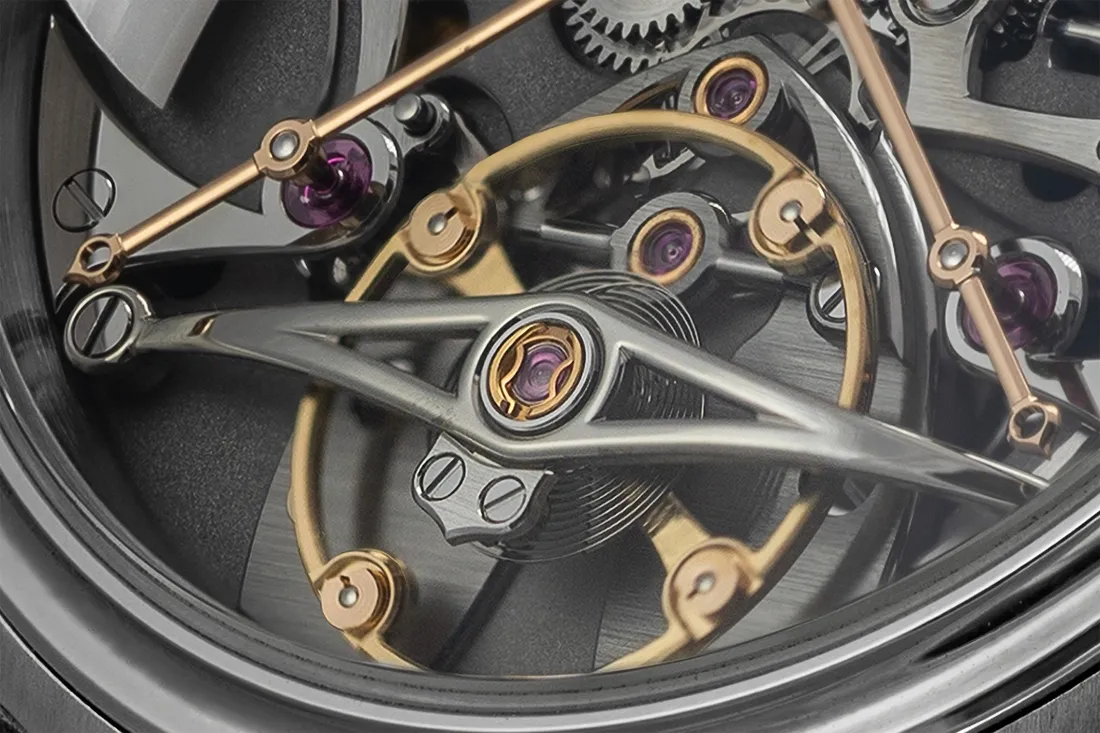
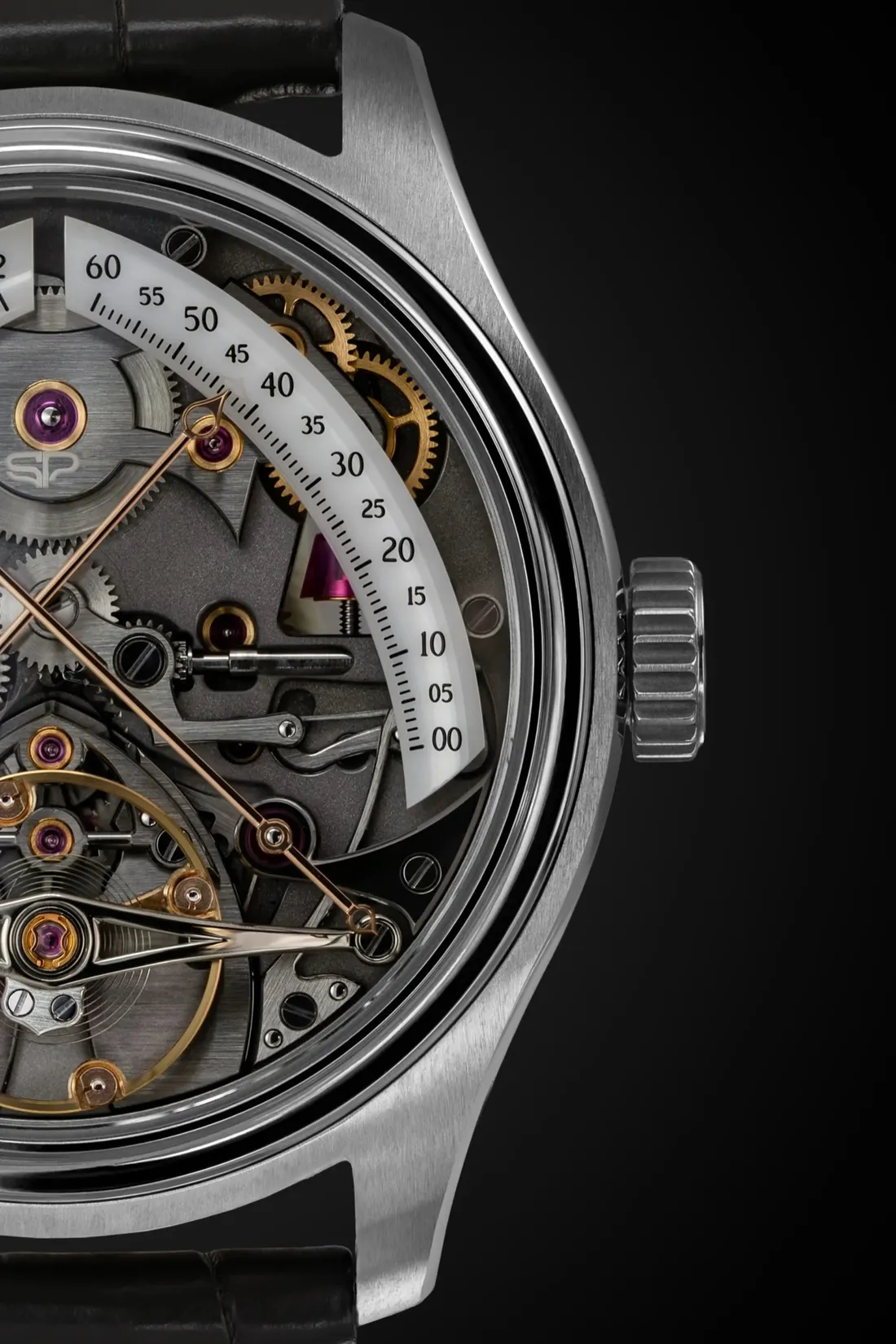
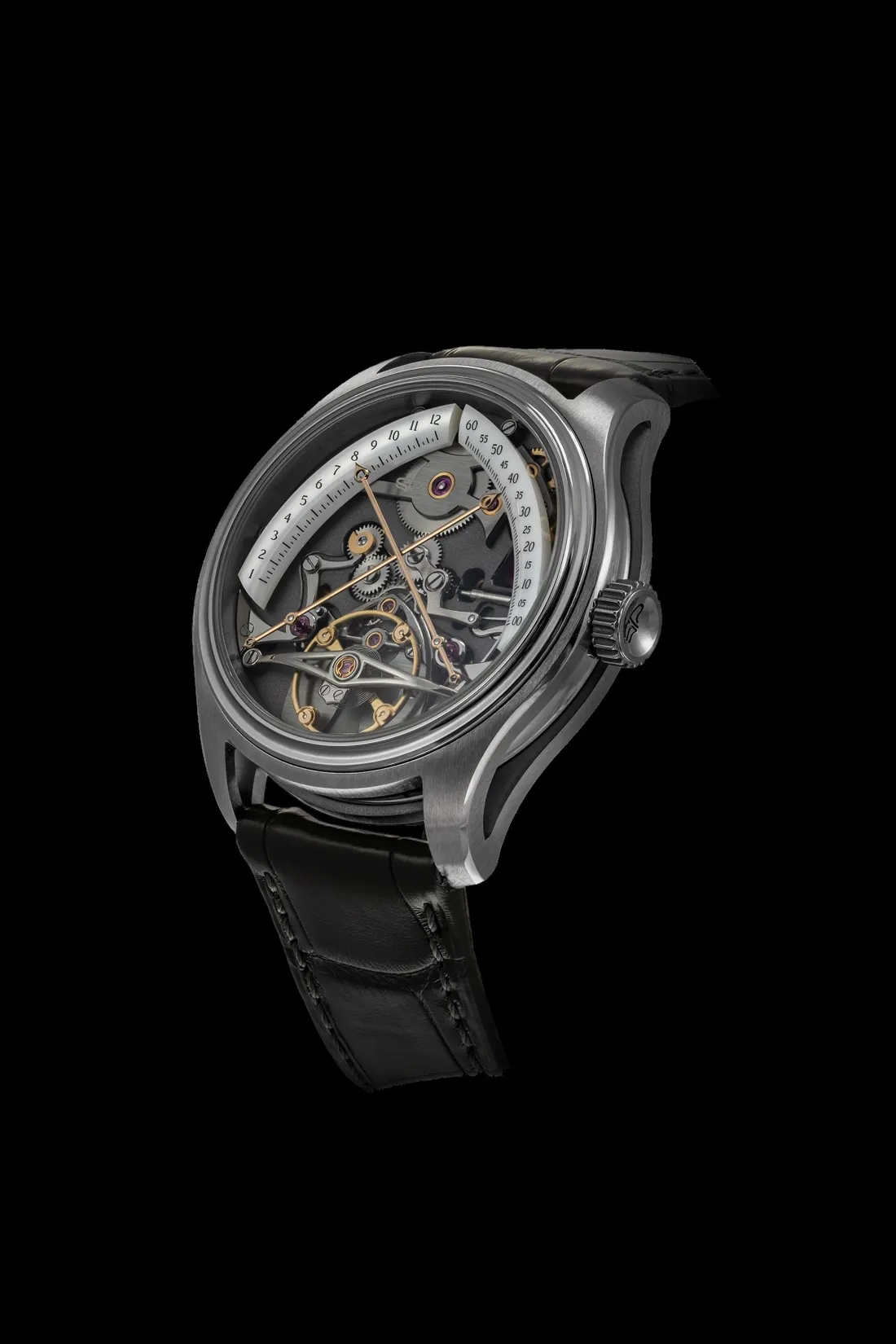
"We are hunting for the invisible; that thing is trying to show it. Look, the dial is opened up almost to nothing, and the balance wheel, instead of hiding inside the movement, has been lifted onto the top of the dial. It is called L’Impétrant and it was made by Stéphane Pierre, a micro-mechanical engineer who spent years in the submarine industry. An impétrant is a young submariner assigned to a crew but not yet fully taken into the group. He gave his first watch the name of his own former condition."
Ilse leaned in. "The hands look strange."
"Because they do not rotate. Both hours and minutes are retrograde: the hand travels along an arc and, on reaching the end, flies back to the start in an instant. There are two of them, one for the hours and one for the minutes. That is exactly the logic of our measurement: the counter reaches its limit, resets, and a new window opens. Is that not how your detector works?"
"That is precisely how it works. And inside?"
"His own calibre. The case is grade 23 titanium, thirty-nine millimetres across and ten point eight thick, twelve point two with the domed crystal. The first run is a subscription series of fifteen pieces, followed by fifty in titanium. The price is eighty-four thousand Swiss francs before tax. He developed it with the prototypist Julien Tixier, and around thirty specialists had a hand in it. So this too is a collaboration; the myth of the lone genius does not survive here either."
format_quote"Finding nothing is the most productive failure in the history of physics."
Above the Puerto Rico Trench
On the deck of a research vessel holding station over eight thousand metres of water, the deep-sea biologist Dr Mira Okonkwo and the physical oceanographer Dr Lars Hedeby are waiting for a submersible to surface.
"People think the ocean is dark," said Mira. "It is not dark, it is blue. Water swallows red in the first fifteen metres, then orange, then yellow. At fifty metres your blood looks green. The last colour to descend is blue, because the way water molecules scatter short wavelengths gives blue the longest journey. The sea is not blue because it is blue; it is blue because blue is all that is left."
Lars smiled and took the watch off his wrist. "Then this works the way the ocean does."
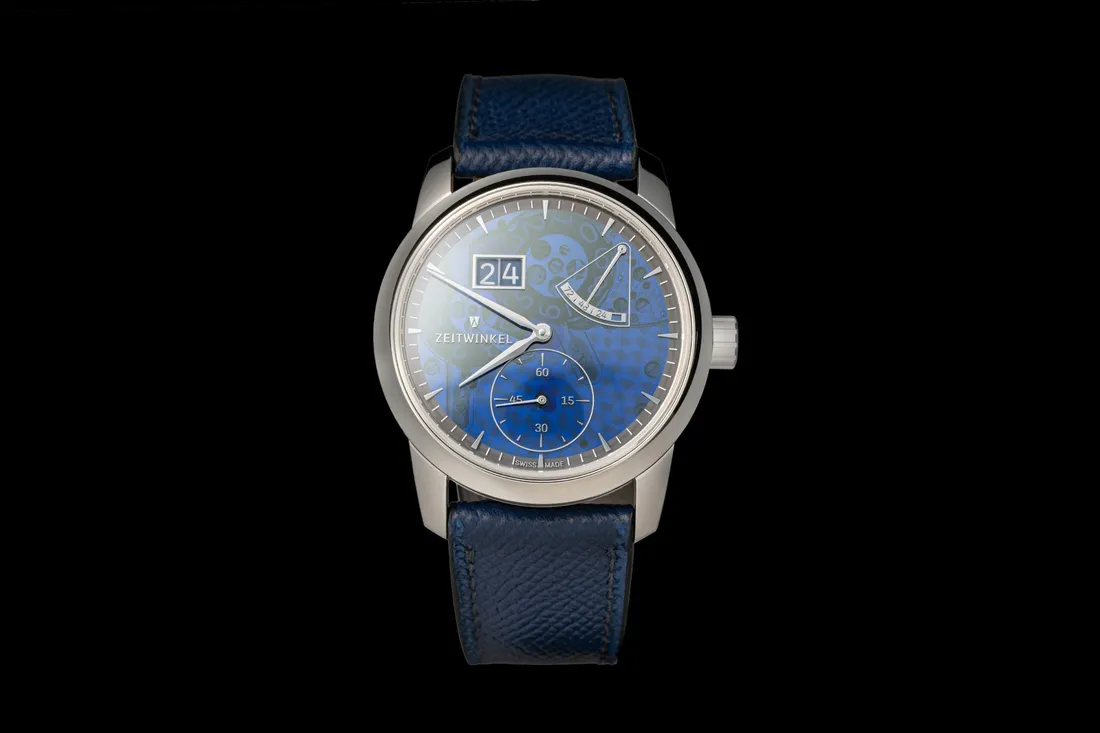
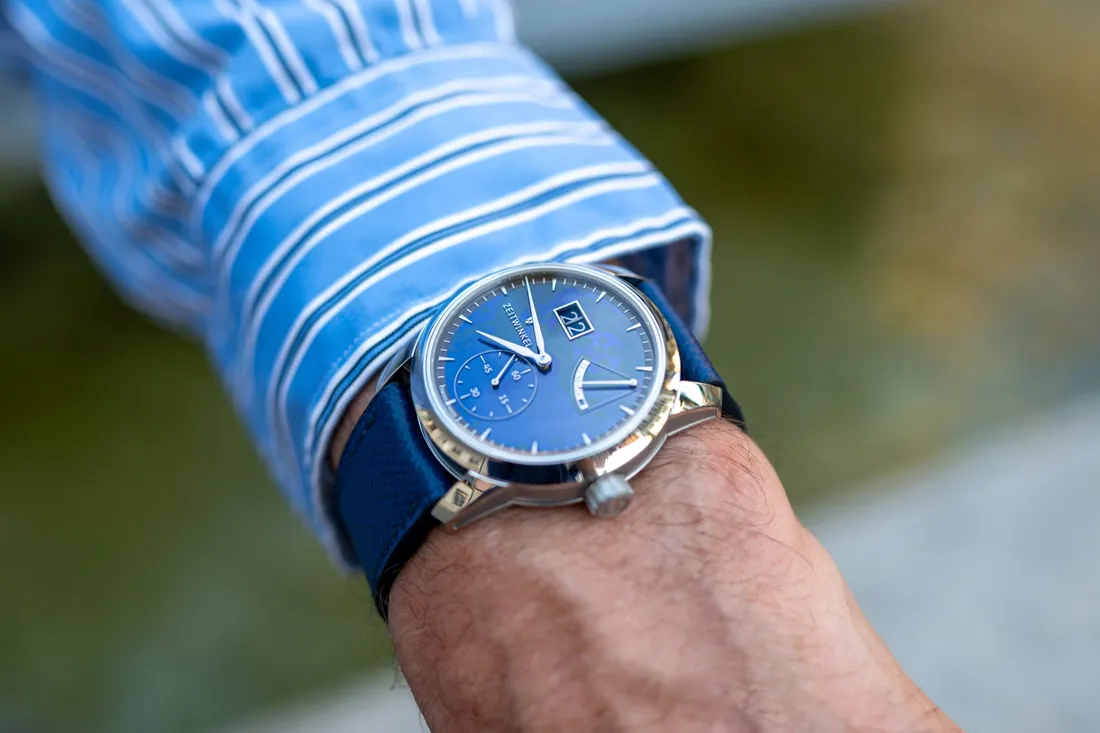
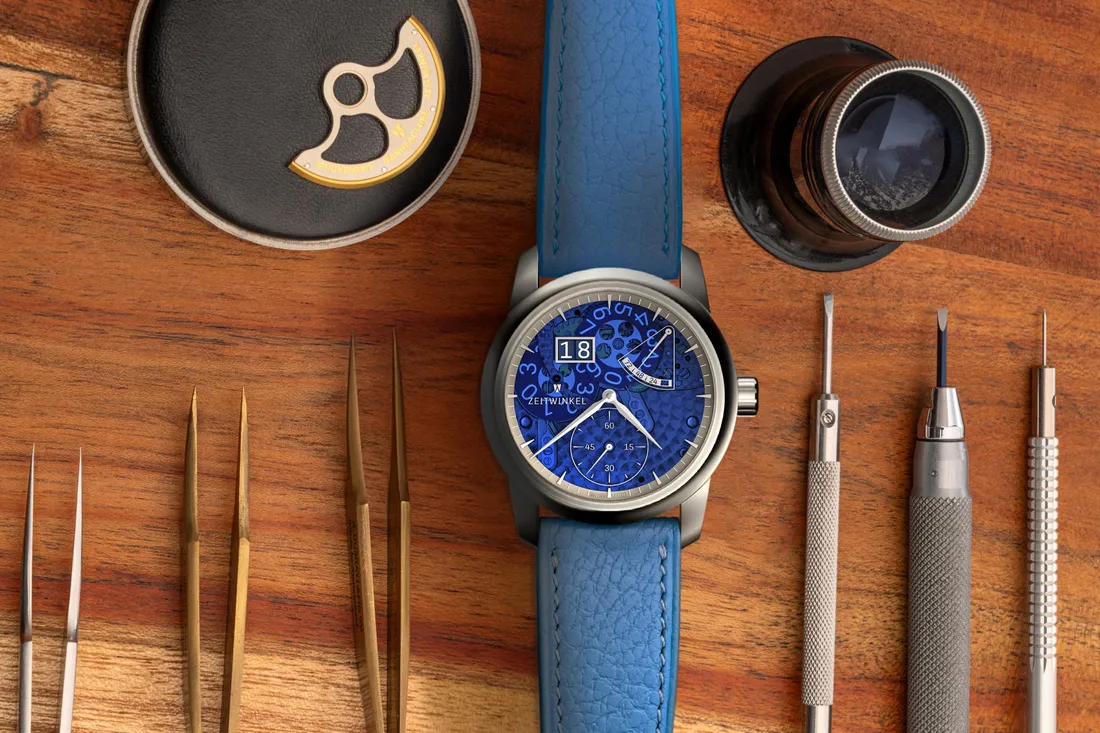
"The dial is sapphire," Lars went on. "Not metal, a transparent stone. You partly see the movement beneath it, and the blue is not a painted surface but what light does between the layers. It deepens and lightens with the angle, exactly the way the sea changes colour while you watch it from above."
"I do not know the brand."
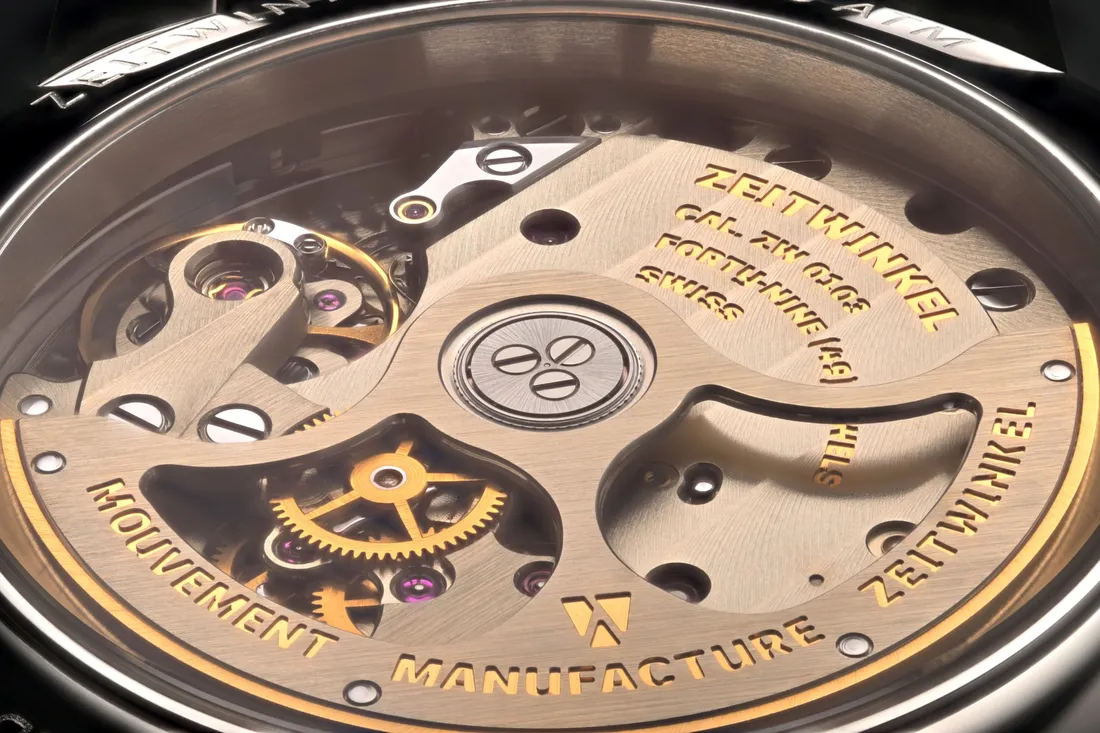
"Zeitwinkel. It is German for time angle, and they name their models after angles; this is the 173°. They work at Saint-Imier in Switzerland with a very small team and build their own calibres, which is rare at that scale. Inside is the ZW0103, self-winding; three hundred and eighty-seven components, forty-nine jewels, twenty-eight thousand eight hundred vibrations an hour, four a second. Despite a single barrel it gives seventy-two hours of power reserve."
Mira raised an eyebrow. "Three days from one barrel?"
"A long and robust mainspring. We have the same problem in our work: spreading a submersible’s energy out is better than spending it in the first hour. The case is thirty-nine point seven millimetres, twelve point nine thick with the domed crystal, forty-eight from lug to lug. Fifty metres of water resistance. The case back is sapphire, and inside the bridges and the three-quarter plate are solid German silver. German silver does not yellow, it patinates; it ages without spoiling."
"There is a big date too."
"There is, and it matters to us. It is easy to lose the days at sea. If the only wrong thing in a dive log is the date, the entire data set becomes arguable."
format_quote"The sea is not blue because it is blue; it is blue because blue is all that is left."
The Tower Above the Amazon
North of Manaus, at the top of a three-hundred-metre observation tower rising above the forest, two people are waiting for dawn. The canopy ecologist Dr Beatriz Salgado and the atmospheric chemist Dr Tomás Vieira are watching the green sea below give off its vapour.
"This forest makes its own rain," said Tomás. "A single tree puts hundreds of litres of water into the atmosphere through its leaves in a day. That vapour rises, condenses and falls again. We call the mass of moisture flowing inland the flying rivers. So the Amazon is not the consequence of rain, it is also its cause. The system feeds itself."
Beatriz took a small box out of her pocket. "Then you need to see this."
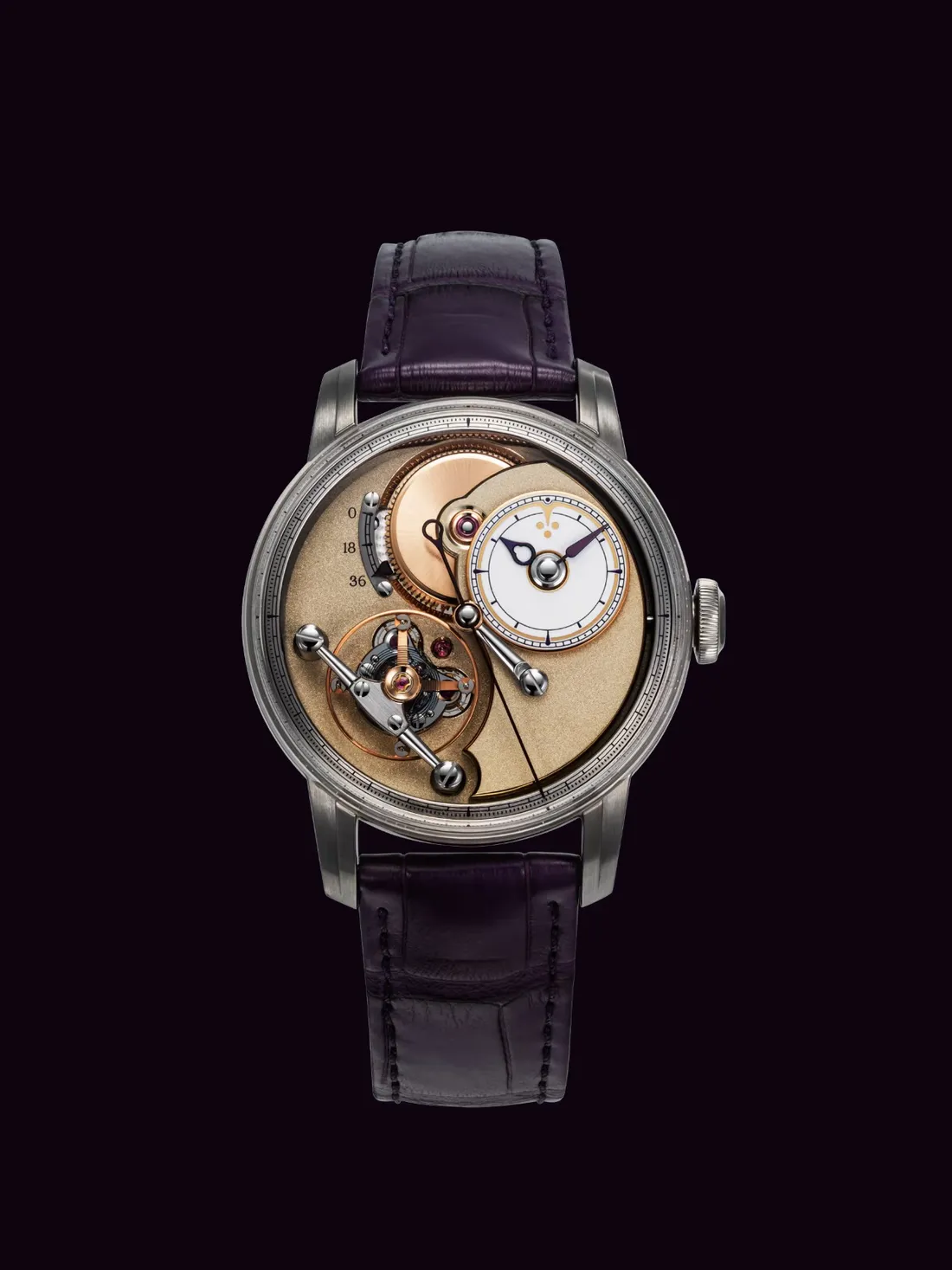
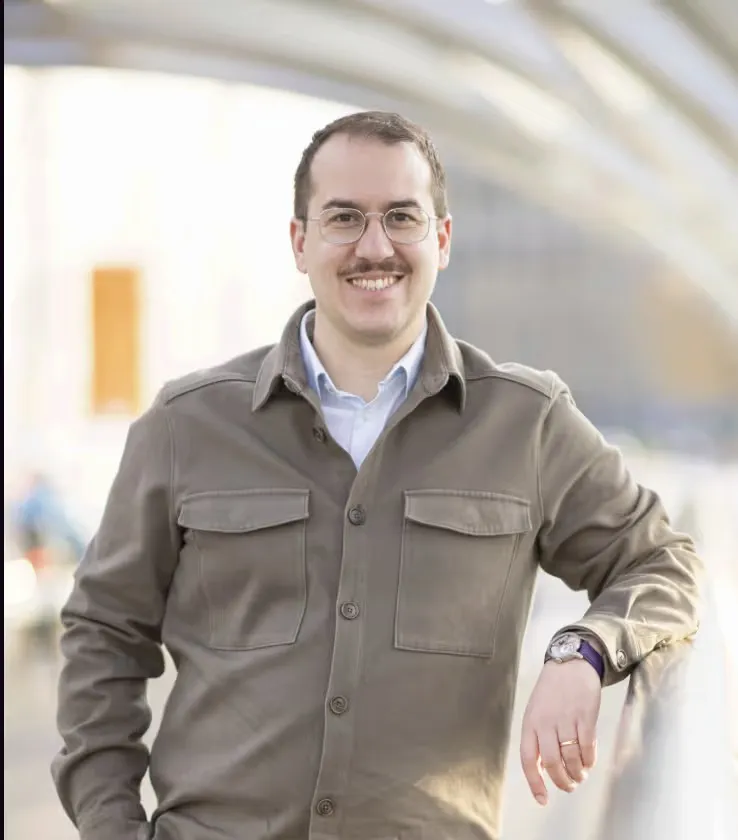
"This is a Cleguer," she said. "It was made by Mathieu Cleguer, a Breton who studied car design for four years and changed direction after seeing a display of watches at the 2006 Paris Motor Show. He worked at Akrivia, then ran the research and development department of a brand, then set up on his own. This is his first watch."
"Half of the dial is movement."
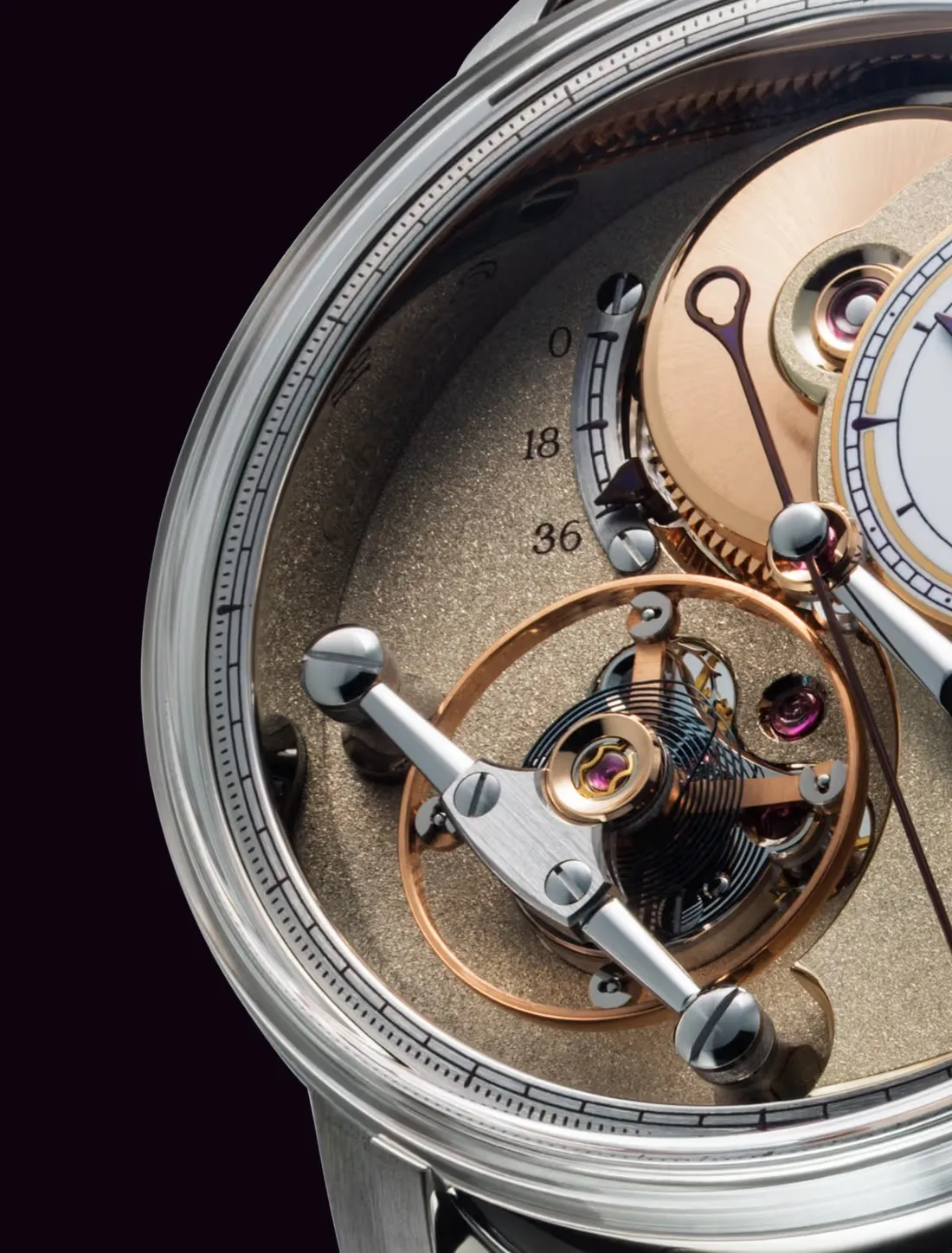
"Because that is where the point is. Inside is an escapement he developed himself, which he calls the innate. In a conventional escapement, energy travels from the wheel to the balance indirectly, through a lever, and every transfer loses something to friction. The solution known as the natural escapement reduces that loss, but it has a well-known flaw: if it stops, it will not restart itself. Cleguer built a geometry that keeps the direct impulse and cures that flaw. There are two escape wheels, the balance is twelve point nine millimetres with four gold regulating screws, and the hairspring has a Phillips terminal curve and a Grossmann inner curve."
Tomás nodded. "Being able to restart itself. That is exactly what the forest does. When a gap opens, the system does not begin from zero, it carries on from where it stood."
"And there is this," said Beatriz. "Eighteen thousand vibrations an hour, which is slow; thirty-six hours of power reserve, and that reserve is bounded by a stop-work called a Maltese cross. The mainspring can neither run fully down nor be fully wound. Only the middle band, where the force is most even, is ever used. A tree does not lean on its roots to the last drop either; it goes into winter with a reserve."
"How many were made?"
"The first subscription series is twelve pieces in titanium, all sold. The dial is grand feu enamel signed Blandenier, and the hands are flame-blued and drawn to a mauve. The case is thirty-eight and a half millimetres, twelve thick, water resistant to thirty metres."
format_quote"Being able to restart itself. That is exactly what the forest does."
The Dishes and the Three Bodies
In the control room of a radio observatory, the radio astronomer Dr Hanne Vos and the orbital mechanics specialist Dr Rafael Ibarra are waiting for twenty-seven dishes to swing onto the same point.
"If we are going to send a message," said Hanne, "it has to contain not only where we are but when we are. And there is no universal now. The moment we call now is something that has not yet happened four light years away. Establishing a shared clock between two points is harder than the communication itself."
Rafael picked up the gold watch on the desk. "This was built for exactly that."
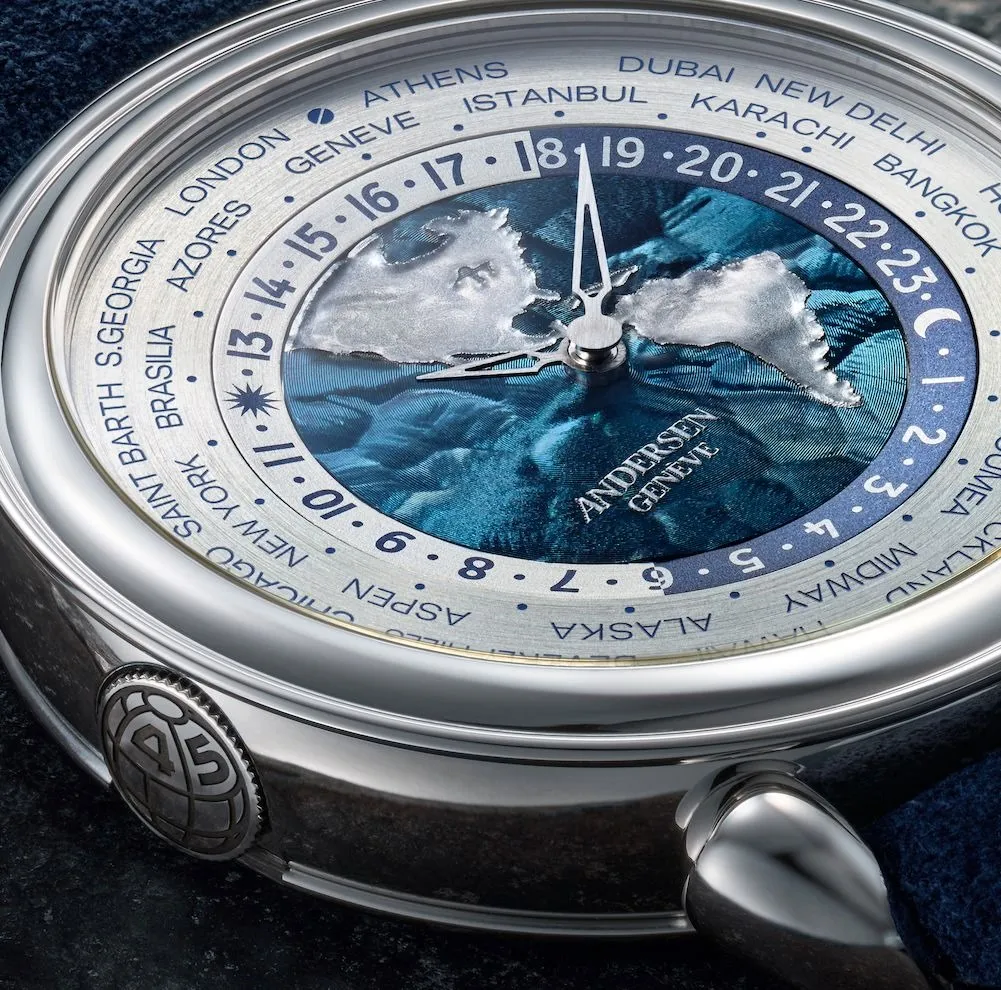
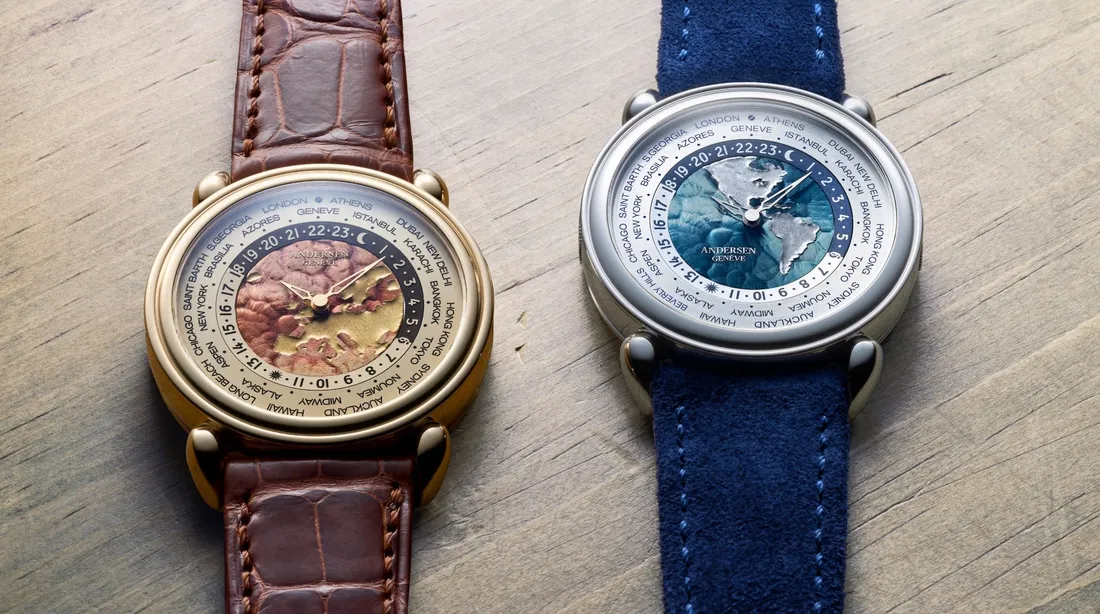
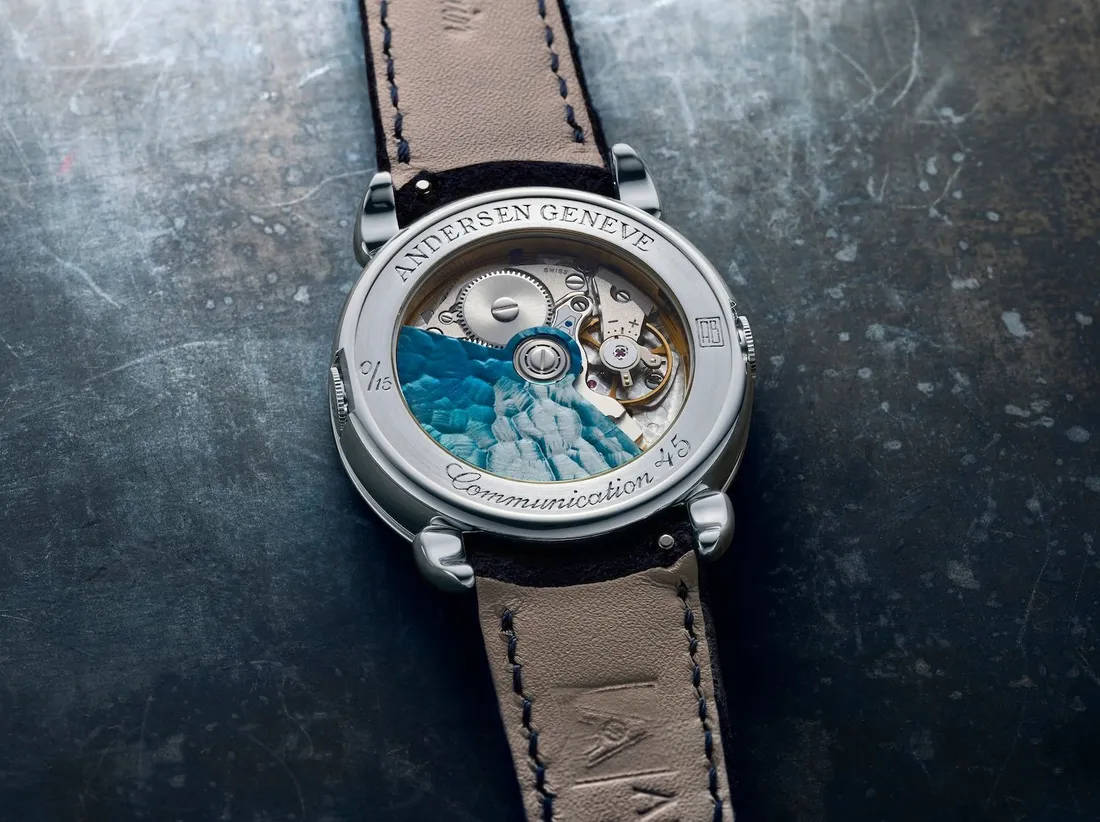
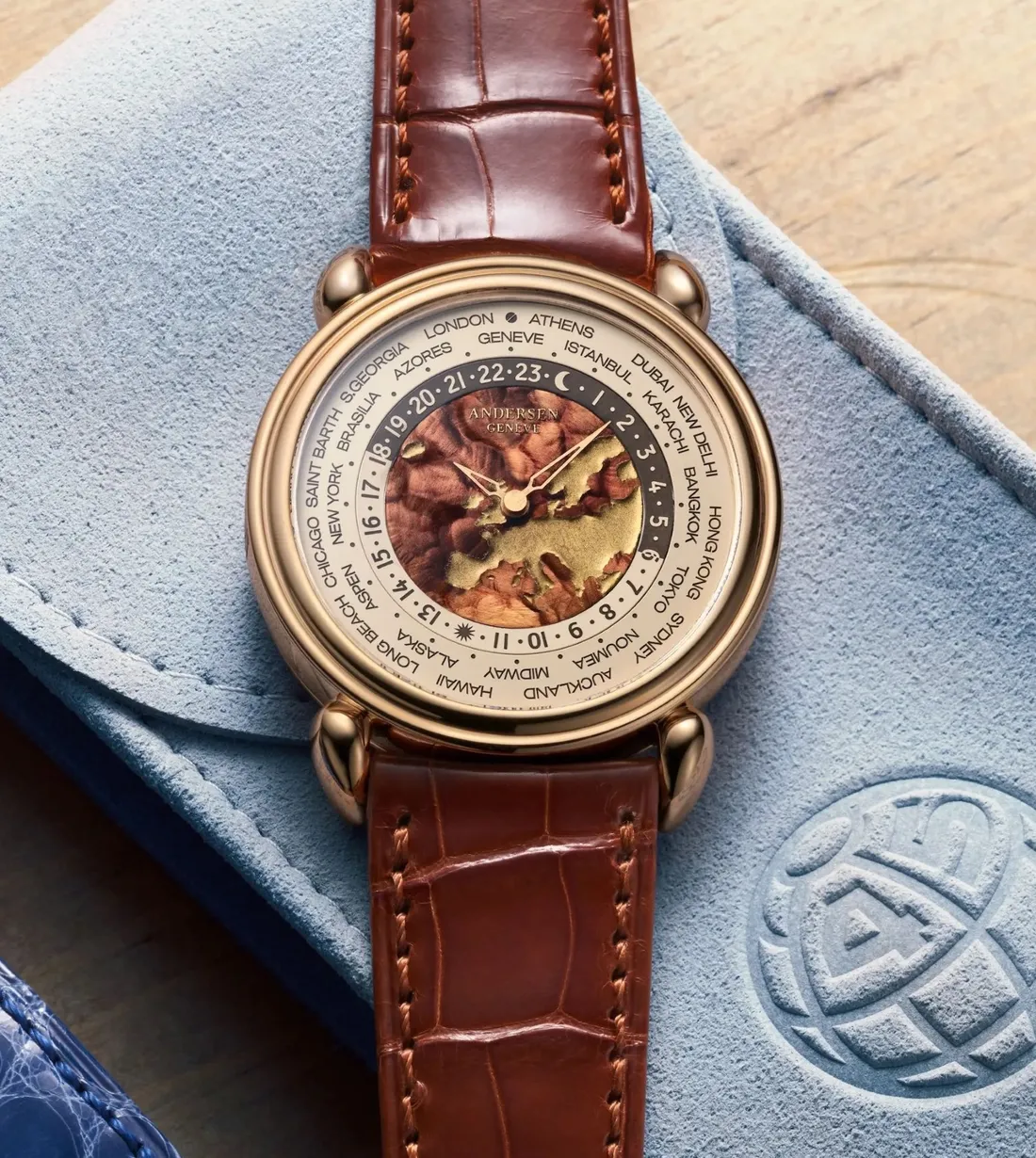
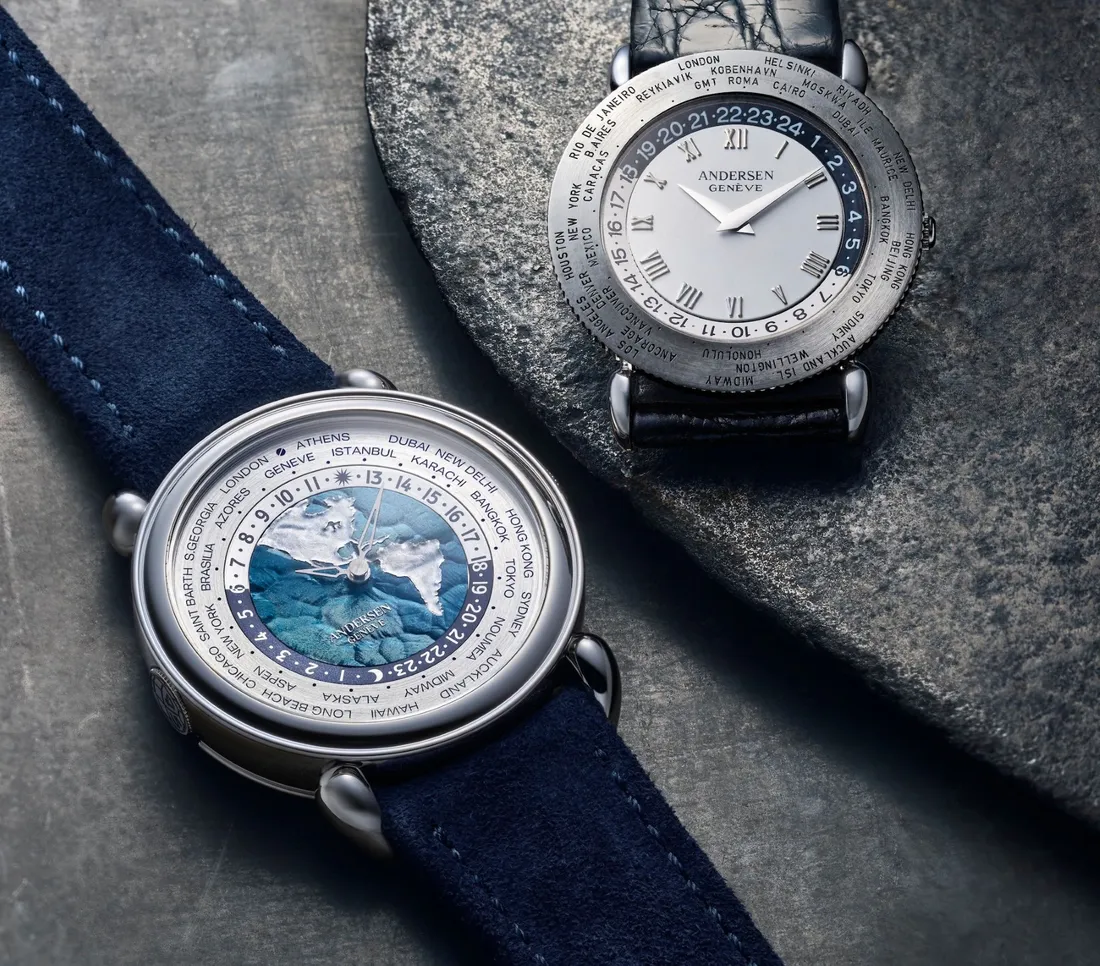
"Andersen Genève," said Rafael. "Svend Andersen set up his own workshop in 1980; this watch was made for the forty-fifth year of that date, and it is the tenth world timer in the catalogue. The forty-five is in the name: Communication 45."
"Why two crowns?"
"Because that is how the classical world-time architecture works. In the arrangement Louis Cottier settled in the 1930s, one crown winds and sets, the other turns the city ring. It is the same here: the crown at nine governs the cities, the crown at three governs the time. The outer ring carries a twenty-four hour scale that separates day from night. So you read twenty-four zones at once."
Hanne looked at the map. "Is that in relief?"
"Gold inlay. The centre dial is BlueGold, Andersen’s own gold alloy, worked in tapisserie. The map is set into it as a separate element. There are three versions, with maps of Europe, Asia and the Americas, fifteen pieces each. The case is thirty-eight millimetres and finished by hand; the teardrop lugs are Andersen’s signature. Inside is a vintage A. Schild base, self-winding, twenty-one thousand six hundred vibrations an hour, forty hours of reserve; the world-time module is the workshop’s own. The rotor is BlueGold too, engraved in tapisserie guilloché."
"So," said Hanne, "what do you say about the three-body problem?"
Rafael laughed. "You can write down in a single formula how two bodies will circle one another. The moment you add a third, that ends. At the end of the nineteenth century Poincaré showed there is no general closed-form solution and that the system is wildly sensitive to initial conditions: change the tenth decimal place and you lose a million years from now. Chaos theory was born there."
"So the sky is not calculable."
"It is calculable, it is not predictable. The difference matters. You can step forward one increment at a time, but not for ever. That is what this watch does as well: it solves twenty-four zones of one planet on a single dial, because that is a two-body problem. One planet and one sun. Add a third and the dial will not be enough."
format_quote"If we are going to send a message, it has to contain not only where we are but when we are."
The Midnight Library
The fifth place is not a laboratory. In the reading room of a closed university library, the philosopher of science Prof Adèle Marchand and the theoretical physicist Prof Yusuf Karahan are looking at a single watch on the table.
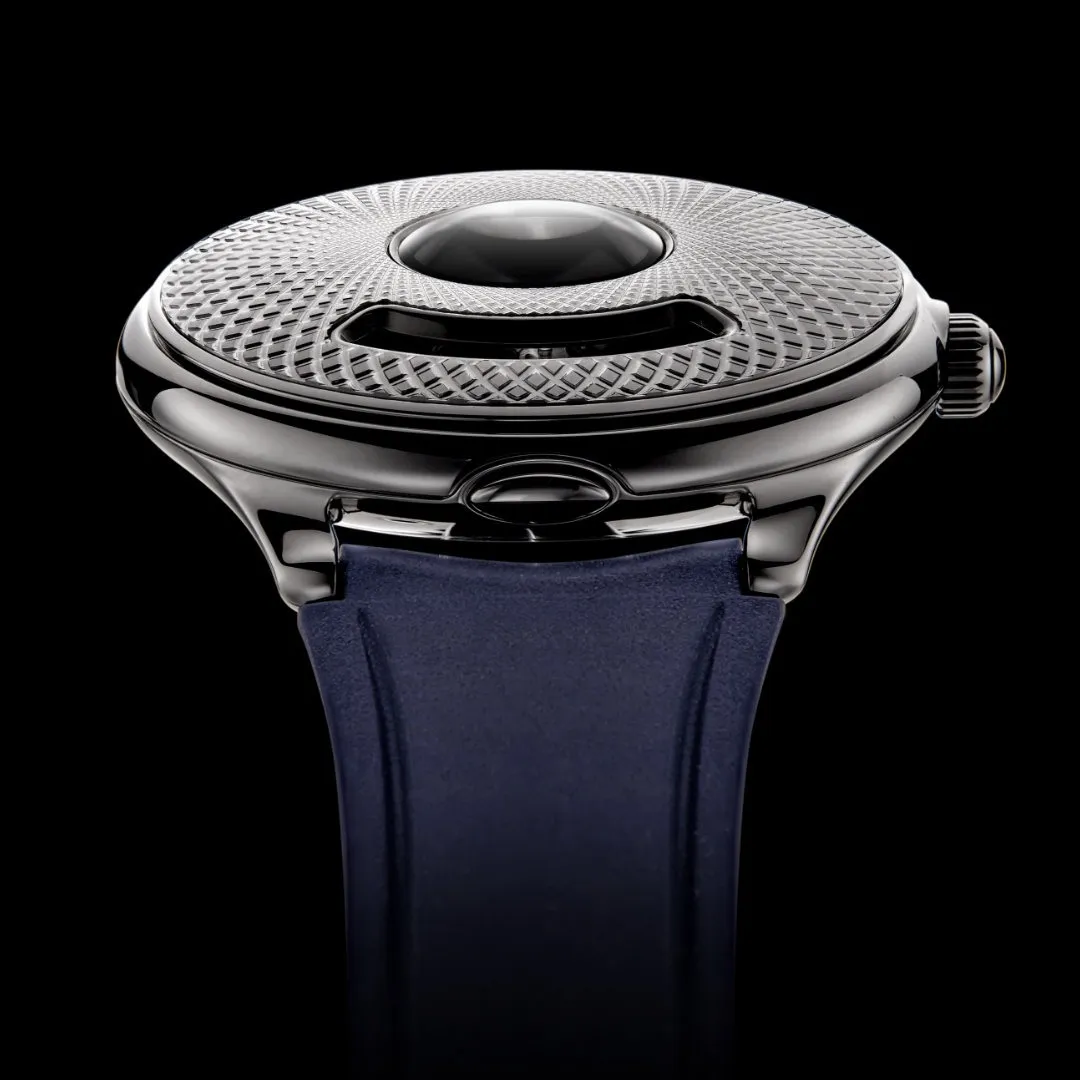
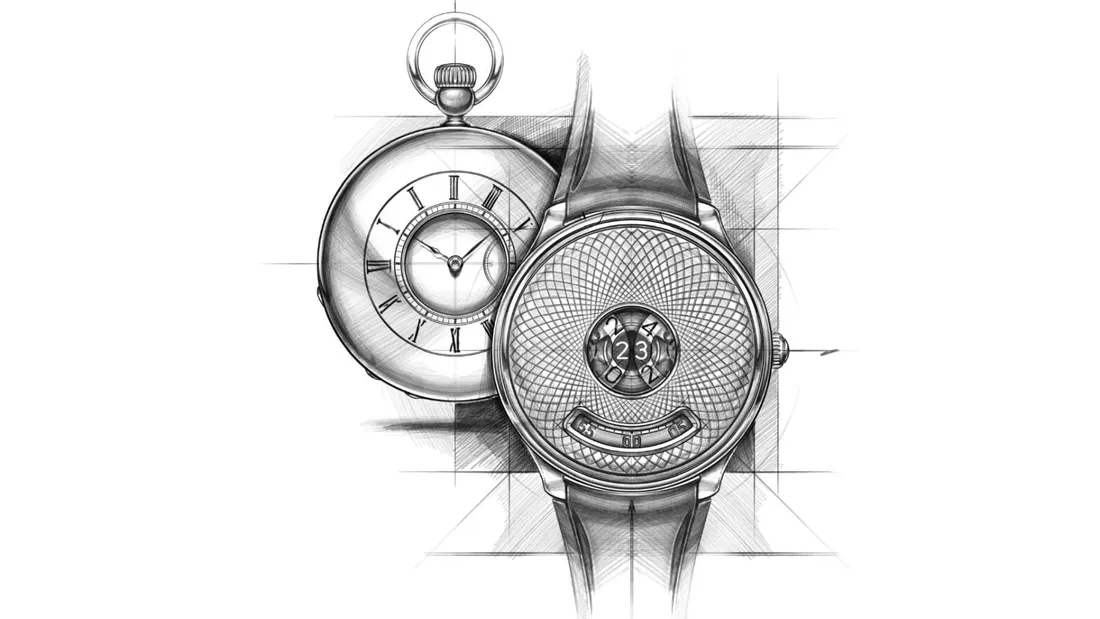
"This one jumps the hour," said Yusuf. "There is no hour hand. Two digits sit in a window, and when the hour is complete that number changes in an instant. The minutes, meanwhile, slide continuously around the edge. So half the dial is continuous and half of it leaps."
Adèle smiled. "They have put a two-thousand-four-hundred-year-old argument onto a dial."
"In the fourth book of the Physics, Aristotle defines time like this," Adèle went on. "Time is the number of movement in respect of before and after. Notice: not movement, but the number of movement. Time is what is countable, and without a mind to count there is no number. The minute disc of this watch flows without a break, but the window that reads the hour counts."
"Kant goes further," said Yusuf. "For him time is not a thing found outside; it is the form of inner sense. It is not drawn out of experience, it is the condition of experience. We do not find time in the universe, we place the universe inside time."
"As a physicist, do you agree?"
"Partly. Most of our equations do not care about the direction of time; they work as well backwards as forwards. The only thing that gives a direction is entropy, the increase of disorder. Run the film of a breaking glass in reverse and no law of physics is violated, only probability is."
Adèle took a thin book from the shelf. "In A Confession, Tolstoy tells a story. A traveller fleeing an animal on the steppe throws himself into a dry well; a dragon waits at the bottom, two mice, one white and one black, gnaw the root of the twig he is holding, and on the leaves of that twig are a few drops of honey. Tolstoy names his own share too: his two drops of honey were his family and his writing. But he writes that he can no longer taste that honey, because he cannot take his eyes off the mice."
"This watch makes those two mice visible," said Yusuf. "When the number changes you hear that something has ended. A hand that turns continuously never says that, because it never ends anywhere."
"One of the old thinkers of the East looks at it from somewhere else," said Adèle. "For him, passing away is not annihilation; at every instant the image on the stage is renewed, the mirror changes but what appears in the mirror is not lost. The cause of our sorrow is that we mistake the mirror for the image itself. Aristotle describes the number, Kant the mind, Tolstoy the fear; he proposes changing the direction of the gaze."
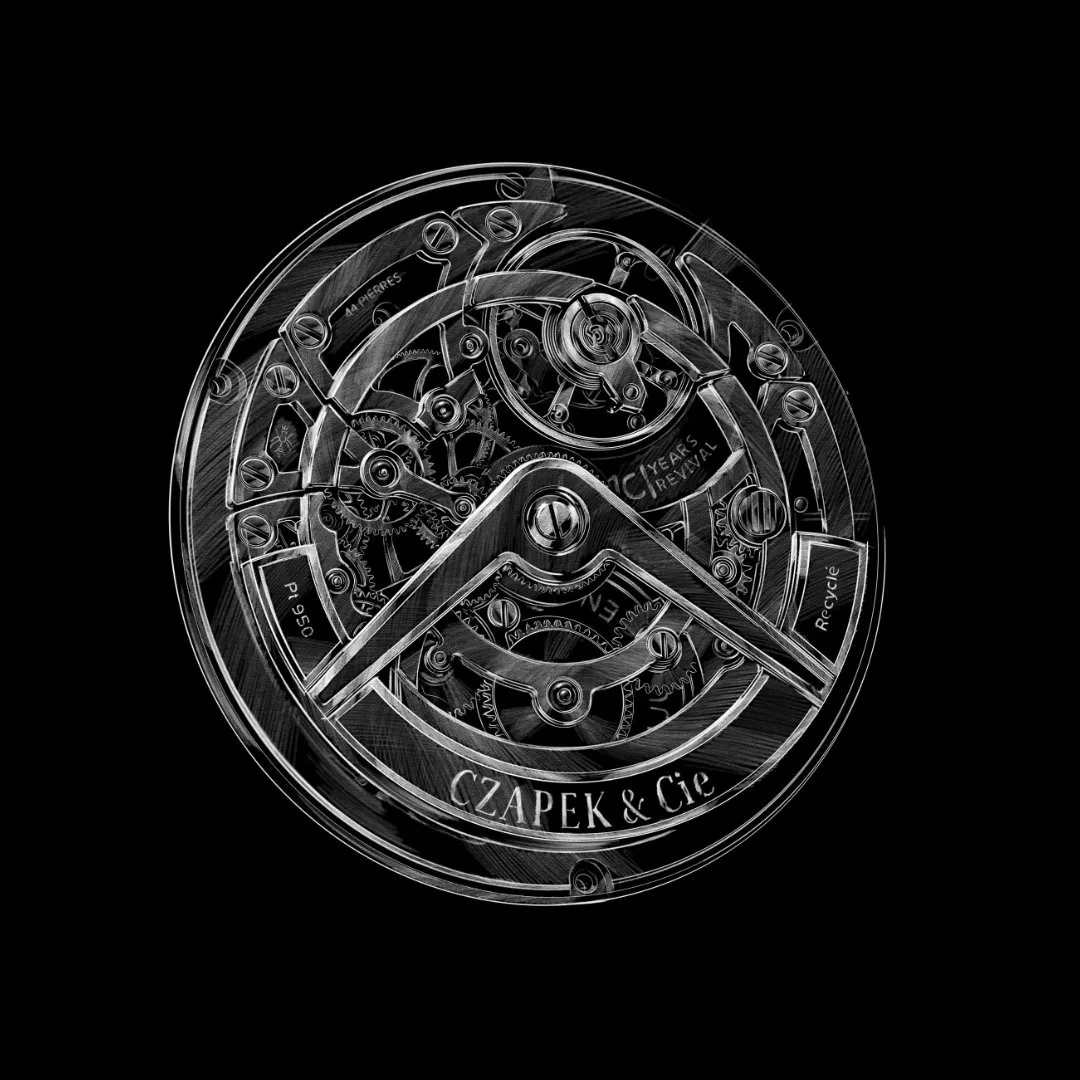
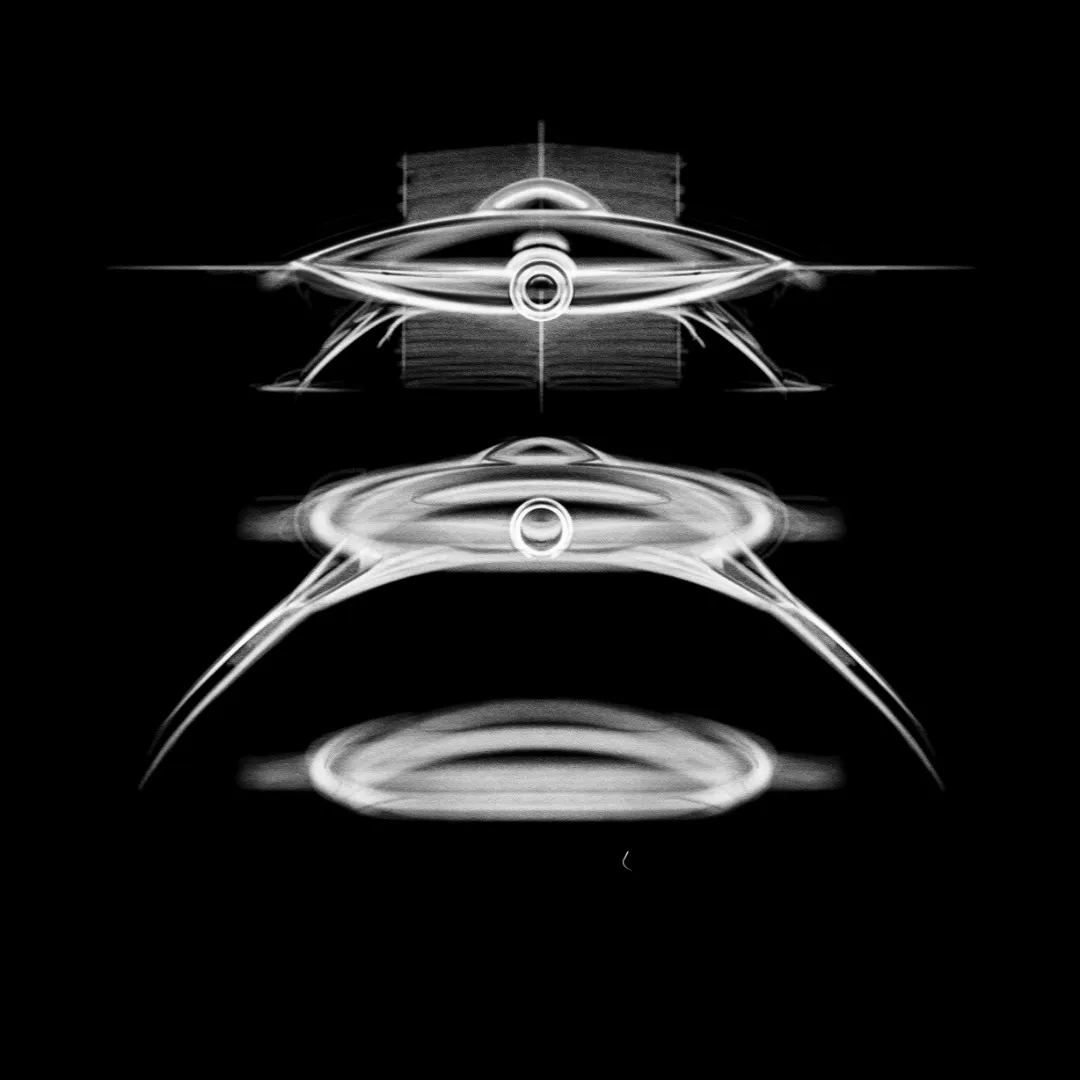
Yusuf picked up the watch. "This is a Czapek. The name comes from François Czapek, who worked in Geneva in the nineteenth century, and the brand was refounded in 2015; this watch was made for its tenth year. Calibre 10.1, self-winding, forty-four jewels, twenty-eight thousand eight hundred vibrations an hour, sixty hours of reserve. Thirty millimetres across and six point one three thick. The system that jumps the hour on two digits across twenty-four hours is patent pending. The case is forty point five millimetres; the half-hunter cover on top is hand-guillochéd and the loupe-shaped aperture at its centre both hides and shows the mechanism. A hundred in steel and thirty in yellow gold, at forty-two and sixty-four thousand Swiss francs."
"Half closed, half open," said Adèle. "Like the argument itself."
format_quote"Time is the number of movement in respect of before and after. Not movement, but the number of movement."
Aristotle
The Round Table
All ten of them woke at the same moment, nowhere. The room was round, it had no window, and its walls were a grey whose distance could not be judged. In the middle stood a round table, and on the table were five watches. Nobody asked how they had arrived; everybody first looked for their own watch.
Ilse spoke first. "Do our watches run here?"
They all looked. All five were running.
"Then something is happening here too," said Kwame. "Because for a watch to run, something has to change. Where there is no change there is no time to measure either."
Rafael pointed at the watches one by one. "Look, five of them answer five different questions. This one measures time along an arc and zeroes it at the end: it says that measurement has a finite window. This one shows time beneath a transparent stone: it says you must be able to see behind the thing you are measuring. This one runs on an escapement that can restart its own impulse: it says a system can carry on after it has stopped. This one gathers twenty-four zones onto one dial: it says the same instant has a different name everywhere. And this last one jumps the hour: it says time does not flow, it is counted."
Mira broke the silence. "So which of them is right?"
"All of them," said Adèle. "Because none of them describes time. All of them describe what we do with time. A watch is not a claim about the universe; it is a confession about a human being."
Beatriz leaned over the table. "I have noticed something. All five were made by hand. All five came out of small workshops. Behind all five there is one person’s name. We talk about a hundred billion galaxies and eight thousand metres of depth, and the only measuring instrument in our hands has still passed through somebody’s fingers."
Hanne nodded. "Perhaps we should put one of these into the message we send. Not a formula. Proof that a human being spent three years with thirty other people in order to make passing time visible."
Lars looked at his watch. "I have seventy-two hours."
"I have sixty," said Yusuf.
"I have thirty-six," said Beatriz. "And because of the Maltese cross I cannot use all of it."
Tomás laughed. "So each of us has a reserve and none of us can use it to the end. Even in this room."
The light went out the way it had arrived. Ten people returned to their own places: one to the bottom of a mine, two to a deck, one to the top of a tower, one to a control room, two to an empty reading room.
The next morning all five did the same thing: they wound their watches. Winding is the oldest human gesture made so that a device will keep going, and no theory has replaced it.
format_quote"A watch is not a claim about the universe; it is a confession about a human being."
Hasan Bekmezci